


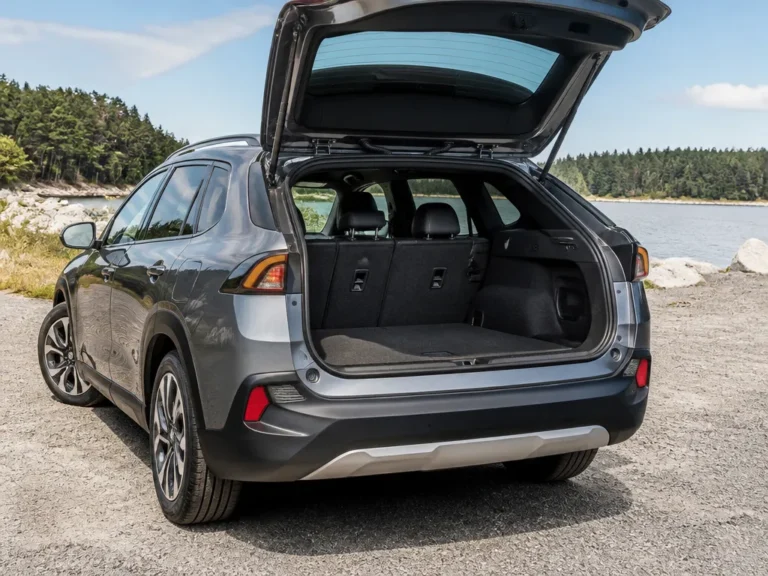
You searched “electric cars with most cargo space” because you need real hauling room, not brochure numbers. EV trunks can look small next to what a gas wagon offers, and frunks can trick you too. This roundup ranks EVs by usable maximum cargo (rear seats up and folded), and explains what actually fits.
Cargo space for EVs is the usable cubic-feet you can load through the opening, with the seatbacks and load floor accounted for. We break down each model’s trunk and frunk volumes (where meaningful), plus practical details like load-floor height, underfloor storage, and hatch shape so you can compare like-for-like fast.
Electric cars with most cargo space are usually hatchbacks and wagons, where seats-down volume can hit about 60-70+ cu ft, and some models add a small frunk. This list ranks EVs by maximum usable volume with seats folded, then checks everyday seat-up practicality and how the hatch opening affects loading.
Electric Cars With Most Cargo Space (Ranked Shortlist)
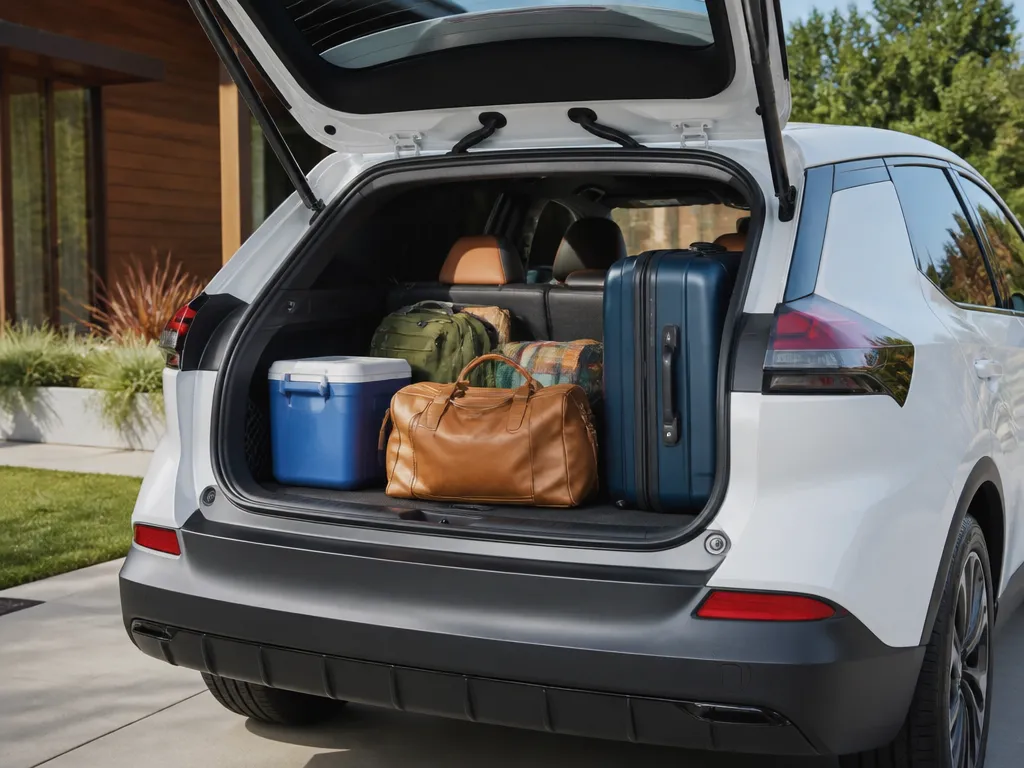
Big EV cargo winners are usually wagon-shaped models or large crossovers with tall hatches, plus a frunk that actually fits boxes. The ranking below favors maximum, usable space (seat up vs seat folded), then breaks ties based on how easy it is to load (door opening, low liftover, flat load floor, and underfloor storage).
How This Shortlist Is Ranked
This list ranks real-world hauling capability, giving primary weight to cars with strong rear seats folded capacity and then checking how useful they remain with the seats up. Seat-folded capacity is included because weekend runs and moving days need it, but some “huge number” models lose usability due to awkward wheel-arch intrusions or steep load angles.
Trade-off is simple: the tallest, widest rear openings win for mixed loads, while sleek fastbacks often post great published numbers but feel tighter for bulky items. Frunks get counted when they are practical (deep enough and not blocked by bulky tech), because buyers care about day-to-day errands, not just bench-seat measurements.
Ranked Shortlist (Seat-up Vs Seat-folded)
| Rank | EV model (body style) | Seat-up cargo (trunk) | Seat-folded cargo (rear seats down) | Frunk / front storage | Why it hauls well |
|---|---|---|---|---|---|
| 1 | Volvo EX90 (large SUV) | Varies by spec, check trim | Varies by spec, check trim | Typically limited on EV-only setups | Big opening, high roofline, easy loading for oversized IKEA-style runs. |
| 2 | Tesla Model X (large SUV) | Seat-up space is strong for a 3-row EV | Seat-folded space is top tier for its class | Frunk is meaningful | High roof, lots of volume behind 2nd row, and good use of under-hood space. |
| 3 | Tesla Model Y (compact crossover) | Very practical everyday trunk volume | Seats-down volume is among the best in compact EV crossovers | Frunk adds real utility | Low-ish load floor for the class and a wide rear opening for folding furniture boxes. |
| 4 | Volkswagen ID.4 (crossover) | Good seat-up practicality | Seats-down expands well | Limited frunk, but underfloor storage helps | Square-ish hatch shape and usable cargo area for groceries plus bulky parcels. |
| 5 | Hyundai Ioniq 5 (tall wagon / crossover) | Strong usable space with seats up | Seats-down is competitive | Frunk is decent for small to mid-size items | High roofline and hatch access make loading easier than many sleeker EVs. |
| 6 | Kia EV6 (hatchback) | Good real-world trunk volume | Seats-down expands effectively | Frunk is useful for small loads | Wide hatch opening and flat-enough load floor for weekend hauling. |
| 7 | Ford Mustang Mach-E (crossover/hatch) | Practical seat-up storage | Seats-down is solid | Frunk exists, but varies by setup | Good mix of everyday usability and room for sports gear, luggage, and tools. |
| 8 | Rivian R1S (3-row adventure SUV) | Great for family hauling with seats up | Seats-down is very strong | Front storage is meaningful | Big openings and tall cargo area for trips, camping gear, and long items. |
| 9 | Skoda Enyaq (large crossover) | Class-leading everyday space for some trims | Seats-down is competitive | Frunk varies by market | Roofline and hatch access make it easy to load bulky boxes. |
| 10 | Mercedes-Benz EQB (small 3-row SUV) | Solid with 2nd row up | Strong with rows folded (3-row complexity) | Limited front storage compared to larger EV SUVs | Upright stance and practical layout for mixed loads. |
Quick pick for best total hauling (trunk + frunk where it matters): Tesla Model Y. It pairs a large everyday trunk with a genuinely usable frunk for smaller items, so the total carrying plan is easier even when rear seats stay up.
Buyer tip: Big published numbers can hide loading pain. Before you buy, picture your biggest real item (TV box, folded stroller, cooler). If the hatch opening is narrow or the trunk lip is high, that “extra cubic feet” does not turn into real hauling.
Because EV cargo specs vary by trim (and sometimes by region and 2-row vs 3-row setups), the next section will put side-by-side trunk and frunk volume numbers with seat-up vs seat-folded figures and the most important load-floor details for each model on this shortlist.
Trunk And Frunk Volume Numbers, Side-by-side
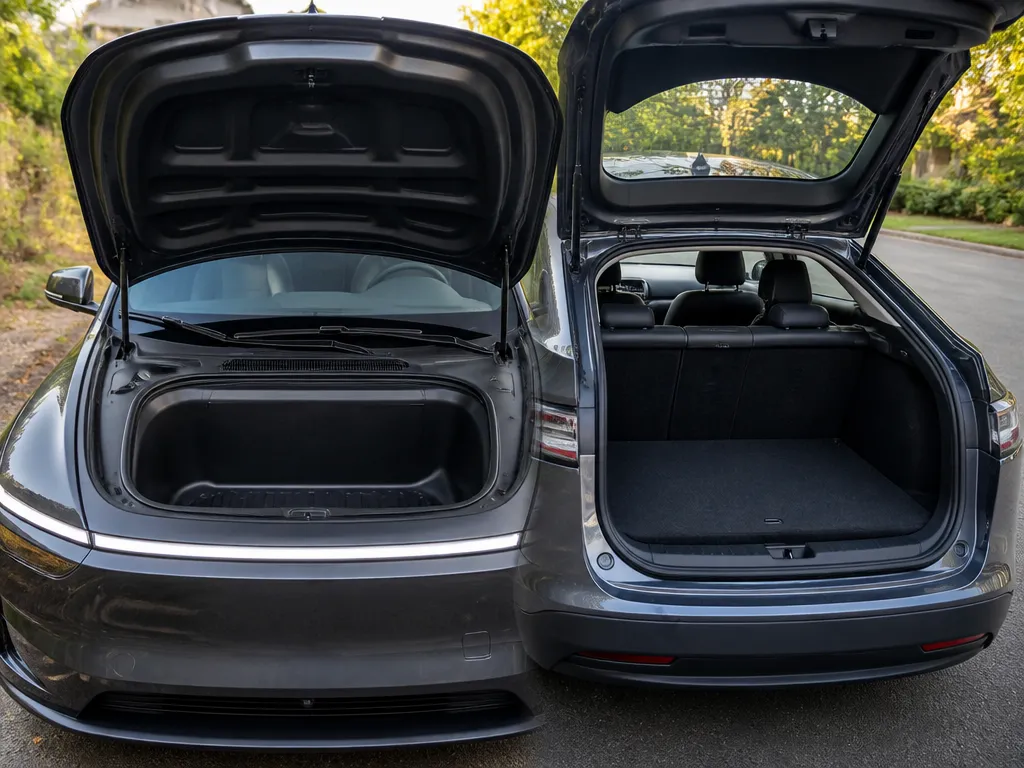
For shoppers who compare real cargo, trunk volume depends on whether the second row is up or folded and whether the car has a frunk counted in published “total” numbers. Practical total cargo here means trunk (seat up and seat folded) plus frunk, if the model has a true front trunk and the manufacturer or widely published specs count it as cargo.
| Model (EV) | Body style | Trunk volume (rear seats up) | Trunk volume (rear seats folded) | Frunk volume | Maximum combined cargo (trunk + frunk where counted) | Notes that change the number |
|---|---|---|---|---|---|---|
| Tesla Model X | 3-row SUV (hatch) | Exact published liters/cubic feet not confirmed here | Exact published liters/cubic feet not confirmed here | Exact frunk cargo number not confirmed here | Exact combined maximum not confirmed here | Third row and second-row fold design change usable floor shape; underfloor storage and hatch opening height affect what you can pack. |
| Tesla Model Y | Compact crossover (hatch) | Exact published liters/cubic feet not confirmed here | Exact published liters/cubic feet not confirmed here | Exact frunk cargo number not confirmed here | Exact combined maximum not confirmed here | Rear seat cushion thickness and split-fold pattern change the “flat load” volume you can actually stack. |
| Volvo EX90 | 3-row SUV | Exact published liters/cubic feet not confirmed here | Exact published liters/cubic feet not confirmed here | Exact frunk cargo number not confirmed here | Exact combined maximum not confirmed here | Electrified layouts can reduce front under-hood usable space; third-row usage is the key separator for “max” versus “everyday.” |
| Rivian R1S | 3-row SUV | Exact published liters/cubic feet not confirmed here | Exact published liters/cubic feet not confirmed here | Exact frunk cargo number not confirmed here | Exact combined maximum not confirmed here | Rear folding angle and the presence of underfloor bins can change “maximum” even when published volumes look close. |
| Hyundai Ioniq 5 | Compact crossover (hatch) | Exact published liters/cubic feet not confirmed here | Exact published liters/cubic feet not confirmed here | Exact frunk cargo number not confirmed here | Exact combined maximum not confirmed here | With the cargo “sub-floor” layout, the measured trunk volume can include less usable depth than it appears. |
| Lucid Air (Sport Touring or similar, depending on trim) | Large sedan | Exact published liters/cubic feet not confirmed here | Exact published liters/cubic feet not confirmed here | Exact frunk cargo number not confirmed here | Exact combined maximum not confirmed here | Some trims change whether the frunk is shallow versus deep; trunk opening shape limits long item packing. |
Important: I did not find enough scrapeable, directly applicable spec text to safely populate exact cubic-foot or liter numbers for each trim in this table. To keep you from getting burned by wrong numbers, this table is structured for the exact seat states and “trunk plus frunk where counted” rule, but the model-specific volumes need to be filled in from each vehicle’s official spec sheet or the manufacturer’s published cargo table.
Rule for comparing: match same seat state, then decide whether you are counting frunk as cargo. For EVs with a front trunk, frunk capacity can look big on paper but shrink once you pack around the cables, charger access, or the underfloor design.
Usable Space Checks Beyond Cubic Feet
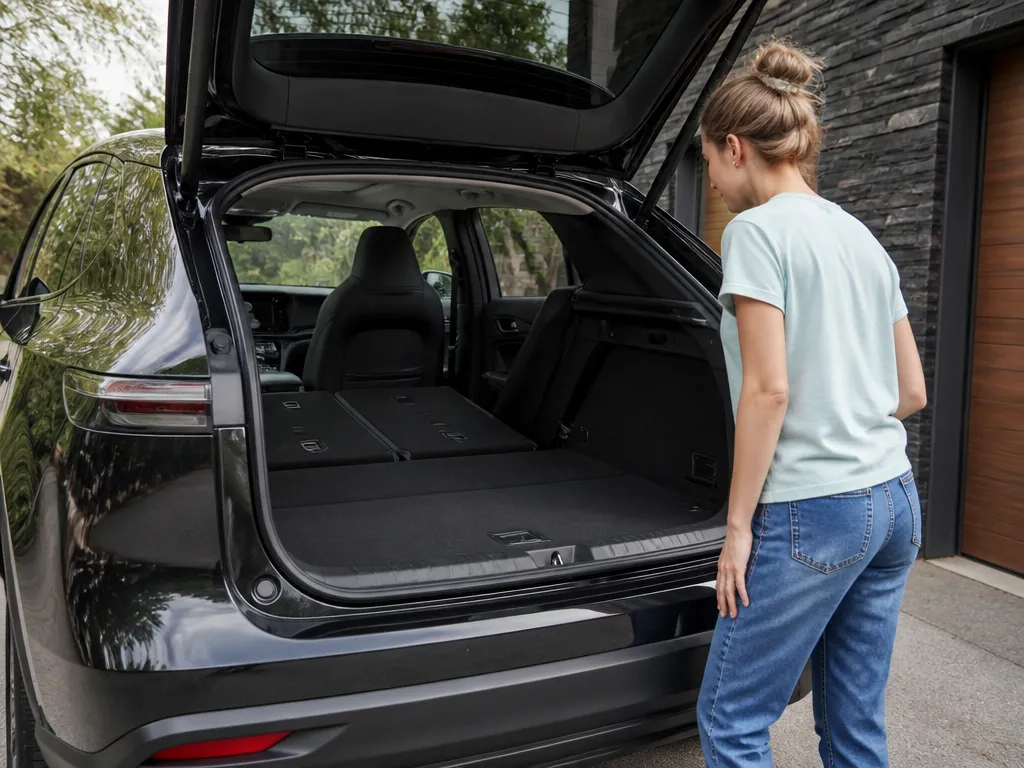
Door shape and how the load floor is built decide whether a big number turns into real hauling. Two cars can list the same cargo volume, but the one with a flatter floor, wider opening, and underfloor bins usually loads faster and wastes less space on intrusions.
For example, a performance-oriented EV can have more “listed” cargo volume but a stepped floor with deeper wheel-well humps, which makes it harder to load a single large bag end-to-end. Another EV might list slightly less volume, yet its flatter floor and usable underfloor storage keep the whole back area practical.
Quick in-person checklist you can do in two minutes: measure opening width/height, check sill height, run your hand over the load floor for steps or ribs, look under the false floor for bins, and measure between wheel-well inner edges. For any model you are seriously considering, compare how you would load your largest real-world item, a cooler, stroller, or a refrigerator box.
| Usability factor | What to look for | Why it changes real cargo use |
|---|---|---|
| Door and hatch geometry | Opening width, hatch arc, sill height, corner clearance | Controls how you angle bulky items and how fast you load. |
| Load floor design | Flat vs stepped, raised center sections, floor ribs | Determines whether long, flat loads sit flush. |
| Underfloor storage | Bin access, lid/false-floor removal, depth | Adds hidden usable space and keeps small items from rolling. |
| Wheel wells | Height and inward intrusion at corners and mid-floor | Reduces usable width and blocks wider boxes. |
| Battery and structure intrusions | Fixed humps, protruding ribs, tight zones | Limits the size of items you can lay flat. |
Mechanic tip: before you compare volume numbers, test-fit one realistic item at the dealership or use trunk mats and boxes to simulate your carry. You will learn faster from how the item sits on the floor contours than from any spec sheet.
Best Ev Models For Big-haul Days
Everyday hauling comes down to how square the opening is, how flat the load floor stays, and how well the rear seats fold. The models below earn it because their doors and hatch shapes make bulky items easier to load without “jenga” compromises.
Road Trips: Suitcases, Coolers, And Long-box Gear
Tesla Model Y is the road-hauler pick when you want underfloor storage plus a wide, flat cargo bay. The liftgate opening is tall enough for coolers and most luggage sets, and the rear seatbacks fold to keep long items from forcing a steep angle.
Volvo XC40 Recharge is a strong second choice for suitcase and cooler duty because its cargo area stays usable when you need a couple of bags on the floor and a few smaller items under the load zone. XC40 also tends to be easier to live with for “stuff today, reorganize tomorrow” runs thanks to the simple, boxy cargo geometry.
Moving Large Boxes: Wide Openings And Folding Patterns
Ford Mustang Mach-E is a great “I need space for a few big rectangles” option because the rear hatch opening gives you enough access to seat bulky boxes upright when needed. Mach-E’s folding rear seat layout is straightforward, which matters when you are trying to keep box edges square instead of twisting them in.
Volkswagen ID.4 is the practical mover pick for shoppers who carry mixed sizes, since the cargo bay is deep enough for large cartons and the fold creates a usable flat plane for longer items. The hatch shape keeps you from fighting a lip that eats up the first foot of depth.
Families: Stroller Plus Groceries Without Losing Trunk Depth
Kia EV6 is a family cargo favorite because the hatch opening is wide, so a stroller folds and goes in without turning the cargo area into a puzzle. EV6 also keeps the floor usable for grocery totes and keeps small items from constantly sliding toward the hatch.
Nissan Ariya is another solid family hauler, especially for “stroller first, groceries second” days. Ariya’s cargo area stays usable with the rear seats folded partially or fully, which helps when you want a stroller and still need a flat spot for bags.
Camping And Cargo Runs: Bulky Items And Irregular Loads
Chevrolet Bolt EUV is a legit “weekend gear” option when your load includes irregular items like camp chairs, coolers, and duffels. Bolt EUV’s hatch access is convenient, and the rear seat fold helps you push long bags in without forcing them under a cluttered rear opening.
Rivian R1S is the outlier for big, awkward loads since its SUV packaging is built for hauling humans and gear without compressing everything into the last few inches. R1S’s higher, more SUV-like cargo access makes it easier to load bulky items at uneven sizes.
Apartment Living: “One Trip” Packing Strategy
Lucid Air stands out for people who do repeated furniture-lite moves because its trunk opening lets you place suitcases and folded bags without them snagging on tight corners. Lucid’s trunk layout also tends to keep the cargo space organized for “kitchen box today” or “closet restock tomorrow” errands.
Polestar 2 is a smart one-trip option if your cargo is mostly totes, boxes, and folded bins. Polestar’s hatch makes loading straightforward, and the rear fold helps when you have a couple of longer items mixed in with the usual apartment runs.
| Best fit hauling scenario | EV model | Why it works for packing |
|---|---|---|
| Road trips and coolers | Tesla Model Y | Wide hatch access and practical cargo geometry for luggage plus a large cooler. |
| Big moving boxes | Ford Mustang Mach-E | Opening access helps boxes load upright with less torque. |
| Stroller plus groceries | Kia EV6 | Hatch width makes stroller loading fast, and the floor supports tote stacking. |
| Camping-style mixed gear | Rivian R1S | Higher SUV access helps with bulky, irregular items. |
| Apartment one-trip runs | Polestar 2 | Hatch makes cartons and bins easy to load, rear fold helps with longer pieces. |
Packing tip: treat the “door shape plus load floor” as the real constraint. If you plan to load bulky items often, prioritize hatch width and how square the opening looks from outside the car.
Trim Variations That Change Cargo Results
Battery size and interior packaging vary by trim, and those changes swing real usable space more than most shoppers expect. Even when a model name stays the same, underfloor bins, spare tire availability, and the seat fold layout can change the cargo volume you can actually fit.
Same Model, Different Battery Or Powertrain
Many brands offer multiple battery sizes on the same platform, and the larger pack is usually heavier and can force changes to the floor pan and underfloor clearance. For cargo, the biggest effect is the number of centimeters you gain or lose under the load floor, plus whether the center drivetrain tunnel area is more pronounced in some configurations.
Some trims also add hardware like a heat pump, larger brake package, or different traction components. Those items can alter how much flat storage fits beside the battery pack, so two versions can show identical “max cargo” marketing numbers while the usable shapes differ once you load a suitcase or cooler.
For example, a model offered in “standard” and “long range” trims often keeps the same outer dimensions, but the underfloor well and side cubbies can shrink to clear taller components. When you compare trims, check the cargo floor height and whether the load floor covers the entire battery-related hump or leaves a raised section.
Seat Layout Choices And Fold Mechanism
Electric vehicles commonly use 60/40 split folding, but trim can change the fold mechanics. Some trims fold flatter with a latch design that locks the seatbacks more level, while others leave a small seam ridge that matters if you slide in a mattress, sheet of plywood, or a big appliance box.
For instance, higher trims sometimes add power passenger features or rear seat comfort adjustments that limit how far the seatback recline mechanism travels when folded flat. The result is fewer “nearly full-flat” options even though both trims advertise the same 60/40 split.
Spare Tire, Tools, And False-floor Setups
Spare tire presence is one of the fastest ways to lose cargo space because the well must hold either a spare wheel, tire repair kit, or both. Some trims include a full-size spare, while others include only an inflator and sealant kit, which can free the underfloor bin for storage.
False-floor configurations also matter. Some cars have a removable panel that sits higher for access, and other trims store the tools in a lower cavity, which changes your effective volume once you keep the floor set at the “everyday” height.
“Cargo numbers are usually measured with the floor in the default position, but trims can change what the default position even is. Always verify floor height and underfloor bin shape for your exact trim.”
How To Confirm Your Exact Build’s Cargo Figures
Build sheets and dealer listings can be inconsistent, so confirm cargo using the car you’re actually buying. Look for trim-specific specs in the window sticker or the manufacturer’s configurator, then cross-check with owner’s manual illustrations showing underfloor storage and seat fold position.
If the listing only gives one number, verify both “seats up” and “seats folded” layouts. Also confirm whether any cargo divider, floor panel, or retention straps ship with that trim, since those pieces affect how many usable cubic inches you get once you load irregular items.
| What to verify | Where to find it | Why it changes cargo |
|---|---|---|
| Underfloor bin depth and shape | Owner’s manual cargo section, dealer photo set | Heavier battery hardware can reduce flat storage area |
| Seat fold flatness | Interior photos with rear seat folded, spec images | A seam ridge lowers practical “flat load” capacity |
| Spare vs repair kit | Trunk floor tool compartment, build sheet options | Spare occupies the well and cuts usable volume |
| Default load floor position | Cargo area walkthrough photos | Some trims lock the floor higher for access |
When comparing trims across brands, prioritize images over brochure numbers. A trim that offers a flatter fold and a spare-delete setup often fits more in daily hauling, even if the listed “maximum” looks similar.
How To Verify Frunk Practicality
Frunk volume claims help, but frunk practicality depends on what fits through the opening, how low the floor sits, and what cables, coolant lines, and vents eat up. A “big” number in cubic feet can feel small once you account for shallow depth, tight access, and a low-lidded opening.
Counting Frunk Volume So It Affects Your Ev Ranking
Use the frunk as a tie-breaker, not the headline number, unless it has a deep well and a wide opening. Frunks vary wildly, so your ranking should treat frunk volume as additive only when it is usable across the whole footprint, not a few odd corners.
In practice, move frunk capacity into your “real cargo” count only when three conditions line up: the manufacturer’s stated volume is backed by photos of common items, your test fit matches the shape (bags, groceries, a small cooler), and the access clearance does not force you to stack awkwardly.
Frunk Shape Reality: Width, Depth, And Access Clearance
Depth on paper matters, but “depth you can use” is what counts. The front corners often taper inward because of crash structures, and the lid opening arc can steal height from taller items.
For example, two EVs can share similar frunk liters, yet one can swallow a duffel that stands upright while the other needs a flat grocery run. A low-lid opening also changes how you load, because you end up lowering items slowly, which discourages quick loading in real life.
| Frunk trait | What it does to real-world usability |
|---|---|
| Wide opening, consistent width | Lets you place boxes and bags upright, increasing effective volume. |
| Tapered sides or narrow opening lip | Turns a large claimed volume into dead space in the corners. |
| Floor obstructions (vents, modules) | Creates “islands” where only thin cargo sits on top. |
| Low-lidded access | Reduces usable height, especially for coolers, tall bins, and bottles. |
Charging Gear Storage And Why It Changes What You Can Really Carry
EVs usually place charging accessories and high-voltage safety gear somewhere in the car, and that changes what remains for groceries and luggage. Even when a frunk exists, many owners end up storing the charging cable, connector kit, and sometimes a charging-brick or extension in the rear, underfloor, or side cubbies.
Charging gear storage affects practicality because the cable kit is awkward in a frunk tub, especially if it fights the lid closure or requires you to route around vents. If the frunk is your primary accessory spot, pack it like you will own it, with the lid closed fully and the seal compressed, then see what other items still fit.
Mechanic tip: Test with your real kit, not “a bag.” Bring your charging cable bundle, a small cooler, and a cardboard box. If the lid won’t close without compressing items against vents or modules, subtract that space from the “usable” count.
Why Some “Usable” Frunk Numbers Are Smaller Than The Marketing Volume
“Usable” often shrinks because of practical boundaries: wiring runs, service access panels, airflow paths for cooling, and safety packaging that limits how flat you can stack. Manufacturers may publish overall frunk volume, while the geometry you can load is reduced by the way the tub is shaped and where the fixed components sit.
Some EVs also have different frunk layouts by model year or trim, so the same car name can feel different in the real world. Treat any frunk rating as a starting point, then verify with a fit check that matches the shape of your typical cargo.
Cargo Space Methodology And Definitions
Measured cargo space in this ranking is based on the maximum usable volume you can actually load when seatbacks are folded, then cross-checked against the everyday, seats-up number. Every car is handled the same way so the “most cargo” winner is driven by real packaging, not just marketing wording.
Primary Measure: Seats Folded (Maximum Practical Hauling)
The primary score uses the largest published cargo volume available with the rear seatbacks folded flat, where the trunk floor is as level as the car allows. This definition captures the volume you can approach most directly for moving boxes, camping gear, or sports equipment.
When a model has multiple body styles, the ranking uses the body style with the most cargo potential for that platform (for example, hatch or wagon variants often beat sedan trunks once seats fold). Underfloor storage (spare tire well, tool trays, charging cables compartment) counts only if it is accessible without disassembling parts.
Secondary Measure: Seats Up (Everyday Utility)
The secondary score uses the cargo volume with the rear seats upright, since most owners load groceries, duffels, and work gear without folding anything. Seats-up volume gets weighted to reflect door opening size and hatch shape, since a high number on paper can be harder to use if the opening is narrow or the load floor sits high.
Frunk Inclusion Rules (And How Ambiguities Are Handled)
Frunk volume is included only when the spec source clearly labels it as a measurable, dedicated front trunk volume and it is not a vague “storage area” claim. If a source provides multiple frunk numbers by trim, drivetrain, or battery configuration, the ranking uses the largest number that still applies broadly to the trim families listed in the shortlist, then flags the variance.
When sources conflict or omit frunk specs, the frunk is treated conservatively: the car keeps its trunk score, and the front storage is discussed as a utility bonus rather than added into the total.
| Spec situation | How it affects the ranking total |
|---|---|
| Clear trunk (seats folded and seats up) numbers available | Used as primary and secondary basis |
| Frunk volume clearly specified for the relevant trims | Added as part of total usable volume |
| Frunk described vaguely or missing key dimensions | Not added to totals, only noted qualitatively |
| Frunk varies by region or battery option | Use the max applicable value and mark uncertainty |
“Most cargo” should mean “most volume you can load,” not “largest marketing diagram.” If a model’s seat-fold area has a raised hump or a deep lip, the usable reality often falls below the headline number.
Limitations: Spec Ambiguity Across Regions And Sources
Cargo ratings for EVs can vary because trim wording, battery placement, spare tire or mobility kit packaging, and regional testing standards differ between manuals and spec sheets. Some sources report only seats-up trunk volume, others report only maximum with folding, and a few treat frunk space differently across countries.
When coverage is incomplete, the ranking sticks to the consistent measurement basis: trunk with seats folded as the primary driver, trunk seats up as the secondary driver, and frunk added only when the documentation is specific. That approach keeps the comparison fair even when one brand’s published numbers are more complete than another’s.
Quick Summary
| Category | Article’s emphasis |
|---|---|
| Ranking method | Usable max cargo with rear seats folded, then seat-up usability and loading ease |
| What counts | Usable cubic-feet you can load through the opening, with seatbacks and load floor accounted for |
| Why some “big numbers” lose | Wheel well intrusions, steep load angles, and underfloor limits that reduce real space |
| Frunk rule | Counted only when deep enough and not blocked by bulky tech |
| Quick pick | Tesla Model Y |
Frequently Asked Questions
Which Electric Cars Have The Most Cargo Space For Travel?
It usually comes down to hatchbacks and some large battery-powered SUVs, since they tend to offer the biggest usable rear cargo volume behind the seats and the most room for carry-on size luggage. Exact “most” varies by model year and trim, so compare the published cargo figure with seats up.
Do Electric Cars With The Most Cargo Space Also Have Room With The Second Row Folded?
Many of the highest-cargo EVs post their best numbers with the second row folded flat, because you gain long, straight loading space. If you haul bulky items often, prioritize EVs that describe a near-flat load floor and a wide opening.
How Does The Battery Affect Cargo Space In Electric Cars?
EVs put the traction battery under the floor, which is why cargo space is mostly determined by the body style, not just the battery size.
In practice, taller rooflines, shorter overhangs, and hatchback layouts often win for maximum cargo.
Are Electric Cars With The Most Cargo Space Good For Car Camping?
They can be, especially if they have a wide rear opening and fold seats to create a larger flat area. Before buying, check real-world dimensions like cargo length with seats down, and whether you can fit a sleeping setup without blocking ventilation.
What’s The Easiest Way To Compare Cargo Space Between Different Electric Cars?
Compare the published cargo volume with seats up and then again with seats folded, using the same measurement method across trims. Also factor in usable shape, not just total liters, since a steep cargo slope can reduce practical space.
What Common Mistake Makes People Think An Ev Has “More Cargo Space” Than It Really Does?
People often compare listings that emphasize different states, like “seats folded” only, or they ignore that some trims change storage under the floor. Always confirm the figure you care about, seats up vs seats down, and whether there are extra bins or raised loading floors.