


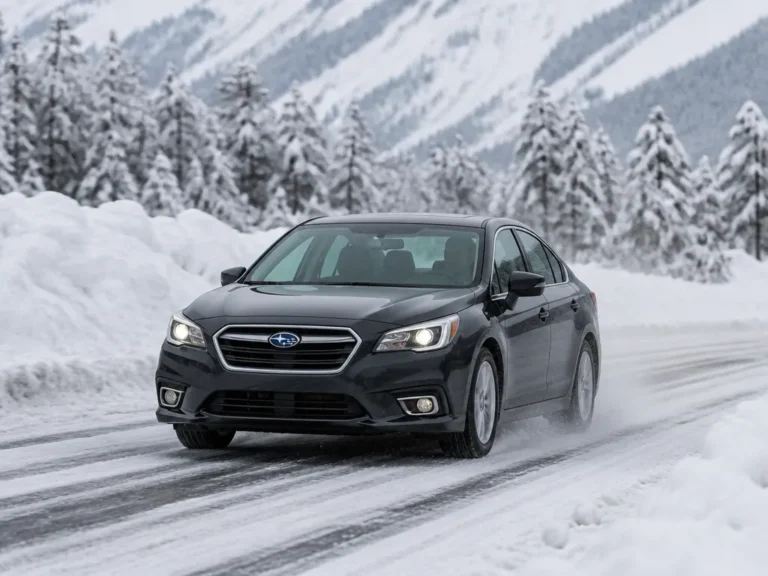
You know the feeling: morning starts fine, then the road turns to packed snow or ice and your Subaru Legacy either grabs and climbs or slips and scares you. Odds are you are wondering how the Legacy’s AWD, traction control, and braking behave in real winter conditions, and what you should do before the first storm hits.
Subaru Legacy AWD helps you start and stay pointed on low-grip roads, but winter tires decide most of the stopping and cornering grip. Expect traction control to limit wheelspin during takeoff, while ABS pulses during harder braking. This guide breaks down what works, what fails, and what to check on your car.
Subaru Legacy in snow and winter driving depends on traction, tires, and driver inputs. AWD helps you launch and climb with less wheelspin, but ice still lengthens stopping distances. Use dedicated winter tires with good tread depth (6/32 in or more) and check tire pressure before daily commuting. Practice smooth throttle, steering, and braking, especially on slush and freezing rain.
Subaru Legacy In Snow And Winter Driving
Subaru Legacy models with Symmetrical AWD are strong performers on packed snow and slushy commutes, but they still obey the same physics as every car: tire grip and temperature decide how much control you get. Where the Legacy shines is traction during everyday starts and steady driving, and where it runs out of margin is on ice and in deep ruts where tires lose contact patch.
Where The Legacy Is Confident Vs Where It Struggles
On packed snow and light-to-moderate slush, the AWD system helps keep power to the wheels matched to traction so the car feels composed instead of hopping and slipping. On glare ice, power delivery matters less than rubber compound and tread pattern, because any wheel that breaks loose will slide until the tires regain bite.
Driver technique still changes outcomes. Smooth throttle and steering inputs keep load where grip lives, while abrupt moves overwhelm the tire’s ability to generate friction.
“AWD helps you move and stay pointed, but tires still control braking grip. A car can feel stable while stopping ability depends entirely on the contact patch.”
What Awd Helps With In Real Situations
In starts, AWD can reduce wheelspin compared with a front-drive or rear-drive setup because torque is distributed to whichever wheels have the best traction at that moment. In turning, AWD helps reduce power-induced understeer or oversteer, yet the car still can slide if you ask for more lateral grip than the tires can provide.
In downhill driving, AWD is not a substitute for speed control. Engine braking and steady braking are your friends, and brake traction limits the wheels the same way they do on non-AWD vehicles.
| Condition | What AWD improves | What still limits you |
|---|---|---|
| Packed snow | Progressive launches, steadier traction while climbing | Tire tread design and compound temperature |
| Slush | Better power transfer before the tires re-pack with snow | Slurry can act like a lubricant without the right tire |
| Glare ice | Less wheelspin off the line | Minimal friction, braking grip, and tire temperature |
The Biggest Variable: Tires, Temperature, And Tread
Tires change everything on a Legacy in winter because they are the only part of the drivetrain that can create friction on snow and ice. All-season tires can work on snowy commutes, but winter traction usually depends on a dedicated winter tire that stays softer in cold weather and has tread blocks designed for biting snow.
For cold nights that drop below freezing, a winter tire’s compound is typically the difference between “manageable slip” and “unpredictable slide.” For daytime warming, properly inflated tires and intact tread depth matter just as much as compound, because worn tread loses edge and channels that clear slush.
Awd Traction Behavior On Snow
Subaru’s AWD system and stability controls in the Legacy are designed to keep torque going to the wheels with grip, then intervene when wheel slip or yaw angle gets out of bounds. On snow-packed and icy surfaces, the car usually feels “eager to help” early, then grows calmer as traction control and stability control start modulating throttle and braking.
Launch And Takeoff On Packed Snow
Launch behavior in the Legacy on packed snow usually depends more on tires than the AWD itself. With all four tires biting, the car will accelerate smoothly with minimal brake intervention, and the AWD can transfer torque to the rear (on typical Subaru AWD layouts) when the front tires lose grip.
In practice, wheel spin shows up fast on slick glare ice, then traction control cuts in by braking the spinning wheel and easing engine torque. Smooth, steady throttle gives the AWD system clean inputs; abrupt throttle requests trigger earlier traction control activity, which feels like a brief hesitation.
Climbing Snowy Grades
Climbing traction is where AWD helps most, but it still can’t overcome tire grip limits. The Legacy will keep moving by distributing torque across axles, while traction control applies selective braking when one wheel starts to spin.
Throttle modulation is key on snowy grades because traction control uses torque and wheel-speed comparisons to decide when to clamp down. When you stay in the “near-traction” zone, you get repeatable progress; when you floor it, the system protects the driveline and you lose momentum to wheel slip.
Turning On Snow
Cornering on snow is where drivers feel the difference between “helping with AWD” and “maintaining stability.” When the Legacy detects instability, stability control can brake individual wheels and reduce engine output to manage yaw, which often makes the car feel less eager and more governed than in dry conditions.
Understeer risk is common when you enter too fast or too much throttle unsettles the front tires, especially on patchy snow. Oversteer can still happen on slippery cross-slopes or when the rear loses grip first, but stability control typically tries to prevent both by trimming power and braking to steer the car back toward the intended path.
Downhill Traction Control And Why Speed Matters
On descents, AWD is only part of the story because the limiting factor is how quickly you can slow the vehicle and keep tires from locking or skidding. Traction and stability control will intervene, but if you arrive too fast, braking distances and wheel-slip behavior can exceed what the system can correct.
Controlled speed matters more than AWD alone because a too-fast entry turns the problem into heat, longer stopping distances, and harder electronic intervention. In real-world winter driving, keeping a steady, modest pace and allowing the car to use engine braking and gentle braking is what keeps the ride smooth and predictable.
Insider tip: treat steep snow descents like an exam you can fail in one corner. Slow down at the top, then make small steering and pedal inputs so traction control can work within its margin.
Starting, Climbing, And Braking Expectations
In a Subaru Legacy with AWD, winter traction is mostly about how smoothly you load the tires. Packed snow demands early, gentle throttle so the drivetrain does not break traction in pulses, and ice demands more patience because steering and braking can go from “grip” to “slide” fast.
Packed-snow Starts: When To Feed Throttle And When To Ease Off
Packed snow usually has enough bite for controlled acceleration, especially if the tires are studless winter or studded. The Legacy can move smartly from a stop, but the margin is thin when the surface is glazed or mixed with slush.
For example, if you are rolling onto a plowed driveway with 1 to 2 inches of packed snow, a short pause after you feel the first traction gain helps. That pause lets the AWD system distribute torque without constantly trying to re-find grip.
Uphill Slush And Ruts: Keeping Traction Above The Groove
Slush and ruts are where momentum beats bravery, because the tires ride up on the ridge between channels of water and compacted snow. The Legacy’s AWD helps you get moving, but climbing still fails when you bury tires in the rut and remove the tire’s ability to grip the higher, drier layer.
In practice, pick the lane that looks the most “crowned” or least gouged, then commit to a smooth line. In a rut situation, steering corrections should be small and steady, because large inputs while the car is in a low-traction climb can cause the tires to fight the surface.
Brake Behavior On Snow Vs Ice: Pedal Feel, Abs, And Stopping Limits
On snow, ABS typically cycles more actively than on dry pavement, but you still get usable deceleration and steering. On ice, ABS can feel “busy” and the car may barely slow while the tires keep slipping in short bursts, because the coefficient of friction is so low.
Pedal feel is your clue: ABS often causes pulsing in the brake pedal and a faint “chatter” noise. Keep firm, steady pressure and do not pump the brakes, because pumping can delay ABS response and can increase stopping distance.
| Surface | What ABS feels like | Driver expectation |
|---|---|---|
| Packed snow | Pulsing pedal with steady decel if you brake straight | Steering stays possible, but leave room and brake early |
| Slush | Pulsing can be irregular as tires pass in and out of wet layers | Expect variable grip, avoid late braking |
| Glare ice | Pulsing with minimal decel and quick onset of sliding | Stopping distance grows dramatically, plan stops far ahead |
Rule of thumb: aim to stop without “last-second” braking. If you must brake late and the pedal starts pulsing, keep constant pressure and straighten the wheel first, then steer as needed.
Crosswind And Snowbanks: Keeping The Legacy Tracking Straight
Crosswinds push the car sideways while the front tires lose grip to the side, which makes the Legacy feel like it is “floating” even with AWD. Snowbanks can also steer you, because the tires scrub lightly against dirty snow and the guidance forces shift across the contact patch.
In practice, make small steering inputs to hold your lane, then let the car settle before adding more correction. Brake gently before entering the worst wind or near the bank, because hard braking during a sideways push can make the ABS pulses look alarming and cause you to chase the slide.
Handling On Slush And Freezing Rain
Slush creates a thin water film over snow, and that film kills tire bite faster than you expect. In a Subaru Legacy, AWD can keep delivering torque, but traction control may take time to react while wheels hunt for grip, so the car can feel like it is “hesitating” or pushing when you ask for sudden power or steering.
Progressive loss of bite shows up first during acceleration and then in corners. Wheel spin starts small, traction control then brakes slipping wheels, and the system can lag behind your inputs when the surface transitions from packed snow to wet slush.
Freezing rain adds a slick ice film, and that is where vehicle systems have real limits. AWD can move power to all wheels, but if every tire is on an ice layer, the tires still have almost no friction to generate lateral grip, so skids start before traction control can “fix” them.
| Condition | What feels different in the Legacy | Driver move that helps |
|---|---|---|
| Wet slush | Delayed response, traction control cycling, push in turns | Throttle modulation, wider turn-in, earlier speed reduction |
| Freezing rain / ice film | Sharp loss of steering response, ABS kicking quickly, longer stopping distances | Gentle inputs, increase following distance, keep steering steady |
| Snow over bare pavement | Uneven grip “pops,” sudden correction needs | Drive straighter, smooth brake and throttle, avoid mid-corner changes |
Mixed surfaces are the hardest for smooth driving because grip changes across the tire contact patch and side to side.
For example, a snow ridge can sit over colder asphalt so one side grabs while the other slips, which creates a steering tug that tempts you to over-correct. Smooth throttle and braking reduce weight transfer spikes, and you should make steering corrections gradually, not in quick jerks.
Street rule for slush and ice: reduce speed before the surface gets bad, then keep steering and pedal inputs calm. If the car starts to slide, avoid sawing the wheel or stabbing the brake, let traction control and tires work with you.
Visibility often determines how much grip you can “use,” because you need reaction time for sudden ice patches and spray. Spray from the Legacy’s tires can reduce contrast, glare from wet pavement can distort lane markings, and light rain that turns to freezing rain can create ice without much warning.
Mixed precipitation can also change traction while you are actively maneuvering, so plan routes with fewer hills and fewer tight turns during storms. A Subaru Legacy can handle slush better than many two-wheel drives because AWD keeps pulling, but freezing rain is still an ice problem, so the best fix is driving slower than your confidence level.
Winter Tires For Legacy Awd
Dedicated winter tires dramatically improve Legacy AWD performance in snow and subfreezing temps. The softer rubber stays flexible to bite ice and compact snow, while the tread maintains a larger, consistent contact patch for easier starts, climbs, and stopping.
In practice, you feel more confident when approaching hills, stopping at intersections, and negotiating icy patches.
Choosing the right tread design matters. Directional tires with a V-shaped pattern push snow out of the contact patch, improving acceleration and steering in fresh and packed snow. Symmetric patterns balance wear and road noise but rely on extra sipes and edge blocks to bite ice. Higher siping density improves grip on glare ice but can increase wear and increase rolling resistance. For packed snow, more open grooves help evacuate snow and maintain grip rather than pack up.
Studs vs non studs: in most winter driving around town, non studded winter tires provide solid grip on dry cold pavement and snow, and they stay quieter and easier on rims. Studded tires shine on ice but can wear faster on dry pavement and may be restricted by local rules. If your route includes long icy descents or rural roads with clear ice, consider studded tires, but only if your area allows them and you plan winter-grade tread wear.
Cold weather pressure and wear practices: check tire pressures when the tires are cold and follow the vehicle manufacturer’s recommended cold inflation value. Expect pressure to drop with temperature, so keep tires within spec after a cold snap to preserve the contact patch. Rotate the entire set every 5,000 to 7,000 miles or with the seasonal swap to winter tires to promote even wear and longer life.
Changeover timing: switch to dedicated winter tires when daily temps stay consistently below about 40 to 45 F and you start seeing regular packed snow or ice. If your winter is mild with occasional snow, a high-quality winter-rated all-season can work, but once you face frequent ice, steep grades, or slush, dedicated winter tires are the safer choice. Track your local temps and road conditions and plan the swap accordingly, not by calendar alone.
| Tire Type | Compound / Temperature Range | Best Use | Pros | Cons | Cost (per tire) |
|---|---|---|---|---|---|
| Non-studded winter | Cold-weather rubber, optimized below 45 F | Snow, slush, ice patches | Strong bite in cold, good wear; quiet on clear roads | Less ice grip than studs; performance degrades above freezing | $120 – $180 |
| Studded winter | Rubber with metal studs | Ice-heavy routes, icy descents | Excellent ice grip; predictable on glare ice | Noisy; accelerated wear on dry pavement; legal limits | $150 – $260 |
| All-season | Moderate winter compound | Mixed winter and dry/wet days | Versatile; lower cost; less hub wear | Poor ice performance vs winter tires | $90 – $150 |
| Winter-performance all-season | Enhanced winter compound | Winter months with variable conditions | Better winter grip than standard all-season | Still not optimal on deep snow or ice | $110 – $180 |
Legacy Winter Prep Checklist
Cold-weather readiness on a Subaru Legacy starts with three things you can verify quickly: battery condition, tire grip, and brake hardware health. Winter snow and ice expose weak electrical connections, worn tread, and sticky brakes fast, especially during hill starts and long descents.
Battery Health And Cold-cranking Readiness
Winter cranking stress comes from higher oil viscosity and thicker battery chemistry, so a weak battery or corroded terminals can feel fine in summer and fail in December. Inspect both ends of the battery cables and the battery posts for white crust, greenish corrosion, and loose clamps.
Replace parts early if you see metal eaten away or the cable won’t tighten firmly. A common warning sign is slow cranking followed by rapid clicks, especially after overnight cold soak.
Tire Condition For Traction And Stability
Tires determine whether the Legacy’s AWD feels sure-footed or vague. Measure tread depth across the center and shoulders, and look for uneven wear patterns that scream alignment or suspension issues.
Sidewall condition matters in slush and plowed snow where hidden potholes and curb hits happen. Cracks, bulges, or cords showing are non-negotiable replacement items.
| Check | What you’re looking for | Winter impact |
|---|---|---|
| Tread depth | Uneven wear, low tread at shoulders | Less biting edges, longer stopping distances |
| Wear pattern | Inner edge wear or feathering | Reduced grip and stronger ABS/brake interventions |
| Sidewalls | Cracks, bulges, exposed cords | Blowout risk and traction loss |
Brakes And Rotors
Cold weather punishes brakes that drag or have sticky slide hardware, because salt and moisture sit in the caliper guides. Inspect pad thickness and look for uneven pad wear, glazed surfaces, or one pad wearing faster than the other side.
Rotor condition is more than just “thickness.” Look for deep rust ridges, heavy scoring, and warped feel. If your Legacy pulls under braking or you feel constant vibration, get it checked before the slickest weeks.
Fluids For Cold Weather Reliability
Coolant health affects defrost performance too, since heater output depends on proper engine temperature. Check the coolant level and confirm you have the right mix for winter temperatures, then verify it is not low.
Washer fluid needs real freeze protection, not just “winter labeled” marketing. Brake fluid absorbs moisture over time, and that can turn into a spongy pedal when it’s cold, so inspect the reservoir and plan a service if the fluid looks dark or you’re due by your maintenance schedule.
Dealer-style habit: confirm coolant concentration and washer fluid rating before the first long snow storm. After that point, topping up with the wrong stuff is more trouble than it’s worth.
Lights, Wipers, And Defrost Performance
Snow driving punishes poor visibility, and a Legacy can only compensate so much with AWD and traction control. Inspect wiper blade condition, verify washer spray is strong and aimed, and make sure the defroster clears the windshield quickly.
Lights need to be bright enough to see and be seen when road grime coats lenses. Check headlight aim, fog/DRL operation, and rear brake lights, then clean lamp lenses if they are hazy from winter dirt.
Underbody And Traction Considerations
Snow buildup is a real limiter on some winter commutes because packed snow can block airflow under the car and reduce traction at the wrong moment. Pay attention to how your Legacy behaves after rolling through deep snow, especially if you feel reduced acceleration or instability after clearing.
Clear away packed snow near the underbody and wheel wells after storms when it’s safe to do so. Treat repeated “getting stuck with no wheel spin” as a sign that snow depth and clearance are overriding traction, which means tire choice and ground clearance habits matter more than AWD.
Driver Technique For Snow Risk Reduction
Subaru AWD helps the Legacy pull and stay stable, but your inputs decide whether it grips or surprises you. In snow, smooth throttle, smaller steering changes, and smart speed choices reduce traction-control interventions and keep the car pointed where you intend.
| Situation | Driver move | Why it reduces risk |
|---|---|---|
| Snowy downhill | Start slowing before the grade, then use light, steady engine braking with controlled braking | Keeps brake heat down and maintains stable traction |
| Approaching a stop on glare ice | Plan for a longer distance, brake earlier with lighter pressure | Reduces the chance of wheel lock and abrupt ABS cycling |
| Corner entry on slush | Set speed before the turn, then keep steering steady | Prevents traction from being demanded all at once |
Downhill technique for the Legacy: Use engine braking by letting the car slow naturally in a lower gear or with smoother throttle lift, then apply brakes gently if speed needs more reduction. Avoid long, hard brake holds on a steep snowy grade, because repeated heavy braking can overheat brakes and reduce stopping consistency.
Limitations That Awd Can’t Beat
Deep snow and ice defeat AWD when the tires lose contact with clean, grippy surface or when the car drags its belly through packed ruts. The Subaru Legacy can send torque to all four wheels, but physics still limits traction and braking on friction-limited ice.
Packaged power and traction control help the Legacy get moving, yet clearance and underbody drag can stop momentum. In real commutes, packed snow turns a lane into a shallow trench, and once the tires ride up or the chassis rides down, AWD cannot “pull” a stuck underbody out any faster than a slipping tire can.
Deep Snow And Packed-rut Limits
Packed ruts are the common failure mode because the tread ends up trying to climb through compressed snow instead of biting into it. AWD can keep wheel spin lower during the climb, but contact patch size still shrinks when the tire is riding on slick, glazed snow.
Watch for these warning signs where the road looks “snowy” but drives like an obstacle course:
| Condition | Legacy AWD reality | Driver takeaway |
|---|---|---|
| Deep powder with clear tire tracks | All four wheels help dig in, but progress slows quickly as resistance rises. | Keep momentum, avoid spinning to heat-cook the snow into the tread. |
| Packed snow ruts | Underbody drag and tire “climbing” limit results more than drivetrain does. | Choose the widest, least rutted line, or wait for plows. |
| Slush over hard ground | Traction control manages slip, but visibility and stopping distance are the bigger risk. | Brake earlier, keep speeds low, avoid late turn-in. |
Ice: Traction Control Can’t Create Friction
ABS and traction control in the Legacy manage wheel slip by modulating brake pressure and engine output. ABS helps you steer during a stop, but ABS cannot manufacture extra friction when the tire is sliding on ice.
Insider mechanic truth: On ice, the “best” brake system still obeys the tire’s grip. If grip is low, stopping distance gets long fast regardless of AWD.
Freezing rain is especially brutal because it turns a surface into a thin, glassy layer. In those moments, your goal is not to “trust the AWD,” it is to give yourself time. Speed reductions and tire choice are the only changes that actually move the stopping-distance needle.
Speed Reality And The “Awd Confidence” Trap
Road conditions change over minutes, and the Legacy’s advantage evaporates when grip drops suddenly. A driver who feels steady at 35 mph on packed snow can still be caught off guard by a patch of glare ice, a crosswind gust, or a transition from snow to bare pavement.
“AWD confidence” is dangerous because it tempts you to brake later and steer later. Steering inputs create weight transfer, and that transfer can unload the tire just when you need grip most.
When To Choose Another Route Or Delay Driving
Route choice is a control strategy. Pick roads that have been salted, plowed, or consistently treated, and avoid shaded bridges and underpasses where ice forms first and stays last.
The Subaru Legacy can be an excellent winter commuter, but AWD is not a force field. Clearance limits progress, and ice limits stopping, so safe speed, winter tires, and smart route timing still win when conditions get ugly.
Quick Summary
The Legacy is most limited by deep ruts, underbody clearance, changing road surfaces, and driver speed. Use smooth inputs, plan stops early, and choose a safer route or delay travel when freezing rain makes the road hazardous.
The guide recommends dedicated winter tires with at least 6/32 in tread depth, checking tire pressure since colder temps drop it, and preparing the battery and brakes before cold snaps. Winter tire tread and temperature remain the biggest variables.
| Winter condition | What AWD helps | What still limits you |
|---|---|---|
| Packed snow | Progressive launches, steadier traction while climbing | Tire tread design and compound temperature |
| Slush | Better power transfer before tires re-pack with snow | Slurry can act like a lubricant without the right tire |
| Glare ice | Less wheelspin off the line | Minimal friction, braking grip, and tire temperature |
Frequently Asked Questions
Is The Subaru Legacy Good In Snow Compared To Other All-wheel Drive Cars?
In general, the Legacy is built around Subaru’s AWD, which helps you keep traction and move forward in slippery conditions. For winter driving, the real difference usually comes down to your tires, tire pressure, and how smooth you drive, not just the drivetrain.
What Tires Matter Most For A Subaru Legacy In Winter Snow?
For snowy roads, you get the biggest improvement from snow-rated or winter tires rather than relying on all-season tread. In deep snow or freeze-thaw conditions, prioritize good tread depth and correct inflation.
How Do I Prevent Subaru Legacy Wheel Slip When Starting On Icy Roads?
Use gentle throttle and try not to spin the tires, especially when moving from a stop on ice. If your Legacy has traction/stability control, keep it enabled.
How Often Should I Check And Replace Wiper Blades And Winter Washer Fluid For A Subaru Legacy?
In winter, visibility changes fast, so check wipers when they streak and top off washer fluid before storms. Use a winter-formula fluid so it won’t gel in cold temps, and replace blades that leave uncovered streaks during clearing.
What’s The Most Common Winter Mistake That Makes A Subaru Legacy Feel Unsafe In Snow?
The biggest mistake is driving on worn tires or expecting all-seasons to provide winter-grip performance. Underinflation can also worsen handling on snow and slush.
Does Using Winter Mode Or Awd Settings Change How The Subaru Legacy Handles Snow?
On most Subarus, AWD is always working in some form, but the way you accelerate and brake matters more than switching modes. If you have a specific drive mode, use it for its intended conditions, but still rely on smooth inputs to avoid upsetting traction.