


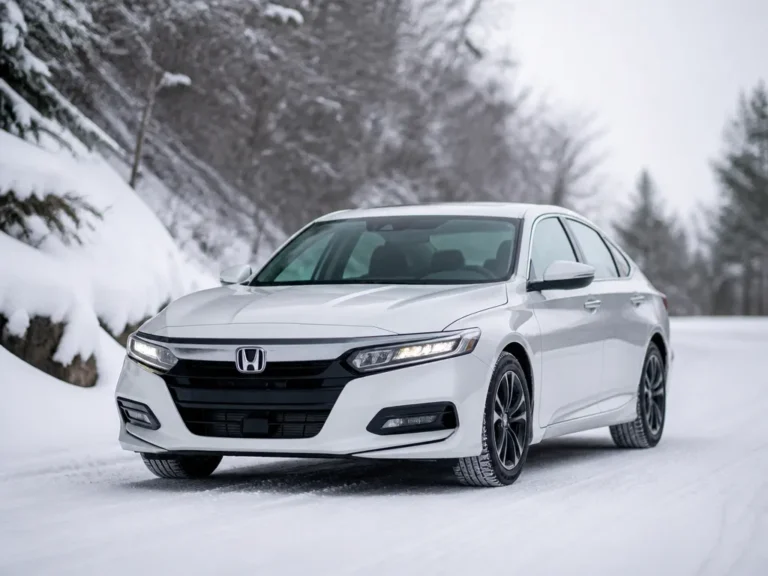
You are staring at a light dusting of snow in the driveway and wondering if your front-wheel-drive sedan is going to make it to work without sliding into a ditch. The Honda Accord is a fantastic daily driver, but its low ground clearance and standard tires often leave owners feeling nervous when the temperature drops. Understanding how this specific chassis handles slick surfaces is the difference between a confident commute and a stressful morning.
Honda Accord performance in snow is competent but limited by its front-wheel-drive layout and 5.5 inches of ground clearance. While the vehicle offers stable handling on packed snow, it struggles in deep drifts or on steep icy inclines where all-wheel drive and specialized winter tires are required for safety.
Is Honda Accord Good In Snow? The Verdict?
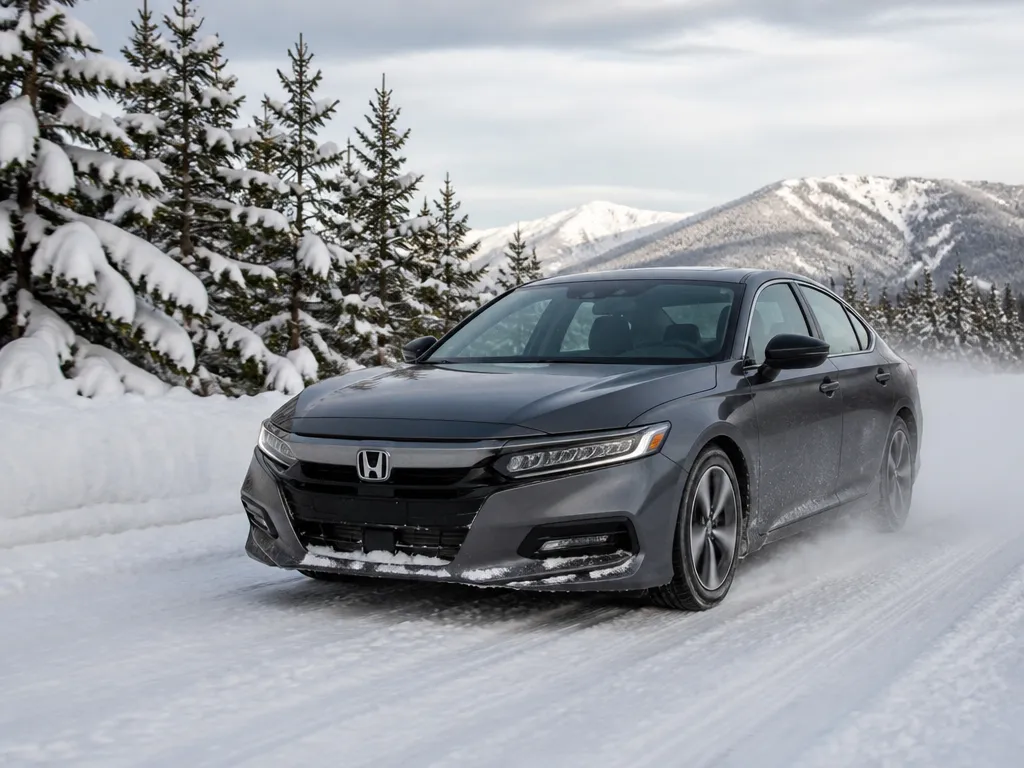
The Honda Accord functions as a competent daily driver in winter conditions, provided the driver understands its limitations as a front-wheel-drive sedan. It handles light to moderate snowfalls effectively thanks to weight distribution over the driving wheels, though it lacks the traction of an all-wheel-drive system. Owners will find the ride stable and predictable, but they should expect reduced stopping power and increased risk of sliding on pure ice without dedicated winter tires.
Front-wheel Drive Mechanics
Front-wheel drive offers a distinct mechanical advantage in snow compared to rear-wheel drive. The engine and transmission sit directly over the front wheels, pushing the car forward rather than pulling it. This weight transfer helps maintain traction during acceleration on slippery surfaces, making the Accord easier to control than a rear-wheel-drive car in a deep snowbank.
Strengths And Stability
The Accord’s chassis tuning makes it feel planted in the snow. Honda’s Vehicle Stability Assist (VSA) system works well to detect and correct slides. The wheelbase offers decent stability, though it is shorter than many trucks or SUVs, which can affect tracking on ice.
| Performance Factor | Accord (FWD) | Rear-Wheel Drive |
|---|---|---|
| Acceleration | Strong (weight on drive wheels) | Weaker (weight shifts rear) |
| Stability | Predominant | Unpredictable in snow |
| Drivetrain Complexity | Low maintenance | Higher maintenance |
Key Limitations
Deep snow poses a significant challenge for the Accord. The front bumper is relatively low, which can cause the car to get stuck in drifts or high snow banks. Additionally, the rear of the car can feel light, leading to potential fishtailing on slick surfaces.
Front-wheel Drive Performance In Winter
Front-wheel drive vehicles benefit from having the engine and transmission positioned directly over the drive wheels. This placement provides a significant amount of downward force, which helps the tires maintain contact with the road surface during acceleration on slick or icy pavement.
Mechanical Advantages Of Weight Distribution
Traction relies on the relationship between tire pressure and the weight applied to the contact patch. Because the heavy engine block sits over the front axle, the Accord enjoys superior grip compared to rear-wheel drive sedans when starting from a standstill. This configuration effectively turns the drive wheels into a pair of anchors that pull the chassis forward rather than pushing it from behind.
Mechanic’s Note: While the engine weight aids in initial movement, it does not improve stopping power. Braking force is distributed across all four wheels regardless of the drivetrain, so rely on your tires and defensive driving rather than the weight advantage alone.
Handling And Pulling Dynamics
Pulling the vehicle from the front allows the steering wheels to dictate the direction of travel while simultaneously providing power. This setup makes the car feel more intuitive when navigating light snow or slush. The front end follows the path of the wheels, which provides a sense of stability when you accelerate through a turn.
| Feature | Benefit in Winter |
|---|---|
| Engine Placement | Increases downward pressure on drive tires. |
| Pulling Power | Provides better directional control during acceleration. |
| Tire Load | Optimizes grip for the wheels responsible for steering. |
Drivers should keep in mind that front-wheel drive can experience understeer in extreme conditions. This occurs when the front tires lose traction and the vehicle continues straight even though the steering wheel is turned. Should this happen, ease off the accelerator to let the front tires regain their grip before making further steering adjustments.
Ground Clearance And Deep Snow Risks
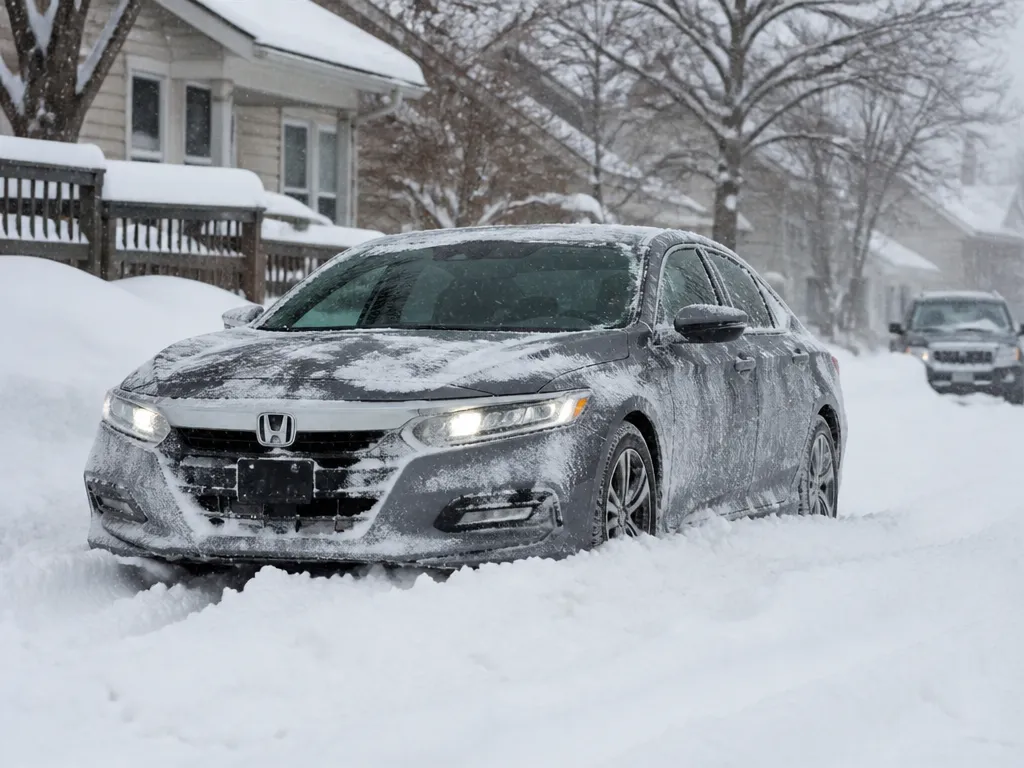
The Honda Accord typically has a ground clearance of 5.5 inches. This low profile makes it susceptible to getting stuck when snow depth exceeds five inches.
The Danger Of High-centering
High-centering occurs when the chassis rests on a pile of snow, which lifts the wheels off the pavement. Once the tires lose contact with the road, the drivetrain cannot generate the friction needed to move.
This happens because the Accord has a flat underbody design. The snow builds up a solid base under the car and creates a physical lift.
For example, driving into an unplowed driveway often results in the belly of the car acting as a sled. The car stops moving even if the wheels are spinning.
| Vehicle Type | Typical Clearance | Snow Capability |
|---|---|---|
| Honda Accord | 5.5 inches | Plowed roads only |
| Honda CR-V | 8.2 inches | Light unplowed snow |
Managing Snow Banks
Pushing through deep snow banks creates a wedge effect. The low front bumper acts like a shovel and packs snow tightly under the engine cradle.
In practice, this pressure can damage plastic under-tray shields or push snow into the radiator area. This restricts airflow and can cause debris to lodge in the chassis.
Avoid trying to plow your way out of a parking spot. The force of the snow against the low fascia can crack the plastic trim or bend the lower grille.
Mechanic Tip: If you high-center, do not keep spinning the tires. This creates excessive heat that can damage the transmission.
Winter Tires Vs All-season Rubber
The compound in winter tires remains flexible in freezing temperatures while all-season rubber hardens, reducing grip significantly below 45°F (7°C). For Accord owners in snowy climates, dedicated winter tires provide significantly better traction, braking distance, and cornering stability than all-season options regardless of whether the car has front-wheel, all-wheel, or no special drivetrain features.
Compound Differences In Cold Weather
Winter tires use specialized rubber compounds with higher silica content that resist hardening in cold conditions. All-season tires contain additives that compromise winter performance to maintain longer tread life and fuel efficiency in warmer months. This fundamental difference means an Accord with winter tires will outperform the same car with premium all-seasons on snow-covered roads.
For example, a 2023 Accord Sport with all-season tires will take approximately 30% longer to stop from 30 mph on packed snow compared to the same car equipped with proper winter tires. The temperature at which this performance difference becomes noticeable is around 44°F (7°C), well above freezing.
Siping And Grip For Ice
Winter tires feature thousands of tiny slits called sipes that create biting edges for gripping ice and packed snow. These microscopic cuts allow the tread block to flex and conform to irregular surfaces, dramatically improving traction. All-season tires have fewer and shallower sipes, limiting their ability to maintain grip on slippery surfaces.
Recommended Winter Tire Setups
For Honda Accords, the ideal winter setup is a dedicated set of four winter tires rather than just two. Many drivers mistakenly believe that only the driven wheels need winter rubber, but this creates dangerous handling imbalances during braking and cornering.
| Tire Type | Best For | Popular Accord Models |
|---|---|---|
| Studded Winter | Ice-covered roads | Accord EX-L, Touring |
| Studless Winter | Snow and mixed conditions | All Accord trims |
| Performance Winter | Light snow with better dry road manners | Accord Sport, Touring |
Accord owners should consider winter tire options from brands like Michelin X-Ice, Bridgestone Blizzak, or Continental VikingContact. These models come in sizes that match most Accord trims without requiring wheel upgrades. The investment in winter tires typically ranges from $600-$900 for a full set but pays dividends in safety and control during winter months.
Honda Traction Control And Stability Systems
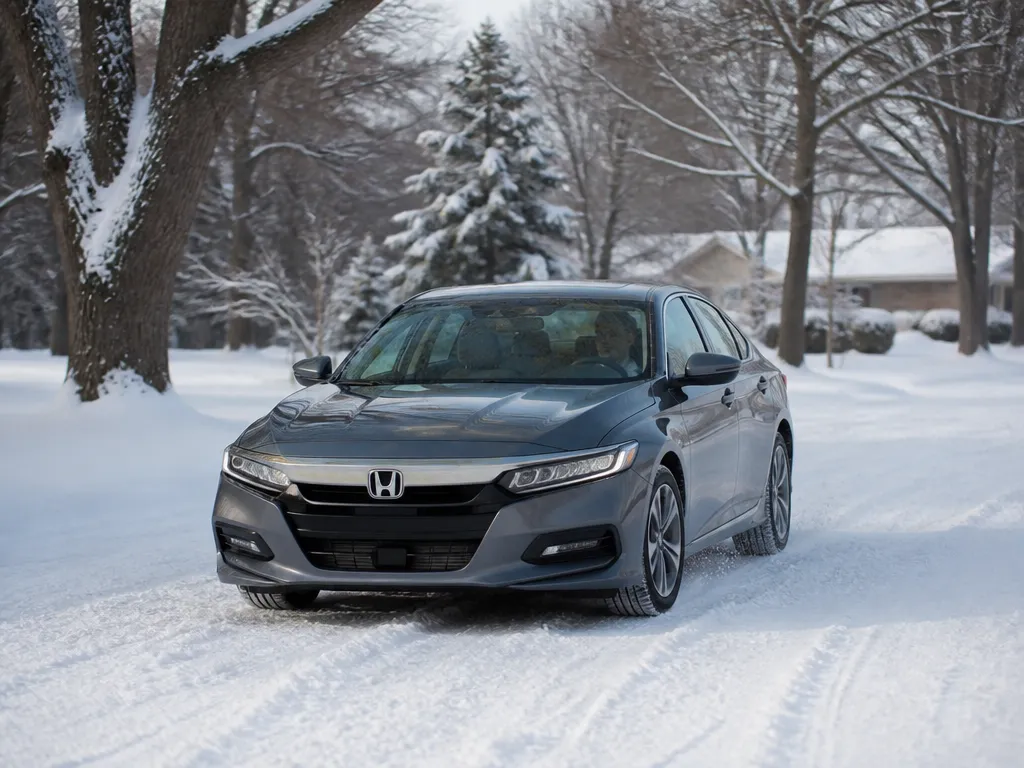
Vehicle Stability Assist (VSA) and the Traction Control System (TCS) use wheel speed sensors to detect loss of grip and manage engine power or individual braking force. These systems work together to keep the Accord on your intended path during slippery conditions by counteracting oversteer and understeer.
Vehicle Stability Assist (Vsa)
VSA acts as a corrective measure when the car begins to slide sideways. If the system detects the vehicle is not moving in the direction the steering wheel points, it automatically reduces engine output and applies braking force to specific wheels. This helps the driver regain control during sharp turns on icy or slushy roads.
Traction Control System (Tcs)
TCS prevents wheel spin during acceleration by monitoring the speed of each drive wheel. When one front wheel loses traction on a patch of ice, the system pulses the brake on that wheel while simultaneously pulling back throttle response. This action transfers power to the wheel with more grip, allowing the car to move forward instead of digging into the snow.
Mechanic’s Note: You will see a flashing amber light on your dashboard when these systems engage. This is your cue to reduce throttle input and steer gently, as the electronics are currently working at their limit to maintain traction.
When To Manually Disable Traction Control
Disabling traction control is sometimes necessary when you find yourself stuck in deep, packed snow. The system naturally limits wheel spin, but a small amount of spinning is often required to rock the vehicle out of a rut or maintain momentum through deep slush.
Winter Driving Tips For Accord Owners
Operating a front-wheel-drive sedan on snow-covered roads requires deliberate inputs to maintain traction. Sudden throttle application causes the front tires to spin, while abrupt braking triggers the anti-lock system prematurely.
Throttle And Brake Management
Smooth acceleration prevents the drive wheels from breaking loose on slick surfaces. Apply pressure to the gas pedal in a slow, steady motion to keep the tires gripping the pavement rather than churning through the snow.
Mechanic Tip: If you feel the front wheels begin to lose traction, lift off the accelerator slightly instead of slamming on the brakes. This allows the tires to regain their rotational speed and bite into the road surface again.
Braking should start much earlier than you think is necessary. Increase your following distance to at least six seconds to give yourself enough room to slow down gradually without relying heavily on the ABS.
Handling Understeer
Understeer occurs when the front tires lose grip and the car continues straight even though you have turned the steering wheel. This is the most common handling issue for front-wheel-drive vehicles on ice.
Recommended Following Distances
Maintaining a safe gap is the most effective way to avoid collisions in winter conditions. The following table provides a guideline for adjusting your habits based on road surface conditions.
| Road Condition | Minimum Following Distance |
|---|---|
| Dry Pavement | 3 Seconds |
| Light Snow | 6 Seconds |
| Ice or Hard-Packed Snow | 10+ Seconds |
Focusing on these techniques minimizes the load on the electronic stability systems. While the Accord has capable safety tech, your physical inputs as the driver remain the most important factor for vehicle control.
Accord Vs Awd Sedans In Snow
Front-wheel drive sedans like the Honda Accord prioritize efficiency and lower maintenance costs, while all-wheel drive alternatives trade those benefits for increased confidence during acceleration on slick surfaces. Traction control systems in modern FWD cars manage wheel spin effectively, but they cannot overcome the physical limit of having only two drive wheels when starting from a standstill on an incline.
Performance And Traction Considerations
All-wheel drive systems provide a clear advantage when navigating deep snow or icy intersections because power is distributed across four contact patches. This setup reduces the likelihood of getting stuck, yet it does not improve stopping distance or cornering stability on ice. Every vehicle, regardless of drivetrain, relies entirely on the grip provided by its tires to stop or turn.
As a mechanic, I tell owners that AWD helps you go, but it never helps you stop. A FWD sedan with a dedicated set of winter tires will consistently outperform an AWD vehicle equipped with standard all-season tires in both braking and emergency maneuvers.
Economic And Maintenance Trade-offs
Owning a front-wheel drive sedan results in lower long-term costs because there is no transfer case, rear differential, or extra driveshaft to service. All-wheel drive vehicles require additional fluid changes and often suffer from increased tire wear, as all four tires must be replaced at the same time to avoid damaging the center differential. Fuel economy also suffers in AWD models due to the added weight and mechanical drag of the extra drivetrain components.
| Feature | Honda Accord (FWD) | Typical AWD Sedan |
|---|---|---|
| Starting Traction | Moderate | High |
| Stopping Distance | Tire Dependent | Tire Dependent |
| Fuel Efficiency | Higher | Lower |
| Maintenance Cost | Lower | Higher |
| Weight | Lighter | Heavier |
Choosing between these platforms depends on your local climate and driving habits. Drivers in regions with heavy, unplowed snow benefit from the extra bite of AWD, while those in areas with light snowfall or well-maintained roads find the simplicity and efficiency of a FWD sedan more practical for daily commuting.
Quick Summary
The Honda Accord is a capable daily driver for light to moderate winter conditions, though it is limited by its front wheel drive layout and 5.5 inches of ground clearance. The engine and transmission weight sits directly over the front drive wheels, which provides improved traction during acceleration compared to rear wheel drive vehicles. While this setup helps the car feel planted and predictable on packed snow, drivers must accept that the vehicle is not designed for deep drifts or steep, icy inclines where all wheel drive systems are necessary for safe operation.
To maximize performance, owners should install dedicated winter tires, which can improve braking distances on ice by up to 30 percent over standard all season tires. It is also critical to keep the Vehicle Stability Assist system active and practice conservative throttle inputs to prevent wheel spin. Because the front bumper acts like a plow in snow deeper than 6 inches, drivers should avoid unplowed roads. Ultimately, the most important takeaway is that while the Accord is reliable in light snow, winter safety depends primarily on tire quality and defensive driving habits.
| Feature | Impact on Winter Driving |
|---|---|
| Front Wheel Drive | Better weight distribution for acceleration. |
| Ground Clearance | Limited to 5.5 inches before plowing occurs. |
| Winter Tires | Reduces ice braking distance by 30 percent. |
| Stability System | VSA helps manage wheel spin and slides. |
Frequently Asked Questions
Does The Honda Accord Come With All-wheel Drive For Better Snow Traction?
No, the Honda Accord is strictly a front-wheel drive vehicle. You will need to rely on quality winter tires to compensate for the lack of power to the rear wheels when driving on ice or packed snow.
Are The Factory Tires On A Honda Accord Sufficient For Winter Driving?
Most Accords come equipped with all-season tires that are designed for dry and wet conditions rather than deep snow. For real winter performance, you should invest in a dedicated set of winter tires which feature specialized rubber compounds that stay flexible in temperatures below 45 degrees Fahrenheit.
How Does The Honda Accord Ground Clearance Affect Snow Performance?
The Accord has a ground clearance of approximately 5.5 inches, which is standard for a sedan. This means you should avoid deep, unplowed snow because the undercarriage can easily bottom out and leave your wheels spinning without traction.
Is The Honda Accord Traction Control System Helpful In The Snow?
Yes, the electronic traction control and vehicle stability assist systems are effective at preventing wheel spin during acceleration. You should keep these systems engaged, as they monitor wheel slip and reduce engine power to the wheels that have lost grip.
What Is The Most Important Upgrade For Driving A Honda Accord In Heavy Snow?
The single most important upgrade is installing a set of four winter tires rather than just two. Using only two winter tires will cause a dangerous imbalance in grip between the front and rear axles, which can lead to a loss of control during cornering.