


You’re driving a Hyundai Venue and you just got that first real snowfall, but the streets feel slick and the car feels way slower than normal. Are the traction control and stability systems enough, or are you going to need better tires and a different driving routine to stay safe? This winter-focused look covers what to expect and what to do before the next storm.
Most Venues are front-wheel drive, so snow grip depends heavily on tire quality and how gently you feed power. Expect the stability and traction controls to intervene often on packed snow, slush, and ice. You’ll get specific steps for tires, prep, cold-start comfort, and how to respond when wheel spin starts.
Hyundai Venue in snow and winter driving comes down to front-wheel traction, tire choice, and patience. With the Venue, plan for longer stopping distances on ice and more wheel spin on slush. If you use fresh snow tires, keep pressures correct, and drive with smooth throttle, you’ll gain noticeable control within about 1 season.
Hyundai Venue In Snow And Winter Driving
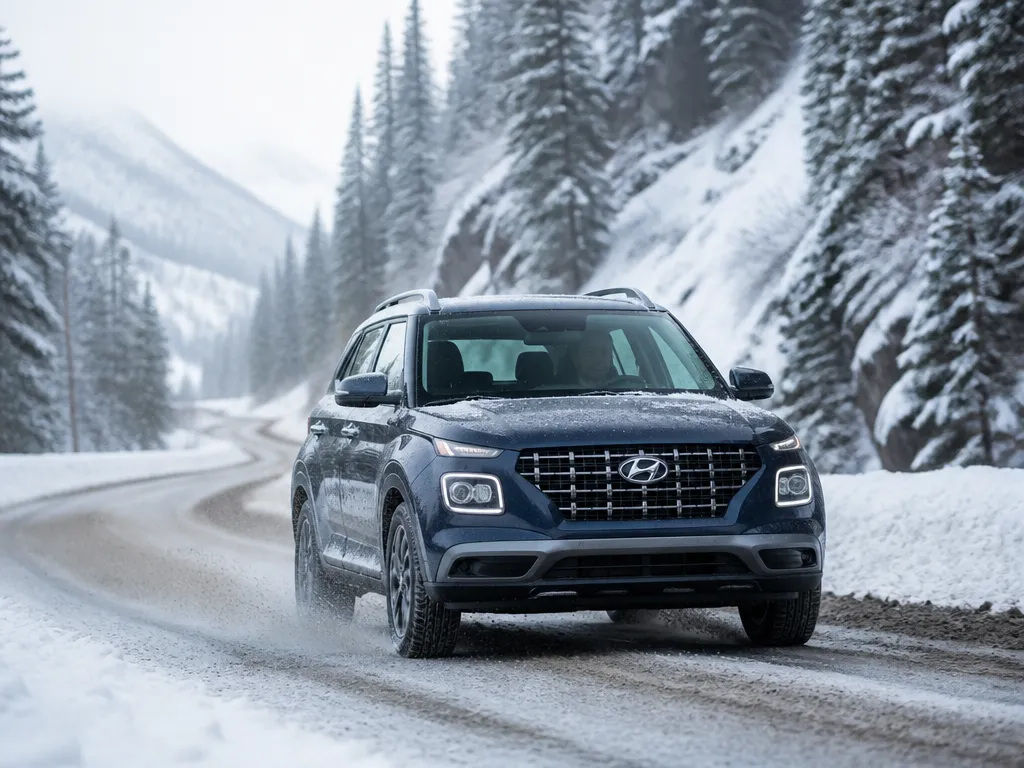
The Hyundai Venue is a small front-drive crossover in most markets, so winter traction depends heavily on the front tires and how hard you ask the car for grip. Expect stability control and traction control to help you stay pointed straight, but they cannot repeal physics, especially on ice or deep snow. Plan around the Venue feeling most confident when the road is only lightly slick and you use the right tires.
Typical Venue Drivetrain Reality In Winter
Front-wheel drive means engine torque goes to the wheels that also steer the car, which is good for everyday snow where you need consistent pull and manageable steering feedback. Ground clearance is also a factor, since packed snow can reduce effective traction and can keep the front wheels spinning if you hit it too fast. If your Venue is equipped with a winter or traction-oriented drive mode, it can reduce wheel spin early, but it still limits how much acceleration you can get on glare ice.
In practice, traction is usually your biggest limiter, not brakes. Braking effectiveness in snow is reduced for every vehicle, so your stopping distance grows quickly as speeds rise. When you start feeling the front tires “hunt” for grip, ease off the throttle and let traction control do its job.
What Stability Control And Traction Control Do (And Don’t)
Stability control (ESC) monitors steering input versus actual yaw, then selectively brakes a wheel to pull the vehicle back toward the direction you asked for. Traction control (TCS) watches driven wheel speed and reduces engine torque when the driven wheels spin. Together, they can keep you moving and pointed, but they do not increase available grip on a given surface.
On snow, these systems often make the ride feel “slower to respond” when you mash the throttle, because they’re trying to prevent wheel slip. Braking is also limited by tire grip, so you cannot rely on ABS and ESC to make an icy stop distance comparable to dry pavement.
| System | What it helps with | What it cannot fix |
|---|---|---|
| ESC | Corrects understeer or oversteer using braking | Running out of tire traction or sliding beyond control |
| TCS | Limits wheel spin during starts and acceleration | Low-friction contact patch caused by bald tires or ice |
| ABS | Helps you maintain steering under hard braking | Shorter stopping distances on ice |
Inside snow, the safest habit is smooth inputs: gentle throttle on takeoff, steady steering, and earlier braking. When the systems intervene, treat it as a warning that the tires are at their limit.
Fwd Traction Limits On Ice
In a FWD Hyundai Venue, acceleration traction on ice runs out fast because the driven wheels are also steering and weight transfer is limited. Packed snow gives the tires something to “bite” into, but black ice removes that bite and turns wheelspin into speed loss and traction control activity. The car can feel perfectly stable until you ask for too much throttle or the surface changes under a tire.
Packed Snow Vs Slush Vs Black Ice: What Grip Changes Feel Like
Packed snow increases friction compared with clear ice, but it still cuts available grip roughly in half compared with dry pavement. Slush behaves like a moving, wet layer, and it can move the contact patch around, so you feel a more frequent “grab and release” under steady throttle. Black ice is the worst case because the tire can be on a film of water with almost no mechanical traction.
In practice, the Venue’s throttle response usually feels normal until you crest a slight incline, hit a patch transition, or start turning while accelerating. The moment you exceed the grip limit, the front tires spin, the steering wheel can go a little light, and the car pulls slightly toward the side with more traction. That pull is why snow driving is smoother when you keep the wheel straight through the acceleration phase.
Wheelspin Control, Abs Behavior, And Steering Feel When Traction Slips
Traction control in a FWD Venue fights wheelspin by cutting engine torque and applying the brake to a spinning wheel. When it intervenes on snow, the car often slows the rate of acceleration and the surge feels “modulated,” not violent, as the system hunts for grip. ABS is different: it activates on braking when wheel lock threatens, so under braking you may feel pulsing in the pedal and hear rapid cycling.
On ice, steering feel changes because the front tires are doing too much work at once. When traction control is active while you’re also turning, the front end may feel like it’s lagging, then suddenly biting when grip returns. That’s your signal to ease off throttle, straighten the wheel, and wait for the tires to regain consistent contact.
| Situation | What you feel | System behavior |
|---|---|---|
| Hard launch on ice | Torque cuts, short surges, then slower acceleration | Traction control limits wheelspin |
| Brake on slick surface | Pulsing pedal, straight-line stability improves | ABS prevents wheel lock |
| Turn while accelerating | Front feels “draggy,” then catches | Traction control manages slip at the driven wheels |
Hill Climbs And Stop-and-go: Where Fwd Struggles First
FWD struggles first when you need torque at low speeds, because the weight on the driven front wheels drops as the car tips and unloads over crests. On hill starts, the biggest risk is wheelspin right as you release the brake, especially if the surface is polished snow or thin ice. Stop-and-go traffic compounds it, since you brake, load weight, then immediately ask for traction again.
For example, climbing a slippery driveway in a Venue usually goes wrong when throttle is applied too late and the car spikes wheelspin before the contact patch warms up. For climbs, keeping torque requests small and steady helps the tires stay planted instead of cycling between grip and spin.
Mechanic tip: If you feel the front end “wander” or the steering gets vague during throttle application, that is the Venue telling you the front tires are out of margin. Straighten the wheel, ease off the throttle, and regain stable grip before you try to climb or turn again.
Braking And Stability In Winter
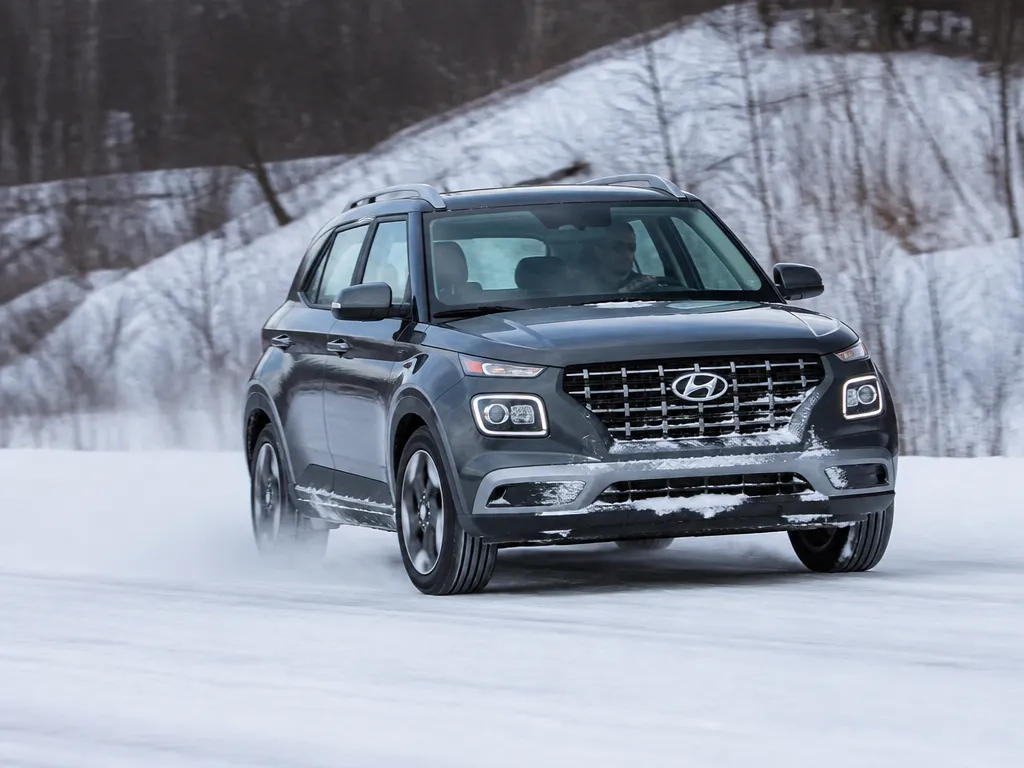
On the Hyundai Venue, winter braking is limited less by the brake system and more by tire grip and how quickly each wheel can stay under the friction limit. On loose snow, stopping distance can stretch dramatically because ABS is doing more work to prevent wheel lock. On icy patches, even ABS cannot create more traction, so the car still slides before it slows.
Loose Snow Vs Icy Patches: What Changes At The Pedal
Loose snow tends to “work” the tire, letting you generate some braking force, but it usually needs longer distance to fully scrub speed. Icy patches reduce available friction so hard that ABS may pulse sooner and more often, even during gentle braking. With a compact crossover like the Venue, that difference is obvious: firm pedal inputs feel controlled on plowed snow, then get sketchy the second you hit glare ice.
In practice, build your braking plan around where the coefficient of friction changes, not around steady speed. Avoid late, hard stops at intersections and instead start braking earlier than you would on dry pavement.
| Road surface | What you feel | What ABS/traction stability is doing | Driver takeaway |
|---|---|---|---|
| Light powder | Brakes respond, pedal stays firm | ABS prevents lock, grip stays somewhat predictable | Brake earlier, keep steering steady |
| Plowed snow with patches | ABS pulses and you may feel “grab and release” | ABS cycles around changing friction | Shorten your braking zone, no abrupt steering |
| Black ice/glare ice | Long slide, limited deceleration | ABS may pulse, but friction is near minimum | Brake early and reduce speed before the patch |
Traction Control Activity Vs Real Loss Of Control
Traction control on the Venue helps when the driven wheels spin during acceleration or sometimes mild braking/turn transitions. A traction control light can come on because the system senses wheel slip, but a light alone does not mean you are about to spin out. Stability control is the one you should respect more, because it targets yaw and brake-by-brake correction when the car starts to rotate.
Insider mechanic tip: Treat “systems working” as a warning that your tires are near their limit. If you keep increasing steering angle or braking force after the wheel slip begins, you are asking the ABS and stability system to do more than traction allows.
Common skid scenario with compact crossovers is the “brake-then-turn” mistake, where drivers brake hard, then add steering late on a slippery surface. Another common one is lifting off the throttle mid-corner on snow, which shifts weight and can make the front end understeer while the rear gets light. The Venue is short and relatively light for its class, so weight transfer can happen quickly when you change inputs.
Reading Abs Cycling And Knowing When To Back Off Sooner
ABS cycling is not a malfunction. ABS modulates brake pressure to prevent wheel lock, so pulsing through the pedal is the system trying to keep you steerable. When cycling becomes constant and the vehicle still barely slows, you are on a surface where grip is already maxed out, and backing off sooner is the only real fix.
Winter Tires For Venue Owners
Cold weather exposes a Venue’s biggest limitation fast, the tire tread and rubber compound. Dedicated winter tires bite harder on packed snow and stay flexible in freezing temperatures, which usually shortens stopping distances and reduces wheelspin compared with all-seasons.
Snow Tires Vs All-seasons For A Hyundai Venue
All-season tires can work for light snow, but the rubber hardens as temperatures drop, and the tread blocks can’t shape and scrub snow the same way. Winter tires have deeper, more aggressive tread and sipes designed to keep gripping on slick surfaces, especially when you are accelerating from a stop or braking on a slushy lane.
For a small crossover like the Venue, traction is everything because curb weight is modest and your tires carry the whole story for start-off and control. If your drive includes frequent packed snow, icy intersections, or plowed roads that turn back into glare ice, winter tires are the difference between “manageable” and “white-knuckle.”
| Surface | All-seasons on a Venue | Dedicated winter tires |
|---|---|---|
| Packed snow | Limited bite, more wheelspin | More consistent traction from tread-to-snow contact |
| Slush | Can skate as tread washes out | Sipes keep channels clearing for steadier grip |
| Ice and black ice | Longest stopping distances, more ABS activity | Improves control, still requires longer distances |
Cold weather also changes pressure, and pressure mistakes are a fast way to lose grip. Tires run softer in winter than you expect when they cool down from garage temperature to the road, and that affects contact patch shape.
Practical tip: For a Venue that sees snow regularly, the best setup is dedicated winter tires on their own wheels. That keeps tread clean, reduces mixing compounds, and makes cold-pressure checks quicker before storms.
Pre-winter Checklist For Venue
Getting the Hyundai Venue ready before the first real cold snap is mostly about preventing three failures: weak starting power, poor visibility, and tire or brake grip. This go/no-go list is built around what drives and stops your Venue in snow, where traction is limited and small issues turn into big problems.
Power, Charging, And Cold-start Reality Check
Cold weather hits batteries harder than you think, so start with a battery and charging “health check” before you need it. If the battery is more than about 3 to 4 years old, plan for a load test at a parts store or shop, because surface charge is common in winter.
For cold starts, set expectations. A short crank and a smooth idle are normal, but extended cranking points to battery weakness or fuel-related issues that should be checked.
Visibility And Defrost Checks (The “Snow Safety” Multiplier)
Snow and freezing rain turn visibility into the first safety problem, so verify every circuit you need before the storm. Test the wipers, both speeds, and the washer system with the correct winter fluid.
Quick test: Park with the engine running for 2 to 3 minutes, set to defrost, and check the driver-side visibility first. If it stays foggy or slow to clear, deal with it before you drive in snow.
Lights, Tires, And Brakes (Traction And Stopping)
Snow driving is brutal on brakes when traction is inconsistent, so you want both the stopping system and the friction match ready. Inspect tires for tread depth, sidewall damage, and uneven wear, then check brake condition based on feel and inspection.
| Item | Pass Go/No-Go | What to fix before storms |
|---|---|---|
| Wiper blades | No streaking or skipping | Replace blades that smear or chatter |
| Washer fluid | Winter-rated | Top with fluid rated for your low temps |
| Tires | Good tread and no damage | Replace tires that are worn, cracked, or uneven |
| Brakes | Firm pedal, no noise | Inspect pads/rotors if pedal or noise is off |
Emergency Kit For A Small Crossover In Snow
Keep emergency basics in the Venue where you can grab them quickly. Snow can strand you with reduced visibility and traction, so plan for warmth, traction, and communication.
Park-it-right advice: Before you need it, make sure your snow kit is accessible and your doors can be cleared quickly. A buried scraper and frozen washer bottle turn a minor stop into a long one.
Cold-start And Defrost Performance
The Hyundai Venue’s winter drivability hinges on two things when temperatures drop: how quickly coolant temperature rises to make heat, and how fast the HVAC system can clear moisture off the glass. In cold starts, expect slower cabin heat and lighter airflow until the engine warms, especially if you idle briefly and then drive immediately.
Cold-start Habits That Reduce Battery Strain
Repeated cranking in sub-freezing weather is what kills starter batteries, more than the first start. The Venue uses a conventional gasoline setup, so the biggest winter stress is battery voltage dip during longer crank events, which also slows sensor and ECU response.
For the best chance of immediate heat later, drive off gently rather than idling for 20 to 30 minutes in place. Idling builds less cabin heat than steady driving because the engine can still be in a warm-up zone while airflow and radiator load stabilize.
Getting Heat And Defrost Sooner (Use The Airflow Correctly)
Cabin warming speed is mostly about engine warm-up and HVAC mode selection. To clear windows efficiently, use defrost settings early and avoid routing air to the floor first, because floor heat is comfortable but slower for windshield clearing.
“Moisture removal beats heat for visibility. Running defrost with A/C engaged helps dry the air, so the windshield clears faster even when cabin temperature is still catching up.”
Condensation Control To Prevent Fogged Glass While Driving
Fog forms when warm, moist cabin air hits cold glass surfaces. In winter, the Venue’s small cabin volume and winter humidity make this show up quickly after a cold start, especially with snow tracked in and wet clothing.
Condensation management is mostly driver habits plus airflow placement. Wipe snow off footwear before entering, keep the inside glass dry, and make sure vents are not blowing heavily across one area of glass where moisture can collect and refreeze.
| Situation | What you’ll see | Best HVAC response |
|---|---|---|
| Cold start with damp air | Windshield fog within minutes | Defrost mode, fan mid-high, keep A/C on if available |
| Snow tracked inside | Fogging that improves then returns | Increase fan, clear glass first, then switch to mix after visibility stabilizes |
| Cloudy eyes, but heat is coming | Fog that won’t fully clear with heat alone | Stay with defrost (do not chase it with floor heat only) |
Driving Techniques For Slippery Starts
For instance, a Venue driver in compact snow often clears a path by rocking gently between Drive and Reverse in short bursts, keeping steering mostly straight while the tires regain bite. In slush, the same technique works, but you may need a slightly longer pause between attempts so the tread can shed wet snow.
Insider tip: For slippery starts, “less throttle than you think” is the winning rule. Smooth acceleration keeps the Venue’s traction control from cycling constantly and helps the front tires maintain a usable contact patch.
When Awd Is The Safer Choice
All-wheel drive can reduce wheel slip and help a comparable crossover keep moving when traction is marginal, but it does not fix weak tires or clearance issues. Most Hyundai Venues are front-wheel drive, so AWD should be considered only when comparing another vehicle or a market-specific configuration. In deep ruts, steep grades, and refrozen slick spots, the safe limit is still tire grip plus driver patience.
Where Awd Helps Most In Venue Winter Use
AWD is most useful when you need forward motion on uneven, low-grip surfaces, like packed snow, slushy intersections, or starting out of a drift. A traction system can keep more torque on the wheels that have grip, so you regain control sooner when one end loses traction.
AWD is less helpful when the car is already skating because tires are worn or your tire compound is too hard for cold pavement. Braking distance also stays long because snow does not care which axle is driven.
| Winter condition | Venue with AWD | Venue with FWD |
|---|---|---|
| Packed snow starts | Usually easier launches, less wheel spin | More wheel spin, slower to regain traction |
| Deep ruts (steering load) | Helps pulling power, grip depends on tires | Higher slip risk when one wheel is unloaded |
| Steep climbs | Better odds of maintaining forward motion | Can struggle if front tires are overloaded |
| Refrozen slick patches | Improves acceleration control only | Higher chance of sliding if traction is lost |
Key call-out: AWD helps you move, winter tires help you stop and steer. If you only do one upgrade for the Venue, do the tire first, then consider drivetrain.
Shopping Limits And What To Check
Before you choose a different drivetrain, verify what your local Venue lineup actually offers in your market. Most trims are FWD only, and traction features can vary by model year and package, so the “AWD” label on a comparable vehicle’s brochure is not always the full story.
When comparing trim listings for winter readiness, prioritize these items in order: tire type (dedicated winter tires), stability control (ESC/traction control), and any selectable drive modes that reduce wheel spin. If you cannot get AWD on your preferred trim, you can still make the Venue much safer with winter tires and conservative driving.
Roadside And Safety Stop Points
In deep ruts and refrozen conditions, the risk becomes getting stuck in a way that blocks traffic or damages the underbody. If the Venue is throwing tire spin repeatedly, steering is getting pulled, or you are scraping before you even build momentum, stop trying to “push through.”
For safety, wait for a plowed lane or a tow-friendly route. If you get immobilized, keep hazard lights on, stay visible, and call for help rather than rocking the vehicle until something breaks.
Quick Summary
The Venue in winter comes down to front-wheel traction, tire condition, and how smoothly you apply power, because most Venues are front-wheel drive. Stability control and traction control typically intervene quickly on packed snow, slush, and ice, often flashing while reducing power to prevent wheel slip. The article stresses that longer stopping distances are part of the reality on ice, and that glare ice and rutted packed snow can overwhelm front tires, even when the car stays pointed straight.
For a pre-winter checklist, the article calls for checking battery health, wipers, washer fluid, and tire tread before the first storm. It also recommends a cold-start approach of idling the engine 30 to 60 seconds, then driving gently while warming up. The key takeaway is to assume FWD behavior, match your tires to the conditions, and use patience with smooth inputs because the systems cannot create extra grip.
| Condition | What you’ll feel | What to do |
|---|---|---|
| Packed snow | Frequent ESC and TCS intervention, reduced power | Apply gentle throttle, keep extra following distance |
| Slush | More wheel spin and traction control activity | Brake earlier, avoid aggressive starts |
| Black ice / glare ice | Loss of tire bite, wheel spin turns into speed loss | Avoid sudden inputs, assume the longest stopping distances |
Frequently Asked Questions
Is The Hyundai Venue Good In Snow?
The Venue is typically front-wheel drive, so it can do fine in light to moderate snow if you run a proper winter tire. For deeper snow or slick ice, tire choice matters more than the vehicle, and you will usually want dedicated winter tires rather than all-seasons.
What Winter Tires Size Should I Use For A Hyundai Venue?
Your correct winter tire size depends on your exact Venue trim and wheel setup. Check your door-jamb tire placard or the tire information on your current tires, then match that size for winter tires.
Should I Use Winter Mode Or Change The Hyundai Venue Settings For Snow Driving?
If your Venue has a dedicated snow or driving mode, use it as a starting point because it typically limits throttle and helps reduce wheel spin on slippery roads. In any case, keep traction control enabled and drive slower than you would on dry pavement.
Why Does My Hyundai Venue Slip More In Snow Even With All-season Tires?
All-seasons often harden in cold weather, so they lose grip just when you need it most, especially on packed snow and icy patches. If you notice frequent traction control activation, switching to real winter tires is the quickest improvement.
What Should I Check Before Winter Driving In A Hyundai Venue?
Start with tire tread depth and tire pressure, then inspect wipers, washer fluid rated for freezing temps, and brake condition. If you feel vibration or pulling, get it checked early, since winter roads magnify tire and alignment issues.
How Much Should A Winter Service For A Hyundai Venue Cost?
Costs vary a lot by region, tire prices, and whether you need installation or extra work, so treat estimates as rough. Typical winter prep can include new winter tires and mounting, plus checks like brakes, alignment, and wiper service, so request a written quote based on your VIN and current tire sizes.