


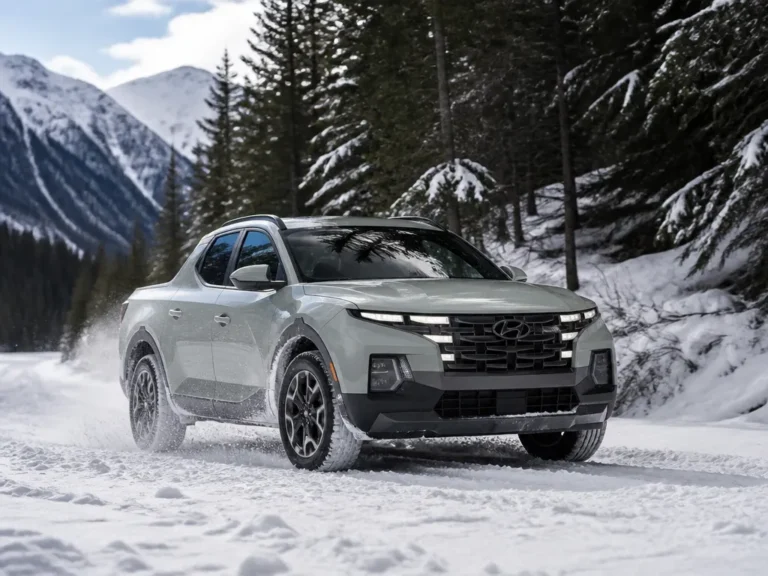
If you searched “hyundai santa cruz in snow and winter driving,” you’re probably wondering if it’ll start on cold mornings, handle slush without getting sketchy, and stop straight when roads turn to ice. This matters even more on a Santa Cruz because traction and tire choice decide whether you feel confident or tense.
Plan on using the right tires (snow-rated if you see real snow), keep pressures correct for cold temps, and use winter traction settings at the first sign of wheelspin. We’ll cover AWD traction behavior, how it accelerates, brakes, and corners in light snow versus deep slush, plus a Santa Cruz winter checklist.
Hyundai Santa Cruz in snow and winter driving is mostly a tire and traction-controls story: light snow and slush are manageable with the right all-weather or snow tires, while deep packed snow and ice demand more clearance and less speed. Use drive and traction modes to limit wheelspin, and prep the car with fresh brakes, wipers, and cold-weather battery strength.
Hyundai Santa Cruz In Snow And Winter Driving
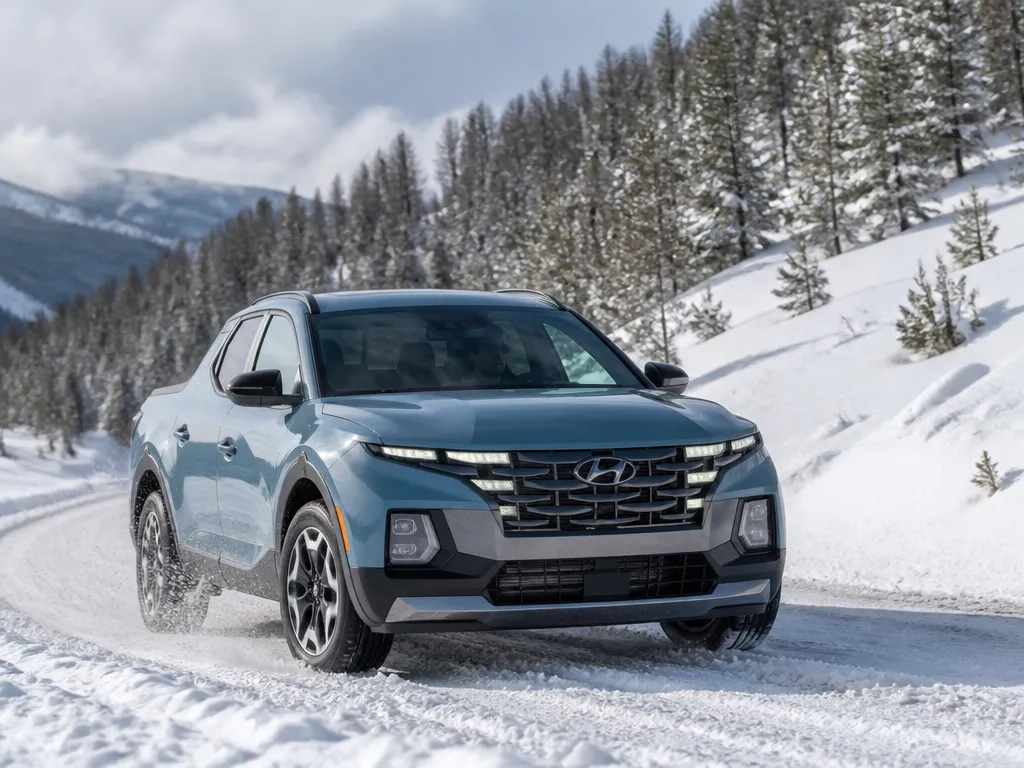
The Santa Cruz can be a confident daily in light snow when you match it with winter tires and drive like you have extra stopping distance. Expect more caution in slush and deep snow, where traction drop, wheel spin, and limited ground clearance become the real-world limiters.
Quick Take: Light Snow, Slush, Deep Snow, And Ice
In light snow, the truck-like stance and available all-wheel drive make starts and lane-keeping feel manageable, as long as you keep throttle inputs smooth. In slush, the problem shifts from grip to drag and steering feel, because tires can pack up and the vehicle can feel like it is pushing through a wet paste.
In deep snow, traction becomes a climbing game. The Santa Cruz will move, but progress can slow fast once you bury the tread, especially if you have to crest drifts or recover from a stop. On ice, tires and driver technique are everything, because no traction system can create friction out of thin air.
| Winter condition | What you feel in the Santa Cruz | Most effective fix |
|---|---|---|
| Light snow | Stable tracking, reasonable start control | Winter tires and gentle throttle |
| Slush | Reduced grip, steering effort feels odd | Keep tires clean with steady speed, avoid hard launches |
| Deep snow | Frequent wheel spin, slower forward progress | Momentum, lower speed planning, tire choice first |
| Black ice | Unpredictable slip when braking or turning | Winter tires, minimal steering and throttle changes |
What Matters Most On The Santa Cruz In Winter?
Tires are the biggest lever you control. All-weather tires can be fine for mild winters, but true winter tires (with the right rubber and tread design) usually make the biggest difference in braking and steering confidence when temperatures drop.
Drivetrain traction behavior and tire slip management matter, too. All-wheel drive helps you pull away with less drama, but it does not replace good tires, proper tire pressures, and spacing to traffic.
Santa Cruz ground clearance and tire size trade-offs also affect winter outcomes. Fatter tires can improve snow contact, but they may increase drag in deep slush, and any reduction in clearance can matter when you crest snowbanks or scrape compacted ridges.
“On snow, the goal is less wheel spin and more tire bite. Smooth throttle and earlier braking do more for you than trying to power through.”
Who The Santa Cruz Fits Best In Snowy Regions
The Santa Cruz fits best for drivers who want a compact truck feel without giving up daily usability, and who are willing to run proper winter tires. If you mostly see light to moderate snow, it can be a comfortable, predictable commuter with the right setup and conservative driving.
Drivers in areas with frequent slush and deep accumulations should go in with realistic expectations. The vehicle can handle the conditions, but the combination of traction limits, tire packing, and clearance means you will want better tires, earlier planning, and patience when roads get churned up.
Next up: the Santa Cruz’s AWD traction behavior in winter, including how it reacts when surfaces go from snow to slush and to ice, and what driver inputs help most.
Awd Traction Behavior In Winter
On packed snow, the Santa Cruz tends to feel “ready to move,” then smooths power as soon as the system senses slip. That matters because AWD can still lose traction if the driver asks for torque too quickly, especially when tires first break through the compacted surface.
For example, if the Santa Cruz hits a snow ridge at takeoff, the tires may momentarily spin before the AWD system locks into a usable slip range.
In practice, waiting one extra heartbeat at a stop, then starting with a calm pedal effort, often gets you moving without the traction system working overtime.
| Condition | What you feel | Driver move |
|---|---|---|
| Packed snow | Initial push, then torque smoothing | Progressive throttle from a stop |
| Slush | Slip control chatters, acceleration feels “staged” | Lift slightly and reapply smoothly |
| Deep snow | Wheel spin ramps, then power backs off | Steady momentum, reduce wheel-spin attempts |
Insider tip: If traction control is cycling hard (you feel repeated surging and braking at the wheels), ease off and reset your tires. Restarting with less throttle often gets you out faster than “trying again” immediately at the same pedal angle.
Braking And Steering On Icy Roads
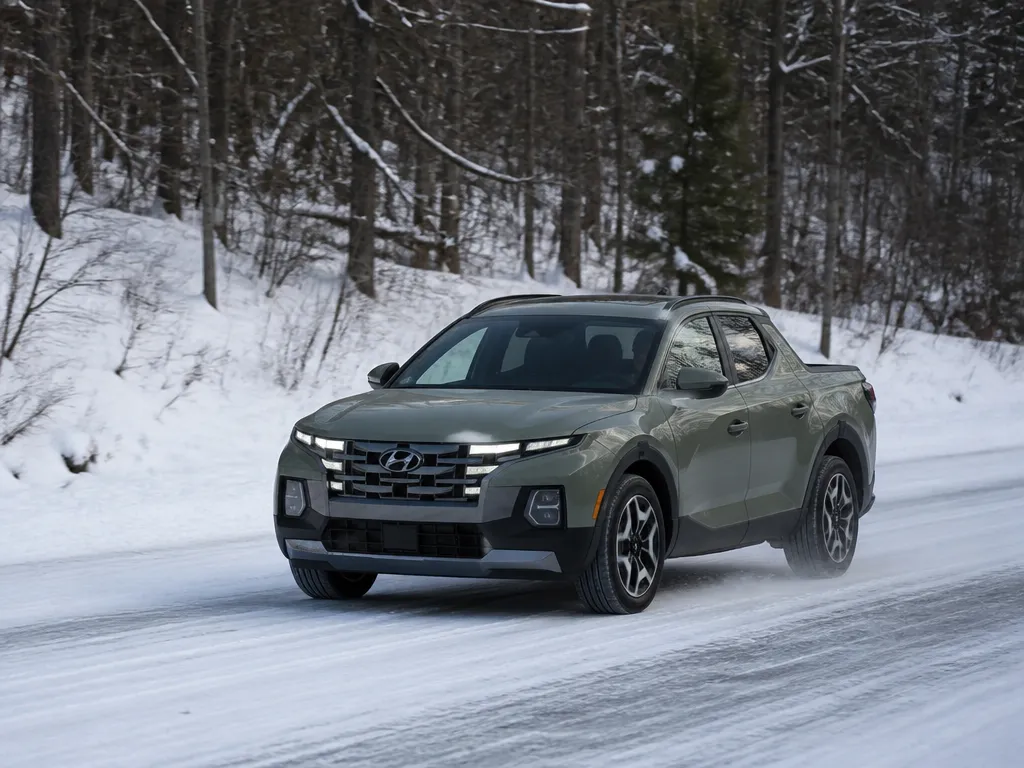
On icy pavement, the Hyundai Santa Cruz braking feel comes down to two things: tire grip and ABS behavior. Expect a firmer pedal with quick pulsing when ABS activates, and expect more pedal travel and longer stops when tires are worn or not winter-rated.
Cold-weather Braking Feel And Abs Clues
Cold tires and cold road film change how the pedal feels. Early in a winter drive, the pedal can seem slightly higher and the car can take extra distance to bite, even if the brakes are mechanically fine.
ABS tells you it is working by cycling the brake pressure. ABS “howling” or loud wheel-speed noise usually means the system is actively preventing wheel lock, and you should keep steady brake pressure instead of stabbing or pumping the pedal.
Stopping Distances In Real Life: Tires Dominate
Real-world stopping distance on ice is mostly a tire problem, not a vehicle electronics problem. All-season tires can feel “okay” on slush but often lose sharp ice grip early, so the Santa Cruz will run out of traction before ABS can make up the difference.
A heavier truck bed load also raises the odds you will hit the same friction ceiling sooner, so braking distances can change with payload.
| Condition | What you’ll feel | What helps most |
|---|---|---|
| Light snow | ABS cycles briefly, steering stays usable | Winter tires, correct pressure |
| Slush | Longer pedal-to-grip delay, more wheel slip | Snow traction tires, clean tread |
| Black ice | ABS cycling quickly, little forward progress late in the stop | Tire choice and patience, extra distance |
Cornering On Snow And Slush: Expect Understeer First
On slippery winter roads, the Santa Cruz typically gets less front-grip first, so the car tends to understeer when you turn in too fast. Ease steering angle and reduce brake or throttle inputs early to regain front-end bite.
Oversteer can happen if the rear steps out under throttle in deeper snow or if the surface is uneven side-to-side. In that situation, small steering corrections and gentle throttle release keep you from overpowering the available traction.
Driving takeaway: If ABS kicks in while you are still turning, prioritize straightening the wheel first. Hold steady braking pressure until the car stabilizes, then add steering back smoothly.
Abs And Traction Intervention Cues: When To Ease Off Vs Hold Steady
When the ABS pulses, treat it like the system is telling you, “more grip is not available.” Keep constant pressure through the pulse cycle, and avoid sudden releases because that can reduce braking efficiency on low-μ ice.
When traction control or stability systems intervene, you may feel engine torque being cut or the vehicle pulling slightly as it finds grip. Ease off throttle right away during those interventions, then resume drive only after you are pointed where you want to go.
Ground Clearance And Snow Packing Risk
Santa Cruz ground clearance is the limiting factor in snow the moment you leave plowed lanes, because ruts, drifts, and hidden snowbanks can catch the front air dam, skid areas, and underbody edges. Once snow packs around those low points, airflow to heat exchangers drops and the ride can feel harsher as the underbody “loads up” with ice.
In practice, approach and departure angles matter more on the Santa Cruz than on many lower-slung cars, especially on curbs, driveways, and graded roads where plows leave a ridge. If you keep your wheels in the trench of cleared pavement, you reduce the chance of scraping, but you also risk hitting deeper slush where spray and ice form.
Where Snow Packs First On A Pickup-like Ute
Pickup-style underbodies collect snow differently than sedans, since the frame-like areas and flat surfaces let snow cling and then freeze. The biggest risk is packed snow bridging gaps under the front end and around components that sit low to the ground.
Quick rule: If you hear or feel a scrape, back out and re-route. Continuing often turns a light contact into a bigger underbody snow plug.
Payload And Tire Size Change Your Clearance Margin
Carrying gear in the Santa Cruz bed can lower rear ride height and reduce clearance over ruts, especially when the bed has a box, cooler, or wet sandbags. Tire size changes the effective sidewall protection too, so a shorter tire profile can expose more rim and underbody area to impacts in churned snow.
For example, two owners can drive the “same” road in different conditions, but the loaded one bottoms sooner and packs snow into the underbody faster. That is why clearance problems show up most on return trips when the truck is still carrying supplies.
| Winter Load Factor | What you feel | What to watch |
|---|---|---|
| Bed loaded with tools or supplies | More frequent rear-end contact in ruts | Rear tire contact over uneven snow ridges |
| Heavier passengers + full tank | Faster clearance reduction under braking | Front dip when entering driveways |
| Lower-profile tires | More rim exposure and harsher impacts | Scrapes on splash shields and lower trim |
| Extra roof gear | More crosswind feel, quicker instability in drifts | Sidewall contact in deep, uneven snow |
When To Reroute Or Slow Down
Reroute early if you see plowed snowbanks stacked higher than the front of the vehicle, because speed only helps you slide forward until the underside catches. If you must proceed, slow enough to keep your tires from hitting square edges at full wheel speed, where snow packs into gaps instead of breaking off.
Tire Choice For Santa Cruz Winter Grip
Winter grip on a Santa Cruz depends on the tire compound staying soft in cold weather and the tread pattern cutting through snow and slush. A dedicated winter tire usually gives the biggest improvement for stopping and steering feel when temperatures drop well below freezing.
Dedicated Winter Tires Vs. The All-season Compromise
Dedicating a set of winter tires is the smart move if you see regular snow, icy roads, or long stretches below 40°F (4°C). All-season tires can work for light snow, but they often feel slick sooner in cold weather because their rubber hardens faster and their tread depth and biting edges wear faster under winter conditions.
For a Santa Cruz, the goal is consistent traction for start, brake, and cornering. Winter tires also help reduce the “searching” feeling you get when the tread can no longer generate enough friction in slush or packed snow.
What “Good Snow Tires” Look For
Look for a cold-weather compound, a tread pattern with biting edges for snow and slush, and enough tread depth to maintain predictable braking and steering.
In practice, winter tires make the Santa Cruz feel more predictable when you brake earlier and turn in with less steering correction. Deep slush still demands a slower pace, but the tires are far less likely to lose grip abruptly.
Cold Tire Pressure Guidance (And Why Underinflation Feels Worse)
Tire pressure drops as temperatures drop. A few PSI low can make the tire’s tread sit differently on the road, and that reduces crisp response and traction in snow because the shoulder blocks get overworked and the tread-to-road contact patch becomes less efficient.
Check pressure when the tires are cold, ideally before driving in the morning, and set to the vehicle placard spec for your Santa Cruz. If you keep a couple PSI higher than minimum in harsh winter use, do it cautiously and always stay near the door-jamb recommendation, since overinflation can reduce grip in soft snow.
| Temperature change | Typical pressure effect | What you feel on snow tires |
|---|---|---|
| Warmer to colder (big overnight drop) | Pressure can drop noticeably | Slower response, less stable braking feel, more tread squirm |
| Correctly set to placard spec | Optimal contact patch shape | More consistent steering and stronger, more repeatable stops |
Tread Depth Minimums Before Winter, Plus Keeping Performance Consistent
For winter performance, do not wait until the tire is “near the wear bars.” A practical minimum is about 6/32 in before the season starts, because deeper tread helps maintain snow evacuation and biting edges as you rack up miles.
For example, if the Santa Cruz tires measure near that threshold in early fall, you will likely feel more slip as the snow gets packed or as slush accumulates, even if the tread looks “fine” in dry weather.
Mechanic tip: If you plan one winter set only, prioritize fresh tread depth and correct pressure over chasing the cheapest tire price. On snow, consistency beats marginal tread savings every time.
Drive And Traction Modes To Use
Use the Santa Cruz traction modes to fine-tune how quickly it sends torque when surfaces are slippery, but expect them to work only within the tire grip you have. Snow mode helps you get moving smoother in light snow and packed slush, while it cannot save you from bald tires or pure ice. In deeper snow, the real limiter is usually wheelspin plus loss of momentum, so mode selection alone will not replace careful driving inputs.
Snow Vs. Normal Driving
In normal, dry or lightly wet conditions, leave drive and traction modes in their regular setting so throttle response and drivetrain behavior stay predictable. Switch to a more snow-oriented or traction-biased mode when you see frequent traction control activity, the surface is slushy, or you feel the truck wants to “hunt” for grip on takeoff.
For example, light snow at street speeds often improves with a traction-focused mode because the power delivery stays calmer. Packed snow in parking lots is where it helps most, since short bursts of torque can keep you moving without instantly breaking traction.
Throttle Management With Mode Selection
Mode selection and throttle technique have to work together, because most winter traction problems come from pedal input, not just software. In slippery weather, press the accelerator slower than you think you need, then pause for a half-second if you feel the tires start to slip.
For instance, if the vehicle begins to spin during launch, ease off immediately and reapply with a smaller throttle angle. Repeating that cycle beats flooring it, because repeated hard surges dig the tires in and make the next attempt worse.
Mechanic tip: If traction control is constantly flashing, you are already beyond what that mode can correct. Back off, change your line, and wait for better grip or switch to a route with less ice.
Hill Climbs And Slippery Starts
Before you start a hill in winter, stop spinning. Pick a line with the most packed texture, then initiate the climb in a low-gear feel with the traction mode engaged if your Santa Cruz offers it, keeping throttle steady instead of chasing speed.
For example, starting uphill on glare ice often goes wrong when the driver ramps the pedal to “make it happen.” A traction-biased mode can help reduce sudden torque, but steady inputs are still what prevent axle load from unloading the driven wheels.
| Condition | What to do with modes | Driver input to match |
|---|---|---|
| Packed snow uphill | Use snow/traction-biased mode | Slow, steady throttle, avoid surges |
| Slush-covered ramp | Traction-focused mode | Gentle takeoff, quick correction if wheelspin begins |
| Glare ice | Any mode is limited, prioritize control | Minimal throttle changes, more following distance |
Limits You Cannot Out-mode
No traction or drive mode can replace real grip. Bald or unevenly worn tires, incorrect tire pressure, or slick ice will overwhelm the traction system quickly, especially in corners or during hard braking.
For the Hyundai Santa Cruz, the best outcome comes from pairing the right traction mode with tires that actually grip in your conditions. If you are finding that the vehicle spins quickly even in the best available mode, that is your cue to stop trying new launches and switch to a different approach, like a better route, more gradual speed buildup, or waiting for better conditions.
Santa Cruz Winter Pre-trip Checklist
Before the first storm hits, run this quick Santa Cruz checklist and you will catch the winter issues that cause most roadside problems. Re-check tire pressure after the first cold snap, since pressure drops fast in sub-freezing temps.
Tires First: Pressure, Tread, And Sidewalls
Tires are your snow traction system. Set pressures to the driver-side door jamb placard (cold), then inspect tread and sidewalls like you are buying the tires for winter today.
For example, a small road cut that seems “stable” in summer can open up after repeated freeze-thaw cycles and hard braking.
Brakes In Winter: Rotor And Pad Health, Plus Warning Signs
Cold and slush bring corrosion and grit, so braking feel can change even when parts are fine. Check for uneven pad wear and rotor surface damage you can see through the wheel.
Mechanic tip: If braking feels grabby on ice or you hear new noises after every wet drive, stop guessing and have the pads, rotors, and caliper slides checked.
Battery And Charging Readiness: Cold-crank Confidence
Cold weather makes batteries work harder, and a tired battery can still pass a summer test. Inspect the terminals for corrosion and make sure cables are tight and not rubbing on metal.
| Check | What to look for | Action |
|---|---|---|
| Terminal condition | White crust, greenish corrosion, loose clamps | Clean and secure, then load-test if starting is weak |
| Battery age (practical) | Near the end of its typical lifespan | Get a load test before the coldest weeks |
| Charging system basics | Signs of over-tight belts or charging-related warnings | Have alternator and charging output tested |
Fluids And Visibility: Wipers, Washer Fluid, Defrost, Cabin Comfort
Visibility is where winter driving gets dangerous fast. Confirm wiper condition, fill washer fluid rated for freezing temperatures, and verify defrost performance before the first storm.
In practice, a weak defrost shows up as fog on the inside first. If you see persistent interior fogging even with correct settings, keep working down the air and filter checks.
Cabin Air Filter And Airflow Check For Defogging Effectiveness
Santa Cruz cabin ventilation matters because winter fog is usually moisture trapped and slow to clear. Inspect or replace the cabin air filter if airflow feels weak or defogging takes too long.
After Driving In Slush: Underbody And Wheel-area Rinse
Slush and road salt cling to the underbody and wheel wells, which can lead to corrosion and sticky brake hardware. After a heavy slush day, rinse the wheel area and underbody with clean water when it is safe to do so.
In practice, a quick rinse every few storm cycles is cheaper than fighting corrosion later, especially if you keep the Santa Cruz through multiple winters.
Bottom Line For Snowy Regions
The Hyundai Santa Cruz can be a solid winter commuter in light to moderate snow, especially when you run proper snow tires and drive it with traction in mind. Its weak spot is deep, packed snow and icy grades where low ground clearance and tire choice become the limiting factors.
Best-case Winter Scenario
Santa Cruz is at its best when roads are snowy but still “drivable,” meaning the tires can bite and you are not scraping snow banks for clearance.
In practice, that is plowed streets with a thin slush layer, short unplowed stretches at low speed, and steady braking distance that lets the tires keep working.
In those conditions, the truck-like stance helps you maintain confidence on gentle turns and improves your ability to keep momentum without spinning. The biggest upgrade you can make is tires, because all the traction management in the world is limited by rubber.
Realistic Limits To Respect
Deep packed snow is where the Santa Cruz can feel work-limited. As the tires fill with snow and the underbody gets closer to the surface, traction drops fast and you start “dragging” instead of driving.
Ice is the other hard ceiling. If the surface is shiny and hard, the limiting factor becomes tire compound and tread sip effectiveness, and you should expect longer stopping distances than you get on studded or severe-duty winter tires.
| Winter condition | Typical outcome | Why it matters |
|---|---|---|
| Thin slush, plowed roads | Good control with proper tires | Tire blocks can still evacuate slush and contact pavement |
| Deep packed snow | Spinning and reduced forward progress | Snow buildup and clearance/undercarriage contact reduce bite |
| Shiny glare ice | Traction and braking both suffer | Rubber grip dominates over drivetrain control |
Clearance reality check: avoid snow banks, rutted driveways, and “track” routes where the undercarriage can catch. Even if you clear a ridge, the next rut can stop you.
Upgrades And Habits That Actually Move The Needle
For snowy regions, a real winter tire set (severe snow rated) offers the most useful margin. If you do not want to swap wheels twice a year, at least plan seasonal alignment and balanced tires, then expect less margin on ice and in deep slush.
Pressure management is another big one. Check pressure when tires are cold, and do not ignore the pressure drop after a big temperature swing, since underinflation increases tread squirm and rolling resistance in snow.
When To Choose Something Else
If your winter is mostly glare ice, steep hills, or frequently involves deep packed snow where you cannot count on consistent plowing, the Santa Cruz may feel like the wrong tool. In those areas, consider a vehicle with more winter-focused ground clearance and tire-friendly packaging, and plan for studded or dedicated ice-capable tires.
If your driving is mostly icy commuter roads with tight turnaround schedules, prioritizing severe winter tires and driver technique will help the most, but you still need to be honest about physics. When you routinely hit rutted, unplowed snow, a purpose-built winter setup and more generous clearance make the difference between “gets through” and “gets stuck.”
Quick Summary
Winter confidence in the Hyundai Santa Cruz comes down to the setup described above: use snow-rated tires when you see real snow, keep tire pressure correct for cold temperatures, and use winter traction settings at the first sign of wheelspin.
Light snow is manageable with smooth throttle and early brake planning, while slush can reduce grip, make steering feel heavier, and stretch stopping distances as tires pack up. Deep snow can trigger frequent wheel spin and slower progress, and ice demands smooth inputs because braking gets longer with the wrong tires. The most important takeaway is to prioritize available grip, then drive smoothly and brake earlier.
| Winter condition | What you feel in the Santa Cruz | Most effective fix |
|---|---|---|
| Light snow | Stable tracking, reasonable start control | Winter tires and gentle throttle |
| Slush | Reduced grip, steering effort feels odd | Keep tires clean with steady speed, avoid hard launches |
| Deep snow | Frequent wheel spin, slower forward progress | Momentum, lower speed planning, tire choice first |
| Black ice | Unpredictable slip when braking or turning | Winter tires, minimal steering and throttle changes |
Frequently Asked Questions
Is The Hyundai Santa Cruz Good In Snow, And What Should I Do Before My First Winter Drive?
Yes, it can be a solid winter truck, but your outcome depends more on tires and traction setup than the vehicle badge. Before the season, confirm tread depth, set your mirror and wiper settings for slush, and test your brakes on a quiet street on a cold morning.
What Traction Settings Or Driving Modes Should I Use In Snow In A Hyundai Santa Cruz?
Start by using whatever Snow or Traction Control-related mode your specific Santa Cruz trim and drivetrain supports, then leave it on until you are confident in the surface. In deep slush, reduce throttle and avoid “wheel spin,” because the traction system works best when tires regain grip quickly instead of spinning for long bursts.
Can Hyundai Santa Cruz Brake Well On Icy Roads, And How Much Extra Stopping Distance Should I Expect?
On ice, stopping distance can jump dramatically, and it depends on tire type, tire pressure, and how frozen the surface is. If you are coming from normal dry-road habits, plan for at least 2 to 3 times your usual following distance, and brake earlier than you think you need to.
Why Does My Hyundai Santa Cruz Feel Like It Loses Traction In Snow, And What Are The Most Common Causes?
The biggest culprits are usually summer tires, low tread, incorrect tire pressures for cold weather, or a mismatch between tire grip and your driving style. If traction feels worse than last year, check tire age and tread, look for uneven wear, and make sure you are not running underinflated tires that reduce contact patch performance.
Is It Safe To Use All-season Tires On A Hyundai Santa Cruz In Winter, Or Should I Switch To Winter Tires?
If you live where roads see sustained freezing temperatures and packed snow, winter tires are the safer bet because they maintain grip as temperatures drop. All-season tires can work for light snow and short commutes, but when it gets truly icy, performance is usually not as consistent as dedicated winter rubber.
What Is The Best Way To Drive A Hyundai Santa Cruz In Snow To Avoid Getting Stuck, Especially With Hills?
Use smooth, low throttle inputs and keep momentum without spinning the tires, because repeated spin makes you dig a rut. If you are headed up a hill, try to start with traction first, keep a steady pace, and if you lose grip, back down and re-attempt rather than hammering the accelerator.