


Is your GMC Terrain feeling sketchy on packed snow, or are you worried an icy commute will spin the wheels too easily? Between front-wheel-drive models and the AWD versions with a transfer case, traction control behavior changes a lot. Here’s what to expect from the Terrain in winter, plus how to set it up and drive it so you stay confident.
Expect the Terrain to feel “better than FWD alone” only if you have AWD and good winter tires.
Traction and stability control will step in fast on slick starts, usually by cutting power and braking a slipping wheel. Ground clearance still limits deep snow and ruts, so tires and speed matter as much as drivetrain.
GMC Terrain in snow and winter driving is mostly about tire grip, drivetrain (FWD vs AWD), and how stability control reacts when wheels slip. On packed snow, AWD can reduce wheelspin at takeoff, but you still need 3 inches of clearance to feel safe. On ice, expect ABS to pulse during hard stops and longer stopping distances.
Gmc Terrain In Snow And Winter Driving
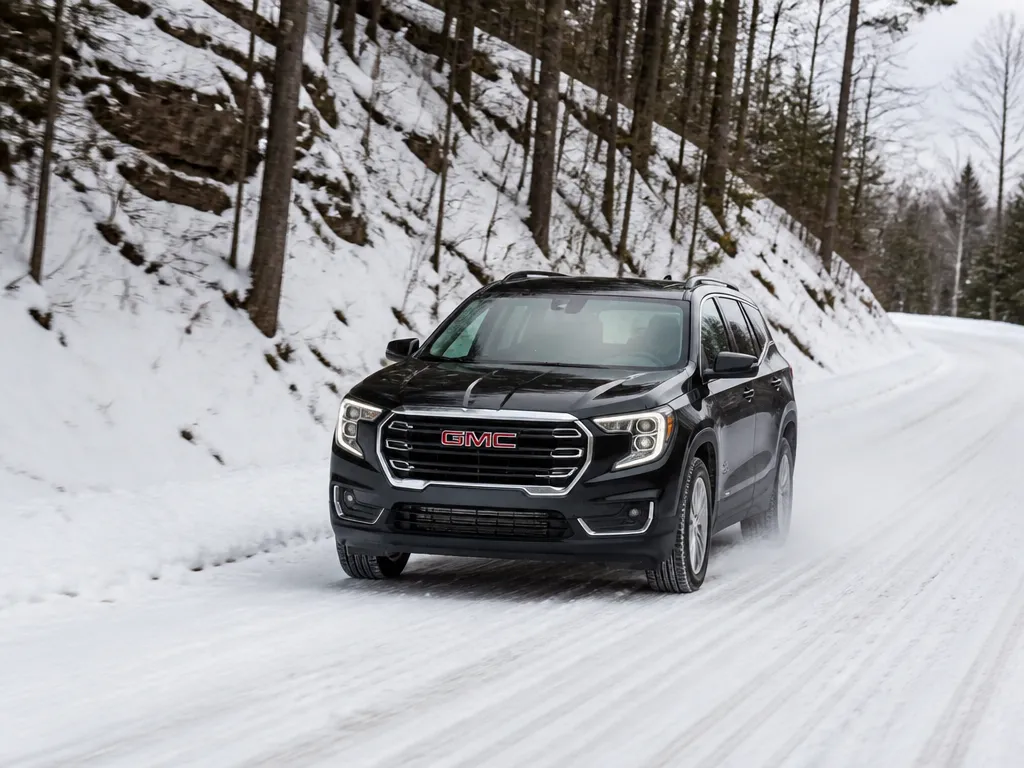
The GMC Terrain is a compact crossover that can handle light snow and cold roads well when it has the right tires and traction settings, but it is still limited by its tire grip and ground clearance. On icy pavement, the Terrain’s real-world limit is usually the tires and driver inputs, not the nameplate. Expect slower throttle response, more frequent traction control intervention, and less tolerance for late braking than you get in dry weather.
Model year and drivetrain choice change how the Terrain behaves under load. Even with similar engines, a front-wheel-drive setup sends all torque to the front axle, so traction control works harder during starts on slick inclines. An all-wheel-drive setup can reduce wheel slip during acceleration and help maintain a steadier line when roads turn from packed snow to slush.
What To Expect From A Compact Crossover In Winter
Terrain ground clearance helps clear shallow snow and slush, but it does not protect you from hidden ice, frozen ruts, or icy ramps into parking lots. Weight transfer is a big deal on this kind of vehicle, the nose dives under braking, and that shifts grip away from the rear even if the car feels stable.
In practice, the Terrain will feel predictable when you keep inputs smooth, then get abrupt the moment a tire breaks traction.
For snow driving, the biggest difference is how often the vehicle applies traction control. Traction control that is constantly pulsing is a sign you are beyond tire grip, not a sign the car is “fine but sporty.” ABS will also cycle during hard stops on ice, which is normal, but pedal feel can be misleading, a longer distance is the reality on ice regardless of driver skill.
Quick Split: Fwd Vs Awd Variants (And Why It Matters)
FWD Terrain variants are easiest to predict in winter when you drive for momentum, because the front tires do both steering and power delivery. That means starting on a hill or merging from a stop is where you feel traction control the most. AWD helps by distributing torque to the axle with the most grip, which reduces wheel spin and keeps the steering more consistent while accelerating.
For example, a FWD Terrain can power through light snow on level roads, then struggle when you try to add power on glare ice. An AWD Terrain typically does better in the same situation, but it still cannot fix poor tire choice, worn tread, or mismatched tires. AWD does not replace braking distance, so the slippery part of the equation is unchanged.
Systems That Affect Snow Grip: Traction Control, Stability Control, Abs
Traction control (TCS) prevents excessive wheel spin by reducing engine torque and, depending on the vehicle, using brake pulses. Stability control (StabiliTrak on many GM vehicles) intervenes when steering angle and actual yaw rate do not match, it can brake individual wheels and adjust torque to regain the intended path. ABS prevents wheel lock during braking so you keep steering authority, but it still prioritizes stopping, not cornering.
In practice, these systems make the Terrain more manageable than a car without them, but they also mask driver mistakes until you hit a certain grip threshold. When you feel repeated TCS or stability activity, the right response is to back off and reduce speed, not to “power through.”
Mechanic’s note: On the Terrain, the driver “feel” is usually the first warning system you get, if the steering goes light during acceleration or the front end slips first, the tires are telling you you are out of traction.
Fwd Vs Awd Terrain Snow Behavior
FWD Terrain builds traction only through the front tires, so it tends to do better on packed snow and steady climbs when you have good tires. AWD Terrain spreads drive torque to all four wheels, which helps you start moving and keep forward motion on slick, uneven patches, but it cannot overcome bald or mismatched tires.
Tire contact beats drivetrain on both layouts, because every traction system is still limited by what the tire can bite. In real winter driving, the Terrain’s FWD or AWD can only react to slip after the rubber has already lost grip on ice or deep slush.
For example, in a snow-covered parking lot with rutted wheel tracks, an AWD Terrain often keeps moving without digging in as quickly because it can pull even when one tire is slightly unloaded in a rut. In the same spot, a FWD Terrain tends to rely on front tire bite and may need more careful throttle, or it will climb the rut edge rather than follow the track.
Tire contact patch matters more than drivetrain in deep snow. As snow gets deeper, the tires need to displace snow and reach firmer ground, and that job is mostly tire design and size, not whether torque goes to the front or all wheels.
For deep, churned snow, tire choice is the big lever. Winter tires with softer compound and snow-specific tread blocks hold onto moving snow and regain grip as temperatures drop, while all-seasons often feel “bouncy” and lose braking confidence sooner on slush-ice transitions.
| Trait | FWD Terrain | AWD Terrain |
|---|---|---|
| Best snow behavior | Packed snow, level or gently rolling roads | Variable traction, light to moderate snow with uneven surfaces |
| Common failure mode | Front-end push during steering/braking on ice | Stability control intervention if throttle or braking exceeds grip |
| Deep-snow limitation | Tire reach to firmer ground (contact patch) is the bottleneck | Tire reach to firmer ground (contact patch) is still the bottleneck |
Ground clearance and AWD differences: Both FWD and AWD Terrain can bottom out if snowbanks build up under the front fascia or skid areas, and AWD does not raise ride height by itself.
In practice, AWD can feel more capable until the tires lose the ability to climb, then the vehicle becomes just as dependent on clearance and traction.
Insider tip: In rutted snow, keep steering inputs small. Sudden steering plus throttle unloads one front contact patch on both setups, and that is when traction control can’t “save” you because the tire is already sliding.
Packed Snow Vs Light Snow
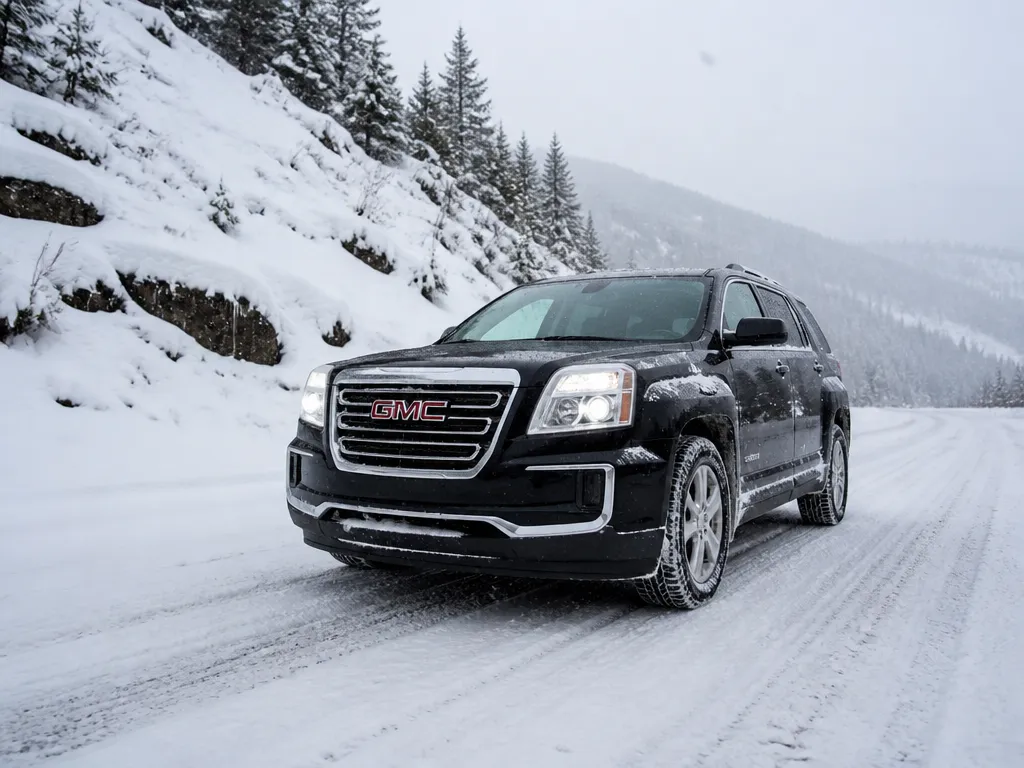
Packed snow gives the GMC Terrain a firm, predictable surface where traction control can work without chasing changing grip every second. Light, powdery snow often feels “slippery” at first, then turns into a bogging problem because the tires lose their ability to bite and the tread cannot stay engaged.
Starting from a stop on packed snow, the Terrain’s throttle response usually feels muted compared to dry pavement. Roll into the gas smoothly and expect a brief traction-control intervention, then a steadier push once the tires find an edge in the packed layer. In typical driving, wheelspin events are short and controlled, especially if you avoid “stall and catch up” throttle habits.
Light, powdery snow is where momentum helps the Terrain more than brute throttle. The tires need a clear path to channel snow aside; if you accelerate too hard, the tread may “float” on top and you dig a shallow trench. The result is slower starts, more belt slippage or wheelspin, and less confidence because grip keeps changing as the tire clears and refills the contact patch.
In practice, light snow often rewards slightly earlier throttle application and maintaining a consistent speed through turns. Terrain movement is steadier when you avoid sudden transitions, but it can still bog down at intersections and in deeper drifts where there is little packed base beneath the powder. Powder over ice is the worst combo, because the tire can spin on top of the ice and traction control cannot create true friction where none exists.
| Road condition | Acceleration expectation | Slip event behavior | Driver confidence |
|---|---|---|---|
| Packed snow | Moderate, controllable with gentle throttle | Short, managed traction-control corrections | Medium to high (within limits) |
| Light, powdery snow | Slower, needs momentum and smooth inputs | Frequent “searching” for traction, occasional deeper digging | Low to medium (grip feels inconsistent) |
“Powder is less about maximum traction and more about staying pointed and keeping the tires from losing the contact patch. If the front end starts to feel vague, ease off and re-establish a clean, steady push.”
Icy patches are a special case that can ride inside both packed and powder scenarios, and traction control cannot fully compensate. Ice traction fades quickly, so you may feel the Terrain surge and then abruptly reduce torque, even with a light pedal. When the surface changes from packed snow to ice in the same stretch, wheelspin correction can come so fast that your confidence drops even if you are driving carefully.
Confidence rating, driver-managed limits vs system help, comes down to how “available” grip is. Packed snow typically gives the Terrain enough consistent friction for driver inputs to stay predictable, so system help improves confidence when used gently. Light powder creates a moving target for the tires, so system help can feel like it is intervening constantly, which is why the confidence rating is lower and requires smaller throttle changes and more distance.
Traction Control Response In Winter
GMC Terrain’s traction control (TC) and stability control (StabiliTrak on many GM products) react fast when a drive wheel spins by cutting engine torque and, when needed, applying the brake on the slipping wheel to redirect force. In snow and ice this can feel like the SUV is “hesitating” or pulsing under acceleration, especially when you press the throttle hard or too early in a turn.
For example, a FWD Terrain usually has TC working mainly through front-wheel slip control, so it tends to feel like it is sanding the throttle down while it fights understeer. An AWD Terrain can move torque distribution to help, but it still needs TC and stability to manage differing traction at each contact patch, so the “pulsing” sensation can still show up in deep snow or icy ruts.
Driver takeaway for GMC Terrain: If you feel TC pulsing, treat it as a traction limit warning. Back off smoothly, keep steering inputs steady, and add throttle gradually so the system can manage slip without “dueling” you.
Braking And Abs On Snow
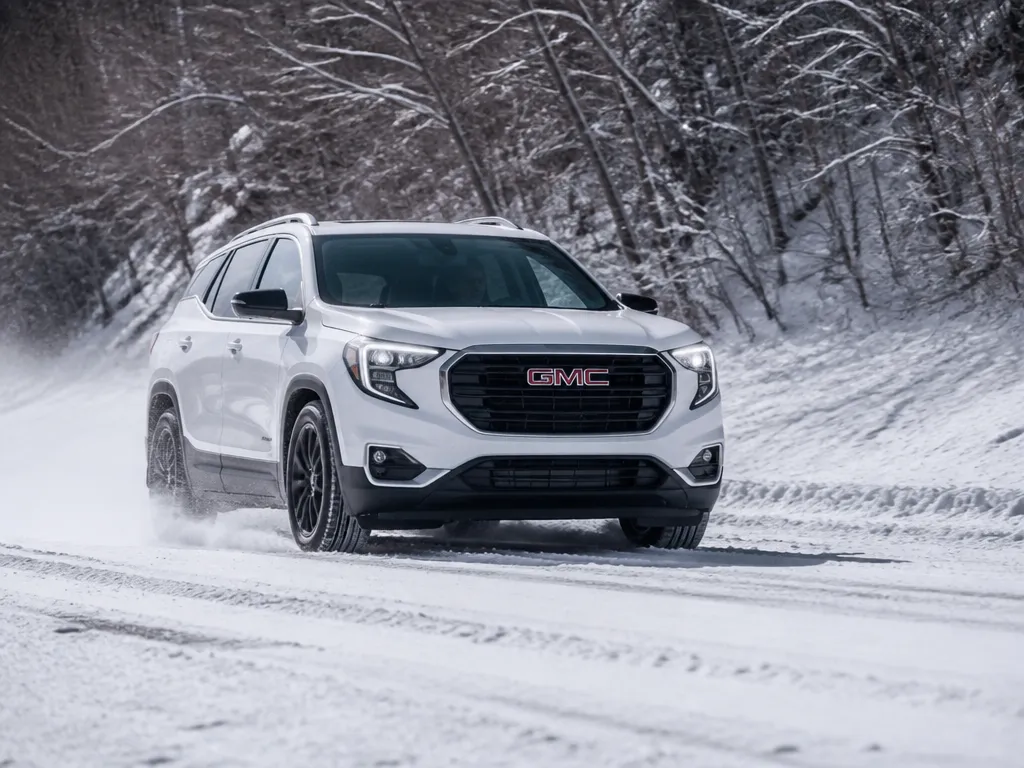
Snow and ice change braking from a “rubber on asphalt” problem into a “tires need grip” problem, so the same pedal press can slow you much less than you expect. ABS on a GMC Terrain still works, but the stopping distance on ice can be dramatically longer because traction is limited even when wheels stay near the point of lockup.
For example, if the road surface is mixed snow and bare patches, ABS may engage, release, and re-engage as different tires find different friction levels. That cycling can feel uneven, but it is still the system trying to keep you steerable while grip varies from lane to lane.
Insider tip: If you feel the pedal pulse, keep holding steady pressure and aim for the lane you want, not the exact obstacle you are passing. Lift and reapply only if the car is already sliding and you need stability first.
Ground Clearance And Underbody Risk
GMC Terrain crossovers in winter are clearance-driven vehicles, meaning deep snow and curb ruts can drag the front lip or catch the underside long before traction systems run out. The risk is highest when you crest an unseen drift, cross a plowed berm, or try to “straight-line” through ruts that shift the chassis side to side.
Where Snow Piles Up Under The Terrain
Snow tends to pack the front air dam and the leading edges of the underbody where airflow slows and ice forms. Suspension cradle areas and the space behind the front crossmember can trap snow that later freezes, increasing the odds of underside contact on the next bump.
FWD Terrain trims generally feel the same underbody risk as AWD trims since both layouts share the same crossover underbody geometry, but AWD adds drivetrain components that can be exposed if the vehicle gets high-centered. The practical point is simple: snow blockage and ice buildup can turn “a little scrape” into a hard stuck situation.
Ruts, Plowed Berms, And Why Clearance Changes Your Angles
Ruts reduce effective clearance because the tires drop into a trough and the chassis rides lower relative to the road surface. Approach angle is your enemy at the front, and departure angle hurts when you come out of a drift or climb over a berm with the rear axle still weighted in snow.
For winter driving on a GMC Terrain, the most common damage scenario is not spinning tires, it is scraping the front lower edge or getting high-centered when a drift hides a ridge. Keeping the tire path straight and slow reduces the “see-saw” motion that can force the chassis into the snowbank.
| Winter obstacle | What you feel | Underside risk | Driver fix |
|---|---|---|---|
| Plowed berm at an intersection | Front dips, then hits a ridge | Front lip scrape | Approach at an angle that clears the lip, then straighten |
| Center ruts | Wheel travel limits, steering gets “tighter” | High-centering on the crossmember | Follow the clearer lane, avoid riding the rut edges |
| Unseen drift over packed snow | Unexpected bump followed by loss of motion | Chassis contacts drift top | Stop early, re-check, then creep through |
Practical rule: if you cannot see the bottom of the dip, treat it like a hidden speed bump. Slow down early so the Terrain climbs gently instead of dropping into it.
Best Practices To Avoid Getting High-centered
Slow approach is the big one. Momentum helps traction, but too much speed makes the underside hit harder and can lock the suspension into a harsh angle before the tires climb out.
If You Get High-centered: What To Do First
When the Terrain hangs up, wheelspin makes the situation worse because it polishes and packs snow tighter around the underbody. The first move is to stop, set the parking brake, and check what is actually touching (front lip, crossmember, or a trapped chunk).
In practice, free the contact point before you attempt a restart. Use a shovel or ice scraper to clear snow from around the area that is grounded, then try creeping forward and backward gently to get the tires back into a workable grip surface.
Cold Start And Winter Readiness
A strong cold start is mostly about battery capacity and fuel vapor readiness. In freezing weather, a GMC Terrain with a weak battery often cranks slowly, then either catches late or stumbles for a second before settling into a normal idle.
Battery Health In Cold Temps (Starting Reliability)
Cold batteries act smaller because chemical reactions slow down. A Terrain owner usually notices weak-battery symptoms before winter gets serious: slow cranking speed, dim interior lights while cranking, a clicking sound from the starter area, and a delay in engine start timing.
For winter operation, treat the battery like a wear item even if it “still starts.” The big tell is trend behavior, if the start gets slower each cold morning, the battery is already losing reserve for the coldest nights.
Insider tip from the bay: if a Terrain needs “one more crank” every cold snap, the problem is usually capacity loss, not a mysterious electrical fault. Start testing load voltage before throwing parts at it.
Defrost And Visibility Priorities
Visibility is the first safety system you drive through snow with. A Terrain’s front windshield clearing matters most, because you need a clean forward view before you even think about rear window defogging or side glass.
In real conditions, you will usually see rear/side fogging come and go as airflow changes, but a partially blocked windshield turns traction-limiting tire slip into a visibility-limiting crash risk. Use the defrost setting early, then switch to a stable vented airflow pattern once the glass is clear so the system can keep up rather than constantly cycling at high demand.
Warm-up Approach For Drivability And Drivetrain Response
Engine warm-up in winter is about letting oil circulate and reach usable viscosity, not idling for long stretches. On a GMC Terrain, a longer idle can raise idle stability without improving traction since tires and brakes still need heat from real driving.
Start the engine, clear the windshield, then drive gently for the first few minutes. Smooth throttle and gradual braking reduce driveline shock, especially when the pavement is slick and the front tires (or all four, on AWD) are searching for grip.
| Condition | What you’ll feel | Driver adjustment |
|---|---|---|
| First 1 to 5 minutes, subfreezing | Higher steering effort, slower response | Light throttle, no sudden stops |
| Cold rain mixed with slush | Tire slip under small inputs | Increase following distance, ease off early |
| Repeated short trips | Moisture and poor drying | Use defrost smartly, dry the cabin |
Tire Pressure Drop And Winter Traction Control Behavior
Tire pressure drops when temperatures drop because air contracts, usually fast enough that you can be underinflated by morning. On a Terrain, low pressure increases sidewall flex and heat buildup while reducing the tire’s contact consistency, which can feel like vague steering and longer stopping distances on snow and slush.
Underinflation also changes how traction control and ABS intervene. You may notice ABS cycling sooner on slushy surfaces and traction control blending more frequently because the tires dig in and slip in less predictable ways.
Best Tires For Gmc Terrain Snow Grip
For a GMC Terrain, winter traction comes down to tire type and compound, plus how you size and maintain pressure in cold weather. A true winter tire with the Three-Peak Mountain Snowflake symbol grabs snow and slush much better than most “all-season” tires, especially when temperatures stay below freezing.
All-season Vs Dedicated Winter Tires (What Changes On Snow And Ice)
All-season tires are built for mixed temps and light snow, so they rely on a compromise tread pattern and a rubber compound that is only “winter-capable” when it is not too cold. Dedicated winter tires use a softer compound that stays flexible in low temps and tread designs that bite through a layer of snow pack.
On the GMC Terrain, the difference shows up fast in stopping and initial turn-in. Ice still demands smooth inputs, but winter tires shorten stopping distances on packed snow and reduce the chance of wheelspin when traction control has to intervene repeatedly.
| Road condition | All-season performance | Three-Peak Mountain Snowflake winter tire performance |
|---|---|---|
| Fresh light snow | Adequate, more slip when you accelerate hard | Better bite and more stable acceleration |
| Packed snow / slush | Grip drops as compound hardens in cold | Consistent traction from softer compound |
| Slushy stop-and-go | Longer stops when tread is worn | Tends to stop shorter with deeper, active sipes |
| Ice | Most grip is limited by physics | Still limited, but improved control with better edges |
What The Three-peak Mountain Snowflake Rating Means
The Three-Peak Mountain Snowflake (3PMSF) symbol means the tire meets a traction standard in snow testing, so it is designed for winter use rather than “all-weather marketing.” That testing requirement is the quickest way to separate real winter tires from all-seasons that only handle cold rain and light flakes.
Shop tip: If you are comparing tires, prioritize the 3PMSF symbol first, then look at tread depth and warranty mileage second. A worn 3PMSF tire can feel like a poor all-season once tread blocks lose their ability to clean and bite.
Sizing And Inflation In Winter (Pressure Is Traction)
Run the correct tire size for your GMC Terrain’s door placard, then follow the placard pressure for cold temperatures. In winter, tire pressure drops as temps fall, and under-inflation reduces contact patch shape and lets the tread deform more than it should, which softens response and can worsen stopping.
Low pressure also increases sidewall flex, so the tread can “roll” under load and lose the sharp contact the sipes need. Keep your gauge in the garage, check when the tires are cold, and don’t chase a warmer-day reading in the middle of a cold snap.
Tread Depth And Replacement Timing (When Worn Tires Turn Slippery)
Tread depth matters because winter traction uses sipes (small biting edges) that need tread blocks to flex and clean. When a winter tire is worn down, the sipes are fewer and shallower, and the tread can fill with slush instead of channeling it away.
Replace winter tires before they are at their limit, especially if you drive a lot in packed snow or salt. A quick rule of thumb: if you feel the tire “skating” earlier than it used to, or you see uneven wear patterns from alignment or suspension, plan replacement rather than waiting for full tread-life charts.
| Wear condition | What you feel in a Terrain | What to do |
|---|---|---|
| Moderate tread, even wear | Predictable braking and steering in packed snow | Keep using, monitor sipes and pressure |
| Low tread, uneven wear | Longer stops, more ABS activity, vague turn-in | Check alignment and replace the tire set soon |
| Near-worn winter tires | Slush buildup, reduced bite, faster hydro-slush feel | Replace before the next heavy snow season |
Snow Tire Mounting Strategy (Full Set Beats Staggered)
On a GMC Terrain, mount winter tires as a full set on the same axle. Mixing tire types or leaving mismatched tread depths can confuse traction control and stability systems because the tires will generate different grip at the same time, especially during braking and cornering transitions.
If you run a staggered setup from the factory (front and rear widths differ), still keep the winter tires paired correctly by position, but keep them consistent within each axle. For best results in snow, avoid mixing an older winter tire with a new one, since the grip difference between tires can show up as tugging under acceleration or ABS pulsing during hard stops.
Snow Technique For Terrain Drivers
GMC Terrain winter traction is won or lost by throttle smoothness and steering discipline, not by leaning on stability control. On slick hills and packed snow, small inputs and early speed reduction keep the AWD system and brake traction strategies working instead of fighting wheel spin.
Terrain is also very sensitive to tire choice and pressure, so treat “driving technique” and “vehicle setup” as one system. Cold pavement plus underinflation or mismatched tread patterns can turn predictable traction into sudden slip, especially on FWD variants when the drive wheels lose load.
Before You Drive: Terrain Winter Setup Checks
Start with tire condition and pressure, because winter grip is mostly mechanical, not electronic. Match all tires to the same tread style and size on the drive axle, and avoid mixing worn and newer tread patterns that can confuse traction behavior.
Check how Terrain reacts to your traction setting and driver mode choices, since many GM systems change throttle mapping and how readily they apply traction control. Driver habits matter here: smooth throttle and early speed reduction reduce how often the stability system has to catch a problem you created with abrupt inputs.
| Check | Why it matters on snow | Quick note for GMC Terrain |
|---|---|---|
| Tire pressure (cold) | Too low reduces steering response and increases tread squirm | Set to the door-jamb spec before heading out in cold temps |
| Tread depth + damage | Shallower tread and sidewall damage lose biting edges | Replace tires that are slick or have irregular wear before winter |
| Traction mode behavior | Changes throttle and traction control intervention timing | Use the intended winter mode for launch and low-speed climbs |
| Driver inputs | Abrupt steering or throttle makes systems intervene more | Apply throttle smoothly and steer earlier, not during the slip |
“When traction is inconsistent, your job is to keep the tires pointed where you want to go and keep power demand steady. Stability control can help, but it cannot replace clean traction.”
Quick Summary
On packed snow, a GMC Terrain feels better in the AWD setup, but only when you also have good winter tires. The article emphasizes that traction control and stability control react quickly on slick starts by cutting engine power and braking a slipping wheel, which can make the car more manageable, but also less tolerant of late or aggressive inputs. It also notes that ground clearance limits how confidently you can handle deep snow and ruts, and that even AWD cannot create grip on ice.
For ice and hard stops, the Terrain’s ABS will pulse, and the reality is longer stopping distances no matter how skilled you are. The drivetrain difference matters most when you add power: FWD sends torque to the front axle, so traction control works harder on steep, slick starts, while AWD can reduce wheelspin and help maintain a steadier line through a transition from packed snow to slush. The biggest action item is switching to properly sized winter tires with the 3-Peak Mountain Snowflake rating, because systems only manage slip after grip is already lost.
| Winter condition | What to expect on Terrain | Driver takeaway |
|---|---|---|
| Packed snow | TCS and stability control intervene quickly, often cutting throttle and braking a slipping wheel. | Keep inputs smooth, and do not assume you can “power through” once systems start cycling constantly. |
| Ice | ABS pulses during hard braking, and stopping distances increase. | Leave extra space and avoid harsh pedal inputs. |
| Deep snow and ruts | Ground clearance is a limiting factor, even with AWD. | Choose tires carefully and limit speed to protect the underbody. |
| Steep starts | FWD traction control works hardest, AWD can reduce wheelspin. | Start gently and plan for more control intervention when traction is marginal. |
Frequently Asked Questions
How Does The Gmc Terrain Handle In Snow, And What Drivetrain Setup Is Best?
Traction is mainly about tire grip and drivetrain, and the Terrain’s AWD generally gives you better launch and mid-corner traction than FWD when roads get slippery. If you can, run winter-rated tires, because they do more for stopping and control than drivetrain choice alone.
What Winter Tires Are Most Important For A Gmc Terrain, And Should I Use All-season Or Snow Tires?
Use true winter tires if you drive where temps often drop below about 45°F (7°C) or you see regular snow, since they stay softer and bite better than all-seasons in cold weather. If you only see light snow, you still want a severe-weather rated tire, but winter tires are the safer bet for consistent grip.
Does The Gmc Terrain’s Awd Lock Up Or Help Much When Getting Stuck In Snow?
Most AWD systems help you get moving by managing torque to reduce wheel spin, but they do not replace traction when tires lack grip. If you are digging out, focus on getting clean contact, use steady throttle, and avoid repeated full-throttle attempts that just spin and pack snow deeper.
What Should I Check On My Gmc Terrain Before Winter So It Starts And Drives Reliably?
Check battery health and charging output, ensure the wiper blades are winter-capable, and verify the tire tread is deep enough for snow traction. Also confirm the brakes feel smooth and responsive, because cold temps can amplify any existing brake issues you might not notice in warmer weather.
How Do I Reduce Brake Risk On A Gmc Terrain In Winter Snow And Slush?
Brake with lighter, earlier pressure and keep following distance, because slush and thin ice reduce friction quickly. If your ABS kicks on frequently, slow down and change your line, and if you notice pulling, grinding, or long stopping distances, get the brakes inspected before the season gets worse.
What’s The Most Common Mistake People Make Driving A Gmc Terrain In Snow?
They over-trust AWD and keep driving too fast for the tires and road conditions. AWD helps you accelerate, but it does not make icy stopping distances shorter, so reduce speed and increase space, especially at intersections and bridges where ice forms first.