


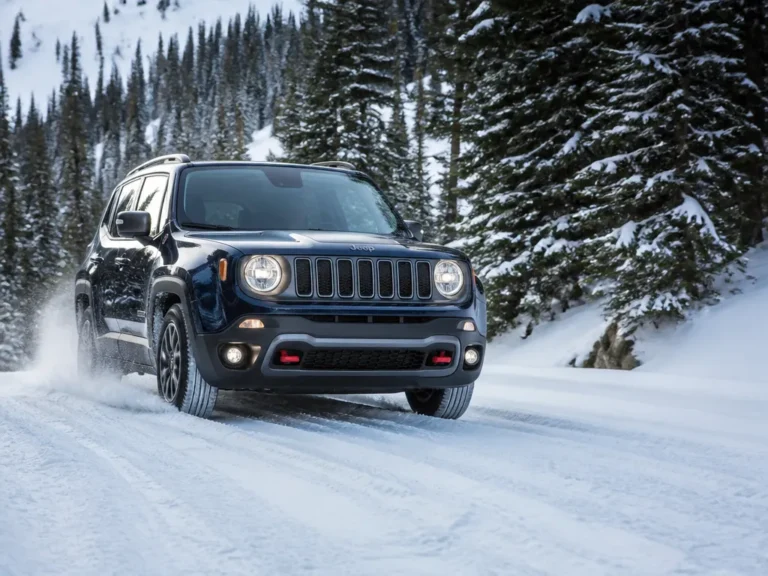
My Renegade feels sketchy the first time the road turns to slush, and I keep wondering if I’m asking too much of the drivetrain. Are AWD versions better in snow than FWD, and which traction mode should you run when the tires start slipping? This is a practical breakdown of how a Jeep Renegade typically behaves in winter and what to check before the storm hits.
AWD is usually the safer choice for winter grip, but tire condition matters more than trim. Expect traction control to intervene sooner on ice, so braking distance and corner speed need to tighten up. You will also get a checklist for winter tires, correct pressures, and ground-clearance habits so the Renegade stays predictable.
Jeep Renegade in snow and winter driving depends heavily on drivetrain and tires. AWD generally helps acceleration on packed snow, while traction control cuts torque on ice within seconds. Plan for longer stopping distances, slower turns, and smoother throttle. A good winter tire and 1-2 psi lower pressure (when cold, per your placard) can make the biggest difference.
Jeep Renegade In Snow And Winter Driving
Snow performance in a Renegade comes down to a simple stack: the tires do most of the work, the drivetrain manages torque transfer, and your inputs decide whether traction is available. With the right tires and conservative throttle, the Renegade can feel steady on packed snow and slushy roads, then it turns unpredictable fast once you run out of tire grip on ice.
What “Good In Snow” Really Depends On
Good snow traction starts at the contact patch. All-season tires can surprise you on light snow, but they usually lose consistency on cold, compacted snow and especially on slick ice. Snow tires (or winter-oriented all-weather tires) keep tread blocks pliable and water channels open so the tire can bite instead of skating.
Drivetrain helps, but it cannot fix a tire that is already out of grip. In low-traction conditions, the Renegade’s stability and traction control will intervene early, which is a good safety net, but it also limits how aggressively you can accelerate or turn before slip starts.
For real-world winter behavior, rank these in order:
Where The Renegade Feels Confident Vs Where Traction Drops Fast
On packed snow, especially when roads are driven in and not glassy, the Renegade typically feels manageable because the tire can find resistance and the drivetrain can keep wheels from spinning as easily. On slush, momentum matters, but steady throttle helps prevent the “dig and spin” cycle that scrapes traction away.
On glare ice, traction drops quickly because there is little to no mechanical bite available. In that situation, hard acceleration, late braking, or fast steering inputs can overwhelm the traction control logic and you will feel it through wheelspin, skidding, and longer stopping distances.
Mechanic tip: If you feel the stability control working (bucking sensation, audible chime), reduce throttle and straighten the wheels before you try to steer harder.
| Winter condition | Renegade tendency | What usually causes the problem |
|---|---|---|
| Packed snow | Confident with good winter tires | Too much throttle causing wheel slip |
| Slush | Usually controllable | Brake or steering inputs that unload tires |
| Glare ice | Grip disappears quickly | Low tire bite plus traction control limits |
Ground clearance and wheel-and-tire setup also matter. Bigger sidewall tire height helps a bit over ruts and broken snow, but too-low tire pressure or worn tires turn small obstacles into contact problems and faster slippage.
Renegade Drivetrain Choices Compared
Renegade drivetrains change winter behavior mainly through how quickly torque reaches the wheels with grip and how often the system can shuffle traction mid-corner.
In practice, all-wheel drive (AWD) gives steadier launches and fewer “one-wheel spin” moments than front-wheel drive (FWD), but it still depends heavily on tires and how you use throttle.
Fwd Vs Awd: What Changes On Snow And Ice
FWD on packed snow typically feels more predictable on gentle starts because the front tires are always the ones doing the work, but you can get sharp traction-control intervention when you exceed available grip. Mid-corner slip is usually more noticeable than in AWD, since the rear axle has no drive torque to help stabilize the vehicle during throttle changes.
AWD improves curb-to-curb confidence because it can send torque to the axle with more traction when the front wheels start to slip. AWD also tends to reduce the “power-on push” feel when you add throttle exiting a turn, but it can still break traction if you drive like the surface is dry.
| Setup | Launch traction | Mid-corner behavior | Driver confidence |
|---|---|---|---|
| FWD | Good with clean packed snow and smooth throttle | More likely to show front-end slip when you steer and accelerate together | Highest when driving slow and linear |
| AWD | Less wheel spin, better traction when conditions vary side to side | Usually smoother during throttle changes, less abrupt regain of grip | Higher when roads are uneven, slushy, or mixed-traction |
Awd Engagement Feel And Selectable Drive Modes
Renegade AWD (where equipped) uses an electronic strategy that typically waits until it detects wheel slip, then transfers torque to improve traction. That means you can feel a slight “grab” after the system senses spin, especially on icy intersections where grip changes every rotation.
Selectable traction or drive modes, if your trim has them, are meant to change throttle mapping, traction-control aggressiveness, and sometimes how soon the system responds. On snow, you want the mode that prioritizes stability and earlier traction control intervention, since delayed torque delivery can lead to a longer spin and more loss of momentum.
Snow/ice Bias: Packed Snow, Slush, And Icy Intersections
Packed snow usually favors both FWD and AWD if your tires are correct, because the tire’s grip surface is consistent. FWD can do well when you accelerate smoothly and avoid sudden steering inputs, while AWD helps when the left and right sides of the lane get different traction.
Slush and icy intersections punish delayed torque delivery, since tires pass through “thin grip” pockets quickly. AWD generally helps you maintain momentum through these transitions because it reacts to slip faster than a driver can modulate throttle by feel, though you should still avoid flooring it from a stop.
Practical takeaway: On Renegade, driveline capability can’t beat bad tires. The best snow setup is the one with fresh winter-rated tires and a mode that keeps traction control working early.
Traction Control And Stability Behavior
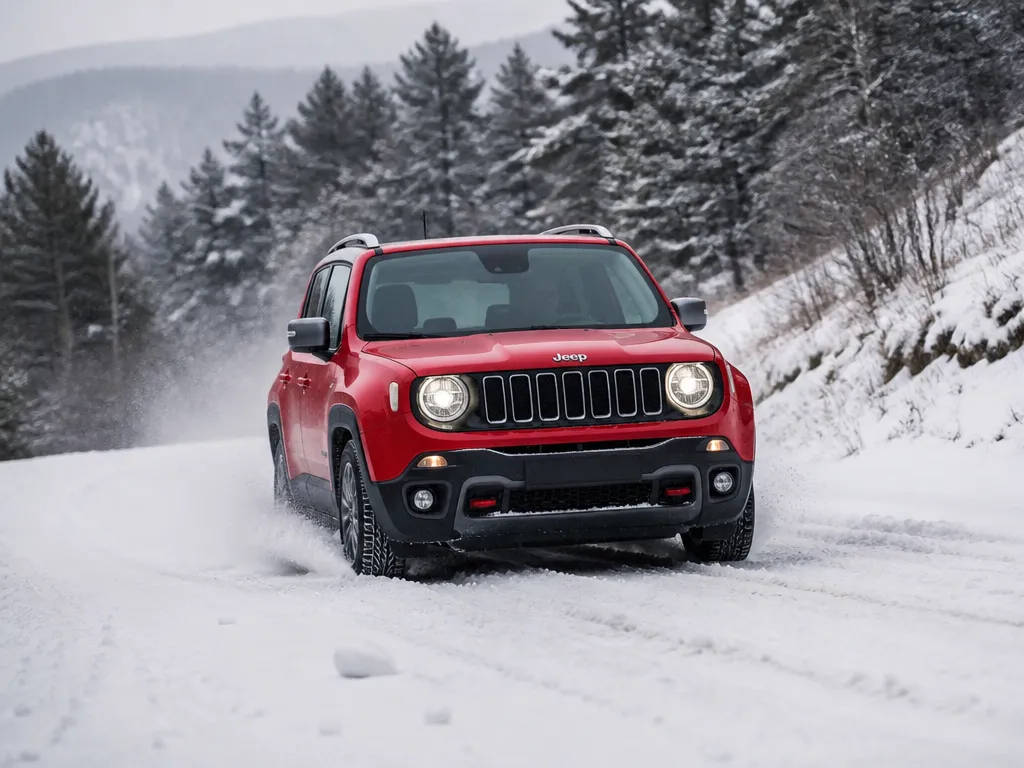
Jeep Renegade’s stability and traction systems manage wheel slip by cutting engine torque and, when needed, braking individual wheels while tracking steering angle and yaw. On snow and ice, you feel this as gentle power reduction during throttle input, paired with controlled brake pulses during hard stops. The system can help you stay pointed where you intend, but it cannot replace good tires and careful pedal inputs.
What Esc And Traction Control Do On Ice
ESC (electronic stability control) is the “bigger picture” controller, while traction control focuses on driving-wheel slip. When the computer detects a wheel spinning faster than the rest, it interrupts power delivery, then can brake that same wheel to transfer torque to the wheel with grip.
For drivers, the most noticeable change is throttle management. During acceleration on ice, the Renegade may feel like it gets pulled back mid-pedal, then re-applies power in short bursts as traction returns. This is normal control behavior, but repeated heavy intervention usually means you are exceeding available tire grip.
Braking On Low-μ Surfaces: Abs Feel Expectations
ABS is the key player during braking on low-friction pavement, snow, and packed slush. ABS cycles pressure to prevent wheel lock, so the pedal may pulse and you may hear a fast clicking or growling from the brakes.
Renegade owners commonly misread this feedback as a “problem,” but ABS is doing its job when the pedal vibrates under braking. The expectation is firm pedal pressure with intermittent pulsing under maximum stop attempts, especially on glare ice or uneven ruts where different wheels see different traction.
Quick reality check: If the pedal goes to the floor, braking is weak, or the vehicle pulls hard to one side, that is not “normal ABS.”
Cornering Behavior And Weight Transfer
On snow, the Renegade’s front axle steering and traction limits often produce a push sensation first, especially if you lift mid-corner. A front-end push (understeer) happens when the front tires lose grip before the rear has a chance to rotate, and the vehicle resists turning more than you expect.
Rear slip can happen if you accelerate mid-corner on slippery surfaces, but ESC tries to contain it by reducing engine torque and selectively braking. The practical takeaway is simple: entering too fast and then holding throttle through a turn increases the chance of rear instability, while smooth throttle on corner exit helps the stability system stay ahead of the problem.
If Equipped: Winter Hill-start And Low-speed Help
Certain Renegade variants can include driver aids that help with low-speed traction and hill starts. In winter conditions, these systems may feel conservative, delaying torque delivery or smoothing creep behavior to keep the driveline from breaking traction on the first few wheel rotations.
Hill-start related behavior should feel like reduced rollback when you’re stopped on a slope, paired with a smoother takeoff. If the vehicle suddenly feels unusually slow to respond at very low speed or repeatedly “fights” your throttle, stop and reassess tire grip and pressures first, since icy contact patches exaggerate how often the traction logic intervenes.
| What you feel in winter driving | Likely system behavior | Owner takeaway |
|---|---|---|
| Power feels “pulled back” during acceleration | Traction control cutting engine torque and/or braking a slipping wheel | Back off slightly, re-accelerate smoothly, and prioritize tire traction |
| Pulsing pedal during hard braking | ABS cycling brake pressure to prevent wheel lock | Keep firm braking, steer cautiously, expect longer stopping distances |
| Front end doesn’t turn as sharply as expected | Front tire grip limit leading to understeer | Reduce entry speed, add steering input more gently, exit with smoother throttle |
Packed Snow, Slush, Ice Limits
On packed snow, the Renegade can move predictably when the tires keep a steady bite and wheel slip stays minimal. Slush cuts traction quickly because the tire sipes lose contact with solid ground, so both acceleration and braking distances jump fast. Ice is the real divider, since it turns grip into a thin friction film that AWD cannot thicken.
Packed snow gives you the best “winter SUV feel” when you treat traction control like a cue to back off. The Renegade can usually claw forward with modest throttle, but hard inputs spin tires sooner because packed snow rides on a mix of snow crystals and thin moisture. Smooth steering plus gentle power keeps the contact patch from hopping.
Slush, Light Snow, And Ground-clearance Limits
Slush behaves like a moving sand layer, the tire digs in less cleanly and you get reduced bite on both sides of the contact patch. That reduced bite is why acceleration feels “hesitant” at first, then surges when the tire finally finds firmer snow, and then slips again. Braking also gets longer because the tires cannot lock into the texture of the surface.
Light snow usually gives you more consistent traction than deep or slushy conditions, but the limiting factor changes with depth and clearance. Once snow accumulates to the point where the tire cannot reach solid ground, the Renegade’s braking and turning grip drop regardless of drivetrain. Ground clearance matters because underbody contact can also push the vehicle sideways or rob your tires of usable tread.
| Surface | What you feel | Practical limitation |
|---|---|---|
| Packed snow | Predictable slide if inputs are smooth | Wheel slip shows up quickly with hard throttle |
| Slush | Delayed bite, then intermittent grip | Stopping distance grows fast |
| Deep snow | Reduced steering authority, buried tires | Tire contact patch becomes snow-limited |
| Black ice | Grip disappears suddenly | AWD cannot change physics of low friction |
Tip: Treat the first signs of tire noise, fast traction control blinking, or a “soft” steering feel as a warning that grip is already falling. Back off right then, before you need to correct.
Black Ice, Glare Ice, And Turn Commit Thresholds
Black ice and glare ice kill confidence because grip is so low that the car can go from rolling to skidding with tiny pedal or steering changes. AWD helps you move, but it cannot create friction for braking or turning, and it cannot prevent a slide if the tires exceed the available traction. On ice, the Renegade will still obey physics, so the safe move is to slow down early and reduce steering angle.
Stopping and turning thresholds are best judged before you commit. Look for “change points” such as shaded bridges, intersections, and cleared lanes that refreeze, then drive at a speed where you can stop within your visible road. For turns, start wide, wait for traction to improve mid-corner if it ever does, and avoid steering while braking harder than necessary.
Winter Tire Plan For Renegade
Winter tires are the single biggest upgrade you can make for a Renegade in slush and ice because their rubber stays softer and their tread design grips frozen surfaces. All-seasons can feel fine in cold rain, then lose traction fast when the pavement freezes because they do not keep enough “bite” under load. For winter driving, tread compound and siping matter more than tire brand marketing.
Winter Tires Vs All-seasons: What You Actually Gain
Winter tires trade a smoother ride and lower road noise than an all-season for stronger grip when temperatures drop. On snow, winter tires cut through slush and keep traction during acceleration because the tread blocks flex more and the sipes pack and release snow. On dry pavement, a winter tire can feel slightly less crisp, and it may wear faster if you run it all year.
For a Renegade, traction control and AWD will do their job, but the limit is still the tire. When the tires start to slide on glare ice, the system can only reduce torque and brake individual wheels, which does not replace true ice traction. Winter tires reduce how often the Renegade needs heavy traction-control intervention.
| Condition | All-season tires | Winter tires | What you feel |
|---|---|---|---|
| Below freezing slush | Grip falls quickly as compound stiffens | More consistent bite and sipe action | Less “skate” on takeoff and braking |
| Pack snow | Slower recovery from wheel spin | Better snow-channeling and block flex | More controlled stop-and-go |
| Glare ice | Often limited, even with AWD | Noticeable improvement if tread depth is fresh | Fewer traction-control surges |
| Cold dry roads | Usually acceptable | Slightly softer steering feel | Comfort over response |
Tread Depth Targets And Why “New-ish” Matters
Tread depth is not just about wet traction, it is about how many effective edges your tire still has for snow and ice. Snow tires wear out quietly at first, then grip drops off sooner than you expect once the tread gets shallow. If you are buying winter tires, prioritize “measurably fresh” tread over a cheaper deal with low remaining depth.
In practice, treat winter tires as a season tool, not a forever tire. Rotate on schedule, avoid curbing and aggressive launches, and replace when the tread is low enough that you can see the snow-traction features getting worn down. Brand matters less than tread condition, aging rubber, and whether the tire still has plenty of usable sipes.
Studs Vs Non-studs: Choosing For Ice-heavy Areas
Studded winter tires can be a strong choice in areas that see frequent glare ice, especially on neighborhood roads where sanding is inconsistent. Studs improve traction when the tire needs to “cut” into ice, but they can be noisier and can ride harsher than non-studs. If your winter is mostly plowed snow and wet slush, non-studded winter tires often give the better balance of quiet comfort and performance.
Studless ice performance depends heavily on tread depth and rubber age, so a fresh non-studded tire usually beats a worn studded tire. Choose based on your local roads, not brochure claims, and make sure your Renegade’s tire size matches your wheels without creating clearance or fitment issues.
Chains And Cables: When They’re Allowed And What To Watch
Certain winter routes and jurisdictions require tire chains or cables, especially for steep grades and severe weather. Before you buy, confirm whether your Renegade setup allows chains, and check the tire sidewall for chain compatibility guidance. Chain use also depends on your tire width and tread design, because some winter tires have blockier shoulders that crowd the wheel well.
Clearance is everything. Too-tall tires, deep snow tire sidewalls, or incorrect chain type can rub the suspension, fenders, or brakes. Fitment matters because a properly tensioned chain should not contact rotating or heat-sensitive components, and cable systems still need clearance for movement.
Fitment Basics And Tire Pressure Guidance
Fitment affects snow bite because sidewall shape changes how the tire loads in corners and during braking. Staying within your Renegade’s approved tire size range helps keep clearances correct and maintains the traction-control strategy the vehicle expects. Bigger tires can also reduce clearance for chains and can rub when the suspension compresses.
Cold weather pressures are critical for snow performance because underinflation can cause vague steering and sidewall flex that wastes grip, while overinflation can reduce the contact patch for traction on slick surfaces. Set pressures to the manufacturer spec when tires are cold, then recheck after the first few trips as temperature changes. If you run lower for “snow” without checking your Renegade’s limits, you can increase heat buildup and wear, and you may reduce stability when the road clears.
Pressure rule of thumb: use the Renegade’s placard or door-jamb spec as your baseline, measure cold, and adjust with the season. Snow tires work best when the contact patch is supported, not when the sidewall is doing extra work.
Winter Readiness Checklist
Winter prep on a Jeep Renegade starts with traction and cold-start reliability, then moves to underbody clearance and cooling. A quick inspection now prevents most “it felt fine on dry pavement” surprises once snow, slush, and cold soak hit.
Tire Service And Winter Fitment Checks
Tires are the biggest variable you control for snow grip, braking distance, and how early the traction control system gets involved. Confirm the Renegade has the correct winter tire size for your wheel setup, and set pressures to what the door placard calls for (check when tires are cold).
For example, a Renegade with aggressive all-season tread may feel acceptable on light snow, then get sketchy during starts and when braking from moderate speeds. Winter tires usually feel more “confident” because the tread blocks and rubber stay working in cold temperatures.
Brake And Driveline Inspection (Prevent Winter Surprises)
Winter punishes weak brakes and borderline driveline components because slush and salt accelerate corrosion and expose small issues. A Renegade should stop straight, brake feel should be consistent, and steering should not pull.
Quick note: If you see pulsation in the brake pedal or hear grinding/metal-on-metal sounds, get it checked before winter weather. Brakes are a safety system, and driveway diagnosis can miss the real cause.
Battery And Charging Health For Cold-start Reliability
Cold weather reduces battery capacity, so a Renegade with a tired battery can crank slowly, stumble, or fail to start after an overnight freeze. Watch for warning lights, slow cranking, or a “starts fine warm, struggles cold” pattern.
For instance, terminal corrosion can create intermittent charging and boost voltage drop. Cleaning and tightening at the battery posts often fixes the “mystery” start problem that appears only during the coldest weeks.
Cold-weather Fluids: Top-offs And “Can They Gel?” Checks
Winter fluid problems show up fast because subzero temperatures expose the margin you have left. Confirm washer fluid is rated for freezing conditions, and check coolant condition and concentration.
In practice, a Renegade that runs fine until the first hard freeze can still fail because a diluted coolant mix or weak washer blend reaches a tipping point. Fixing fluid condition during mild weather saves you from roadside troubleshooting.
Underbody And Clearance Awareness In Snow And Slush
Snow buildup can affect performance by blocking airflow to cooling components and trapping ice under the chassis. The Renegade needs clear vents around the radiator and proper airflow so the engine stays in its intended temperature range.
| Winter item | What to check on your Renegade | What “bad” looks like |
|---|---|---|
| Tires | Tread, pressure set cold, correct winter size | Uneven wear, low pressure, mismatched fitment |
| Brakes | Pad thickness, rotor condition, brake fluid | Pulsation, pulling, grinding, very dark fluid |
| Battery | Load test, terminal cleanliness, alternator output | Slow cold crank, dim lights, repeated no-starts |
| Fluids | Washer freeze rating, coolant level and mix | Slushy washer jets, recurring coolant loss |
| Clearance | Snow pack underbody, shields intact | Blocked airflow, hanging shields, overheating alerts |
For example, a Renegade can lose motive confidence in deep snow even with traction control active because the tires are working against packed snow and reduced contact patch. Keeping the underbody clear and maintaining tire pressure in the correct range reduces that “stuck feel” when conditions worsen.
Renegade Driving Technique For Snow
Snow driving in a Jeep Renegade is mostly about keeping traction-control events calm and predictable. The traction system (AWD variants and Selec-Terrain on many trims) helps, but your pedal and steering inputs still decide whether the tires stay hooked.
Mode Selection: Traction Modes Vs “Normal”
Use the Renegade’s traction-focused settings when conditions are actively slipping, not just when it is cold outside. Snow and ice that is packed or lightly covered usually calls for smooth driving in the normal drive setting, because extra intervention can tempt you into more throttle than you need.
On trims with Selec-Terrain, switch modes when ground conditions change, then leave the mode alone until traction improves. Frequent mode changes can work against you because each mode changes throttle response and how the drivetrain allocates grip.
Throttle Habits: Smoother Launches And Incremental Acceleration
Spin kills traction on the Renegade because it wastes available grip and can dig the tires into snow. Launch with a short, controlled throttle application, then hold steady pressure rather than “feather and chase” the wheel slip.
In practice, think in inches, not miles per hour. If you need more speed, add a small amount of throttle and wait a beat for the traction system to react.
Driver tip: If you feel a surge or jerk from traction control, back off slightly and reapply more gently. That sensation means the tires are losing grip, even if the car keeps moving.
Braking Technique: Abs Awareness And Slippery Intersections
ABS can pulse during hard braking on ice and packed snow, and that pulsing is normal. Keep firm, steady brake pressure during ABS activity and steer with small inputs to avoid changing weight abruptly.
For stop signs and intersections, plan to arrive with reduced speed before the intersection. Brake earlier than you think, because snow and ice add stopping distance even when the Renegade’s brakes feel strong.
| Situation | What to do |
|---|---|
| ABS engages at a stop | Hold steady pressure, keep steering gentle, release only when fully stopped and traction is stable. |
| Slippery stop sign corner | Brake in a straight line, then coast lightly through the turn if needed, avoid braking mid-turn. |
| Engine braking on descent | Use controlled speed selection, avoid sudden shifts between throttle and brake that can upset traction. |
Cornering On Snow And Ice: Slower Entry And Gentle Steering
Cornering traction is where most winter losses happen, even on AWD Renegades. Slow the approach, enter with enough speed to coast through the arc, and avoid large steering corrections that can cause the rear to step out.
Keep steering inputs smooth and spaced out. Abrupt steering combined with braking or throttle changes can shift load faster than the tires can grip.
Hill Start And Traction Management: Preventing Roll-back
On snowy hills, roll-back is usually a mix of light brake release timing and low tire grip. Hold the car with the brake, then apply throttle gently and smoothly as traction returns.
For low-speed slip management, if the tires begin to spin, stop and reset rather than trying to “power through.” Spinning often digs a shallow rut that makes the next attempt worse.
Practical rule: If you feel the Renegade surge or chatter from traction control, ease off and restart with a smaller throttle input.
Common Renegade Winter Problems
Traction-control and ABS cycling heavily in snow often points to mismatched tires, incorrect pressures, or worn tread that loses edge grip. Braking feel changes can be normal on packed snow, but a pull, grinding, or long stopping distances usually mean a brake system issue worth diagnosing. Cold starts then reveal battery weakness fast, especially when the engine oil is thick and cranking demand is high.
| Winter symptom in a Renegade | Most common meaning | DIY checks first | When to go pro |
|---|---|---|---|
| Traction control and ABS chirp or pulse | Low traction detection or wheel speed mismatch | Tire pressure, tread depth, tire size/type match | Repeated events on dry pavement, grinding noises, warning lights |
| Brakes feel grabby or longer stopping on snow | Normal ABS modulation on slippery surfaces | Brake fluid level and look for leaks | Brake pull, pedal pulsation on dry roads, spongy pedal |
| Slow crank, click no-start, dim dash | Battery low state of charge, weak cold capacity, poor connections | Battery terminals and casing for corrosion, surface voltage test | One-year-old or newer battery with repeated cold no-starts |
| Wipers streak, chatter, or skip | Worn blades, ice buildup, low washer fluid performance | Blade condition and rubber wipe test, confirm proper washer fluid | Wipers stop mid-swipe, motor noise, fuse blows repeatedly |
| Washer spray weak or doesn’t reach glass | Frozen line/nozzle, incorrect fluid, blocked nozzles | Confirm fluid type, inspect nozzle output | Line damage, repeated freezing after switching fluid |
| Ice on glass despite wiper use | Wiper contact is limited until ice softens | Pre-treat glass, confirm wiper disengage from ice | Cracked windshield, recurring severe ice that won’t clear |
| Warning lights stay on (ABS, traction control, brake) | Sensor fault, system fault, or brake system concern | Check tire matching and pressures, look for obvious damage | Any ABS or brake warning that persists, scan with OBD-II |
Traction-control And Abs Cycling Too Often
Traction-control or ABS cycling is common when you start moving or accelerate on packed snow, especially if tires are close to wear bars. Tire choice matters most, winter tires with soft compound keep a biting edge, while all-seasons can look “fine” until the first deep cold snap. Incorrect pressures also exaggerate this, too-low pressure grows sidewall flex and too-high pressure reduces contact patch grip.
For example, two tires that are the same size but different models or tread depth can trigger wheel speed mismatches, which makes ABS feel like it is grabbing and releasing more than you expect. Inspect for uneven wear (inner or outer edge), cupping, and damaged sidewalls, then verify all four tires match in size and load rating. If the pulsing happens on dry pavement too, look deeper at wheel speed sensors, tone rings, and harness connectors because tire tread alone should not cause ABS to misbehave on clean roads.
Braking Feel Changes On Snow
Renegade braking can feel different in winter because ABS modulation is designed to prevent wheel lock, so the pedal may pulse and you may hear a rhythmic motor noise. That is usually normal when the road is icy, especially during the first firm stop or on curved entries where weight transfer shifts grip. Brake feel that improves as the surface warms or as the tires find snow traction is a good sign.
For instance, a persistent brake pull to one side, grinding that increases with speed, or a spongy pedal that does not firm up points to a brake system problem. Low brake fluid, a caliper issue, or air in the lines can be masked by snow grip for a short time, then becomes obvious once you hit plowed pavement. Any “brake system” warning light or ABS warning that stays on means you should stop driving and get it checked, because you can lose stability control help and, in some cases, brake assist performance.
Cold-start And Battery Concerns
Cold starts often reveal battery issues first: slow crank, one-click pauses, and dim interior lights are common tells when the battery cannot supply enough current in sub-freezing temps. Battery terminals can also corrode under the hood area, which increases resistance and makes the starter act “weak” even if the battery still reads okay at rest.
For example, a battery that starts fine when warm but struggles after overnight cold soak should get tested with a proper load test, not just a basic voltage check. Inspect for loose or corroded clamps and check that ground cables are tight before you condemn parts. If the starter cranks normally but the engine won’t catch, the issue may be fuel or sensors rather than the battery, and it is worth professional diagnosis to avoid replacing the wrong components.
Visibility Issues: Wipers, Washer Spray, And Ice Management
Wiper performance drops fast in winter when blades are worn, stiff, or ice-lashed to the glass, and that can leave streaks that blur lane markings. Washer spray that dribbles or stops usually comes from frozen nozzles, incorrect washer fluid, or an empty reservoir that you do not notice until it is freezing outside. Use winter-rated washer fluid and confirm the correct mix, because water-based fluids can gel and block delivery.
In practice, clear ice with an appropriate glass treatment or gentle warm-up, then check blade rubber for hardening or torn edges. If the wiper motor stalls, runs intermittently, or park position is wrong, the wiper linkage or switch circuit may be failing and it is better handled by a shop with electrical diagnostics.
Warning Lights: What To Note, And When To Stop
Warning lights that relate to ABS, traction control, or the braking system deserve immediate attention in winter because slippery roads increase the consequences of any system fault. If a warning stays illuminated after the engine starts, and especially if braking feels off or the steering feels unusual, you should not keep driving “to see if it goes away.” A scan with an OBD-II tool can point to wheel speed sensors, brake switch faults, or other drivability inputs.
Safety callout: Stop driving and get it towed or inspected right away if you see a brake warning along with poor pedal response, or if stability control and ABS warnings are both present and the vehicle behaves unpredictably. If you only see traction control cycling on snow without other warnings, that is often normal behavior, but repeated events after you confirm correct tire match and pressure still justify a deeper inspection.
Quick win for winter reliability on a Renegade: keep tire type and tread depth matched across all four corners, maintain correct cold pressures, and test the battery with a load tester before the coldest stretch hits.
Quick Summary
In a Jeep Renegade, winter confidence comes down to a simple stack: tires provide grip, the drivetrain manages torque transfer, and your inputs decide whether traction is available. AWD is usually the safer choice in snow compared with FWD, because it tends to find traction quicker on packed snow and reduces one-wheel spin moments. The article also emphasizes that traction control typically intervenes sooner on ice, which can feel protective, but it also means you must plan for slower turns and longer stopping distances.
As temperatures drop below about 45°F, the article recommends switching to winter tires, noting that all-seasons often lose grip in slush and on ice. It calls out that frequent traction control activation is a sign to reduce throttle and corner speed, and it advises braking for the condition rather than just steering. For setup, it says to set tire pressure by the placard and check when cold, and it even mentions running about 1 to 2 psi lower pressure when cold if that is per your placard guidance. The most important takeaway is to prioritize correct winter tires and conservative, smooth inputs over worrying about trim alone.
| Winter factor | What the article says to do |
|---|---|
| Traction | Use winter tires when temps are below about 45°F, since all-seasons can slip in slush and on ice. |
| Drivetrain | AWD generally helps on packed snow by finding traction quicker than FWD. |
| Traction control behavior | Expect earlier intervention on ice, and reduce throttle and corner speed when it is working often. |
| Tire pressure | Set pressure by the placard and check when cold, with the article mentioning 1 to 2 psi lower when cold per that guidance. |
Frequently Asked Questions
Is The Jeep Renegade Good In Snow And Ice, And What Should I Prioritize First?
Yes, it can be decent in snow if you have the right tires and you drive with traction in mind. Prioritize fresh winter tires (or at least good tread depth), correct tire pressures for winter temps, and smooth throttle inputs to avoid wheel spin.
What Tire Setup Works Best For A Jeep Renegade In Winter Driving?
Winter tires are the biggest difference-maker. If you are seeing icy conditions or deep snow, use true winter tires, keep them matched across the axle, and avoid mixing tire types unless you have a specific reason and understand the handling impacts.
How Do I Adjust Driving Technique In A Jeep Renegade When The Roads Are Snowy Or Slushy?
Drive slower than you think you need to, and brake earlier than normal. Use gentle acceleration and earlier braking, because slush can hide ice and reduce effective traction, especially when you turn or change lanes.
Will Awd Help My Jeep Renegade In Snow, Or Do I Still Need Winter Tires?
AWD helps you move and maintain traction, but it does not replace winter tires. Even with AWD, tire grip and tread condition control stopping distance and cornering in snow and ice.
What Common Mistakes Cause A Jeep Renegade To Feel “Unsafe” In Winter?
Most winter “bad behavior” comes from tires, pressures, or throttle habits. Common mistakes include waiting too long to switch to winter tires, running low tire pressure in cold weather, and flooring it to “get moving,” which usually leads to wheel spin.
How Much Does Winter Maintenance On A Jeep Renegade Affect Snow Driving Safety?
It matters more than people expect, especially for braking and traction. Check wiper operation and fluid for freezing conditions, inspect brakes for wear, confirm tire tread depth, and make sure all lights are working before the first big snow so you can see and be seen.