


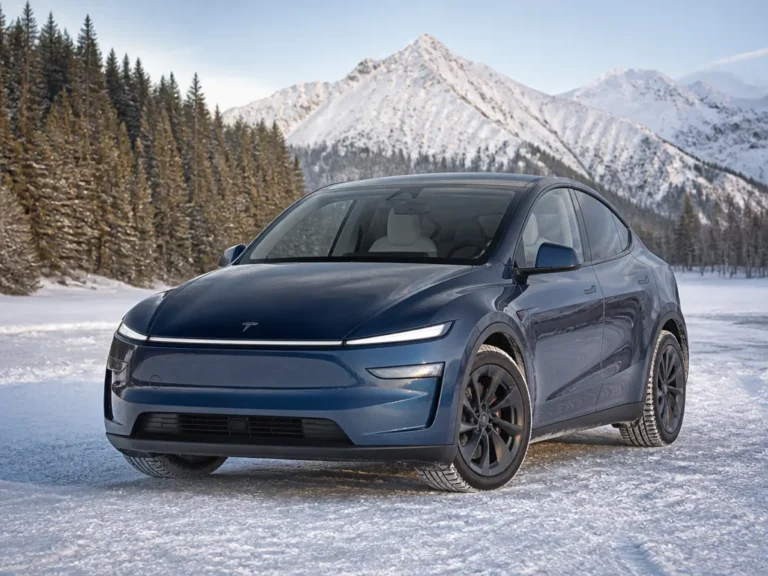
Your EV’s range drops the moment temps hit freezing, and the heater can drain the battery faster than you expected. If you’re searching “best electric vehicle for winter drivin,” you probably want AWD traction, strong cabin heat, and predictable charging when the battery is cold.
Pick an EV with real cold-weather thermal management, heat-pump cabin heating (when available), and preconditioning controls so the battery and cabin are ready before you drive. We’ll rank models for winter use, explain what to expect below 32°F, and give trim, charging, and feature notes you can act on.
Best electric vehicle for winter drivin depends on cold-weather range retention: aim for cars with heat pumps, battery preconditioning, and usable DC fast-charging in cold. In sub-freezing weather, expect real-world range to drop roughly 20-50% versus EPA-style numbers. Choose AWD for snow traction and plan charging after preconditioning.
Best Electric Vehicle For Winter Drivin
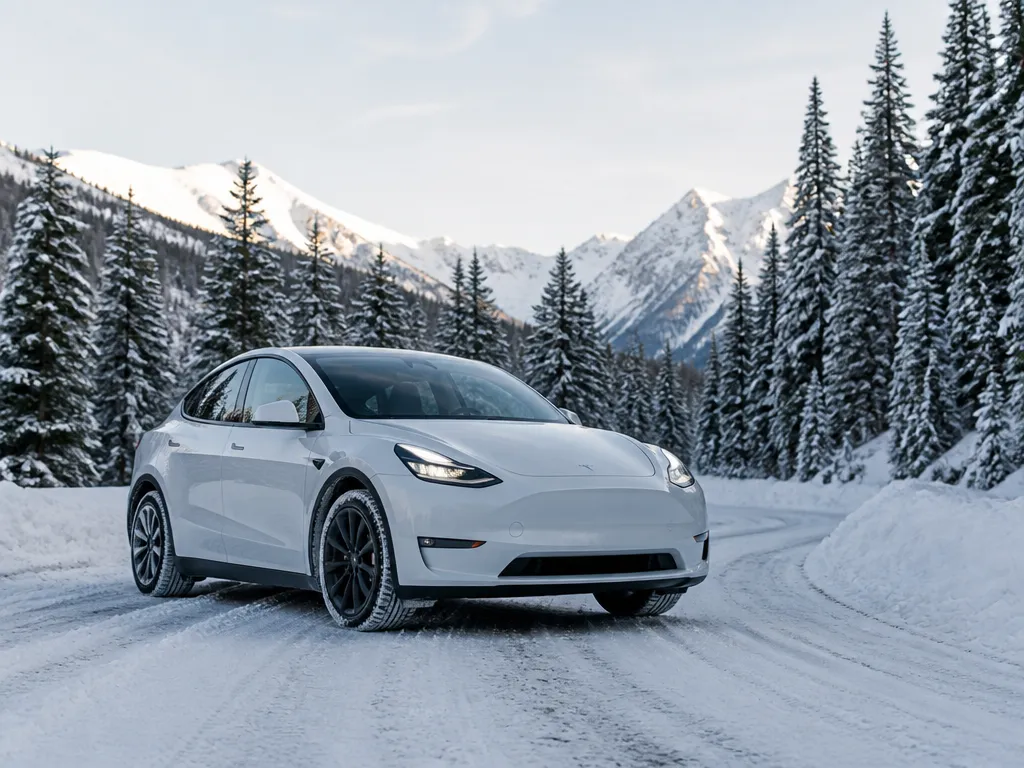
Winter “best” in an EV means you keep usable battery range while still running heat, defrost, and traction demands when roads are icy and temps are well below freezing. The right pick also manages energy loss during repeated start-stop driving and short trips, where warm-up and battery conditioning hurt the most.
Winter Ranking Criteria That Actually Move The Needle
Cold weather drains an EV in three big ways: the battery chemistry delivers less power, the cabin and battery need energy to come up to operating temperatures, and tires chew more energy in snow or slush. A winter-friendly EV is the one that makes the least compromise across all three.
For EV buyers, the “EPA range” number is a warm-weather, standardized test result, so it is a starting point, not the winter target. Two EVs can show the same EPA miles, yet one will feel much better in January because its thermal system and power limits handle cold differently.
| EPA range tells you | Winter reality adds | What to watch on the spec sheet |
|---|---|---|
| How the vehicle performs in controlled conditions | Battery power limits and extra heat demand | Heat pump (if listed), battery conditioning support, and charging capability |
| Relative sizing and efficiency at moderate temps | Speed sensitivity and tire losses | Rated efficiency and whether the trim supports low-drag winter setups |
Quick rule of thumb: Expect the biggest winter swing from outside temperature, driving speed, and tire choice, then a smaller swing from how many short trips you chain together.
In practice, speed matters because aerodynamic drag rises with velocity, and the battery also has less usable power when cold. Tire choice matters because snow-ready tread blocks and softer compounds increase rolling resistance, which can cut winter range faster than cabin heat alone.
Charging access also shapes “best.” Cold batteries often require conditioning, and very low temperatures can slow charging until the pack warms, so the best winter EV is the one that pairs efficient preconditioning with charging behavior that is easy to work with on your routes.
Trade-offs are real: some EVs use a simpler heating approach and feel fine in a milder winter, while others keep range steadier but place more emphasis on battery conditioning, which helps most when you can plug in before you leave.
Top Winter Ev Short List
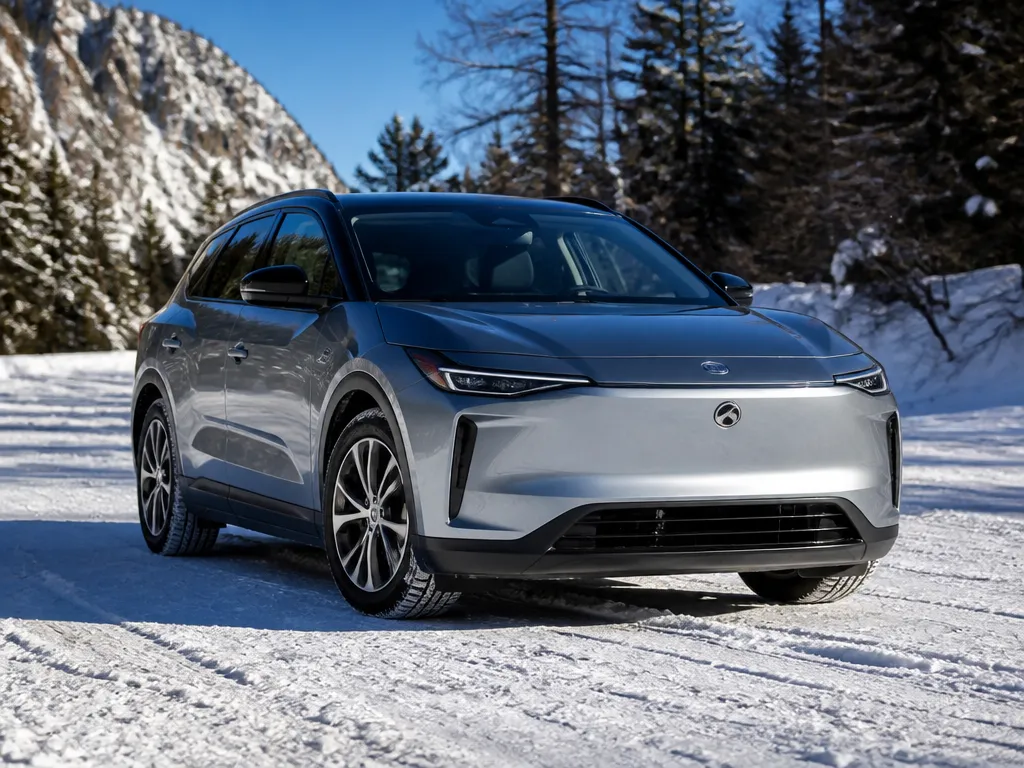
For cold-weather EVs, the winners are the ones that manage cabin heat efficiently and keep real-world driveability steady when temperatures drop. The list below ranks models that tend to handle sub-freezing commutes with fewer “range surprises” and better winter comfort features.
| Rank | EV model (key trims to consider) | Winter win |
|---|---|---|
| 1 | Tesla Model Y (Long Range, Performance) | Strong cabin heat control and widely used preconditioning behavior |
| 2 | Hyundai Ioniq 5 (SE/SEL with heat pump, Long Range) | Heat-pump-equipped trims help reduce HVAC energy draw |
| 3 | Kia EV6 (Wind AWD, GT-Line AWD trims with heat pump) | Efficient heating on the right trims plus good traction confidence |
| 4 | Ford Mustang Mach-E (Select trims with heat pump) | Heat-pump availability varies by trim, but winter drivability is solid |
| 5 | Volkswagen ID.4 (Pro S with heat pump, or equivalent) | Comfort heating efficiency on heat-pump configurations |
| 6 | BMW iX3 / iX (heat-pump equipped trims) | Premium cabin heat control and strong winter setup options |
| 7 | Volvo XC40 Recharge (heat-pump equipped trims) | Winter-focused comfort and traction tuning |
Winter reality check: heated seats and heated steering wheel are usually far cheaper than blasting cabin heat. Dressing for cold and using seat heat often beats raising cabin temperature aggressively.
What To Verify On The Exact Trim (Before You Sign)
Heat-pump availability changes by model year and trim, so the “best winter EV” can turn into a mediocre choice if the build you want lacks it. Preconditioning should work while the car is plugged in, and you want seat and steering wheel heating as standard or easy options.
For any of these models, verify the following in the spec sheet or window sticker for your specific VIN: heat pump equipped, preconditioning, and robust heated seats and steering wheel. For winter traction, confirm AWD availability and plan for quality winter tires.
Winter Range Expectations By Temperature
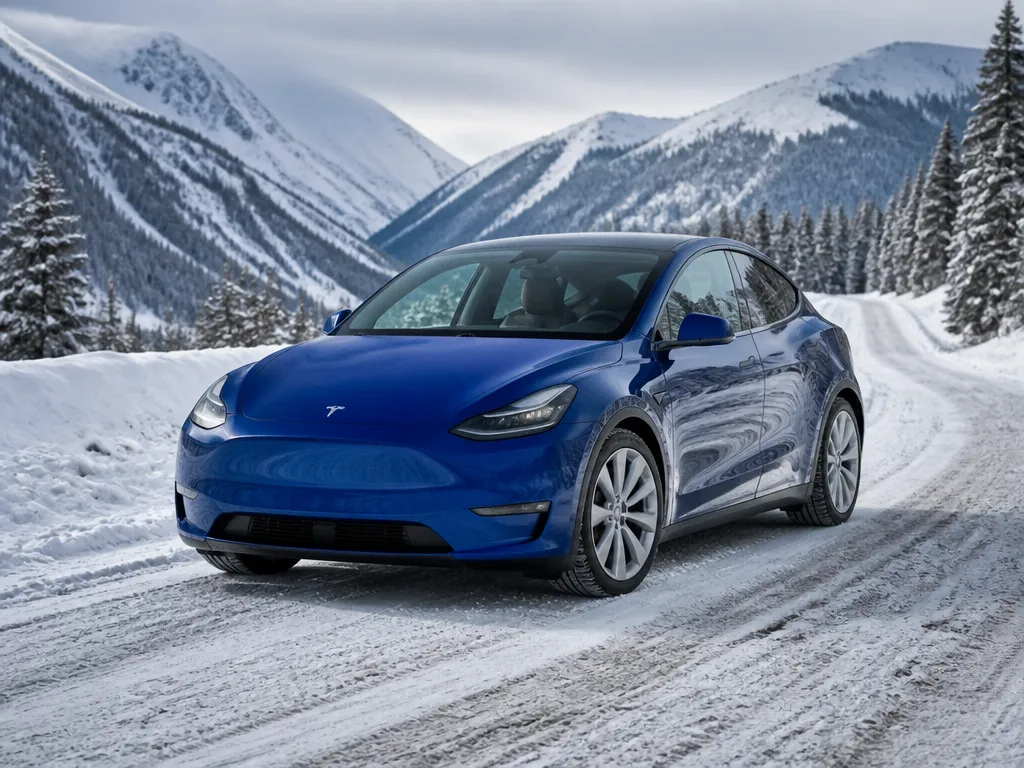
EV range usually drops fast once temperatures get below freezing, then drops again during harsher conditions like wind, snow, and repeated hard acceleration. The biggest “early” drain is cabin heat demand and increased rolling resistance from cold tires, while the battery thermal system also ramps up to protect power output.
What Hurts Range First: Heat, Battery Cooling, Or Tires?
Winter range loss is a stack of effects, and they hit in a pretty predictable order. Cabin heating loads the powertrain immediately, cold tires add drag from thicker rubber stiffness, and the battery thermal system draws energy to keep the pack in a safe operating window.
For winter driving comparisons, tire choice matters as much as the badge. A well-reviewed winter tire on a heavy EV can hold usable range better than an all-season tire, especially at highway speeds.
Budgeting Range: Mild Cold Vs Sub-freezing Days
Plan for a bigger swing on days below freezing because your car needs heat for both occupants and the battery strategy. On milder cold, range loss is more manageable and often looks “normal” after the first 10 to 20 minutes.
| Ambient temperature | Typical real-world expectation | What changes most |
|---|---|---|
| 0 to 32°F (-18 to 0°C) | Expect a noticeable drop versus summer, especially on short trips | Cabin heating and tire drag rise quickly |
| -10 to 0°F (-23 to -18°C) | Expect a steep hit unless you start with a warm battery | Battery warm-up demand and reduced efficiency are common |
| Below -10°F (-23°C) | Expect the most volatile range, with strong speed sensitivity | Heating load and pack thermal limits dominate |
In practice, treat range like a range, not a number. If your route includes highway miles, cold starts, and HVAC use, budget conservatively, then tighten the plan once you see how your specific EV behaves over your usual trip length.
Charging Strategy Impact: Soc On Arrival And Preconditioning Before Departure
Arriving at a lower state of charge (SOC) pushes the car to manage power delivery harder in the cold, and it can also reduce your ability to warm the pack efficiently before you need peak performance. A higher arrival SOC gives you more buffer for both heating and thermal management.
Mechanic’s rule of thumb: in winter, your “first mile” efficiency matters more than your “last mile,” so prioritize a warm cabin and a warm pack over chasing the smallest possible SOC at the plug.
Charging Performance In Freezing Temps
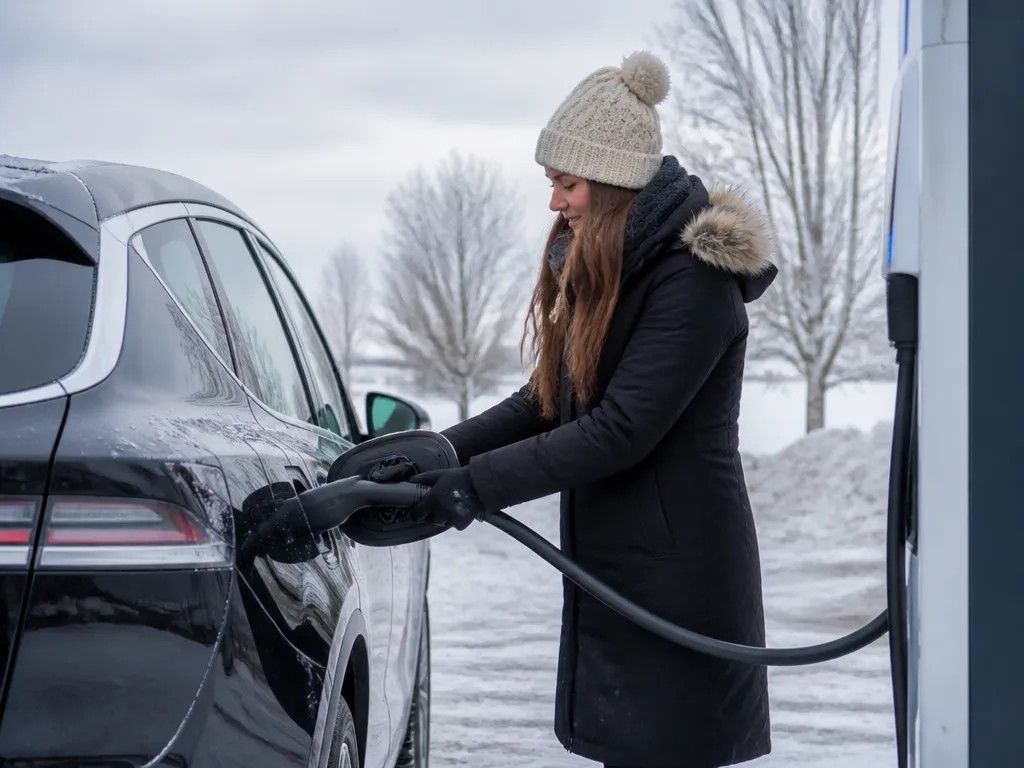
Cold lithium-ion packs accept charge more slowly, so DC fast charging speed can drop even when the charger itself is capable. Expect the biggest slowdown when the battery is near-freezing and you arrive with low state of charge.
Battery temperature drives charge rate because higher internal resistance limits how safely the battery can accept high current.
In practice, that means the car may limit charging power until it warms the pack, so your peak kilowatt output often arrives later in the session.
Dc Fast Charging: What Changes In Winter
Many EVs try to protect the pack by reducing maximum charging power in the cold. For road trips, that turns a “short stop” into a longer one, especially if you rely on a cold battery and start charging at a low percentage.
| Situation | Typical winter behavior | Road-trip impact |
|---|---|---|
| Battery at or near freezing | Reduced max charge power until pack warms | Slower early ramp, longer stops |
| Battery preconditioned before arrival | Less limitation, earlier access to higher power | Stops closer to planned time |
| Mid-session taper (all seasons) | Charging naturally slows as the battery fills | Plan to top up less aggressively in winter |
Insider tip from the service bay: if your route app says you can precondition, use it. The speed you lose in the first part of the session is usually the difference between “arrived, charged, left” and “stuck waiting on a charger.”
Navigation-to-charge And Preconditioning: When It Helps
Navigation-to-charger often triggers battery preheating on the way in, which can reduce that early speed drop. Preconditioning helps most when you are starting from a cold garage or you drove a short distance without much battery warmth.
Preconditioning helps less when the battery already warmed up from spirited driving, long downhill runs, or repeated charge/discharge cycles. It also can fail to fully heat the pack if you miss the recommended arrival timing window, so the car may still throttle power during the initial minutes.
Home Charging In Winter: Cable And Wall-connector Realities
Home charging is about consistency, not peak speed, and winter is where you notice small frictions. Long, cold sits mean your EV starts the day with a colder pack, which affects how quickly you regain energy for the next trip.
Wall-mounted Level 2 chargers are generally the most reliable setup in winter because they avoid sharing circuits and reduce voltage sag. Cable management matters too: keep the charge cable off snowbanks and avoid coiling it tightly against cold surfaces, since stiff cables can stress connectors and increase hassle.
Heating And Traction Features That Matter
Cold weather makes HVAC draw more power and traction losses show up fast, so winter performance is mostly about heating efficiency and driveline confidence. Pick an EV that can keep the cabin comfortable without hammering the battery, and that pairs the right tire and drive layout with predictable torque delivery.
Cabin Heat: Heat Pump Vs Resistive
Heat pumps move heat, resistive heaters create heat, and the difference gets dramatic as temperatures plunge. In freezing or below, heat pumps generally use less energy than resistive heat, although their efficiency varies with temperature and system design.
Trim choice matters here because some vehicles reserve heat pump capability for specific packages or higher trims. When you shop, look for language like “heat pump” on the spec sheet, and treat “battery preconditioning” for the HVAC circuit as a bonus rather than a substitute.
| Heating method | Winter impact | What to prioritize |
|---|---|---|
| Heat pump | Generally better efficiency in cold weather | Cabin heat retention, smart preconditioning, strong defrost |
| Resistive heat | Greater energy draw as temps drop | Seat and steering heat support, good insulation, efficient thermal management |
Heated seats and steering wheels reduce how hard the HVAC has to work, especially for short trips. Heated seats also help you stay comfortable without blasting airflow across the windshield, which can keep energy use lower and defog time shorter.
Traction Essentials: Awd/fwd, Tires, And Regen Feel
Drive layout affects confidence, but winter tires matter more. AWD helps transfer torque when one axle loses grip, while FWD can still work very well with proper winter tires, light throttle habits, and stable traction control.
In practice, the best winter setup is the one you can maintain: four matching winter tires, correct load rating, and decent tread depth. Many EVs deliver strong low-speed torque, so you want tires that can handle quick acceleration without breaking loose immediately.
Owner tip: If your car has selectable drive modes, try “snow” or “low regen” early in the season. Learning the car’s torque and regenerative braking behavior on slick pavement saves you from surprises during stop-and-go.
Regen feel changes in cold weather because the battery may limit charge acceptance and traction control may intervene sooner. Look for cars that let you adjust regen levels, or at least have predictable one-pedal braking, so you can modulate deceleration without locking up the front end on glare ice.
Side-by-side Winter Ev Comparison
Winter efficiency comes down to three things: cabin heating power draw, battery protection limits, and how fast you can get energy back in during long trips. The models below earn top spots because they handle cold-weather preconditioning and charging realities better than average, so you keep a usable buffer for driving and heat.
| Model | Drivetrain | Heat pump | Preconditioning | Heated features to watch | Fast-charging considerations | Best winter scenario |
|---|---|---|---|---|---|---|
| Tesla Model Y Long Range (AWD) | AWD | Varies by build and year, confirm in your VIN spec | Cabin and battery preconditioning tied to departure and routing | Heated seats, heated steering wheel (depending on trim) | Cold slows charge, peak rates arrive after pack warms | Sub-zero commutes plus frequent Supercharger stops |
| Hyundai Ioniq 5 (AWD, preferred: heat-pump equipped) | AWD | Common on many trims, confirm trim level | Battery and cabin preconditioning on route (model and year dependent) | Heated seats, often heated wiper park and strong defrost behavior | Charging speed drops in deep cold until the battery warms | Road trips where charging access is predictable |
| Kia EV6 (AWD, preferred: heat-pump equipped) | AWD | Common on many trims, confirm trim level | Route-linked preconditioning in supported markets | Heated seats, warm-up prioritization for driver comfort | Battery warm-up time can add 10-20 minutes to fast-charge stops (typical) | Mixed commuting plus weekend highway runs |
| Ford Mustang Mach-E (heat-pump equipped trims) | AWD | Trim-dependent, verify build | Departure scheduling and battery protection logic for cold starts | Heated seats, strong cabin warm-up control options | Cold-weather throttling is common across CCS fast charging networks | Snowy-city driving where cabin comfort is a priority |
| Rivian R1S (built for adventure, AWD) | AWD | Often equipped on many configurations, confirm | Preconditioning logic depends on software version | Heated seats, heated steering wheel on many trims | Fast-charging performance is sensitive to battery temperature, expect ramp-up | Rural winter roads with long gaps between chargers |
| Volkswagen ID.4 (heat-pump equipped trims) | AWD available | Trim-dependent, verify | Departure-based cabin conditioning | Heated seats and effective defrost strategy | Cold pack limits charging more than drivetrain choice does | Everyday commuting with home charging |
How To Read This Table For Your Winter
For a daily commute, prioritize heat pump availability, preconditioning that runs before departure, and heated defrost comfort. Models with route-linked battery conditioning tend to protect range better on cold mornings, because the pack is ready before you need full power.
For road trips, fast-charging matters, but battery temperature matters more. If you cannot count on frequent stops, choose an EV that minimizes heating drain and lets you arrive at chargers with a warm pack through scheduled or route preconditioning.
Most Common Wrong-choice Pitfalls
Trim mix-ups are the biggest issue. Many shoppers buy the right model name, then miss the heat pump, or they pick a battery configuration that charges slower in cold because the pack stays colder longer.
Tires and charging access are the next two deal-breakers. All-season tires can turn winter range into a shortfall, while a lack of reliable DC fast chargers nearby can force you into slower Level 2 charging that makes winter trips stressful.
Quick rule: if your local winter means sub-zero starts and you do not have home charging, pay extra attention to preconditioning and heat pump trims, because battery warm-up time and heating demand decide how “usable” range feels.
Best Ev By Winter Scenario
For winter, the “best” EV is the one that keeps heat efficient, has predictable cold-weather charging, and gives you traction confidence. Model and trim choice matter more than the badge, because battery size and AWD hardware change both range and drivability.
| Winter Scenario | Best Pick(s) to Consider | Why It Fits Winter | Trim/Battery/Config Notes |
|---|---|---|---|
| Daily commuting (predictable charging) | Hyundai Ioniq 5 (RWD or AWD), Kia EV6 (RWD or AWD) | Strong winter range usability for their efficiency class, cabin heat recovery stays reasonable for short trips | Choose the battery size you actually need, avoid “max range only” trims if it pushes your budget into a less practical payment |
| Road trips in snow (fast charging reliability) | Tesla Model Y (AWD/Long Range), Ford Mustang Mach-E (AWD), Volvo XC40 Recharge (AWD) | Better chances of staying on schedule because they typically support preconditioning logic and consistent DC charging behavior in cold | Prefer trims with AWD for traction, and plan stops with charging site temperature in mind |
| Sub-zero cold nights (heater efficiency) | Polestar 2 (if equipped to manage heat well), Tesla Model 3 (AWD/Long Range) | Heat management is the big deal overnight, cabin comfort should drop less than “basic heater” setups during deep cold | Pick AWD or a trim known for robust thermal management, and verify home charging rate so the pack has time to warm |
| Budget winter buyers (value trims) | Nissan Ariya (depending on availability), Hyundai Ioniq 6, Chevy Bolt EUV (if still a local option) | Costs less up front while still offering workable winter usability when you match your daily distance to realistic cold range | Prioritize heated seats/steering and a heat-pump-equipped setup when available, these matter more than extra range modes |
| AWD choice for snowy/icy roads (traction hardware matters) | EVs: generally prioritize traction-focused AWD EV trims like Tesla Model Y AWD, Kia EV6 AWD, Hyundai Ioniq 5 AWD | AWD plus winter tires beats “more range” when traction is the limiter | Go AWD if your commute includes ice-covered intersections, bridges, or frequent slush. Budget for winter tires regardless |
Best For Daily Commuting
Hyundai Ioniq 5 and Kia EV6 are strong commuter options because their efficiency keeps cold-weather range usable for the kind of repeatable trips you drive every day. Cabin heat costs are also easier to manage when your drives start with a fully warmed or at least preconditioned battery pack from home charging.
Best For Road Trips In Snow
Tesla Model Y, Ford Mustang Mach-E, and Volvo XC40 Recharge make more sense for winter road trips because they are commonly set up to handle cold-weather charging better than many “efficiency-only” EVs. Fast charging is where winter trips go sideways, so preconditioning support and stable DC charging behavior matter.
Best For Sub-zero Cold Nights
In deep cold, cabin heat draw becomes the swing factor, so Tesla Model 3 (AWD/Long Range) and Polestar 2 are worth considering when you regularly face sub-zero overnight temps. The goal is to keep the cabin comfortable without draining the battery faster than your overnight charge routine can replace.
Best For Budget Winter Buyers
Hyundai Ioniq 6, Nissan Ariya (trim dependent), and a Chevy Bolt EUV option (where available) can be smart winter value plays because they let you buy into EV ownership without overspending, as long as you match range expectations to your routes. Winter range drops, but predictable city driving makes that penalty easier to absorb.
Best Awd Choice For Snowy/icy Roads
AWD is most valuable when traction is the limiter: slick starts, ice-covered ramps, and slushy corners. Tesla Model Y AWD, Kia EV6 AWD, and Hyundai Ioniq 5 AWD are good “winter traction first” candidates, but the win condition is still winter tires.
Mechanic take: AWD can help you accelerate and stabilize, winter tires help you stop and steer. In icy conditions, tire grip is the foundation, AWD is the assist.
Winter Driving And Charging Playbook
Preconditioning the battery and cabin before you leave helps protect winter range and comfort. Plan to arrive at your departure SOC with enough buffer for heat, and keep tires ready to bite so you do not pay for traction with extra energy use.
Preconditioning Timing, Charging Habits, And Soc Targets
Start preconditioning based on your cold-soak time. If the car sits outside overnight, run precondition right before departure so the battery warms for propulsion and regen, then use cabin heat in a moderate, targeted way during the first 10 to 20 minutes.
For charging, warm batteries accept charge more smoothly. Plug in as soon as you are home or after you park, then let the car finish any battery heating routine before a fast-charge session when the weather is well below freezing.
Tires, Traction, And The Range Trade
Winter tires reduce stopping distance and improve control, but they can add rolling resistance compared with many all-seasons. That trade is still worth it because slip wastes energy and increases drivetrain demand when traction control intervenes.
All-seasons can work on lightly salted roads and milder cold, but true winter tires keep bite on snow and slush. For EVs, traction is range related, because more grip means less wheelspin and less energy thrown away.
Regen And Braking Behavior In Cold Weather
Cold batteries often limit regenerative braking. You will typically feel weaker lift-off regen early on, and friction brakes do more work until the battery warms.
Drive smoothly to keep regen available. Ease off the accelerator earlier than normal, anticipate slower traffic, and avoid abrupt throttle transitions so the car can manage power flow without repeated traction events.
Route And Charging Planning For Winter
Route planning is where winter trips succeed or fail. Build your plan around HVAC load, speed, and battery limitations in the cold, then choose chargers that are spaced so you are not forced into an all-or-nothing sprint.
Speed management is the silent range killer in winter. Higher highway speeds increase aerodynamic drag and keep the battery colder for longer if you are arriving with a low SOC, so a modest speed reduction often beats chasing extra charge time.
Mechanic’s winter rule: treat the first 10 to 30 minutes as “reduced efficiency mode.” Smooth driving, correct tire pressure, and preconditioning make that window far less painful.
Quick Summary
When temps hit freezing, an EV’s range drops quickly because battery power delivery is reduced and the cabin, battery, and defrost system need extra energy. Winter planning should prioritize AWD traction, cold-weather thermal management, heat-pump cabin heating when available, and preconditioning controls that warm the battery and cabin before you drive. The “EPA range” number is based on standardized testing, so it is only a starting point, not a winter target.
In sub-freezing conditions, real-world range is expected to drop roughly 20-50% versus EPA-style numbers, especially as driving speed rises and tire losses increase on snow or slush. Cold batteries also can slow DC fast charging until the pack warms, so navigation-to-charge and routing to chargers that arrive with a warmer battery matter. The winter win list highlights Tesla Model Y, Hyundai Ioniq 5 on heat-pump-equipped trims, and Kia EV6 AWD trims with heat pump.
| Winter factor | What to look for | Why it matters (per article) |
|---|---|---|
| Cold-weather range retention | Battery preconditioning, usable miles in 20 to 0°F, thermal management | Range can drop about 20 to 50% below freezing when heat and battery conditioning are needed |
| Cabin heat efficiency | Heat pump availability | Heat-pump cars warm the cabin with less battery drain than resistive-only strategies |
| Charging behavior | Precondition before departure, use navigation-to-charge | Very cold packs often slow DC fast charging until the battery warms |
| Road grip | AWD and winter tires | AWD with good winter tires beats single-range claims for snow and ice traction |
Frequently Asked Questions
What Electric Vehicle Is The Best For Winter Driving In Snow And Ice?
For winter, the best pick is usually the one with strong traction control and available all-wheel drive for low-grip conditions. Since winter performance depends more on tires, drivetrain setup, and driving habits than a single published number, prioritize test results and choose the right tire for your region.
Do Evs Lose Range Faster In Winter, And How Much Should I Expect?
Yes, EV range typically drops in cold weather because batteries and cabin heating use more energy and tires lose efficiency on snow and cold pavement. Plan on reduced range and build extra buffer time for slower speeds and heater use.
Which Ev Winter Driving Option Matters Most, Heated Seats Or A Heated Steering Wheel?
Heated seats are often the most efficient comfort upgrade because they warm you directly, while cabin heat can draw more energy depending on the system. If you are trying to stretch range, using seat and steering heat first usually helps reduce reliance on full cabin heating.
Are Winter Tires Still Necessary On The Best Electric Vehicle For Winter Driving?
Yes, even if the EV is “best in winter,” your tires are still the biggest grip factor on ice and packed snow. Dedicated winter tires generally outperform all-season tires when temps are low and roads are snowy or slushy.
How Should I Precondition An Ev For Winter Driving To Get Better Range?
Preconditioning while plugged in is a smart move because you can warm the cabin and battery using external power. Use your EV’s departure schedule or precondition button so the car is ready before you leave, especially on cold mornings.
What Common Winter Mistakes Make An Ev Worse In Snow, And How Can I Avoid Them?
The big mistakes are using winter tires incorrectly, pushing speed too early, and relying on aggressive acceleration on slick starts. For safer handling, accelerate gently and give yourself longer stopping distance, because regen and friction braking can feel different as conditions change.