


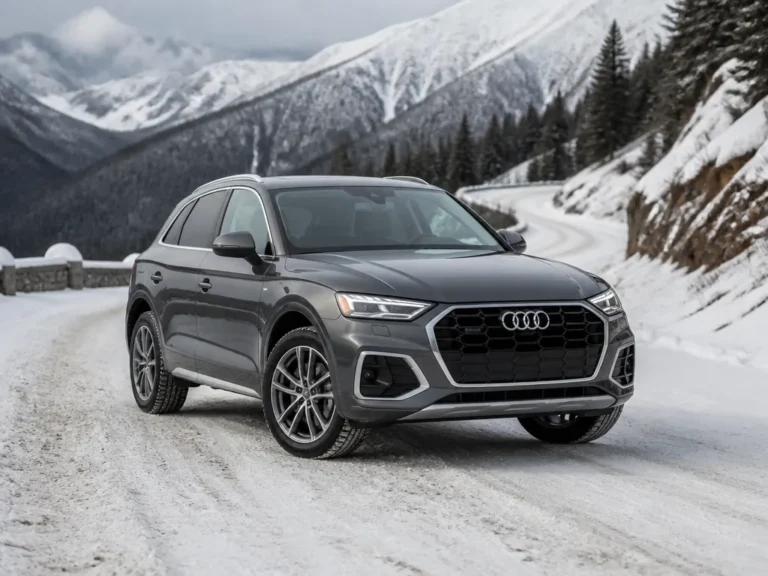
Your Q5 feels solid in rain, but the first real snow day makes you wonder if quattro is enough or if you’re going to get stuck. Maybe you’re shopping winter tires and trying to match the right wheel and size. This guide breaks down how an Audi Q5 handles ice, what settings to use, and what prep actually matters before temperatures drop.
With quattro, power is split to help you move and stay stable, but ABS and traction control can only do so much on smooth ice. Expect grip limits when tires are worn, pressure is off, or snow packs hit the underbody.
Before temperatures drop, plan for 25 to 45 minutes to swap tires and check pressures in the cold. Use drive modes correctly, and expect ABS/traction control to pulse when stopping or accelerating on ice.
1. Audi Q5 For Snow And Winter Driving
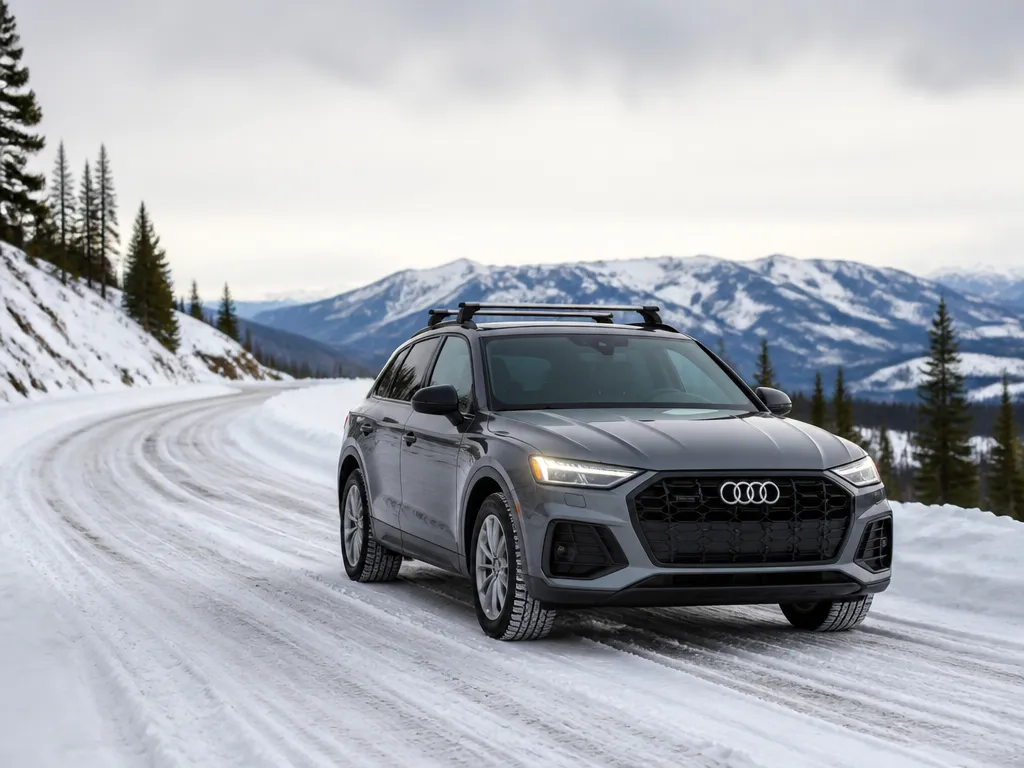
All-wheel drive is the big reason the Audi Q5 belongs on a winter list, because it gives you grip when road temps drop and snow or slush shows up. The Q5 is also built with winter-focused comfort in mind, so you spend less time fighting fogged glass and stiff seating. With Audi’s typical driver-assist and traction-control strategy on the Q5, it’s a practical choice for commuters who need confidence more than drama.
Winter rubber stays flexible in cold weather, while its tread blocks and grooves help clear slush and maintain contact with packed snow.
In practice, look for a quattro-equipped Q5, and prioritize a good tire size match to your door-jamb sticker. A winter setup commonly means rotating tires on schedule and keeping tire pressures checked more often as temperatures swing.
Use this checklist when planning a snow season:
What To Spec For The Cold Months
Winter effectiveness comes from the full package, not just the drivetrain. Start with the tire choice, then make sure the Q5’s traction system has the support it needs, which includes correct tire pressures and no mismatched tire sizes across axles. If you drive in heavy snow or where highways get icy fast, choose a wheel and tire combination that lets you run the factory-recommended rolling circumference so the stability control and ABS stay calibrated to normal operation. For mixed city and highway driving, a balanced winter tire tread pattern usually gives better everyday wear than aggressive deep-snow designs.
2. Quattro Awd Behavior In Snow
Quattro all-wheel drive helps the Audi Q5 keep propulsive torque to the wheels that still have grip, which matters the moment the surface turns slick and steering inputs start to matter more than raw throttle. In snow, that means the system can keep moving when a two-wheel-drive SUV would spin one set of tires and lose momentum. The gain is confidence, but the tires and brake condition still decide how safely you can stop and turn.
In practice, Audi’s AWD logic works with wheel-speed sensing and traction control to manage slip, so you may feel quicker power recovery after brief tire spin in slush or packed snow. For best results, match your tire setup across all four corners because differences in tread depth can limit the usable traction the system can send to the axle(s). Winter tires also provide better control on snow because their tread blocks stay flexible as temperatures drop and the softer compound helps the tire remain compliant on icy surfaces.
How To Drive Quattro Effectively When Traction Changes Fast
Snow conditions often flip from packed to slushy to icy within a few blocks, and that is where driver technique matters. When you enter a turn on a mixed surface, ease off the accelerator first, then steer, because the traction control system needs time to reduce wheel slip before you ask for more lateral grip. For merging or climbing, aim for steady throttle and the smallest steering correction, since abrupt inputs can cause the tires to cross the grip limit and you will feel power reduction. If you hear persistent wheel spin or feel the car fighting you, back off and let the tires regain bite, then continue.
3. Winter Tire Choices For Audi Q5
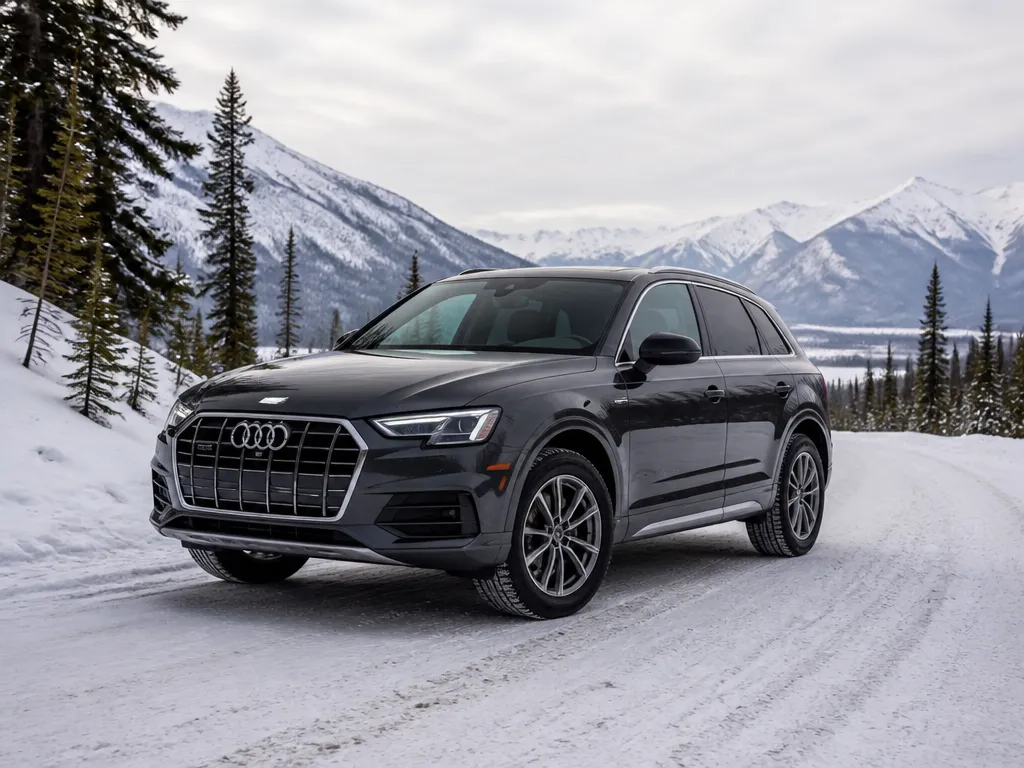
Winter tires for an Audi Q5 matter because AWD systems still need traction at the tire, and winter compound rubber stays flexible in cold weather. For the best snow and slush grip, choose a true winter tire (with the mountain snowflake symbol) rather than an all-season, since the tread blocks and siping are tuned for packed snow and icy surfaces.
Pick a tire size that matches your Q5’s door-jamb spec or owners manual, then plan for either a full set on the correct wheels or a staggered setup if your wheel package is already seasonal. Many Q5 owners run dedicated winter setups in the colder months, roughly from late fall to early spring, so you get consistent performance instead of mixed-tire uncertainty.
For example, staying with the OEM-recommended diameter helps keep the ABS and traction behavior predictable, while changing aspect ratio or wheel width can alter ride comfort and tire wear. Budget for a complete set mounted on wheels, since rotating and balancing winter tires correctly is what keeps them working as intended on an AWD SUV.
What To Look For In A Winter Tire For Your Q5
Start with the traction rating you can confirm on the tire sidewall and packaging, then focus on tread design for the conditions you actually see. Packed snow and roadside drifts usually benefit from deeper, more aggressively siped tread blocks, while “black ice” days reward studless designs built for biting on smooth surfaces. Sidewall stiffness matters too, because potholes and slush-caked roads can beat up softer tires, especially if you run higher speeds on plowed highways. If you tow a small trailer or carry winter gear often, prioritize the correct load index and keep pressures at the winter spec, since cold weather drops tire pressure and reduces grip.
4. Ground Clearance And Snow Pack Limits
Ground clearance matters in winter because packed snow and slush can act like a moving curb under the Q5, scraping the underbody or forcing the front tires to ride up. The Q5 is built as an SUV crossover, but clearance is still finite, so the “snow capability” you feel on a trail depends on how deep the snow is compared with the lowest points under the chassis. For snow-belt driving, this item earns a spot because it directly affects traction consistency and whether you end up high-centered when conditions change fast.
For practical winter use, you should plan around the Q5’s real-world lowest clearance points, typically the front air dam area and any exposed drivetrain components, and then reduce speed before you enter rutted snow where depth varies lane to lane.
In practice, aim to keep momentum steady, avoid stopping mid-pack, and keep steering inputs smooth so the tires can keep cutting through instead of climbing onto a snow ridge. When temperatures hover near freezing, slush can thicken quickly, so the same road can become far more likely to trap snow under the bumper within an hour.
Tradeoffs When You Need To Go Deeper
Going into deeper snow can work for short stretches, but it comes with tradeoffs that show up fast. Wheelspin can turn into snow packing around the tire, which reduces traction and increases the chance of scraping the front end or pushing snow under the chassis. Even with traction control, the AWD system cannot “create clearance,” so once the tires cannot keep climbing out of the ruts, the car can sit lower than you think. If you have to stop, restart with light throttle and a straight line, and if you feel sustained shuddering or the nose is riding high on a ridge, it is safer to back out and reroute rather than keep digging.
Treat ground clearance like a hard limit, not a suggestion, and base your route on packed snow depth in wheel tracks, then drive slower and more deliberately as slush thickens.
5. Braking And Handling On Snow
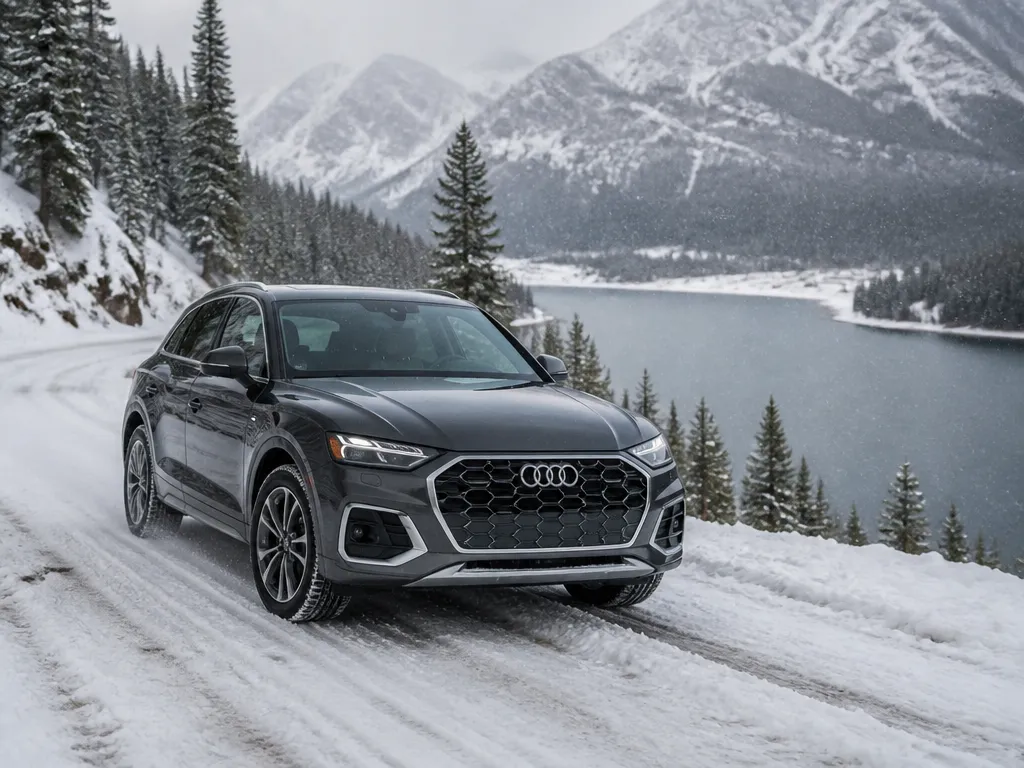
Braking distance grows fast on snow and slush because tire-to-surface friction drops, and the Audi Q5’s winter-ready control strategy has to work with the tires you choose. This is why simple pedal habits matter as much as drivetrain features. Getting the Q5 stopped smoothly also helps keep steering angles predictable when road grip changes every few car lengths.
For best results, run winter tires on all four corners, ideally with fresh tread and correct inflation for cold weather. A practical setup is a dedicated winter tire wheel package so you can swap at the same time each fall and keep your all-season tread for dry months. In heavy snow, leave extra following space because ABS can still slow you down, but it cannot beat physics when the surface is packed ice. If your Q5 feels vague during braking or pulls to one side, check tire condition first (uneven wear, mismatched sizes, low tread depth) before assuming a brake fault.
- Use gentle brake pedal pressure, then modulate as traction changes to avoid locking or skidding.
- Match tire size to your door-jamb spec, and keep left-to-right tread depth within about 3 to 4 mm when possible.
- Expect longer stops on slush; prioritize steady deceleration over last-second braking.
- If you have an electric parking brake, check that it releases normally in cold temps before you drive.
Cold-weather Brake Confidence
On a Q5, the brakes and stability systems are only as consistent as the contact patch. Ice glaze over asphalt can turn a normal stop into a slide even with ABS active, so reduce speed earlier than you would on dry pavement and aim for straight-line braking before you turn.
In practice, do a short, safe test drive in a quiet lot after tire changes: apply firm, controlled braking from low speed to confirm the pedal feel is normal and the vehicle tracks straight. If you notice steering wheel shimmy during braking or a persistent pull, have the brake system inspected by a shop, since warped rotors or sticky calipers can be more obvious in winter conditions.
Quick Summary
Quattro helps the Q5 move and stay stable, but ABS and traction control still have limits on smooth ice, especially when tire grip is compromised. Worn tires, incorrect pressure, or snow packing the underbody can reduce control, and ABS may pulse during stopping or accelerating on slick surfaces.
The guide recommends planning 25 to 45 minutes before cold snaps to swap tires and check pressures in the cold, then rechecking using the door-jamb sticker spec after overnight settling. It calls out using Snow mode to prioritize smoother throttle and stability control inputs, and warns about ground clearance when heavy snow and slush can trap underbody.
| Topic | What to do | What to expect |
|---|---|---|
| Tires and grip | Use real winter tires, matched to factory-spec wheel and size, all four corners | Quattro helps forward traction, but it cannot fix worn or mismatched tires |
| Pressures in cold | Check tire pressures in the cold, then recheck after overnight settling using door-jamb specs | Proper pressure supports stability control and ABS calibration |
| Driving on ice | Use Snow mode, keep inputs smooth, avoid repeated full-throttle starts in deep snow | ABS/traction control may pulse, normal on slick surfaces |
Frequently Asked Questions
What Tires And Tire Setup Should I Use On An Audi Q5 For Snow And Winter Driving?
For real winter traction, plan on using dedicated winter tires, not all-season rubber. If you go with snow tires, make sure all four match in size and tread type, and set your pressure to the door-jamb spec when the tires are cold.
How Should I Use Quattro And Drive Modes In My Audi Q5 On Icy Roads?
Quattro helps you get moving, but it does not replace careful driving. In snow, use Snow mode if your Q5 is equipped with it; otherwise use the traction-friendly mode available, and avoid aggressive throttle, since wheelspin can still happen on glare ice.
Do I Need To Warm Up My Audi Q5 Before Snow Driving?
Yes. Let the engine reach normal operating temperature and clear snow and ice from the windshield, mirrors, and all cameras/sensors if your Q5 has them, because visibility and sensor accuracy matter on snowy roads.
What Winter Items Should I Keep In My Audi Q5 For Roadside Help And Safer Stopping?
Carry a small kit with a flashlight, ice scraper/brush, gloves, a blanket, and an ice-safe tire inflator. Also keep traction aids (like sand or traction mats) because even a quattro Q5 may need help if you get stuck in deep snow.
Can Winter Weather Cause Problems On An Audi Q5, And What Should I Watch For?
Cold weather can make batteries and weak charging systems show up fast, so pay attention to slow starts or dim lights. If you get warning lights for traction, ABS, or braking performance changes, get it checked, since winter use can expose worn tires, low brake fluid, or sensor issues.
What’s A Common Mistake People Make When Driving An Audi Q5 In Snow?
The big one is driving like it handles the same as dry pavement. Keep speed down and leave extra following distance, because braking distance on packed snow can be dramatically longer, even with quattro.