


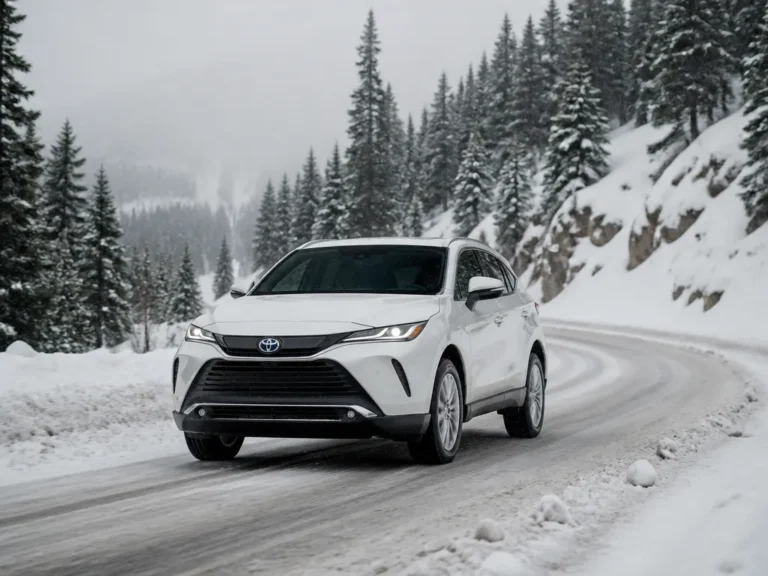
My Venza feels fine in dry weather, then snow turns it into a traction-control light show. If you are asking how your Venza behaves on ice, what modes and tires matter most, or why it sometimes feels like it has “less power” in winter, you are in the right spot.
Toyota Venza AWD helps you move on slippery roads, but winter tires do the heavy lifting for stopping and steering. You will get a Venza-focused checklist, tire and pressure guidance for cold mornings, driving technique for snow and slush, and what ABS or TCS warnings mean when the roads get sketchy.
Toyota Venza Snow And Winter Driving Guide
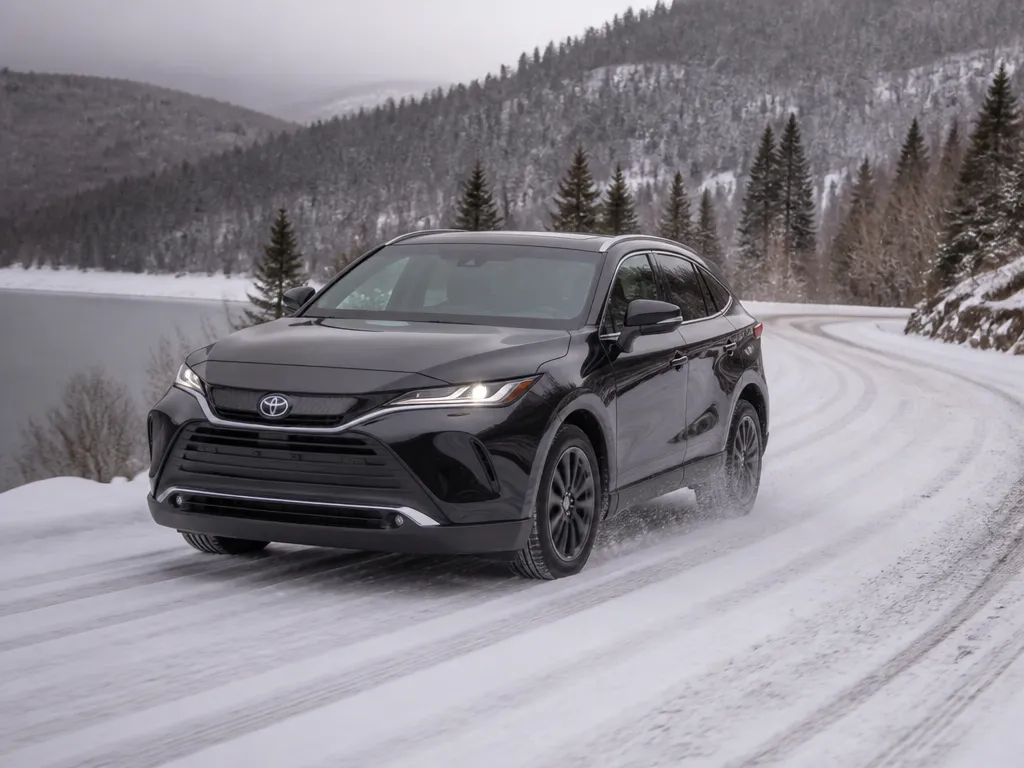
Toyota Venza winter readiness comes down to four things you can control: tires, tire pressures, traction control behavior, and how you drive before the snow hits. The Venza’s AWD and stability systems help you stay on the line, but they do not replace grip from cold-weather tires.
What This Guide Covers For The Venza
This guide focuses on how the Venza manages traction in slick conditions, what to watch for on the dash during winter driving, and which driver inputs matter most when roads get icy. The big theme is consistency: tires and throttle/brake smoothness determine whether the AWD and stability systems can do their job.
Because winter issues overlap across systems, this guide also covers common warning-light scenarios you may see in cold weather, along with realistic limitations like ground clearance and visibility. The goal is simple, get you to the right actions fast, without guessing.
Key Winter Realities For Venza Owners
Snow traction is a tire problem first, and a drivetrain problem second. Even with AWD, a Venza on worn all-seasons can spin up, push in corners, and lock up sooner than you expect because the contact patch is sliding.
Visibility and ice management also decide how safe you are. Windshield washer fluid can freeze, mirrors get crusted quickly, and slush builds up around the tires and underbody if you drive through wet, then refreeze conditions.
| Winter reality | What you’ll notice in a Venza | Your best response |
|---|---|---|
| Cold tires lose grip | Longer stopping distance, lazy throttle response | Use winter-capable tires and verify pressures when cold |
| Traction control intervention | RPM stays lower, braking feels different under slip | Ease onto throttle, give more room, avoid sudden steering |
| Slush and packed snow | Tire “digging” and steering feel changes | Clear tires early, keep speed modest, avoid wheelspin |
| Low visibility | Wipers smear, lights look dim, lanes disappear | Use winter wipers and correct washer fluid |
Insider mechanic tip: If traction control is working constantly, you’re already beyond what your tires can handle. Back off speed and smooth inputs before you try to “out-drive” the system.
Toyota Venza Snow And Winter Driving Awd
Venza AWD uses an electronically managed all-wheel-drive system, so traction control can shift torque and clamp brake slip events fast when surfaces ice over. Venza also pairs AWD with VSC (Vehicle Stability Control) and TC (Traction Control) to keep the car pointed where you command it during low-μ driving.
In Venza E-Four equipped models, the system is designed to send drive to the wheels that have grip, while the brake-based traction control handles wheel slip at the individual wheel level. That means you will feel the car “grab” and straighten itself under acceleration on slick patches, even when you are steering through a slow turn.
How Awd And Traction Control Behave On Snow And Ice
Venza’s traction control logic is speed-sensor based, so it reacts when one wheel spins faster than the others. Once it detects slip, TC cuts engine power and uses braking on the spinning wheel(s), and then VSC can add steering correction by braking one side more than the other if the car starts to yaw.
In practice, this is why you can start moving on snow and feel progress even if you goose the pedal a little. The trade-off is that repeated wheel spin can trigger more intervention, which can feel like power is “mushy” until traction returns.
Drive Inputs That Maximize Grip
For example, if you are pulling out of a parking spot on packed snow, rolling forward with a short pause after initial movement usually gives TC time to regain traction. A hard launch keeps the system in slip mode, and the car can take longer to actually move where you want it.
Driver tip: Treat traction control like a seatbelt, not like a substitute for tire grip. If you see traction or stability warnings frequently, the limiting factor is usually tires, ice thickness, or driver input speed.
Drive modes matter too, since they change throttle mapping and how quickly torque is requested from the driveline. For deep snow or when surfaces are uneven, choose the mode that softens throttle response and reduces wheel spin tendency, then stay smooth until you find a consistent, grippy line.
After any snow event, watch for reduced response from cold start and lingering warning lights. If traction control or stability lights stay on or you notice repeated “reduced power” behavior, get it checked by a Toyota-capable technician before the next storm, because the system needs correct sensor inputs (wheel speed, yaw, steering angle) to regulate AWD and braking properly.
Toyota Venza Snow And Winter Driving Tires
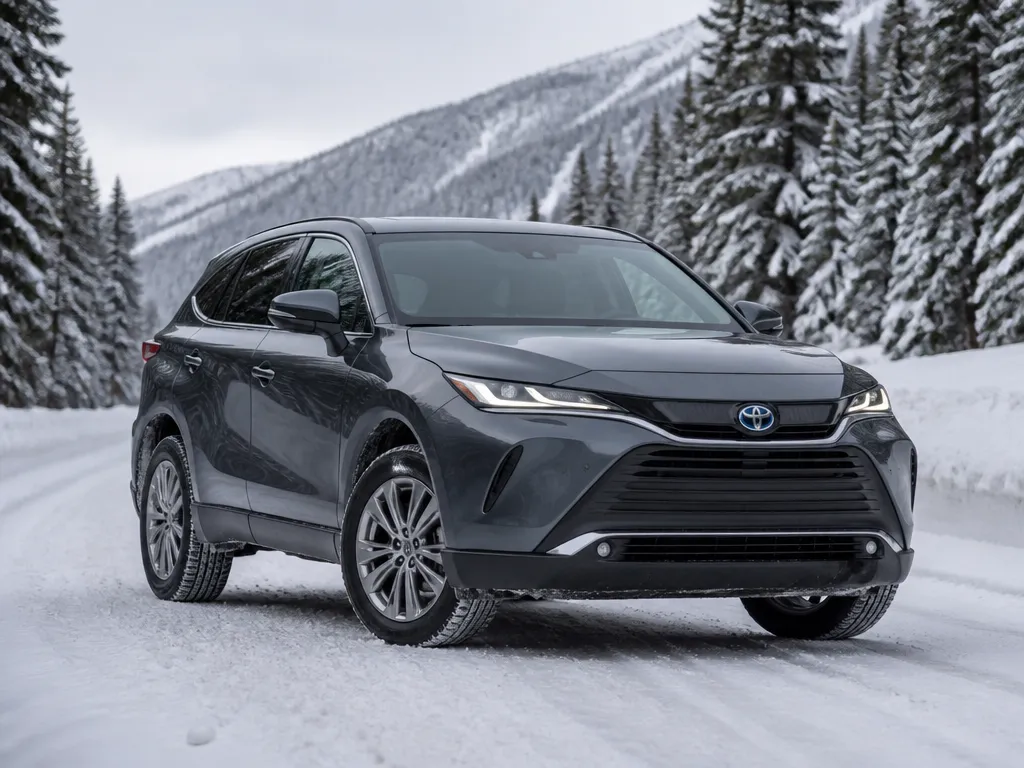
Winter tires grip snow because their rubber stays flexible in cold weather and their tread has real biting edges for slush and packed snow. All-seasons can work in mild winters, but they usually get slick once temperatures drop and snow turns abrasive. For a Toyota Venza, that grip difference is what keeps AWD traction control from constantly “working overtime.”
Winter Tires Versus All-seasons On A Venza
Winter tires are built for cold, so the tread compounds stay softer below roughly 45°F (7°C). All-season tires often harden in the same temperatures, which makes snow braking distances longer and reduces steering response when the surface is half-frozen. Venza’s AWD can help you move, but it cannot replace tire traction when you need to stop or turn.
Choose winter tires if your Venza sees regular freezing temps, slush, or any packed snow. Choose all-seasons only if you are dealing with light, intermittent snow and most days stay near or above freezing. Even then, you will get noticeably better confidence with dedicated winter tires if your routes include hills and highway speeds where you cannot “crawl” through bad spots.
| Use case | Best tire choice for Venza | What changes in bad weather |
|---|---|---|
| Mild winter, mostly dry roads | All-season (good quality) | Better everyday mileage, less planning for seasonal changes |
| Cold nights, slush, packed snow | Dedicated winter tires | Shorter stops, steadier turn-in, fewer traction control interruptions |
| Frequent storms or long commutes | Dedicated winter tires + proper inflation | More consistent grip as temperatures swing |
For example, Venza trims across model years often share a few common factory sizes, but Toyota changes wheel/tire packages year to year. The safe move is to use your specific door-jamb size and then select a winter tire in that exact size from a reputable brand with a true winter compound and snowflake rating.
Tread Depth And Temperature Effects On Snow Grip
Winter tire performance depends heavily on starting tread depth. A new winter tire has more fresh sipes (micro-edges) to bite into snow and slush, while worn tires have fewer active edges and rely more on rubber friction, which drops as snow gets packed and rough.
Temperature is the other big lever. Cold helps winter tires by keeping the compound workable, but even winter tires lose effectiveness as the tread wears down, and they can behave more like all-seasons when they are thin or aged. Keep winter tires at the correct cold inflation pressure, because underinflation increases sidewall flex and can overheat the tread pattern faster during long drives.
Rule of thumb: If your winter tires are down near the legal limit, replace them before the next deep-snow season. On a Venza, worn winters can still pull you forward, but braking and steering response are where the real confidence disappears.
Toyota Venza Snow And Winter Driving Prep
Cold weather prep on a Venza comes down to four things before you leave the driveway: battery confidence, clear visibility, predictable stopping power, and clean, solid airflow under the hood and underbody. A quick walk-around plus a 10 to 15 minute under-hood check can prevent most “winter starts bad” problems.
Cold-weather Checklist Before Storms
For storms that drop temps fast, do these checks the same day you expect freezing or heavy snow. The goal is to catch weak battery voltage, low washer volume, and any brake or tire issues before the weather stacks against you.
For example, a Venza that starts fine in mild weather can still lose voltage under sub-freezing cranking, which trips “reduced power” behavior or warning lamps. If the first start of the day feels weak, handle the battery issue before you assume it is a fuel problem.
| Check | What to look for | Why it matters in snow |
|---|---|---|
| Battery terminals | Loose clamps, corrosion, wet residue | Cold increases voltage demand during cranking |
| Washer system | Low fluid, slow pump response | Road spray freezes fast and visibility drops quickly |
| Brake inspection | Low fluid, warning lamps, uneven pedal feel | ABS relies on clean wheel speed signals |
| Underbody clearance | Heavy ice buildup, loose splash shields | Accumulations can affect airflow and scrape control |
Battery Health And Charging Tips
Cold weather is rough on batteries, because chemistry slows down and the starter draws more current. Keep the battery in the “known good” zone by watching for slow cranking, dim headlights right after you start, and any repeated weak-start pattern.
Insider tip: If you have a multimeter and you can measure battery voltage, weak voltage in the morning is often the earliest clue, even before the starter “sounds” different.
Washer Fluid And Wiper Blade Prep
Winter washer fluid should be rated for local minimum temps, because plain water freezes in the reservoir and lines. A Venza with good wipers still fails if the washer pump cannot deliver thawed fluid quickly enough.
For instance, streaking that only appears after the first coat of fluid usually means blade wear or contamination on the windshield. Wiping the windshield with a proper glass cleaner before swapping blades improves contact and reduces chatter in ice conditions.
Brake And Underbody Inspection
Snow and slush can hide brake problems, from ice stuck to rotors to underbody panels that came loose. Before a storm, check for abnormal brake warning indicators and verify the pedal feel is firm, smooth, and consistent.
For example, if you notice the ABS or traction control warnings coming on more often than usual after a rain-to-freeze event, suspect wheel speed sensor contamination or ice at the wheel. Keep it simple, clear the visible ice where safe, and if warnings persist, have the system checked before the next storm.
Toyota Venza Snow And Winter Driving Tips
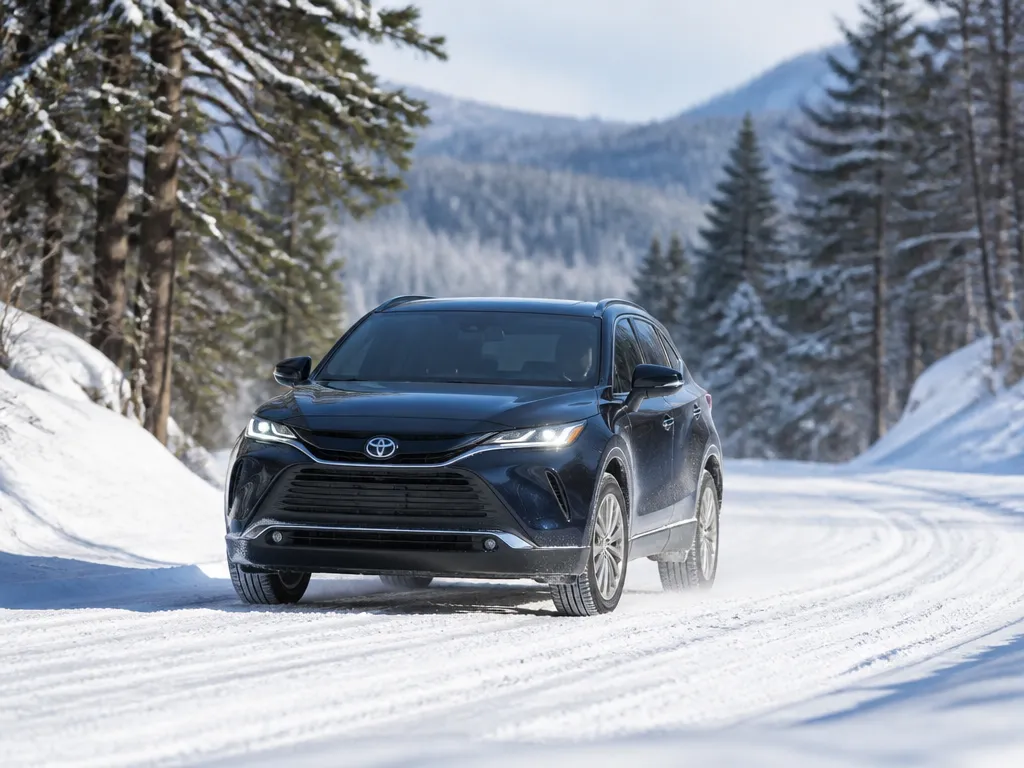
Control wheelspin first, because the Venza’s traction control and AWD can only work with what the tires can grip. Gentle throttle input keeps the system from overreacting and lets AWD transfer torque before you lose momentum.
Throttle Control, Wheelspin Avoidance, And Traction Behavior
On snowy pavement, “more throttle” usually means “more spinning,” and more spinning means slower, less-stable acceleration. Ease into the accelerator, pause for a beat, then add power so the tires bite and the drivetrain can distribute torque.
Tip: If the Venza begins to surge or the steering feels vague, lift off slightly. That single action often restores traction control authority faster than digging in harder.
Braking Distance Expectations On Snow And Ice
Plan for significantly longer stopping distances than dry-road driving, because snow compresses and ice removes friction. With ABS, braking stays more controllable, but ABS does not create extra grip, it just prevents wheel lock.
Use this simple expectation table as a starting point, then adjust based on what you feel in the first few safe stops:
| Surface | Typical feel | Driver action |
|---|---|---|
| Light snow (packed) | Longer pedal travel, slow deceleration | Brake earlier, keep steady pressure |
| Hard-packed snow | ABS cycling more noticeable | Brake in a straight line, no late panic swerves |
| Black ice or glare ice | Decel drops suddenly | Leave maximum following distance, brake very early |
Smooth Steering And Traction Preservation
Steering is traction management, not direction control. Make inputs earlier and smaller, because quick turns unload the inside tires and can trigger traction control even if you are “going slowly.”
In practice, keep the car pointed where you want to go first, then manage throttle and brake changes after the wheels are settled. If you need to change lanes, do it with gentle, incremental steering, not a single sharp correction.
Hill Starts With Engine Braking And Controlled Power
For climbs on slick grades, use a calm start to prevent wheelspin and avoid rolling backward. Engine braking helps you stay composed on descent, but you still need stable tire grip, so keep the car in a smooth power band.
Trade-off to remember: relying on heavier braking late on a slippery hill can overcool the tires and reduce stability, while smooth roll-on control gives traction control an easier job.
Toyota Venza Snow And Winter Driving Scenarios
Ice and slush punish traction fast, so a Toyota Venza driver wins by keeping inputs smooth and spreading distance for braking. Speed control before turns matters most.
Icy Intersections
At a frozen stop sign or light, the Venza may feel “fine” until the tires hit glare ice. Brake earlier than normal, release the brake gently if you feel ABS kick, then continue slowing with shorter, lighter brake pulses.
In practice, start from a stop with modest throttle so the traction control system has room to work. If the Venza wheel speed sensors detect slip, traction control will limit wheel spin, while ABS modulates braking pressure during braking.
Snow-packed Lanes
Snow-packed roads create a “hidden” layer where the Venza tires first ride on top and then suddenly drop to pavement. The moment the contact patch changes, steering can get lighter and power can break traction.
When staying in your lane, treat every merge and lane change like a low grip exercise. Keep a longer following distance than you think you need, because the snow ridge between tire tracks can act like a small ramp and steer the car.
| Winter surface | Venza behavior to expect | Driver move that helps |
|---|---|---|
| Powder | Tires may dig and feel draggy | Use gentle throttle, keep momentum without wheelspin |
| Slush | Brake response feels delayed | Increase following distance, brake earlier and softer |
| Glare ice | Steering and throttle can surge grip loss | Slow down before turns, minimize steering input |
Slushy Highway Conditions
Slush builds up on tread blocks, which can reduce grip until the tires “scrub clean” again. The first few minutes after entering a slushy highway are usually the slickest, even if the road looks wet.
Maintain steady throttle and avoid sudden lane-to-lane corrections. If the Venza shows traction or stability intervention, back off the throttle and give the car a chance to settle, since fighting the steering while traction control is working can worsen the slide.
Pro tip: If you must pass, pass with a calm steering hand and no extra braking mid-maneuver. Slush throws spray and reduces visibility, and fast steering changes can turn a manageable slip into a loss of control.
Cornering On Slippery Curves
On slick curves, the Venza can feel like it “turns in” when you ease the steering, then surprises you when grip disappears mid-corner. The safest move is to set your speed before the turn and keep the steering smooth, since rotating the car too aggressively on ice overwhelms traction control.
Cornering technique is simple but strict: go in slower, hold a steady throttle, and avoid abrupt braking while turning. If you begin to understeer (front wash-out), lift slightly and straighten the steering, then roll back into throttle once the tires regain grip.
Toyota Venza Snow And Winter Driving Warnings
ABS, traction control, and stability control lights tell you the Venza is limiting wheel slip or can no longer control braking traction normally. In winter, those alerts usually mean the tires are losing grip, the system is not reading a wheel speed accurately, or a sensor signal is intermittent. Treat the warnings as a “traction level dropped” message and adjust immediately.
Reading The Alerts In Real Winter Conditions
On a slippery Toyota Venza, the traction-related light can flash briefly when one wheel spins during acceleration, indicating that the system is reducing wheelspin. An ABS warning light that stays on indicates a fault or that ABS may be unavailable, rather than normal ABS activation. What you do next depends on whether the light is brief and disappears or stays on.
| What you see | What it usually means in snow/ice | What to do right now |
|---|---|---|
| ABS light | ABS may be disabled, often due to wheel speed sensor input or a fault | Drive slower, increase stopping distance, and avoid panic braking until checked |
| Traction/Slip (TRAC)/TCS light | Traction control is active or reduced because a wheel is slipping | Ease off the accelerator, straighten the wheel, and don’t try to “power through” |
| Stability/”VSC” type light | The vehicle is correcting understeer or oversteer, or a fault is present | Reduce speed, go gentler on turn-in and throttle, pull over when safe if it stays on |
Tip from the shop: a traction light that flashes briefly during slip can be normal behavior. A light that stays on after the drive, especially an ABS or VSC-style warning, is a “diagnose it” situation.
Common Causes And The Safest Immediate Actions
Tire grip is the top cause. Worn tread, wrong tire pressure, packed snow in the tread blocks, and icy sidewall slick spots can trigger wheel slip quickly, especially on stop-and-go hills. Wheel speed sensors and their wiring are the next most common reason for ABS or stability lights to remain on, since salt and moisture can create intermittent signals.
Immediate safe actions include checking tire pressure, clearing tread clogging where safe, and slowing down until the cause is confirmed.
Wheel slip that happens repeatedly despite slow inputs is a sign you should inspect tires before chasing electronics.
For example, check tire pressure first, then look for tread clogging or uneven wear. If warnings persist after tires are confirmed, schedule a scan for wheel speed and yaw rate related codes, since that is where intermittent sensor issues show up.
Quick Summary
In winter, the Venza can quickly show traction-control intervention when the road turns slick, especially if you are relying on all-season tires. You are advised to accelerate gently and brake early because grip can drop fast on packed snow, and to check and recheck tire pressure as overnight cold settles in.
For system behavior, the guide explains that Venza traction control reacts using speed sensors and, once slip is detected, TC cuts engine power and uses braking on the spinning wheel(s), while VSC adds steering correction to keep the car pointed where you command it. On Venza E-Four models, drive is designed to go to the wheels with grip, with brake-based traction control handling wheel slip at each wheel. It also warns not to ignore ABS or TCS lights staying on.
| Winter factor | What to expect in the Venza | What to do |
|---|---|---|
| Tires in cold (near or below 7°C / 45°F) | All-seasons can lose grip quickly, triggering traction-control intervention | Use winter-capable tires and keep them properly inflated |
| Traction control behavior on ice/snow | TC cuts engine power and brakes spinning wheel(s), VSC may steer-correct | Ease onto throttle, brake early, and avoid sudden steering |
| Dash warnings (ABS/TCS) | Lights staying on indicates a problem you should not ignore | Plan to slow down and get it checked |
Frequently Asked Questions
Does The Toyota Venza Handle Snow Better With The Available Awd Or Fwd?
If you have AWD, you generally get better traction when roads are slick, especially during takeoff and on uneven snow-covered surfaces. If your Venza is FWD, your results depend heavily on tire choice and tread depth, because driving force comes mostly through the front tires.
What Snow Tires Size And Type Should I Use On A Toyota Venza For Winter Driving?
The safest approach is to match the exact tire size listed in your Venza owner manual or the tire placard on the driver door. For winter, prioritize a true snow tire or an all-weather tire rated for severe winter service, and avoid mixing tire tread depths front to rear.
How Can I Tell If My Toyota Venza’s Tires Are Worn Enough To Be Risky In Snow?
Use the tread-depth gauge or the penny test, but the key number is 4/32 in or less, since stopping distances can get noticeably worse in deep snow and slush. Also check for uneven wear, because a misalignment or worn suspension components can make the car feel unstable on snowy corners.
Should I Warm Up My Toyota Venza Before Driving In Freezing Weather?
You can let it idle briefly, but don’t plan on long warmups, since modern engines warm efficiently while driving. In very cold temps, give the car a short time to stabilize and expect slower throttle response until the drivetrain and tires gain traction.
Why Does My Toyota Venza Feel Like It Slips Or Has Traction Control Kick In On Snow?
Most “traction” issues in winter come from tire grip problems, like worn tread, low tire pressure, or hard winter compounds on old tires. If traction control triggers even with good tires, get it checked, because dragging brakes, sensor faults, or steering or suspension wear can cause unexpected stability control behavior.
What Common Winter Driving Mistake Causes The Worst Snow Performance In A Toyota Venza?
The biggest one is going too fast for the available traction, then trying to correct with abrupt steering. In snow, smooth inputs matter, and it helps to follow a longer gap and brake earlier, because tires and brakes cannot overcome low-traction physics no matter how confident the AWD system feels.