


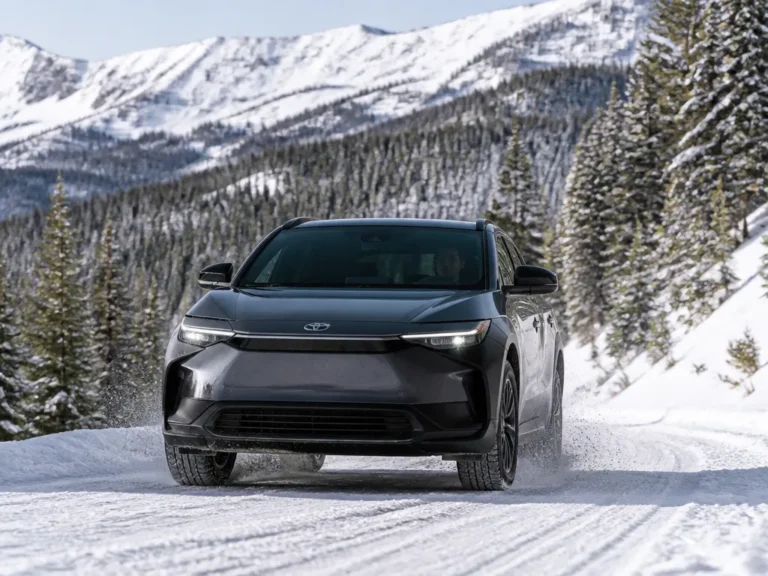
Thinking about taking your Toyota bZ4X into a real winter, but wondering if it will feel planted on snow and ice? The EV part adds questions too, like how much range you lose when it is 0°F, and how regen behaves on slippery pavement. This is where a lot of owners get surprised.
Toyota bZ4X winter confidence comes down to tires first, then traction control and stability behavior, and finally cold battery management. Expect noticeable range drop in freezing temps, reduced regen feel at times, and stronger ABS/traction interventions on ice. Read on for practical settings, habits, and a realistic winter plan.
Toyota bZ4X in snow and winter driving is usually safe when you run the right tires and drive smoothly. On ice, traction control and ABS will intervene quickly during hard throttle or late braking, so start pulls gently. In cold weather around 0°F, expect a range drop of roughly 30% to 50% depending on speed and heating, even with normal driving.
Toyota Bz4x In Snow And Winter Driving
Toyota bZ4X winter behavior is predictable: it moves smoothly on snow when traction is available, and it becomes cautious on ice once slip triggers stability control and ABS. The biggest real-world limiter is tire grip, because the EV drivetrain will still send torque to the wheels even when the surface is cold and slick.
Overall Winter Safety Verdict
The bZ4X is a capable cold-weather cruiser, with traction control and ABS doing their job during typical snowfalls and slush. On packed snow and light ice, the AWD system helps keep the car moving without the dramatic “one-wheel spin” you can get from under-tired vehicles.
On glare ice or hard-packed ice, expect reduced confidence. Stability control will intervene sooner, throttle and torque delivery feel more conservative, and stopping distances depend heavily on tire compound and temperature. Winter tires (for later sections) matter more than any driving mode choice.
| Winter condition | bZ4X expectation | What you’ll notice |
|---|---|---|
| Fresh snow (3-6 inches) | Good confidence, smooth launches | Traction control works quietly, steady progress |
| Packed snow | Solid, but speed planning matters | Grip fades if you accelerate mid-corner |
| Slush | OK, watch for hydroplane-like behavior | Splashing and reduced braking bite |
| Glare ice | Weakest area | ABS cycles sooner, stability control clamps down |
Strongest Vs Weakest Scenarios (And The Ev-specific Twists)
For strongest results, keep speeds moderate and drive like you are on “low-grip” pavement, not like you are on dry asphalt. Gentle initial throttle and early braking reduce how often traction control and ABS have to correct the car.
For weakest results, glare ice and deep, loose snow that repeatedly unloads tires will turn the driving into a careful, short-pulse effort. Regenerative braking can also feel different in cold weather, because the battery and power electronics may limit regen when they are not ready, which can reduce one-pedal deceleration compared with mild days.
“On EVs in winter, the most noticeable change is usually not acceleration, it is deceleration feel. Plan to use the brake earlier and assume regen may be capped when the battery is cold.”
Winter Tires For Bz4x Traction
Winter tires grip ice and slush better because their rubber stays softer in cold weather and their tread design clears snow more effectively. For the bZ4X, that extra traction matters because you feel every slip through the EV’s instant torque and regenerative braking.
Winter Vs All-season Performance You Actually Feel
All-season tires are built around a wide temperature range, but they lose bite as temperatures drop into the teens and single digits. Winter tires add a colder-weather compound and deeper, more aggressive sipes, so the contact patch can keep working when the road surface is damp, packed, or icy.
On the bZ4X, the biggest difference shows up when you try to move from stoplights or crawl through slush. A tire that can maintain grip will let the traction control manage wheel slip without forcing the vehicle into more abrupt torque reductions.
Practical rule: If daytime temps are consistently below about 45°F (7°C), switch from all-seasons to winter tires for the best real-world traction.
Studless Vs Studded: Choosing Traction For Your Conditions
Studless winter tires are usually the better choice for most bZ4X owners because they provide strong bite on packed snow and slush, with less harshness on dry pavement. Studded tires can improve straight-line control on glare ice, but they trade off noise, vibration, and often more wear on cleared roads.
For electric vehicles, the feel of traction is immediate. Pick the tire based on what you see most, glare ice for studded, mostly snow and slush for studless.
Correct Size And Load Handling For Snow Grip
Tire size and load rating matter because a too-small load index or an incorrect overall diameter can affect how the tire supports the vehicle and how the traction system interprets wheel behavior. The bZ4X also has specific tire fitment, so staying within the manufacturer’s approved sizes helps ensure consistent ABS and traction control performance.
In practice, prioritize the exact tire size listed on your door jamb sticker or in the owner’s manual for your model and wheel setup. Winter tires are often available in multiple widths and sidewall profiles, and choosing the proper load rating is what keeps the tire from overheating or squirming under torque on slippery grades.
| Winter tire decision | Why it matters on the bZ4X | What to look for |
|---|---|---|
| Approved winter tire size | Preserves correct rolling diameter for wheel-speed sensing and traction behavior | Door-jamb or manual size, not a random cross-size |
| Load index matched to vehicle | Maintains sidewall stiffness so the contact patch stays stable under slip | Load rating at or above the required spec |
| Inflation set to spec | Cold temperatures change pressures and can reduce grip if underinflated | Use the placard numbers, recheck after the first cold snap |
Cost reality check: A full set of quality winter tires for an EV-sized bZ4X setup often costs more than a one-season “budget” approach, but you gain predictable traction when roads get icy. Investing in the right size and load rating is what makes that money show up as safer, calmer handling.
Traction And Stability On Snow
Snow and ice make the bZ4X’s traction and stability systems work more often, with frequent throttle and brake intervention to keep the tires pointed where you want to go. On slick surfaces, expect the system to limit wheelspin quickly, then fall back to slower, smoother control inputs from the driver.
For example, on a snow-packed two-lane where the outside lane is glazed and the inside lane is slushy, the bZ4X may alternate between ABS activity and traction control intervention as the tire-to-surface grip changes every few seconds. That’s a normal response on EVs with high torque available at low speed, because the system has to manage rapid torque changes across unstable traction.
Mechanic tip: For winter confidence in the bZ4X, drive like traction control is “always a passenger,” not the driver. Use smaller throttle changes, maintain spacing, and avoid sudden steering plus hard braking combinations on glare ice.
Regenerative braking can affect how quickly the vehicle settles on low-grip surfaces, but even before that topic, the traction and stability systems still have limits: they work best with progressive inputs and sufficient baseline tire grip. With winter tires properly inflated and the vehicle preconditioned, the bZ4X’s interventions are usually controlled and predictable; with summer tires on slush or ice, the same systems spend more time working against wheelspin and brake slip.
| Situation | What you feel | System intervention | Practical limitation |
|---|---|---|---|
| Start on packed snow | Pull “backs off” quickly | Torque reduction to prevent wheelspin | Longer acceleration, higher chance of needing extra distance |
| Braking on glare ice | Pulsation or audible ABS cycling | Brake pressure modulation | Steering must stay smooth to avoid slip transitioning side to side |
| Mid-corner on uneven traction | Correction feel through brake/torque changes | Individual brake pressure plus torque reduction | Too much speed or abrupt steering overwhelms the available grip |
Regenerative Braking In Cold
Regenerative braking is weaker when the bZ4X battery is cold, because the battery management system limits charge acceptance to protect battery life. On slick snow, that means you may get less slowing from lifted throttle and more reliance on the friction brakes, especially right after you start moving.
Regen Levels When The Battery Is Cold
Cold-soaked battery packs take longer to reach a state where they can accept higher regen current, so the bZ4X can cap deceleration. The change is usually gradual: regen feels noticeably limited at first, then firms up as the battery warms through driving and system preconditioning (when available in your climate and schedule).
In practice, expect three winter behaviors. One, lifted-throttle slowdown is reduced until the pack warms. Two, brake blending shifts more work to the hydraulic brakes, so pedal feel can feel less “one-pedal” and more conventional. Three, repeated hard decelerations while cold can keep regen capped longer, because the battery stays near the same temperature threshold.
One-pedal Driving Viability In Snow
One-pedal driving is still usable, but it becomes less consistent during the coldest portion of the trip. On snow, the traction limit is already low, and if regen is capped you lose part of the deceleration authority you count on for controlled, low-speed following.
For low-speed maneuvering (roundabouts, parking lots, merges), you can still use one-pedal style by modulating how far you lift the accelerator.
For example, lift to the point where the car begins to slow, then hold steady rather than demanding strong deceleration that may exceed what traction or regen can provide.
Blended Braking Feel And Action
On the bZ4X, deceleration is blended, meaning the car mixes regen and friction brakes based on battery readiness and traction demand. On cold days, more of that “blended” slowing comes from the friction brakes, so pedal travel and feedback can feel different than the way the car behaves once warmed up.
In a snowy stop, this blending usually reads as smoother ABS events rather than sudden lockups, but you may feel quicker pedal response because friction pressure is doing more work. If you notice a firmer pedal or less lever-effect deceleration from lifting, assume regen is limited and adjust to earlier braking.
Insider tip: For winter confidence, drive the first 5 to 10 minutes like the regen is “soft,” then gradually return to your usual one-pedal habits as the slowdown authority improves.
Winter Range Impact
Cold weather usually cuts bZ4X range because the battery needs heat and cabin heating draws electricity. Snow also increases rolling resistance and slows you down, so the efficiency you expect in mild weather drops quickly once roads get rough.
How Much The Range Drops In Real Winter Use
Expect the biggest range hit when temperatures stay well below freezing, drives are short, and you use cabin heat and defrost often.
In practice, city-style driving with frequent slow speeds and traction events can use more energy than you’d see on the same route at steady highway speed.
For planning, a conservative rule of thumb for EVs is to budget extra margin in winter rather than trusting the summer-style range estimate. A good approach is to start with your expected route energy and then assume an additional “cold penalty” for heater use plus battery conditioning needs.
| Winter scenario | Typical range impact (planning) | Why |
|---|---|---|
| Sub-freezing temps, short trips (under ~15-20 min) | High | Battery and cabin heating use electricity before you’re really rolling |
| Cold highway cruise | Moderate | Less stop-and-go, but aerodynamic and rolling losses still climb with colder tires and surfaces |
| Snowy/slushy roads with slower speeds | Variable | Rolling resistance spikes, traction control events can cost energy, and regen may be less effective when conditions are harsh |
City Driving Vs Highway Efficiency
City efficiency is highly sensitive to speed, heater demand, and how often you brake from low speeds. In winter, stop-and-go also means more repeated acceleration cycles, and that can outweigh the energy you recover.
Highway driving is steadier, so it usually lets you “live closer” to the rated range, but cold tires and snow-packed roads still raise losses. If you drive faster to compensate for winter delays, aerodynamic drag grows fast and eats range quickly.
Battery Thermal Management And Its Direct Effect On Range
The bZ4X has to keep the traction battery in a workable temperature window. When the battery is cold, the vehicle spends energy warming it (or limiting power delivery until conditions improve), and that hits usable range immediately.
For planning, battery preconditioning helps most when you can plug in before departure. When you precondition while connected, you shift energy use away from the battery you’re trying to preserve for driving, which is why the “range loss” feels smaller on cold mornings.
“The range estimate is strongest in mild weather. In winter, the battery’s need for heat is often the biggest part of the penalty, then tires and road surface finish the job.”
Winter Preconditioning &Amp;amp;amp; Charging Tips
Cold battery temperatures can slow the bZ4X’s charging, even when the charger is capable of high output. Preconditioning warms the battery pack so it can accept more current sooner, which matters most for DC fast charging.
When And How To Precondition
Plan preconditioning around your first charging stop, not every mile of driving. The best results come when you arrive at the charger with a warm pack, since lithium cells take heat first and charge second.
Use the bZ4X’s navigation-linked charging or scheduled climate features when available, and keep the battery from sitting outside in extreme cold right before you plug in. If you just pulled out of a deep-freeze parking spot, adding a short drive to generate a little heat before you charge can help.
Dc Fast Charging Vs Ac Charging In Cold
DC fast charging is the one most affected by battery cold, because the car limits charging power when the pack is not ready. AC charging is typically gentler, but it still takes longer in winter since the battery and cabin compete for energy.
For most drivers, AC is fine for overnight charging, and bZ4X preconditioning helps more when you’re trying to claw back time on a road trip with DC stops.
| Charging type | Winter impact | What to expect |
|---|---|---|
| AC (Level 2) | Moderate slowdown | Steadier charge rate if parked indoors or warmed by prior driving |
| DC fast | Big slowdown when pack is cold | Initial power limit until battery warms, then a stronger ramp |
Insider tip: If your goal is “fastest total trip time,” prioritize preconditioning for the first DC session after the car sat overnight. Chasing fast charging after the battery is already warmed is where you get the real payoff.
Winter Charging Speed Expectations
Expect reduced charging power in typical winter temps, especially at the start of a session. The exact number changes based on how cold the pack is, how long it sat, and whether preconditioning ran successfully.
In practice, many owners see the biggest hit in colder conditions during the first few minutes of a DC fast session, then improvement as the battery warms. Cabin heat also draws power while you charge, so using seat heat (if equipped) and a lower cabin target can help you keep more energy going into charging.
Driving Tips And Modes For Snow
Toyota bZ4X winter traction is mostly about how gently you apply torque, steering, and braking inputs. Use the vehicle’s snow-focused drive mode when available, then keep wheel spin close to zero with smoother acceleration and longer following distances.
Recommended Drive Modes For Snow
Start in the most traction-conservative mode you can select, then only step up if you have clean visibility and steady grip. With EV torque, the bZ4X can spin tires fast if you jab the accelerator, even with traction control on.
In practice, choose the most conservative available mode for snow or slippery roads.
Insider tip: In mixed snow and dry patches, keep steering and throttle changes slow. Turning, then adding torque, is where most EV winter traction issues happen.
Throttle And Speed Control On Slick Surfaces
On snow and ice, your goal is momentum, not reaction. Drive slower than you think you need to, and aim for one smooth throttle slope instead of repeated pedal corrections.
Use this simple speed and control approach:
| Road condition | Throttle style | What to watch |
|---|---|---|
| Packed snow | Light, steady pedal | Any surging or wheel spin, even brief |
| Slush | Earlier lift, smoother reapply | Traction control cycling |
| Thin ice | Very gentle inputs | ABS pulses and sudden yaw changes |
Regenerative braking changes how the car slows, so throttle lifting can feel different when it is cold. If lift-off causes the nose to dip or the car to feel unstable, ease off more gradually and consider increasing brake use instead of relying on abrupt regen when traction is worst.
Hill Starts And Cornering Technique
Hill starts are where a lot of EVs surprise owners, because power delivery is immediate. The bZ4X is still traction-limited in snow, so plan for a longer roll, stage your start, and avoid standing-start “bursts” of torque.
Cornering technique is the same in any winter EV, but it matters more with instant torque. Enter slower than normal, keep steering angle steady, and add throttle only after the car is pointed where you want to go. If you brake, brake in a straight line first, then turn, since combining hard steering with braking or aggressive regen can cause instability on icy snow.
Quick Summary
The Toyota bZ4X handles winter driving best when you apply the tire and driving principles covered above. On packed snow it moves smoothly with traction available, but on ice it gets cautious once slip triggers stability control and ABS. The EV drivetrain still sends torque to the wheels even when the surface is cold and slick, so tire grip remains the biggest limiter. If you hard throttle or brake late, traction control and ABS intervene quickly, which makes the car feel managed rather than magically grippy.
In near-freezing weather, the biggest practical change is deceleration feel and reduced energy efficiency. At about 0°F, expect roughly a 30% to 50% range drop depending on speed and heating, with cabin heat and frequent acceleration driving that number up. Regen can soften because the battery and power electronics may limit regen until the battery is ready, so one-pedal deceleration may be capped. Precondition before you leave, drive with smooth inputs, and brake earlier because braking distances grow fast on packed snow and glaze ice.
| Winter factor | What the article says you will notice |
|---|---|
| Tires | Winter tires beat all-seasons below 45°F, with better ice and slush grip and tread that clears snow. |
| Ice behavior | ABS cycles sooner and stability control clamps down, so be gentle and plan for reduced confidence. |
| Regen in cold | One-pedal feel can soften until the battery warms, because regen may be limited. |
| Range at 0°F | Expect about 30% to 50% less range, influenced by speed, cabin heat, and heating use. |
Frequently Asked Questions
How Does The Toyota Bz4x Handle In Snow, And What Traction Settings Should I Use?
Start in the appropriate driving mode for snow or slippery roads, then keep speeds down and increase following distance because traction still limits acceleration. If your bZ4X has traction control behavior you can feel through the pedal, let it work, avoid wheelspin, and steer smoothly to keep the tires within their grip.
What Winter Tire Size And Type Works Best On The Toyota Bz4x For Icy Roads?
Use the exact tire size listed on your bZ4X tire placard, then choose a true winter tire (3PMSF rated) over all-seasons for consistent bite in freezing temps. For the best results, prioritize the tire compound and tread pattern meant for ice and packed snow, not just general “winter capable” branding.
Why Does The Toyota Bz4x Lose Range Faster In Cold Winter Weather, And How Can I Reduce It?
Cold battery temperatures can reduce effective range, so preconditioning and limiting high-energy cabin heat help. Drive gently, use regenerative braking smoothly, and avoid extended idling while parked, because every extra minute and harder acceleration costs range.
Can I Use Regen Braking On The Toyota Bz4x In Snow Without Losing Control?
You can use regen, but you should apply it more progressively on slick surfaces so you do not upset traction. If the road is icy enough to feel the car “hunting” for grip, reduce your regen input and leave more space ahead to avoid sudden deceleration events.
What Is The Most Common Bz4x Winter Driving Mistake That Causes Wheel Spin Or Sliding?
The biggest mistake is hard throttle inputs after a long brake-free stretch, especially when tires are cold and traction is inconsistent. Accelerate gradually, avoid abrupt steering corrections, and use lower speeds to keep tires from breaking traction.
How Often Should I Check Toyota Bz4x Tire Pressure In Winter, And What Should I Look For?
Check tire pressure at least once a week and before longer trips, because cold weather drops pressure and affects grip. Make sure each tire matches the pressure values on your driver door jamb label, then visually inspect for uneven wear that can point to alignment or tire balance issues.