


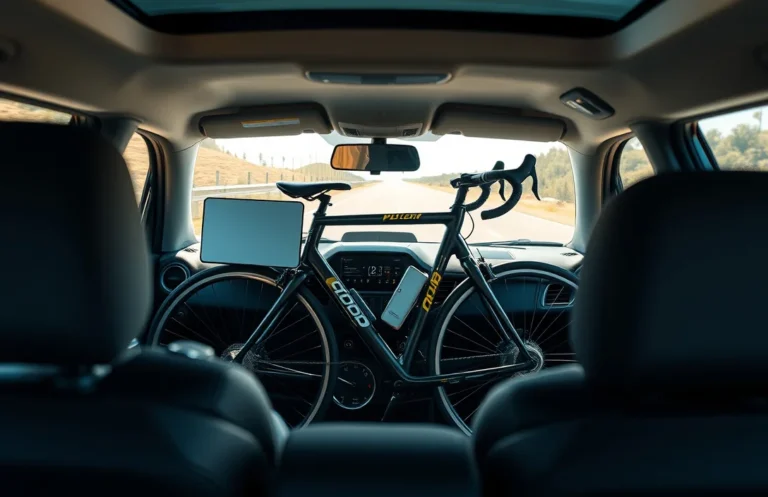
You just pulled the Peloton bike out of the box (or you’re shopping for one), and now you’re staring at your SUV’s cargo area wondering if it actually fits. The bike’s frame size, plus the box dimensions, matters. A quick “yes” can turn into a sore back when the box won’t clear the hatch or doors.
Peloton bikes can fit in many SUVs, but the real question is hatch clearance and door width with the bike (or shipping box) already in place. Plan for turning clearance and expect setup space behind the bike. This article breaks down what to measure so you can buy or transport confidently.
Peloton bike fit in SUV depends on measured cargo area length, door opening width, and hatch opening height. If you’re bringing the bike in its shipping box, you need space for the box to pass the doors without forcing. Measure those three openings before you schedule delivery.
Can Peloton Bike Fit In Suv?
Peloton bikes can fit in many SUVs, but the deciding factor is the bike’s folded dimensions versus your cargo area’s opening width, floor-to-headroom, and how much you can tilt or lay the frame during loading. The Bike’s size (and whether it is a Peloton Bike or Bike+) plus your SUV’s cargo shape often matter more than the SUV’s advertised “capacity.”
Even when the bike’s outer dimensions look compatible, real-world fit can fail due to the lift gate opening height, rear seat track design, or the angle your garage door clearance forces you to load at. Expect the tight spots to be the widest part of the frame and handlebars, and the tallest point when the bike is moved through the cargo opening.
Key Size Factors That Control Fit
Peloton packaging and shipping materials change the picture during delivery, but once you’re moving the bike yourself, the bare bike dimensions and clearances control everything. Measure for both “through the opening” and “down on the cargo floor,” since the path into the SUV is usually the limiting step.
How To Measure Your Suv So You Get A Real Answer
Accurate measurements remove guesswork. Use a tape measure and write down three numbers for both sides of the decision: the opening you’ll pass through and the cargo space you’ll land the bike in.
For example, an SUV may have plenty of floor area, but a narrow lift gate opening makes loading impossible without removing accessories or using extra tilt. Another common problem is the bike can enter, then stop short because the rear seat latch or the wheel well blocks the frame during the final slide.
Quick takeaway: Start with opening width and height, then confirm floor depth. If either opening measurement is tight, the bike may still be able to fit in the SUV, but only with careful loading and correct angle.
This article will help you confirm fit by breaking down the measurements you need and the specific size-related variables that change the outcome. The next step is Peloton Size Specs, where you’ll compare your bike’s dimensions to your SUV’s opening and cargo space.
Peloton Size Specs
Peloton Bike dimensions can vary by generation and whether you measure the fully assembled unit or the shipping carton. Exact figures also depend on the base type (Bike versus Bike+) and how the handlebars and pedals are oriented during measurement.
Because exact sizes were not reliably found in the available reference material, treat the numbers below as planning targets, then confirm with your specific model label or the packing insert from the retailer you ordered from.
Assembled Footprint
Plan for an installed footprint that includes the bike’s widest points at the handlebars and pedals, plus working clearance to step around the frame. A good rule for SUV fitment planning is to allow extra space for opening rear doors and for getting the bike wheels and feet positioned square.
| Measurement type | What it affects | Practical fitment tip |
|---|---|---|
| Assembled width | Door opening clearance | Measure at the grips, not just the frame |
| Assembled length | Rear hatch depth | Check pedal position before loading |
| Assembled height | Roofline and hatch opening | Plan for tilting only if the cargo area allows it |
Boxed And Shipping Dimensions
The shipping carton is what you need for most SUV fitment decisions, because the carton shape locks in the package size even if the bike itself could fit with clever rotation. Peloton typically ships the bike with major components secured to reduce movement, so the box size is the most repeatable number.
For cargo planning, check three things: carton length versus the distance from rear hatch sill to the back of the front seats, carton width versus the narrowest point of your cargo opening, and carton height versus the height to the underside of the roof. For tall boxes, SUVs with a lower liftover or removable rear seats make life easier.
“If you can’t match the exact model’s carton dimensions, measure your SUV’s cargo opening and distance to the front seatbacks first, then confirm the box size from the order paperwork.”
When you get the carton dimensions from Peloton, the retailer, or the packing label, compare them to your SUV’s measured cargo opening using the orientation you expect to load in (flat, at a slight angle, or lengthwise). This is the baseline you’ll use before the next step in the article: SUV cargo space planning.
Suv Cargo Space Basics
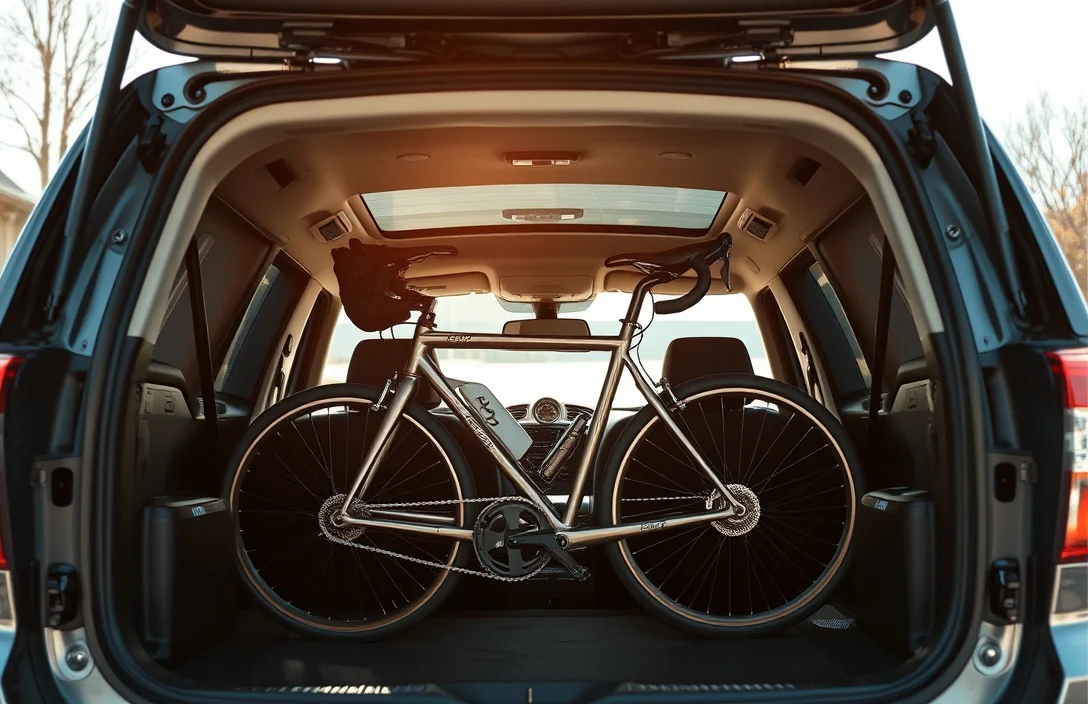
Most SUVs can fit a Peloton bike when you plan around the third-row folded position and the cargo floor height, because the limiting factors are length behind the seats and whether the cargo floor becomes flat. With the third row up, the usable opening is usually too small for the bike frame to clear. With the third row down and a fold-flat second row, clearance improves a lot and you can slide the bike in more squarely.
Behind-third-row Space
Behind the third row, SUV cargo areas are shaped like a trapdoor opening, so the bike can be “almost there” but still snag on the rear door opening, wheel wells, or seatback contours. A key check is the interior straight-line distance from the back of the folded second row to the rear door, then subtract space you need for the bike’s pedal and handlebar ends to rotate past obstacles. Many midsize SUVs with a power liftgate also have a lower roof opening angle that reduces height clearance at the tail end.
For practical fit testing, measure three things in your exact trim:
Mechanic’s tip: Plan for a slight diagonal entry. A bike can slide in with a “perfect rectangle” plan and still hit due to seatback angles, so give yourself clearance at the opening, not just at the floor.
Flat-fold Vs Non-flat
Fold-flat seating is the difference between “it fits” and “it grinds the bottom bracket on the seam.” Non-flat folds create a hump or step in the cargo floor, and that step can force you to tilt the bike differently to get past it. Peloton bikes have a low-profile frame, so the floor mismatch can shift the bike’s center of gravity and make it harder to push straight in without catching.
Use this simple decision table to judge whether your SUV’s layout will work without heavy contortions:
| SUV seat/cargo setup | What you will notice during loading | Fit outcome |
|---|---|---|
| Third row down + second row fold-flat | Long, cleaner floor path, fewer snags | Most likely |
| Third row down + second row non-flat fold | Floor step forces tilt and changes clearance | Possible with care |
| Third row up | Shortened opening and seatback interference | Usually not |
For SUVs like the Honda Pilot and Toyota Highlander (where cargo geometry varies by trim), aim to confirm that the floor area behind the second row becomes continuous enough to roll the bike’s base in without lifting. For SUVs with a flat-cargo option, you often gain the most by lowering the second row completely and then checking for any floor seam height right where the bike wheels and frame corners travel.
Partial Disassembly Options
Peloton bikes usually fit in an SUV by reducing the bike’s overall “footprint” using a few removable parts, most commonly the pedals and, on some models, certain trim pieces around the base. You can often gain a few critical inches in length and width, which is the difference between “straps on” and “doesn’t clear the cargo opening.”
Pedal Removal Basics
Pedals are the easiest win because they stick out farther than anything else. Removing them can also make the bike easier to rotate and slide without scuffing the SUV’s rear bumper or door sill.
Peloton uses standard pedal threading, so you want to follow the bike’s pedal markings and the way the crank is built. Many riders learn the hard way that forcing the wrong side can damage crank threads, so take a minute to confirm which pedal loosens counterclockwise and which side is reverse-threaded.
Shop tip: If a pedal won’t budge, stop and reassess. A stuck pedal often needs proper leverage and a little penetrant time, but you should keep penetrant off sensors or drive components.
| Part removed | What you gain | Practical impact in an SUV |
|---|---|---|
| Pedals | Less width and easier rotation | Better clearance near liftgate and wheel wells |
| Accessory/trim pieces (if applicable) | Less snagging on door opening | Fewer scuffs during loading |
Console And Seat Adjustments
Seat position and handlebar tilt can change how the bike “stacks” in the cargo space. Dropping the seat to its lowest practical height usually helps the bike clear the liftgate edge and keeps the frame from hitting the top of the cargo opening during the angle change.
Console and display alignment can also matter, especially with taller cargo openings or SUVs with a pronounced rear curve. If your console mount allows adjustment without tools, set it forward or to a neutral angle so it doesn’t catch on the trim when you slide the bike in.
Trade-off: Maximum adjustment helps fit, but overextending parts you do not understand increases the chance of poor alignment or cosmetic damage. If an adjustment point feels stiff or resists beyond normal force, pause and use the bike’s manual for that specific model.
Loading And Orientation Tips
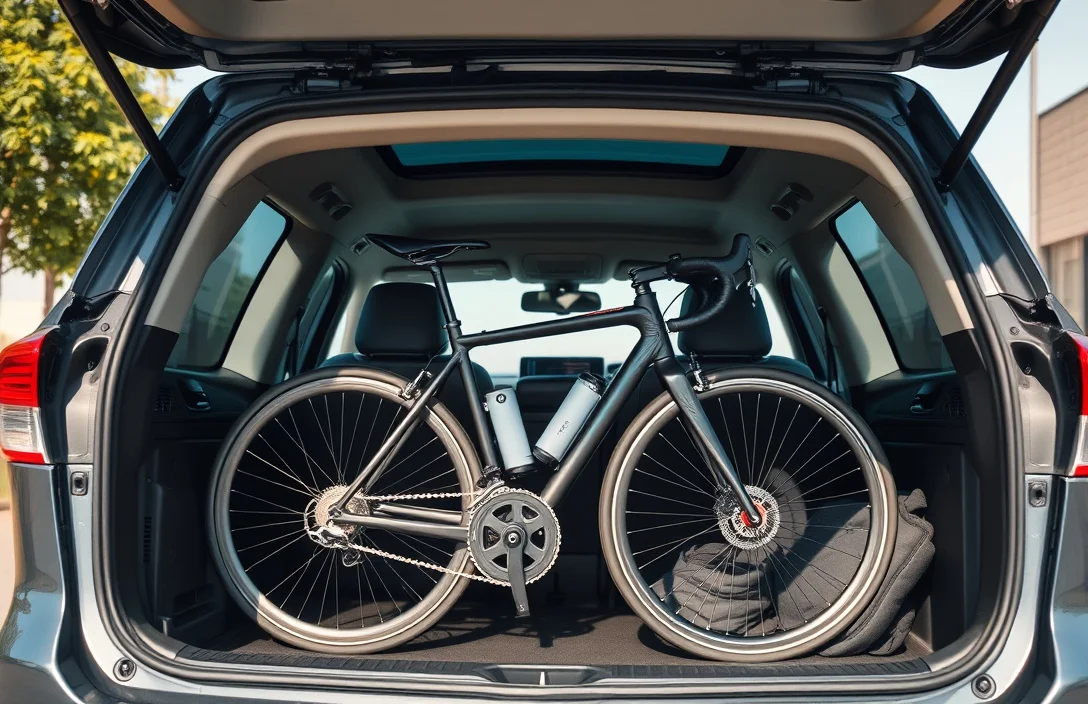
Peloton bikes fit best when you treat the move like furniture transport: plan your clearances, orient the bike to minimize door and screen contact, and pad every touch point before the first lift. In most SUVs, the limiting factors are the handlebar width, flywheel side clearance, and the screen or console edges. If you can keep the bike’s most delicate areas facing inward toward padding, you reduce the odds of scuffs and cable stress.
Best Orientation Plans
For a typical Peloton Bike and Bike+, the safest orientation in an SUV is with the bike lengthwise along the cargo area so the handlebars are least likely to hit the liftgate. Aim to keep the console side toward a padded roof rail or side panel rather than toward the rear opening, since the rear corners take the most bumps during loading.
For example, loading with the handlebars toward the front passenger area usually gives you a wider “swing” at the rear opening and keeps the crank and pedal side from scraping the bumper lip. Another practical trick is to rotate the bike so the heavier frame side is toward the floor during the carry, which helps the bike settle straight when you lower it onto padding.
Protection And Padding
Padding is what turns an awkward transport into a controlled one. Focus on corners, edges, and anything that can flex, since those are the areas that take damage even when the bike “looks fine.” Use separate padding for contact points so tape does not touch the console screen or paint.
Safety note: Lifting a bike into an SUV is a real back-risk and a pinch-point risk, especially if you are working alone. If you feel strain or the bike binds halfway, stop and recruit a second person or use a moving dolly.
When It Won’t Fit: Alternatives
A Peloton bike kit can get awkward when it is too long to clear the rear opening or when the frame and handlebars interfere with roofline and door seals. The practical workaround is planning a different transport method, either taking it to the roof or off the vehicle with a hitch or a professional carrier.
Roof Rack Vs Hitch Cargo
Roof racks are the common “small vehicle” solution, but Peloton bikes are bulky enough that overhead loading is a real hassle. Roof mounting also increases clearance concerns for low garages and tree branches, and you have to keep the bike from shifting since the load sits higher than in any other setup.
Hitch cargo systems are usually easier because the bike sits closer to the ground and you can see alignment. Trade-off is hitch capacity and hitch compatibility, plus you need solid tie-down points so the bike does not rock during driving.
| Option | Best for | Main trade-off | Typical hassle level |
|---|---|---|---|
| Roof rack | Short trips, no hitch, you can lift safely | Higher lift effort, more clearance limits | Medium to high |
| Hitch cargo carrier | Longer trips, you want safer handling | Requires hitch and correct carrier ratings | Lower to medium |
Mechanic take: If you feel like you are wrestling the bike into place through tight openings or fighting the handlebars, that is your cue to switch methods. A distracted install is how tie-downs get incomplete.
Professional Transport Options
When fitment is tight or you worry about finish damage, professional transport can be cheaper than replacing scuffs, bent parts, or a botched setup. Local delivery services and moving companies can bring the right dollies, lift assistance, and load straps designed for large electronics and exercise equipment.
For Peloton in particular, plan for disassembly or protective crating if the service requires it. Ask the company how they strap items (number of straps, padding approach) and whether they use enclosed vehicles if weather is a factor.
Safety And Securing Tips
Peloton bikes can shift hard during braking and cornering, so you need more than “tight straps” to protect the bike and your passengers. Plan on a strap-down setup with solid anchor points and confirm the SUV’s cargo area and tie-down capacity before you move.
Strap-down Methods That Actually Control The Bike
Use a straight, low-to-the-floor tie-down pattern whenever possible so forces go into the vehicle structure instead of the Peloton’s frame tubes. Strap the bike at the wheels and at stable frame locations, then add a second set so it cannot rock side-to-side or pitch forward.
Start with the bike immobilized. Engage any transport locks the bike has for moving, remove accessories that can snag (headphones, bottle cages if you use a strap-through setup), and cover sharp edges with a thin wrap so straps do not cut or abrade.
Vehicle Load Limits And Insurance Notes Before You Drive
Do not assume every SUV tie-down point is equal. Check the owner’s manual for cargo tie-down locations and maximum trailer or cargo limits, then keep the Peloton secured within the rated capability of those points.
For insurance, treat transport damage the same way you would treat a loose load. If a claim happens, photos help, and documentation that the bike was restrained to the manufacturer’s guidance makes the difference between a smooth resolution and a fight.
| What to check | Why it matters | What to do |
|---|---|---|
| Cargo tie-down ratings and recommended anchor points | Overloading anchors can fail during emergency braking | Follow the SUV manual and only use designated cargo anchors |
| Rear hatch and seat latch condition | Loose latches can loosen under vibration | Verify latches are fully engaged before driving |
| Strap hardware condition | Worn hooks and frayed webbing fail early | Replace damaged ratchets, hooks, or webbing |
| Transport photos and load-out notes | Helps with claims if anything gets damaged | Take clear before-and-after pictures of the secured bike |
Insider mechanic tip: do a 5-minute “shake test” after the first mile and again before city driving. If anything shifts, stop and re-tension, because straps often settle as the load finds its final position.
Quick Summary
A Peloton bike can fit in an SUV, but you must measure cargo dimensions and check seat height and handlebar clearance first.
| Check | What to confirm | Quick pass test |
|---|---|---|
| Vehicle opening | Rear door or liftgate width and height | Bike clears the narrowest measurement |
| Cargo depth | Distance from opening to front seats | Frame and base do not hit seatbacks |
| Clearance | Handlebar and seat height margins | No part touches trim during a slow test fit |
| Loading plan | Assembled vs partially disassembled transport | You can load without forcing or twisting |
Frequently Asked Questions
Can A Peloton Bike Fit In An Suv With The Seats Down?
You can usually fit it in many SUVs only if you remove or fold back the rear seats and disassemble the bike first. Peloton bikes are not “small box” items, so check whether the bike’s shipping size plus packaging fits your cargo opening before you haul it.
What Size Suv Do I Need To Fit A Peloton Bike Inside?
There is no single SUV size that guarantees fit, because models vary and the bike often needs partial disassembly for transport. If you can, measure your SUV cargo space with the seats folded and compare it to the Peloton bike’s packed dimensions (including any box or protective packaging).
Will A Peloton Bike Fit In A Small Suv Like A Rav4 Or Cr-v Without Removing Parts?
In most cases, you should not expect it to fit without removing parts, because the bike and packaging typically take up a lot of length and height. Plan on taking off handlebars and pedals where the setup instructions allow, so it can fit more compactly in the cargo area.
Can I Fit A Peloton Bike In An Suv If It Is Not In Its Original Box?
It may still fit, but you risk damaging the frame or sensors if you do not protect and secure the bike properly. For safe transport, wrap the bike, secure it so it cannot shift, and make sure you still have enough clearance from tailgate and window areas.
Is It Safe To Transport A Peloton Bike In An Suv With The Bike Sticking Out The Back?
It is generally a bad idea to have the bike sticking out, because it can obstruct visibility and could be unsafe in a sudden stop. If it cannot fit fully inside, consider a trailer or cargo van and strap it down so it cannot move during driving.
What Is The Most Common Mistake When People Try To Fit A Peloton Bike In An Suv?
The most common mistake is assuming the bike will fit based on “bike size” alone, without measuring the SUV cargo opening and transport configuration. Always dry-fit with seats folded and protect the bike while using straps or tie-downs to prevent shifting.