

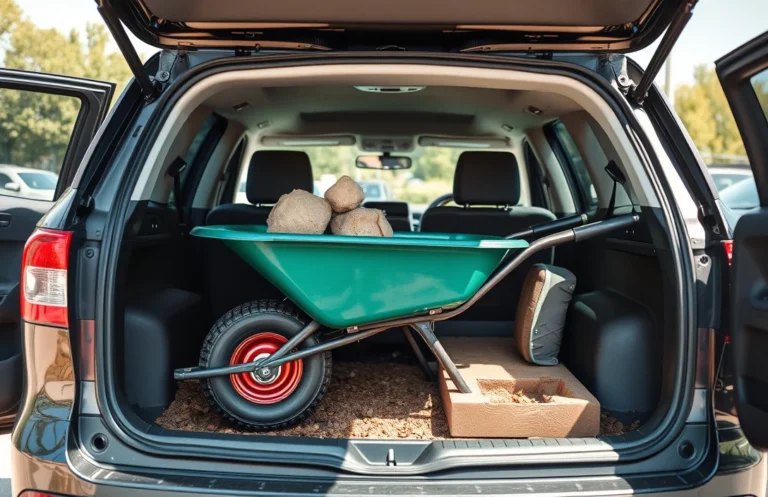
You found a used wheelbarrow or bought one new, and you are staring at your SUV’s rear opening thinking, “Can a wheelbarrow fit in here without making a mess?” The surprise is that fit is mostly about dimensions (wheelbarrow height and tub width) and whether the SUV’s cargo height and tailgate clearance give you room.
Yes, it can fit, but often only one way: inside fully, partially with the tailgate open, or only if you lay it down or remove the wheel. You’ll need to compare wheelbarrow overall height to cargo floor-to-roof height and tub width to the cargo opening width.
Wheelbarrow fit in an SUV depends on measurements. A typical wheelbarrow is around 50 to 60 in tall overall with handles and 24 to 28 in wide at the tub. If your SUV cargo opening is shorter than that height, it likely fits only by tilting or laying it on its side, or with the tailgate open.
Can A Wheelbarrow Fit In A Suv?
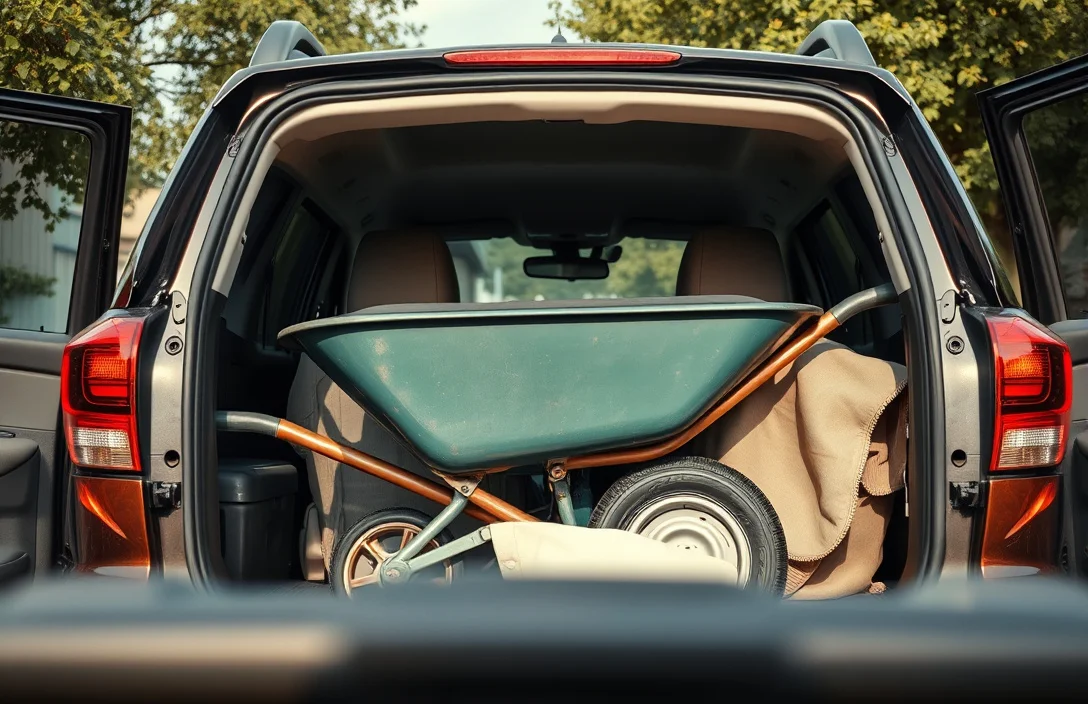
Wheelbarrow fit in an SUV depends on the wheelbarrow’s dimensions and the SUV’s cargo opening, with the tailgate position making the biggest difference. A standard wheelbarrow can usually fit only when it clears the opening height and width, and it may still require tilting or partial extension depending on the model.
What “Fit” Means For Hauling
For hauling, “fit” means the wheelbarrow can sit where it is loaded and secured without scraping the bumper trim or blocking the tailgate from closing (unless you are explicitly hauling with the tailgate open). Inside the cargo area is the easiest setup because you keep most of the tub under the roofline and away from direct road spray.
Partially inside fit is common, especially with taller wheelbarrows or SUVs that have a high cargo floor. In that case, the wheelbarrow tub goes through the opening, while a wheel, handle, or part of the tub may stick out. “On the roof or hitch” fit is a different category and usually needs a proper rack and tie-down plan, because the center of gravity and impact forces are much higher.
Quick clearance rule: you need enough space for tub width, tub depth (front to back), and the max height from wheelbarrow ground contact to the highest tub point at the moment you tilt it into the opening. You also need the cargo opening clearance (height from bumper top to roof opening, width between the side rails, and the tailgate hinge area).
| Fit scenario | What “in” looks like | What must clear | What commonly causes trouble |
|---|---|---|---|
| Fully inside | Wheelbarrow tub and handles are in the cargo area | Opening height and cargo length, with tailgate able to close | Cargo opening is narrow or cargo floor is high |
| Partially inside | Wheelbarrow wheel or handles extend forward of the cargo opening | Opening width plus wheelbarrow height when tilted | Tailgate lip and bumper corners block straight in loading |
| Tailgate open haul | Wheelbarrow slides in with tailgate raised | Opening width and height when tailgate is up | Hinge swing and roofline interference limit tilt angle |
| Only if laid down or modified | Wheelbarrow is rotated flat or components removed | Length and clearance for the lowest-profile orientation | Height still blocks the tub from passing the opening |
When It Counts: Measure Height, Width, And Opening Clearance
Measure the wheelbarrow tub width (widest point), tub depth (front-to-back), and overall height when the wheelbarrow is tilted into the SUV. Then measure the SUV cargo opening height and width with the tailgate closed and again with it open, because the hinge and bumper lip can change usable height by several inches.
For most people, the deciding factors are (1) opening height near the bumper and tailgate opening, (2) opening width between side rails, and (3) cargo floor-to-roof clearance once the wheelbarrow is inside. Handle height matters too, because handles can snag on the rear glass or the upper trim even when the tub clears.
For example, compact SUVs often have a shorter cargo length and tighter rear openings, so fully-inside fit is less common unless the wheelbarrow is on the smaller side. Mid-size and full-size SUVs typically do better, but hatch opening shape still matters, some models have a tighter “mouth” even when the overall cargo area is large.
Bottom line for the rest of this article: treat “fit” as a clearance problem, not a “will it fit somehow” problem. The best outcome is fully inside with the tailgate closed; the next acceptable outcome is partially inside with the tailgate open; the worst outcome is fit only when you lay it down or remove parts.
Wheelbarrow Size Checklist
A wheelbarrow only fits an SUV cargo area when its tub dimensions plus wheel and handle profile clear the opening, floor, and any raised cargo lip. Take measurements before you buy another “maybe,” because a few inches of tub height or wheel clearance decides whether it goes in upright, partially tilted, or not at all.
Tub Measurements To Write Down
Tub length, width, and height matter because they determine how much of the wheelbarrow’s body can fit past the SUV’s rear opening and onto the cargo floor. Measure the tub itself, not the handles, and include the widest points you will actually carry through the doorway.
In practice, deeper tubs often clear the floor fine but run into the cargo threshold or tailgate opening when you try to set the wheelbarrow upright. Wider basins can hit the side rails of the cargo area or the curved corners of hatch openings.
Wheel Diameter And Under-tub Clearance
Wheel size dictates the minimum floor-to-bottom-clearance you need, especially if the wheelbarrow sits low while you slide it in. Measure from the lowest point under the tub (often the wheel hub or leg ends) to the top of the basin rim.
Overall Height With Handles Up, Plus Load Profile
Overall height controls whether the wheelbarrow clears the cargo opening when you lift it in place. Measure with the handles at their highest practical angle (handles fully upright, or whatever position prevents the basin from scraping).
Load profile is the trap most people miss. When a wheelbarrow is upright, its highest point might be the handles; when you tilt it to slide in, the basin rim often becomes the limiting height against the tailgate edge.
| Wheelbarrow measurement | How to measure at home | Why it matters for SUV fit |
|---|---|---|
| Tub length | Outside edge to outside edge | Determines if it sits fully on the cargo floor |
| Tub width | Widest basin point | Prevents rubbing on side rails or corners |
| Tub height | Floor of basin to top rim | Controls clearance under the hatch/tailgate |
| Lowest wheel/leg point | Floor to lowest contact point | Checks against a raised cargo lip |
| Overall height (handles up) | Top of handles to floor, upright | Checks opening clearance with the cargo door raised |
| Overall height (tilted-in) | Measure the highest point during the tilt needed to enter | Checks tailgate edge clearance when inserting |
Tip from the garage floor: Do a dry-fit with packing blankets on the SUV sill, then note the exact spot it first contacts (side rail, cargo lip, or tailgate edge). That contact point tells you whether tilting, lowering the handles, or going in diagonally is the real fix.
Add-on models can change the game because some wheelbarrows use wider basins or deeper tubs than “standard” units. If your wheelbarrow has a reinforced, deeper steel pan, plan for the rim height to be the limiter. If your wheelbarrow uses larger wheels or different leg geometry, expect the under-tub clearance to be the limiter.
Common Wheelbarrow Size Ranges
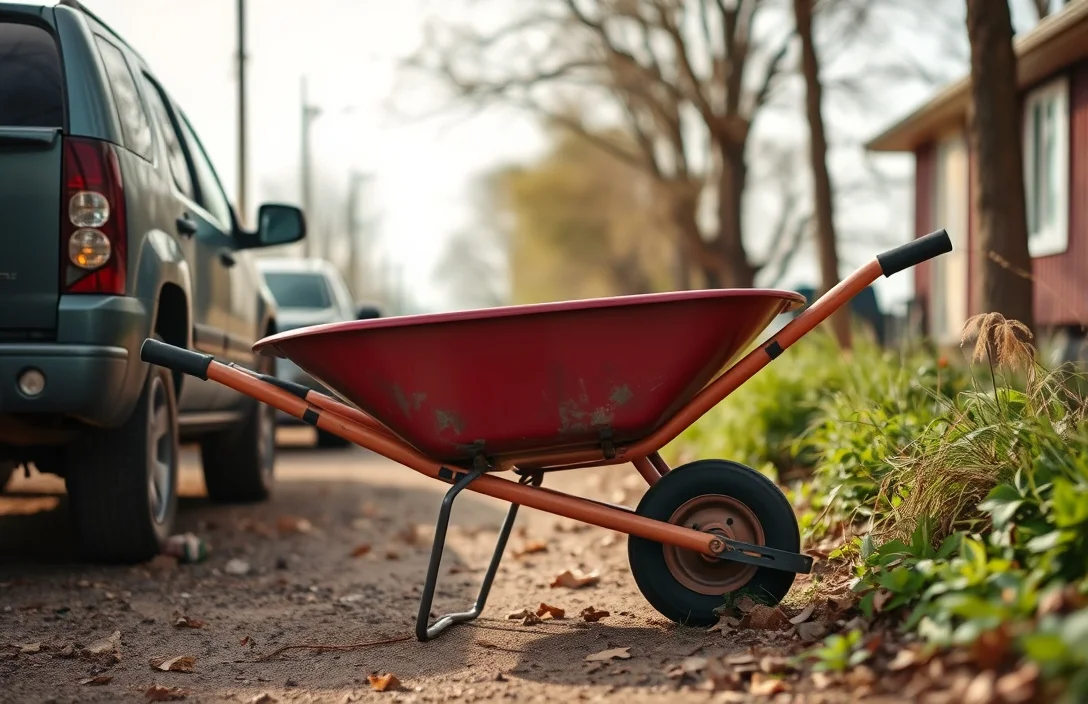
Most “standard” wheelbarrows fall in the roughly 6 cu ft class, with a typical assembled tub footprint around 58 x 27 x 26 inches (length x tub width x tub height). Dimensions vary a lot by brand and model, and the big reason SUV fitment can surprise people is that wheelbarrows come in different measurement conventions (tub length versus overall length).
Capacity Classes And What They Usually Imply
Capacity is usually quoted as cubic feet of material in the tub. In practice, capacity and dimensions track together, but they do not lock in a single size because manufacturers change tub shape (deeper versus wider, flatter versus higher sides) while keeping volume in the same ballpark.
Here are common capacity groupings you can use as a starting point when you are trying to visualize fit in an SUV cargo area.
| Wheelbarrow class (typical) | Often-typical tub footprint | Fit risk in many SUVs |
|---|---|---|
| 3 to 4 cu ft | ~50 to 54 in length range; ~24 to 26 in width range | Moderate, mostly opening-width limited |
| 5 to 6 cu ft | ~58 in length; ~27 in width; ~26 in tub height | High, often rear-opening width and tailgate height limited |
| 7 to 8+ cu ft | Often wider than ~27 in and taller than ~26 in | Very high, may need partial loading techniques |
Measurement caveat: “Length” can mean tub length only, or it can include handles and the wheel frame. Treat the quoted length as an estimate until you measure tub length, overall length, and clearance paths.
Width And Height Usually Limit Fit, Not Volume
Volume tells you how much material the tub can hold, but width and height decide whether the wheelbarrow clears the SUV’s rear opening and cargo floor. Even a “small” 5 cu ft wheelbarrow can be difficult to load if the tub width is near or above the cargo opening width, or if the wheel is tall enough to interfere with the tailgate opening.
In practice, the easiest fit scenario is when the wheelbarrow can go in at a slight angle or across the cargo floor. If it must go fully inside with the handles up, tub height and wheel clearance become the limiter, and the same wheelbarrow that “almost fits” can miss by an inch or two.
Suv Cargo Measurement Checklist
Measure your wheelbarrow and your SUV the same way, from the actual cargo floor up to the roof line and across the narrowest spot. Focus on height with seats up and folded, plus the rear opening width and height, because those two decide whether it goes in clean or scrapes trim.
Cargo Area Dimensions To Record On Your Exact Suv
Start with the cargo floor-to-roof height, then redo it with rear seats folded. Floor-to-roof height tells you whether the wheelbarrow can sit upright inside the cargo space without the handles contacting the headliner or hatch.
Next, measure cargo length from the seatback face (or the folded-seat bulkhead) to the inside face of the tailgate/hatch. Cargo width must be measured between wheel wells at the narrowest point, because the wheelbarrow can clear the outer edges but still get stuck mid-way.
Loading reality check: Even when dimensions look close, the wheelbarrow rarely goes straight in. Expect to angle the tub to clear the wheel well and tailgate opening, so your clearance needs to work for both height and diagonal fit.
For example, a wheelbarrow can fit “in the cargo area” with seats folded, yet still fail to enter because the hatch opening is narrower than the wheelbarrow wheel plus tub. Test-fit by lowering the wheelbarrow into the opening slowly while someone watches for contact points on the bumper cover and side trim.
| Measure | Where to measure | Why it matters for fit |
|---|---|---|
| Floor-to-roof height | Center and both sides | Handles and tub highest point clearance |
| Cargo length | Seatback/bulkhead to inside tailgate face | Front-to-back fit once you clear the bumper |
| Cargo width | Between wheel wells, narrowest spot | Prevents binding mid-cargo |
| Rear opening width/height | Inside lip of opening | Decides entry, even if cargo space is larger |
For instance, if the rear opening height is the tight spot, you may still haul the wheelbarrow inside if you can angle it so the handles clear first, then straighten once past the opening. If the bumper cover corners or side trim are the tight spot, you might need to load with the tailgate open to keep the tub from scraping while you rotate it.
Suv Fitment: Compact Vs Midsize Vs Full-size
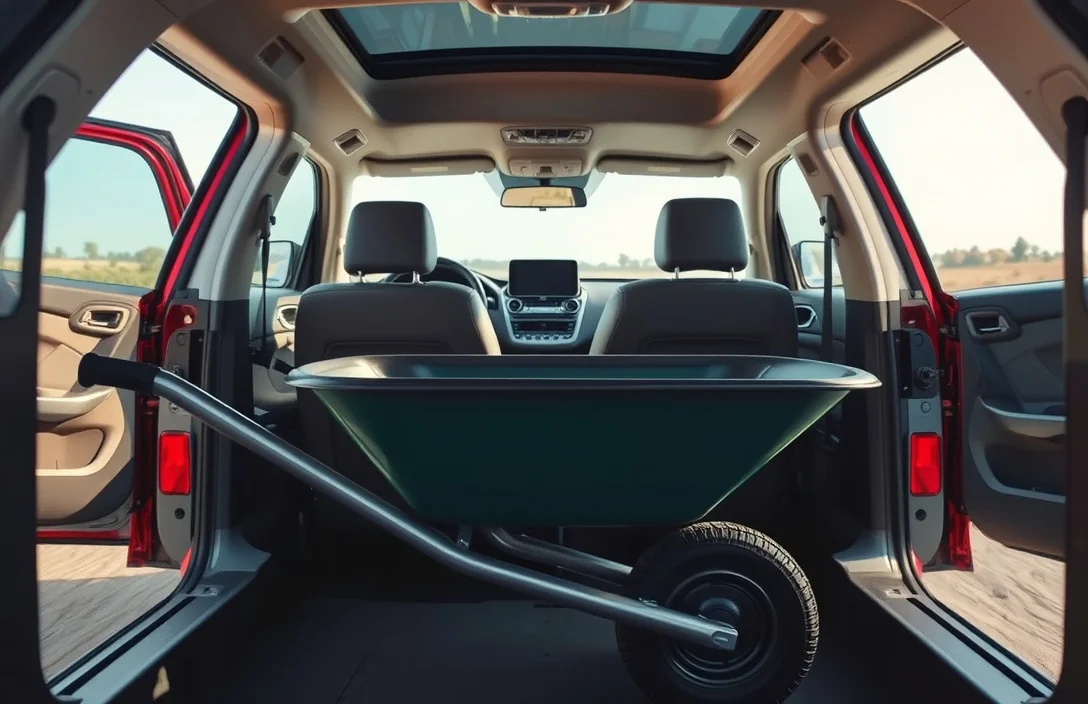
Wheelbarrow fitment in an SUV depends more on cargo opening geometry and vertical clearance than on “overall” cargo volume. A typical compact SUV often fails first on height (roofline and floor-to-roof space) and then on the access angle at the tailgate opening. A full-size SUV more often fits a wheelbarrow upright inside, but tailgate style and liftgate hinge position still decide whether it clears.
Compact Suvs: What Usually Blocks The Load
Compact SUVs usually lose the fit battle because the cargo floor sits relatively high and the rear opening narrows quickly as you go upward toward the tailgate glass and frame. Many models also have a steep cargo door angle, which forces the wheelbarrow tub to tip or “bump” the opening edge before you can square it up. Roof rails can help you think about an alternate mounting plan, but most owners should assume inside fit is the main goal.
For example, a wheelbarrow that “almost” fits in a compact SUV often only clears if the tub goes in first and you angle the handles down.
In practice, that means you may need to partially remove the wheel or rotate the wheelbarrow to a non-upright orientation, even when the floor dimensions look close.
Mid-size Suvs: Seats-folding Usually Makes It Work
Mid-size SUVs are where folding second-row seats changes everything. The seatbacks move the effective cargo length rearward and create a flatter, longer path for getting the tub past the rear opening without scraping the trim. Where mid-size models still fail is when the rear opening shape is tight, because a wheelbarrow wheel sits in the “wrong” spot for tight doorframes.
For instance, many mid-size crossovers can accept the wheelbarrow if you fold both seat sections and keep the tailgate closed, but you still might need to tilt the wheelbarrow slightly to thread the handles past the opening. Wagon-like rooflines and taller liftgate openings generally do better than compact-feeling hatch profiles.
| Mid-size layout | Most likely outcome | Why |
|---|---|---|
| True 3-row capable body with large cargo opening | More often upright inside | Longer and taller passage when seats are folded |
| Standard 2-row with steep hatch opening | Often fits partially | Handles and wheel hit the opening lip |
Full-size Suvs: More Vertical Space, But Opening Style Still Wins
Full-size SUVs usually have more vertical cargo volume, so a wheelbarrow is more likely to go in upright or nearly upright without removing the wheel. Full-size body-on-frame and larger unibody models also tend to have less aggressive cargo narrowing right behind the rear seats. Even then, the tailgate hinge placement, bumper height, and whether you have a separate tailgate door versus a liftgate can make the difference.
For example, full-size SUVs with a high-gloss liftgate and a narrow rear opening may force the wheelbarrow to angle in, while models with a wider, flatter cargo mouth clear handles with less fuss.
Hatch Vs Tailgate Opening Effects (Clearance And Access Angle)
Hatch designs with a broad opening generally give you more usable clearance for the tub height and handle position. Liftgates with a smaller opening window or strong inward taper can reduce effective height at the moment you need to rotate the wheelbarrow into place. Tailgate openings that open wide and sit lower can help you lower the handles first, which often prevents scraping.
Roof Racks Vs Inside Space: When Roof Mounting Becomes The Fallback
Roof racks only make sense when inside fit is blocked by height, not when the tub is too wide for the opening. Roof mounting also adds safety concerns because the wheelbarrow center of gravity rides high, and wind drag can increase if the wheelbarrow is not tightly strapped and oriented correctly. A workable plan is to strap the tub flat against crossbars and keep the handles secured so they cannot swing.
Rule of thumb: if the wheelbarrow cannot clear the cargo opening opening angle with the tailgate open, roof mounting usually becomes the practical fallback, not repeated “forcing” into the hatch.
Realistic Fit Scenarios And Thresholds
Start by measuring your wheelbarrow in three dimensions, then compare those numbers to your SUV cargo opening and ceiling. Treat fit in a wheelbarrow as three separate challenges: height (ceiling and load floor), width (wheel wells and tub sides), and length (tailgate opening and door-to-wall reach).
Below are practical “plan A” thresholds that keep you from wasting time. If any single threshold fails, you move to the next scenario (tailgate open, then tilt, then remove or lay down).
| Scenario | What must clear | Typical failure point |
|---|---|---|
| A: Upright inside | Wheelbarrow tub width, height, and length all clear the cargo opening and ceiling | Ceiling lip or roofline reduces usable height |
| B: Upright with tailgate open | Handles and tub clear opening; only latch and closing path fail | Latch panel or handle sweep blocks closing/latched position |
| C: Tilt or lay-down method | Wheel clearance and tub clearance work together at an angle | Wheelbarrow wheel contacts the rear sill or tub hits wheel well |
| D: Remove a wheel/leg or rotate components | Design allows it without bending, stripping, or stressing fasteners | Hardware binding, rusted bolts, or frame stress |
Scenario A: Fits Fully Upright Inside
Wheelbarrow upright fit usually depends on whether the assembled tub height clears the SUV’s cargo ceiling with the handles staying inside the opening. For width, the critical measurement is the distance between wheel well inner edges, since the tub sides hit wheel wells before the outside panels.
For length, focus on the straight line from tailgate opening to the first obstacle (rear seatbacks, floor lip, or cargo tie-down anchors). If your wheelbarrow length is longer than the usable floor area at the opening, you will end up contacting the seatback or sticking the handles out.
Scenario B: Fits With Tailgate Open
Upright fit with the tailgate raised often works when the handles are the only part that exceeds the latch opening. The wheelbarrow can sit fully supported on the cargo floor, while the handles protrude upward or backward enough to keep you from latching the tailgate.
Tailgate-open hauling works if the protruding portion does not interfere with rear lighting visibility or contact the hinge area as you close the tailgate (even partially). If the handles land near the latch pocket, that is the telltale sign that latch clearance fails, even though “upright inside” would look close.
Scenario C: Won’t Fit Upright, Tilt Or Lay-down Method
Tilt fit is about two clearances that fight each other: wheel clearance versus tub clearance when rotated. As you tilt the wheelbarrow, the wheel can drop into the rear sill area or hit the floor seam, while the tub edge can scrape the wheel well or cargo side.
To check tilt feasibility, place the wheelbarrow in front of the cargo opening and simulate the angle by eye, then confirm two things: the wheel will not dig into the threshold, and the tub rim will not swing into the wheel well. Wheelbarrows with smaller wheels can be easier for tilt because they raise less relative to the floor seam, but the tub shape often matters more than wheel size.
Practical tip: mark the “touch points” with painter’s tape on the wheelbarrow frame, then test fit again. If tape shows contact at the wheel well or rear sill, upright fit is failing for a reason tilt can fix, but only if the tub rim clears at the same time.
Scenario D: Remove A Wheel/leg Or Rotate Components
Component removal can save the load, but only if the wheelbarrow design allows it without stressing fasteners. Quick-release wheel systems are usually a clean win, while rusted or over-torqued axle bolts can turn a 5-minute job into a stuck-hardware problem fast.
Rotate-only solutions also have limits. If you rotate the wheelbarrow to reduce width, watch the frame and handle mounts, because some bars and weld points are the first to contact SUV trim and the first to bend under a forced fit attempt.
Threshold Guidance: What To Measure On Your Suv
Height threshold is the ceiling and rear hatch lip, not just the “cargo opening height.” Width threshold is the wheel well gap at the floor level where the wheelbarrow tub sides sit, and length threshold is the distance from the opening to the first fixed obstruction while the wheelbarrow is at its intended angle.
Examples: a compact SUV often fails on upright height first due to a higher roofline taper and smaller cargo opening, while midsize SUVs more often fail on wheel well width. A full-size SUV may clear height but still block tailgate closure with handle protrusion, making Scenario B more common than you expect.
How To Load Safely In Your Suv
Loading a wheelbarrow into an SUV is doable when you manage clearances, protect interior surfaces, and keep the load from shifting. The safest approach is to plan the orientation first, protect the cabin, and secure the wheelbarrow before you close the tailgate or liftgate.
Strap And Secure Without Damage
Securement is what keeps a metal wheelbarrow from becoming a projectile if you brake hard or hit a pothole. Tie-down points vary by SUV, so use the factory cargo anchors first, then fall back to durable aftermarket cargo bars only if they are designed for that purpose.
Strapping should keep the wheelbarrow from walking when you close the tailgate. If the wheelbarrow shifts while you’re lowering the liftgate, reopen and reset position, since a tightened strap placed after the fact often still leaves a pivot that can move under load.
Visibility And Legality Basics
Rear visibility matters even on short trips. Ensure the wheelbarrow does not block tail lights, turn signals, license plate, or the rear wiper area, and check both when the liftgate is closed and when it is partially raised (some fit scenarios only work with the tailgate open).
Roadgoing legality can vary by location, but a common rule is that any cargo that blocks required lighting or identification is not acceptable. Treat overhang and rear blockage seriously, especially with taller wheelbarrows where the tub can rise into the line of sight.
| Fit scenario in an SUV | Main safety risk | What to do |
|---|---|---|
| Fully inside cargo area, liftgate closed | Shifting during braking or cornering | Strap to factory anchors, add non-slip mat/chocks |
| Partially inside with liftgate/tailgate open | Reduced visibility and unstable contact | Reposition, ensure lights and plate are unobstructed, secure straps first |
| Only possible by tilting or removing a wheel | Unstable load geometry | Lower the center of gravity, add padding, strap before driving |
If the wheelbarrow can move more than a small amount when you grab the handles and push, it is not secure yet. Re-tighten, reposition, add padding at contact points, and re-check before you start the engine.
How To Verify Fit With Tape
Use painter’s tape and a tape measure to map your wheelbarrow footprint and height onto your exact SUV cargo opening before you try lifting it in. This method catches the two trouble spots that usually stop the load, the wheel well pinch and the tailgate or hatch height, so you do not waste a trip or end up fighting the handles.
Build A “Fit Box” On Your Suv
Lay the wheelbarrow on its side or on flat ground and measure the tub footprint and overall height in the orientation you plan to use. Record three numbers with a note for which side is “front,” then transfer them to the SUV with tape marks.
Transfer the footprint to the SUV cargo area: stick tape rectangles where the wheelbarrow will sit, then add a tape “ceiling” line for the peak height. Put the floor marks at the narrowest practical location you can reach, then check from both the left and right sides because many SUVs have one wheel well that pinches more.
Check The Narrowest Point: Wheel Wells Vs Tub
Measure the wheel well width at the tightest spot, then compare it to your wheelbarrow tub width and any protrusions. Wheelbarrow wheels often sit higher than the tub, so the effective width changes with how level the load is.
For example, a compact SUV cargo floor may show enough room at the back but still fail at the wheel well pinch when the tub enters upright. Tape the wheelbarrow orientation on the SUV so you can see where the tub edges hit, not just where the wheel touches.
| Obstacle | Tape measurement to take | What to compare it to |
|---|---|---|
| Wheel well pinch | GW (narrowest inside gap) | Wheelbarrow tub width W plus any wheel arch protrusion |
| Tailgate or hatch height | Opening height at the latch edge | Upright peak height H (handles included) |
| Handle clearance | Opening width at the corners | Max handle-to-handle width at the entry angle |
Test The Opening: Tailgate Or Hatch Height, Width, And Handle Clearance
With the tape ceiling line in place, close the tailgate or hatch slowly in the “attempted” position to check clearance. Do not force it against the tape ceiling, if the tape is hit, the wheelbarrow needs a new orientation, or a partial outside fit (with the lid open).
For instance, many SUVs allow the tub to clear but stop at the handle sweep, especially when the barrow is upright and the handles rise toward the latch area. Use tape to mark where the handles would pass, then re-check after you shift the “fit box” forward 2 to 6 inches, because the contact point often changes with depth.
Run A Dry Orientation Test: Upright, Tilted, And Lay-down
Use tape to mark the three entry styles on the SUV floor, then do a dry run without lifting the full weight. Upright entry checks handle height and latch clearance, tilted entry checks wheel well pinch, and lay-down checks hatch width and tub height-to-width interaction.
Mechanic tip: If upright fails on height, tilted often fixes it because the highest handle point drops. If tilted fails on the wheel well, lay-down may still work because the wheel no longer has to pass through the same pinch plane.
Document results immediately so you do not repeat guesses later. Write down which direction works (wheel first or tub first), whether the tailgate must stay open, and whether you need to remove a wheel (only if your wheelbarrow is designed for it and you can reassemble safely).
- Result B (tilted): clearance achieved at wheel well? (Y/N), contact location:
- Result C (lay-down): hatch clears peak width? (Y/N), contact location:
Quick Summary
Yes, many wheelbarrows fit in an SUV, but you must check the wheelbarrow width and overall height against your cargo opening dimensions.
| What to check | How to measure | Why it matters |
|---|---|---|
| Wheelbarrow overall width | Measure widest point across the handles and tub | Determines if it clears the cargo opening |
| Assembled height | Measure from wheel to highest handle point | Determines if it clears liftgate and roofline |
| Rear opening and cargo floor | Measure width and height at the opening and floor level | Shows fit with the wheelbarrow angled for loading |
| Loading angle | Test a dry fit by tilting, not forcing | Prevents scratching and stuck-in-the-door problems |
Frequently Asked Questions
What Size Wheelbarrow Will Fit In The Back Of An Suv?
Measure the wheelbarrow tub length, wheel to handles height, and assembled overall width and compare them to your SUV’s open cargo box dimensions. In most cases, many standard wheelbarrows fit only if the handles clear the tailgate opening and you can angle the wheelbarrow in without forcing it.
Will A Full-size Wheelbarrow Fit In An Suv With The Tailgate Closed?
Sometimes yes, but you need to confirm the wheelbarrow’s height at the handles when fully assembled versus the vertical opening of your SUV. If it barely fits with the tailgate open, it usually will not fit with the tailgate closed because the opening height is smaller near the latch area.
Can I Fit A Wheelbarrow In An Suv If It’s Tipped On Its Side?
Do not assume it will fit safely on its side because the handles and wheel can still hit the cargo floor or rear trim. If you try it, keep weight centered, protect the interior with a blanket or cardboard, and avoid scraping the body or bumper.
What’s The Quickest Way To Test If A Wheelbarrow Fits In My Suv?
Use cardboard or painter’s tape to mock the wheelbarrow’s footprint in the cargo area, then do a dry-fit with the wheelbarrow upright and tilted. Include clearance for the tailgate opening, wheel well areas, and any cargo lip, since those are common places it gets stuck.
Will My Wheelbarrow Fit In An Suv With A Hitch Rack Installed?
Usually no, or it will be much tighter, because hitch racks reduce access to the rear opening and steal the space you need for the handles and wheel. If you have to remove the rack to load it, treat that as part of your normal setup.
What’s The Most Common Mistake People Make When Trying To Fit A Wheelbarrow In An Suv?
The common mistake is only checking the wheelbarrow’s tub dimensions and forgetting handle clearance and the wheel’s position. Always compare the assembled wheelbarrow’s overall height, overall width, and how it angles into the cargo opening.