


You popped the question because something looks wrong under your SUV, either a missing rear drive shaft, a broken section hanging low, or loud clunks after a vibration. The scary part is wondering if you can still move the vehicle and limp it somewhere safe. Here’s the straight answer on driving an SUV without a drive shaft and what to do next.
No, you generally should not drive an SUV without a drive shaft installed. With it missing, power transfer is interrupted and driveline balance is gone, which can lead to loss of drive, drivetrain damage, and unsafe handling. Sometimes towing or a short controlled move is the only practical option.
Drive an SUV without a drive shaft? Usually no. A drive shaft is required to transmit power from the transmission or transfer case to the differential, so the vehicle may lose drive entirely. Even if you can roll in neutral, attempting to propel it can damage the drivetrain fast. Use towing or a repair shop instead.
Can You Drive An Suv Without Drive Shaft?
A missing driveshaft means the rear axle (on 2WD or full-time 4WD layouts that use a shaft) or the intended axle never gets rotational power from the transmission. The SUV may still roll and you may be able to move it short distances, but it will not drive normally under engine power and drivetrain load.
In most SUVs, the driveshaft is the mechanical link that carries torque from the transfer case (when equipped) to the differential. When that link is gone, the differential does not receive torque, so the wheels lose the ability to propel the vehicle. You can get movement only if the vehicle is already rolling (coasting), or if the drivetrain is partially engaged through some other path (which is rare and still unreliable).
What The Driveshaft Actually Does In Power Transfer
Inside the drivetrain, the transmission output spins, the transfer case (if present) splits torque to the axles, and the driveshaft transmits that torque to the differential. The differential then multiplies torque for the axle shafts and wheels. Without the driveshaft, the axle side you lost is basically disconnected from the engine’s torque.
| Drivetrain condition | Power path | Result |
|---|---|---|
| Driveshaft installed | Transmission/transfer case to differential through driveshaft | Vehicle can propel under throttle |
| Driveshaft missing or disconnected | Torque transfer breaks at the differential input | Axle does not get drive torque |
| Vehicle rolling with no shaft | Wheels coast, no engine torque to axle | Movement possible, drivetrain load not |
What Happens When It Is Missing (Real-world Behavior)
With the driveshaft removed, you may hear vibration or see misalignment marks if it came apart, and the axle may sit at a standstill even while the engine revs. In a typical rear-wheel-drive or part-time 4WD SUV, throttle input will spin the driveline components up to the break point, while the wheels on the affected axle stay mostly stationary.
For example, a common roadside scenario is the driveshaft gets knocked loose after an impact or corrosion. The vehicle can roll a bit to clear traffic, but attempting to “drive through it” usually means power is not reaching the wheels, and the risk of collateral damage goes up fast due to missing or damaged components.
Mechanic’s take: Being able to roll does not mean the SUV can be driven. A missing driveshaft breaks torque transfer, and “moving it around” is very different from driving under load to a destination.
Several SUV drivetrains use a driveshaft only on one axle, so the exact outcome depends on whether the missing shaft feeds the front or rear differential, and whether the vehicle is part-time 4WD or full-time AWD. Even then, the practical takeaway stays the same: normal propulsion relies on that rotating link, so missing it is a drivability failure, not a minor inconvenience.
Hazards Of Missing Driveshaft
Missing a driveshaft leaves the transfer case output spinning without the load path it needs, so drivetrain damage can start immediately. The first failures are usually at the output yoke and related seals, followed quickly by collateral damage to the differential and CV joints. Even short-distance driving can turn a simple mechanical problem into a transmission or axle repair.
Transmission Output And Yoke Damage
The transfer case output and transmission output are designed to run with a driveshaft supporting thrust loads and keeping driveline geometry stable. Without the shaft installed, the yoke and output splines can take abnormal wear, especially under torque reversals from throttle changes. That can damage the yoke, chew up splines, and spread metal debris through the drivetrain.
Broken or missing rear propshafts also risk fluid loss and contamination depending on the failure mode and which component is exposed. A damaged seal lets gear oil migrate out, and once gear oil levels drop, bearings and gears run dry or aerated. Dry running accelerates heat and scoring, which can push repairs into the $1,500 to $3,500 range for major drivetrain work in many shops, with labor alone often being the biggest chunk.
Collateral Hits To The Differential, Cv Joints, And Mounts
Many SUVs are more vulnerable in the rear axle or front independent setup because the driveshaft is part of how torque reaches the differential and how axle components stay loaded. When the shaft is missing, the differential can still spin freely, but torque transfer and axle articulation become unpredictable, increasing the chance of joint overextension. That can rip boots, ruin CV joints, or damage wheel-end components.
For example, a typical AWD layout uses the driveshaft to keep steady rotational speed at the differential side gears and to limit shock loads through engine braking and throttle transitions. Without that dampening, you can see rapid vibration that breaks mounts, stresses exhaust hangers, and tears isolators. Driveshaft mount failure often starts as sagging, then evolves into cracked crossmembers and misaligned driveline angles.
“Treat a missing driveshaft like a drivetrain emergency. The damage cascade is real because output seals, joints, and mounts all take hits from torque shock and vibration.”
Safety, Legality, And Insurance

Operating an SUV without a working driveshaft (or with one removed) creates real risks for drivetrain bind, loss of control, and secondary damage that can turn a “short drive” into a tow. Even when the vehicle still moves, uneven driveline behavior can damage differentials, transfer cases, CV joints, and wheel speed systems that stability control uses.
From a legal standpoint, the big issue is whether the vehicle is safe and roadworthy. Many jurisdictions treat missing or disabled driveline components as a vehicle defect, especially if it causes noise, vibration, fluid leaks, or drivability problems that can endanger traffic.
On-road Safety Risks For People Around You
When driveline parts are compromised, the car can create sudden changes in traction and torque transfer. That can cause unexpected jerks during acceleration, coasting, or steering transitions, particularly on wet roads or during merges.
Missing or inoperable rotating components also raise the odds of road debris, even if the main failure stays “inside” the drivetrain. Fluid loss is another safety concern, because powertrain leaks can reduce traction under the vehicle and can ignite if they contact hot surfaces.
Insurance And Liability Reality
Insurance companies generally look at whether the vehicle was maintained in a roadworthy condition and whether the driver knowingly operated it in an unsafe state. If you are involved in an accident while the driveline is missing or disabled, coverage can get complicated because the insurer may argue the failure is preventable negligence.
For claims, expect scrutiny on two points: repair history (was it fixed promptly) and documentation (did you remove or disable components yourself, and why). If you have a rental or towing record, those documents help show you were trying to correct the issue quickly instead of continuing long-term operation.
| Situation | Safety concern | Insurance/liability risk |
|---|---|---|
| Driveshaft removed or disabled | Unpredictable torque behavior and secondary damage | Higher, may be treated as unsafe operation |
| Vibration or noise under load | Loss of control, debris risk | Higher, often viewed as continued operation despite a known defect |
| Vehicle runs normally at low speed to a shop | Still can fail later, but controlled risk | Moderate, depends on documentation and prompt repair |
Best practice is simple: get it on a flatbed and keep proof of prompt repair. If you do drive at all, treat it like an emergency reposition, limit speed and distance, and do not mix it with weather or traffic conditions that force hard acceleration or sudden maneuvers.
Detection And Diagnosis Hurry-up
A missing driveshaft usually shows up as a drivetrain imbalance, vibration, or a sudden change in how the SUV moves under load. Driveshaft issues also trigger driveline noises because the rotation, balance, or coupling is wrong. If you suspect the shaft is gone or separated, treat it as a “move it only under guidance” situation and get it inspected.
Symptom clues tend to stack up fast. A vehicle that still starts but refuses to propel smoothly often has a driveline problem, and a missing or broken shaft can create loud impacts, a shudder, or clunks from underneath. Expect symptoms to worsen when accelerating, climbing a hill, or shifting between light throttle and heavier throttle.
Quick reality check: Some AWD systems can limp briefly with a failed center connection, but running with a completely missing shaft risks secondary damage to transfer case internals, differentials, wheel bearings, and control arms.
Common “look-and-listen” signs your SUV needs immediate inspection include these.
A shop confirms the actual condition with a mix of visual checks, measurements, and scanning. The goal is to prove whether the driveshaft is missing, separated, or simply disconnected, and to rule out transfer case or differential damage.
For owners, the key is to stop guessing once symptoms point toward a driveline separation. Professional inspection is the only reliable way to confirm whether a shaft is missing versus a U-joint, coupling, or transfer case connection that creates similar symptoms but has different repair paths.
Tow-first Approach
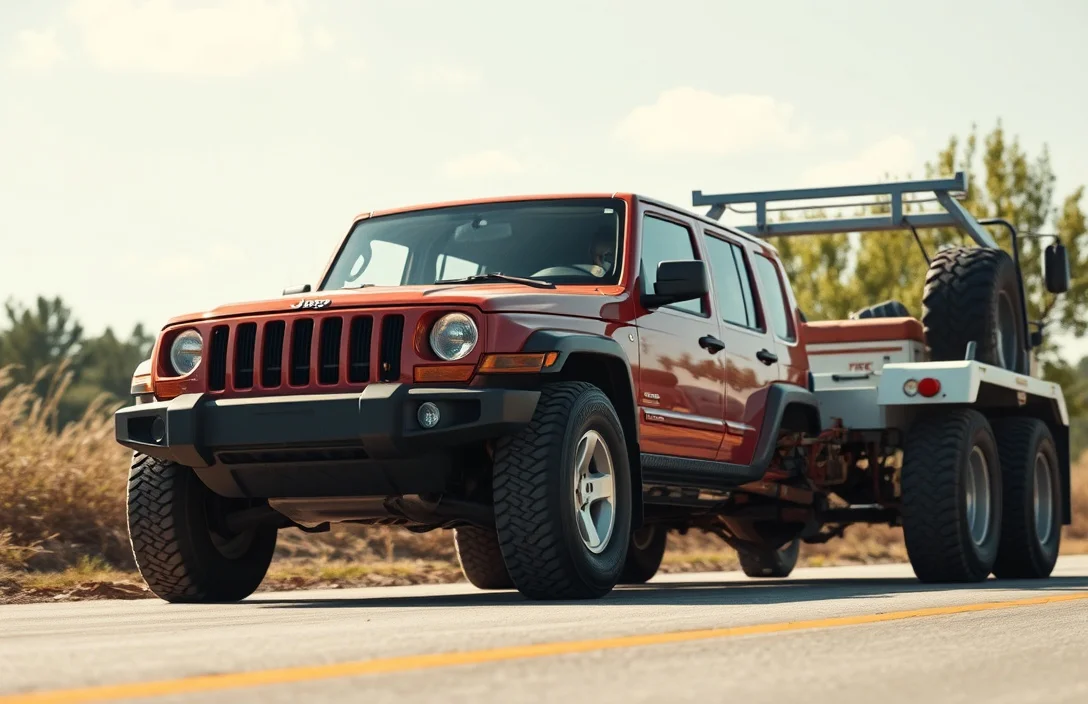
When the driveshaft is missing, broken, or disconnected, towing is the safest plan because the drivetrain cannot transfer torque to the wheels correctly. Most “drive it anyway” attempts end up damaging the transfer case, transmission, or rear differential, and they can also create driveline debris hazards.
For example, a rear-driveshaft loss on a 4WD SUV can lead to uncontrolled wheel-spin and binding in parts that rely on the driveshaft for correct rotation. If you need to move the vehicle a short distance only to reach a tow pickup spot, moving it under strict limits is better than trying to “drive it home.”
| Situation | Best move | What to tell the tow operator |
|---|---|---|
| Driveshaft is missing or visibly broken | Flatbed | No driveshaft, location (front or rear), any clunking or debris |
| Driveshaft disconnected to prevent damage | Flatbed | Disconnected by owner, AWD or 4WD type, any transfer case symptoms |
| Unknown drivetrain damage and warning lights | Flatbed | Unknown failure, lights on, last driveline behavior you noticed |
Insider tip: Tow shops care about axle clearance and wheel-rotation risk. If you can, provide the VIN or at least the year, make, model, and drivetrain (2WD/4WD/AWD) so they can choose the safest tow configuration.
Repair Options And Costs
A driveshaft issue is usually repairable only if the damage is limited (like a worn U-joint) and the shaft itself is straight and balanced. If the shaft is bent, cracked, or the vehicle has vibration that persists after joint service, replacement is the common fix. SUV drivetrain damage can escalate quickly, so diagnosis comes first before anyone pays for parts.
Replacement Versus Repair Path
U-joints and center support bearings are the most common “serviceable” parts on many SUV drivelines, especially on vehicles with two-piece shafts. The shop will inspect for play, torn grease seals, corrosion pits, and signs of imbalance, then check for vibration at specific speeds before picking parts.
Drive shaft replacement is more likely when the tube is bent, the slip yoke is worn, balancing weights are missing, or the vehicle has a driveline vibration that does not go away after installing new joints. For some modern SUVs, a “drop and replace” driveshaft is also faster when the factory assembly is a specific length or uses proprietary slip-connection hardware.
Typical repair paths
| What’s wrong | Most common parts involved | Typical labor path | Difficulty (DIY) |
|---|---|---|---|
| U-joint wear/play | U-joints, seals, grease (sometimes straps, clips) | Lift, measure play, replace joints, road test | Moderate (2-3/5), needs tools and torque specs |
| Center support bearing wear | Center bearing, mounting insulators/bushings | Support shaft, replace bearing, verify mount condition | Moderate (3/5), depends on access |
| Vibration from imbalance | Driveshaft re-balance or full replacement | Road test correlation, inspect for missing weights | High (3-4/5), professional balancing often needed |
| Bent/cracked shaft | Complete driveshaft assembly | Replace shaft, confirm angles, verify fastener condition | Moderate (3/5), usually best done in shop |
Ballpark Costs And What Drives Price
Parts cost can range from relatively affordable U-joint service to a complete SUV driveshaft assembly that is the biggest line item. Labor is usually priced around diagnosis, removal and install time, and an alignment or test drive to confirm the vibration is gone.
Several factors swing the total bill: whether the SUV uses a one-piece or two-piece shaft, how many joints are included, whether you need new straps or fasteners, and whether the shop finds additional issues like worn slip components or bad mounts. Big differences also come from location and whether you buy an OEM-style shaft versus an aftermarket assembly.
Insider tip: If the vibration started after a hard impact or pothole, pay attention during inspection. A bent shaft can look “fine” at a glance, but the balance problem shows up under load and at highway speeds.
Common cost ranges you’ll see (very rough)
Preventing Repeat Driveshaft Problems
Driveshaft wear accelerates with harsh impacts, prolonged off-road abuse, and speed-related vibration that goes unaddressed. Keep an eye out for clunks on takeoff, droning that changes with road speed, and grease flung from U-joint seals.
Routine maintenance helps too: verify suspension bushings and motor or transfer case mounts, keep fasteners torqued to spec after any driveline work, and address tire issues like mismatched sizes or severe imbalance. For SUVs like Ford Explorer, Jeep Grand Cherokee, and Toyota 4Runner, uneven tire wear and worn mounts are frequent upstream causes that beat up joints and slip connections.
Quick Summary
Most SUVs cannot be driven safely without a drive shaft, because the drivetrain load and motion control can fail and damage parts quickly.
| Situation | What to do | Driving risk level |
|---|---|---|
| Drive shaft missing | Do not drive, tow immediately | High |
| Drive shaft broken | Tow, inspect U-joints and differential area | Very High |
| Temporary move to safety | Only a few feet to a tow location | Medium to High |
| After replacement | Road test carefully, recheck for vibration | Low |
Frequently Asked Questions
Can You Drive An Suv Without A Drive Shaft?
No, not safely or normally. If the drive shaft is missing or disconnected, the drivetrain usually cannot transmit power to the rear or to the AWD system, and you can also damage other components fast by running the vehicle with mismatched driveline speeds.
What Happens If You Remove The Drive Shaft From An Suv And Try To Drive It?
You typically lose the axle the drive shaft powers and may get a warning light, driveline binding, or drivetrain faults. Depending on the system, you can also overload parts like the differential, transfer case, or CV joints if the vehicle is forced to move.
Is It Okay To Drive Short Distance Without A Drive Shaft Just To Move The Suv?
Only in extremely limited, controlled situations. If you must move it (for example, off the road), do it at very low speed and for minimal distance, but expect it may be undriveable, and the correct move is usually a tow to avoid hidden damage.
Will An Awd Or 4wd Suv Be Drivable Without The Drive Shaft?
Most AWD and 4WD SUVs are not meant to be driven without the correct driveline setup. Many systems can bind or throw severe faults if the transfer case and axles are not turning as designed, and “partial drive” can still cause damage.
What Are Common Symptoms After A Drive Shaft Failure That Make Driving Risky?
Yes, symptoms matter because they can warn of more than just the shaft. Look out for heavy vibration, clicking or clunking (often from CV joints/U-joints), grinding noises, or severe shaking under load, since driving through those can quickly damage the differential or related joints.
Can You Tow An Suv If The Drive Shaft Is Broken Or Removed?
Sometimes, but you must follow the right procedure for your drivetrain. Tow guidelines depend on whether it is 2WD, 4WD, or AWD, and which components are being rotated, so check the owner’s manual or get shop guidance before towing.