


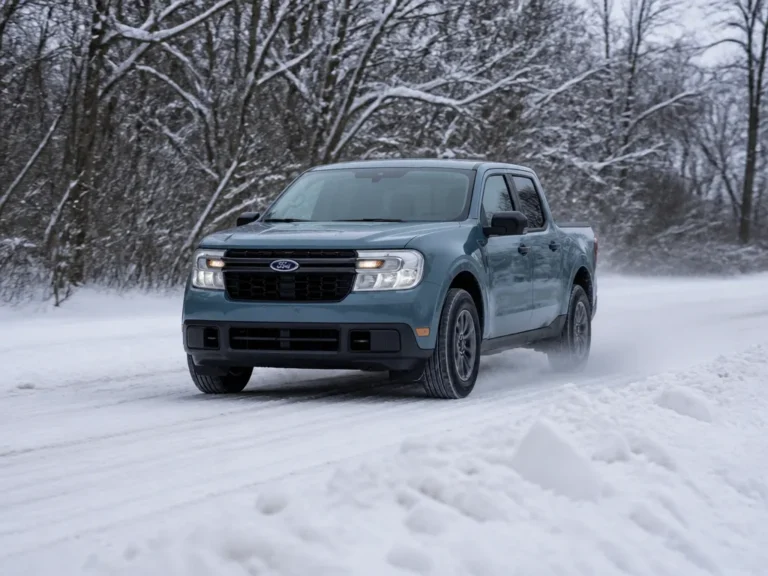
The Ford Maverick sits lower than most traditional pickup trucks, which leaves many owners wondering if it can actually handle a harsh winter commute or deep snow drifts. You might be questioning if the available all-wheel drive system is enough to keep you on the road when the temperature drops and the streets turn to ice. Understanding how this compact truck balances its car-based architecture with winter conditions is the difference between a confident drive and getting stuck in your own driveway.
Ford Maverick performance in snow is highly capable when equipped with the optional all-wheel drive system and a proper set of winter tires. While the 8.3 inches of ground clearance is sufficient for most paved roads, this vehicle remains a light-duty truck that requires careful driving in snow depths exceeding six inches.
Is Ford Maverick Good In Snow Winter Driving?
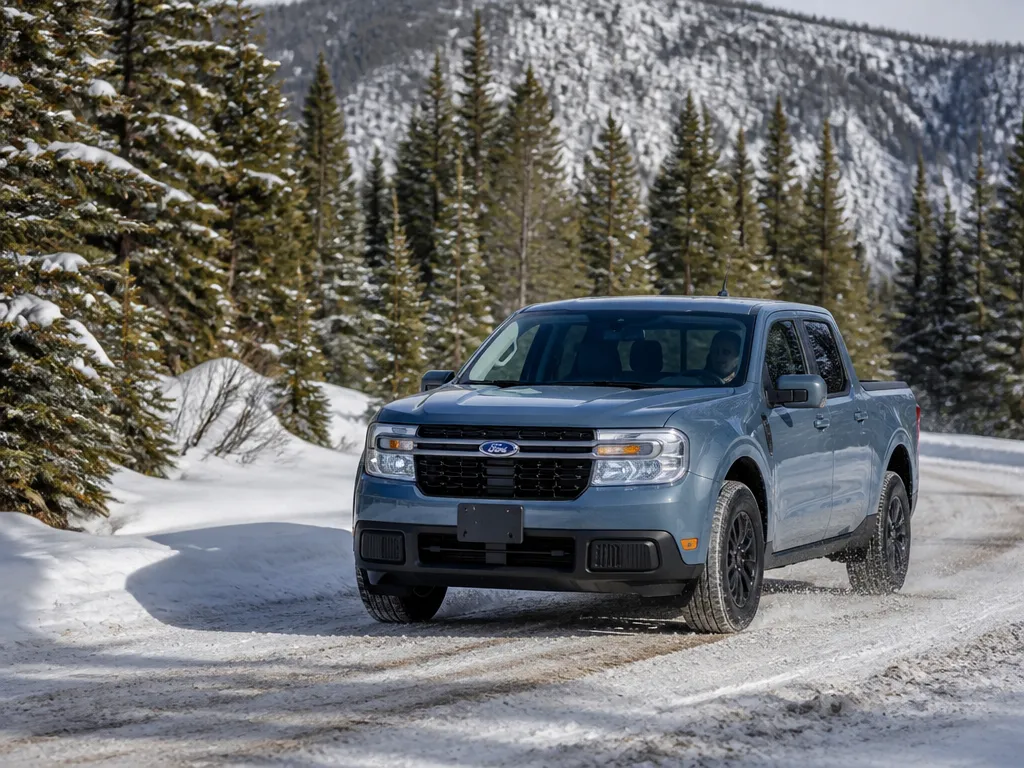
The Ford Maverick handles snow and ice effectively when equipped with the optional all-wheel drive system and proper winter tires. Its modest ground clearance of 8.3 inches provides enough height to navigate unplowed residential streets without bottoming out.
Comparing Drivetrain Performance
Choosing between the standard front-wheel drive and the available all-wheel drive models changes how the truck manages low-traction surfaces. Front-wheel drive models rely entirely on the front tires for both propulsion and steering, which limits their ability to climb steep, snow-covered inclines.
Real-world Performance Expectations
Drivers should keep realistic expectations regarding the truck’s capabilities regardless of the chosen drivetrain. The Maverick uses a unibody construction rather than a traditional truck frame, which results in a lighter rear end that can feel loose on slick pavement if the driver is too aggressive with the throttle.
Mechanic Tip: The electronic traction control system on the Maverick is calibrated to cut engine power quickly when it senses wheel spin. While this prevents the tires from digging into deep snow, it can leave you stuck if you stop on a steep hill. Turn off the traction control if you need to maintain momentum through deep, loose powder.
| Feature | Impact on Winter Driving |
|---|---|
| Ground Clearance | 8.3 inches allows for moderate snow depth traversal. |
| Weight Distribution | Lighter rear end requires caution on icy corners. |
| Tire Setup | Critical factor; factory all-season tires are insufficient for heavy ice. |
In practice, the most significant performance upgrade for any Maverick owner is a dedicated set of winter tires. Even an AWD-equipped truck will slide through an intersection if the tires lack the siping and rubber compounds necessary to grip frozen asphalt.
How The Maverick Awd System Performs
The Ford Maverick utilizes a clutch-based intelligent all-wheel drive system that automatically manages torque distribution between the front and rear wheels. This setup monitors vehicle speed, throttle position, and wheel slip to engage the rear axle in milliseconds when traction loss occurs.
Mechanical Operation And Torque Management
The system operates primarily in front-wheel drive mode during dry, steady-state cruising to maximize fuel efficiency. When the onboard computer detects a discrepancy in wheel rotation speeds, it activates a power transfer unit to send torque to the rear wheels. This transition happens without driver intervention, providing a seamless response during sudden icy patches or slushy highway conditions.
Mechanic’s Note: Unlike traditional 4×4 systems with a manual transfer case, this intelligent system is designed for road-going traction rather than deep-mud rock crawling. It is highly effective at maintaining forward momentum on packed snow, but it cannot replace the physical grip provided by proper rubber.
Electronic stability control works in tandem with the AWD system by monitoring yaw sensors and individual wheel braking. If the vehicle begins to lose control, the system cuts engine power and applies specific brakes to pull the truck back into the driver’s intended path. This combination of mechanical torque shifting and electronic braking is the primary defense against oversteer or understeer on slippery surfaces.
Performance Comparison
| Condition | AWD Performance | FWD Performance |
|---|---|---|
| Packed Snow | High confidence | Moderate, requires momentum |
| Deep Slush | Good traction | Poor, prone to spinning |
| Black Ice | Assisted stability | Limited, relies on tires |
Drivers should keep in mind that the system is reactive, not predictive. It requires a small amount of initial slip before the rear axle engages, which is normal for this class of vehicle. On steep, snow-covered inclines, maintaining a steady throttle is the best way to keep the intelligent AWD system active and pulling effectively.
Why Winter Tires Remain Non-negotiable
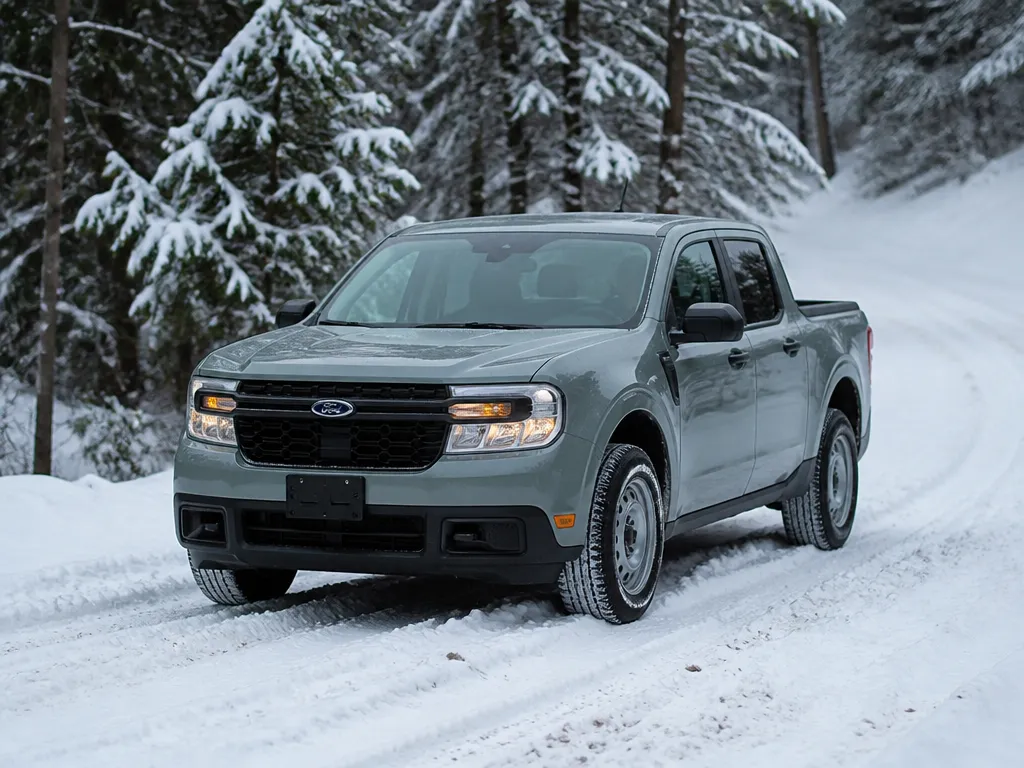
Winter tires provide the only physical connection between your Maverick and the road when temperatures drop below 45 degrees Fahrenheit. All-season tires rely on rubber compounds that harden in the cold, drastically reducing your ability to stop or steer on packed snow and ice.
The Physics Of Low-temperature Traction
Rubber chemistry dictates how much grip your truck maintains during a winter commute. Standard all-season tires use a compound designed to remain firm in summer heat, which causes them to lose flexibility and traction on frozen asphalt. Winter tires utilize silica-infused compounds that stay pliable in sub-freezing conditions, allowing the tread to conform to the microscopic imperfections of icy surfaces.
| Feature | All-Season Tires | Winter Tires |
|---|---|---|
| Rubber Compound | Hardens under 45°F | Stays flexible below 32°F |
| Tread Pattern | Optimized for water evacuation | High-density siping for snow bite |
| Stopping Distance | Longer on ice and snow | Significantly shorter |
Performance Differences In Real-world Conditions
Stopping power is the most critical safety factor in winter driving, and all-wheel drive does absolutely nothing to help you stop. While an AWD Maverick helps you accelerate away from a light, dedicated winter rubber is the only component that prevents a collision when you need to brake suddenly for a slide or obstacle.
Mechanic Tip: Do not rely on the “M+S” rating found on many factory tires as a substitute for winter performance. That rating only indicates tread void ratio, not the rubber’s ability to grip on ice. Look for the Three-Peak Mountain Snowflake (3PMSF) symbol to ensure the tire meets severe snow service requirements.
For example, a Maverick equipped with high-quality winter tires will consistently outperform a vehicle with standard tires regardless of whether the latter has a more advanced drivetrain. Investing in a dedicated set of winter wheels and tires saves your summer rims from road salt corrosion and allows for a quick swap at the start and end of the season.
Managing Traction With Slippery Mode
Slippery mode adjusts the engine throttle response and optimizes the transmission shift points to maintain stability on low-traction surfaces. This setting reduces the sensitivity of the gas pedal to prevent wheel spin when you pull away from a stop on ice or packed snow.
The system works by softening the initial throttle input, which gives the tires a better chance to find grip rather than breaking traction immediately. While the computer manages power delivery, you still need to provide smooth steering and braking inputs to keep the truck composed.
When To Activate And Deactivate
Engage this mode the moment you encounter slush, light snow, or icy patches on your commute. It is designed to mitigate the sudden torque spikes that often cause a vehicle to slide sideways during acceleration.
Mechanic Tip: Slippery mode does not replace the need for winter tires. If your tires have lost their tread depth, no amount of electronic intervention will keep you from sliding in a corner. Always check your tire pressure as the temperature drops, because cold air causes a significant drop in PSI.
For example, you might encounter a steep, snow-covered driveway leading to your house. Activating Slippery mode before you start your ascent helps the AWD system distribute power more effectively to the wheels with the most grip. If you leave it in Normal mode, the engine might deliver too much power too quickly, causing the wheels to spin and digging you into the snowbank.
Ground Clearance And Deep Snow Limitations
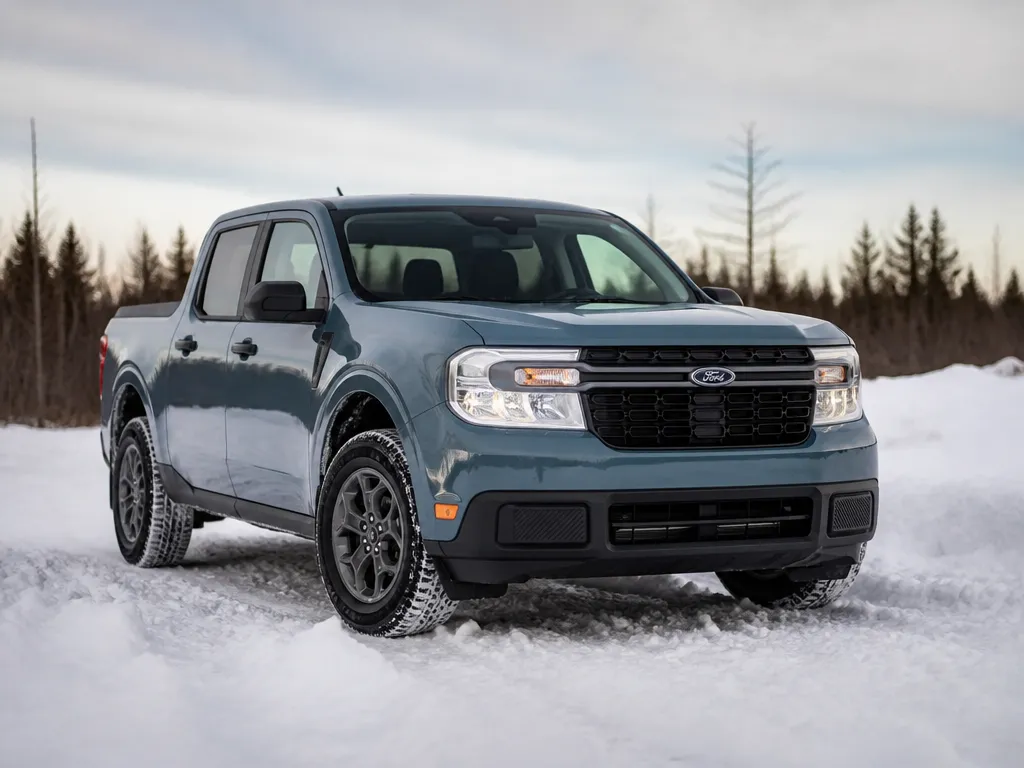
The Ford Maverick has approximately 8.3 inches of ground clearance. This height is adequate for maintained roads and light accumulation, but it is not designed for deep off-road snow.
Comparing The Maverick To Other Trucks
The Maverick sits lower than traditional mid-size or full-size pickups. It is closer to a crossover in height than a heavy-duty work truck. This makes it easier to enter and exit, but it limits where you can drive during a blizzard.
| Vehicle | Approx. Ground Clearance | Snow Capability |
|---|---|---|
| Ford Maverick | 8.3″ | Light to Moderate |
| Hyundai Santa Cruz | 8.1″ | Light to Moderate |
| Ford Ranger | 8.9″ – 9.8″ | Moderate to Heavy |
| Full-Size Trucks | 9″ – 12″+ | Heavy |
Compact trucks prioritize fuel economy and urban agility over raw clearance. If you primarily drive on salted highways, this height is a non-issue. However, those living in rural areas with unplowed lanes will find the limits quickly. Adding larger all-terrain tires can provide a slight lift, but the factory suspension limits how much you can gain.
The Risk Of High-centering
High-centering occurs when the underbody of the vehicle rests on a mound of snow, lifting the wheels off the ground and preventing forward movement.
Winter Driving Safety Tips For Maverick Owners
Managing weight distribution in the Maverick requires caution because the unibody truck bed is lightweight and prone to rear-end skids on ice. Adding 200 to 300 pounds of sandbags or salt tubes over the rear axle improves tire contact patch pressure for both FWD and AWD models.
Optimizing Traction And Battery Health
Payload management is essential when driving on packed snow or slush. Keep heavy items centered between the wheel wells and as far forward as possible to maintain a balanced center of gravity. Avoid placing heavy cargo at the very rear of the bed, as this acts like a pendulum and increases the risk of fishtailing during turns.
Pro Tip: Use a rubber bed mat or a spray-in liner to prevent your ballast from sliding around. A shifting load mid-corner can catch you off guard and compromise your steering control.
Cold temperatures significantly reduce the chemical reaction speed within your 12V battery, making it harder to crank the engine. Check your battery terminal connections for corrosion and ensure they are tight before the first freeze of the year. If your truck sits for several days in sub-zero weather, a trickle charger or battery maintainer is a smart investment to prevent a no-start situation.
| Component | Winter Maintenance Task | Frequency |
|---|---|---|
| Battery | Clean terminals and check voltage | Before winter season |
| Tires | Check pressure (PSI drops in cold) | Monthly |
| Wipers | Install winter blades | As needed |
Visibility remains the biggest safety factor during winter storms. Replace standard wiper blades with heavy-duty winter blades that feature a rubber boot to prevent ice buildup on the frame. Keep your washer fluid reservoir topped off with a winter-rated formula that is rated for at least -20 degrees Fahrenheit to prevent the lines from freezing solid while you drive.
Quick Summary
The Ford Maverick is a capable winter vehicle when configured with the optional all-wheel drive system and a dedicated set of winter tires. Its unibody construction and 8.3 inches of ground clearance allow it to navigate unplowed residential streets effectively, provided the snow depth remains under six inches. While the front-wheel drive model is sufficient for cleared roads, the intelligent all-wheel drive system is the superior choice for frequent heavy snowfall because it automatically shifts torque to the rear wheels the moment it detects front tire slippage on icy surfaces.
Drivers must remain cautious because the Maverick has a lighter rear end that can feel loose on slick pavement if the throttle is applied too aggressively. For better stability in low-friction conditions, owners should engage Slippery Mode and consider adding weight over the rear axle to improve grip. Although the electronic traction control helps with safety, it may need to be disabled to maintain momentum in deep, loose powder. Ultimately, high-quality winter rubber is the single most important investment for ensuring traction and stopping power on frozen asphalt.
| Feature | Winter Performance Impact |
|---|---|
| Ground Clearance | 8.3 inches for moderate snow traversal |
| Drivetrain | AWD preferred over FWD for icy conditions |
| Traction Control | Disable if stuck in deep, loose powder |
| Primary Upgrade | Dedicated winter tires are essential |
Frequently Asked Questions
Is The Ford Maverick Fwd Good For Winter Driving?
It can handle light snow, but the light rear end often leads to wheel spin on slippery surfaces. You can improve traction by placing 200 to 300 pounds of sandbags over the rear axle.
Does The Maverick Awd Handle Deep Snow Well?
The AWD system provides much better grip by sending power to all four wheels, making it far more capable than the FWD model. However, it is not a heavy duty 4×4, so you should still be cautious in snow deeper than six inches.
Does The Maverick Hybrid Lose Fuel Economy In The Cold?
Yes, you will notice a 10 to 20 percent drop in MPG during freezing weather. This happens because the gasoline engine must run more frequently to generate heat for the cabin.
Is The Ground Clearance Enough For Unplowed Roads?
The Maverick has about 8.3 inches of ground clearance, which is sufficient for most city streets and plowed roads. You may still high center if you attempt to drive through deep, unplowed drifts.
Are All Season Tires Enough For A Maverick In Winter?
All season rubber begins to harden and lose grip when temperatures drop below 45 degrees Fahrenheit. For true winter safety, you should install dedicated winter tires to ensure shorter braking distances on ice.