


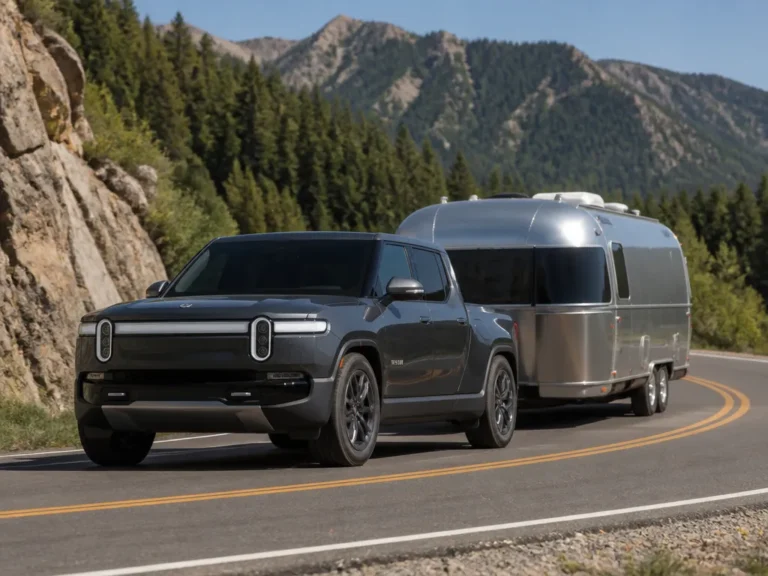
You keep seeing “max tow” numbers for EVs, but the moment you add a hitch and a tongue-weighted trailer, the real capacity can change fast. If you searched “electric vehicle with the best towing capacity,” you want the top-rated models, the exact trims, and what you must install (and update) to make the rating apply.
Best max towing varies by configuration, and EV tow ratings are commonly tied to specific packages plus payload math. This roundup gives you a ranked shortlist with exact max trailer weight, the required hitch and wiring setup, and a quick checklist to confirm your vehicle matches the rating.
Electric vehicle with the best towing capacity depends on trim and tow package, but the highest published ratings on electric pickups and large EV SUVs typically fall around 7,000 to 11,000 lb max trailer weight. Use the truck or SUV that matches your GVWR and payload, then confirm the tow package and wiring are installed.
Electric Vehicle With The Best Towing Capacity
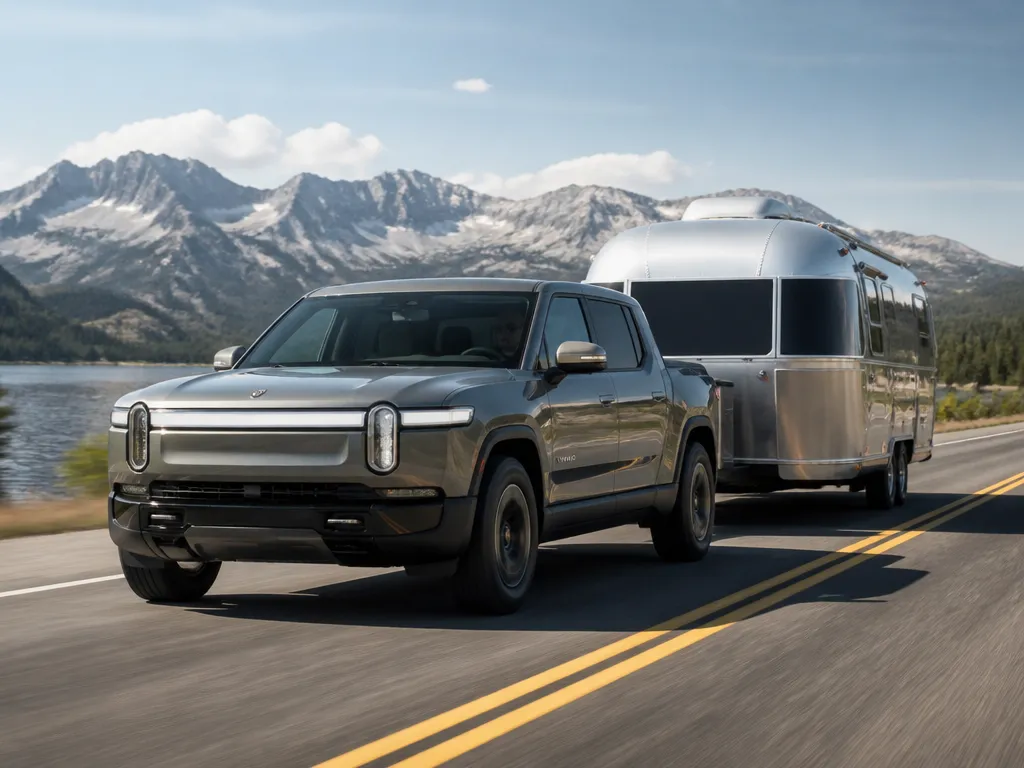
Rivian R1T, with the Max Tow Package, is one of the top EVs for straight max trailer weight at 11,000 lb (5,000 kg) on 2WD. The Rivian R1S has a lower published maximum of 7,700 lb with its applicable tow configuration. Tesla also lands in the upper group with the Model X and Model Y towing near 5,000 lb, but it is configuration and region dependent.
Ranked Ev Towing-capacity Shortlist (Max Trailer Weight)
| Rank | EV (model years) | Trim or configuration that matters | Max trailer weight (lb) | What to verify before you buy |
|---|---|---|---|---|
| 1 | Rivian R1T (2022+) | Max Tow Package | 11,000 lb | Tow package installed, correct hitch/receiver, and that your specific build matches the published rating in your market. |
| 2 | Rivian R1S (2022+) | Max Tow Package | 7,700 lb | Same checks: tow package, hitch hardware, and configuration match to your local spec sheet. |
| 3 | Tesla Model X (2021+) | Tow Package equipped | 5,000 lb | Verify you have the factory tow package and the correct hitch wiring harness, plus the allowable trailer type and tongue load. |
| 4 | Tesla Model Y (2021+) | Tow Package equipped | 3,500 lb | Check wheel and tire setup, payload limits, and whether your exact configuration is rated for towing in your region. |
Important: EV towing ratings can change with options (tow package on/off), wheels and tires, and sometimes brake or cooling capacity. Before anyone signs paperwork, confirm the rating in your exact VIN’s spec (or the manufacturer’s towing chart for your build) because “max trailer weight” is only one piece of the full towing math.
What The Number Means (Max Trailer Weight Vs. Gcwr Vs. Tongue Weight)
“Max trailer weight” is the heaviest trailer mass the vehicle is rated to tow under the stated conditions. “GCWR” is the maximum combined weight rating, meaning vehicle plus trailer, and it is where many real-world limits get decided once you load the vehicle and add passengers.
“Tongue weight” (the vertical load at the hitch) is also critical because it affects how much load transfers to the axles. If you overload payload, you can be within trailer-weight limits on paper but still exceed what the truck or SUV can safely carry on its axle, which is why tongue weight and vehicle payload capacity are non-negotiable.
Conditional Ratings You’ll See On Spec Sheets
“Max trailer weight” is the marketing number, but the binding constraints usually are GCWR and payload. If you tow often with gear, treat tongue weight and axle load limits as the real checklist.
Top Ev Picks By Tow Rating
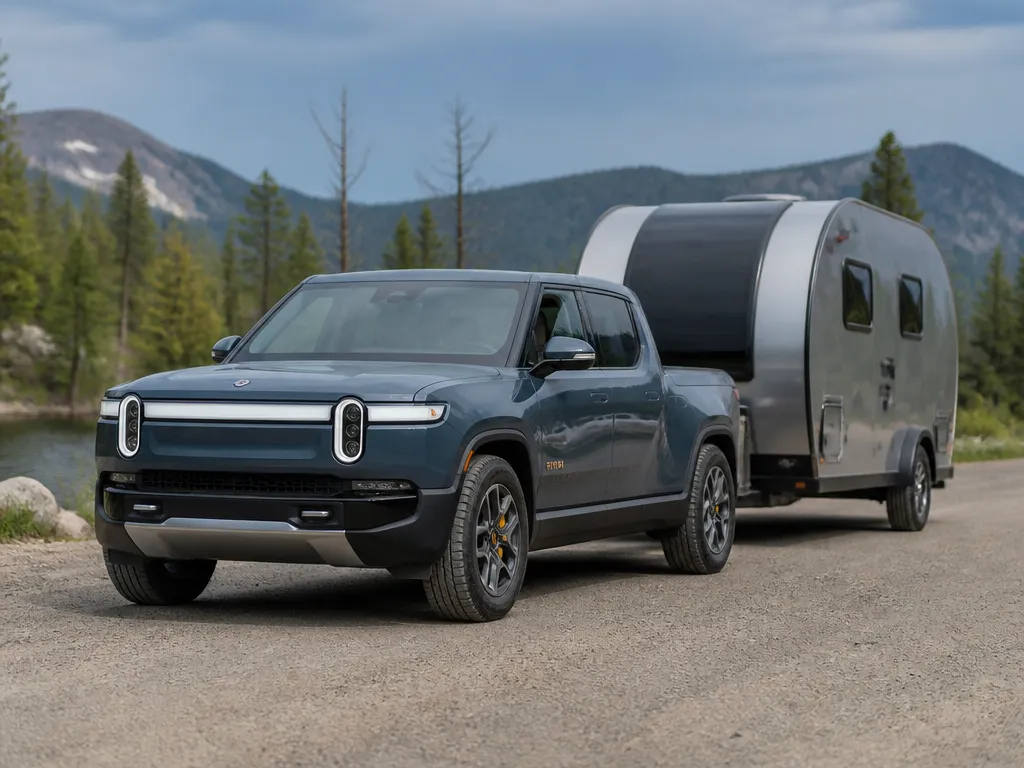
Rivian R1T and R1S usually lead the EV towing conversation in US listings, but the real-world “max trailer weight” number only applies when you have the factory tow package and the correct configuration. Ford’s F-150 Lightning, Tesla Model X, and Tesla Model Y can tow impressive weights too, but the published ratings often depend on trailer type, GVWR limits, and software or hardware that may vary by model year.
Vehicle-by-vehicle Tow Qualification (What Must Be True)
Use this checklist as a reality filter before you trust any brochure number. Tow ratings are tied to GCWR, axle limits, battery conditioning strategy, and the trailer electrical connector and brake controls the truck or SUV can recognize.
| EV pick | Trim/config to look for | Official tow rating conditions to confirm | What you may need to buy |
|---|---|---|---|
| Rivian R1T | Models with factory tow capability (varies by year) | Trailer max weight is only valid with the tow package and correct wheel, axle, and drivetrain setup | Factory tow hitch kit, correct wiring harness/connector |
| Rivian R1S | Models with factory tow capability (varies by year) | Rating depends on tow package, tires/wheels, and GVWR limits | Factory hitch kit, wiring harness/connector |
| Ford F-150 Lightning | Tow-ready trims, proper axle and wheel setup | Max trailer weight depends on payload, axle ratio, and equipped trailer brake controller configuration | Tow package parts, trailer wiring harness, brake controller support |
| Tesla Model X | Versions listed with towing capability and tow package | Max trailer weight depends on hardware package and region-specific certification | Trailer hitch kit and approved electrical interface |
| Tesla Model Y | Eligible versions with tow support (year/region dependent) | Published max weight applies only with the approved hitch and trailer wiring adapter | Approved hitch kit, wiring adapter |
In practice, “max trailer weight” numbers can be out of reach simply because payload is consumed by people, cargo, and the tongue weight of your trailer.
For example, a heavy travel trailer can hit tongue-weight reality before you ever reach max trailer weight.
Tow Hardware Checklist (Avoid The Common Gotchas)
Before you drive home with the hitch installed, verify the infotainment shows the tow/trailer menu and that trailer lights illuminate correctly at the plug. If the software prompt or menu is missing, stop and get the update or activation done before you tow anything heavy.
Brake and trailer compatibility is where owners get burned. Some EVs require specific trailer brake wiring or controller settings, and some regions require different electrical and braking behavior for certification.
Confirming these details is straightforward at the dealer or installer, but it’s hard after the fact. Buyers should ask for the exact trim’s equipped tow package SKU (or the installer’s kit part number), then verify receiver class, wiring connector type, and tow-mode software status on the delivery day.
Tow Setup Limits That Matter
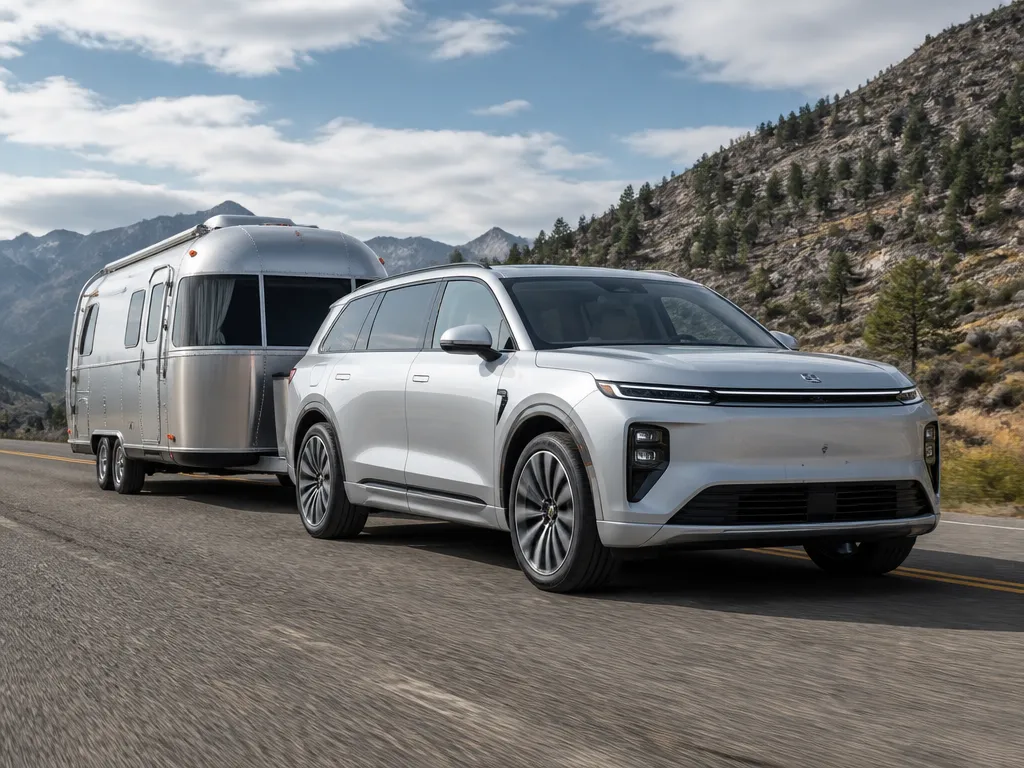
Towing limits break down into two numbers: the trailer’s maximum weight and the hitch’s tongue weight, and both interact with the vehicle’s payload and gearing (GCWR). Most EV “max tow” claims assume you are using the factory tow package, within the rated hitch/tongue specs, and on level or mild conditions. Once you add passengers and cargo, the usable capacity shrinks fast because your payload is finite.
Tongue Weight Vs. Maximum Trailer Weight
Tongue weight is the downward force the trailer puts on the hitch, and it is what controls steering stability and sway resistance. Maximum trailer weight is the overall gross trailer weight (GTW), but you can still overload the tongue or the rear axle even when GTW is “under the limit.”
Measuring tongue weight is simple and worth the effort before you trust any rating. A tongue weight scale works best, but you can also use a calibrated truck scale setup by weighing the vehicle with and without the trailer, then subtracting.
| Spec name | What it really limits | Common confusion |
|---|---|---|
| Max trailer weight (GTW) | Powertrain and cooling ability, plus braking load | Assuming GTW alone guarantees safe handling |
| Max tongue weight | Rear axle load and hitch loading | Assuming a light tongue happens automatically when GTW is low |
Practical tip: After loading, hook up and measure tongue weight. If you are high, shift cargo forward in the trailer. If you are low, redistribute toward the front or adjust how the trailer sits on its suspension.
Gvwr And Payload Math (Why “Max Tow” Shrinks)
GVWR is the maximum total weight your vehicle can legally and safely carry, and payload is what is left for people and cargo after the curb weight and options. Your tow rating may list a large max trailer weight, but that number assumes a specific “base” vehicle condition with no extra occupants or gear. Add passengers, a full fridge worth of stuff, a full water tank, or toolboxes, and your payload may run out before your trailer GTW rating does.
Use this payload math every time you tow: subtract passengers, cargo, and tongue weight from the vehicle’s available payload.
Gcwr Vs. Max Trailer Weight (Where Confusion Happens)
GCWR is the maximum combined weight of the vehicle and trailer, and it is where many “max tow” misunderstandings happen. Manufacturers often publish a trailer max weight based on GCWR, but the exact number can change with battery state, drivetrain calibration, and required equipment (like a tow package). If your trailer’s actual loaded weight pushes toward GCWR, you can feel it in reduced acceleration, higher temperatures, and more aggressive power limits.
For most EV owners, the key is to verify you are comparing apples to apples: make sure the rating you are using is the same as your configuration (wheels, drivetrain, tow package, and sometimes software state). When ratings conflict, the lower of the applicable tongue limit and the GCWR-based combined limit is the one to follow.
Passengers And Cargo Effects, And How To Verify By Vin
EV towing is sensitive to weight distribution, and passenger and cargo weight drives your payload down while also changing how much of the trailer load ends up on the hitch.
For example, adding a couple of adults and a heavy cooler might still keep you under GTW, but tongue weight can jump or your rear axle load can exceed the hitch’s max tongue rating. Once you pass those limits, stability and braking margin drop even if the powertrain can move the combined mass.
In practice, confirming your exact towing limits is easiest through VIN-based fitment. Use the VIN to confirm which towing hardware and software unlocks are required for your model year, and check whether your tow package includes the right hitch receiver rating and wiring harness for the correct trailer lights and controller options.
Range Drops While Towing
Expect range to fall sharply once an EV tows, and speed and grades are usually bigger drivers than the trailer type. Many owners see a “two parts” situation, the battery drains faster and the heater or battery cooling keeps working harder. Plan on significantly less real-world range than the car’s rated figure.
Why Towing Changes Range
Towing adds aerodynamic drag and increases rolling resistance, especially once you get past about highway speeds. The drivetrain also works at higher continuous load, and the battery management system may demand extra cooling power to keep cells within safe temperature. Those factors stack together, so the same trailer can cut range more at 70 mph than at 55 mph, even on level ground.
Wind is the sneaky multiplier. A crosswind or gusty stretch can force the truck to steer corrections that keep power use higher, and it also increases effective drag on the trailer. Boxy RVs and tall boats are worst-case shapes, even when they weigh the same as a lower-profile cargo trailer.
Grade And Speed Effects (What Hurts The Most)
Grades and speeds usually cause the biggest range losses because they push the EV to higher power draw for longer. Climbing a sustained hill often forces the traction motor to run near its efficient operating region for extended periods, which eats energy quickly. Even after the climb, regen can recover some energy, but it rarely brings you back to the original rated range.
Charging-stop Planning And “Significant Drop” Expectations
Charging planning needs to assume a meaningful reduction versus the rated range, because the rated numbers are for unloaded driving under controlled cycles.
In practice, towing range often lands far closer to your worst-case scenarios, especially with heavy loads and highway speeds. Treat the vehicle’s route estimator as a starting point, then verify on a similar route profile before committing to a trip.
Thermal Considerations And Pacing Advice
Battery and motor cooling pulls energy during hard towing, especially when the battery warms up from high current. Hot-weather towing can worsen range further because cooling has to work longer, and uphill power keeps the pack hotter. Cold weather can do the opposite, it reduces effective battery output until the pack warms up, so your early miles are less efficient.
Pacing pays. Set a steady, slightly lower towing speed, keep tire pressures at the tow-spec listed on the door jamb or your tire placard (higher pressures can help rolling resistance within safe limits), and avoid repeated hard accelerations. A smooth approach usually gives more savings than trying to “thread the needle” between charger legs.
Practical tip: If you are comparing the “best towing capacity” EVs, compare them on real route efficiency during towing, not just the maximum trailer weight. The one you tow with comfortably and efficiently will win on trip completion, even if another model lists a higher maximum.
Braking And Stability Considerations
Trailer braking and traction control are where a high-capacity EV either feels confident or gets stressful fast, especially on long descents. The big trick is that EVs can tow more weight than their towing package can safely manage if the trailer brakes, wiring, and software integration are not set up correctly.
Trailer Brakes: Electric Vs Surge And Ev Compatibility
Electric trailer brakes rely on a controller that sends a proportional brake signal to the trailer, then the trailer magnets apply braking force. Surge (inertial) setups brake based on trailer push during deceleration, which can be hit or miss because the EV may not produce the same smooth deceleration rate you expect at the trailer.
For highest confidence, match the trailer type and controller style to what your EV tow package is designed to work with. Many EVs use a vehicle-side harness and a specific controller interface, so “it plugs in” can still be “it is not calibrated right.”
| Trailer brake setup | What tends to go right | What to watch in an EV tow |
|---|---|---|
| Electric (controller controlled) | Predictable brake response | Controller type must match the EV’s recommended harness and signal output |
| Surge/inertial | Simple wiring | Deceleration feel can vary with regen changes and grade inputs |
“If the tow harness and controller are mismatched, you can get delayed trailer braking, which makes sway worse because the trailer keeps pushing while the vehicle tries to settle.”
Controller Integration And Thermal Load On Long Grades
Brake controller integration depends on what the manufacturer calls for, including required harness parts, approved controllers, and supported settings. Avoid generic wiring “solutions,” because some EV systems expect specific signaling behavior to prevent brake conflict between regen decel and trailer braking.
Long descents add heat to both sides: trailer brakes heat up their magnets and drums/rotors, and the vehicle braking system has to manage stability when traction limits are reached. Real-world cues include a softening braking feel after repeated pedal applications, a noticeable increase in stopping distance, and a persistent brake warning message if the system detects overheating.
Thermal management is where “max capacity on flat ground” can be misleading. If you do frequent mountain towing, you want enough trailer brake capacity to keep the vehicle in regen longer, and enough heat capacity in the trailer brakes so you are not repeatedly cooking them on every descent.
Crosswind And Sway Control: Sizing Equipment Differently
High tow ratings do not eliminate dynamic instability, crosswind pushes the trailer side load into the hitch, and uneven braking can kick sway. If your destination use case is boats or travel trailers behind an EV with a tall rear profile, you should size stability equipment based on real road conditions, not just the stamped maximum tow weight.
For sway-prone loads, pay attention to hitch setup, weight distribution, and whether the trailer has proper tongue weight. A properly loaded trailer (and brakes that apply in sync) reduces the amplitude of sway, which also helps the vehicle’s stability system avoid constant interventions that can feel like inconsistent braking.
Before You Buy: Verify Towing
Towing capacity is only “real” when the exact trim, hardware package, and software configuration match what the rating assumes. Confirm the details using the VIN and the vehicle’s tow-capable wiring and control equipment before you sign paperwork.
Match The Spec To The Exact Vehicle (Vin, Trim, And Tow Package)
Online listings can mix trim years, remove tow packages, or quote a number that assumes factory-installed hitch and wiring. Your job is to match what the manufacturer rates for your specific build.
For example, a high advertised tow number may require the correct tire size, wheel/tire package, or battery/traction configuration. A single missing option can lower the legal or published limit because the vehicle ratings are conservative by design.
Confirm Electrical And Brake Control Support Before You Buy The Trailer
Trailer towing reliability and braking performance depend on the correct connector type and brake control wiring. Trailer lights that work sometimes and brake lights that fail intermittently are a common “it’s wired wrong” scenario.
For instance, some vehicles provide a tow wiring interface that still needs a brake controller install kit or software pairing. If you plan to tow frequently, spend the extra time confirming the brake controller path now, not after the trailer is already purchased.
Confirm Warranty, Limitations, And Software Updates Tied To Towing Hardware
Towing can affect how warranties apply if the vehicle is used outside the approved configuration or if towing-related software updates are missed. Before delivery, confirm the vehicle’s current software level and that the tow configuration is properly recognized.
| What to verify | What you should see in writing | Why it matters |
|---|---|---|
| VIN-matched tow rating | Owner’s manual and VIN build confirmation for your trim/equipment | Prevents “max number” listings that assume factory tow kit |
| Tow package/hitch receiver | Installed tow kit or approved dealer-install plan | Determines whether the rating applies to your vehicle |
| Trailer wiring/connector | Correct connector type and lighting circuit support | Prevents no-brake or wrong light functions |
| Brake control integration | Required adapter/module and controller compatibility | Ensures braking signals work under load |
| Warranty limitations | Towing-related usage restrictions tied to hardware and loads | Reduces risk if something goes wrong while towing |
“Bring your trailer and tow list to the dealer discussion. Ask for the exact connector type, brake control interface, and the VIN-specific towing limits the manual allows for your build.”
Best Ev For Each Towing Scenario
Maximum towing numbers only help if they match your trailer’s weight, tongue weight, and how often you tow on grades. For the EV buyer who wants “best” by use case, the right pick usually shifts from the highest published rating to the best efficiency, thermal headroom, and practical charging plan for long trips.
For example, a buyer towing a 20 to 30 ft travel trailer or a large enclosed cargo trailer should prioritize the EV with the best payload availability after accounting for passengers, gear, batteries for the trailer, and tongue weight. Tongue weight safety is where many “max tow” purchases fall short, because GCWR and rear axle limits control what you can actually carry.
For instance, a buyer who tows a midsize boat trailer to the same lake a few times a season should focus on repeatable thermal performance and regenerative braking behavior at highway speeds. Wet ramp conditions also make it important that the EV’s stability systems and trailer sway control stay active and predictable with the tow setup you can actually buy.
| Use case | What to optimize | Buyer checklist |
|---|---|---|
| Heavy RV or large trailer | GCWR margin, permitted trailer weight, payload | Confirm tow package availability, verify tongue weight guidance, ensure your loaded vehicle stays under GVWR/GAWR |
| Mixed weekly towing | Efficiency under load and grade | Compare reported towing consumption by trim, plan speeds, check if tow mode changes regen and HVAC behavior |
| Long-distance frequent trips | Thermal headroom and charging integration | Use the nav routing with towing mode, confirm charger density along the route, plan a buffer for repeat climbs |
| Occasional light-to-moderate towing | Right rating without overspending | Match your trailer’s actual loaded weight to the EV’s permitted tow rating, confirm electrical connector support |
| Boat trailer | Braking stability, speed discipline, ramp range | Plan for higher transient consumption near ramps, confirm sway/brake behavior with your hitch and wiring kit |
Practical tip: Treat “max tow” as the upper limit for static conditions. Pick the EV that still leaves you a comfortable payload and range buffer after your real trailer is fully loaded and you account for headwinds, grades, and ramp traffic.
How This Ranking Was Sourced
Official towing limits for each EV are taken from the vehicle owner manual or the manufacturer towing specification sheets, because those numbers are tied to the exact gross trailer weight, required equipment, and permitted conditions for that configuration. When official charts were hard to find, the ranking uses second-level confirmation from reputable spec databases and documented owner reports, then flags any conflicts clearly.
Primary Sources And What Counts In The Table
Manufacturer-published towing capacity is the baseline for every entry in the shortlist, since automakers only allow a max tow number after validating drivetrain thermal limits, high-voltage system behavior, and cooling performance with trailer loads. The values used are the vehicle’s stated maximum trailer weight rating, usually under “maximum tow” or “trailer towing” sections, and they apply only when the required tow package (hitch, wiring harness, and sometimes cooling upgrades) is installed.
Each table value is entered with the same interpretation the manufacturer uses, typically as a single max trailer weight number in pounds or kilograms, along with any stated conditions like level ground, correct tongue weight range, and the requirement for a Class III/IV hitch. If a source presents separate limits for equipped vs. not equipped, or for different axles, batteries, or wheel/tire sizes, the ranking picks the configuration that the manufacturer explicitly rates for towing.
Secondary Verification And Handling Conflicting Specs
When manufacturer documentation is incomplete or buried, the ranking cross-checks the same model and year on reputable spec databases and forums where owners post VIN-specific build details and measured outcomes. Forum data is treated as supporting context because owners can tow different trailer weights, grades, and ambient temperatures, and those differences can make real-world results diverge from the published max rating.
Conflicting published numbers trigger a conservative approach: the ranking prefers the figure closest to the owner manual wording and then annotates the discrepancy.
For example, if one site lists a higher “max tow” number but the owner manual for the same year states a lower equipped-only rating, the ranking keeps the manual number and flags the higher figure as an inconsistency tied to equipment or interpretation.
| Data type | Priority | How it affects the ranking |
|---|---|---|
| Owner manual / manufacturer towing chart | Highest | Used as the displayed max trailer weight, with conditions recorded |
| Manufacturer accessories or tow package documentation | High | Used to confirm which configurations are eligible for the rating |
| Reputable spec databases | Medium | Used to corroborate, then adjusted to match the manual wording when possible |
| Owner forums and towing logs | Context only | Used to explain variability in range and temperatures, not to replace official limits |
Practical takeaway: A “highest max tow” number only applies if your build matches the manufacturer’s eligible configuration and you install the required tow package and wiring, since EV thermal management is what makes towing limits enforceable.
Quick Summary
Electric vehicles only reach their best “max tow” numbers when you match the exact package and configuration, because adding a hitch and trailer changes the usable limits. The article stresses that EV tow ratings are commonly tied to specific tow packages plus payload math, so the highest published figures in the EV pickup and large SUV segment usually land around 7,000 to 11,000 lb max trailer weight. The key starting point is the manufacturer’s tow rating number, then matching max trailer weight to your exact VIN and trim.
In the ranked shortlist, the Rivian R1T (2022+) with the Max Tow Package is rated at 11,000 lb, while the Rivian R1S (2022+) with its applicable Max Tow configuration is rated at 7,700 lb. The buying checks include verifying the tow package is installed, confirming correct hitch or receiver hardware, and ensuring your build matches the published rating for your market. Tesla’s Model X (2021+) with the Tow Package is rated at 5,000 lb, and the Model Y (2021+) with the Tow Package is rated at 3,500 lb. The article warns that EV towing ratings change with options like wheel and tire setup, and that even if trailer weight fits, tongue weight and payload can cap towing before the brochure number. Final takeaway, confirm the towing rating in your exact VIN’s specification before you sign paperwork.
| EV (model years) | Towing trim or configuration | Max trailer weight (lb) | What to verify |
|---|---|---|---|
| Rivian R1T (2022+) | Max Tow Package | 11,000 | Tow package installed, correct hitch/receiver, VIN matches spec |
| Rivian R1S (2022+) | Max Tow Package | 7,700 | Tow package installed, hitch hardware correct, VIN matches spec |
| Tesla Model X (2021+) | Tow Package equipped | 5,000 | Factory tow package, correct hitch wiring harness, tongue load within limits |
| Tesla Model Y (2021+) | Tow Package equipped | 3,500 | Wheel and tire setup, payload limits, VIN rated for towing in region |
Frequently Asked Questions
Which Electric Vehicle With The Best Towing Capacity Can Tow The Most Weight In Real-world Terms?
It depends on the specific model year, trim, and hitch rating because EV towing limits can vary by configuration. As a starting point, look for an EV that clearly lists a published maximum trailer weight and a separate maximum tongue weight in the owner’s manual, then match it to your trailer class.
How Does An Electric Vehicle With The Best Towing Capacity Affect Range While Towing?
Towing usually cuts range because you are adding aerodynamic drag and drivetrain load. Plan for meaningfully reduced range, and always calculate using your actual trailer weight and your route speed, since highway towing can drop efficiency fast.
Does An Electric Vehicle With The Best Towing Capacity Need Special Towing Equipment Like A Brake Controller?
Many EVs still require the right hitch and wiring for trailer lights, and some setups may also need a brake controller depending on the trailer. Check the manufacturer’s towing guide for the exact wiring requirements and whether the vehicle supports an integrated brake controller.
Is It Safer To Tow At The Maximum Rating On An Electric Vehicle With The Best Towing Capacity?
No, towing near the absolute maximum rating can increase heat and stress on the system. You can stay safer by choosing a trailer that keeps you well under the published limits, and by using proper weight distribution so the tongue weight is within spec.
What’s The Most Common Mistake When Towing With An Electric Vehicle That’s Known For High Towing Capacity?
The common mistake is assuming the max towing number is the same as payload, or ignoring the vehicle’s axle and tongue weight limits. Always verify you are within the vehicle’s Gross Vehicle Weight Rating and the trailer’s tongue weight spec.
Can I Increase Towing Capacity On An Electric Vehicle With The Best Towing Capacity By Upgrading Parts?
Generally, no, you should not try to “modify” towing capacity by changing suspension, hitches, or cooling components without manufacturer engineering support. The only towing ratings you can trust are the ones in the official owner’s manual, and anything else can create safety and warranty issues.