

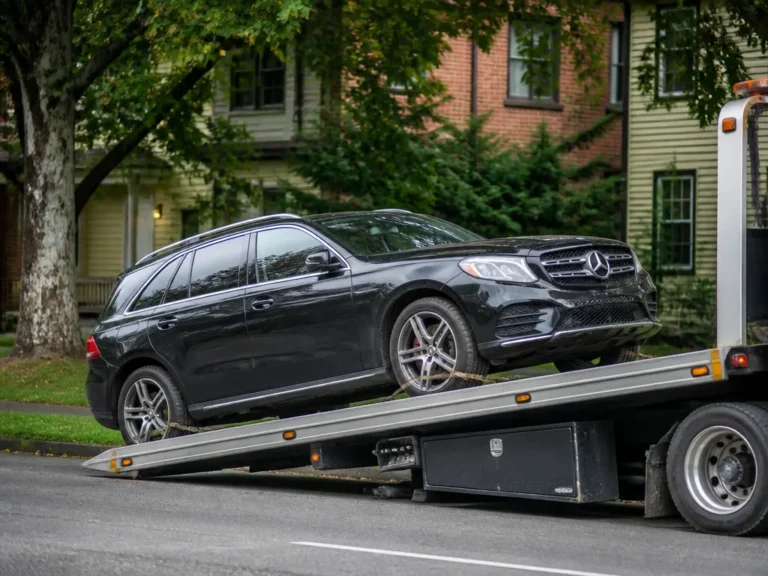
You searched “flat towed mercedes suv” because you want to hook up a tow dolly or tow truck rig without cooking the drivetrain. The annoying part is Mercedes towing approvals vary by SUV, drivetrain, and model year, and a wrong transfer-case or ignition step can cause expensive damage. You need a clear do/don’t plan before you move a wheel.
Mercedes SUV flat-tow compatibility depends on the exact model year and whether it has 4MATIC/AWD. You’ll get a model-by-model compatibility chart, then the exact neutral/transfer-case and ignition/key steps that keep driveline rotation safe, plus speed and distance limits where the manual specifies them.
Mercedes SUV flat-towing (all wheels on the ground) is only safe when the owner’s manual specifically approves that exact model, year, and drivetrain. Because the required transfer-case setting and steering lock and ignition/key procedure change, this guide forces you to confirm your SUV’s exact configuration before towing 10+ miles.
Flat Towed Mercedes Suv Compatibility Chart
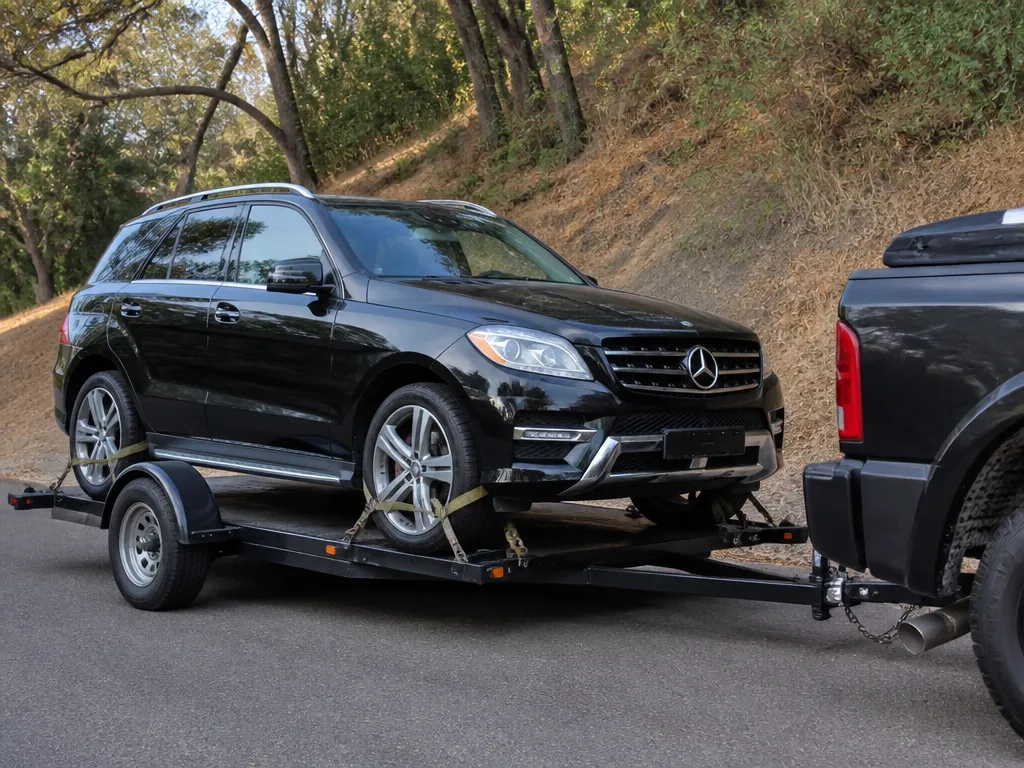
Mercedes decides flat towing on a drivetrain basis, since AWD and some transfer-case designs can keep the transmission and transfer gears turning even with the shifter in neutral. For most Mercedes SUVs, the safe rule is this: confirm whether the transfer case is electronically commanded to a tow mode, then verify the exact “neutral” state required for the transmission type.
How to read the chart: each row is a compatibility decision at a model-year window level, based on the most common Mercedes drivetrain families (4MATIC/AWD layout and automatic transmission behavior). “Flat-tow approved” means all four wheels can be on the ground, but it still requires the pre-tow checks in the checklist below. “Trailer required” means you should plan on a trailer or dolly unless you can get a Mercedes-specific tow-mode procedure from your exact VIN manual.
| Mercedes SUV (model-year window) | Drivetrain / transmission | Flat tow (all wheels down) | Key condition to verify before towing | Common “gotcha” |
|---|---|---|---|---|
| GLK (approx. 2010-2015) | 4MATIC / Automatic | Restricted | Transfer-case tow/neutral procedure and ignition/key state per manual | AWD transfer case may still be driven unless placed into the correct mode |
| G-Class (all years) | 4MATIC / Transfer-case vehicles | Restricted | Transfer-case position and whether a specific “tow” mode exists | Low-range and locking transfer-case settings can damage driveline |
| GLE / M-Class (approx. 2016-2019) | 4MATIC / 7G-TRONIC (automatic) | Trailer required (typical) | Mercedes tow-mode and speed/time limits (VIN-level) | Different AWD/transfer-case variants can change the rule |
| GLS (approx. 2017-2019) | 4MATIC / Automatic | Trailer required (typical) | VIN-level confirmation of tow mode for transfer case | Electronic AWD behavior can keep components turning |
| G[LE]/GLB/GLA in newer years (approx. 2020+) | AWD (4MATIC) / Automatic | Restricted | Whether a true tow mode exists with ignition and shifter settings | Some vehicles require specific “system awake” and steering lock states |
| ML (older 2006-2011 era, where applicable) | 4MATIC / Automatic | Restricted | Transfer-case neutral confirmation and ignition/key position | Models within the same nameplate can have different transfer-case behavior |
Flat-tow Approved: What To Verify Before You Tow
Flat towing only works when the drivetrain is in the exact “no rotation” state Mercedes expects. Before you hook up, verify your transmission type (for example, 7G-TRONIC vs. newer 9G variants) and confirm whether the vehicle has a Mercedes tow mode for the transfer case.
Mechanic’s tip: if the procedure you find is written for a different model year or transmission variant, treat it as “not verified.” A wrong tow mode request is exactly how you end up with overheated driveline components.
Not Approved Or Restricted: When You Must Use A Trailer
Trailer or dolly is the safer plan when the vehicle does not have a documented transfer-case tow mode for flat towing, or when the manual states internal lubrication depends on engine running. Any time the rules change by AWD layout, transmission, or production run, assume “trailer required” until your VIN-level procedure confirms otherwise.
Data Gaps: What Exact Inputs To Provide To Confirm Your Specific Suv
Model name alone is too broad. The relevant inputs are the VIN, model year, drivetrain, transmission, and transfer-case equipment; these identifiers tie the vehicle to the exact drivetrain control strategy.
4matic And Transfer-case Differences
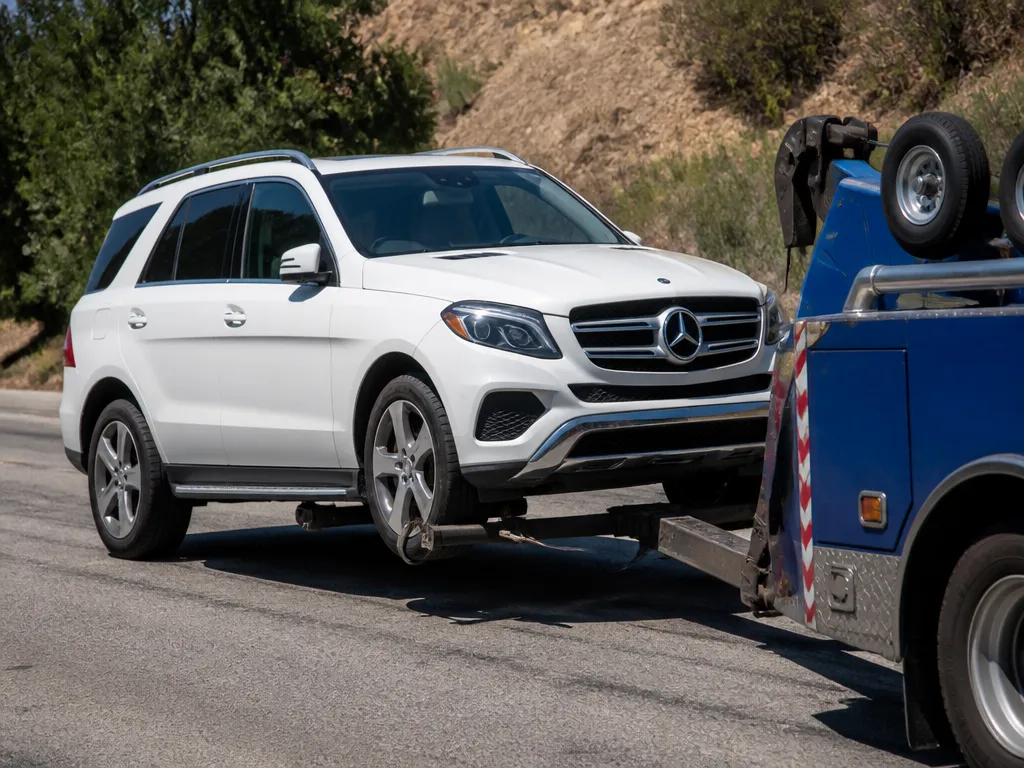
Mercedes 4MATIC drivetrains tolerate flat towing only when the transfer case and drivetrain can be put into a mode that prevents the prop shafts and internal gears from being forced to rotate. The towing permission hinges on whether the AWD power path stays active during tow, and whether the system has true driveline decoupling (some vehicles) or only “neutral” that still lets parts spin (others).
In practice, the drivetrain logic comes down to one question: when the wheels turn, does the transfer case send rotation to the transmission output and through the drivetrain? Full-time AWD systems with a locked or continuously engaged coupling can back-drive the transmission, which can overheat lubrication circuits or spin components that are not designed to move without engine oil pressure.
Transfer-case Neutral Vs. Driveline Decoupling
Transfer-case neutral is a commanded state that changes how torque is routed, usually by relocating internal shift elements or opening a clutch. Driveline disconnect is more aggressive, it separates the output from the rest of the driveline so the transfer case can sit “geared out” while the axle shafts still rotate.
Mercedes transfer cases vary by platform and year. Some have a true disconnect (or a mode that behaves like one), others have a neutral procedure that still leaves certain gear sets turning. That distinction is why two owners can follow the “same” neutral instructions and still see different results from one SUV to another.
| Drivetrain behavior during tow | What it means for flat towing | Owner checklist item that matters most |
|---|---|---|
| Rotation is decoupled | Flat towing is more likely to be permitted | Transfer-case mode confirms neutral/decouple |
| Rotation is still transmitted | Flat towing is often prohibited or limited | Ignition/transmission state must prevent back-drive |
| System is in “neutral” but not decoupled | Driveline may still spin internally | Year-specific neutral procedure matters |
Practical tip from shop experience: follow the transfer-case neutral method by model year and drivetrain variant. Using a procedure from a different year or a different 4MATIC generation is the fastest path to a forced-driveline situation.
What Changes With Transmissions, And Why The Year Matters
Mercedes SUVs use multiple automatic transmission families, and the towing-safe state can depend on whether the transmission can maintain safe lubrication and internal gear movement without engine-driven oil pressure. Some gearboxes need the torque path to be managed so the pump and bearings are not spun dry or overheated.
Year matters because Mercedes updated transfer cases, control software, and how the vehicle requests transfer-case mode. A 4MATIC SUV from one model year may have a decoupling behavior that another year lacks, even when both are “4MATIC” on the grille. That is why you should treat the neutral procedure as year-specific, not just trim-specific.
Exact Flat-tow Procedure Steps
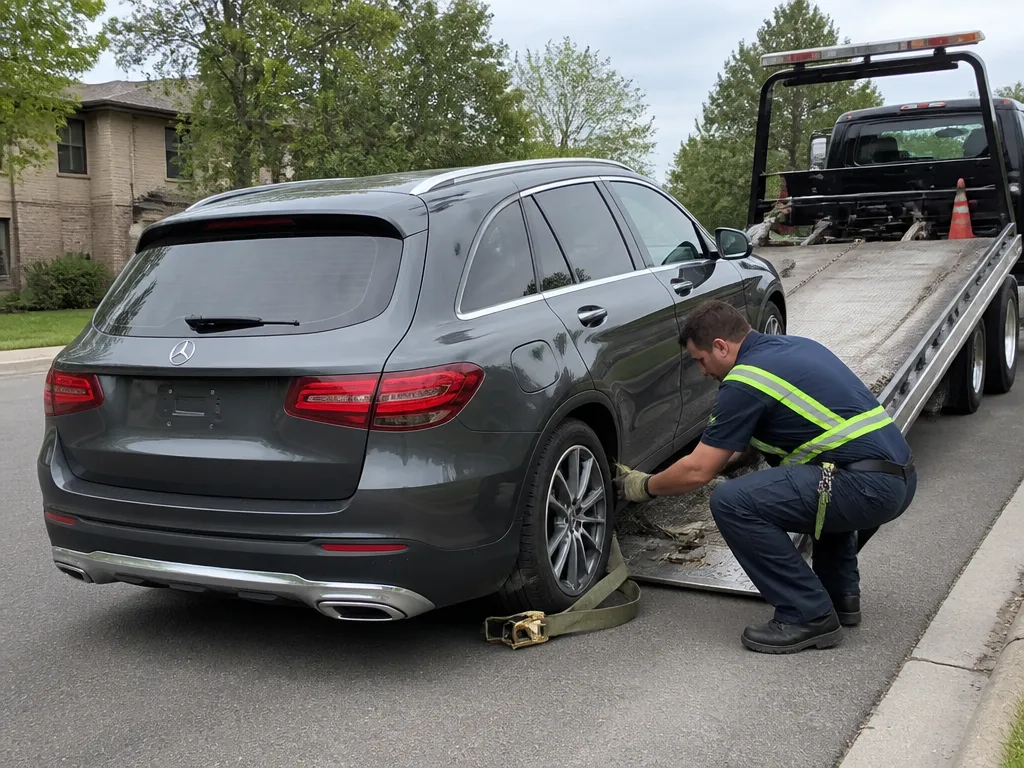
There is no single Mercedes-wide sequence: use the VIN-specific manual to place the transmission in the specified neutral state, select the approved transfer-case tow mode if equipped, set the ignition and steering state as directed, and confirm the dashboard indicators before moving. Re-check after the first 5 to 10 minutes because some systems take a moment to transition modes.
Quick Checklist Before You Roll
Use this checklist as a last look from the driver’s seat through the tow setup. If any item does not match the intended tow configuration, correct it before the first tire rotation.
For example, if you see the dash display indicating the drivetrain is not ready or the steering lock message reappears during a stop, return to the setup steps and confirm gear and transfer case positions before resuming. Treat any change in indicator behavior as a sign the vehicle exited the commanded state.
Professional tip: The fastest way to prevent expensive internal damage is to avoid “guessing” key and selector states. If you are not 100% sure your exact SUV year and drivetrain allow flat towing with wheels down, pause and verify the owner manual procedure for that specific configuration before you roll onto the tow truck.
Do Not Flat Tow These Conditions?
Flat towing a Mercedes SUV with the wrong drivetrain state can damage the transfer case, overheat the transmission, or leave you with a no-start or steering lock scenario. Stop towing immediately if the vehicle binds, grinds, throws drivetrain warnings, or you cannot keep the wheels turning freely.
Transfer Case, Transmission, And Ignition States That Cause Damage
Many Mercedes SUVs use a transfer case with mode selection that must match flat towing. The most common owner mistake is leaving the transfer case in an operating mode intended for driving, which can force internal lubrication paths to behave incorrectly when the wheels turn but the engine is off.
Wrong gear selection is equally risky. Transmission “neutral” versus “park” matters because some Mercedes automatics can lock the driveline or keep pump flow tied to engine operation, which can overheat components during towing.
In practice, the safest decision point is uncertainty. Do not rely on “close enough” settings when the transfer-case mode, transmission tow state, or ignition/key position is unknown.
Abort Triggers And What They Usually Mean
Stop towing immediately when you feel resistance or hear abnormal noises. Binding, grinding, or popping from under the vehicle usually indicates driveline stress or a drivetrain state mismatch, and continuing can turn a solvable setup issue into real mechanical damage.
For example, if you complete setup and the first few hundred feet feel smooth but the sound changes, that is still an abort trigger. Drivetrain heat and fluid circulation issues can start after a short distance.
Speed And Distance Limits When Limits Are Not Confirmed
Flat towing limits exist because many Mercedes drivetrains rely on engine-driven lubrication and controlled hydraulic pressure, even when the vehicle is moving. Without verified limits for your exact model, year, and transfer case configuration, assume the risk rises quickly.
Conservative rule for unknown limits: Keep towing to the shortest possible distance to reach a safer setup point, and slow the tow speed. If a verification step is required, do it before covering more ground.
When you cannot confirm exact limits, treat “arriving at a shop” as the goal, not a long-distance relocation. If recovery requires hours, plan a safer transport method instead of pushing the flat-tow duration.
| Condition during flat tow | What to do |
|---|---|
| Drivetrain binding or abnormal noises | Stop towing immediately and re-check drivetrain mode and tow state |
| New dash warnings | Stop towing and have the condition read or handled before continuing |
| Steering lock behavior or lockout issues | Stop and correct ignition/key state before attempting any further movement |
Towing Speed And Distance Limits
Flat-towing distance and speed limits exist because drivetrain and steering lubrication needs change when the vehicle is key-off and being pulled. Mercedes often sets limits based on model year and transmission type, so treat any number you find as “specific to that exact vehicle configuration” until you verify it in the owner’s manual or Mercedes towing supplement.
Pick The Safest Limits When Your Manual Conflicts
When the owner’s manual, towing guide, or dealer sheet give different numbers, use the most conservative limit you can verify first. The safest approach is to start with the lowest published speed and the shortest distance, then confirm the correct procedure for your exact VIN and drivetrain.
For example, if one page lists a longer distance but another page lists a lower maximum speed, your plan should follow the lower-speed spec and cap distance at the shorter value. If the manual is vague (common when documents are meant for multiple body styles), assume there is a limit tied to lubrication or cooling strategy and do not exceed what is explicitly allowed.
Weather And Road Conditions That Increase Risk
Heat, repeated braking, and long-duration pulling raise the risk even when you stay under the published distance. Flat-towing can keep certain systems from operating the way they do during driving, so sustained loads and high ambient temperatures can cause warnings or reduce margins.
In practice, stop-and-go routes, steep grades, strong crosswinds, and hot pavement can all make the “same speed, same distance” plan behave worse than expected. If you feel the tow vehicle is constantly working or the towed SUV starts flagging faults on the dash, the correct move is to stop, let the systems cool, and reassess rather than “finish the leg.”
Rest-stop Planning To Reduce Overheat And Warnings
Rest stops are part of the speed and distance strategy. Build a schedule that gives the towed SUV time to cool and lets you check for wheel heat, abnormal noises, and any dashboard messages.
For conservative planning, use shorter legs on hot days or in traffic and allow more cooling time after longer pulls. If you see warning messages tied to steering, drivetrain, or braking systems, treat them as a signal to stop and confirm the correct towing mode before continuing.
| Situation | Conservative adjustment |
|---|---|
| Conflicting manual limits | Use the lowest stated maximum speed and shortest stated maximum distance until VIN-specific confirmation |
| Hot weather or heavy traffic | Reduce leg distance and add extra cooling stops |
| Frequent grades and braking | Slow down and shorten legs to reduce thermal load over time |
| Warnings appear during the tow | Stop, cool, re-check towing mode, then continue only with confirmed correct settings |
“Conservative towing planning is how you avoid turning a simple flat-tow into a drivetrain or steering problem. If the official limits are unclear for your exact SUV, treat shorter legs and lower speed as your safety margin.”
Pre-tow Checklist For Mercedes Suvs
Before you hook up a flat tow, confirm the vehicle is set up for drivetrain rotation and that the steering and brakes will behave normally while the car is being dragged. Mercedes SUVs can tolerate flat towing only when the drivetrain state, transfer case mode, and steering position are correct, or you risk drivetrain damage and loss of steering assist.
Drivetrain Confirmation (Awd And Transmission Type)
Confirm the exact drivetrain and transmission before the first tow. Wrong assumptions here are how owners end up with a transfer case that is not in the correct mode or a gearbox state that can overheat.
| What to verify | What “good to tow” should look like | Red flag |
|---|---|---|
| Drivetrain identification | AWD/4MATIC and transmission are confirmed | Unknown transfer-case or mixed-up trim drivetrain |
| Transfer-case/tow mode | Transfer-case display shows the approved mode for towing | Mode changes when you cycle power or shift |
| Gearbox state | Dash/cluster indicates the tow-allowed state | Gear indicator does not match the required position |
Steering Position (Lock Versus Unlocked) And How To Prevent Re-lock
Steering must be positioned so the wheels track straight and the column does not re-lock mid-tow. Locking is usually tied to key/ignition and steering column status, so treat this like a “verify every time” step, not a one-time setup.
Insider tip: If the steering feels stiff or “catches,” stop and reset the steering/ignition state before towing.
Tire Pressure And Wheel Securing (Chocks, Straps, Chains)
Check tire pressures before you tow, because incorrect pressure increases the chance of tire damage and makes wheel tracking harder to maintain. Wheel securing must keep the car from rolling or shifting relative to the tow bar, ramps, or dolly arrangement.
Battery, Ecu, And Alert Handling (What To Expect, What Needs Action)
Mercedes vehicles may show messages when accessories and drivetrain modules are in an unusual state for towing. Treat persistent warnings about the drivetrain, steering, or braking systems as a “do not proceed until resolved” item.
Final “Ready To Tow” State (Dash Indicators And Transfer-case Display)
End with a deliberate “go/no-go” check on the dash and transfer-case display. Your SUV is ready only when indicators show the correct drivetrain mode and the gearbox state stays consistent after you confirm steering is free.
Before you drive away, verify the transfer-case/tow display remains in the correct mode and the dash gear indicator matches the approved towing position. If the vehicle changes mode after you reconnect the tow gear or after a key/ignition cycle, correct it before moving the vehicle.
During Flat-tow Monitoring
During a flat-tow on a Mercedes SUV, stop immediately if the instrument cluster shows a drivetrain, steering, or brake system fault, or if power assist disappears. If a warning is intermittent, keep the car safely stopped and verify ignition and transmission/transfer-case status before moving again. Watch for message changes in clusters, not just one-time chimes, since some faults only appear after load or speed changes.
Warnings And Messages That Mean Stop
Mercedes SUVs may display different wording depending on model year and software, but the categories matter. A message about ABS, braking system, electronic stability control (ESP/ESC), steering assistance, or drivetrain faults is a red flag because these systems rely on specific vehicle states during towing.
For example, a “brake/ABS” message that appears only after rolling indicates the car did not stay in the proper neutral and electronic “towing-ready” conditions long enough.
| What you see | Likely cause | What to do mid-tow |
|---|---|---|
| ABS/ESP/ESC/”Brake system” warning | Improper key/ignition position or electronic stability mode not supported in the current state | Stop. Re-check setup (shifter position, transfer-case mode if equipped, and ignition state). Resume only after the warning clears. |
| Steering assist or steering fault message | Power steering assist not available in the towing state, or steering lock/unlock logic not met | Stop. Verify steering wheel is not loaded, and re-check the tow setup before attempting to continue. |
| Transmission/drivetrain fault | Transmission not in the specified towing condition, or transfer case mode wrong | Stop. Return to the start area and re-check shift and transfer-case settings exactly. |
| “Limited driving” or “Drive carefully” message | System detected abnormal behavior during towing (wheel speed plausibility, control module state) | Stop if it persists after a short roll test. If it resets immediately, re-check setup and towing speed. |
Practical rule: If the message stays on and you feel change in steering feel or braking response, treat it as a real fault. Keep the vehicle stopped and correct the setup. Do not “drive through it” to see if it goes away.
Rough-road Impacts, Bump Handling, And Contact Checks
Rough pavement, potholes, and aggressive dips spike wheel speed and load on the driveline, even during a flat tow. Watch the tow rope and the tow bar setup for any slack, bounce, or wheel lift. A brief wheel lift can trigger ABS plausibility faults and create new warning messages.
For instance, if you hit a curb-size bump and then see ABS or “limited driving” come on, assume the wheel speed sensors saw a disagreement moment, or the car briefly left its flat-tow-ready state.
When the road gets rough, keep turns gentle and avoid high-speed washboard. If the vehicle jolts hard, stop at the next safe spot, visually confirm all wheels stay planted, and re-check that the driveline setup was not disturbed (especially transfer-case and shifter position on SUVs with more than one selector).
Mid-tow Response Workflow (Stop Vs Continue Vs Re-check)
Use this decision flow without improvising: if you get a major drivetrain/steering/brake related warning or steering feel changes, stop and re-check setup. If you only get a brief chime and the message clears after the car settles and speed stabilizes, you can continue cautiously, but only after confirming shift states are still correct.
Post-tow Quick Checks For New Noises Or Fresh Lights
After you reach the destination, do a quick scan before you start troubleshooting anything else. Look for new warning lights that were not present at hookup, and listen for drivetrain whine, clicking, or grinding from the transmission area or wheels.
For example, a new metallic growl that changes with vehicle speed often points to a control state problem or wheel speed sensor mismatch, while a chattering sound after towing can indicate a wheel bearing or brake drag issue that got worse under towing conditions.
If a new drivetrain or ABS-related warning comes back right away after the tow, get the SUV scanned with an OBD-II tool that can read manufacturer-specific codes. Clear-and-forget without reading codes can delay the root cause and cost more later.
Quick Summary
Mercedes SUV flat towing, meaning all four wheels on the ground, is only safe when the owner’s manual specifically approves that exact model year and drivetrain setup. The article emphasizes that approvals vary by SUV, drivetrain, and model year, and that a wrong transfer-case or ignition/key procedure can lead to expensive driveline damage. It also notes that compatibility depends on whether the vehicle is 4MATIC/AWD and whether the transfer case can be commanded into the correct tow mode.
The guide directs you to use a model-year compatibility chart, then confirm the exact neutral and transfer-case setting before towing more than about 10 miles. It stresses that ignition and key state, steering lock handling, and “system awake” or ECU wake behavior can change the result, and it tells you to follow speed and distance limits in the manual, stopping if there is a time or mileage threshold or if drivetrain-related warnings appear.
| Model-year window (from article) | Drivetrain / transmission | Chart takeaway | Key condition to verify |
|---|---|---|---|
| GLK (approx. 2010-2015) | 4MATIC / Automatic | Restricted flat tow | Correct transfer-case tow/neutral and ignition/key state |
| GLE / M-Class (approx. 2016-2019) | 4MATIC / 7G-TRONIC (automatic) | Trailer required (typical) | Mercedes tow-mode and speed/time limits, VIN-level |
| GLS (approx. 2017-2019) | 4MATIC / Automatic | Trailer required (typical) | VIN-level confirmation of tow mode, electronic AWD behavior changes rules |
Frequently Asked Questions
Can I Flat Tow A Mercedes Suv With A Keyless Start And No Towing Mode?
Most Mercedes models require specific procedures, and some powertrains or steering lock setups may not allow flat towing without the correct mode. An incorrect setup can cause a no-start or steering lock issue.
What Mercedes Suv Models Are Approved For Flat Towing?
Approval depends heavily on the exact model year and drivetrain, and many models are not approved for flat towing at all. Use the compatibility chart and the applicable owner’s manual to distinguish a restricted vehicle from one approved for wheels-down towing.
How Do I Protect The Drivetrain When Flat Towing A Mercedes Suv?
You want to avoid damage from the driveshaft and transmission not being lubricated the way they are during normal operation.
In practice, that means using only the approved towing method for your specific transmission type and following the exact speed and distance limits listed for your vehicle.
What Happens If I Flat Tow A Mercedes Suv Without Putting It In Neutral Correctly?
If the car does not end up in the correct state, the transmission may not behave as intended, and you can overheat components or create driveline loading. Dashboard confirmation is required before the vehicle rolls.
Does Flat Towing A Mercedes Suv Require Disconnecting The Driveshaft Or Using A Dolly?
Some drivetrains are better handled with a dolly or tow separation rather than true flat towing, because not all systems can be safely back-driven while powered down. A flat-tow setup that is not listed for the vehicle can lead to expensive damage.
How Much Does It Cost To Fix Damage From Flat Towing A Mercedes Suv The Wrong Way?
Costs vary a lot depending on whether you damaged the transmission, transfer case, differentials, or only triggered a sensor issue. Budget uncertainty is normal, but a diagnostic right away can sometimes catch lubrication or driveline concerns before major teardown is needed.