


That first snowy morning in your Mazda CX-5 can feel like a question, “Is AWD actually helping, or are my tires doing all the work?” You might also notice ABS or stability control kicking on sooner than you expect on ice, packed snow, or slush. This guide explains what the CX-5 does, what you should change before you drive, and how to handle common winter situations.
AWD helps CX-5 move and recover grip, but tires control real stopping and cornering limits in snow. ABS and traction/stability control will intervene by modulating braking and reducing wheel spin, so you’ll feel pulsing or limited acceleration when traction is gone. We’ll cover setup, tire choices, and scenario-by-scenario technique.
1. Mazda Cx 5 For Snow And Winter Driving Explained
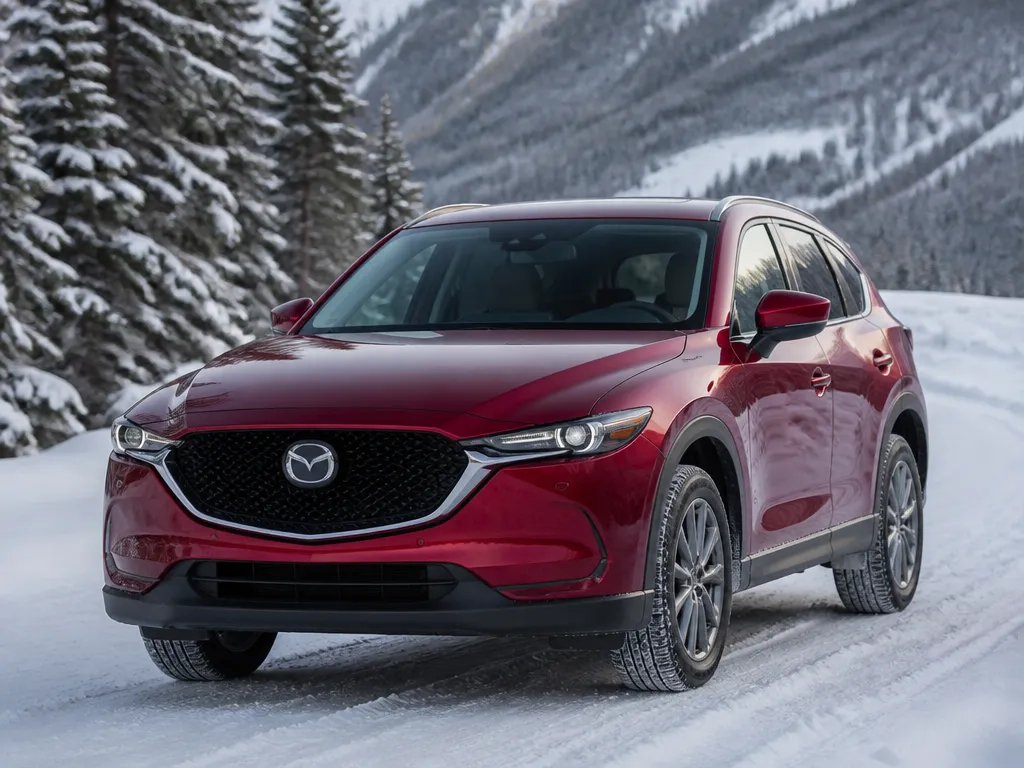
Winter grip comes down to tires and AWD logic, and the Mazda CX-5 is a common choice because it pairs predictable all-wheel-drive behavior with reasonable real-world fuel use. Mazda lists the 2026 CX-5 starting at $29,990, which makes it a realistic platform for winter setup without jumping into luxury pricing.
In practice, most owners end up spending more on winter tires and wheels than on the truck-based driving aids. A sensible baseline is swapping to a true winter tire set before the first sustained freeze, then keeping tread depth healthy through the season since worn winter tread loses snow bite quickly.
For example, if you rotate on a typical schedule (often every 5,000 to 7,500 miles) while using winter tires only for cold months, you can keep traction consistent and reduce the chance of uneven wear that feels like “mysterious” handling changes. If you run the CX-5 in slush, watch for slick spots at intersections and painted lines, since any tire can break traction there.
What Matters Most In The Cx-5 When Roads Get Slick?
The CX-5 can feel confident in snow because it can send torque to the wheels with more traction, but winter driving still punishes small mistakes. Tread pattern and compound are the biggest difference between “it drives fine” and “it drives like a snowmobile,” especially below about 40 F when all-seasons harden. Tire size matters too, since incorrect tire width or aspect ratio can affect steering response and the way the traction system interprets wheel speeds. For the best feel, stick to the winter tire size approved for your CX-5 trim and keep the same tire set on all positions for consistent grip.
Reader takeaway: budget for a proper winter tire set for the CX-5 and focus on maintaining tire pressure, tread depth, and smooth braking habits before leaning on AWD to do all the work.
2. Awd Vs Fwd Traction Behavior
In winter, traction is often the limiting factor before braking and steering, which is why AWD vs FWD behavior belongs in this guide. On slick snow, AWD can move torque to the axle with grip, helping the CX-5 keep momentum when a front-drive setup starts to spin the front tires. That difference shows up most on snow-packed roads, slushy pull-outs, and when you accelerate out of turns.
For a Mazda CX-5, the big practical takeaway is how the tires and surface interact with power delivery. FWD tends to lose grip first at the front when you add throttle on ice or deep snow, so you feel wheel spin and reduced acceleration sooner. AWD usually delays that loss because the system can send power to the rear axle when the fronts slip, so launches and mid-corner throttle feel more consistent.
In practice, AWD shines when you need steady traction while climbing, merging, or pulling out of ruts, especially with uneven snow where one side gets more grip than the other. A CX-5 with AWD can cost more to buy and service than an equivalent FWD model, so the tradeoff is worth it if you regularly drive during real snow seasons rather than occasional flurries.
How It Feels When You Accelerate
When the road is covered with uniform snow, FWD usually gives a more predictable, front-tire-limited feel: lift slightly to regain grip, then feed power back in. With AWD, the CX-5 is more likely to keep moving without that sharp “front-end spin” moment, so you can use a steadier throttle in the 0 to 15 mph range where traction matters most.
For example, exiting a stop sign onto a compacted snow patch, you may notice AWD staying composed longer while FWD will often require a more cautious pedal press. Still, if the surface turns to polished ice, both layouts can lose traction regardless of power being sent to more wheels, so winter tires and conservative inputs remain the real safety baseline.
3. How Traction Control And Abs Act
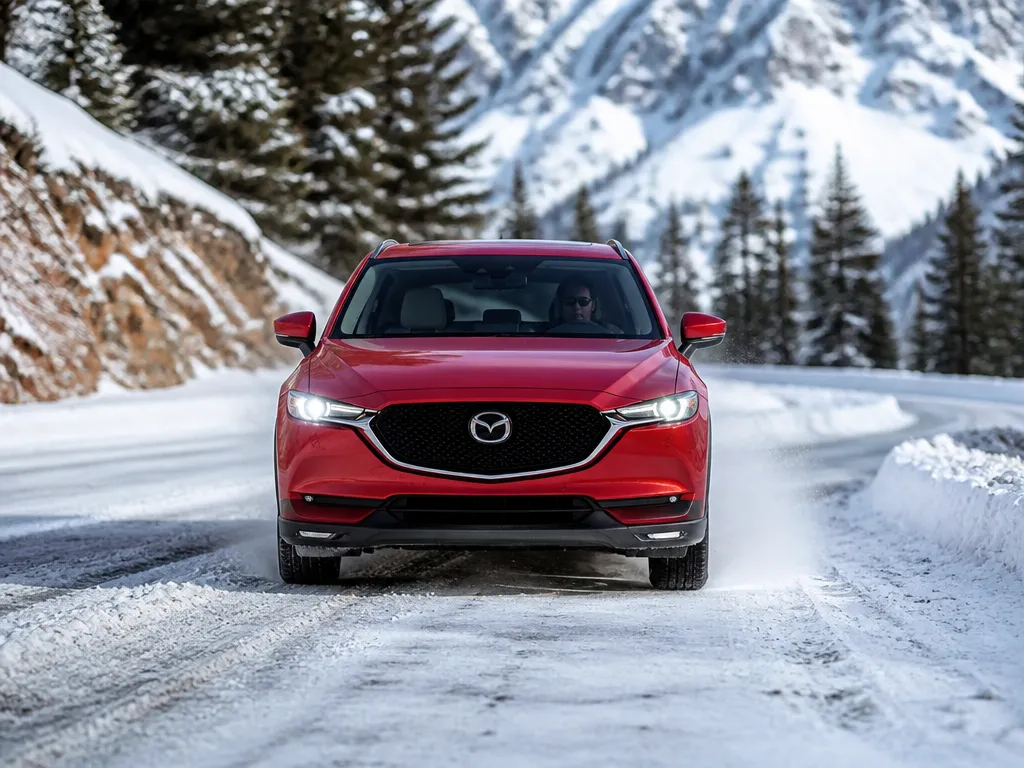
On a CX-5 in snow, your traction control and ABS are the main “computer-driven muscle” that helps keep the car pointed where you’re steering. When wheel speed sensors detect slip, traction control briefly limits engine torque and may apply brakes to the slipping wheel, while ABS prevents the brakes from locking and skidding. The result is more controllable stopping and better directional stability on glare ice, packed snow, and wet slush.
For example, if the front tires start spinning when you accelerate from a stop, the system reduces power to regain grip instead of letting the wheel freewheel. In a braking situation, ABS pulses brake pressure many times per second, keeping the tires rolling enough to steer. A major practical point for winter driving is that brake performance depends heavily on having the right tire, because these systems manage traction, they cannot replace tread and rubber compound.
What You Feel In The Car (And When To Back Off)
In real winter driving, it is common to feel a pulsing brake pedal and hear a modulated noise as ABS works, especially on icy patches where grip changes every few feet. Traction control can also cause a slight surge or hesitation when it cuts engine torque to a spinning wheel. If you notice these systems activating constantly during normal driving, reduce speed and increase following distance, because frequent intervention often means the available traction is lower than you expect or your tires are worn.
4. Winter Tire Strategy And Pressure
Winter traction drops off fast when temperatures stay below about 45°F, which is why a Mazda CX-5 needs a tire plan, not just a snow cover. A real winter tire with deeper tread and softer rubber keeps grip when roads are slushy or glazed, and correct pressure helps the tire stay in its best contact patch. Since the CX-5 is heavy enough to load the front tires during braking and corner entry, pressure mistakes show up quickly as reduced bite and faster wear.
In practice, run a seasonal setup: mount dedicated winter tires on wheels and swap them when overnight lows are consistently cold. Follow the placard values for tire pressure, and recheck pressure after the first cold snap because tire pressure can fall in low temperatures.
For example, pressure can change notably as the ambient temp drops from daytime into the teens, so it is worth checking with a reliable gauge at least weekly in winter.
Pressure Routines For Slush, Ice, And Long Trips
Slush and packed snow can mask a pressure issue until you hit a hard stop or a higher-speed freeway merge. Keeping pressure at spec helps the tread blocks flex the way they are designed to in cold weather, which is what you feel as steering response and braking confidence. For long winter drives, take a quick stop to recheck pressure if you are bouncing between warm parking lots and freezing highways, since heat built during driving can change readings. If your CX-5 pulls to one side under braking or you see abnormal shoulder wear on one tire, pressure and alignment are the first things to confirm before chasing other causes.
5. Cx-5 Pre-drive Winter Checklist
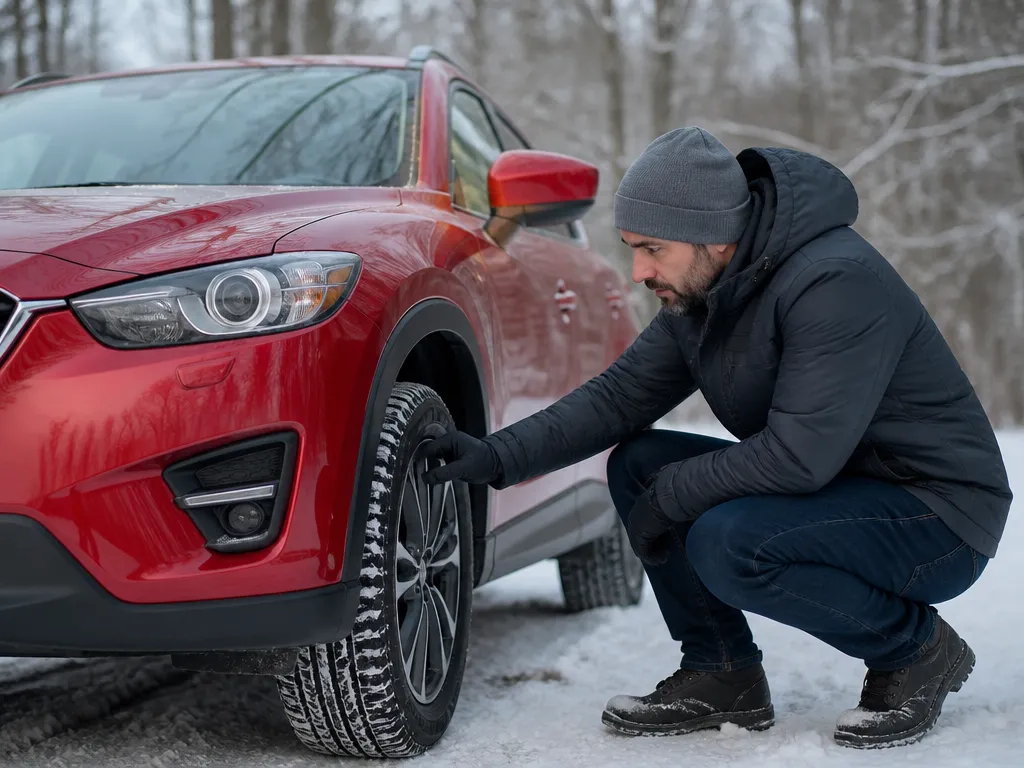
Cold-weather grip depends on simple starting checks, because the CX-5’s winter drivability starts before you ever hit the first packed snow. A few minutes checking tire pressure, wipers, fluid condition, and battery health can prevent the most common “I got stuck at the end of the driveway” problems. Keeping the basics tight also reduces the chance of weak starts and poor visibility when temperatures drop fast.
In practice, warm the cabin 30 to 60 seconds at idle while you do a quick scan for dashboard warnings, then verify tire pressures match the door-jamb placard (cold, not after driving). Check washer fluid for winter-rated concentrate, and confirm wiper blades are clearing clean arcs without streaking. Inspect tread condition and confirm you have the right winter tires for your area, since Mazda CX-5 owners often switch in late fall and stay through early spring. As a baseline cost reference for planning, the 2026 CX-5 is listed by Mazda USA starting around $29,990.
When To Redo The Checklist
Redo this pre-drive routine after any overnight temp drop, after the car sits for more than a day, and whenever you change elevation or drive into different conditions. In mixed weather, snow can melt and refreeze around wheel wells and under the front air dam, so a quick visual check of clearance is worth it before highway speeds. If you have a history of battery drain, keep a small jump-starter or a set of cables in the CX-5 during the coldest weeks, then recheck battery voltage after a few cold snaps. For winter tires, confirm the valve caps are in place and there are no slow leaks, since pressure swings show up fast on colder mornings.
Snow Scenario Driving Instructions
Snow and ice turn traction into a timing problem, which is why this driving-focused item matters for a Mazda CX-5 in winter conditions. The CX-5 is commonly used for commuting and weekend errands, so knowing what to do in low-speed slip, deeper snow, and slush helps you keep control when the road changes fast. Treat this as practical “what to do in the moment” guidance, since tires and momentum matter more than any single tech feature.
In practice, start by leaving extra space and accelerating gently, then increase the time you follow the car ahead when you first hit snow-covered pavement.
For example, if you normally brake 2 seconds before an intersection, move that planning to 3 to 4 seconds until your tires and drivetrain settle into the conditions. If the CX-5 has tire pressure monitoring, keep pressures at the winter-specified level from your door placard, since underinflation can worsen snow handling.
During a snowpack-to-clear-road transition, reduce wheel spin by easing on the throttle rather than “punching it,” especially when pulling away from a stop.
- When climbing a slick incline, use steady throttle and avoid coasting mid-climb.
- In a slide, steer where you want to go and ease off power, letting the tires regain grip.
- For slushy corners, slow before the turn, then keep steering inputs smooth.
- After driving through deep slush, watch for vibration or pulling that could indicate a buildup issue on wheels or tires.
What To Do When Traction Drops Suddenly
Cold mornings and fresh snow are the most deceptive because the surface can shift from tacky to glassy with just one temperature swing. If the CX-5 starts to feel “light” on the front end or the rear tends to step out, treat it as a traction loss signal, not a steering correction problem. Back off the accelerator, reduce steering angle, and allow the vehicle to slow before you make bigger directional changes. If anti-lock braking activates, keep steady brake pressure and do not pump the pedal, since the goal is to maintain directional control while the system modulates brake force.
Cx-5 Winter Feature Usage And Limits
The CX-5’s winter value comes from how well its traction and driver-assist systems stay predictable when roads get icy and visibility drops. AWD helps keep the tires pulling, but it does not change physics, so the car can still hydroplane on slush or skid on glare ice. Knowing what to use, when to turn it off, and where the limits are keeps winter driving safer and less stressful.
Start with the basics: winter tires matter more than any knob or mode. Mazda CX-5 also has electronic aids like ABS, stability control, and traction control that work best when you drive smoothly and let the systems manage wheel slip. For cold starts, winter-grade washer fluid and a clear windshield are practical priorities, since most winter “handling problems” are actually low visibility and reduced braking performance from slush on the road surface.
In practice, use the traction/stability systems normally and avoid “battering the throttle” to dig out, which just heats up tires and wastes grip.
For example, when climbing a snowy driveway, keep momentum low and steady, and use small steering inputs so the stability system can do its job. If your CX-5 has a temperature warning or check-engine light, address it before deeper winter trips since powertrain or sensor issues can affect how the traction system behaves.
Tradeoffs You Feel In Real Winter Conditions
Electronic traction and stability control can reduce wheel spin and help the CX-5 stay in line, but they will still intervene through braking and throttle changes, which can feel abrupt on deep powder or patchy ice. That sensation is a reminder that the system is prioritizing control, not speed. AWD may also send power to the wheels that have the most grip, yet a thin ice layer can still cause sudden loss of traction across all tires, especially during turns. Plan for longer following distances and avoid late braking into corners, because the limit is tire traction at the contact patch, not drivetrain distribution.
Quick Summary
The guide compares AWD and FWD behavior during launches, climbs, and turns, while explaining how ABS, traction control, and stability control respond when wheel slip is detected.
The CX-5 winter setup also includes the Three-Peak Mountain Snowflake symbol for real snow performance, checking tread depth, and monitoring cold tire pressure. The 2026 CX-5 starts at $29,990, and ABS cannot overcome the longer stopping distances created by ice or reduced tire grip.
| Winter factor | What the guide says to do |
|---|---|
| Tires | Use true winter tires with the Three-Peak Mountain Snowflake symbol, replace worn tread first. |
| Temperature trigger | Winter tires help once temps drop below about 45°F. |
| Tire pressure | Check cold, then recheck after driving because pressure changes with temperature. |
| Braking | Brake early and smoothly, since ABS modulates to prevent lockup but stopping distance still increases on ice. |
Frequently Asked Questions
Is A Mazda Cx-5 Good For Snow With All-wheel Drive, Or Do I Still Need Winter Tires?
Winter tires matter more than the drivetrain. Even with AWD, CX-5 traction depends heavily on tire rubber and tread design in cold temps, so you will usually want dedicated snow tires or at least all-weather tires rated for severe snow conditions.
What Is The Best Way To Start A Mazda Cx-5 In Freezing Weather And Avoid Drivetrain Strain?
Let it warm long enough to smooth idle and check engine behavior, then drive gently for the first few miles. In sub-freezing conditions, avoid hard throttle and aggressive acceleration until everything is warmed up, especially if roads are icy.
How Do I Set Up The Mazda Cx-5 For Slippery Roads, And What Should I Change In My Driving Habits?
Use slower inputs and bigger following distances. If the road is snow-packed or icy, ease into throttle, brake earlier than you normally would, and keep steering smooth to avoid losing grip.
Will Snow And Ice Cause Common Mazda Cx-5 Problems Like Wiper Failure, Brake Noise, Or Traction Control Warnings?
Yes, winter can trigger nuisance issues. Salt and slush can build up on moving parts, wipers can chatter on icy glass, and you may see traction control activity more often on low-grip surfaces, but repeated warning lights or brake vibration that worsens should be checked by a shop.
How Much Does A Winter Setup For A Mazda Cx-5 Usually Cost, Tires Vs. Wheels Vs. Awd Maintenance?
Most of your winter budget goes to tires. Expect to pay for a quality winter tire set first, and only consider wheel packages or extra storage options if it saves you time, since AWD does not eliminate the need for seasonal tires.
What Is The Most Common Mistake People Make When Driving A Mazda Cx-5 In Snow?
They assume AWD means they can drive like the roads are dry. The common mistake is speeding up, following too closely, or braking late, which is how you end up sliding even with a stable crossover and traction systems working.