


My Kona feels great until the first real snow, then I start wondering, am I about to trade smooth acceleration for wheelspin, or will the traction control save me? If you drive packed snow or slushy commutes, you need Kona-specific expectations for braking feel, corner stability, ground clearance, and what to do when the system cuts in.
Expect traction limits first at the tires, not the drivetrain. Kona’s snow behavior depends heavily on tire choice and FWD vs AWD, while stability control can reduce throttle during wheelspin. This walkthrough covers driving modes, cold-start heat timing, winter tire pressures, and a practical checklist before you leave.
Hyundai Kona in snow and winter driving is mostly about tire grip and how traction control reacts. In packed snow and slush, plan for longer stopping distances (often 2 to 3 times normal on slick ice), softer launches, and throttle cut when wheelspin happens. AWD helps, but it still cannot beat icy tire traction.
Hyundai Kona In Snow And Winter Driving
The Hyundai Kona feels more “relaxed” and predictable in snow when traction control is allowed to work, but it also makes the limits obvious faster than it does on dry pavement. Most owners notice early that steering feels slightly heavier, braking bite is softer at first contact, and acceleration triggers wheelspin sooner on light throttle. The biggest difference you can feel day to day comes from the tires and how cold or icy the surface actually is.
What Feels Different In The Cabin And At The Tires
Traction control intervention is the first thing you will feel: the Kona tends to reduce power when the tires start slipping, and you will often notice a brief pause in response before it resumes. Steering on snow can feel a bit muted because the tires lose lateral grip sooner, so small corrections can feel slower to take effect. Braking on packed snow usually brings a longer, more gradual deceleration feel, especially when the first pedal press is light.
For example, during a snowy commute, the Kona can feel stable in a straight line even when it is “slippery,” because the drivetrain and stability systems are managing wheel slip. In corners, grip drops off quickly when you turn in too hard or accelerate mid-corner, so you get more of a push toward the outside than a clean, flat “car on rails” feel. Ground contact also changes the vibe: in deeper snow, the tires can ride up and over ridges, so you feel a more noticeable bounce and slight wander over rutted pavement.
Biggest Variables That Change Outcomes
Tires are the control knob you can actually buy. All-seasons can handle light snow and slush, but packed snow and any ice tend to expose their shorter tread block edges and softer compounds drying up in cold weather. Winter tires keep more bite through freezing temps because the rubber stays flexible and the tread can keep channels clear of snow slush.
| Condition | What the Kona feels like | What changes results most |
|---|---|---|
| Normal snow | Gradual traction, slower throttle response | Winter-rated tires, gentle pedal inputs |
| Slush | Uneven grip, steering can feel “smeary” | Tread design and tire age, keeping speed modest |
| Packed snow | Brake bite is softer, wheelspin risk increases | True winter tires over all-seasons |
| Deep snow | Ruts, bouncing, reduced progress | Momentum management and appropriate tires |
All-wheel drive versus front-wheel drive changes the most when you are starting on a slick slope or trying to crawl through slush. AWD can reduce the “instant spin” feeling on launch, but it still cannot outrun available traction. Temperature and snow type matter just as much: snow that is wet and freezing over is harder on braking distances than fluffy, cold snow that is still compressing under the tire.
“The Kona will feel safest when you treat traction control like a seatbelt, not a cheat code. Smooth inputs give it time to do the right thing.”
Day-to-day Expectations And What To Do With Them
Cold starts usually mean more throttle sensitivity until the system stabilizes traction behavior, and cabin heat can take longer to feel strong if you expect immediate hot air. Over the first few miles, the Kona’s response is often a little slower because the drivetrain and stability systems are coping with reduced tire grip and changing surface moisture. Reduced visibility from snow buildup is also a daily issue, especially if you park near plowed snowbanks that throw spray back onto glass.
Fwd Vs Awd Traction Behavior
With the Kona in front-wheel drive trim, tire slip usually starts at the driven wheels during hard starts, so wheelspin is the first thing you feel in snow. With all-wheel drive trims, the system can add rear traction and hold the car more steadily during acceleration.
| Situation | FWD Kona feel | AWD Kona feel | What limits you |
|---|---|---|---|
| Launching from a stop | Quick wheelspin, slower “hook up” | More immediate bite, steadier pull | Front tire grip, tire type, snow packing |
| Cornering on packed snow | More understeer when you add throttle | Earlier correction ability, still understeer-prone | All tires saturate on ice |
| Braking on slush/ice | ABS pulses sooner when tires lock | ABS pulses too, stopping distance still rises | Tire traction, not driveline |
| Backing and low-speed turns | More traction loss if you steer and throttle | More stable creep, less sudden slip | Steering angle plus limited grip |
Typical Fwd Experience: Tighter Traction Limits
Front-wheel drive Kona traction in snow is usually consistent until you ask for more than the front tires can transfer. On takeoff, the car may flash traction control and you feel a cut in power when the front tires spin faster than the car is moving.
In corners, the FWD Kona tends to push wide (understeer) as soon as you add throttle while grip is low. That behavior is predictable, but it means you get the best results by entering with a steady speed and easing off before the steering angle increases.
Typical Awd Experience: Stability Improves, Grip Still Runs Out
All-wheel drive on the Kona can change how power flows when one axle loses traction, so starts feel less “spin then go.” Power bias changes speed control at the wheels, and the car usually feels more settled when you roll on from a stop on snowy pavement.
When traction is very low, AWD can still allow you to accelerate harder than FWD, which can tempt you into faster corner entry. Use that added launch confidence carefully and maintain conservative corner speeds.
Insider tip: AWD reduces the chance of getting stuck on a slippery launch, but it does not reduce stopping distance. If you shorten your following distance like you have better brakes, you will still run out of traction.
Limits On Ice: Why Even Awd Can’t Beat Tire Grip
On smooth ice, both FWD and AWD Kona trims rely on ABS control and careful steering inputs. The first warning sign is often reduced steering response, followed by vague throttle response as the system manages slip. Drive at a lower speed and keep inputs gentle.
Low-speed Maneuvering And Backing: Where Drivetrain Feel Shows Up
Backing and tight turns punish mistakes more in snow because you combine steering angle with throttle or braking. In FWD, a sharp throttle input while turning can trigger quick front-wheel slip and a tugging sensation at the front end.
Esc Traction Control Interventions
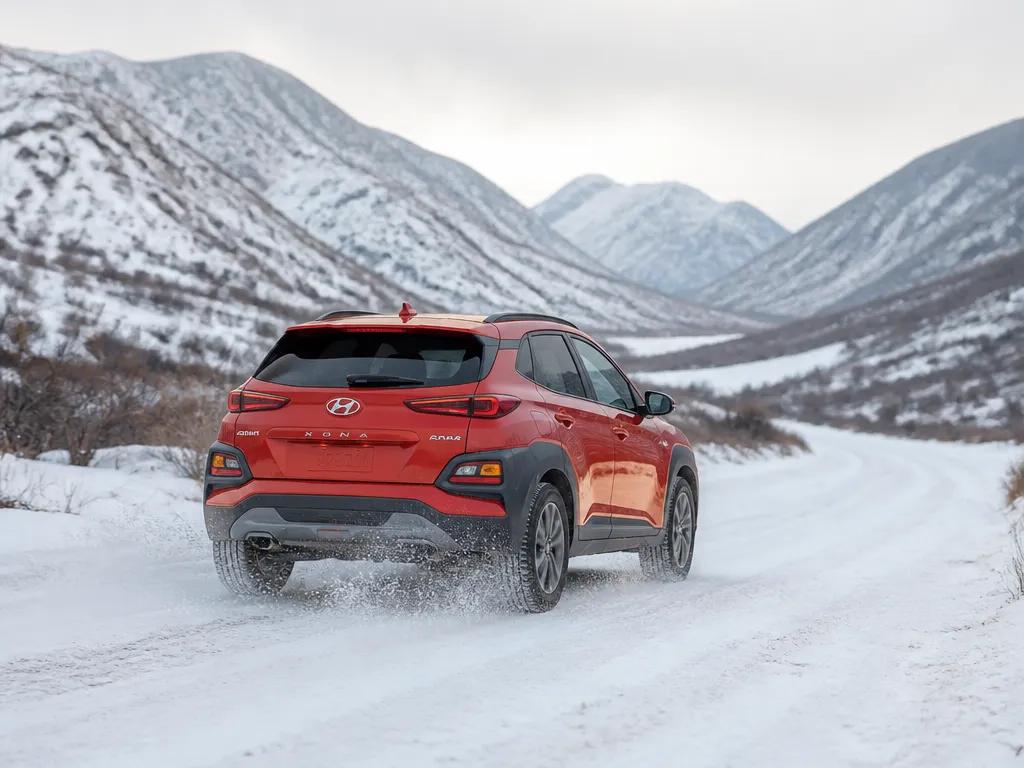
ESC traction control and stability logic react fast in Kona when the tires lose grip on ice or packed snow. The system cuts wheel torque, brakes individual wheels, and can tighten steering response to keep the car pointed where you intend. Driving feel changes can be subtle, but the behavior is predictable once you know what the warnings mean.
When Traction Control Cuts Throttle
Traction control (TCS) intervenes when a driven wheel spins faster than the vehicle speed implies. In snow, that often happens during hard takeoffs from a stop, quick throttle on an icy turnout, or merging when the road surface changes mid-lane.
How Abs Behaves On Snow
ABS on Kona prevents wheel lock by pulsing brake pressure when sensors detect an impending lock. On snow and slush, the pulsing is usually more frequent because tire slip signals show up sooner than on dry pavement.
Stability Control In Corners, Understeer Vs Oversteer
ESC uses steering angle, yaw rate, and wheel speed to decide if the Kona is rotating more than it should. In slippery corners, understeer often shows up first when the front tires lose grip and the car wants to go straight, while oversteer shows up when the rear steps out and rotation increases.
| Symptom | Likely ESC response | Driver takeaway |
|---|---|---|
| Front pushes wide (understeer) | ESC can brake a front wheel and reduce torque to limit speed and regain directional stability | Ease off the throttle sooner, reduce steering angle, and aim for smoother entry speed |
| Rear slides or rotates more (oversteer) | ESC can apply braking to individual wheels to counter yaw and reduce rotation | Hold a steady steering angle (don’t jerk-correct), lift gently, and straighten before power |
Common Indicators And What To Do Next
Warnings matter because they tell you whether ESC is actively intervening or whether the system has a fault. On Kona, pay attention to the difference between brief traction/ESC activation (often no warning lamp) and sustained warning messages that indicate limited or disabled stability functions.
Winter insight: if you feel ESC working every few seconds, your tires are already near their traction limits. The fastest way to “fix” the problem is usually tire grip, not more technique.
Snow Acceleration And Braking Feel
On a Hyundai Kona, packed snow usually gives you predictable traction if you roll into power smoothly, while glare ice makes braking distance grow fast because tire slip happens almost instantly. The biggest day-to-day difference you feel is how often the car trims torque through traction control when you press the throttle or brake harder than the surface allows.
Packed Snow Launches: Smoother Throttle Wins
Packed snow grips well enough that the Kona can launch cleanly, but the tires still “hunt” for traction under quick inputs. A gentle, steady pedal lets the drive wheels add torque gradually, so you feel fewer shudders and fewer traction-control light flashes.
In practice, use lower speeds and longer merge gaps, then build acceleration in two steps: start with a light pedal to get moving, then increase pressure once the car is rolling. For FWD Konas, wheelspin usually starts first at the driven wheels, so aggressive launches feel harsher and slower than they look.
Icy Surface Braking: Abs Can’t Stop Physics
On ice, the Kona’s ABS will pulse the brakes to prevent wheel lock, but the pulsing does not mean you have short stopping distance. ABS keeps you steering, yet braking distance still jumps quickly because the tire can only generate limited grip on frozen film.
In practice, keep steady brake pressure and let ABS do its job. If you stab the pedal or keep adding brake force after the system is already working, you can end up lengthening the stop while also increasing the chance of sliding past your target.
| Surface | Launch feel | Braking feel (ABS behavior) | What changes first |
|---|---|---|---|
| Packed snow | Smoother with gradual throttle, jerks with quick pedal | ABS may stay quiet or pulse lightly under stronger stops | Wheelspin frequency and how quickly traction-control intervenes |
| Glare ice | Most sensitive to throttle, spin can start immediately | ABS pulses sooner, steering stays possible but stops extend fast | Maximum usable friction at the tire |
| Slush (water mixed with snow) | Traction varies with depth and spray, throttle must be slower | ABS can activate intermittently as grip changes moment to moment | Grip shifts between tire wipe and water film |
Slush Driving: Traction Changes As Tires Shed Water
Slush makes the Kona feel different within the same lane because tires alternate between pushing snow aside and riding through a thin water film. Spray also reduces visibility fast, and that matters because delayed braking decisions cost more distance on low-grip surfaces.
Corner entry is where slush gets tricky, since a steady steering angle can still lead to a sudden traction change as the tires clear a patch of wet snow. Keeping speed modest and easing off the throttle before turning helps the drive system stay stable and reduces traction-control chatter.
Corner Stability: Steering Response Vs Frequent Traction Control
In corners on snow, the Kona’s steering response is usually acceptable if you keep inputs smooth, but aggressive steering or throttle mid-corner can trigger frequent stability interventions. FWD cars tend to show front-end limitations first, so you may feel the nose “push” if you add power too early.
In practice, the safest setup is brake in a straight line, then coast or gently add throttle as you enter and hold a consistent steering angle. If the traction-control or stability indicators are flashing repeatedly, reduce speed before attempting any steering or power corrections.
Tire Choice That Matters Most
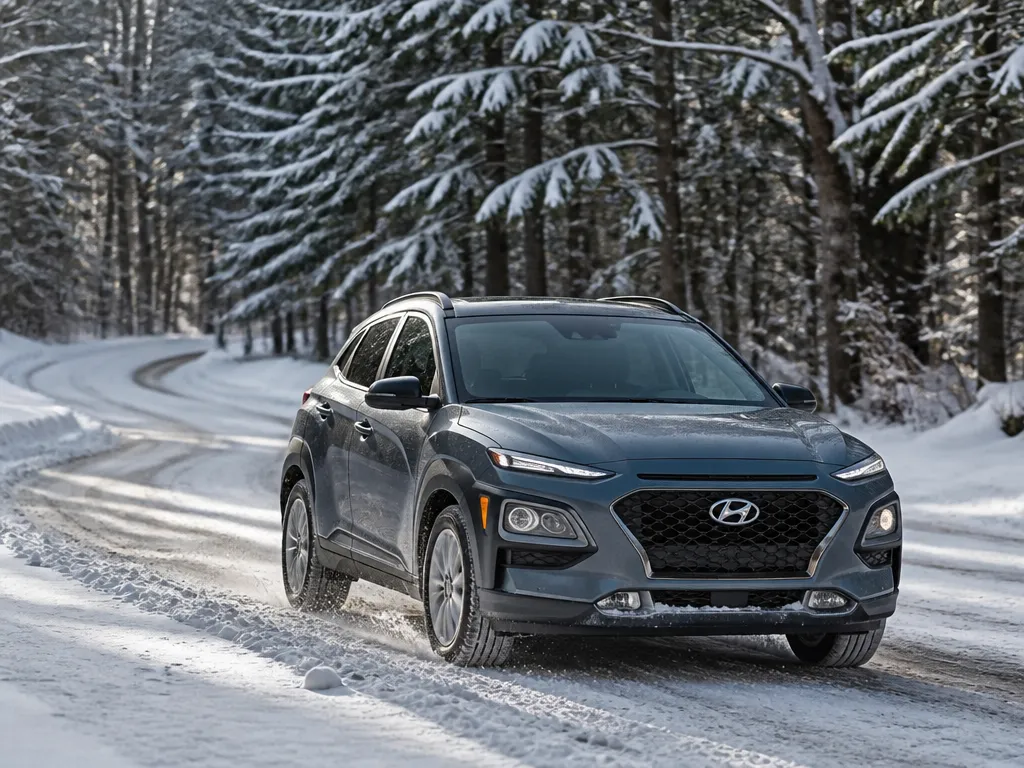
Winter tires can cut your stopping distance on packed snow and slush because their softer rubber stays more flexible in cold temperatures. The tread blocks on true winter designs also sip snow for grip, so the Kona feels more predictable when you turn in and brake.
On the Hyundai Kona, tire choice is the biggest “seat of the pants” upgrade you can make for snow driving, especially if you have FWD and rely on traction control to manage wheelspin. Choose a complete, properly matched set so the car responds consistently during braking and cornering.
For many Kona owners, the best “feel” comes from matching tire type to your worst roads, not the average commute. If your route includes regular plowed snow and occasional ice, studless winters are the safer all-day option; if you live on hard glare-ice roads and can tolerate noise, studs can help when ice is the main problem.
| Winter tire trait | What you gain on a Kona | Trade-off |
|---|---|---|
| More sipes | More consistent traction on packed snow and slush | Can wear faster if driven all year |
| Softer cold-weather compound | Shorter stops and better steering bite in low temps | Less efficient on warm, dry roads |
| Directional or deeper winter tread | Better evacuation of snow and slush under load | Slightly different feel as tread “grabs” on turn-in |
| Studs | Extra traction on true glare ice | Noise and a firmer ride over clean pavement |
Sizing and fitment matter more than people think, because winter tires often have slightly different tread depth and can increase overall tire circumference. Stick to Kona-approved tire sizes for your trim and wheel setup, and make sure the tire sidewall height leaves clearance for suspension travel and mud flaps. For conservative fitment, confirm you are not changing overall diameter too much, since that can affect traction control behavior and the way the Kona’s stability systems interpret wheel speed.
Shop by sidewall size first, then pick the winter type. On a Kona, you get better results from a correct fit and a true winter tread-and-compound design than from a “close enough” size.
Winter Tire Pressure In Cold
Cold weather drops tire pressure, so check the Kona’s pressure when the tires are cold and set it to the target on the door placard. For winter driving, check pressure in the morning before the car moves, then set it based on the placard number for your tire size. Re-check after you have driven 5 to 10 minutes only to confirm the tires are still close, since heat raises readings.
Set Cold-morning Pressure To Avoid Underinflation
Underinflation is the enemy in snow because it increases sidewall flex, delays tread response, and can reduce traction when you brake and turn on packed snow or slush. For the Kona, use the pressure values printed on the driver door jamb (or the tire info label in the owner manual) for your exact wheel and tire size, then set them with the tires cold. If you are switching to winter tires, make sure the placard you follow matches the winter tire size, not the original all-season size.
For example, if your morning tire pressure is 28 psi and the placard says 35 psi, you add air until the tire reads 35 psi cold. If temperatures drop overnight, the pressure change can be noticeable even between day-to-day drives.
How Pressure Changes Through The Day And Why Traction Suffers
As you drive, tire temperature rises and pressure climbs, so midday readings are usually higher than morning values. That increase is normal, but it can trick you into overinflating if you adjust based on hot pressures. Overinflation makes the center tread carry more load, which can feel “skatey” on snow because the tire does not conform as well to uneven ice or rutted slush.
| Situation | What you’ll see | Snow impact |
|---|---|---|
| Morning cold, pressure low | Tread stands softer, sidewall squirm | Slower grip response, longer stopping on packed snow |
| Midday hot, pressure high | Gauge reads above cold target | Grip may feel inconsistent if you “fix” it mid-day |
| Overinflated cold | Hard ride feel | Reduced contact on slush and icy ridges |
Winter driving tip: set pressure cold to the door label, then only top up again if you notice a big drop after several cold-soak parking cycles.
Tpms Vs Gauge: Trust The Placard, Use Tpms As An Early Warning
The Kona’s TPMS is helpful, but TPMS is not a substitute for setting accurate pressure with a gauge. TPMS typically triggers a warning when a tire is meaningfully underinflated, and it may lag when temps swing quickly. Use TPMS to spot a slow leak or a steep cold drop, then confirm the actual psi with a handheld gauge.
Common Pressure Mistakes To Avoid On The Kona
Randomly “topping off” from memory can overshoot the target, especially after you have driven to the station and adjusted hot tires. Pressure changes also vary by temperature swings, so you can end up chasing numbers that never stabilize until you check cold again. Uneven wear patterns can be linked to inconsistent pressures, so if one tire stays low more often, treat it as a leak or a seal issue, not a normal seasonal change.
Ground Clearance And Underbody Risks
Hyundai Kona’s underbody clearance is the first thing you test in winter ruts, plowed snow berms, and driveway ramps. When tires ride higher snow ridges, the front lower splash area and wheel-well liners are the usual scrape points.
In practice, the Kona will feel more “tippy” in confidence than in stability when the suspension travels over uneven snow. The danger is mechanical damage you do not feel right away, like a torn splash shield that later drags into the tire at speed.
For Kona, the “feel” difference between FWD and AWD in winter is traction control behavior, but the underbody risk pattern is similar. AWD can help you keep moving, yet it can also encourage higher speed over a rut because the car keeps pulling, and that is when you scrape the lowest plastics.
| Underbody area to inspect | Winter trigger | Typical damage you might see | What it can lead to |
|---|---|---|---|
| Front lower splash area | Slushy berms, plow piles | Tears, missing fasteners | Road debris impact, airflow issues, later dragging |
| Wheel-well liners | Snow packed between tire and liner | Cracks, gouges | Noise, debris trapping, tire rubbing |
| Front skid-style covers (if equipped) | Driveway lip, potholes filled with snow | Bent tabs, scraped edges | Contact at higher speed |
| Rear underbody plastics | Off-camber lots, rutted exits | Loose clips, scuffs | Wind flapping, eventual separation |
Insider tip: After a rough storm, check under the car when the surfaces are dry enough to see scuffs and missing clips. Slush can hide damage until it refreezes, then the next drive turns a small scrape into a hanging panel.
After a snow event, focus on fast visual checks you can do safely without climbing under the Kona. Park on level ground, use the floor illumination from your headlights, and look for plastic pieces that look “shifted” or partially detached.
Cold Start And Cabin Heat Timing
Hyundai Kona cabin heat takes a little longer to feel strong in sub-freezing weather, and visibility is the first thing you need to manage after a cold start. Expect the engine to run a richer warm-up strategy initially, so drivability is gentle and gradual for the first few minutes. Prioritize defrost settings and give the heater time before you ask for quick lane changes.
Cold-start Behavior And Warm-up Habits
On a cold morning, the Kona may idle a bit higher and throttle response can feel slower until coolant temperature rises. In snow, that early delay matters because aggressive throttle inputs create wheelspin before traction control can build a steady pattern. Keep your first acceleration smooth and short, then let the drivetrain settle into the tire grip it will have for the rest of the trip.
For better winter manners, use a habit that reduces “temperature shock” inside the cabin. Start the blower, set heat to a moderate level, and drive lightly for the first 5 to 10 minutes.
In practice, that timing helps the defrost strategy and reduces the odds of fogging up because warm air has to mix with the cold glass.
Defrost Timing For Visibility In Real Winter Conditions
Defrost performance depends on airflow direction, blower speed, and whether the cabin has humidity from previous trips. In heavy snow or wet air, the windshield can fog quickly, even if the heater eventually gets hot. Run the windshield-focused mode early and keep the fan up until the glass clears, then fine-tune for comfort.
For many drivers, the “problem” is impatience. The Kona can clear the windshield, but it takes a few minutes for heat to transfer effectively to the glass, especially when the outside is near or below freezing. Once the windshield is clear, reduce blower speed to maintain comfort without letting moisture build again.
Tip from the shop: In slush and wet snow, check the wiper performance after the first few minutes. Streaking often means the glass is still warming, or wiper blades need cleaning or replacement.
Cabin Heat Comfort Versus Engine Load
As temperatures drop, you may feel cabin heat arrive slower because the heater has to overcome colder coolant and more heat loss to the outside. Running maximum defrost can increase engine load and keep the cabin feeling warm, but it also delays when the system feels “steady.” Expect a trade-off: stronger airflow and defrost clears glass faster, while lower settings improve comfort efficiency.
In winter driving, comfort settings also affect visibility indirectly. When you turn heat down too far, the windshield can regain fog sooner after you exit a warm garage or after you hit a damp snowstorm. Keep an eye on glass temperature, not just the cabin temperature gauge.
| Situation | What you’ll notice | Most effective setting approach |
|---|---|---|
| Cold start, clear but very cold outside | Air feels cool early, windshield clears gradually | Windshield mode + moderate to high fan until glass is fully clear |
| Wet snow, fog starts quickly | Fogging returns after initial clearing | Higher fan, short humidity control, keep windshield as priority |
| Long commute with repeated door openings | Cabin feels warm, glass may still haze | Reduce cabin heat only after windshield stays clear for several minutes |
Common Complaints And Fixes
Mirrors and the windshield are the big winter complaints because they cool quickly and show moisture first. If you see haze on mirrors after clearing the windshield, increase airflow to the relevant surfaces and keep an eye on wiper quality and washer fluid condition. Poor wiper contact can make “fog” look worse because smeared film hides visibility.
Another common complaint is “heat isn’t strong enough,” even when the cabin temperature changes normally. Often the issue is that the defrost strategy is fighting incoming humidity from snow-packed clothing and wet mats. Dry the floor area, wipe off boots after entering, and use your defrost routine early so you are not reacting to fog after it has spread.
Before You Drive Snow Checklist
Winter traction starts with the tires, and the Kona tells on itself quickly when tread is worn. A simple pre-drive check catches most winter failures like ice slick starts, cloudy visibility, and dead wiper blades before they turn into a tow call.
Tires First: Tread, Winter Rating, And Even Matching
Tread depth decides whether the Kona can bite packed snow and slush, even with traction control doing its job. Match tire types and brands side to side, because mixed grip can make the steering feel uneven when you brake or accelerate in a turn.
Minimum action for winter confidence is a quick tread look and a tire-size check against the door placard. If you have an all-season set, replace it with a complete set of winter-rated tires (the Three-Peak Mountain Snowflake symbol) for best results when temperatures swing below freezing.
Pressure Routine: When To Measure And How To Reset
Cold weather drops tire pressure, which increases sidewall flex and delays braking response on the Kona. Measure when the tires are cold, meaning the car has been parked long enough that the tread is not warmed by driving.
Reset the Tire Pressure Monitoring System after you set pressures to the door-jamb spec. For example, if you top up after a cold morning drive, let the tires cool again before trusting the gauge reading.
| What to check | When | What “good” looks like |
|---|---|---|
| Tire pressure | Morning, before driving | At the door-jamb specification |
| TPMS reset | After pressure adjustment | No persistent TPMS alerts |
Lights And Visibility: Wipers, Washer Fluid, Defroster
Visibility issues cause more winter near-misses than people admit, because salt spray and slush haze show up fast. Inspect wiper blades for chatter and uneven wiping, then confirm washer fluid is full with a winter formula that resists freezing.
Check headlight output and aim feel before you roll, especially if you replaced tires and changed ride height slightly. Run the defroster and rear window de-fog (if equipped) for a few minutes to confirm airflow clears glass, because a slow cabin-to-glass turnaround forces you to drive on “eyes down” time.
Fluids And Readiness: Quick Under-hood Check
Cold weather punishes low fluids, and a couple of minutes now can prevent a stranded start. Do a basic under-hood glance for washer level, coolant level, and secure caps, then check for obvious leaks around the front of the engine bay.
For the Kona, also confirm the battery terminals are tight and clean by eye, since slow cranking in winter often traces back to loose connections. If you see corrosion buildup, clean and re-torque properly, or have a shop handle it so you do not damage the terminal or cable.
Tip: If the Kona has sat overnight and you hear slow cranking, check the battery condition and charging system before you keep driving. Winter voltage dips turn into hard-start situations quickly.
Recovery Gear And Traction Aids: Prepare Before You Need Them
Pack tire chain readiness if your routes include deep snow or steep grades, because chains work best when installed before conditions worsen. Keep chains compatible with your Kona’s tire size and store them where you can reach them safely without sliding around on ice.
Bring a traction aid kit, shovel, and a pair of gloves, and make sure you know how to place it once you are stuck. If traction control starts cycling heavily on takeoff, stop early, back out of the rut if you can, and re-attempt with steady throttle instead of spinning the tires.
Test Run: Short Controlled Drive For Traction And Stability
Do a short loop in a safe, empty area to confirm straight-line braking feel, steering stability, and whether the Kona smoothly manages wheelspin. Ease into light throttle, then brake gently to see how the tires and traction control respond on packed snow or slush.
If you get steering tug, repeated traction control alerts, or unusual vibration, slow down and reassess tire pressure and tire condition immediately. After that, proceed with a calmer pace, because snow confidence comes from repeatable behavior, not from “one lucky run.”
Quick Summary
In packed snow and slush, the Kona’s real-world winter behavior includes longer, more gradual braking, a softer initial brake “bite,” muted steering, and a tendency to push toward the outside if you turn in too hard or add throttle mid-corner. A brief pause in response is common when traction control intervenes.
Choose winter-rated tires, keep pressures at the cold door-placard specification, and use AWD’s launch advantage without treating it as a substitute for cautious braking or cornering. Visibility and cabin comfort matter too, since snow buildup reduces what you can see and cabin heat can take 5 to 10 minutes to feel strong, so defrost early and leave extra following distance because ABS may pulse. Treat traction control like a seatbelt, not a cheat code.
| Condition | How the Kona feels | What changes results most |
|---|---|---|
| Normal snow | Gradual traction, slower throttle response | Winter-rated tires, gentle pedal inputs |
| Slush | Uneven grip, steering can feel “smeary” | Tread design and tire age, keep speed modest |
| Packed snow | Brake bite is softer, wheelspin risk increases | True winter tires over all-seasons |
| Deep snow | Ruts, bouncing, reduced progress | Momentum management and appropriate tires |
Frequently Asked Questions
Will A Hyundai Kona Handle Snow Without Snow Tires?
You can drive a Hyundai Kona in light snow on all-seasons, but traction drops fast once roads get icy. For winter use, prioritize 4-season or dedicated winter tires because the rubber compound and tread pattern hold grip better at low temperatures.
Do I Need To Use Snow Chains On My Hyundai Kona?
It depends on your tire size, local rules, and conditions, so check your specific Kona year and wheel-tire setup. In general, chains are typically for ice-packed roads where traction is poor, and you should only install them if you have the correct clearance and chain type for your vehicle.
What Should I Warm Up On A Hyundai Kona Before Winter Driving?
Focus on the basics: clear all windows and check tire pressure before you move. Let the car reach a comfortable temperature for the heater while you drive gently for the first few minutes, because tires and brakes perform better once everything is warmed.
Why Does My Hyundai Kona Feel Like It Slips Or Won’t Accelerate In Snowy Weather?
Common causes are worn tires, incorrect tire pressure, or driving too aggressively for available traction. If you are slipping, ease off the throttle, reduce speed, and confirm the traction control and ABS lights are not on, since sensor or brake issues can affect stability.
How Long Should I Leave Between Tire Rotations For Winter Driving On A Hyundai Kona?
Winter often makes tires wear unevenly due to more starts, stops, and turns, so staying on a strict schedule matters. A practical approach is to rotate at your normal interval and inspect tread depth more often in winter, especially if you notice steering pulling or vibration.
What Winter Prep Costs Make The Biggest Difference On A Hyundai Kona?
The biggest payoff is usually tires, wiper performance, and fluids, not expensive add-ons. Plan for good wiper blades, properly mixed washer fluid for freezing temperatures, and a battery check, since cold weather reduces cranking power even if the car is otherwise healthy.