


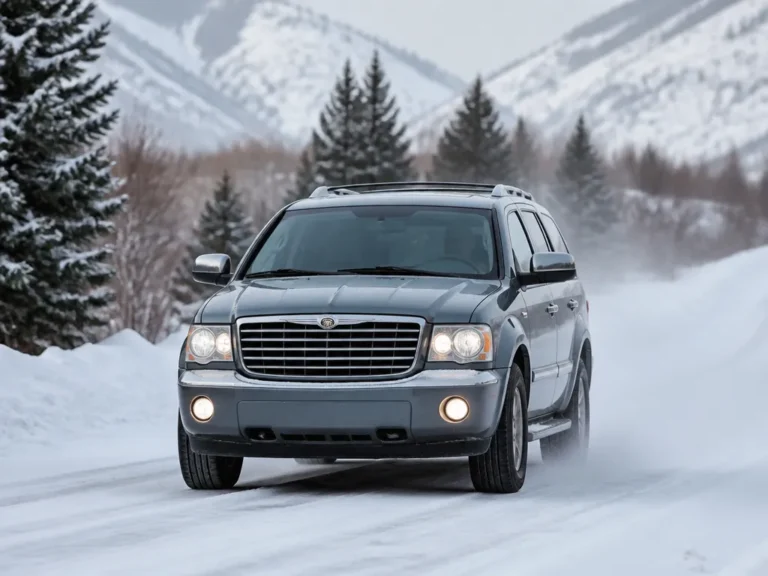
Is your Chrysler Aspen feeling sketchy when the roads get salted and icy, or are you trying to decide whether it can handle real winter snow before you commit to a set of tires? Owners often mention ABS cycling, traction control kicking in early, and hard starts when temps drop. Let’s get you a winter-ready, Aspen-specific game plan for traction, braking, and common cold-weather problems.
Chrysler Aspen winter confidence comes down to tire grip, tread depth, and how you respond when ABS and traction control pulse. You’ll learn what matters most for light snow versus packed ice, plus a practical checklist for batteries, brakes, fluids, and drivetrain checks before the first freeze.
Expect ABS to pulse during hard braking, and traction control to limit wheelspin. A fresh set with at least 6/32 in tread helps stability when snow gets deeper.
Chrysler Aspen In Snow And Winter Driving
The Chrysler Aspen can feel confident in light snow thanks to its weight and available traction-control logic, but it turns demanding fast once you hit glare ice. Winter grip hinges on tire condition and compound, while stability depends on how you manage throttle and steering inputs when the tires start to slip.
Weight, Chassis Behavior, And Traction Limits
The Aspen’s mass helps it “plow” through light snow, keeping the tires in contact long enough to build usable traction. The trade-off is momentum, when stopping distance stretches because weight pushes the vehicle forward during brake transitions.
Front-wheel slip triggers traction control and stability control, then the system reduces engine torque to regain grip. When traction is limited evenly side-to-side (like hard-packed snow), control is smoother; when grip changes quickly across the axle (like rutted snow with bare pavement), you can feel more steering correction as the system works.
Light Snow Vs Packed Snow Vs Black Ice
Light snow rides up between the tread blocks and can still allow the Aspen’s tires to bite into the surface underneath. Packed snow is thicker and denser, so tire tread has less “texture to catch,” and you often feel earlier wheelspin on takeoff.
Black ice is the problem child because it breaks traction with almost no warning, and the tires can lose grip before traction control has time to react smoothly. Driver inputs that are acceptable on packed snow become abrupt on ice, which is why the Aspen may feel like it “moves sideways” even at modest speeds.
| Surface | Grip feel | What you’ll notice from the driver seat | Best response |
|---|---|---|---|
| Light snow | Predictable, controllable | Minor TC activity on hard acceleration, steering stays composed | Use gentle throttle, keep steering inputs slow |
| Packed snow | Moderate, reduced bite | More traction control cycling, longer time to regain speed | Accelerate in smaller doses, avoid sudden lane changes |
| Black ice | Near-zero traction | ABS cycling fast under braking, stability control may intervene quickly | Brake earlier, reduce speed before turning |
Driver-facing Signs Traction And Stability Control Are Working
Traction control typically shows up as a subtle reduction in power during acceleration, sometimes paired with a faint pulsing feel through the pedal or drivetrain. Stability control is more noticeable when you enter a turn and the vehicle corrects itself, often felt as a tugging sensation or steering that tries to “hold” your chosen path.
ABS behavior matters too: ABS cycling is normal on snow and ice, but rapid pulsing plus a “skate” feel means you’re on a surface with very low friction. When ABS or stability control keeps activating after repeated throttle changes, the real fix is speed reduction and smoother inputs, not more steering correction.
Insider tip: If the Aspen feels composed in light snow but gets skittish the moment you cross ruts or shaded patches, treat that as ice pockets. Those micro-changes in friction are why the same speed feels safe for a block, then suddenly unsafe.
Tire Traction Matters Most
AWD can move torque to all wheels, but it cannot create grip if the tires are worn, wrong for ice, or inflated like it is summer.
All-season Tires Vs Snow Tires On The Aspen
All-season tires usually feel fine in light snow and slush because their tread blocks are still flexible and they have enough siping to evacuate water. In cold temps, though, many all-seasons lose rubber softness and slip more easily on polished snow and compacted ice.
Dedicated snow tires (often called winter or snowflake-rated) are built with softer tread compounds and more aggressive biting edges. Snow tires usually take braking and turning from “sketchy” to “predictable” when the road is glazed or traction is inconsistent.
| Road type | All-season | Winter (snow) tires |
|---|---|---|
| Slush, 25F to 35F | Usually OK, grip fades if tread is low | Consistent control, better bite in cold |
| Light snow (fresh) | Works if tread is healthy | Better forward traction and turn-in |
| Compacted snow | More ABS cycling, longer stopping | Shorter stops, steadier steering response |
| Ice or glare ice | Grip is limited and sudden slips happen | Improves odds, still requires slower inputs |
Owner reality check: If you drive mostly plowed roads with occasional flurries, quality all-seasons can work. If you deal with repeated cold nights, slush-to-freeze cycles, or regular commutes on treated but re-freezing routes, winter tires are the bigger safety upgrade.
Tread Depth, Wear Patterns, And “Winter Slip” Causes
Tread depth is grip margin. As tread gets shallow, the tire has fewer usable edges to cut through snow and disperse water, so the Aspen loses traction sooner when you brake, turn, or accelerate.
Wear patterns can be even more important than overall miles because they change how the tire contacts the road. Even with decent tread depth, uneven wear can leave one side of the tread edge rounded off or the center glazed, which is a common recipe for unpredictable handling in cold weather.
For winter readiness, inspect inside edge and outside edge, not just the middle. For a quick check, use a tread gauge and look for worn spots that are different across the axle.
Cold Tire Pressure And Traction Loss You Can Feel
Cold weather drops tire pressure because air contracts as temperatures fall. A few PSI low is enough to change contact patch shape, which can increase slip on ice, lengthen stopping distance, and make ABS feel “busy” during normal braking.
In practice, many drivers check pressure only once in fall. Tire pressure should be checked when the tires are cold, usually after the Aspen has been parked a few hours, then set to the door-jamb spec for winter use.
Rotation And Matching Tires For Even Winter Grip
Rotation matters in winter because uneven wear changes each tire’s bite at the exact moment you need consistent braking and turning. Matching tire sets also matter more than most people expect, since an Aspen with AWD behavior can still feel unstable if the tires have very different tread depths or grip potential across corners.
Rotation becomes a safety tool, not just maintenance. Keep tires matched by size and tread design on the same axle and replace tires in pairs when possible so the Aspen has similar tread depth on both sides.
Awd/traction Setup Check For Winter
Power transfer in an AWD Chrysler Aspen depends on healthy transfer-case operation, correct axle engagement, and tires that can actually bite when rubber is cold. Cold weather exaggerates problems like sticky transfer-case components, worn/incorrect fluid levels, and driveline backlash, so issues show up as hesitation or harsh engagement instead of smooth torque delivery.
Start by confirming what drivetrain you actually have, because the inspection points change. The Aspen is commonly found as AWD with a transfer case, while some owners have seen 2WD setups or configurations depending on year and options, so rely on your VIN/door placard or the drivetrain tag on the service paperwork, not memory.
Inspect the transfer case and driveline before the cold locks everything in. Owners often find corrosion on the exterior electrical connectors, boot tears that sling grease, and damaged underbody shields that let salt water reach vulnerable joints.
Service-record review matters because you are chasing fluid health, not just “cold weather performance.” For example, a transfer-case service that was skipped or done with the wrong spec fluid is a common reason for late engagement complaints when temperatures drop into single digits.
| What to check in records | Why it affects cold traction | What you should see |
|---|---|---|
| Transfer case fluid service | Low or incorrect fluid can cause delayed engagement, shudder, or harsh shifts under load | Last service date, fluid type/spec listed |
| Axle fluid service | Cold viscosity and contamination can increase backlash and noise | Service entry and correct differential fluid spec |
| Tire rotation and matching | Diameter mismatch can trigger traction control activity and stress the drivetrain | Rotation history, consistent tire size and tread matching |
Insider tip: If your Aspen feels “normal” on dry pavement but acts sketchy at the first snowy start of the season, that often points to transfer-case engagement, fluid condition, or tire mismatch rather than the engine.
Warning signs in cold weather are usually about uneven torque delivery or traction system confusion, and they are worth taking seriously. The key is to pay attention to timing and feel: hesitation before moving, shudder on takeoff, binding during slow turns, or loud engagement can all point to poor power transfer.
Braking, Abs, And Traction Control Behavior
On ice, the Aspen’s ABS prevents wheel lock by rapidly pulsing hydraulic pressure, so you feel a rapid “chatter” through the pedal and hear a fan-like pump sound. This is normal traction management, not brake failure.
ABS cycling on slick pavement usually comes from the tires losing grip during strong braking, especially when you brake too hard or initiate the stop while turning. The steering may feel busy because ABS is reacting to the available friction in real time, and that can vary side-to-side on patchy snow or glare ice.
Traction control activation looks less like a braking event and more like a drivetrain intervention. The Aspen may reduce engine torque, and you might notice a slight deceleration, a brief surge as grip returns, or the steering wheel angle staying steady while the vehicle “tries” to hook up.
For example, if the Aspen’s dash shows traction-control or ABS related warning lights after a brief cold drive, treat it as a “needs attention” situation, not a one-off quirk. Winter moisture, salt, and road grime can coat wheel-speed sensors, and wheel-speed sensor issues can cause ABS or traction-control malfunctions.
| What you notice | Likely meaning | What to check next |
|---|---|---|
| ABS light on and ABS feels reduced or absent | ABS system may be disabled due to a fault | Scan for ABS/wheel-speed related codes, inspect front and rear sensor wiring and connectors for corrosion or damage |
| Traction control light on, TC cuts power more aggressively | Traction control system may be limited | Scan for TC/ABS codes (they often share inputs), check wheel-speed sensors and tone rings for contamination |
| Repeated cycling every drive in dry-ish conditions | System is seeing an abnormal speed signal or traction estimation error | Clean the wheel sensor areas, confirm tire size is correct and evenly inflated, then diagnose with OBD-II if symptoms persist |
Tip: If warning lights come back after clearing them and the controls feel inconsistent, get it diagnosed sooner. Repeated ABS or traction-control faults can leave you without the very aids you rely on when roads get slick.
Winter Tire Recommendations For Aspen
For an Aspen, the biggest winter improvement comes from swapping to a dedicated snow tire or snow-focused all-season during cold months. The Aspen is also tall and heavier than a passenger car, so winter tread and compound matter for both forward traction and stopping confidence on slush and ice.
Best Choice For Most Owners: Dedicated Winter (Snow) Tires
Dedicated winter tires use a softer rubber compound and higher-density siping that stays flexible in cold weather, which helps grip in wet snow and on light ice. For Aspen owners, the real payoff shows up as less steering wander on packed snow and more consistent braking when the road turns slick after thaw-freeze cycles.
Size match is the rule. Stay with the factory recommended tire size, load rating, and (ideally) the same overall diameter, then choose a tire model that is marked for severe snow service (the mountain snowflake symbol). If your Aspen came with staggered sizes, keep the front-to-rear sizing the way it was from the factory to avoid driveline stress and traction control quirks.
| Road condition | Winter tire traits that help | What you should notice while driving |
|---|---|---|
| Wet snow and slush | Soft compound, dense siping, wide circumferential grooves | Less “push” during turns, braking feels more linear |
| Packed snow | 3D sipes, staggered tread blocks, strong shoulder edges | Steering returns more predictably after steering input |
| Light ice | Sipe density, tread contact stability, winter compound | Reduced ABS intervention surprises, steadier pedal feel |
All-season “Acceptable” Strategy
All-seasons can work on an Aspen if your winter is mostly above-freezing or you avoid true ice days, but they are always a compromise. Once temps consistently drop below about 40°F (5°C), many all-seasons harden, and that is where you feel traction fall off on braking and in slick cross-slopes.
Choose all-seasons only if you can commit to condition and monitoring. Budget for an upgrade the moment you see uneven wear, tread squaring, or a ride that feels vague during the first cold mornings.
Wet And Ice Traction Criteria You Can Shop By
When the roads are wet plus cold, you want a compound that stays grippy and a tread design that creates edges for bite. Look closely at the tread pattern for lots of sipes, and pay attention to the shoulder area, since that is where most Aspen drivers feel lateral slip during lane changes on slushy highways.
Mechanic tip: If you are choosing between two tires with similar treadwear numbers, prioritize winter traction ratings and real winter patterns over a higher mileage warranty. On an Aspen, traction beats longevity during cold months.
Chain And Snow Sock Considerations (Where Permitted)
Chains can be a lifesaver for deep snow, steep grades, or when conditions turn into a sheet of compacted slush, but fitment matters. Verify clearance at the tire sidewall and inboard wheel well, then confirm whether your local rules require chains versus socks and where they are allowed.
Snow socks are usually easier to fit than chains and can be a practical option for short trips when chains are difficult, but they can wear quickly and are not a substitute for proper winter tires on ice. Before buying, check that your sock size matches your tire width and that you can install it quickly in cold weather.
| Option | Best use | Key thing to verify |
|---|---|---|
| Studless winter tires | Most daily winter driving (slush, packed snow, light ice) | Correct size, full tread depth, lots of siping |
| Chains | Steep grades, deep snow, emergency situations | Clearance and legal use (speed and road rules) |
| Snow socks | Short, mild snow runs when chains are impractical | Exact fit to tire width and expected wear |
Cold-start And Cabin Readiness Checklist
Cold mornings expose weak battery health, thick fluids, and worn visibility gear fast. On a Chrysler Aspen, slow cranking or intermittent starts often point to battery or charging issues, and a quick winter prep can prevent a roadside tow.
| Checklist Item | Quick Winter Symptom | What to Do |
|---|---|---|
| Battery/charging | Slow crank, intermittent starts | Have battery load-tested and charging system checked |
| Engine coolant | Coolant low or old | Verify correct concentration and top off properly |
| Wipers/washer | Streaks, frozen washer fluid | Replace blades, use winter-rated washer fluid |
| Brakes | Squeal, grinding, uneven pad wear | Inspect pads, rotors, and brake hardware |
| Underbody/exhaust | Rattles, missing shields, soot smell | Repair or inspect before heavy slush season |
Safety note: If the Aspen cranks normally but won’t start repeatedly, or if you see brake warning lights or smell exhaust, stop and have the system checked. Winter failures tend to get worse fast, and guessing usually costs more than a proper test.
Pre-winter Drivetrain Inspection Steps
Winter trouble on an Aspen usually starts with small issues that salt and cold exaggerate, like axle boot tears, CV joint wear, and fluid leaks. A 45 to 60 minute pre-season inspection can catch most drivetrain problems before they turn into driveline shudder, binding, or repeated warning codes.
In practice, owners often describe a “single thunk” right after startup or during first engagement as normal if it is brief and always the same. A persistent thud that grows stronger, or any binding that shows up in reverse or tight parking maneuvers, is a red flag for a shop inspection.
| Symptom you notice | Likely cause area | Best next action |
|---|---|---|
| Grease on boot or torn boot seam | Axle boot failure, CV joint wear | Book an inspection before winter deepens |
| Fluid wetness under transfer case or seams | Seal leak, hose leak, fluid seepage | Verify leak source, check fluid condition |
| Harsh clunk on AWD engagement | Transfer case clutch/actuator wear, fluid issue | Request drivetrain diagnostic and scan |
Pro tip: Salt eats at fasteners and hides leaks under grime. If you cannot confidently identify a leak source by wiped-clean inspection, let the shop clean the underbody and trace it with proper lighting, since guessing wastes time and money.
If Aspen Feels Unsafe In Snow
Traction problems can escalate fast on a Chrysler Aspen in snow, especially if tires are mismatched or pressures are off. When the truck feels sketchy, slow down immediately and treat the situation as a potential tire grip or brake/traction-control issue, not a “driver problem” you can muscle through.
Slipping Or Won’t-hook-up
Symptom: Wheels spin, it crawls without bite, or it will not move when you add throttle. Cause: Flat-spotted or mismatched tires, low pressure, or the road surface is colder and slicker than expected (polished ice, slush over hard pack). Fix: Stop increasing throttle, pick a better line, and verify tire condition and pressure as soon as you can do so safely.
Start with the basics that actually change grip. Confirm you have the same tire brand and tread type on all positions, check pressures cold (or estimate if you just drove onto a warm service area), and look for obvious damage, chunking, or uneven wear that can reduce contact patch in snow.
For example, if the Aspen starts spinning in a straight line on level ground, it is often tires first, then pressure. If tires are good but grip is still poor, the quickest practical next step is to get it to a shop for a tire evaluation and drivetrain/transfer-case related checks if AWD behavior seems wrong.
Harsh Abs Or Traction-control Events
Symptom: The ABS chatters or pulses hard, the traction-control light flashes, or the brakes feel grabby during normal stops or gentle turns. Cause: Too much steering input for the available grip, abrupt pedal modulation, or a low-traction surface that forces the system to work continuously. Fix: Use smaller steering angles and smooth inputs, then check for wheel speed sensor concerns if the behavior is unusually violent or persistent on dry pavement.
Driver technique matters because ABS and traction control react to wheel speed differences, not to what you “intend.” If you floor it in snow, the traction system will intervene quickly, and repeated aggressive corrections can make the vehicle feel unstable.
“In ice, keep the wheel pointed and do braking and throttle changes gently. If you turn and brake hard at the same time, ABS will do its job and you will feel it.”
For a Chrysler Aspen, harsh events that happen only when conditions are slick usually mean the tires and surface are doing most of the talking. ABS that feels abnormally delayed, stays active longer than expected, or triggers on dry roads is a cue to have the brake system and wheel-speed sensors scanned for codes.
Jerky Shifting Or Shudder In Cold
Symptom: Shifts feel abrupt, you get a shudder on takeoff, or the driveline feels “busy” until the vehicle warms up. Cause: Transmission fluid is cold and thick, torque converter lockup behavior changes with temperature, or an engine/idle issue causes driveline vibration. Fix: Warm up gently, avoid hard throttle until the fluid is warm, and request a cold-drive diagnostic if symptoms persist.
Cold drivetrains can feel worse on a lightly loaded, slippery surface because any torque spike spins the tires and loads the driveline differently.
In practice, keep it in a steady throttle position for the first few minutes and allow smooth acceleration ramps.
If the shudder becomes severe, you smell burning fluid, or you get repeated warning lights, stop driving and get help. Severe driveline vibration can point to a mechanical fault that is not a “normal cold-weather trait.”
Route And Avoidance: When To Turn Back
Symptom: The Aspen cannot climb, you keep needing repeated throttle bursts to move, or you cannot maintain lane position without corrections. Cause: Icy grade, packed snow over hard ground, or exposure to freezing rain that turns the surface to slick glass. Fix: Turn around early, choose lower speed routes, and avoid hills, bridges, and shaded stretches where the freeze-thaw cycle makes ice stick.
On a heavy AWD-capable SUV like the Aspen, traction control can buy time, but it cannot overcome lack of tire grip on ice. If you are already reduced to slow crawling with frequent wheel spin, you are spending traction that you will need for emergency maneuvers.
Stop driving and get help if you experience brake pulsation with loss of stopping power, steering feels intermittent, the driveline is making new loud noises, or the vehicle repeatedly locks up in a way that suggests a brake, ABS, or traction-control fault rather than simple low traction.
For example, if the Aspen feels unsafe on a flat road during daylight and the tires are correctly inflated, that is the time to turn back. Continuing into deeper snow or onto an icy bridge is how a manageable traction issue becomes a tow and repair bill.
Quick Summary
ABS cycling and traction control engagement are common when roads are salted and icy, especially during hard braking and hard takeoffs. On packed ice or dense packed snow, worn tread and low tire pressure lose grip quickly, and the Aspen can feel like it needs more correction as stability and traction systems work to regain control.
For light snow, the Aspen can feel more predictable because the tires can ride up between tread blocks and still bite the surface below, but glare ice is the problem because traction drops with almost no warning. The article recommends aiming for at least 6/32 in of tread depth for winter, rechecking tire pressure as temperatures drop, and driving off gently so you can watch traction control intervene early. During braking, it stresses keeping steady pedal pressure, because pumping can reduce ABS effectiveness and increase stopping distance.
| Situation | What you may feel | What to do |
|---|---|---|
| Light snow | Minor traction control activity, steering stays composed | Use gentle throttle, keep steering inputs slow |
| Packed snow | More traction control cycling, longer time to regain speed | Accelerate in smaller doses, avoid sudden lane changes |
| Black ice | Near-zero traction, rapid ABS cycling, stability control may intervene quickly | Brake earlier, reduce speed before turning |
Frequently Asked Questions
What Winter Tires Work Best On A Chrysler Aspen, And When Should You Switch Them In The Snow?
For the best grip in slush and packed snow, use a dedicated snow-rated (3PMSF) winter tire rather than all-seasons. Swap them before your first hard freeze, because tread rubber stays softer in cold temps and biting edge traction matters below about 40°F (5°C).
Why Does A Chrysler Aspen Feel Like It Is Losing Traction On Snowy Roads, Even With Winter Tires?
The most common causes are worn tread, low tire pressure, or ABS or traction control faults that reduce wheel torque when the system thinks something is slipping. If the traction/ABS lights stay on or you get repeated “pulsing” braking, you should get the codes checked before blaming the tires.
Should You Idle A Chrysler Aspen In Winter, And How Long Is Too Long For Snow Driving?
It is fine to let it warm up briefly, but modern fuel systems do not need long idling, and you can waste fuel while adding condensation. A practical rule is 5 to 10 minutes to clear windows and get oil circulating, and then drive gently to finish warming while keeping speed and braking smooth.
How Can I Improve Stopping Distance In A Chrysler Aspen On Ice And Snowy Roads?
First, make sure your brake pads and rotors have life left, because weak friction in cold weather punishes already-worn components. Second, avoid hard stops early in a storm, since fresh snow compacts under braking, and keep at least 3 to 4 times the normal following distance until you know how the vehicle responds.
What Winter Maintenance Matters Most On A Chrysler Aspen Before The First Snow?
Focus on battery health, coolant condition, and wiper blades plus correct washer fluid. Cold weather hits harder on starting, so if you have a sluggish crank or your battery is older, have it load-tested, not just “surface tested.”
What Are The Biggest Mistakes Chrysler Aspen Owners Make In Winter Snow Driving?
The biggest mistakes are driving too fast for the conditions and trusting traction control too much. When you feel a slide, ease off the accelerator and steer into the slide smoothly, and do not try to “fix it” with abrupt steering inputs, because that usually makes the car hunt for grip.