


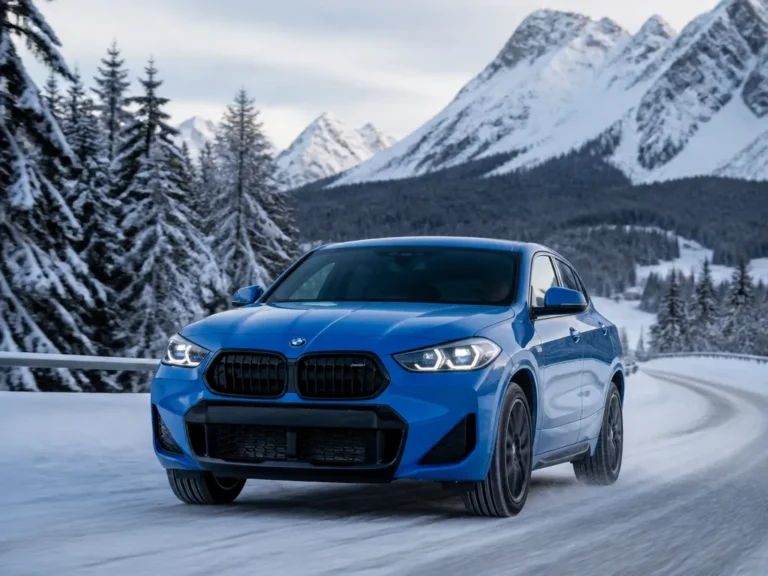
That “BMW X2 in snow” search usually starts after a slippery hill, a first snow morning, or seeing your wheels spin when you ease into the throttle. The X2 can feel composed when traction is there, but it also exposes tire mistakes fast. This guide breaks down how the X2 behaves in winter, what to set, and what limits to expect.
BMW X2 winter traction comes down to drivetrain (AWD vs non-AWD) and tires, more than driver tricks. Expect stability and traction control to intervene early on ice, and plan for longer stops on packed snow and slush. I’ll cover tire setup, ground clearance, heating readiness, and the feel of braking and steering.
BMW X2 in snow and winter driving depends mainly on AWD and winter tires. With good studless winter tires and proper pressure, it tends to steer predictably, while ice can trigger traction control quickly and cause slower acceleration. Braking uses ABS, so you can brake hard, but packed snow and slush usually take longer to stop.
1. Bmw X2 In Snow And Winter Driving
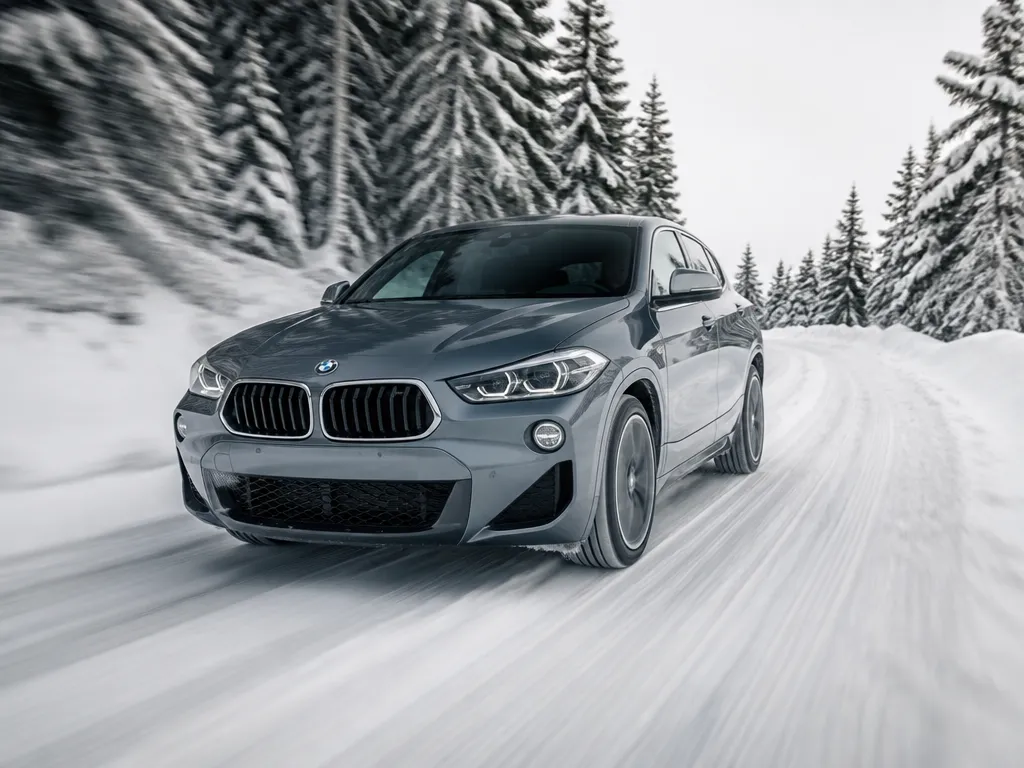
The BMW X2 earns a spot on a winter-driving list because it typically comes with an electronically controlled AWD system and stability control logic designed to manage wheel slip on low-grip surfaces. That matters in real-world snow when traction changes every few feet. Its compact crossover size also helps with parking and lane positioning during plowed-but-narrow winter streets.
For instance, snow performance is less about the badge and more about the contact patch, so season-correct tires make the biggest difference.
In practice, choose dedicated winter tires with the proper load and speed rating for your X2, and keep tire pressures set to the door-jamb spec for cold temperatures. If you drive in frequent freeze-thaw conditions, prioritize tread that can grip slush, and consider stronger sidewall winter options if you see deep ruts.
- Use winter tires before first sustained cold nights, then keep them until consistent spring temps return.
- Confirm whether your X2 is FWD or AWD before planning snow routes and tire sizing.
- Reduce steering and throttle inputs for smoother AWD torque distribution.
- Carry a small winter kit (ice scraper, brush, gloves, jumper cables or a jump starter).
Traction System Limits And Practical Habits
Even with AWD, the X2 can still run out of grip when snow is packed deep or when tires are worn or all-season-rated. Stability control can reduce wheelspin, but it cannot overcome tires that have hard rubber or insufficient siping for wet snow and ice.
In practice, keep distances longer than you would on dry pavement, accelerate gently to avoid sudden torque spike, and begin braking earlier to allow for longer stopping distances on glare ice.
2. Winter Tire Setup For X2
Winter tires are the biggest traction upgrade you can make for an X2 when roads are below about 45°F (7°C), because the softer tread compound stays pliable for better grip and shorter stopping distances than all-seasons in true snow and slush. For a BMW X2, that matters since the taller sidewalls and winter weight transfer can quickly overwhelm tires that are past their winter-ready tread life. A dedicated set also means you get a consistent setup each season, instead of swapping to a different “maybe-good” tire every storm.
In practice, plan for a dedicated wheel and tire set so swapping is faster and your winter tires do not get mixed wear patterns. A common approach is to match your X2’s recommended tire size from the door jamb sticker, then choose a winter tire with an actual snowflake symbol (3PMSF) for braking confidence. Budget-wise, a full set of four winter tires on wheels is often a mid-range expense, so many owners start by pricing just the tires first, then decide whether to add wheels to reduce swap costs over time.
When To Switch And How To Confirm Your Setup
Switch to winter tires when temperatures are reliably cool, even before the first snowfall, since grip depends heavily on rubber softness, not just snow coverage. After installation, do a careful first-drive check for vibration or pulling, then re-check torque if you use wheels that require lug torquing to spec. Pay attention to snow mode behavior and traction control, but treat the tires as the foundation, since no software can overcome a worn winter compound. If you are unsure about your exact tire size for your specific X2 year and wheel package, verify against the door-jamb label or the owner’s manual so your rolling diameter stays consistent for drivetrain and stability systems.
Quick Summary
BMW X2 winter driving comes down to drivetrain and tire choice, more than driver “tricks.” The article explains that stability and traction control tend to intervene early on ice, so you should expect limited throttle and slower, smoother acceleration when grip disappears. It also notes that AWD X2 models generally move more smoothly on slippery ramps than non-AWD versions, while tire mistakes show up quickly when traction is marginal.
The guide also emphasizes cold-weather tire pressure checks and preheating the cabin and windshield for better visibility. Plan smoother inputs and longer stopping distances on packed snow and slush.
| Winter factor | What the article says for the X2 |
|---|---|
| Drivetrain | AWD generally feels smoother on slippery ramps, but traction control will still limit wheelspin on ice. |
| Tires | Dedicated winter tires, ideally 3PMSF, usually beat all-seasons in true snow and slush below about 45°F (7°C). |
| Stopping and control | ABS can help you brake hard while steering, but packed snow and slush take longer to stop. |
| Tread and pressure | Aim for at least 6/32 in (about 5 mm) tread depth, and check pressures because cold weather drops them. |
Frequently Asked Questions
What Bmw X2 Winter Driving Setup Actually Matters In Snow?
For snow, correct tire pressures and keeping the brake and steering feel consistent by not driving on worn all-seasons matter most. If you use run-flats, make sure they are in good condition, since winter grip depends heavily on tire compound and tread.
Do I Need Winter Tires For My Bmw X2, Or Will All-seasons Be Ok?
If temperatures stay near or below freezing, winter tires usually perform better because their rubber stays flexible in cold weather. A common rule of thumb is to switch when you consistently hit about 45°F (7°C) and below for several days.
Why Does My Bmw X2 Feel Like It Slips Or Pulls In Snow Even With Traction Control On?
Most often it is tire mismatch or mismatched wear, low tire pressure, or snow packing that reduces effective tread. If the pull happens mostly while braking, or you feel uneven braking, have the brakes and wheel sensors checked, since stability control relies on accurate speed readings.
How Should I Adjust Driving Habits For A Bmw X2 On Snowy Hills?
Use smoother inputs, start in a lower gear or with reduced throttle, and avoid quick steering corrections. If your X2 has a Snow mode or similar drive mode, use it, but do not rely on it to replace more following distance and gentler acceleration.
What Is The Safest Way To Use Bmw X2 Features Like Auto Start/stop And Traction Control In Winter?
In snow, it helps to keep traction control enabled, but you should still drive conservatively because it cannot stop you from sliding. For auto start/stop, many drivers prefer disabling it in severe cold to reduce repeated engine restarts, especially if the cabin takes longer to warm up.
How Do I Prevent Bmw X2 Winter Issues Like Frozen Doors And Poor Traction After A Snow Storm?
Before a storm, treat door seals with a proper rubber-safe protectant and keep vents clear so airflow can prevent fogging. After driving, check tire tread visibility and remove packed snow from wheel wells, since packed snow can worsen grip and steering response.