


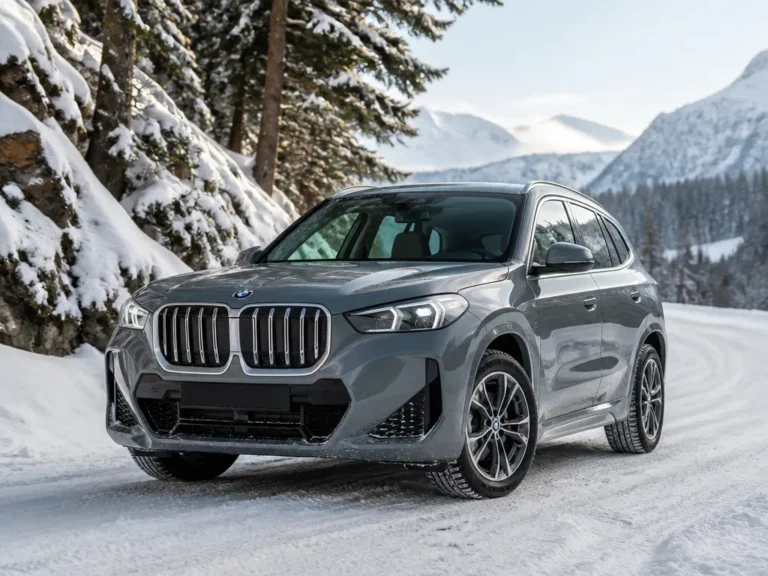
BMW X1 owners in snowy driveways often ask the same thing after the first cold snap, why does the car feel “busy” when traction drops, and what actually works when you need to creep uphill, brake on slush, or turn without drama? If you searched “bmw x1 in snow and winter driving,” you need answers that match your drivetrain, tires, and real conditions.
BMW X1 traction in snow depends on xDrive (AWD), DSC calibration, and winter tires, not just the badges. Expect ABS to pulse under hard braking and traction control to bite during wheelspin, usually within seconds. The biggest improvement is proper winter tires, correct pressures for cold temps, and smooth inputs.
Bmw X1 In Snow And Winter Driving: What To Expect
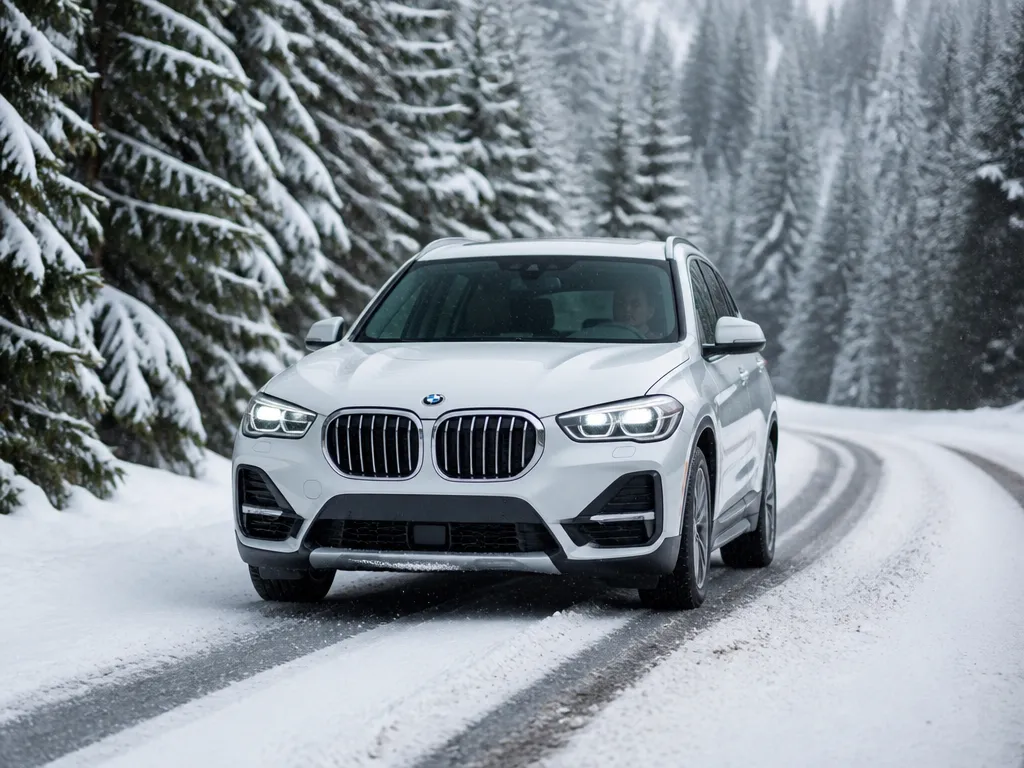
BMW X1 traction in snow is mostly a tire story, with drivetrain and stability systems picking up the slack. With the right winter tires, the X1 feels composed and predictable, but once you hit true ice, even AWD cannot create grip that the tires do not have.
Real-world Limits: Tires First, Awd Second
AWD (xDrive on many trims) helps the X1 get moving and keeps torque more evenly managed when one end or one axle loses traction. AWD does not shorten stopping distances on ice, and it does not let you brake later through a slick intersection. The only “traction multiplier” that consistently improves both acceleration and braking feel is a proper winter tire compound and tread pattern.
For example, in deep, packed snow, xDrive can reduce wheelspin on takeoff and help maintain forward momentum up a slope. In hardpack ice, the X1’s electronics will often intervene quickly, pulsing brakes and reducing torque as it senses slip, which can feel like the car is “thinking” before it lets power through.
Typical Winter Feel In The Cockpit
The X1 steering response on snow is usually accurate, but that accuracy depends on tire sidewall grip and the available tread blocks contacting the surface. On soft snow, steering can feel a touch heavier because the tire is compressing the snow layer; on glare ice, steering may feel twitchy since small changes in angle can exceed available friction.
Stability control (DSC) is the real “feel” manager. When you’re pushing harder than the tires can handle, DSC reduces torque and applies brake pressure to individual wheels, which makes the car feel like it is smoothing out your inputs. Expect more frequent DSC intervention when you accelerate early at a stop sign, merge into slush, or brake while turning.
| Situation | What you’ll notice in the X1 | What to do differently |
|---|---|---|
| Snow-packed street | Good forward bite, steadier tracking | Leave extra following distance, keep throttle smooth |
| Glare ice | DSC/traction control intervenes quickly | Reduce speed earlier, avoid sudden steering or throttle |
| Snowbanked intersections | Grip changes side to side | Brake in a straight line first, then turn |
Insider tip: treat the first 10 to 20 minutes after a cold snap like a “different road.” Side roads can freeze while main roads look fine, and the X1 will react accordingly through traction control and DSC.
Xdrive And Traction Systems In Winter
xDrive actively manages torque distribution between the axles, then uses wheel-speed sensing and brake-based traction control when grip drops. In a BMW X1, that means you usually feel smoother starts than front-wheel-drive cars, but you can still get wheelspin if tires are worn or the surface is packed ice.
What You Feel When Abs, Dsc, And Traction Control Step In
ABS pulses the brake pressure to keep at least some wheel rotation control during hard stops on snow. On fresh snow, stopping distance can look “long and floaty” because tire bite is limited and the tires keep sliding before they slow fully.
DSC (Dynamic Stability Control) and traction control intervene when a driven wheel spins or the car begins to yaw more than the driver input predicts. You will often notice it as reduced power, a brief shudder through the drivetrain, or a firm brake tug from the system trying to redirect traction.
Awd Vs Xdrive Behavior, And How Brake Feel Can Change On Snow
“AWD” can mean different systems in different vehicles, but on the X1, xDrive is the key term because it actively manages torque split and uses wheel-speed sensing to react fast. On loose snow, the car may feel confident straight-line, then suddenly intervene when you add lateral load through a turn or when one wheel rides onto a clearer patch.
ABS on snow often gives a pulsing pedal, but pedal feel can vary by surface type. Fresh snow can create a softer pedal and longer roll before full deceleration, while ice can trigger ABS earlier because slip happens fast, sometimes making the pedal pulse feel more frequent.
| Low-grip moment | System behavior you’ll notice | Driver takeaway |
|---|---|---|
| Wheelspin when accelerating | Power reduction, brake-based traction control, occasional shudder | Ease throttle, keep steering steady, avoid sudden inputs |
| Hard braking | ABS pulses, longer stopping distance on snow/ice | Brake firmly and continuously, do not “pump” the pedal |
| Slip in a turn | DSC limits torque and may apply individual brakes | Slow before the turn, tighten throttle control |
Dash Clues, Warning Lights, And When To Stop To Diagnose
DSC or traction-control related icons tell you how intrusive the system is or whether it is disabled. When you see a steady warning for DSC/traction control, treat it as a “reduced safety” situation and plan slower driving, tighter following distance, and no spirited cornering until you sort it out.
For example, a brief indicator during aggressive wheelspin can be normal because DSC is doing its job, while repeated or persistent warnings suggest a sensor or module issue (common culprits are wheel-speed sensors, wiring damage, or a fault in the stability system).
Insider tip: In deep snow, the system can intervene more often because tire bite changes every few feet. Smooth throttle and steering keep DSC from spending all its time “trying to save it,” which makes the X1 feel steadier.
Winter Tire Choice For X1 Wheel Sizes
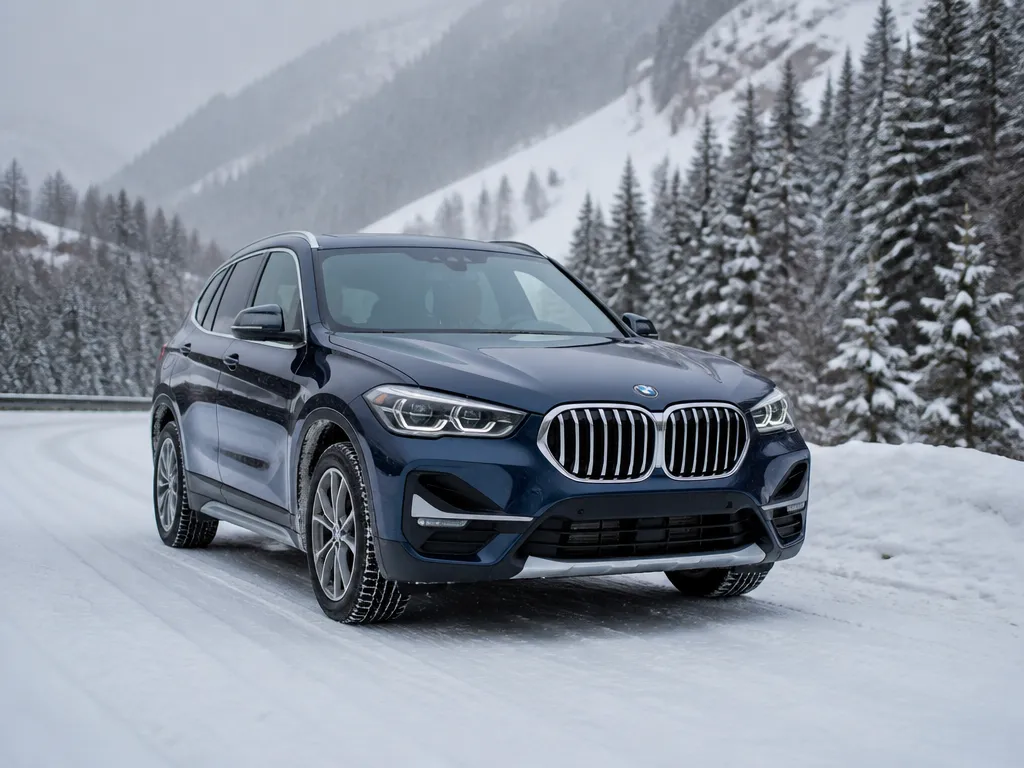
For the biggest snow grip gains, fit a true winter tire (often called studless winter) on all four corners, matched to your wheel size and BMW’s load and speed ratings.
Winter Vs All-season Vs Summer
Summer tires harden when temps drop, so braking and steering grip fall off fast on slush and cold ice. All-season tires can feel “okay” on dry roads but usually lose siping, compound flexibility, and snow bite once the pavement stays near freezing.
Winter tires are the setup you want for X1 snow use because their rubber stays softer in cold weather and their tread has more biting edges. Studless options use deeper, more aggressive patterns for slush and light ice, while studded tires can help on consistent hard ice but trade off more noise and wear on dry pavement.
| Season tire choice | Best for | Snow/ice reality on an X1 |
|---|---|---|
| Summer | Above-freezing dry roads | Weak compound grip in cold, longer braking on slush/ice |
| All-season | Mixed weather, occasional snow | Degrading snow bite as temps drop, less control in icy corners |
| Winter (studless or studded) | Freezing temps, slush, packed snow, ice-prone commutes | More edges for traction, better low-speed crawl and uphill stability |
Studless Vs Studded, And Tread Design For Real Winter
Studless winter tires are usually the smarter default for most X1 owners because they grip well on packed snow and improve control on wet, slushy roads. Studs shine when your area has frequent, long-duration hard ice, but they add road noise and can wear faster if you drive lots of dry miles between storms.
Tread design matters for how the X1 moves at low speed and how it holds in corners: look for lots of closely spaced sipes for ice grip, plus a tread pattern that clears slush without letting it skate. A softer winter compound also helps the tire maintain contact patch in uneven freeze-thaw conditions.
Winter setups should also avoid mismatch. Staggered setups and incorrect sidewall height can create uneven rolling behavior across axles, which can confuse traction events, increase ABS intervention frequency, and make braking feel inconsistent when the surface changes side to side.
For the X1, keep the winter tires the same size and type on all four corners, unless BMW factory specs for your particular configuration explicitly call for a staggered wheel-and-tire layout. Consistency is what keeps the steering feel stable and the braking feedback predictable when DSC is doing its job.
Cold Tire Pressure And Traction Targets
Cold weather drops tire pressure as air temperature falls, so the same BMW X1 tires feel “softer” after a night outside. Softer pressure can increase grip on snow, but too much reduction hurts steering response, sidewall support, and can overheat the tires during a longer drive.
Why Pressure Swings In Winter
Air pressure changes with temperature, so you can see a noticeable drop after the car sits overnight. A few PSI down also means the tire deflects more, which can feel like extra bite on loose snow, then becomes sloppy on cleared roads.
For an X1, that swing matters because the car’s traction systems (ABS, DSC, and xDrive logic) rely on stable tire behavior. When tire pressure varies, wheel slip patterns shift, and the systems may intervene more often even if the tires are new.
How To Check Pressure Correctly (Bmw X1 Routine)
Target goal for the BMW X1: set pressures to the placard value for your exact tire size, wheel size, and load situation (normal vs. full load), then keep them there as temperatures swing. More air is not “more traction” because higher pressure reduces the tread’s contact patch under load, which can make the steering feel harsher and reduce bite in soft snow.
| Condition | What you’ll notice | Pressure approach |
|---|---|---|
| Cold morning (after sitting) | Lower readings on the gauge, slightly softer steering | Set to placard with tires truly cold |
| During the drive | Pressure rises as tires warm | Do not adjust on the road based on warm readings |
| After several hours or big temperature swing | Pressure drifts again with ambient temps | Recheck the next time tires are cold |
For most owners, a practical routine is once in the driveway in the morning (cold check) and a second check midweek if your area has big day-to-night swings. If you travel between warmer and colder towns, pressure-check at the start of the trip when the tires are cold, then only recheck when you’ve parked long enough to cool them.
Deep snow warning: Avoid “letting air out” as a first move on the X1. Reduced pressure can help briefly, but it also increases the chance of wheel damage on plowed ruts, sidewall overheating, and traction control fighting a tire that is rolling over more than gripping.
If you ever do drop pressure for a specific situation, treat it like a temporary, cautious adjustment and always return to placard when you’re back on normal roads.
Snow Task Performance: Start, Climb, Stop
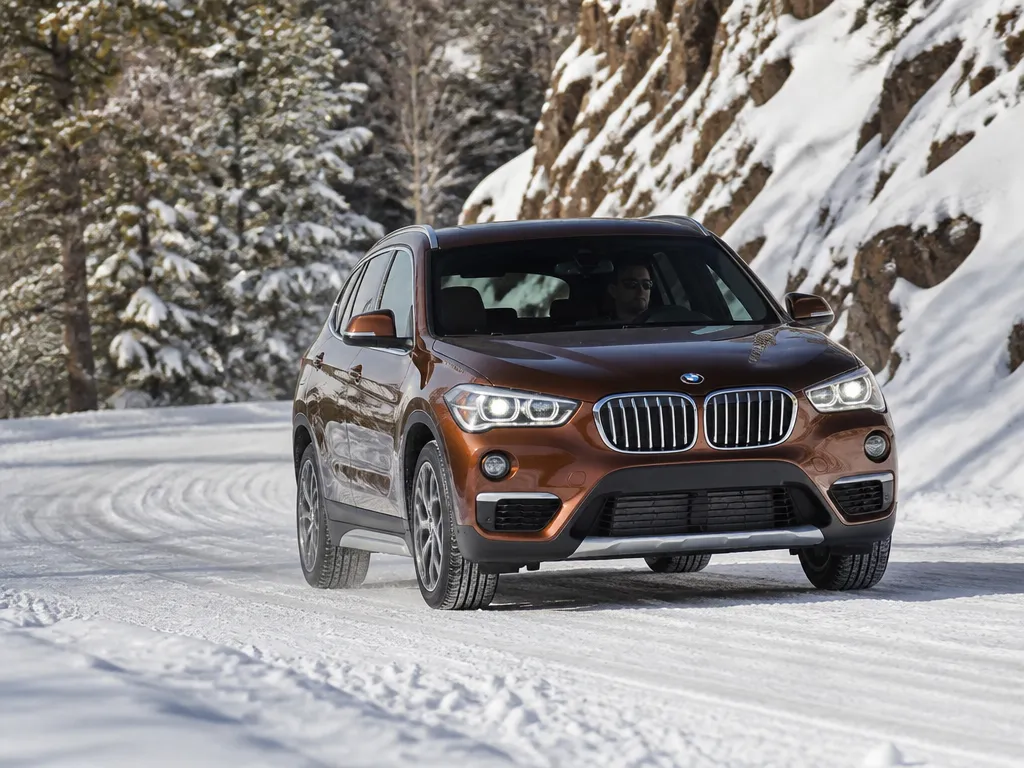
BMW X1 traction control and stability logic work fastest right at the moment you ask for torque, so your job is to feed power smoothly and brake predictably. With winter tires, the X1 usually feels “guided,” meaning the drivetrain and DSC keep you moving without aggressive, wheel-slowing surges.
Starting From A Stop
On slick pavement, the X1’s xDrive (if equipped) sends torque to the axle with grip, then DSC and traction control clamp down if a wheel spins faster than it should. What you feel is a gentle push followed by a slight reduction in acceleration when the system detects slip, especially if you stab the throttle.
To keep it calm and controllable, aim for a long, smooth pedal application and let the AWD do the work. If you hear rapid tire noise or feel the car “hunting” forward in short bursts, lift slightly until the driveline settles and the slip stays within the system’s limits.
Uphill Launches On Slick Inclines
When the hill gets steep and the surface turns glassy, traction control trims engine torque to prevent wheelspin, even with xDrive. That torque cut can feel like the car “throttles you” mid-launch, and it is exactly what prevents the wheels from spinning and sliding sideways.
For an uphill start, use shorter throttle pulses rather than a long push to the floor. Keep the steering wheel straight until the car is moving, because turning while spinning increases the chance you catch traction control intervention at the worst time.
Insider tip: If you feel the X1 fade forward, then catch, then fade again, that is repeated slip correction. Back off a bit, wait a half-second, then reapply torque smoothly.
Braking On Snow Vs Ice
On snow, ABS usually cycles more noticeably because the tire grip is low but still variable, so you may feel pulsing through the pedal. On ice, ABS still works, but the pedal can feel closer to a firm “pressure maintained” sensation, because the tires can lose grip so quickly that ABS is constantly managing lockup risk.
Stopping distance is the big limitation, not pedal strength. With the X1, the realistic expectation is longer than dry-land braking because a winter tire’s bite is still far less than pavement, so plan for extra distance and avoid late, hard stops.
| Surface | Typical ABS feel | Driver takeaway |
|---|---|---|
| Snow | Pulsing or chatter through pedal | Brake earlier, steady pressure is better than pumping |
| Slush | Irregular ABS cycling | Keep it straight, expect longer stops than snow |
| Ice | Rapid ABS modulation, limited steering response | Slow down early, reduce speed before curves |
Low-speed Creeping And Parking-lot Maneuvers
Creeping is where the X1 can feel jerky if you treat it like a dry parking lot, since torque is still being transferred through the AWD system and traction control is ready to correct slip. The goal is a deliberate crawl with minimal pedal movement, so the driveline stays in the “grip window.”
For sharp parking maneuvers, avoid sudden throttle and avoid abrupt steering while the tires are scrubbing. If you feel the car tug or surge, ease off the pedal until the tugging stops, then continue at a lower pace.
Cornering Stability: Steering, Dsc Timing, And Recovery
During corner entry on snow, the X1 tends to understeer first if speed is too high, because the tires lose lateral grip and DSC aims to restore it by braking individual wheels and adjusting torque. DSC intervention can feel like a gentle brake tap or a throttle reduction, and you should treat that as a speed cue, not a challenge to keep turning in.
Correcting safely is about steering less and slowing sooner, then letting DSC settle the car. If the rear starts to slide, reduce steering angle toward center and keep brake inputs gentle, because heavy braking or large steering changes can force the system into deeper corrections.
Driver Settings And System Habits In Snow
DSC and traction control are there to keep the X1 pointed where you steer, and they work best when you leave them on. In BMWs like the X1, stability control actively manages brake pressure and engine torque as the tires slip, which is exactly what you want on snow and slush.
What To Keep On, And When Snow-focused Modes Help
Keep DSC (stability control) enabled in most winter conditions, even when the road looks “mostly fine.” With DSC on, the car can reduce torque before you get a full wheelspin event, so you keep forward progress without turning traction into a spinning contest.
When the X1 offers a Snow or traction-focused driving mode, it can be useful for very low grip starts, short uphill pulls, and neighborhoods where you do lots of stop-and-go. Those modes typically soften throttle response and adjust traction intervention logic, which helps when you are trying to move smoothly on hardpack or compacted snow.
How To Read Dsc And Traction Warnings While You’re Slipping
DSC-related indicators usually mean the system is intervening, which is normal on slick roads. A brief flash during a light slide is expected, but repeated, prolonged intervention is your cue that speed is too high or your steering angle is too aggressive.
For instance, if you accelerate and the dash shows traction/DSC activity while the vehicle crawls forward, you are running out of tire grip and the car is doing its job by limiting torque. If the vehicle feels like it “won’t go” even with gentle input, the fix is often tires, not extra throttle, because wheelspin clears away what little traction you have.
What To Avoid: “Turn It Off To Get Unstuck”
Turning stability or traction systems off to “rock” the car can make you dig a deeper rut fast. On the X1, DSC helps control brake-based torque management, so disabling it removes a key safety net when the surface is unpredictable.
Risk versus reward: You might inch out of a rut once, but you also increase the chance of spinning a tire enough to lose contact, causing higher wheel damage risk and more body-off-line damage from impact angles. If you are stuck, the smarter move is to regain traction with momentum control, route changes, or traction aids, then leave DSC enabled.
Insider tip: If you need repeated attempts to crawl out, the traction problem is already bigger than the electronics can solve. Stop, clear snow from around the tires if it is safe, and use a traction aid before you keep testing the limits.
Speed And Following Distance For Powder, Slush, Hardpack, And Ice
Speed is the big driver setting you control, because system interventions cannot create friction that your tires do not have. Lower grip types need more braking distance and more time to settle the car between steering and throttle inputs.
| Surface | How the X1 typically behaves | Driver adjustment |
|---|---|---|
| Powder | Traction builds slowly, wheelspin can happen before momentum carries you | Keep steady throttle, reduce steering changes, and leave extra distance because braking feels delayed |
| Slush | Grip can change minute to minute | Drive smoother than you think you need, brake earlier, and avoid late steering corrections |
| Hardpack | Grip is decent until you exceed it suddenly | Moderate speed, gentle inputs, and stay patient at stoplights and merges |
| Ice | Any throttle or brake can trigger slip quickly | Cut speed aggressively, increase following distance the most, and steer with minimal angle changes |
X1 Winter Driving Techniques That Work
Throttle, Braking, And Steering Inputs
On packed snow, traction falls off fast when you request more power than the tires can grip. Ease into the throttle with small pedal moves, pause, then continue. That gives DSC time to meter torque before wheelspin turns into a spin.
Braking needs earlier commitment and careful pedal modulation. The X1’s ABS will pulse when wheel speed tries to drop too quickly, and you get the best results by braking sooner and with steady pressure rather than a last-second stomp.
Pro tip: if the front end feels “mushy” on slush, keep steering corrections smaller and let the car slow first. After speed drops, steering response returns.
What To Do When Wheelspin Shows Up
Wheelspin feels dramatic, but traction control is trying to save you by cutting torque and controlling throttle. When the traction control light flashes, stop adding throttle and do not “chase” the car with rapid steering changes.
In practice, the fix is simple: settle the car first, then move off again with a lighter request for torque.
| What you see | What the car is doing | What you should do |
|---|---|---|
| Traction control light flashing | DSC is limiting torque due to wheel slip | Ease off throttle, straighten the wheels, then reapply smoothly |
| ABS pulses through the brake pedal | ABS is preventing wheel lock | Maintain firm, steady pressure and keep steering smooth |
| Steering feels delayed on snow | Tires are losing bite and regaining it unevenly | Reduce speed, make smaller steering inputs, avoid sudden transitions |
Highway Snow And Slush: Visibility And Spacing
Highway slush is where control changes fastest because tires pack with snow and water forms a slick layer. Keep a lane position that reduces spray into your line of sight, and drive where you can see road texture ahead through the spray.
Passing distances should grow, because slush can kick the car sideways when you change speed and lane position. Give yourself extra room to complete passes smoothly, and avoid lingering alongside plowed ridges where traction is inconsistent.
Winter Limitations: Ground Clearance And Adas
BMW X1 winter limits show up fast when snow depth climbs and when road spray covers sensors. Deep snow and hard-packed ridges can force wheel spin even with AWD, and the car’s driving aids can behave differently if camera and radar views are dirty or obscured.
Ground Clearance Realities: Where The X1 Scrapes Or Gets Stuck First
BMW X1 ground clearance is decent for a compact crossover, but winter surfaces make it feel smaller. The front bumper lip, lower engine undertray edges, and the crossmembers are usually the first “contact points” when you hit unplowed snowbanks or drifted driveways.
For example, creeping into a garage apron with a thin snow layer often works fine, then fails suddenly once a wheel meets a ridge. The X1 can spin that wheel pair while the tires climb the ridge, which turns a short crawl into a “stuck” situation.
Sensor And Adas Concerns: Blocked View In Snow And Salt
BMW driver-assistance systems rely on camera and radar views that snow spray and road salt can degrade. When the camera sees a muddied forward view or ice on its lens area, warning messages can appear and some assistance functions may limit themselves.
In practice, heavy snow days often change how the X1 handles speed and following distance because those systems reduce their confidence. When you see ADAS warnings, treat it as a traction and visibility downgrade, keep more distance, and drive like the safety tech is temporarily offline.
What Common Winter Complaints Mean Mechanically
Winter “feel” issues are often traction-control and brake thermal behavior, not a hidden drivetrain failure. On the X1, driver perception is key, because the car can mask problems while traction systems work hard under snow load.
Safety callout: If ADAS warnings persist after you clean the windshield and you cycle the wipers, or if the car repeatedly limits traction/ABS unexpectedly, get it checked by a BMW-capable technician before you push it in deeper snow.
Pre-winter Prep Checklist And Before-you-drive
BMW X1 winter readiness starts with three things: traction (tire condition and pressure), braking reliability (hardware and fluid level), and cold-start confidence (battery and wipers). If any one of those is weak, the X1 can feel “fine” in the driveway and then behave differently on packed snow or after an overnight freeze.
Tires, Brakes, And Cold-start Basics
Tires are your real winter drivetrain. For snow season, plan to replace when tread depth hits 4/32 in (3.2 mm) and definitely by 2/32 in (1.6 mm), because stopping and side grip drop fast on cold, icy surfaces.
Check the full tire sidewall for bulges, cuts, or dry rot, and look for uneven wear patterns. Uneven wear usually means alignment or suspension wear that changes contact patch shape on snow.
Brakes must be mechanically healthy before you trust winter traction control. Inspect for uneven rotor wear, stuck caliper slide feel (hard to move by hand), and worn brake pads or warning indicators.
Brake hardware issues show up fast in snow because repeated low-speed stops and slush promote corrosion at caliper pins and rotor edges. After a few drives in salt, you should not see a “grabby” pedal or persistent brake drag.
Cold-start confidence starts with the battery and charging system. Watch for slow cranking, reduced interior light brightness, or repeated “start stop” refusals even when the engine is warm.
Inspect battery terminals for corrosion and looseness, and confirm the battery has not been repeatedly drained by accessories left on. In cold weather, a weak battery can also cause sensor or control module voltage dips, which can affect how DSC and ABS feel during slippery starts.
Wipers, Washer Fluid, And Quick Service Baseline
Wiper performance is a visibility system, not a comfort feature. Replace blades that streak, chatter, or leave film, and confirm the wiper arms are tight to the pivots.
Use winter-rated washer fluid, and make sure it can handle freezing temps in your area. For slushy commutes, a fluid that includes a winter detergent helps clear salt film so ABS and camera-based systems see what they should.
| Before-you-drive check | What you’re looking for | Winter impact |
|---|---|---|
| Tires tread and sidewalls | Enough tread depth, no bulges or cuts | Stops, steering bite, and reduced wheelspin |
| Brake pedal feel | Firm pedal, no pulsation when braking gently | ABS can help, but bad hardware makes it feel unstable |
| Battery terminals | Clean, tight connections | Reliable starts and stable sensor voltage |
| Washer and wipers | No streaking, correct fluid for freezing temps | Visibility for safe lane keeping |
Quick shop tip: If you drive through salt often, schedule a brake hardware and underbody check mid-winter. Light corrosion can turn into sticking hardware by late season.
Second Go/no-go Routine In The Driveway
Snow-ready drivability is about predictability. Take the first few hundred yards gently, confirm straight-line braking is smooth, then build confidence from there.
Quick Summary
When traction drops, ABS can pulse during hard braking and traction control cuts in within seconds as it senses wheelspin, which can make the car feel “busy.” The drivetrain and stability systems can only manage what the tires can grip.
With xDrive, torque is split front to rear and the car helps maintain forward motion on starts and climbs, especially when the front tires break loose first. Even so, real stopping distances still grow on ice, and AWD does not let you brake later in a slick intersection. Deep snow can limit clearance, and ruts and snowbanked intersections mean grip changes side to side, so you should brake in a straight line first.
| Winter situation | What you’ll notice | What to do |
|---|---|---|
| Snow-packed street | Better bite and steadier tracking | Leave extra following distance and keep throttle smooth |
| Glare ice | DSC and traction control intervene quickly | Reduce speed earlier, avoid sudden steering or throttle |
| Snowbanked intersections | Grip changes side to side | Brake straight first, then turn |
Frequently Asked Questions
Is The Bmw X1 Good In Snow If I Have Winter Tires, Or Is Awd Mandatory?
AWD is not mandatory, although it can make starts and climbs easier. A front-wheel-drive X1 with appropriate tires can still be controlled in winter conditions, while xDrive cannot overcome insufficient grip during braking or cornering.
What Tire Pressure Should I Use On A Bmw X1 In Winter Driving?
Lower ambient temps usually drop tire pressure. Check pressure more often in winter, and set it to your BMW placard spec when the tires are cold, since pressure guidelines assume cold-start readings.
How Do I Prevent The Bmw X1 From Getting Stuck In Snow, Especially When I Start Moving?
Use smooth throttle and give the tires a clean path. If you spin, ease off and try again with controlled acceleration, and consider moving the car to a higher-friction surface before attempting repeated starts.
Does A Bmw X1 Need A Winter Battery Test Before Cold Weather Hits?
Yes, cold weather reveals weak batteries fast. Have the battery and charging system load-tested before winter, especially if your battery is more than a few years old or you notice slow starts in cold mornings.
Why Does My Bmw X1 Feel Jerky Or Slip In The Snow, Even With Snow Tires?
It can be traction control and stability system intervention. If you get frequent slipping, make sure you are not over-accelerating, and check for issues like uneven tire wear or the wrong tire size spec, which can upset traction behavior.
What Is The Biggest Winter Driving Mistake Bmw X1 Owners Make?
Waiting too long to switch to winter tires. Driving on all-seasons in sustained cold and snow often leads to poor braking and reduced grip, so swap when temps consistently sit near freezing and you start seeing slush or snow regularly.