

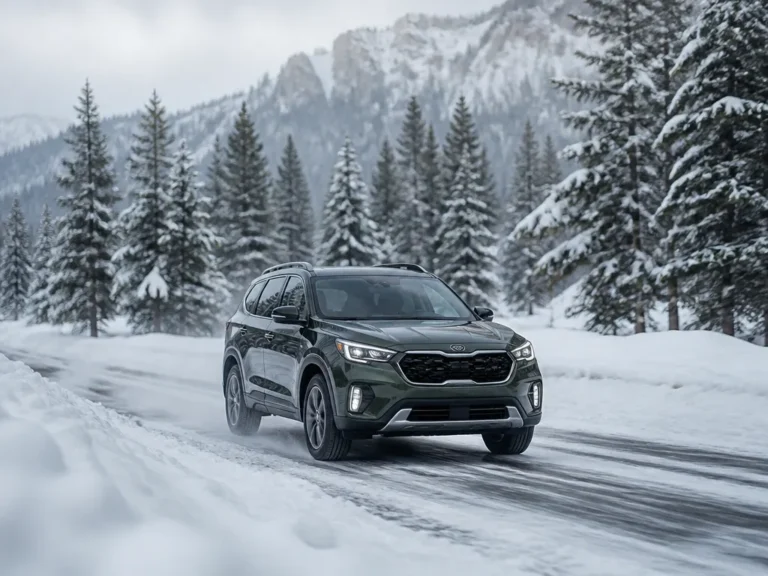
You searched “Kia Seltos in snow winter driving” because you want to know what happens when that SUV meets packed snow and slush, not just dry-road grip. If you drive FWD, AWD, or AWD with a winter-focused tire setup, the Seltos can feel very different in starts, turns, and braking. This guide breaks down the real-world behavior and the checklist stuff that keeps you out of trouble.
Kia Seltos snow confidence mostly comes down to tires, traction control, and your drivetrain choice. Expect ABS and ESC to intervene quickly on low-grip surfaces, especially during hard throttle or late braking. This article covers how FWD vs AWD changes wheel slip, plus what to do for starting, cornering, and stopping before the first storm.
Kia Seltos In Snow Winter Driving Performance (Fwd Vs Awd)
The Seltos behavior in snow is mostly tire and traction-control dependent, but FWD and AWD feel different once grip gets scarce. In slushy starts and packed snow, FWD usually sends power to the front with more wheel slip, while AWD generally reduces the “spin then catch” sensation.
The drivetrain setups covered here are Seltos FWD and Seltos AWD. You will feel that difference as the AWD system keeps more constant drive at the wheels when traction changes abruptly, while FWD relies heavily on front tire grip and stability control to control wheel spin.
What You’ll Feel In Snow By Drivetrain (Fwd Vs Awd)
FWD Seltos in snow usually feels progressive at low speed, then traction-control takes over when you ask for more throttle than the tires can hold. AWD Seltos tends to be calmer on uneven ice, because torque is still available even when one front tire loses grip.
For example, starting on a slick driveway, FWD often shows a brief shuffle in the steering and a quick surge of traction-control intervention, then it settles once the tires bite. AWD often hits fewer “slip spikes,” so the car feels steadier, though it still limits wheel spin through the same stability electronics.
| Condition | FWD Seltos feel | AWD Seltos feel |
|---|---|---|
| Slushy launch | More initial front-wheel slip, quicker control pulses | Less slip, more consistent pull |
| Ice patch while accelerating | Power cuts feel sharper, then returns after grip regains | Power modulation feels smoother |
| Corner entry on packed snow | Front tires work harder, understeer is more likely | Grip is shared, understeer still happens but is reduced |
Traction At Launch And Throttle Feel
Traction-control on a slippery surface typically reacts within fractions of a second by cutting engine torque and braking the slipping wheel. In FWD trim, that usually shows up as higher wheel spin at first, with more noticeable “grab” once control catches up and tire traction returns.
Throttle response in snow should be thought of as “controlled by grip.” Once grip improves, the Seltos returns power quickly, but you will still feel electronic modulation as traction-control prevents wheel slip.
Steering And Stability When Grip Changes Suddenly
On snow, steering feel is a mix of tire grip and stability control authority. FWD Seltos commonly builds understeer first because the front tires are both steering and driving, so the safest line is slower entry with a smooth steering angle.
AWD helps reduce the severity of understeer because it can maintain more overall traction when the front tires get overwhelmed. Sudden grip changes, like going from packed snow to bare ice, still trigger traction and stability intervention on both drivetrains, but AWD usually feels more composed when the wheels regain sync.
Mechanic tip: If the steering starts to “hunt” during acceleration, ease off immediately and let the tires re-grip. That moment is traction-control trying to regain control, and keeping steady pedal input usually makes the intervention longer.
Traction Control And Esc In Snow
Traction Control (TCS) and Electronic Stability Control (ESC) manage wheel slip and slide risk by reducing engine torque and selectively braking individual wheels. On a Kia Seltos in snow, these systems work quickly enough that you often feel them as a light brake pulsation or a reduction in throttle response. When snow is thick or uneven, expect more frequent intervention, which is normal, not a malfunction.
What You Feel When Slip Happens
When a drive wheel starts spinning, TCS reduces power by momentarily limiting throttle and can brake the slipping wheel to restore traction. ESC adds steering and yaw correction when the car begins to rotate too much, or when traction on one side differs from the other.
In practice, that can feel like the car “holds back” during acceleration, even though your foot stays steady.
Brake pulsing usually comes from the system modulating hydraulic pressure to brake one wheel at a time. The pedal can feel a little alive during hard slippery launches or sudden lane changes, because ESC is actively controlling stability. Treat that as the system doing its job, then drive smoother for a faster recovery of traction.
For drivers, the key is interpretation: system activity is progress toward control, while wheel spin or a drifting slide is the car still searching for grip. If the Seltos is struggling, you will usually notice it first as throttle reduction and a “grippy” steering feel returning after slip events.
Driver tip: If you feel ESC pulsing during a turn, release a little throttle, keep steering inputs steady, and let the car regain grip before adding power again.
Common Snow Moments On The Seltos
For example, starting on an incline on snow-packed pavement often triggers TCS immediately if the tires break loose at launch. The fix is not disabling the system, it is applying torque more gently. Aim for a short, controlled roll forward while the traction system sorts out wheel speed differences.
In practice, merging onto packed snow can cause one-side traction variation as you cross ruts or tire tracks. ESC may correct yaw and you can feel it as slight braking or reduced acceleration when you steer and accelerate at the same time. Smooth inputs win here, because abrupt throttle plus steering is what creates slip angles.
Exiting slush is another common trigger, especially when the tires drop into a thinner layer and then hit a more slick patch. TCS will reduce torque to prevent wheel spin, and you may also notice a momentary delay in power delivery. Keeping a little more following distance helps because winter traction events can extend stopping distance.
Drive Modes And How They Change Behavior
Drive modes, if your Seltos is equipped, can alter throttle mapping and how readily the car applies torque. A sportier mode typically gives a sharper pedal response and can bring TCS/ESC intervention into play sooner when traction is marginal. A more comfort-focused snow-friendly calibration often softens throttle request so the stability systems intervene less abruptly.
Drive mode does not “turn off” safety logic, it changes how much torque the car is willing to request from the engine before TCS has to step in. If you feel frequent or harsh control during acceleration, switching to a calmer mode can smooth torque delivery and reduce the number of slip events.
Understanding Alerts And Limited-system Messages
Traction control and ESC indicators usually light up when the system is actively intervening or when a fault is detected. During normal winter driving, the indicator may flash or illuminate briefly during heavy slip, then go out as traction returns.
Messages about systems being limited are different. Limited warnings can mean the control module has reduced authority due to sensor or calibration conditions (such as speed/traction patterns outside expected ranges, or a detected fault), and you should drive more conservatively until the message clears or you have it checked.
| What you see/hear | Typical meaning in snow | How to respond |
|---|---|---|
| ESC/TCS indicator flashes, power feels reduced | Wheel slip or yaw control is active | Ease throttle, keep steering steady, give traction time to return |
| ESC/TCS indicator stays on | Fault or system disable condition may exist | Drive gently and arrange inspection if it does not clear |
| Message says system is limited | Reduced control authority or condition outside normal parameters | Increase following distance and avoid hard launches or quick lane changes |
Braking On Packed Snow And Slush
Packed snow and slush make stopping distance jump because the tire has less grip and the surface can change under you. The Kia Seltos can still stop hard, but you need to expect longer distances and a more “active” braking feel from ABS.
What Abs Feels Like On Snow (And Why It Can Be Loud Or Pulsing)
On packed snow, ABS engages when a wheel is about to lock, even though you are pressing the brake normally. In the Seltos, that shows up as a pulsating pedal and short brake release-and-apply cycles, which can feel rough compared to dry pavement.
ABS noise is common in winter because the system is working to keep each wheel near the optimal slip point.
For example, you might hear clicking, grinding, or a harsh rumble through the brake pedal during heavy braking on glare ice or hard-packed snow.
Braking Distance Reality: Packed Snow Vs Slush Vs Ice
Packed snow usually lets tires bite more than ice, so braking is typically better than on clear ice, but still worse than dry roads. Slush is tricky because it can behave like a low-friction mix at one moment and like a slick liquid film the next, especially when tires churn it.
Ice is worst because the tire cannot generate consistent friction, so ABS may cycle rapidly while you still travel farther than expected. For the Seltos, treat any “it’s braking okay” moment as temporary if the surface is melting, refreezing, or transitioning between snow and bare patches.
| Surface | Grip consistency | What you’ll notice when braking |
|---|---|---|
| Packed snow | Low to moderate | ABS pulses can be steady; pedal can chatter under firm braking |
| Slush | Variable | More frequent ABS cycling; longer stops than packed snow are common |
| Ice | Very low | Rapid ABS cycling; steering can still be hard even while braking |
Driver Technique That Reduces Stopping Risk
Brake in a straight line and start slowing earlier than you would on dry roads, because the tires need time to find a stable grip level. Keep steering inputs smooth, since abrupt turns while braking can shift load and trigger faster ABS cycling, especially on slush.
In practice, aim to apply firm, continuous brake pressure once you commit, rather than “dabbing” the pedal repeatedly. Threshold-style steering, like yanking the wheel at the same time you brake hard, is what turns a manageable ABS event into a slide risk.
If Abs Can’t Prevent A Slide: What To Do Instead Of Pumping
If the car starts to slide despite ABS, aggressive pumping often makes the situation worse because you interrupt the system’s ability to maintain the best possible wheel slip. Release brake pressure gradually if you need to regain lateral control, then steer calmly in the direction you want the vehicle to go.
For example, if the Seltos begins drifting sideways during a panic stop on glare ice, ease off the brake enough to reduce wheel slip, keep your hands steady, and let traction come back before you re-apply the brake gently. Smooth inputs are the difference between “ABS event you recover from” and “lockup behavior that drives you straight into trouble.”
Quick rule: On slick roads, keep braking smooth, avoid threshold steering inputs, and if you feel you are losing control, back off the brake and steer calmly to regain grip.
Cornering Behavior With Winter Traction
The Kia Seltos in snow tends to start with mild understeer when you ask for more steering than the tires can grip, especially if entry speed is too high. When the stability system intervenes, the car pulls back power and may apply individual brakes, so the steering feels calmer even while traction is being managed.
Turn-in And Understeer/oversteer Tendencies
Most drivers notice a predictable pattern: the first turn-in feels “slower” than on dry pavement, then the front end pushes wide if throttle is applied early or speed is excessive. With proper entry and a neutral throttle through the turn, the Seltos usually stays composed, and the rear stays fairly well behaved for an SUV, assuming tires are in good shape and pressures are correct.
For example, in a snowy parking lot, a quick steering input with no speed control often makes the front tires lose grip before the rears. When the rear starts to drift, it is usually because the vehicle is already near the limit, and the driver adds more steering while also changing throttle.
Throttle Changes Mid-corner And Why Gentle Inputs Matter
Throttle changes mid-corner affect how the Seltos distributes grip because they change load transfer across the axles. Gentle, steady throttle usually keeps the tires closer to their traction peak, while abrupt pedal changes can overwhelm the ESC’s ability to stabilize the vehicle.
For instance, if you aim for a safe line but then floor it before the steering angle is reduced, the drive wheels spin, traction control acts, and you may get a brief surge then reduction in power. That power modulation is exactly what you want, but it happens faster than the driver expects, so smooth inputs help the car stay predictable.
How Esc Helps On Slippery Surfaces
ESC intervenes by reducing engine torque and using selective braking to help the Seltos follow your steering input. Instead of letting the car “hunt” for grip through repeated wheel spin, ESC helps keep rotation under control, especially when the front tires start to slide during turns.
If the stability light flashes during a snowy corner, expect power reduction and brake-based correction. Ease off steering input slightly and keep throttle steady while ESC does its job.
| What you feel | What’s likely happening | Driver response that usually helps |
|---|---|---|
| Front pushes outward | Front tire grip limit reached, ESC may prepare to brake a corner or cut torque | Ease off steering angle and reduce speed next time |
| Wheel slip sensation or sudden power reduction | Traction control active from drive-wheel spin during throttle changes | Hold throttle lighter and accelerate only after the car is pointed |
| Brake-like “nips” while turning | ESC applying selective braking to correct yaw | Keep steering smooth, avoid abrupt throttle or steering inputs |
Best Practices For Snowy Corners
Entry speed is the biggest lever for corner behavior, because it determines how much lateral grip you need from the tires right at turn-in. Line choice matters too, smooth arcs beat late sharp inputs, and exiting before adding throttle keeps the tires from being asked to do braking and cornering at the same time.
Kia Seltos cornering on winter traction is most confidence-building when you treat the throttle like it is part of steering. Smooth entries, minimal mid-corner changes, and acceleration only after the steering settles help the ESC keep the car stable without feeling intrusive.
Hill Starts And Controlled Descents
Kia Seltos traction management can move you uphill in snow, but wheel spin control still depends on how hard you apply torque. Smooth throttle inputs help the stability system keep the wheels gripping instead of cycling into traction control. Controlled descents are about slowing early and using steady deceleration so you are not cooking the brakes.
Uphill Starts: Torque Control Beats Clutch Drama
On snowy grades, the first few seconds decide whether the Seltos hooks up or spins. The Seltos traction control and stability control will intervene when drive wheels slip, which can feel like the car “hesitates” if you stab the throttle. A smoother start lets the tires find usable traction before the systems step in.
AWD helps starting because it spreads drive torque to more than one axle, but AWD does not create traction. Snow tires and surface condition still cap how much force the tires can transmit without slipping. If the ground is glare ice, even AWD can only do so much before traction control reduces torque.
Awd Impact: Climbing Traction Improves, Stopping Control Does Not
AWD on the Kia Seltos typically improves forward bite on loose snow and packed snow compared with FWD, especially when you are pulling away from a stop. AWD can reduce the chance that one axle spins away while the other finds grip, so the launch feels more “confident.” Brake control on steep grades is still mainly a downhill technique problem, not an AWD problem.
Downhill Control: Use Steady Inputs To Prevent Brake Heat
Downhill snow and ice driving demands earlier deceleration because traction fades faster than many drivers expect. Engine braking plus controlled brake pressure gives you a stable speed without repeated hard braking that overheats components. Repeated “tap and accelerate” corrections often create more slip than a smooth, steady descent.
Insider tip: If you can hear or feel brake fade developing (longer pedal travel, weaker bite), the best fix is to slow earlier at the next opportunity. Dragging the brakes while they are hot is how drivers get stuck with no margin on the steepest part.
Steep grades in snow change fast. Reduce speed sooner than you think when the road looks smooth but has a slick top layer, when you enter shaded areas, or when you hit slush at the bottom of the hill.
Setup For Winter Tires And Pressure
On the Kia Seltos, winter traction comes down to tire choice, tread condition, and correct cold tire pressures. Fresh winter tires can cut braking distances and reduce wheel slip feel compared with worn all-seasons on snow-packed roads. Keep pressures set for cold weather, then recheck after the first hard drive in the winter.
Winter Tires Vs All-seasons (What Changes In Snow)
All-seasons work in light snow, but they hit a wall when roads turn packed, icy, or repeatedly thaw and refreeze. Winter tires use a softer rubber compound and a snow-focused tread pattern that keeps biting even as the surface hardens. On the Seltos, that usually means less throttle interruption from traction control and smoother starts before ABS and ESC get involved.
On snow, expect different behavior at three moments: launch, mid-corner slip, and braking. Winter tires help most at launch (less spin) and braking (more consistent ABS modulation). All-seasons often feel fine until they do not, then grip falls off quickly when tread blocks can no longer deform into the snow film.
| Setup | Snow feel | Biggest limitation |
|---|---|---|
| All-season (cold-worn) | Traction control cuts in sooner | Rubber stiffens in cold, grip drops fast |
| All-season (new) | Better confidence in light snow | Pack snow and ice still reduce bite |
| True winter tires | More predictable braking and turn-in | Needs good inflation and tread to perform |
Tread Depth And Wear Checks (Legal Is Not Safe)
Even if your tires pass legal tread minimums, deep snow can still beat them because tread blocks must flex and clear slush. For winter driving, you want tread that still looks sharp in the grooves, with no rounded shoulders or cupping. If you feel hydroplane-like wandering in slush, tread wear is a prime suspect.
Tread depth that feels “fine” on dry roads can still skate on packed snow because the rubber needs grooves and sipes to do their job.
Cold-weather Tire Pressure (How To Think About Adding Air)
Tire pressure changes with temperature. The correct pressure spec depends on your Seltos tire size and wheel configuration, so use the label in the driver door jamb or the owner documentation for your exact setup. Set pressures when the tires are cold, meaning the car has been parked for a few hours out of driving.
In winter, many owners top off based on what the tire looks like, but that can lead to under-inflation on cold mornings or over-inflation after driving warms everything up. A simple routine works: set cold pressures to spec, drive for a bit, then recheck to confirm the gauge reading matches reality. If you regularly lose pressure, check for slow leaks, rim damage, or valve stem issues.
Tire Size And Compatibility (Avoid Mismatches That Upset Traction)
Mixing tire sizes or brands can upset ABS and traction control behavior, especially if tread depths differ front to rear. The Seltos is happiest with a matched set of tires in the same size (and ideally the same model and wear level) on all four corners. If you run staggered sizes or try a different brand just to “get through,” traction control may intervene more than you expect, and steering feel can get inconsistent.
Tire Chains (When They’re Needed And What To Verify)
Chains are typically for severe snow or when local rules require them during storms. Check local signage for “chain control” zones and the specific mounting requirements, because rules vary by state and province. On the Seltos, verify you have clearance in the wheel well and suspension area for your exact tire diameter and chain type.
Fitment is everything: wrong chain design, wrong link size, or loose tension leads to rubbing and can damage wheel components. Practice installing chains on dry pavement before the first real storm, then recheck tension after a short drive.
Cold-start Readiness For Seltos Owners
Cold weather makes the Kia Seltos either feel solid or expose a tired battery fast. A healthy starting system should crank at normal speed and start within a few seconds even on frosty mornings. Slow cranking, repeated “no-start,” or a start that keeps getting worse across days is a battery warning you should not ignore.
Battery And Cold-crank Reality
Battery capacity drops in winter because chemical reactions slow down, and engine oil thickens, so your starter works harder. What is “normal” is quick-to-crank and consistent starts. What is “not normal” is one day it starts fine, then later it struggles, then you start seeing extra delay or dim interior lights during cranking.
For the Seltos, also watch for corrosion at the battery terminals and a battery age issue. Many shops see problems come from a weak battery that still shows a decent reading in mild weather, then fails when the temperature drops below freezing.
| Symptom in the first 10 seconds | Most likely cause | Owner action |
|---|---|---|
| Slow crank, dim lights | Battery cold capacity or terminal resistance | Clean/inspect terminals, test battery and charging system |
| Clicking with no crank | Battery voltage too low to engage starter | Stop repeated attempts, load test battery |
| Cranks normal, but won’t start | Fuel system or ignition issue | Check fuel level, then scan for stored codes if it repeats |
Starting Routine: Warm Efficiently Without Wasting Time
Start the Seltos and give it enough time to settle, usually 30 to 60 seconds in light snow. During that window, keep your hands off the steering wheel unless you need to correct it, because traction control may feel more active as systems wake up. Wait until idle is smooth before you try to move off aggressively.
For immediate “watch-outs” after start, listen for rough running, check the dash for any warning icons, and verify the defrost air is actually getting to the windshield. If the engine starts and then stalls repeatedly, do not keep cycling the ignition in the cold, because it can worsen battery problems and mask the real issue.
Quick rule: If the engine starts sluggishly, the battery is the first suspect. If the engine starts fine but drivability is off, focus on warning lights, defrost effectiveness, and then fuel or ignition diagnostics.
Fluids And Visibility Basics
Washer fluid matters more than most owners expect in snow, because road spray quickly turns the windshield into a fogged-up mess. Confirm the washer reservoir has winter-rated fluid, and make sure the nozzle stream hits the glass evenly. Wipers need good blades too, because streaking in sub-freezing temps is often a blade issue, not a “speed” issue.
Tire condition is part of visibility and control at the same time. Check tread depth and look for uneven wear that suggests alignment or suspension problems, since those can make the Seltos wander or slip during the first turns. Defrost performance should clear side windows too, so you can see traffic and lane lines without leaning forward.
Short Pre-trip Inspection List (30 To 90 Seconds)
A fast pre-trip check saves you from the worst winter surprises, especially early in the morning when everything feels rushed. Walk around once, get the car ready, then do a brief brake and light check. This is not “extra,” it is how you keep a confidence level high when traction is inconsistent.
If an ESC or ABS warning light is on, treat it seriously for snow driving and plan to get it checked before you head out. Tire pressure warnings also matter immediately, because underinflation can increase slip and braking distance on packed snow.
Snow Driving Technique That Works
Snow driving on a Kia Seltos is about controlling wheel slip before the car has to fight it. Smooth throttle and earlier braking keep the ESC from cycling traction control, which means more predictable steering and stopping.
Accelerate Gently, Brake Early
On compact crossovers like the Seltos, aggressive launch is the fastest way to trigger repeated traction control and ESC corrections. The goal is to feed torque in small doses so the front tires (FWD) or both axles (AWD, if equipped) can stay near the grip limit.
For example, if you normally brake for a stop sign at the end of a lane marker in clear conditions, give yourself room to brake 1.5 to 2 times farther back on snow packed with light ice. That extra distance is where you prevent a hard ABS event that scrubs speed and reduces directional control.
Steering And Throttle Timing Reduces Esc вмешательство
ESC (Electronic Stability Control) steps in when the car detects loss of intended path. On snow, that usually happens when you turn and add throttle at the same time, or when you lift abruptly mid-turn.
Driver tip: Make steering changes first, then add (or remove) throttle slowly. If the nose starts to drift, ease off power instead of making a sharp steering correction.
Throttle timing is everything because the Seltos will try to restore stability by braking individual wheels and adjusting engine torque. Repeat traction-control cycling can feel like the car is “hesitating,” but it is really protecting the drivetrain while you are asking for more grip than the tires have.
Slush, Potholes, And Spray Control
Slush is a traction killer because it can act like a thin film between tire and pavement. Treat slushy corners like ice, keep the wheel angle steady, and avoid any sudden inputs that can unload the tires.
| Situation | What to do with the Seltos | What to avoid |
|---|---|---|
| Starting from a stop | Light throttle, short pause after first movement | Flooring it to “get going” |
| Cornering on snow | Set steering, then roll through power smoothly | Hard throttle while turning |
| Braking on mixed snow/ice | Early braking with steady pedal pressure | Late, heavy braking and sudden pedal releases |
| Slushy intersections | Slow entry, steady steering, minimal wheel changes | Quick lane changes at the worst traction moment |
Quick Summary
In the Kia Seltos, snow confidence is driven mostly by tire choice, traction control, and whether you are in FWD or AWD. On low grip surfaces, ABS and ESC are expected to intervene quickly, especially with hard throttle or late braking, because the car reduces slip by cutting engine torque and applying braking to a slipping wheel. The article emphasizes that stability control works in fractions of a second, so the real win is keeping inputs smooth and letting the electronics do their job early.
FWD versus AWD changes the way slip shows up when the surface is packed snow or slushy. FWD often sends power to the front with more wheel slip, then settles once traction control catches up, while AWD generally feels calmer because torque is spread to all wheels and produces fewer “slip spikes,” even though stability electronics still limit wheel spin. For driving, use smooth throttle for the first 10 to 20 feet, brake early with extra following distance, and turn in early to reduce understeer, with winter tires usually outperforming all seasons below 45°F. The single most important takeaway is to match throttle, steering, and braking to grip and let ESC manage slip.
| Scenario | What You Feel | What to Do |
|---|---|---|
| Slushy launch | FWD has more initial front-wheel slip, AWD feels steadier | Ease into throttle, keep inputs shorter |
| Ice or glassy packed snow | ESC/traction control cuts torque and modulates braking quickly | Pause briefly before adding power |
| Corner entry | FWD is more prone to understeer, AWD helps reduce severity | Slow entry, smooth steering angle |
Frequently Asked Questions
Is The Kia Seltos Good For Winter Driving In Snow?
It can be, especially if you run the right tires. For snow traction, your tire choice matters more than any one driving mode, so consider snow-rated tires and keep them at proper pressure.
Should I Use Eco Mode Or Sport Mode In A Kia Seltos During Snow?
In most snowy conditions, you want smoother throttle response, so you typically do better with Eco or a gentler normal setting than Sport, which can make the drivetrain feel more abrupt. If your Seltos has selectable drive modes, test the feel in a safe, empty area and stay in the one that lets you accelerate without wheelspin.
How Do I Prevent Wheel Spin In My Kia Seltos When Driving In Snow?
Use gentle acceleration, avoid sudden steering inputs, and give yourself extra following distance so you can keep traction. If you start to spin, ease off the gas and let the car regain grip, then continue slowly.
What’s The Best Tire Setup For A Kia Seltos In Winter Snow?
If you’re seeing regular snow and ice, the best practical upgrade is winter tires (or at least all-weather tires rated for severe snow). Make sure tread is in good shape and check pressure before trips, since colder temps can drop tire pressure and reduce traction.
How Much Should I Warm Up A Kia Seltos Before Driving In Cold Snowy Weather?
You generally only need a short warm-up, just enough for the windshield defrost and for the engine to settle. Modern engines build heat efficiently, and driving gently right away is often better than idling for long periods.
What Common Winter Mistake Should Kia Seltos Owners Avoid In Snow?
A big one is assuming the car will handle the same as in dry weather, then driving too fast or braking late. Another common mistake is waiting until you feel stuck to change tires or adjust driving habits, so plan ahead with traction-focused tires and a slower pace from the start.