

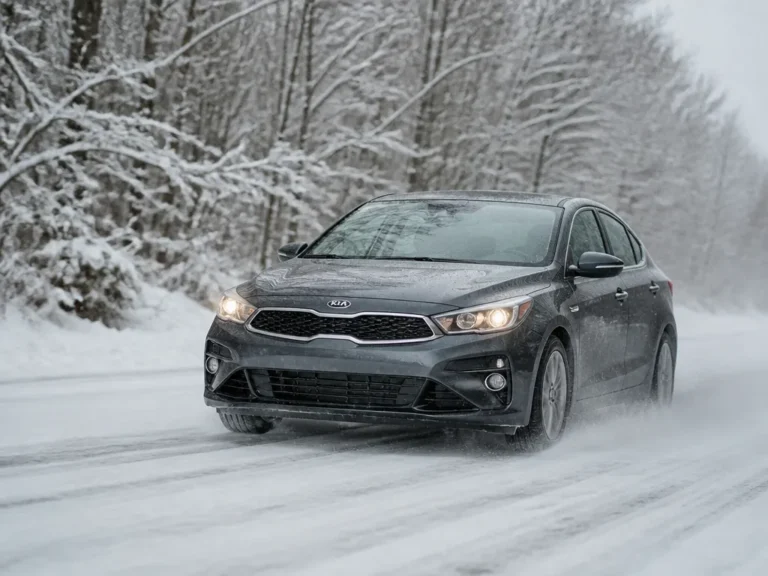
Got a Kia Forte and you’re staring at a snowstorm wondering if it’ll actually move, stop, and steer with confidence? The Forte is most often front-wheel drive, so winter traction comes down to how well the tires grip and how smoothly you drive when road friction drops. This practical, Forte-focused rundown explains what to expect in snow and what to do about it.
Expect weaker traction than an AWD setup on ice, deep snow, and steep grades, even with ABS and ESC doing their job. The fix is usually tire choice plus driving habits: gentle throttle inputs, more following distance, and the right pressures for cold weather.
Kia Forte In Snow And Winter Driving
The 2020s Kia Forte is a front-wheel-drive compact sedan, so snow traction depends heavily on the tires and how smoothly you apply throttle and brakes. With all-season tires, the Forte can feel predictable in light snow, but it can get sketchy on glare ice because the tires are the limiting factor. ABS and stability control help you stay steerable, yet they cannot fix worn or “all-season” tread that is flattened and slick in cold weather.
Fwd Basics And The Forte’s Winter Behavior
Front-wheel drive puts the engine’s torque over the drive wheels, which helps the car move forward in snow better than rear-wheel drive with the same tires. The Forte also tends to understeer in slippery corners, meaning the front end pushes outward when grip is low. Smooth inputs matter, because excessive throttle or abrupt steering can overload the front tires and trigger traction control intervention.
Brake behavior is also tire-driven. In snow and slush, a hard brake can lock up grip early, but ABS will pulse the pedal and reduce lockup. Stability control may cut engine power or brake individual wheels if the car starts to rotate, so don’t panic if you feel a mild “grabby” sensation during aggressive stops.
Why Winter Tires Matter For A Forte
All-season tires are a compromise, and cold pavement makes that compromise show. Winter tires use softer rubber compounds and deeper, more aggressive tread patterns that keep biting in packed snow and slush. On a Forte, that difference is huge because both forward motion and steering grip come through the front tires.
| Situation | All-Season Tires on Forte | Winter Tires on Forte |
|---|---|---|
| Packed snow acceleration | Traction control may intervene early | More consistent bite, less drama |
| Glare ice | Grip can vanish quickly | Still limited, but better chance to steer |
| Slushy corners | Front push is more likely | Improves front grip and stability feel |
Real-world rule: if you feel the front end “go light” or the steering stops responding, you are out of tire grip. Driver aids can help you stay on course, but winter tires decide whether you had grip to begin with.
Performance Differences By Snow And Ice Situation
Deep snow is the hardest case for any sedan because tall, soft snow can act like a snow brake, robbing tire contact no matter how good the electronics are. For glare ice, the Forte can feel fine in a straight line but unpredictable when you brake or turn, because the tire can only grip on microscopic friction. Mixed conditions, like snow over ice, often trick drivers: the car moves normally until a tire finds the ice layer.
For steep grades, FWD helps you start moving, but descending control still depends on traction at the front tires and brake modulation. If you see frequent ABS activation or traction control cutting in hard on climbs, that is your cue to slow down, build momentum earlier, and avoid wheelspin.
Forte Esc And Abs On Ice
On ice, the Kia Forte can lose grip fast, so the traction and stability control system (ESC with traction control/TC) often intervenes to limit wheel spin and curbside yaw. ABS also stays active more easily, so braking may feel like a faster, more frequent pedal pulse than you get on dry pavement.
How Esc And Tc Behave On Ice
When the front tires start to spin or the car begins to yaw more than the steering input allows, ESC/TC modulates engine torque and applies individual brakes to the slipping wheel. On ice, that intervention can happen repeatedly in short bursts, especially during light throttle, lane changes, or while climbing onto a higher-friction patch of road.
Drivers usually notice the system by a mix of reduced acceleration, audible clicking from the brakes, and a steering feel that feels “corrective” even if you are trying to hold a steady line. The important part is that ESC is trying to keep the car pointed where you steer.
Abs Pedal Feel And Threshold Braking On Snow And Ice
ABS pulse is normal, even on light braking, because ice offers so little friction that the tires can lock quickly. On the Forte, you should expect pedal vibration and a grinding-like noise, but the pedal should still stay firm enough for you to control how hard you are braking.
Threshold braking is still about doing the right thing, but ABS changes the timing. You want steady, committed pressure rather than stabbing the brakes, since pumping or “releasing for a second” can confuse ABS and may lengthen stopping distance on very slippery surfaces.
On ice, the goal is stability first. A steady brake application with ABS active usually beats frantic pedal pumping, especially when you are also trying to correct steering.
What To Expect When Systems Intervene
For the Kia Forte, ESC/TC intervention can show up as jerky acceleration changes, brake activity you feel in the brake pedal, and a sense that the car is “nervous” during low-speed turns. ABS can pulse more aggressively if you brake while turning, because cornering loads already reduce available traction.
A correctly mounted set of winter tires typically improves control more than trying to out-drive the electronics.
| Situation | What you’ll feel/hear | Driver correction |
|---|---|---|
| Hard braking on glare ice | ABS pulsing, clicking/brake modulation noise | Keep steady pressure, steer gently, avoid releasing the pedal |
| Throttle too heavy on slick packed snow | TC cuts torque, possible brake interventions at a wheel | Ease off and reapply more gradually |
| Turning while braking | More ABS activity, steering may tug back subtly | Slow down before the turn, keep inputs smooth |
Starting And Accelerating In Snow
The key to getting a Kia Forte moving in snow is gentle throttle and speed control, because FWD traction limits show up immediately at launch. A smooth, short pedal press helps the front tires build grip instead of spinning and digging a trench under the contact patch.
Throttle Technique For Fwd Under Snow
Launch with a mindset of “calm buildup,” not “instant power.” For most Forte drivers, that means rolling in smoothly, pausing briefly to let tire grip stabilize, then continuing acceleration. If you feel the steering load up or the car surges, you are likely past the grip limit and spinning the front tires.
Mechanic tip: On FWD cars like the Forte, traction loss is usually a front-wheel grip issue first. If the nose feels light or the car “pushes” sideways while accelerating, ease off and regain control of the pedal angle.
Traction-control Engagement During Acceleration
When traction control activates, you will feel the car tug, soften acceleration, or briefly reduce power. That feedback is useful, it means the system is preventing front-wheel spin, but it also tells you your throttle request is too aggressive for the surface. Let traction control do its job, but do not keep feeding the same amount of torque after it intervenes.
| Driver feel | What it usually means (Forte FWD) | What to do immediately |
|---|---|---|
| Front end spins briefly, then grabs | Over-torque at launch, grip limit reached | Reduce throttle, pause slightly, then continue smoothly |
| Acceleration falls off during pedal press | Traction control power reduction | Keep pedal lower and steadier |
| Steering feels busy while speeding up | Uneven traction across front tires | Slow down, straighten steering, then accelerate gently |
Uphill Starts And Momentum Management
Uphill traction is where FWD cars like the Forte ask the most of the front tires, since engine torque fights gravity while the front contact patch does the work. The best win is momentum: get rolling smoothly on level ground or a gentler approach before committing to the steep portion. Once you are moving, hold a steady, moderate throttle and avoid surging.
Momentum control matters because digging a hole under the front tires makes the next attempt harder. If the surface is icy and you cannot maintain a crawl speed, waiting for better conditions or taking a different route is often smarter than repeatedly slipping in place.
Winter Braking Realities
On snow and ice, the Kia Forte can stop in a straight line, but braking is limited by tire grip and road friction, not by how hard you press the pedal. ABS on the Forte helps you steer while braking by preventing wheel lock.
When roads are slick, ABS cycling is normal. The pedal may pulse and you may hear rapid clicking, that is the system modulating brake pressure to keep at least some wheel rotation.
Abs Behavior On Snow And Ice
ABS works best when at least some grip is available. On glare ice, the tire can reach a “slip” threshold almost instantly, so ABS may sound active while the vehicle still feels like it takes a long distance to slow.
ESC (electronic stability control) and ABS work together, and you may feel extra brake intervention if the car starts to slide during hard braking. For the Forte, the practical takeaway is simple: let ABS do its job, keep steering inputs smooth, and do not pump the brake pedal.
Following Distance In Winter
Winter stopping distance increases quickly as pavement goes from wet to snow-packed to ice. A safe rule is to double your normal following distance in snow, then add more if you see frequent ABS activation or you cannot consistently stop before the car in front.
For example, if you normally leave about 2 seconds, expand to 4 seconds when braking is frequent, and use extra margin on hills where weight transfer changes traction.
Brake-to-a-light test: on a quiet stretch, gently brake from typical winter speeds and watch how soon the Forte slows without ABS cycling. Use that feel to judge winter following distance, then increase it because you will not always get an ideal surface.
Brake Performance In Cold Temperatures
Cold air and cold rotors change brake behavior in the first few stops. Moisture and salt can create a thin film on rotors, which can delay bite until the brakes clean off and build temperature.
Brake hardware itself is usually fine in winter, but heat management still matters. Repeated hard stops on long descents can cause brake fade, and in snow you may trap more slush on rotors, which can worsen initial grab.
| Condition | What you feel | What it means | Driver move |
|---|---|---|---|
| Fresh snow | Longer pedal travel, softer bite | Tires have less grip | Brake earlier, keep inputs steady |
| Slush/packed snow | ABS cycling sooner | Rotor and tire contact is inconsistent | Increase following distance |
| Ice | ABS sounds active, stopping still feels slow | Traction is extremely limited | Avoid hard braking and high speed |
| Cold, damp mornings | Delayed initial bite | Moisture film on rotors | Expect slower first stops |
Safety warning: If the pedal feels spongy, the vehicle pulls to one side under braking, or ABS activates constantly on straight, level pavement in light conditions, get the braking system checked. Those symptoms can point to issues like uneven pad/rotor wear, a sticking caliper, or a problem with sensor signals that can reduce ABS effectiveness.
Tire Guidance For Winter Forte
Winter grip comes down to tire compound and tread design, not the Forte’s traction control alone.
Winter Tires Vs All-seasons (What Changes In The Snow)
All-season tires are a compromise: they work in light snow, but they lose bite as temperatures drop because the rubber stays too stiff. Winter tires use a softer compound and deeper, more aggressive tread patterns that keep working when roads get cold and slick.
For a Kia Forte, the difference shows up in real-world behavior. You get more stable turn-in on packed snow, shorter stopping distances on cold pavement, and better control when you accelerate out of slushy corners where all-seasons tend to spin up. Trade-off is increased tread wear in warm weather, plus a bit more road noise on dry pavement.
Studded Vs Studless Winter Tires For Forte
Studs give you an advantage on glare ice because they bite mechanically, but they come with trade-offs like reduced grip on dry pavement and more noise. Studless tires lean harder on rubber chemistry and tread design to grip icy surfaces, and they tend to feel better on wet, slushy, or snow-dusted roads.
For the Kia Forte, studded tires can help if your area gets long stretches of sheet ice that never gets fully plowed. Studless is the smarter choice for most drivers when winter roads alternate between slush, snow, and cleared surfaces, since you get more consistent traction across changing conditions.
| Winter tire approach | Best conditions | Main trade-off |
|---|---|---|
| Studded | Glare ice, packed ice, roads that refreeze | Noise and reduced comfort on dry roads |
| Studless | Mixed snow, slush, cold wet pavement | Can be less sharp on pure sheet ice vs studs |
Key callout: Tire pressure matters just as much as tire choice in cold weather. Underinflation increases sidewall flex and can worsen steering response on snow, while overinflation can reduce contact patch shape when the road is slippery.
Cold-weather Prep Checklist
Cold weather is hard on the Kia Forte because cranking amps rise, battery voltage drops faster, and wiper visibility becomes a make-or-break issue on pretreated roads. A short pre-trip inspection today prevents the “weak-start” phone call tomorrow, especially after overnight sub-freezing temps.
Battery Health And Cold-start Readiness
Inspect the battery and cable connections for tightness and clean contact. Loose terminals can still feel “tight enough” warm, then fail when the battery is cold and the starter draws higher current.
Tip: If the Forte cranks slower than usual or you hear repeated fast click-click, treat it as a battery or connection problem first, before chasing other systems.
Coolant, Wipers, And Winter Fluids
Confirm coolant level is correct and the system is charged with the right antifreeze mix for your region. Low coolant can turn into an overheating event when cabin heat demand spikes, plus it increases freeze risk in the reservoir and overflow tank.
Winter driving in the Forte also punishes “almost full” reservoirs and weak fluid mixes. For best visibility, keep the washer bottle topped off and use the wipers early, before road grime bakes on.
Lights, Visibility, And An Emergency Kit
Check exterior lights in a lit driveway or with a helper because snow glare hides weak bulbs. Headlights and fog lights matter more than you think on dusk, when traction is poor and you need distance visibility, not just lane-level sight.
| Item | Why it matters in snow | What to check |
|---|---|---|
| Headlights and DRLs | Snow glare and shorter stopping distance | Lens condition, bulb brightness, correct aim |
| Tail lights and brake lights | Reduced visibility for drivers behind you | Both sides work, clean lenses |
| Wipers and washer spray | Clears salt film and slush | Nozzles spray evenly, blades don’t skip |
Stored emergency gear needs to be reachable when you are stressed, not buried under cargo. A simple “winter grab point” in the trunk keeps you from fumbling while you’re dealing with poor visibility.
Winter Conditions Scenarios
Slush and packed snow punish momentum, ice punishes steering and braking inputs, and deep snow punishes traction. On the Kia Forte (typically FWD), traction control and ABS can keep you from total wheel lockup.
Slush And Packed Snow: Manage Traction, Keep It Moving
In slush, the tires can alternate between wet pavement grip and snow grip as you move through uneven patches. That grip shift often feels like brief steering “float,” then a sudden pull when the tires bite again, especially at higher speed or with abrupt throttle changes.
In packed snow, the tire tread compacts snow into a denser layer, so tires with softer rubber and real winter siping keep biting longer. If you only have all-season tires, expect faster traction loss on inclines and longer stopping distances, even with ABS.
Driver tip: If the Forte starts to feel “mushy” in slush, reduce speed and widen turn-in. Most loss of control comes from chasing the slide too aggressively.
Black Ice And Freezing Rain: Brake Earlier, Steer Smoother
Black ice is the hardest winter condition to predict because it looks like clear pavement and offers little warning traction. Freezing rain can coat bridges and shaded roads quickly, so the same route can change grip within minutes.
ABS helps with stopping, but it cannot restore grip once tires lose traction. ESC (electronic stability control) can reduce the chance of a full spin by braking individual wheels and managing engine torque, yet it still needs some tire grip to work effectively.
| Condition | What you’ll feel | What to do |
|---|---|---|
| Black ice | Sudden loss of steering response | Lift gently, avoid sharp steering, brake earlier |
| Freezing rain | Wheels slip with minimal pedal movement | Increase following distance, slow before turns and hills |
| Patchy mixed snow/ice | Uneven pull left to right | Reduce speed, correct smoothly, keep brake pressure steady |
Bridge rule: Treat overpasses and shaded cut-throughs as “first to ice.” The Forte can be stable, but only if you keep speeds low enough for the available grip.
Deep Snow: Traction Limits, Chains Decision, And Realistic Alternatives
Deep snow often turns a FWD car into a ground-hugger problem. The inside wheel spins, the belt of snow builds, and the car digs a trench, even if traction control tries to limit wheel spin.
Chains can help a lot in deep snow, but they are not a cure-all on every surface. Use chains when local rules require them, when you cannot keep moving without wheelspin, or when you are driving through repeatedly snow-packed routes where your tires keep sinking.
For the Forte, the “right” approach in deep snow is often the boring one: slow approach, smooth throttle, and momentum management. If you feel the car digging in and you need multiple bursts of throttle to crawl forward, you are closer to needing chains or a different route than improving technique.
Quick Summary
With the Kia Forte being front-wheel drive in most trims, winter traction depends mostly on tire grip and how smoothly you drive when friction drops. The article warns you should expect weaker traction than an AWD setup on ice, deep snow, and steep grades, even while ABS and ESC are working. ABS pulses at wheel lock, and ESC intervenes early on slippery roads, but neither system can create grip if the tires are worn or the tread is slick in cold weather. For ice, plan for extra slip and keep steering input steady.
For better results, the article says winter tires matter more than AWD myths, recommending you swap from all-seasons to studless or studded winter tires before freeze-up. It also calls out a real maintenance detail: cold weather changes tire pressure, so check it after the car sits overnight, not right after driving. Deep snow can overwhelm ground clearance and momentum, and slush that turns to packed snow is especially risky. The most important takeaway is that tire choice and gentle inputs decide whether you have grip to begin with.
| Winter factor | What the article says |
|---|---|
| Tire and grip | Front tires control motion and steering feel, all-seasons can get sketchy on glare ice. |
| Driver aids behavior | ABS pulses during lockup risk, ESC intervenes early and may cut power. |
| Best fix | Use winter tires (studless or studded) before freeze-up. |
| Pressure checks | Check after the car sits overnight because cold changes pressure. |
| Hardest conditions | Deep snow can act like a snow brake and rob tire contact. |
Frequently Asked Questions
Is The Kia Forte Good For Snow Driving Without Snow Tires?
It can be manageable, but if you want real traction in snow, you should plan on using proper winter tires. All-seasons can work in light snow, but once temperatures drop and roads get packed or icy, winter tires usually make a noticeable difference.
What Tire Type And Tread Depth Matter Most For A Kia Forte In Winter?
For snow and slush, prioritize winter tires (with the 3PMSF snowflake rating) and healthy tread. If your tread is worn down, you lose biting edges, which is especially noticeable in freezing rain and deep slush, so check tread depth before the cold season.
Why Does My Kia Forte Feel Like It Slips Or Loses Traction In Snow?
Most of the time it comes back to tires and driving habits, like accelerating too hard on compact snow or ice. If traction control light behavior is unusual, or braking feels inconsistent, you should have the system inspected because faults can mimic “snow traction problems.”
How Can I Start And Warm Up A Kia Forte Safely In Very Cold Weather?
You should let the car warm up briefly, then drive gently right away, keeping acceleration smooth until the tires and drivetrain are working well. In cold weather, focus on easy throttle inputs and steady braking, because traction is lower even if the cabin feels warm.
Do I Need To Use Tire Chains On A Kia Forte For Winter Driving?
Only if your area’s conditions or road rules require it, because chains can be needed on certain icy routes. If chains are legal and required, use the correct size for your Forte’s tire setup and practice installation ahead of time.
What Winter Mistakes Most Often Make A Kia Forte Handle Worse In Snow?
The big ones are overconfident acceleration, ignoring tire wear, and waiting until the roads are slick before swapping to winter tires. Another common issue is using the wrong tire pressure for the conditions, so check pressures regularly and adjust to the door-jamb spec when temperatures change.