

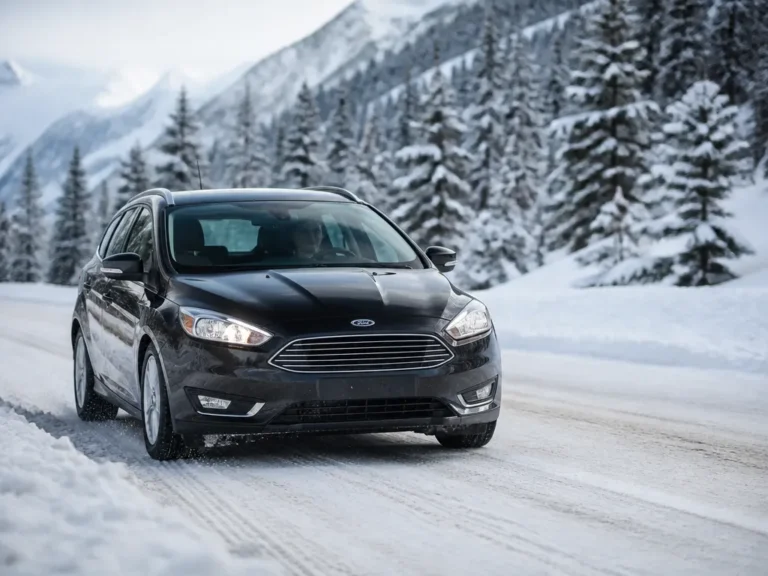
Your Ford Focus feels skittish in snow, and you are wondering why, traction control keeps intervening, or ABS seems to pulse every stop. Maybe you are still on all-season tires and you want the right upgrade before the next storm hits. You need Focus-specific winter driving tips, plus what ESC, ABS, and traction control do when roads are iced over.
Winter tires bring the biggest grip jump, and you should consider switching when temps stay near or below 45°F (7°C). On the Focus, ESC, ABS, and traction control are still working in snow, but the key is smoother inputs and correct tire pressure. You will get a pre-drive checklist, scenario tips, and a troubleshooting guide.
Ford Focus in snow winter driving comes down to tire grip and smooth controls. Swap to winter tires when roads are icy or temps sit near 45°F (7°C), and keep pressures within the door-jamb spec. In snow, ABS may pulse during hard stops, ESC corrects yaw, and traction control limits wheel spin by reducing power and braking individual wheels.
Ford Focus In Snow Winter Driving
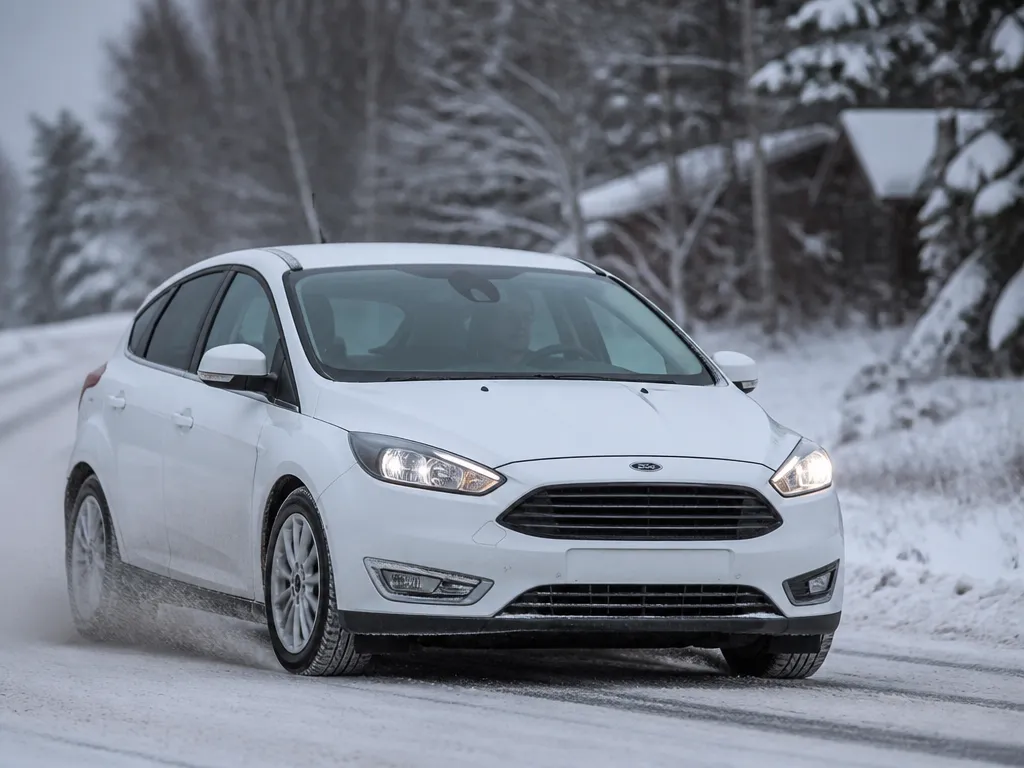
Snow reduces a Focus from a “drives like it’s on pavement” car to a traction-limited vehicle where tires do the work and driver inputs do the rest. Expect smooth throttle, longer stopping distances, and slower corner entry because the contact patch is smaller and easier to overwhelm. ESC, ABS, and traction control can help, but they cannot create grip that the tires do not have.
Traction Limits On A Focus: What Changes In Snow
With snow on the road, your tires can lose grip in three common ways: weak bite on packed snow, sudden slip on glare ice, and rolling traction loss as tread blocks deform. A Focus can still accelerate and steer predictably on the right tires, but when you exceed available traction, the rear end can step out and steering response can feel “light” because the tires stop transmitting lateral force.
For a front-wheel-drive Focus, the biggest snow threat is overpowering the drive wheels during acceleration. During braking, the biggest threat is front tire lockup or reduced friction, which is why ABS matters, and why you should brake firmly in a straight line instead of easing into panic stops.
Key Electronic Systems You Will Feel (Esc, Abs, Tc, Hill Start Assist)
ABS prevents wheel lock during hard braking, helping you keep steering ability. Traction control (often called TC or ASR in Ford logic) detects drive-wheel spin and cuts engine torque and can apply brake pressure to the slipping wheel to regain traction. ESC monitors yaw rate and steering angle, and it can apply individual brakes and reduce engine torque if the car starts to rotate beyond what the driver inputs call for.
In practice, ESC and TC can feel like the car “talks back” through reduced acceleration when you feed in too much throttle. Hill Start Assist (HSA) holds brake pressure briefly when you shift from the brake to the gas on an incline, which helps prevent roll-back and keeps you focused on smooth pedal control.
| System | What you’ll notice in snow | What you should do |
|---|---|---|
| ABS | Pulsing pedal under hard braking, steering stays usable | Brake firmly in a straight line, avoid steering changes mid-stop |
| TC | Engine power feels limited, wheel spin slows quickly | Use gentle throttle and let TC work, avoid “digging in” |
| ESC | Reduced power and subtle brake interventions when you over-rotate | Back out of the throttle and reduce turn angle, then straighten |
| Hill Start Assist | Short brake hold when starting on an incline | Release the brake smoothly, add throttle gradually |
What To Expect During Winter Maneuvers
Reality check: ESC, ABS, and TC reduce mistakes, but they do not change the laws of physics. Tires choose the limits first, electronics try to keep the car inside those limits second.
Winter Readiness For Focus
Start every cold-weather trip with a 10-minute walkaround and a quick start routine, because Ford Focus snow drivability is most compromised by weak battery performance, low winter visibility, and fluids that are too cold or contaminated. A Focus with good traction tires, clear glass, and full charging health will behave far more predictably when ABS and stability control intervene.
Pre-drive Checklist You Can Do In One Stop
Safety callout: Before climbing under the hood in freezing conditions, let the engine bay sit for a minute so you do not disturb brittle plastic covers or knock off ice chunks into the engine or belts. Do not use open flame to melt ice around the battery or wiring harness.
| What to check | Why it matters in snow | Quick Pass/Fail |
|---|---|---|
| Battery terminals | Voltage dips can trigger system warnings and unstable sensor behavior | Clean, tight, no white/green corrosion |
| Windshield washer | Slush needs fluid to clear, dry blades smear | Spray pattern hits the glass, no drips |
| Defrost performance | Visibility controls your reaction time | Glass clears in minutes, fan speeds respond |
| Headlights and aim | Snow glare hides obstacles and reduces effective stopping distance | No dim sections, beams not crooked |
Insider tip from the shop floor: if your Focus “usually” clears the windshield but takes noticeably longer after a cold soak, treat that as a red flag for weak battery power, low coolant condition, or a cooling system that is not circulating heat correctly.
Carry winter essentials in the Focus even when you drive local roads, because snow slush and stuck tires create delay. Keep a small ice scraper, a snow brush, and a pair of bright gloves where you can reach them without digging through the trunk in a storm.
Winter Tires Vs All-season For Focus
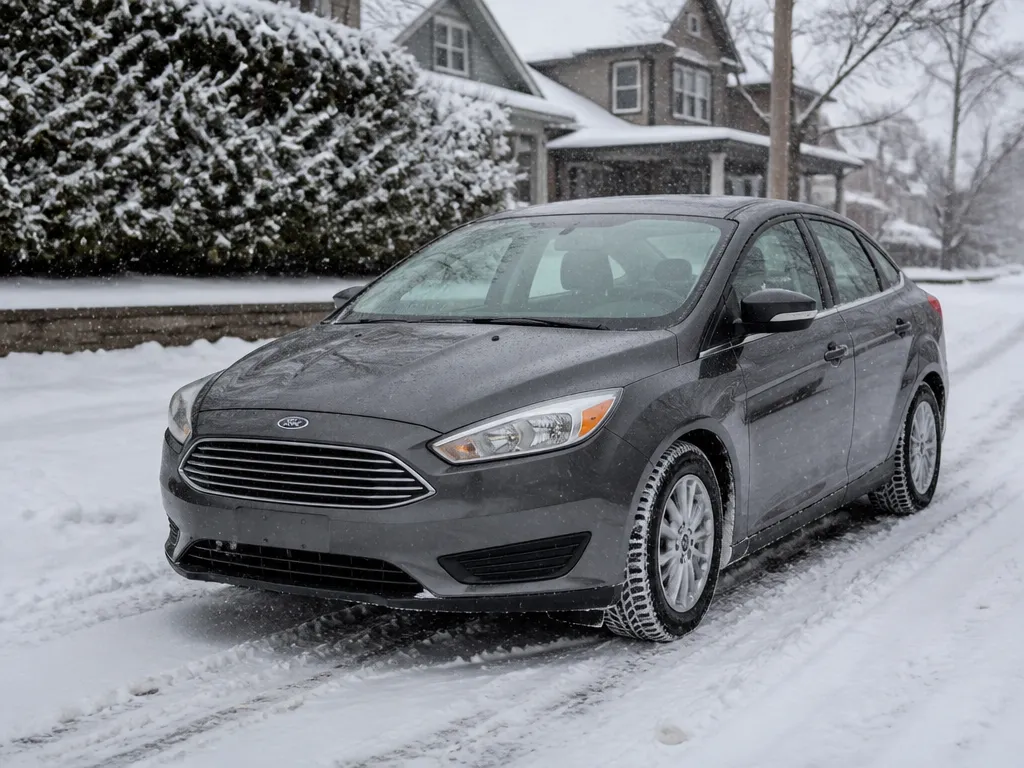
For a Ford Focus in snow, winter tires give you shorter stopping distances and more predictable steering because their tread compound stays softer in cold weather and their sipes grip the slush and ice film. All-season tires can work in light snow and dry cold, but they lose grip fast once temperatures drop and the roads turn icy. The difference shows up most in braking and cornering confidence, especially before the tread “wakes up” from warmth.
When To Switch On Your Focus
Install winter tires on your Focus when daytime highs are consistently around 45°F (7°C) or lower, since that is when all-seasons start to harden. If you live where roads see packed snow and icy bridges, go earlier even if the forecast looks mild, because the first cold snaps create the worst conditions.
Swap back to all-seasons when the snow season ends and you are regularly above about 50°F (10°C), since winter compounds wear quickly in sustained warm weather. Winter tires also tend to feel less precise on dry pavement than good all-seasons, so you get the best overall year-round balance by matching tires to the season.
Tire Sizes And Trim-specific Setup (Focus Reality Check)
The Focus trim you have determines wheel size, which controls what winter tire sizes you can mount. Typical setups stay within the same wheel width family, with winter tires available in multiple sidewall heights for that wheel size.
For example, if your Focus is on 16-inch wheels, you usually get more sidewall “cushion” with winter tires than an 18-inch wheel setup. That extra compliance can feel more stable over rutted snow and uneven ice, but it does not replace good tire quality.
| Focus wheel size (typical) | Winter tire choice trend | Snow-road feel |
|---|---|---|
| 16-inch | Taller sidewall options are common | Often smoother over bumps, easier compliance |
| 17-inch | Balanced ride, fewer sidewall choices | Good control, still comfortable enough |
| 18-inch | Shorter sidewall, narrower “wiggle” | Sharper response, less forgiveness on rough snow |
Tread Depth Targets And Wear Indicators
Winter tires should start the season with plenty of bite. A practical target is at least 6/32-inch remaining tread for heavy snow duty, and you should plan to replace them soon if you are below about 4/32-inch where snow performance drops quickly.
Winter tires have wear indicators, often in the form of molded bars in the grooves. If those indicators are showing, your tread depth is down to the minimum, and grip in slush and wet ice will be noticeably worse.
Cold-weather Tire Pressure Basics For Snow Traction
Tire pressure changes with temperature, and that affects contact patch shape, braking distance, and steering response. Check pressure when tires are cold, ideally in the morning or after the car sits a few hours, then set them to the placard pressure for your Focus load and speed rating.
In winter, you may see pressures drop by several PSI as the air gets colder, even if you did everything right in fall. Keep a reliable gauge in the car or garage, and treat underinflation and overinflation as two separate handling problems: too low increases sidewall flex and can feel squirmy, too high reduces grip and can make the ride harsh.
Quick rule for the Focus: Set pressure by the door placard when tires are cold, recheck after a big weather swing, and do not guess based on ride feel alone.
Esc/abs/tc In Snow On Focus
In a snowy Ford Focus, ABS and ESC work together by monitoring wheel speed and steering inputs, then modulating brake pressure and engine torque to keep traction and direction. Traction Control (sometimes listed as TC in Ford menus or warnings) reduces spin by limiting torque when driven wheels lose grip.
When road grip drops, the systems often become active more frequently, so you may feel pulsing through the brake pedal (ABS) or see the dash light behavior change even during normal driving.
How Braking Control Feels On Snow
ABS is designed to prevent wheel lock during hard braking on slippery surfaces. On snow, it can cycle brake pressure rapidly, which feels like a pulsing pedal and brief changes in brake response.
ESC adds steering stability by comparing what the wheels and yaw rate are doing versus where the driver is steering. ESC can apply individual brakes and may reduce engine torque, so the vehicle tracks more consistently even when you brake while turning.
Hill Start Assist In Winter Conditions
Hill Start Assist (HSA) holds brake pressure briefly when you release the brake on an incline. In snow, the timing stays the same, but reduced traction can make the transition feel different because the tires may begin to creep or spin sooner.
HSA helps you start without rolling back, but it does not replace good winter technique. If the surface is icy, prioritize smoother clutch or accelerator input so you do not overpower traction right as the hold releases.
Warning Lights And What They Mean When It Is Cold
Cold weather can trigger brief changes in sensor output and system status messages, especially after a battery has been weak or after the car sits. A persistent warning is the one that matters, because ESC and TC rely on wheel speed and brake system health.
Use the following as a practical interpretation guide on a Ford Focus.
| Dash indication (typical) | Likely meaning in snow | What to do |
|---|---|---|
| ABS light | ABS may be disabled due to a fault or sensor issue, so braking is more likely to lock wheels on snow. | Drive cautiously and get it scanned soon if the light stays on. |
| ESC OFF or ESC warning | Stability control may be turned off or not available, increasing slide risk during braking or cornering. | Do not rely on ESC, check for a persistent message, and have the system checked. |
| Traction Control indicator flashing | TC is actively limiting wheel spin, common on snow during starts or acceleration out of turns. | Ease off the throttle and correct your steering input; flashing alone is usually not a failure. |
| Brake system / stability system warning | Brake or stability related fault, which can reduce intervention ability. | Stop driving if the message is severe, then diagnose promptly. |
Mechanic’s note: If ABS or ESC warnings stay on after startup and driving, assume there is a real fault. On snow, that fault matters because the car loses the very systems that help you stay pointed straight when grip disappears.
Snow Driving Techniques For Focus
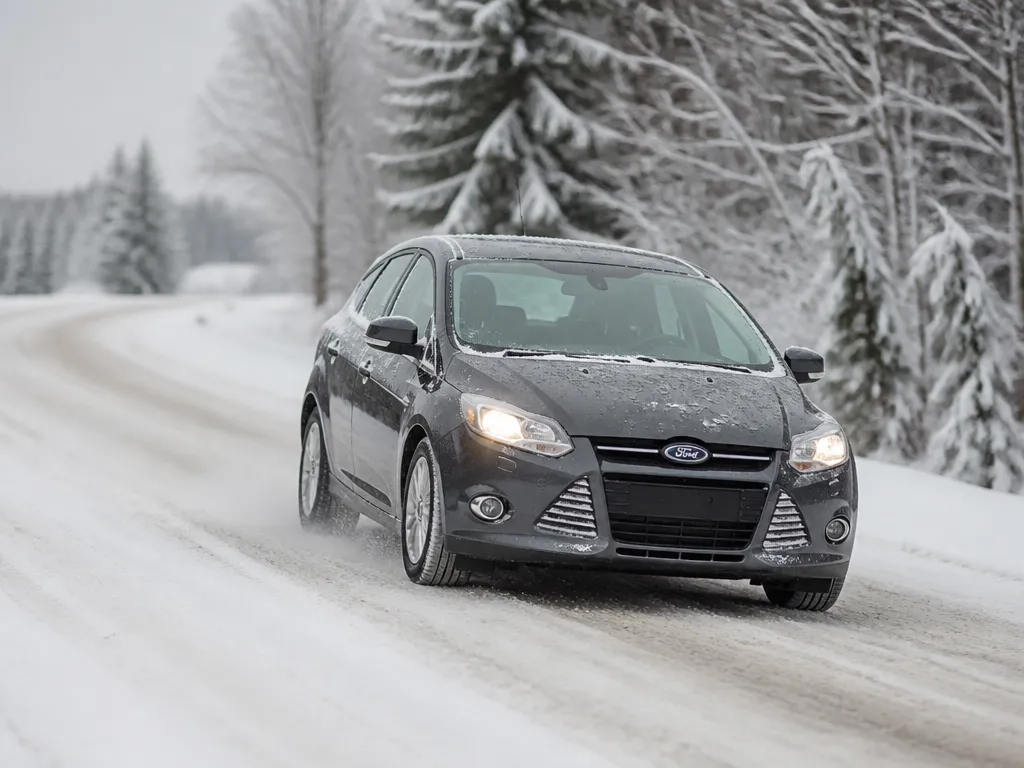
On a Ford Focus in snow, the biggest gains come from smooth inputs and maintaining momentum without wheel spin. The tires still do most of the work, so gentle throttle and controlled braking keep traction where ESC and ABS can manage stability instead of fighting it.
Throttle, Braking, And Steering Inputs That Keep A Focus Stable
In snow, you want less torque change and less weight transfer. Ease into the accelerator until the car settles, then keep a steady pedal, because sudden throttle usually spins the front tires on FWD Focus models and upsets the rear.
Braking should be progressive, not a pedal jab. On a Focus with ABS, you can brake firmly, but you still need to avoid repeated stab-release-stab because that pulses load and can help the tires lose grip again.
For icy patches, reduce speed before the patch and brake firmly in a straight line. Keep the car pointed where you want to go, then modulate pressure so the ABS can keep wheels near the limit without turning the stop into a slide.
| Situation on a Focus | Best driver input | What to avoid |
|---|---|---|
| New snow with fresh grip | Steady throttle, earlier braking | High throttle bursts and late braking |
| Packed snow | Progressive pedal use, larger following distance | Quick on-off throttle that breaks traction |
| Black ice or glazed pavement | Gentle brake modulation, straight-line first | Turning while braking hard |
Step-by-step: Starting From A Stop On A Snowy Incline
Starting on a slope is where traction is easiest to lose, especially if the front wheels spin and the car rocks. Use this routine to keep the Focus moving straight and under control.
Insider tip: If you need to reattempt, change only one variable each try. Cut throttle first, then only later adjust where you stop and your line, since sudden steering changes can scrub grip fast.
Hill Start And Slopes
Starting uphill on snow for a Ford Focus comes down to keeping the tires gripping and preventing a rollback, even when traction is low. Hill Start Assist helps by holding brake pressure briefly, giving you time to move off without rushing the clutch or throttle. The better tires you run, the more predictable ABS and stability control feel when you need to correct while climbing.
Uphill Launches: Using Hill Start Assist On Steeper Grades
Hill Start Assist on the Focus is designed to hold the brakes for a short window after you release the brake pedal on an incline. Use it like a timer, not a substitute for smooth power, since spinning or skidding tires still happen if you give too much throttle too soon.
For example, on a snowy driveway where the surface is packed ice under the top layer of snow, a controlled, lower-gear start keeps driveline shock down and reduces the chance of a stability-control tug that can feel “late.”
Downhill Control: Brake Technique On Slick Grades
Downhill traction loss is where drivers overwork the brakes and overheat them, or they wait too long and end up ABS-cycling the entire way. With a snow-covered Focus, the goal is to keep speed low and steady, then make small brake corrections instead of big pedal moves.
In practice, if you can feel the tires slipping early, you are already too fast. Dial your entry speed down at the top, then hold the line with consistent braking rather than trying to save speed in the middle of the slope.
Stability Inputs: Engine Braking And Throttle For Control
Engine braking helps on descents because it reduces the load you place on the brakes, but it only helps when the tires keep grip. Too much throttle on the way up or too abrupt throttle lift on slick patches can trigger wheelspin or weight transfer that ESC and traction control must correct.
If the car is “hunting” for grip, slow down and reduce your inputs. A Focus can feel controlled on snow when your pedal use is steady, but it feels busy when you ask for rapid grip changes at the tires.
| Scenario | What you want | What to avoid |
|---|---|---|
| Snowy uphill start | Brake hold, smooth roll forward, gentle throttle | Hard throttle that spins the tires |
| Icy downhill | Early speed reduction, light steady braking | Late panic braking and big pedal changes |
| Mixed traction | Small corrections, consistent inputs | Throttle reversals that trigger traction control repeatedly |
Winter Maintenance And Safety Essentials
Start every snow season by verifying the battery health, coolant/antifreeze protection, and defrost performance, because cold weather exposes weak charging systems, marginal cooling mixtures, and slow windshield clearing. A Ford Focus that feels “fine” in warm weather can still crank slow, mist the windows, and lose traction faster once temps drop.
Battery, Charging, And Fluid Protection
Winter cranking load is hard on battery plates and can drag system voltage down when the alternator is already working overtime. Have the battery tested under load, and inspect the terminals for corrosion and looseness before you get stranded.
Coolant protection matters as much for drivability as it does for engine safety. Use the correct antifreeze concentration for your area, and confirm you have enough fluid for winter temperature extremes.
| Item to verify | What to look for on a Focus | Why it matters in snow |
|---|---|---|
| Coolant/antifreeze concentration | Proper mix, no repeated low-level warnings | Prevents freezing and reduces corrosion |
| Windshield washer fluid | Winter-rated fluid, clean reservoirs | Stops streaking and ice buildup |
| Brake fluid level | Within the marked range | Moisture can lower performance and raise boiling risk |
Defrost, Defogger, And Windshield Care
Clear glass is traction. On the Ford Focus, make sure the wiper blades wipe clean, the washer jets aim correctly, and the defrost/defogger can clear fog before you start moving.
For icy wipes, use winter washer fluid and avoid repeated dry wiping that can haze the windshield. Keep a small bottle of washer fluid in the trunk, because a frozen line or empty reservoir ends up delaying every fix you need to make.
Emergency Kit And Pre-drive Checklist
Keep a compact winter kit in the Focus so you can solve the most common roadside problems quickly. Snow season turns “minor issues” into long delays when you cannot see, cannot move, or cannot keep warm.
For example, do a two-minute pre-drive routine at the same time each morning: check tire condition and pressure when tires are cold, confirm wipers and defrost work, verify washer fluid level, scan for dash warnings, and test light and brake operation. Keep this checklist consistent so you notice changes early.
“If the windshield clears slowly, fix the cause first. Poor visibility is what turns bad traction into a crash.”
Quick Summary
When your Ford Focus feels skittish in snow, the biggest driver is tire grip, not a mysterious electronics fault. The article explains that ESC, ABS, and traction control are still active in winter, but you will only get results if you keep inputs smooth and maintain correct tire pressure using the door-jamb spec. It also calls out a practical trigger for tire changes, recommending switching to winter tires when temps stay near or below 45°F (7°C) for better snow and ice bite than all-seasons.
In actual snow maneuvers, you should expect ABS pulsing during hard stops, and you need to keep steering steady through the vibration, because ABS helps prevent wheel lock. Traction control limits wheel spin by reducing power and can apply braking to the slipping wheel, while ESC monitors yaw and steering angle and can reduce engine torque or brake individual wheels if the car starts to rotate beyond what you request. The article also notes Hill Start Assist holds brake pressure briefly on inclines, then you should release smoothly and add throttle gradually, with the most important takeaway being that tires set the limits and electronics can only help you stay inside them.
| System | What you will feel in snow | What to do |
|---|---|---|
| ABS | Pulsing pedal under hard braking, steering remains usable | Brake firmly in a straight line, avoid steering changes mid-stop |
| Traction Control (TC) | Engine power feels limited, wheel spin slows quickly | Use gentle throttle, avoid digging in, let TC recover traction |
| ESC | Reduced power and subtle brake interventions when over-rotating | Back out of throttle, reduce turn angle, then straighten |
| Hill Start Assist (HSA) | Short brake hold when starting on an incline | Release brake smoothly, add throttle gradually |
Frequently Asked Questions
What Winter Tires Should I Run On A Ford Focus For Snow Driving?
For snow, you generally want true winter tires (often marked with the 3-peak mountain and snowflake symbol), not all-seasons. If your Focus still has all-seasons, switching to winter tires is one of the biggest traction upgrades you can make for snow-covered roads.
Do I Need To Warm Up A Ford Focus Before Driving In The Snow?
Start it and let it idle just long enough to clear windows and let the drivetrain settle, then drive gently. If temperatures are very low, give the car about 30 to 60 seconds before moving, but avoid long idling because it usually does not get you “warmed up” faster than light driving.
How Should I Change My Driving Technique In A Ford Focus When It Starts Sliding On Ice?
If the car starts to slide, ease off the gas smoothly and keep steering in the direction you want to go. Don’t jerk the wheel or stomp the brake, and remember that ABS still allows braking, but you may feel the pedal pulse.
Why Does My Ford Focus Feel Slower To Stop On Snow, Even With Abs?
ABS helps you steer while braking, but it does not shorten stopping distances on ice. If you notice longer stops than before, check tire condition and tread depth, confirm the tires are still matched on the axle, and consider that worn tires and uneven wear can be the real culprit.
What Common Ford Focus Winter Mistake Causes Wheel Spin Or Slipping In Snow?
A big one is turning too sharply or accelerating too hard right after you hit snow, which overwhelms the available traction. Start in lower grip situations with softer inputs, and if you have traction control, let it work instead of quickly “feathering” the throttle.
Should I Use Engine Braking Or Put The Ford Focus In Neutral When Descending Snowy Hills?
In most snow situations, it is safer to keep the car in gear and use steady braking rather than coasting in neutral. If your Focus is an automatic, avoid neutral on hills since you rely on engine drag less, and traction can get sketchy when you resume throttle.