


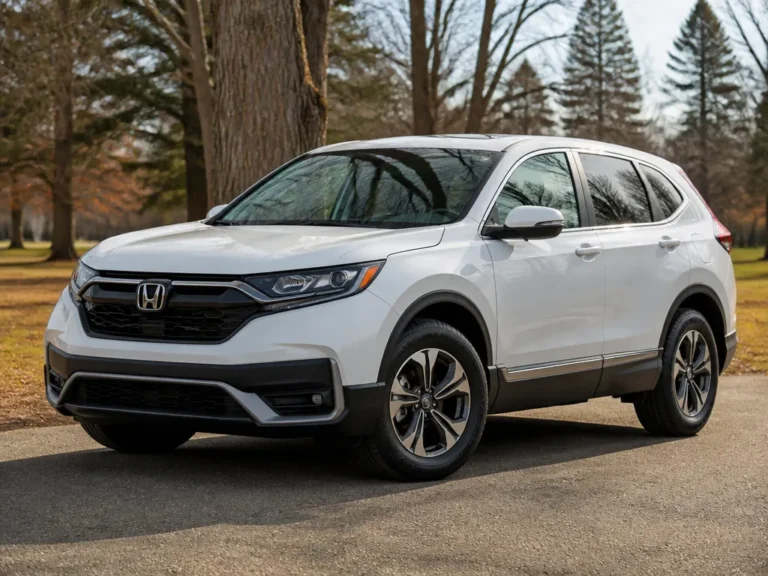
Your teen’s first SUV has to survive curbs, cold mornings, and a brand-new driving routine. If you searched “best suvs for teens” you’re probably comparing safety tech, insurance-friendly trims, and which models won’t nickel-and-dime you. We’ll narrow it down by budget, show what to look for in listings, and help you avoid the common traps.
Good teen picks come down to driver-assist safety, simple, visible layouts, and trim choices that insurance usually prices lower. Use our checklist to confirm items like automatic emergency braking, lane-keeping assist, and blind-spot monitoring, then choose model years that are easier to maintain.
Best suvs for teens are mid-size or compact SUVs with automatic emergency braking, lane-keeping assist, and blind-spot monitoring as common options. Aim for years when those systems are standard or included in a safety package. Prioritize strong visibility, simple controls, and trims that avoid high-performance drivetrains.
Best Suvs For Teens: Top Picks By Budget
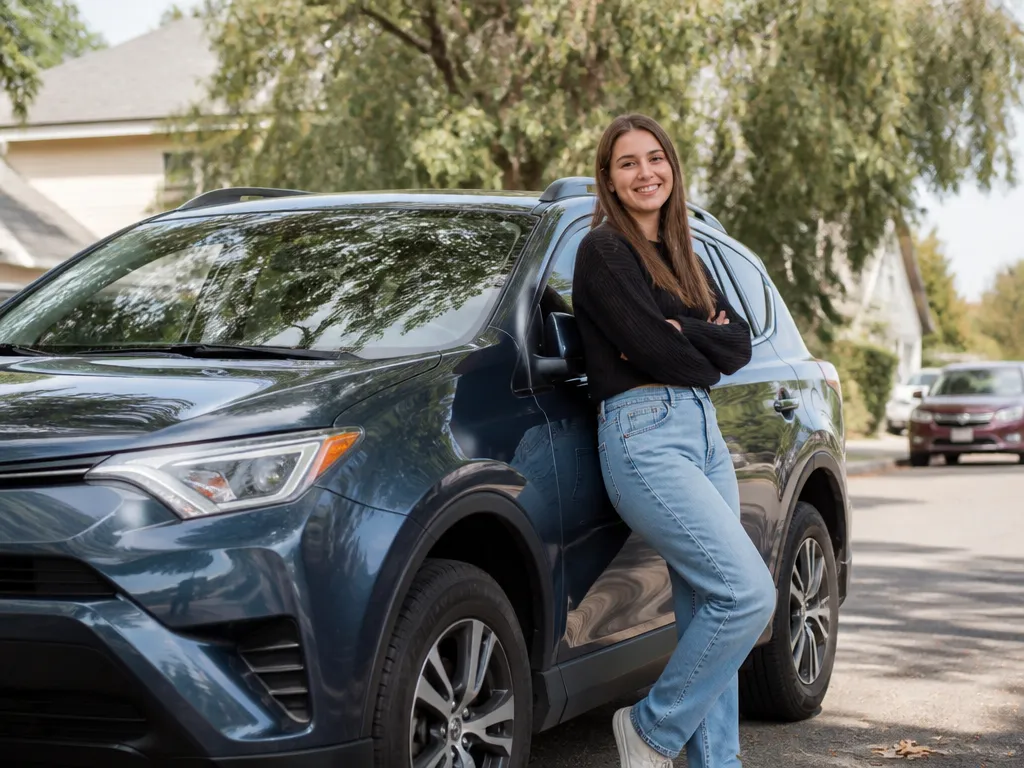
Picking the right SUV for a teen starts with easy visibility, strong collision-avoidance tech, and predictable ownership costs. The shortlist below is grouped by typical used-car budgets and each pick includes the safety tech to prioritize when you browse listings.
Budget Tier A (Around $20k Used): Value-first Safety
At this price, you want mainstream compact or subcompact SUVs with the best available safety package on that year. Coverage varies by trim, so treat “base” models as the starting point, then confirm the presence of forward collision warning and automatic emergency braking.
Budget Tier B (Mid-20s To Low-30s Used/new): Better Driver-assist Coverage
In this tier, you can usually step into more complete lane-centering or blind-spot monitoring. That matters for teens because it reduces the “I didn’t see it” moments during lane changes and highway driving.
Budget Tier C (Mid/high-30s To 40s+): Newer Tech And Comfort For Families
When you’re paying more, prioritize newer model years and trims that include rear cross-traffic alert and parking sensors, especially if the teen will park in tight lots. Comfort also reduces stress on long drives, which helps good habits form.
| Model (best trim targets) | Why it fits teen driving | What to verify on the listing |
|---|---|---|
| CR-V (EX/EX-L) | Great sightlines, predictable controls | Forward collision warning, automatic emergency braking, lane assist, blind-spot monitoring |
| RAV4 (XLE/Adventure) | Easy daily size, strong mainstream support | Automatic emergency braking and lane support (not just basic cruise) |
| Tucson (SEL/Limited) | Modern safety tech at reachable prices | Blind-spot and rear cross-traffic alert |
| Outback (Premium+) | High seating and stable comfort | Lane-centering assist and rear parking aids |
Shop smart for teens: prioritize trims that include driver-assist and blind-spot monitoring, then confirm key safety features in the listing photos or window sticker. Avoid performance trims and complex infotainment setups that require menu-hunting while driving.
Quick test-first shortlist for most families: 2020-2022 Honda CR-V (EX or EX-L), 2019-2021 Toyota RAV4 (XLE or Adventure), and 2021-2022 Subaru Forester (Premium or Sport). These three hit the sweet spot of mainstream availability, straightforward ownership, and a strong chance of getting the right safety tech on the right trim.
Teen-safety Features To Verify On Listings
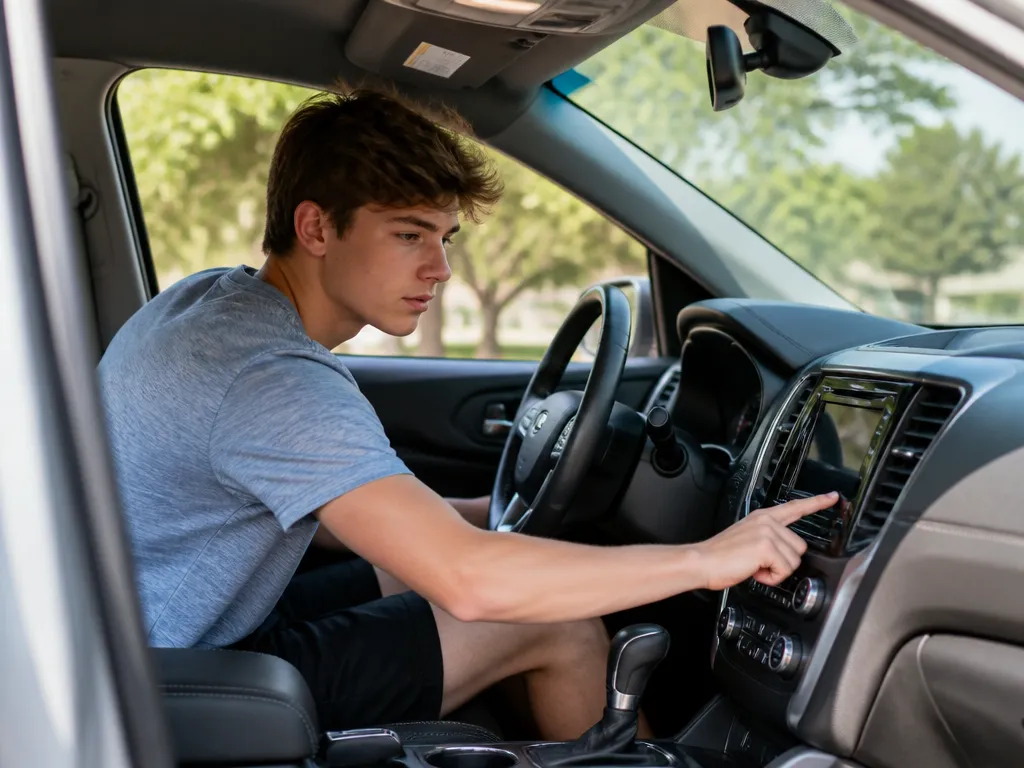
Automatic Emergency Braking with Forward Collision Warning is the single most important tech to require on teen-driven SUVs. Lane Keeping Assist and Lane Departure Warning should be present together, since one alerts while the other helps steer back. Blind-spot monitoring plus rear cross-traffic alert is the next “must-have” for daily backing and lane changes.
| Feature group | What to type in the listing | Where to confirm | Red flags |
|---|---|---|---|
| Forward crash prevention | “Forward Collision Warning” + “Automatic Emergency Braking/AEB” | Window sticker, spec sheet, build code list | “Warning” only, no AEB mention |
| Lane support | “Lane Departure Warning” + “Lane Keeping Assist” | Sticker bullets, feature abbreviations | “Lane assist” with no steering assist note |
| Blind-spot and lane change | “Blind Spot Monitoring/BLIS” + “Lane Change Assist” | Sticker, packages, option list | Mirror alerts only, no lane change help |
| Reversing | “Rear Cross Traffic Alert” + “Rearview Camera” | Sticker, driver assist suite description | Camera mentioned, cross-traffic alert missing |
What to screenshot before you buy: the exact option/feature list from the window sticker, any “Driver Assist” package breakdown, and the feature abbreviations tied to that VIN. For common “trim math” confusion, screenshot the exact trim level and the package names, then confirm AEB and lane support are explicitly included.
What to avoid when matching teens: SUVs with AEB missing, low-specced packages that only provide warning lights, and listings that advertise “camera-only” or “blind spot warning” without rear cross-traffic alert. Another common mismatch is “base trim with one add-on,” where the add-on is infotainment or styling, while the core safety tech stays out of the build.
Used Picks Under $20k: Safest Values
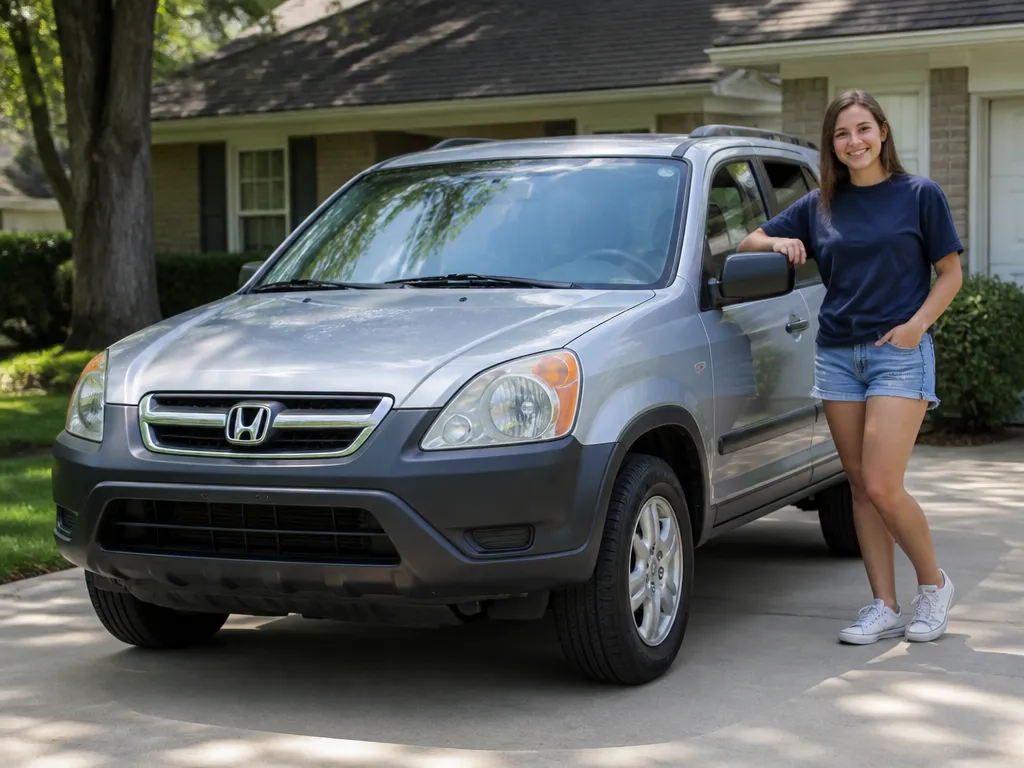
For the under-$20k used market, the safest buys are usually mainstream compact SUVs from the late-model 2010s to early 2020s, because they tend to keep modern driver-assist tech and still have predictable maintenance costs.
In practice, you get the best safety-per-dollar when you target model years that were sold with forward-collision warning, automatic emergency braking, and blind-spot monitoring options (or standard equipment on higher trims) rather than base configurations.
What Model Years Maximize Safety Tech For The Money
On most of the common picks, safety tech starts showing up around the mid-to-late 2010s, then becomes more consistent as trim levels add radar-based systems. A practical target is 2017 to 2021 for most of these nameplates, since that window is where you can often find a well-equipped example under (or very near) $20k depending on mileage and your region.
When shopping older than that, expect more cars with older camera-only systems and fewer radar features. When shopping newer than that, pay attention to insurance cost and availability, since “top trim” examples can quickly push above budget even when the vehicle itself is still a great value.
Top Models To Consider (Recommended Years And Trim Targets)
RAV4, CR-V, Forester, CX-5, Tucson, and Sportage are popular because parts are common and repair shops see them every week. The key is to buy the trim that has the safety sensor package, then verify it on the listing’s option list or photos of the dash menus.
“For teens under $20k, pay more for the sensor package than for the sunroof or fancy wheels. The teen crash risk is tied to lane changes, following distance, and backing visibility, so those are the dollars that actually matter.”
Ownership Guidance For This Tier
Common wear points in this age range are usually predictable: tires, brakes, and suspension components that have seen potholes and rough roads. Infotainment quirks are where teens feel the pain, so make sure the screen responds well, Bluetooth pairs easily, and any navigation system starts without repeated prompts or freezes.
Parts-cost reality favors these mainstream models. Toyota and Honda tend to be the easiest for many shops to source quickly, while Hyundai and Kia can be just as affordable, but you should confirm recall/compliance history is complete before purchase.
Insurance Practicality: Why Mainstream Trims Usually Cost Less
Insurance pricing is mostly tied to repair cost and theft risk, so mainstream trims with common body parts usually cost less than performance-focused versions or rare option-heavy builds. In the under-$20k world, buying a widely equipped but non-specialized trim often keeps insurance reasonable.
Insurance companies also price “package risk” differently, so two SUVs with the same base model can land in different brackets based on wheel size, safety tech, and how costly the front-end repairs are. Before you sign, grab a quick quote using the VIN or exact trim and wheel configuration so you do not get surprised after the purchase.
| Trim buying approach (under $20k) | Why it helps a teen budget | What to avoid |
|---|---|---|
| Choose popular safety-equipped trims (EX/XLE/Limited style) | More likely to include radar-based driver assist and blind-spot monitoring, and insurance is usually steadier | Base trims that lack the sensor package |
| Stay away from rare option bundles | Fewer expensive-to-find parts in collisions | High-dollar wheel and body kits, uncommon paint packages |
| Prefer mainstream trims with common repair profiles | Shops can source parts faster and costs trend lower | Performance or off-road-special editions |
Mid-budget Suvs Teens Enjoy
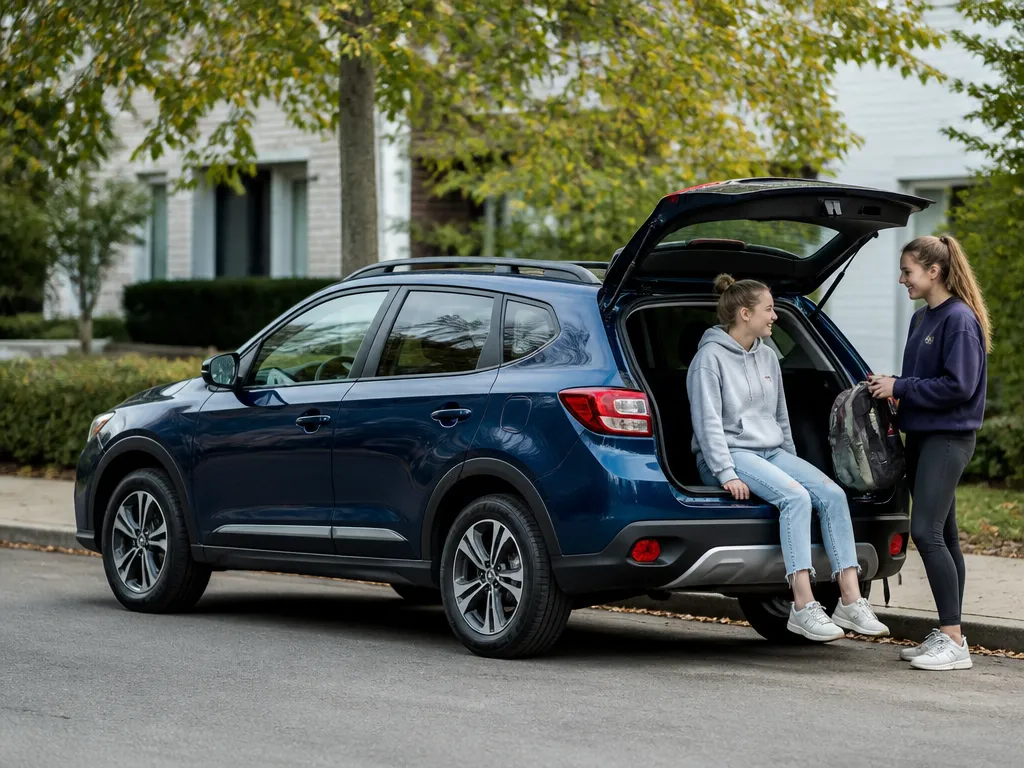
Mid-budget SUVs work best when driver-assist features are easy to find across trim levels, not tied to a rare tech package. This tier is where you want AEB, blind-spot monitoring, and lane support that show up consistently, because teens benefit from repeatable habits behind the wheel.
What Changes In This Tier
Compared with cheaper used options, mid-budget choices usually give you more reliable traffic behavior from driver-assist systems, especially forward collision warning and automatic emergency braking. Blind-spot monitoring and rear cross-traffic alert also show up more often, which matters for lane changes in parking lots and busy pickups.
Trim planning becomes the whole game. The safest path is to target bundles that group camera, lane centering or lane keeping, and blind-spot monitoring together, then skip trims that add fancy infotainment or power add-ons your teen will use poorly.
| Model (best years to shop) | Trim to look for | Why it fits a teen | Reliability callouts |
|---|---|---|---|
| Toyota Corolla Cross (2022-2024) | Look for trims with Toyota Safety Sense that include road-facing camera features | Great visibility, predictable ergonomics, and driver-assist tech that is easier to live with day to day | Keep up with oil changes and check maintenance history; avoid neglected intervals |
| Ford Escape (2020-2023) | Choose trims with Co-Pilot360 style packages that include blind-spot and lane support | Strong balance of size and confidence features for new drivers | Vary by engine and mileage, so verify service records and watch for transmission-related complaints |
| Nissan Rogue (2021-2023) | Shop for trims with safety shield and tech that includes blind-spot and rear cross-traffic | Comfortable seating, easy daily driving, and good odds of getting the safety bundle | Confirm CVT service history if applicable and keep an eye on fluid maintenance |
| Volkswagen Tiguan (2020-2022) | Pick trims that bundle camera-based lane assist and blind-spot monitoring | Excellent visibility and straightforward controls once you avoid the most tangled option stacks | Higher-mile turbo models need closer inspection; require proof of scheduled maintenance |
| Jeep Compass (2021-2023) OR Grand Cherokee (2021-2022) | Only buy trims with the safety tech you can see on the window sticker or in the build sheet | Good fit if the safety package is present, with a more driver-focused assist suite | Safety tech availability varies a lot by trim, so don’t assume it is there |
Trim Guidance That Prevents Expensive Mistakes
Prioritize packages that bundle a camera-based lane feature with blind-spot monitoring, and ideally rear cross-traffic alert. When trims separate those systems, you can end up paying for a screen upgrade while your teen lacks the single features that prevent common mistakes (missed lane changes and parking-lot backing hits).
For Corolla Cross and Rogue, start by matching the safety package to the features you want, then verify the exact equipment list in the listing photos or dealer build sheet. For Escape and Tiguan, confirm the tech bundle includes blind-spot monitoring and rear cross-traffic, not just forward collision warning.
How To Check Safety Tech On Compass/grand Cherokee
Jeep safety equipment varies enough that you should verify it before you fall in love with the color. Check the window sticker or the dealer’s build sheet for the driver-assistance package name, and confirm it explicitly includes blind-spot monitoring and rear cross-traffic alert, plus lane support if you want lane centering.
For used units, look for the presence of the correct sensor hardware on the vehicle (like blind-spot indicator lighting where equipped), and confirm the infotainment menu shows the driver-assist settings. If the listing is vague, walk away, because replacing cameras or sensors after purchase is rarely cheap.
Pitfalls To Watch
Shop with insurance in mind: when you shortlist trims, ask for a live insurance quote. Two trims with the same safety tech can price wildly differently because of performance or parts costs.
Mid-budget is where you can buy confidence without buying complexity. Pick the SUV because the safety bundle is present and easy to operate, then buy the cleanest maintenance history you can find within your budget.
Higher-budget Choices Parents Love
Paying more usually means the SUV comes with the safety tech already built into most trims, plus cabin layouts that are easier for inexperienced drivers to live with. You also tend to find newer model years and stronger resale value, which matters when a teen drives hard and trades later.
Why The Extra Money Reduces Teen-driver Compromises
Higher-budget SUVs are more likely to include the driver-assist and visibility equipment you want from day one, even on the “right” trim. Better ergonomics also help, because teens spend years adjusting to mirrors, seating position, and controls.
Best Picks For A Higher Budget (With Recommended Years/trims)
Subaru Outback is a strong “parent-proof” option when you want easy visibility, good real-world utility, and modern driver assist included on many newer builds. For best results, shop model years where your target trim has EyeSight with the full active suite (forward collision warning with automatic emergency braking, lane centering-style assist, and related alerts), then confirm the exact features on the window sticker or build sheet before you buy.
Honda Passport is a better pick than a lot of smaller crossovers when your teen needs space and a comfortable seating position without fiddling with controls. Passport or a close Passport-type alternative can be a smart move when you verify the trim includes the key safety basics across that model year, especially blind-spot monitoring and rear cross-traffic alert.
Toyota Highlander fits when your family wants a mainstream midsize SUV with roomy second-row seating and a long track record of parts availability. Highlander works in this tier only if the budget lines up with a model year where the safety suite is standard or easy to get on the trim you are considering.
Kia Sorento is worth serious attention in higher-budget shopping because certain trims bundle the safety suite and parking aids that make a new driver less nervous. Hyundai Santa Fe is similar, and both can be good value when you choose the trim that includes the full driver-assist package rather than paying for upgrades your teen will never use.
| Model | Shop for (what to confirm) | Why it helps a teen |
|---|---|---|
| Subaru Outback | EyeSight active safety features on the chosen trim | Lane assist and collision avoidance alerts reduce mistakes |
| Honda Passport | Blind-spot monitoring and rear cross-traffic alert | Safer lane changes and safer backing out |
| Toyota Highlander | Safety suite availability on your target trim/year | Room + predictable driving feel |
| Kia Sorento | Parking sensors or rear camera plus driver-assist suite | Confidence at low speeds |
| Hyundai Santa Fe | Driver-assist bundle and blind-spot/rear alert tech | Helps with daily parking and merging |
Long-term Ownership Notes That Matter With Teens
Higher-budget SUVs can still get expensive if you land in the wrong trim mix, but you usually get better odds on durability when you stick with mainstream engines and avoid low-volume specialty variants. Prioritize drivetrains that are common in your area so maintenance and replacement parts are easier to source.
When you compare higher-budget trims, don’t pay extra for performance add-ons. Pay for the trims that include the full driver-assist safety suite and the parking visibility tools your teen will use every day.
Trim Selection For Insurance And Cost
Insurance cost swings most with trim level, engine choice, and how the vehicle is equipped. Parents should target trims that bundle the core safety suite while keeping the drivetrain “ordinary” so maintenance stays predictable.
Safety Tech Bundling And What To Insist On
When you shop trims, treat crash-avoidance and visibility aids as a package deal. Pick the trim level where AEB (automatic emergency braking) + BSM (blind-spot monitoring) + RCTA (rear cross-traffic alert) are included together, since those are the features that help teens most in real parking-lot and lane-change situations.
For teens, also prioritize simple, obvious controls: a standard backup camera is a must, and parking sensors add real-world confidence when they are still judging distance. Heated seats are a comfort win during winter commutes, and remote start helps with cold starts without requiring extra idling time.
Engine And Transmission Sanity For Predictable Maintenance
Most teen-friendly SUVs keep costs down with naturally aspirated or proven turbo engines paired with conventional automatic transmissions, and you should stay in those lanes. Avoid trims that add performance tuning, unique gearing, or specialty cooling unless you truly need it, since parts and labor costs rise fast when something goes wrong.
Look for the most “mainstream” engine in the model range, then verify the maintenance schedule is reasonable in your area. If a drivetrain uses a complex dual-clutch or unusually service-sensitive setup, plan on higher repair risk and higher local shop familiarity requirements.
| Trim/Drivetrain Choice | Cost Outcome | Teen Suitability |
|---|---|---|
| Base to mid trims with standard automatic | Lower insurance risk and simpler parts sourcing | High, predictable daily driving |
| Performance trims or sport packages | Higher insurance and more expensive wear items | Medium, harder pacing and more temptation |
| Trims with rare option bundles tied to safety tech | Higher purchase price, slower replacement availability | Medium, only buy if safety bundle is confirmed |
Avoiding Cost Traps And Confirming Insurance Practicality
Performance trims, “fully loaded” editions, and obscure combinations can inflate both the purchase price and insurance rate. Expensive wheels, upgraded brake packages, and specialty tech options often raise repair costs even when the vehicle is driven conservatively.
Before you buy, call your insurer with real details. Provide the VIN or the exact year, trim name, and option package, and ask whether the vehicle includes AEB, BSM, and RCTA on that specific build.
Insider tip: If two trims cost close to each other but one adds sensors, safety tech, and simple comfort items, choose the one with the safer equipment first. A slightly cheaper trim with missing BSM or RCTA can cost more in the long run if it leads to riskier driving habits.
Skipping overly complex systems matters, too. Driver profile menus, deep infotainment customization, and hard-to-navigate screen layouts can distract inexperienced drivers, so pick trims with straightforward phone pairing and clearly labeled driving-assist controls.
Used Suv Shopping Checklist For Teens
Paperwork matters because safety systems and wear patterns tell you how the SUV was driven and maintained. Start by pulling service history, checking recalls, and verifying that maintenance matches the mileage, not just the calendar.
Documentation To Demand (Before You Fall In Love With The Suv)
Ask for a service history report (dealer invoices, independent shop records, or an official maintenance log) that shows oil changes, tire rotations, brake service dates, and any transmission or differential work if applicable. Recalls matter too, because a safety recall can disable or change how driver-assist behaves.
Bring these items up front so you can walk away early if the paperwork is a mess.
Safety Tech Verification (Test It Like A Teen Will Use It)
Driver-assist can look fine in a showroom demo and still misread lanes in real conditions. During the test drive, verify camera and sensor dependent features by watching what the instrument cluster and head-up displays do.
Mechanic tip: If you see “driver assist unavailable” messages or if the camera view looks hazy, treat it like a real problem, not a minor annoyance. Calibration or sensor repair can get expensive fast.
Mechanical Inspection Items (What Teens Stress First)
Brakes, tires, and steering feel issues show up fast with new drivers. Put eyes on the obvious stuff before you even start the test drive.
Common Teen-wear Patterns (The Stuff People Hide)
Curb rash tells a story even when the SUV “looks clean.” Focus on wheels, tires, and front-end trim because teens usually start with impacts and parking mistakes.
Electronics And Infotainment Checks (Bluetooth, Cameras, And Speed-sensitive Behavior)
Infotainment problems drive teen frustration, and cameras that glitch make parking unsafe. Test audio and phone pairing early, then check camera function and any “black screen” behavior.
Airbag And Seatbelt Basics (Quick Checks You Can Do)
Scan the dash for airbag and seatbelt warning lights, and make sure they clear after starting. For seatbelt reminders, confirm the warning behaves normally for front passenger and driver seating.
Test Drive Route Plan (Cover Teen-real Scenarios)
Plan your drive like a teen drives: mix speeds, do a merge, then practice parking. This also helps verify that driver-assist behaves consistently across sensor conditions.
| What to check | Teen-focused red flag |
|---|---|
| Driver-assist messages | “Unavailable” alerts during normal conditions suggest sensor/camera/calibration issues |
| Brake feel | Vibration, pull, or grinding increases the odds a teen will panic-stop |
| Steering feel | Clunks or loose steering makes control harder for new drivers |
| Tire wear | Uneven tread and inner shoulder wear point to alignment and handling drift |
When To Walk Away (Expensive Repairs Or Safety Systems That Are Bypassed)
Walk away if you find evidence that safety systems were disabled, repeatedly repaired, or never properly calibrated. A clean test drive is great, but warning lights, mismatched tire wear, and missing history are the “stop now” signals.
Practical move: If any of the safety tech checks fail, insist on a pre-purchase inspection with diagnostics. Paying for that inspection now is cheaper than replacing calibrated components after the teen has already put miles on it.
Suv Comparison Table For Teen Fit
Honda CR-V, Subaru Forester, and Toyota RAV4 consistently hit the sweet spot for teen fit because they are easy to drive, have strong forward crash prevention, and keep controls simple for new drivers. The table below gives you the fastest way to narrow trims by budget and safety tech, without getting stuck in expensive, hard-to-insure packages.
| Budget tier | Recommended models | Best year range + trim targets | Must-have safety suite (look for these) | Reliability/ownership notes (high-level) | Strengths and tradeoffs |
|---|---|---|---|---|---|
| Value used | Toyota RAV4 (base to XLE), Honda HR-V, Hyundai Tucson | 2017-2019 RAV4 XLE or SE, 2018-2020 HR-V EX, 2017-2019 Tucson SEL | AEB with pedestrian detection, lane keeping assist/lane departure warning, blind-spot monitoring (BSM) with rear cross-traffic alert (RCTA), good backup camera | RAV4 and HR-V are usually lower-drama ownership picks, Tucson can be a good value if maintenance history is solid | Strengths: easy visibility, simple seating positions, practical cargo. Tradeoffs: infotainment can feel dated on older trims, some trims skip BSM or RCTA |
| Midrange sweet spot | Subaru Forester, Honda CR-V, Toyota RAV4 (XLE Premium), Nissan Rogue | 2020-2022 Forester Premium or Sport, 2019-2022 CR-V EX-L, 2019-2021 RAV4 XLE Premium | AEB, adaptive cruise with lane support (or lane centering), BSM and RCTA, rear parking sensors, strong driver-assist logic | Forester is generally predictable to own, CR-V is common in dealer service lanes, Rogue is decent when maintained on schedule | Strengths: lots of space for friends and gear, confident highway manners, visibility is excellent. Tradeoffs: some “convenience” packages cost real money, ride can feel firm on Sport trims |
| Higher budget, newer tech | Mazda CX-5 (higher trims), Subaru Outback, Toyota RAV4 Hybrid (XLE Premium), Honda CR-V Touring | 2022-2024 CX-5 Touring, 2020-2024 Outback (Premium to Limited), 2021-2023 RAV4 Hybrid XLE Premium | Comprehensive AEB, lane centering, BSM and RCTA, parking sensors (or 360 camera on some trims) | Newer models have less wear and fewer “mystery” fixes, but insurance can rise with higher trim levels | Strengths: best driver-assist packages, nicer cabin materials, strong visibility. Tradeoffs: more expensive trims can increase insurance and reduce “first-year value” if the teen totals it |
Vehicle trim is where most teen-fit deals happen or fall apart. Prioritize trims that include BSM and RCTA, then confirm AEB is on the spec sheet for that exact model year and package, since some “almost identical” trims delete one safety function.
Quick Trim Targeting Rules For Teen Drivers
When you’re comparing two nearly identical SUVs, pick the one that adds safety and driver-assist before you pick the one with larger infotainment screens. Teens handle touchscreens better when the system includes physical buttons for core functions, so steering-wheel controls and simple HVAC layouts are a plus.
Insurance reality check: Ask for quotes by VIN on the exact trim you plan to buy. Two SUVs that look similar can price wildly differently if one trim is more likely to be stolen, repaired, or written off.
For teen-friendly controls and visibility, target SUVs with a clear hood line, wide mirrors, and a seating position that lets the teen see traffic over the dash. After that, focus on ownership cost by choosing trims that are common in your area, since local dealer support and parts availability tend to be better.
When you’re deciding between models, stick with the winners that match your commute. Urban driving favors strong blind-spot and rear cross-traffic alerts, while highway driving favors lane support plus adaptive cruise that reduces stress in long stretches.
Quick Summary
Choosing the best SUV for a teen comes down to making sure the truck or wagon has the right driver-assist safety tech, plus a layout that is easy to live with. The article calls out common priorities like automatic emergency braking, lane-keeping assist or lane centering, and blind-spot monitoring, and suggests aiming for years where those items are standard or grouped in a safety package. It also emphasizes strong visibility, simple controls, and avoiding high-performance trims and overly complex tech setups.
For a practical shortlist, the article groups recommendations by typical used-car budgets and points you to confirm specific items in the listing photos or window sticker. In Budget Tier A (around $20k used), it highlights 2020 to 2022 Honda CR-V (EX or EX-L), 2019 to 2021 Toyota RAV4 (XLE or Adventure), and 2021 to 2022 Subaru Forester (Premium or Sport), with forward collision warning plus automatic emergency braking as key checks. In Budget Tier B (mid-20s to low-30s), it targets Hyundai Tucson (SEL or Limited), Kia Sportage (EX or SX), and Mazda CX-5 (preferred with i-Activsense). In Tier C (mid/high-30s to 40s+), it adds Toyota Highlander, Subaru Outback, and Honda Passport, and stresses requiring blind-spot monitoring, rear cross-traffic alert, plus backup camera and parking sensors where possible, with the most important takeaway being to buy the trim that includes the driver-assist and visibility tech you want, then verify it before you pay.
| Budget tier (used) | Best SUV picks in the article | What to verify on the listing |
|---|---|---|
| ~$20k | Honda CR-V (EX/EX-L), Toyota RAV4 (XLE/Adventure), Subaru Forester (Premium/Sport) | Forward collision warning, automatic emergency braking |
| Mid-20s to low-30s | Hyundai Tucson (SEL/Limited), Kia Sportage (EX/SX), Mazda CX-5 (i-Activsense preferred) | Blind-spot monitoring, rear cross-traffic alert, lane support beyond basic cruise |
| Mid/high-30s to 40s+ | Toyota Highlander, Subaru Outback (Premium+), Honda Passport (EX-L/Touring) | Parking sensors and rear cross-traffic alert, plus backup camera |
Frequently Asked Questions
What Are The Best Suvs For Teens Under $25,000?
You can usually find solid used options in the low-to-mid $20,000 range by shopping 3 to 7 model years back, depending on mileage and trim. If you want fewer headaches, prioritize reliable drivetrains and clean maintenance records over the newest badge.
What Suv Is Safest For A Teenage Driver?
Look for an SUV with advanced driver assistance like automatic emergency braking and lane-keeping when possible. Also budget time for a pre-delivery check, especially tires, brakes, wipers, and proper alignment, because safety tech works best when the basics are right.
How Many Miles Is Too Many For The Best Used Suvs For Teens?
There is no magic number, but many buyers set a rough cap around 60,000 to 100,000 miles for a first teen vehicle. The bigger question is service history, so try to buy one with documented oil changes and recent brake and tire replacement.
Should A Teen Drive An Suv With A Turbo Engine?
A turbo SUV can be a good pick, but make sure the owner’s routine includes proper warm-up and cool-down habits. If it has a history of quick stops after hard driving or poor maintenance, you are more likely to run into costly repairs.
What Features Matter Most In An Suv For A Teenager?
For everyday use, prioritize easy phone pairing, good visibility, and driver-friendly seating positions. If you can, choose options like rear cross-traffic alert or blind-spot monitoring, since teenagers often struggle with quick lane changes and parking.
What Is The Biggest Mistake People Make When Choosing The Best Suvs For Teens?
The common mistake is buying based on the monthly payment and trim, then ignoring real ownership costs like insurance, tires, and fuel. Before you commit, get an insurance quote for the exact SUV and compare it to your budget, because that number can swing a lot.