


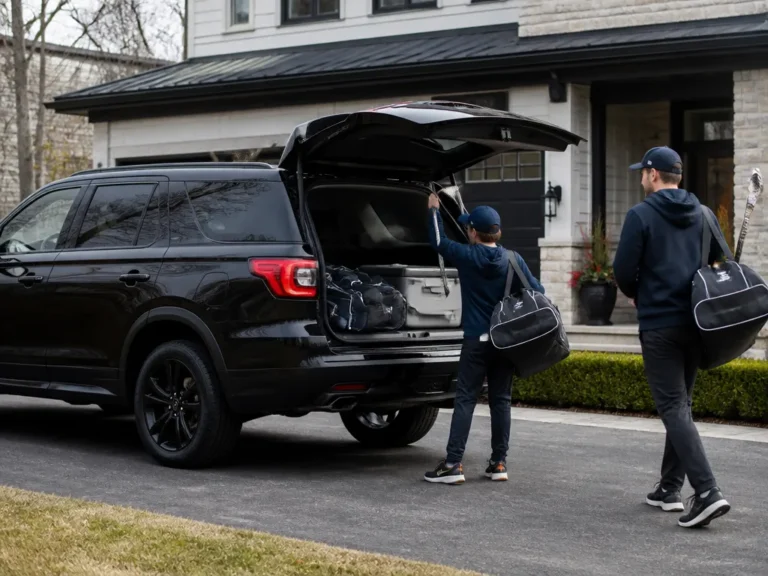
You searched “best suv for hockey family” because you need to haul 8 pairs of skates, a stack of sticks, helmets, and wet gear without turning every tournament into a cleanup mission. The right SUV has to handle cold starts, muddy floors, and quick kid loading, while still giving you enough cargo room when the seats fold flat.
Best overall pick is the Honda Pilot (AWD) for its practical 3-row layout, easy second-row access, and cabin materials that clean up well. Next, we’ll rank real hockey-hauling SUVs (from two-row to 3-row), then map each one to AWD, winter defrost, cargo organization, and seat-fold loading so you can buy with confidence.
Best SUV for hockey family: Honda Pilot (AWD) is a strong choice if you regularly load hockey bags, skates, and helmets into a 3-row cabin. Look for AWD plus fast defrost, washable floor areas, and fold-flat seats with tie-downs. For bigger groups, step up to a Yukon or Telluride.
Best Suv For Hockey Family Picks
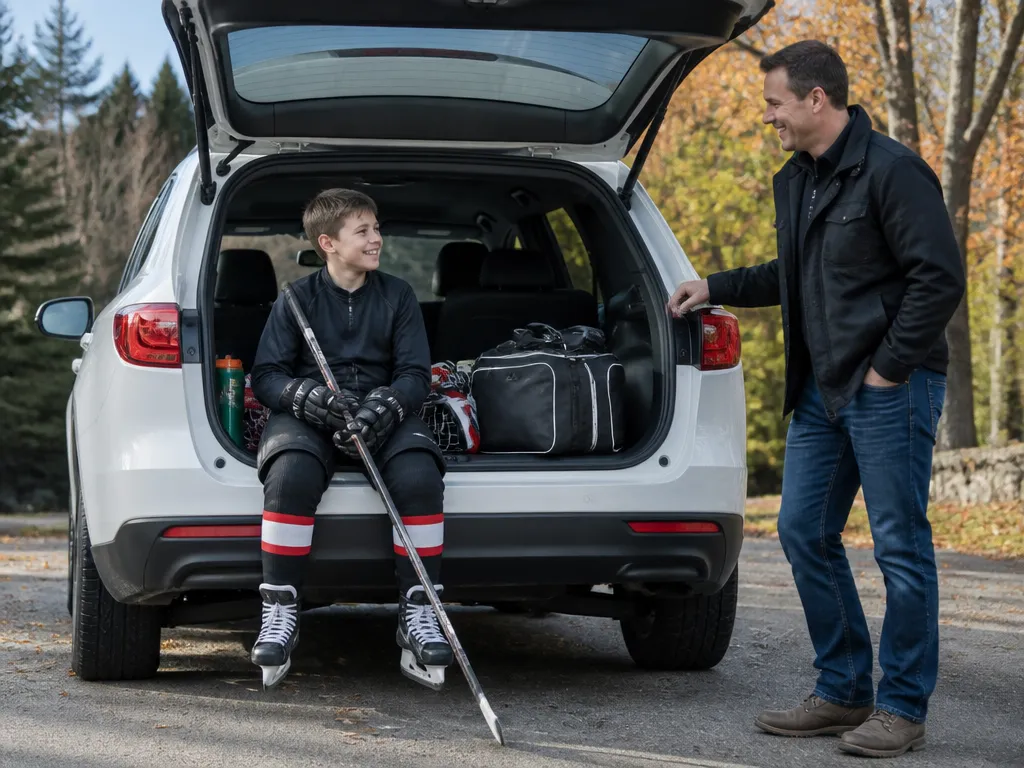
For a weekend-tournament hockey loadout, the best overall pick is the Toyota Highlander Hybrid AWD because it mixes all-weather traction with a clean, easy-to-wipe interior and real space for bags, skates, and team gear. The second row still works for kids, and the AWD driveline helps when you are leaving rinks in snow or slush.
Here is a ranked shortlist built around how hockey families actually pack: bulky bags and sticks, wet gear, frequent cold starts, and quick access for kids getting in and out. Cargo access matters as much as raw volume, because you will live in the back hatch when you unload.
| Rank | SUV | Best hockey-family reason | Trade-off to watch |
|---|---|---|---|
| 1 | Toyota Highlander Hybrid AWD | Great cold-weather drivability with practical cabin storage and easy-to-clean surfaces | Cargo depth is better than ultimate width, packing takes planning |
| 2 | Honda Pilot AWD | Strong third-row versatility for teams, plus wide-opening access for gear runs | Fuel economy drops with heavier loads |
| 3 | Kia Telluride AWD | Roomy interior for a full-family setup, great layout for bags and wet items separation | Turn-in and ride feel vary by wheel size |
| 4 | Subaru Outback (AWD) | Rugged AWD and good ground clearance for snowy parking lots and winter starts | Kids fit is strong, but hockey gear can crowd when the seats are in use |
| 5 | Ford Explorer AWD | Good mix of cargo space and kid-friendly second-row access for frequent trips | Higher trim can add cost quickly |
| 6 | Chevrolet Traverse AWD | Big-car cargo volume for tournaments, useful when a couple of families caravan | Loading height is a bit higher than smaller crossovers |
| 7 | Hyundai Palisade AWD | Easy second-row and comfortable ride for long drives after games | Third-row use reduces the “dead-simple” cargo space |
| 8 | Jeep Grand Cherokee 4×4 | Traction confidence for rough lots and strong capability-minded vibe | Cargo floor layout is less “hockey intuitive” than the minivan-sized SUVs above |
How To Spec It For Hockey Weekends
Pick the configuration like you are building a gear system, not just a family car. If you regularly carry 2 to 3 sticks bags plus helmets and towels, you want the second row to fold flat with minimal steps and you want an AWD system for leaving the rink in bad weather.
Real-world tip: before buying, load a full bag set at the dealership. Stuff a stick bag, skate bag, and a wet towel bundle into the rear. If you have to “repack” to close the hatch, you will hate it at tournaments.
Trade-offs are predictable. Bigger SUVs usually give more cargo width and length, but ride comfort with a fully loaded hatch can stiffen depending on tires and wheel size. Shorter rear overhangs and wider door openings make the biggest difference for kid access, because you will be loading and unloading in parking lots, not garages.
Next up: How Much Hockey Gear Fits will break down real packing scenarios by number of players and seat usage, so you can match size to your tournament schedule.
How Much Hockey Gear Fits
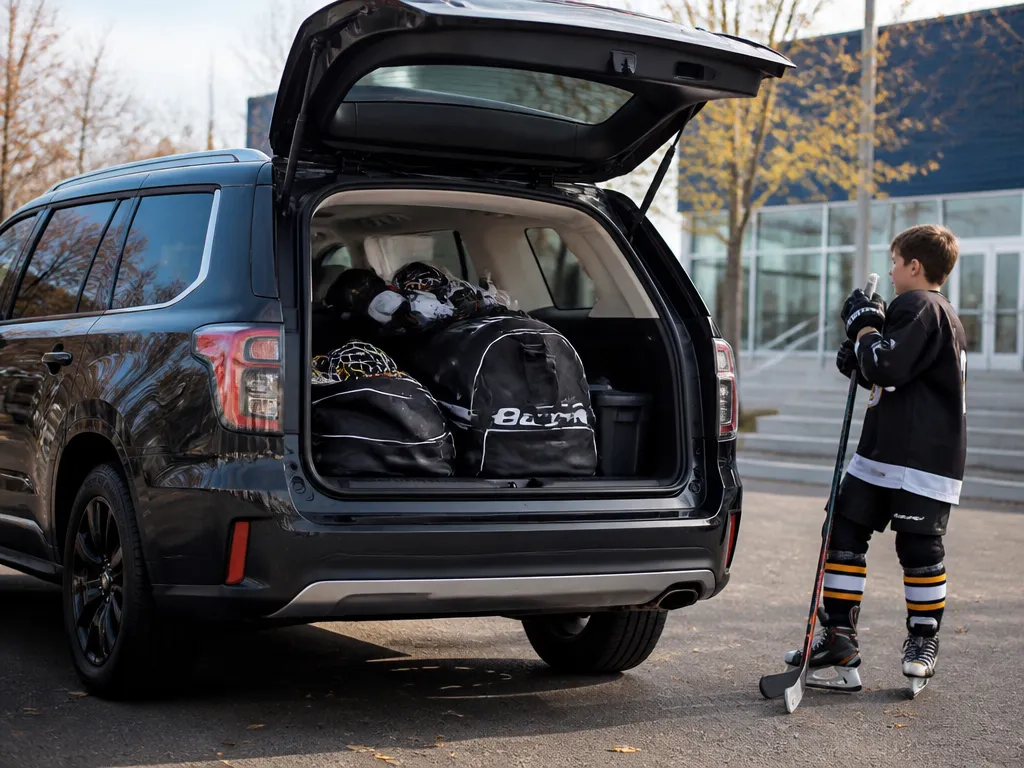
Most families underestimate how much “real” hockey clutter is made up of wet bags, bulky skate bags, and the extra space a folded bench creates or steals. A practical target is planning for 2-4 full hockey bags plus sticks and helmets in a two-row SUV, and 4-6 bags when you can lay the seats flat and keep load low and wide.
Realistic Packing By Gear Count And Cargo Style
Pack by footprint first: bags go down first, skates go in last if you can keep them contained.
In practice, a typical load is one player’s kit per bag, plus one or two “shared” items like helmet bags, stick bundles, and a small toolbox for tape and repair kits.
For example, a four-player travel setup (two parents, one coach, plus gear) often fits with 4 bags and room for a bin of helmet/scraper stuff, but it gets tight fast once skate bags go in uncovered and wet gear takes extra volume.
| Cargo layout | Typical fit (bags) | What usually ruins fitment |
|---|---|---|
| 2-row SUV, seats up | 2-3 | Wide skate bags, tall helmet bags, and bulky winter clothing blocking the cargo opening |
| 2-row SUV, one seat folded | 3-4 | Seat-back angle leaving gaps you cannot fill with flat items |
| 2-row SUV, both seats flat | 4-6 | Hump in the floor, tailgate threshold, and trying to stack items above bag height |
Seat-folding Strategy: Flat Floor Beats “Humps”
Flat load floors make hockey gear behave. A small rise in the rear floor can force you to stack bags, which eats volume and makes wet gear slosh when you brake.
In practice, test for “hump” issues by folding the seats fully and walking the floor with a tape measure: check whether the cargo floor is level and wide enough for the largest bag to slide in without tilting. If the SUV has a pronounced center hump or uneven seat latches, expect to lose about a bag’s worth of usable space compared to the same SUV with a cleaner flat deck.
Mechanic tip: bring one of your biggest hockey bags to the dealership. If it drags or won’t sit flat after the seats fold, the SUV is probably going to feel cramped on game day.
Wet Gear Rules And Load-floor Planning
Wet gear is bulky even when it looks “small,” because you need containment. Plan on a small waterproof tote (or two) for goalie items and a dedicated bin for skate cleaning gear so slop stays off carpeting and seat seams.
Tall bags are the sneaky fitment killer. Before buying, measure from the cargo floor to the lowest point of the tailgate opening with seats down, and check whether your tallest helmet bag can stand up without forcing you to stack sticks on top.
Tie-down Points And Keeping Loose Items From Becoming Projectiles
Helmets and shin guards slide fast when the SUV is loaded. Use tie-down rings or cargo hooks to strap bags down, and keep helmets in a bag with shoulder straps cinched tight so they cannot “walk” forward during sudden stops.
For long tournaments or winter roads, tie sticks and skate tools separately. Loose sticks can puncture liners and become a real hazard in a panic stop, so plan for a net, bungee cords, or a dedicated stick holder that prevents rotation.
Winter Traction And Defrost Reality
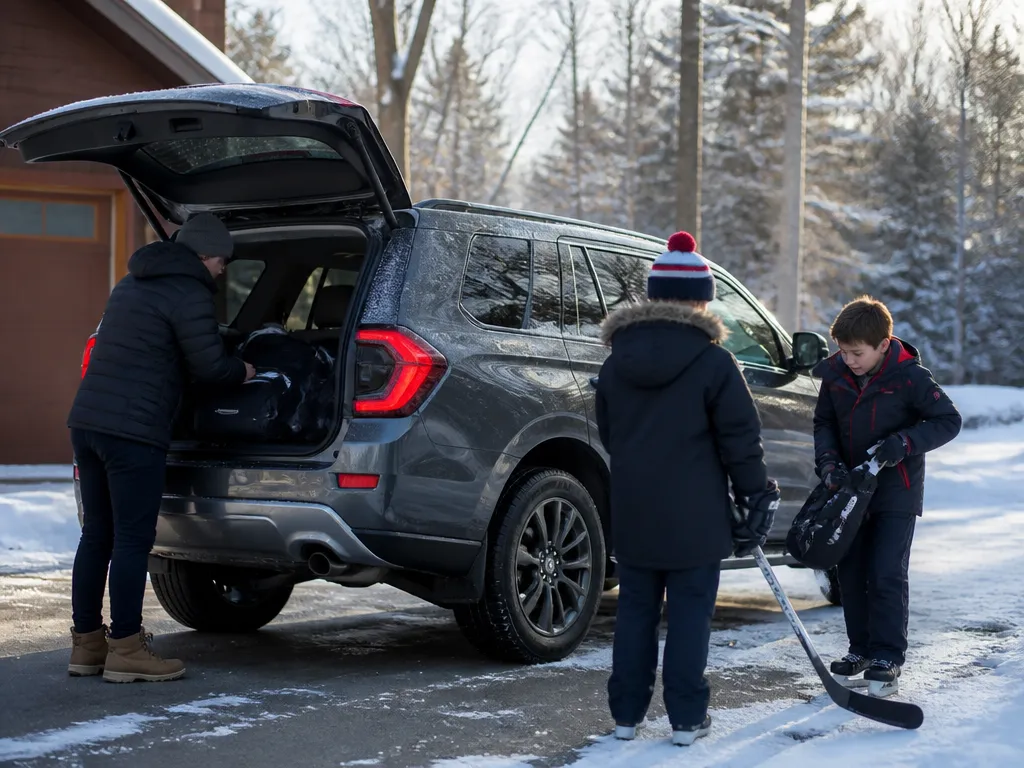
Winter traction starts with tire quality and warmup time, then gets helped by AWD plus the right traction controls. For hockey nights, the real make-or-break is whether the SUV clears ice and keeps visibility steady during repeated cold starts and quick turnovers.
Awd Vs 4wd Vs Traction Modes (What You Feel In Snow)
AWD is the safe default for hockey families because it works automatically and reduces the driver workload when kids are hopping in and out and you are stopping often in parking lots. Part-time 4WD can be excellent in deep snow, but many systems still need deliberate engagement and can be less forgiving on slick mixed surfaces if you do not match the mode to conditions.
Traction modes matter, but they mainly change throttle mapping and how the vehicle limits wheel spin.
In practice, a snow/ice mode that pairs with good ABS and stability control is usually more useful than a low-speed “off-road” mode meant for higher traction surfaces.
For example, in a typical driveway to rink run, you will feel the difference more from tire grip and engine torque management than from badge-level branding. A vehicle that limits wheel spin smoothly will climb gently, keep you pointed straight, and reduce that “churn then lurch” behavior that scares passengers.
| Setup | What it helps most | Trade-off for hockey days |
|---|---|---|
| Full-time AWD | Automatic slip control on wet ice, slush, and mixed pavement | Fuel economy impact vs 2WD |
| Part-time 4WD (auto or on-demand) | Deeper snow, when engaged correctly | Can add extra driver steps and mode confusion |
| Traction “Snow/Winter” mode | Controlled throttle and smarter wheel-spin behavior | Over-reliance if tires are worn or underinflated |
Ground Clearance And Visibility: The Two Winter Realities
Ground clearance helps you clear curbs, speed bumps, and snowbanks around the rink without grinding the front lip or hanging a skid surface. Approach and departure angles matter too, because hockey lots often trap you with a tall pile at entry and a nasty ramp at exit.
Defrost speed is the visibility limiter, not comfort. A fast-clearing windshield plus strong side defrost and heated mirrors buys you safer lane changes when you are leaving practice while everything is fogged from damp gear.
Mechanic tip: If the cabin takes forever to clear, you will keep the wipers and blower on high longer, which can drain battery reserve on repeated early-morning starts. Prioritize SUVs with strong climate output and make sure you can run the defrost without waiting 10-15 minutes.
Heated seats and heated steering wheel are worth it for hockey families because cold kids and cold hands wreck morale fast, and quick warm-up reduces the temptation to crank heat to max and let the windshield stay foggy. Climate controls that let you keep airflow directed at the windshield without fighting the audio and child seats are a real day-to-day win.
Interior Materials That Clean Fast After Wet Practices
Wet gear is unavoidable, so the interior has to handle slush, melted ice, and dirty skate bags without turning into a moldy science project. Look for easy-wipe surfaces where kids touch daily, like door panels and the lower dash area near cup holders.
In practice, rubberized floor mats and seat materials that do not trap grime give you the shortest cleanup cycle. Water-resistant upholstery with less pile texture cleans faster when you pull out wet helmets, and sealed or well-coated plastics in the cargo area help you rinse off salt and sand.
For example, if you plan to haul two or three hockey bags plus helmets and a spare pair of skates, the cargo area becomes your “wet-zone.” SUVs with simple cargo liners and fewer fabric crevices keep the interior from smelling like rink water by February.
Loading And Kid-friendly Access
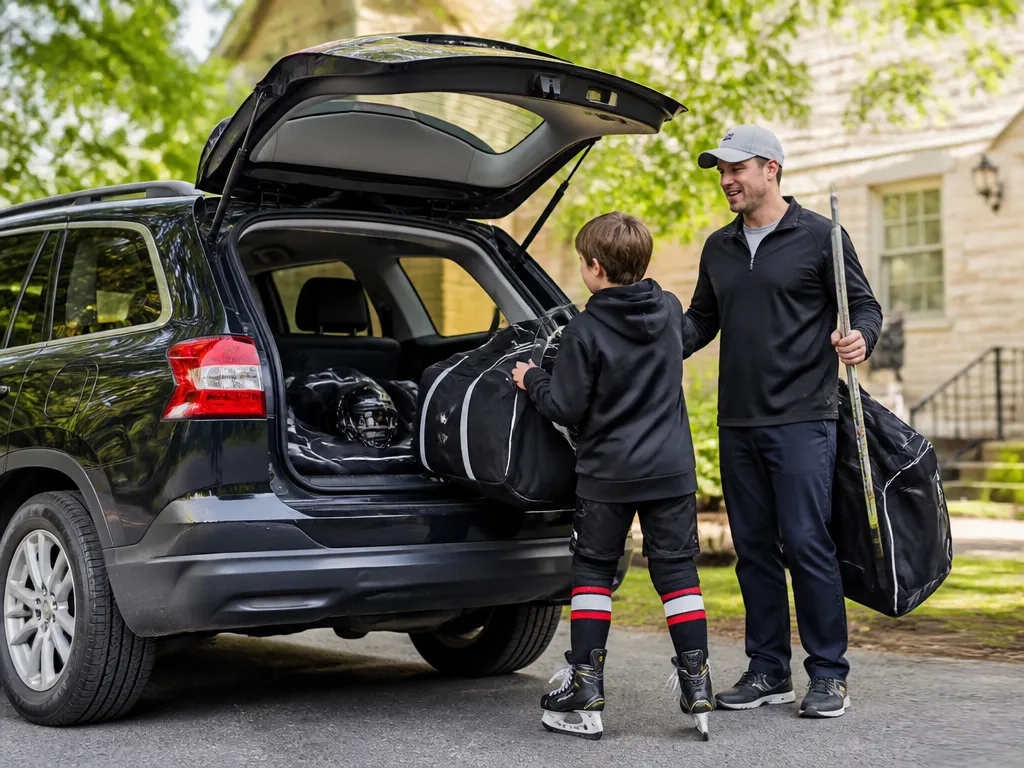
Rear access is where hockey families feel the difference most, because kids need to pile in quickly while bags, skates, and wet gear crowd the floor. Aim for a tall, wide rear opening and a door design that lets you place a bag without stepping into the cargo area.
Rear Door Openings And How Gear Meets The Seat
Sliding rear doors usually make loading easier on tight driveways and parking lots because the opening is consistent and you do not fight a swing door against other cars. Wide, SUV-style hinged doors can work fine in open lots, but they get annoying fast when you are juggling a hockey bag in one hand and a kid’s backpack in the other.
Rear door height matters in winter. If the opening is too low, you end up doing a “reach and step” move that slows you down and increases the odds someone kicks a skate bag as you transfer gear.
Second-row Access, Gear Placement, And Avoiding The “Seat-step” Circus
Loading bags without kids stepping on them is mostly about where gear goes before the doors close. Put the tallest, heaviest items on the floor behind the second row or in the cargo area, then keep softer items (gloves, socks, jerseys) in bins so they do not slide.
For bench seating, confirm that your oldest kid can slide into the seat without planting a knee on a skate bag.
In practice, a split-fold or power-fold rear seat helps because you can create a straight aisle to get gear in, then close everything once the kids are seated.
Third-row Vs Two-row For Hockey Schedules
Third-row seats help when you regularly carry teammates plus siblings, and you want everyone seated instead of stuffing extra people into the cargo area. Third-row access becomes a trade-off for hockey because you often store bulky items in the middle of the cargo area, then the family needs to climb past them later.
For hockey weekends with 4 to 5 passengers, a well-designed two-row SUV typically wins for speed and sanity. For tournaments where you consistently run 6 to 7 people, a third-row SUV can still work, but you will feel the compromises in rear access and the way cargo has to be staged.
Insider tip: If your hockey setup is frequent and repetitive, pick the layout that lets you load gear first, then move kids without stepping over anything. That one habit cuts arguing more than any storage accessory.
Cargo Cover, Trunk-only Limits, And Step-in Comfort In Winter
Cargo covers are great for privacy and keeping gear from staring out at the world, but they can become annoying on repeat trips if you have to remove or constantly reroute items to clear the cover edge. A retractable or easy-lift cover saves time compared to a cover that fights your hand when it is cold and gloved.
Loading in winter comes down to step height and floor shape. Look for a cabin floor that is not too high above the ground, because stepping up while holding a bag often leads to spills, dropped gloves, and wet gear ending up where it should not.
| Setup choice | What you gain | What you give up |
|---|---|---|
| Full-height tailgate access | Faster access for bag stacks | Less direct reach into deep storage if the opening is narrow |
| Rear bins + cargo tray | Quick cleanup and organized gear | Costs extra, and bins take space when you need maximum volume |
| Third-row use every trip | More seats for team days | Cargo staging becomes more restricted and access slows down |
Best Trim And Configuration To Buy
AWD and easy-to-clean interior surfaces are the two biggest “buy once, live with it” decisions for a hockey family. After that, pick the cargo setup that matches how you load skates, helmets, bags, and wet gear every week.
Must-have Checklist (Minimum Spec For Hockey Runs)
Start with these requirements and you will avoid most buyer’s remorse.
For families with multiple players, size up cargo reality. A single weekend tournament can fill every trunk cubby, under-floor area, and seatback pocket fast, especially when you add spare gloves and drying racks.
Roof Rack Vs Hitch Vs Trunk Cargo Systems
Roof racks move bulky items like folded dry bags, a spare helmet bag, or a ventilated gear tote up high where they stay out of the cabin. Hitch receivers are better for carrying a cargo basket or a trailer carrier, keeping the cabin free for passengers and damp-to-dry transitions.
Trunk-only systems work best when you keep gear in containers, because they prevent sliding and reduce mess transfer. The trade-off is that you live with a tighter cabin loading plan, especially with a larger team and frequent repeat trips.
| Configuration | Best for | Trade-off to expect | What to verify on the spec sheet |
|---|---|---|---|
| Factory crossbars + roof cargo | Dry bulk (totes, spare bags), fewer wet items inside | Higher loading height, fuel economy drop when loaded | Crossbar fit, roof weight limit, clearance for garages |
| Hitch receiver + cargo carrier/basket | Wet gear containment, spare equipment, off-cabin storage | Rear visibility and parking sensitivity, added length | Max trailer tongue weight, carrier weight rating, hitch class compatibility |
| Trunk seatback + cargo bin strategy | Cabin comfort, quick in-out gear changes | Takes time to keep bins organized, less total volume | Under-floor storage size, tie-down points, door opening width |
Tow Package Guidance (When You Carry A Trailer Or Cargo Carrier)
A tow package is worth it when you plan to use a cargo basket, small enclosed trailer, or a utility trailer for tournaments. Buying the tow package later often costs more once labor and wiring are in the picture, and it is usually simpler to match factory wiring and hitch mounting provisions.
In practice, verify three things before you commit: hitch class and receiver size, wiring harness type for the lighting you need, and the vehicle’s maximum towing limits with passengers and cargo aboard. Also confirm whether the tow rating assumes a specific tire type, and whether your chosen configuration includes a transmission that can handle frequent loaded stop-and-go.
“If you will carry a trailer, plan your maximum load at tournament time, not at everyday grocery loads.”
Cargo Organization That Keeps Hockey Gear Under Control
Bins and tie-down strategy matter more than raw cargo volume once you start stacking wet bags and sharp stick ends. Use lidded bins for helmets and smalls, a separate bin for gloves, and a dedicated “wet zone” area that you can hose clean.
For wet-to-dry logistics, prioritize a configuration that lets you access the cargo area without stepping on gear. A rear load opening that clears at shin height helps, because you are loading with cold hands while kids circle the SUV.
What To Avoid In Trims And Option Packages
Avoid trims that limit cargo usability through bulky under-floor obstructions, low-profile “style” bumpers that create loading headaches, or option packs that add extra storage in awkward places. Avoid interior materials that are hard to wipe clean where skates drip and gloves get damp.
Also avoid combinations that force you to choose between passengers and gear. A trim that looks good online can reduce effective storage because of the spare tire setup, missing tie-down points, or packaging that blocks the clean path from liftgate to floor.
Row Vs 3-row Decision Guide
Choose a 3-row SUV only when you regularly move 4 to 5 kids plus gear without forcing awkward boarding. For a “2 to 3 kids” hockey crew, a well-packed 2-row with a strong cargo setup usually beats the 3-row because it keeps usable trunk space for skates, helmets, sticks, and wet bags.
Row count changes how you live with the vehicle during tournament weeks. With 2-row rigs, you park closer, load once, and keep the rear bench available for quick seat access. With 3-row rigs, you get extra seating, but you trade away cargo width and floor height, which matters when you are dragging in wet gear or swapping bags between games.
| Family + Gear Situation | Best Row Choice | Why It Works for Hockey | Trade-off to Watch |
|---|---|---|---|
| 2-3 kids (plus 1 goalie bag or shared bins) | 2-row, large cargo | Folds flat storage for bulky bags, easier wet-item containment, better access to the front third of the cargo area | You may need roof storage or a hitch rack for overflow |
| 4-5 kids (no adults riding) | 3-row, second-row captain or bench | More seats so kids can all ride without rotating who sits in the second row | Third-row space steals volume when all seats are up |
| 4-5 kids (adults also ride, frequent carpool) | 3-row or 2-row + towing/extra vehicle | Reduces “you drive” scenarios and makes departure times consistent | Gear management becomes mandatory (bins, straps, dirty-to-clean separation) |
Frequent tournaments change the math because your SUV gets loaded and unloaded multiple times per weekend. With occasional outings, a 3-row can feel fine since cargo can be smaller and you likely leave fewer wet items inside. With frequent tournaments, the daily grind favors the SUV that stays easy to load and keeps cargo capacity available even when the kids are settled.
For example, a 2-row with a low, wide opening and a flat-fold second row is easier when you have to get skates out fast and keep “wet and muddy” bags away from dry ones.
In practice, hockey families often end up running a cargo bin system (one “dirty” bin, one “dry” bin, one for helmets and gloves) and that system is harder to maintain when the third row is in play.
Ride comfort with a fully loaded back is another reason row choice matters. A heavy load, plus passengers, increases squat and can make rear-seat comfort worse on soft suspension setups. A 3-row may look like the answer on paper, but if the third row gets used only for occasional kids, the best everyday comfort still comes from keeping the cargo area dominant (more evenly packed, fewer awkward reach loads).
“For hockey, cargo usability is a seat feature. A 3-row that makes loading annoying will feel smaller every tournament.”
Configuration is where the row decision becomes real. Second-row captain chairs can make third-row access easier for kids, but a second-row bench often gives better cargo carry when you fold it. A hitch or roof strategy also changes what “3-row enough” means, because overflow gear is common when tournaments pile up across two weekends in a row.
Pros, Cons, And Quick Scorecard
For a hockey family, the best SUV is the one that swallows wet gear, gives you easy rear access, and keeps traction dependable in snow. The scorecard below ranks SUV picks by cargo fit, winter capability, and day-to-day loading and cleaning, then calls out the real-world trade-offs.
| SUV (short list) | Cargo / Gear Fit | Winter Capability | Loading Ease | Cleaning | Trade-offs | Best For (use-case tags) |
|---|---|---|---|---|---|---|
| Toyota Grand Highlander (or Highlander) | 9/10 | 8/10 (AWD) | 8/10 | 8/10 | Higher trims cost more; feel of ride varies by wheel size | Big bag + board setup, frequent tournaments, two kids + extra gear |
| Subaru Outback (2-row) | 7/10 | 9/10 (AWD, ground clearance) | 9/10 | 9/10 | Max cargo wins with smaller stowage systems; long trips still fine, but not top towing | Snowy lots, wet equipment, “keep it simple” loading |
| Subaru Forester (2-row) | 7/10 | 9/10 (AWD) | 9/10 | 9/10 | Less space than 3-row options for full team weeks | One to two players, quick practices, budget-friendly practicality |
| Honda Pilot | 9/10 (with 2nd/3rd row strategy) | 8/10 (AWD) | 7/10 | 8/10 | Rear access is good but deeper cargo can mean more bending with tall bags | Three-row needs, 3-4 players, family + teammate hauling |
| Kia Telluride | 9/10 | 8/10 (AWD) | 7/10 | 8/10 | Ride can feel firm on larger wheels; plan cargo carefully with third row up | Weekend tournaments, family comfort with serious gear storage |
| Hyundai Palisade | 9/10 (2nd-row folding options) | 8/10 (AWD) | 7/10 | 8/10 | Soft-touch surfaces can get abused if you do not plan protection | Long drives, “sleepers in the vehicle” weekends, lots of wet gear |
| Jeep Grand Cherokee (AWD) | 7/10 | 8/10 (AWD, depending on variant) | 8/10 | 7/10 | Cargo is workable but usually not as easy to organize as the top family crossovers | Mixed road conditions, occasional rough-weather priority |
| Chevrolet Tahoe (or Suburban) | 10/10 | 8/10 (AWD varies) | 7/10 | 7/10 | Big vehicle means higher fuel burn and tighter parking spots; cleaning needs more attention | Team-travel weeks, towing gear, “everyone rides together” |
Best overall for hockey hauling: Toyota Grand Highlander (or Highlander) for the balance of cargo volume, easy daily use, and AWD availability. Best winter-minded pick: Subaru Outback, then Forester if you want the simpler smaller footprint.
Best for real team weeks (most gear): Chevrolet Tahoe/Suburban, because you can dedicate more of the cabin to bags while keeping seats usable. Best for “I need a third row sometimes”: Honda Pilot, Kia Telluride, or Hyundai Palisade based on how often you carry extra players versus how often you leave the third row stowed.
Configuration Rules That Matter For Hockey Days
Pick AWD when winter conditions include glare ice, packed snow, or frequent plowed-but-messy lots. Prioritize fold-flat second row and easy third-row stow if you expect full-size hockey bags plus a cooler, then plan your system around what stays loaded for multiple days.
Choose roof racks for helmets and dry items only, keep wet gear inside, and add a rear cargo mat plus removable bins (skates, socks, tools) so you can pull one mess at a time. Loading height is a bigger deal than people think, try it with your own bag during a test drive, and check door opening width so you can slide gear in without fighting the angle.
Quick reality check: A third row helps with occasional players, but hockey hauling works best when your “always loaded” gear is kept in the cargo zone with the seats down or partially folded.
Sizing up guidance: Two players plus one parent driver usually fits well in 2-row crossovers with smart bin organization. Three to four players or frequent tournaments push you toward a true 3-row SUV or a bigger cargo-first SUV where you can keep bags organized without repacking every stop.
New Vs Used Hockey-suv Shopping Targets
For hockey families, the “best” choice comes down to uptime and daily practicality, not brochure features. A used SUV can be a smarter buy if it has documented AWD service (if equipped), good tires, and no heavy salt rot underneath. A newer SUV pays off when you want fewer surprises and easier access to modern driver-assist and climate tech.
Used-target Priorities That Keep Winter Trips Trouble-free
When you shop used, prioritize vehicles that look cared for in the places hockey life hits hardest: traction systems, weather sealing, and the floor where wet bags spill. AWD that was driven in snow is fine, but neglected fluid service and mismatched tires turn that advantage into expense.
For example, a family SUV that spent winters parked in an unprotected driveway can look “clean” from the outside while having real corrosion near brake lines and pinch welds. That is the kind of problem that turns a simple tire purchase into a brake line job at the worst time of the season.
| Inspection target | What to find | What to ask the seller |
|---|---|---|
| AWD components | Service receipts, no vibration on test drive | Transfer case and diff fluid history |
| Cooling and cabin heat | Consistent heat output | Any heater core or thermostat work |
| Salt areas | No rust-through around frame and lines | Any underbody rust repairs |
| Defrost performance | Rapid windshield clearing | Windshield and HVAC repair history |
Feature Targets By Model-year Logic (What To Hunt For)
Even within the same nameplate, the exact year matters because AWD availability, heated seats, and strong defrost output changed with updates. Start by deciding which must-haves are non-negotiable for your season, then match the trims that commonly include them.
Safety callout: Towing and drivetrain limits vary by VIN and trim. Verify towing ratings and axle ratios using the VIN and exact configuration before buying a hitch.
Test-drive Checklist With Actual Hockey Gear
Bring real bags for the test drive, even if it is just one full stick bag and one sweaty skate bag. Load the cargo area the way you normally would, then check rear-seat access, visibility, and how doors open with gear in place. A “great” SUV on a showroom lot can still be a pain if you need awkward angles to lift bags in and out.
For example, some three-row SUVs have the cargo space you want, but the second-row access is tighter. If you run a lot of tournaments with quick kid swaps in parking lots, two-row with a low liftgate opening often feels easier than a bigger three-row layout.
Accessories That Make Any Hockey Suv Work Better
Accessories matter because they protect the interior and make loading faster, which is what you live with every weekend. Focus on solutions that handle wet gear without turning the cabin into a sponge.
| Scenario | Target setup | Main trade-off |
|---|---|---|
| Smaller teams, frequent local practices | Two-row, fold-flat seats, all-weather mats, cargo bins | Taller loading height if you pick a higher roofline SUV |
| Weekly tournaments, more kids | AWD, roof rack for dry gear, deeper cargo area organization | Extra cargo can reduce rear visibility and fuel economy |
| Long road trips | Strong defrost output, heated seats, HVAC controls that reach rear passengers | More comfort features can mean higher used-car risk if neglected |
Used shopping wins when you match the SUV to your real gear, then verify the VIN for AWD, towing rating, and trim-specific options. New shopping wins when you want fewer unknowns about salt corrosion, HVAC history, and drivetrain maintenance gaps.
Quick Summary
The article picks the Honda Pilot (AWD) as the best overall SUV for a hockey family because it has a practical 3-row layout, easy second-row access, and cabin materials that clean up well after muddy floors and wet gear. It also emphasizes that your win condition is fast kid loading plus fold-flat seats for cargo, not just maximum space. For winter games, it says to prioritize AWD plus fast defrost and to choose interiors with easier-to-wipe floor surfaces and less carpet.
For a wider shortlist, the Toyota Highlander Hybrid AWD ranks first for cold-weather drivability and easy-to-clean surfaces, the Honda Pilot AWD follows for strong third-row versatility, and the Kia Telluride AWD is next for a roomy layout that helps separate bags and wet items. The article then advises spec like you are building a gear system, using AWD, fold-flat second-row setups, and cargo bins like one for helmets and one for wet gear. Its real-world buying tip is to load a full stick bag, skate bag, and wet towel bundle, because if you need to repack to close the hatch, you will hate tournament days.
| Category | What the article says to prioritize |
|---|---|
| Drivetrain & winter control | AWD, plus fast defrost for leaving rinks in snow or slush |
| Loading and kid access | Convenient second-row access, wide door openings, and fold-flat seats with minimal steps |
| Cleanability | Wipe-down-friendly surfaces, less carpet, and darker plastics or stain-resistant seat surfaces |
| Cargo organization | Bins for helmets and wet gear so you are not hunting items every stop |
| Seat strategy | Two rows for lighter schedules, 3 rows when you need extra riders for frequent multi-player weekends |
Frequently Asked Questions
What Suv Is Best For A Hockey Family With Kids And All The Gear?
Look for an SUV with big usable cargo space behind the second row and a flat, wide opening so you can load a bag, skates, and helmets without fighting the doorway. If you play year-round, prioritize an SUV where you can fold the second row flat to create a near-open cargo area.
How Much Cargo Space Do I Need In An Suv For Hockey Bags And Equipment?
For most hockey setups, you should plan on at least space for 2 to 3 large duffel or hockey bags plus loose items like gloves and protective gear. A good rule is to physically measure your bags, then check that the SUV’s cargo area can fit the largest bag width and height with the door opening.
What Suv Is Easiest For Loading Hockey Equipment During Practices And Tournaments?
Choose an SUV with a low, easy-to-reach cargo floor and easy second-row access so you can load in under a couple minutes. Power liftgates and wider rear openings can help, but the biggest win is flat-fold second-row seating for bulky bags.
Is A Used Suv A Smart Buy For A Hockey Family, And What Years Should I Target?
Buying used can be smart because hockey gets hard on interiors, but you should target models with a proven reputation for reliability and check service history. Focus on suspension wear, tire condition, and brake health, since constant trips with weight can accelerate wear even on great vehicles.
What Safety And Family Comfort Features Matter Most In The Best Suv For Hockey Families?
Prioritize forward collision warning with automatic emergency braking, plus blind-spot monitoring and rear cross-traffic alert for busy rinks and parking lots. Comfort matters too, so look for heated seats and good climate control, especially if your kids sit in wet gear before drying off.
What’s The Most Common Mistake Hockey Families Make When Choosing An Suv?
The biggest mistake is focusing only on total cargo volume and ignoring how the equipment fits through the opening. If the rear opening is narrow or the cargo floor is too high, you will end up reorganizing gear every trip, so verify fit with your actual hockey bags before buying.