


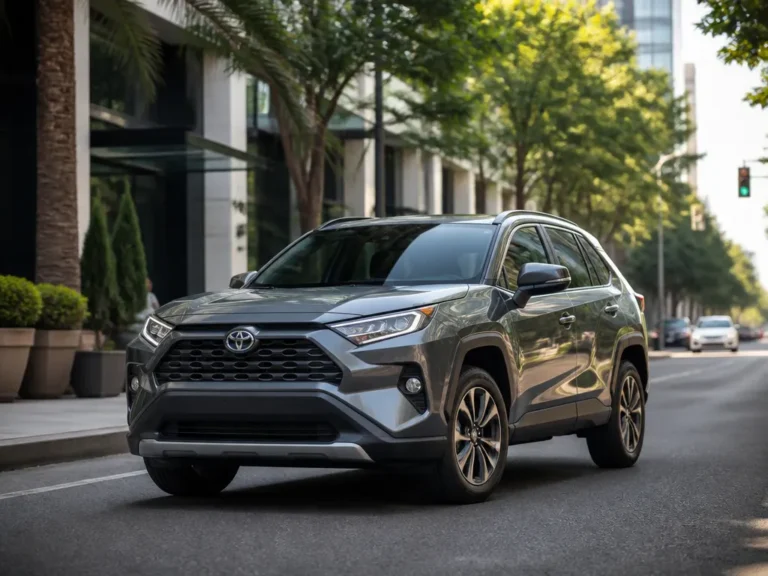
Trying to pick the best SUV for city driving gets tricky fast when every week brings tight parking, stop-and-go traffic, and potholes that rattle your teeth. If you have street parking or shared garages, the wrong turning radius or camera setup turns into daily frustration. You also want good fuel economy and easy ownership, because short trips add up.
Best city SUV picks usually split into three wins: easy parking (360 cameras and sensors), low-speed driver help (adaptive cruise and lane centering), and efficient powertrains (hybrids or efficient turbo engines). Below is a curated shortlist of models matched to real urban constraints, plus a quick way to choose the right trim.
Best suvs for city driving are compact or midsize models that are easy to park, steady in traffic, and efficient. Look for 360-degree cameras and parking sensors, plus low-speed driver-assist like adaptive cruise control. Hybrid versions often work well for short trips, since stop-and-go traffic rewards efficiency.
Best Suvs For City Driving: Quick Picks
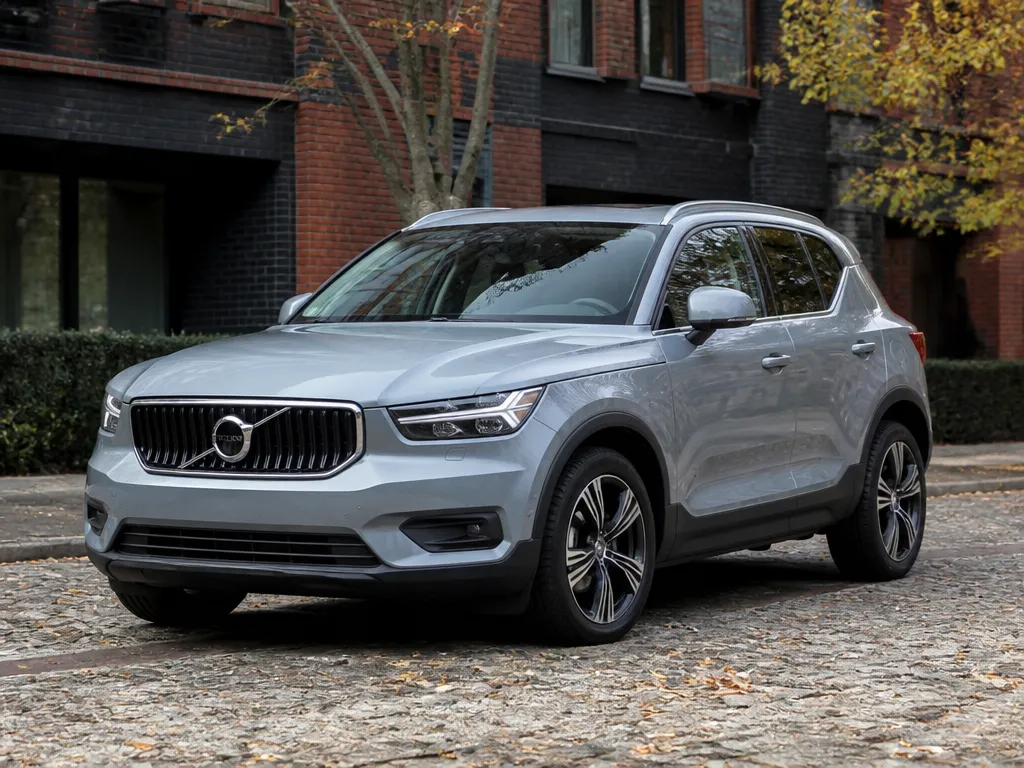
For most city drivers, the 2025 Honda CR-V is the best overall pick because it mixes easy maneuvering, strong visibility, and a cabin layout that stays practical in stop-and-go traffic. The comparison table below lets you scan key city constraints like footprint, parking aids, and typical running costs side by side.
| Rank | Model (trim depends on price) | Best City Fit | Parking Aid Readiness | Stop-and-Go Efficiency | Ownership Cost Tilt |
|---|---|---|---|---|---|
| 1 | Honda CR-V | All-around city balance | 360 camera and sensors on many trims | Strong gas efficiency, smooth drivability | Historically low hassle |
| 2 | Toyota RAV4 (or RAV4 Hybrid) | Compact feel, easy ownership | Available 360 camera on higher trims | Hybrid trims cut fuel in traffic | Tends to have durable drivetrain costs |
| 3 | Subaru Forester | Visibility and versatility | Blind-spot monitoring common; cameras by trim | Good manners, efficient enough for city | Predictable maintenance schedule |
| 4 | Mazda CX-5 | Compact and fun to place in tight spots | Rear camera standard, higher trims add more | Efficient gas models | Costs often stay reasonable |
| 5 | Hyundai Tucson | Value-first commuter | Sensors and camera options vary by trim | Efficient engines, good daily refinement | Often strong incentive pricing |
| 6 | Kia Sportage | Comfort with city-friendly size | Parking aids available across many trims | Efficient gas options | Good warranty coverage depending on region |
| 7 | Honda HR-V | Tight parking champ | Rear camera standard; sensors/cameras on higher trims | Efficient gas, easy stop-and-go | Low running cost vibe |
| 8 | Toyota Corolla Cross (SUV option) | Compact urban utility | Camera and sensors available by trim | Efficient for daily commuting | Often lower cost over time |
| 9 | Ford Escape | Balanced city tech | Driver-assist and parking aids by trim | Efficient options | Costs depend on engine choice |
| 10 | Jeep Compass | Compact outdoors feel | Parking aids available | Depends on drivetrain | Value can be strong on deals |
Quick Picks By City Need
Top overall: 2025 Honda CR-V. The CR-V is easy to live with in tight streets because it is not huge, yet it keeps a practical rear seat and cargo shape for groceries, strollers, and everyday gear. The ride stays composed over rough pavement, so your commute feels less tiring when you are stopping every block.
Best compact for tight parking: 2025 Honda HR-V. The HR-V is the “spot you can actually reach” SUV. It is small enough for slimmer parking aisles, and the visibility is good enough that you are less tense during low-speed maneuvers.
Best hybrid or efficiency commuter: 2025 Toyota RAV4 Hybrid. The hybrid setup is built for the kind of stop-and-go that eats fuel in a conventional SUV. The RAV4 Hybrid also feels calm and predictable at low speeds, which matters when traffic crawls and you are constantly modulating the pedals.
Best safety tech for dense traffic: 2025 Subaru Forester. The Forester is a strong pick for drivers who want active safety confidence while weaving through packed lanes and merging often. Higher trims typically add more driver-assist and visibility tech, and the tall seating position helps you spot hazards earlier.
Best value for ownership costs: 2025 Toyota RAV4 (gas) or Mazda CX-5. RAV4 and CX-5 are popular because maintenance and wear items tend to be straightforward, and they usually avoid the expensive surprises that some lesser-known trims can bring. RAV4’s resale strength and CX-5’s typically efficient day-to-day operation are the main reasons they land here.
Tip for quick shopping: Match your intended trim to what you actually need in town. If you park in tight garages, prioritize 360 camera and parking sensors; if you commute through congestion, prioritize hybrid or strong stop-and-go efficiency.
Shortlist Grouped By City Needs
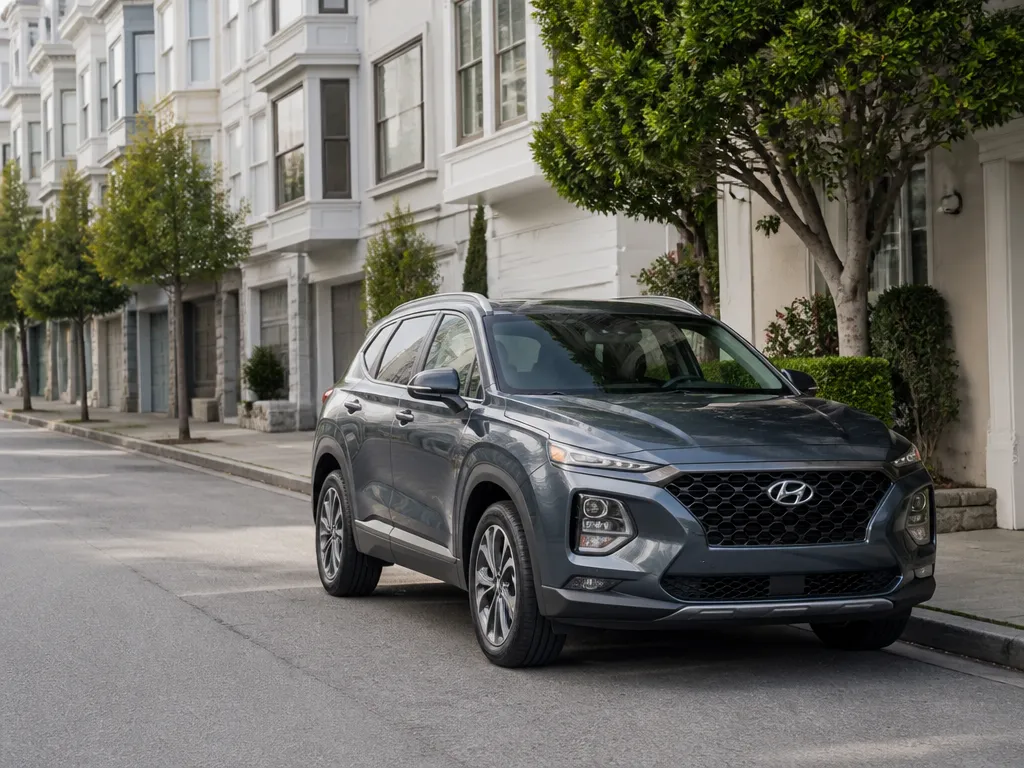
Urban driving rewards SUVs that are easy to park, predictably efficient in stop-and-go traffic, and offer low-speed driver-assist and clear visibility. The picks below skew toward compact or midsize models with strong maneuverability, camera and sensor options, and ownership costs that do not punish city mileage.
Most Maneuverable And Parking-easy
These SUVs keep steering effort reasonable in tight lots and make curb avoidance less stressful. Expect smaller footprints and turn-in that feels quick, even when traffic is packed.
Best For Stop-and-go Efficiency
Stop-and-go rewards hybrid drivetrains because they recapture energy and keep the engine from running as hard at low speeds. The best city setups also smooth out low-speed transitions so you do not feel jerkiness in traffic.
Best Visibility And Driver Confidence
City confidence comes from seeing pedestrians, curbs, and lane edges early, especially at night and during rain. Look for tall glass areas, good hood visibility, and camera views that cover blind angles when you angle into spaces.
Best For Rough Roads And Daily Commute Comfort
Rough city surfaces punish tire sidewalls and suspension tuning, so you want compliance without turning every pothole into a jolt. Comfort also means good ride control when you hit expansion joints or rutted roads on your commute.
Best Driver-assist And Parking Aids
City tech matters most at low speeds: blind-spot alerts in stop-and-go, parking sensors that react quickly, and cameras that reduce guesswork when squeezing into tight gaps. Choose trims that bundle 360-degree views and automatic braking for close-range scenarios.
Best Overall Value And Reliability-minded Picks
Value in a city is less about spec sheets and more about predictable ownership, common parts availability, and a drivetrain that does not get fragile under frequent short trips. Reliability-minded shoppers also benefit from straightforward maintenance intervals and easy-to-find service.
| Need in the city | Most aligned SUV | City-focused pros | City-focused cons |
|---|---|---|---|
| Reliability-minded, easy daily use | Toyota RAV4 | Clear visibility, straightforward controls | Can be noisier than quieter options |
| Best balance of efficiency and practicality | Honda CR-V Hybrid | Smooth low-speed behavior in traffic | Cargo layout can feel tighter depending on trim |
| Comfort over rough pavement | Kia Sorento | Composed ride and daily usability | Parking is harder in the tightest spaces |
Quick buying tip for city use: prioritize trims that include parking sensors and a 360-degree camera, then choose the smallest SUV that still fits your real parking reality. The “right” city SUV is the one you can park confidently under stress, not the one with the longest option list.
City Suv Comparison Table (Ranked)
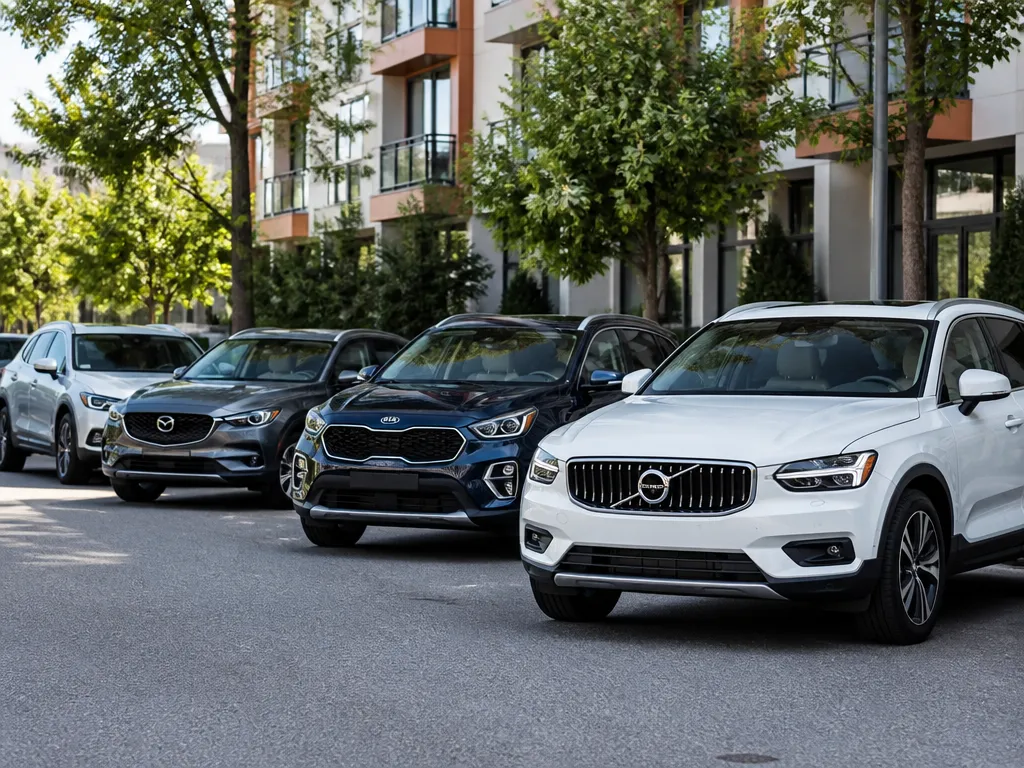
Parking stress, stop and go efficiency, and visibility matter more in town than 0 to 60. The best city SUVs in this list keep the footprint manageable while offering credible camera and sensor coverage, plus real-world fuel economy advantages.
Quick Guidance Before The Table
Turning radius numbers are useful, but cities punish steering effort more than a single figure. A smaller radius helps tight U turns, yet a well-sized curb-to-curb path and predictable low-speed steering feel matter just as much in real parking lots.
Parking aid ratings come down to what you can see at bumper distance. 360 camera plus front and rear sensors is the combo that reduces surprises, while blind-spot monitoring with rear cross-traffic is the combo that reduces costly “I thought it was clear” moments.
Ownership-cost/value angle here is a rough estimate, based on typical maintenance items (tires, brakes, fluids), expected reliability patterns, and how expensive parts usually are for that class. Current pricing, exact incentives, and regional repair rates were not found reliably, so exact ownership cost math would be guesswork.
| Rank | Vehicle size/class | Turning radius or maneuverability notes | Parking aids/visibility features | Efficiency/fuel economy or hybrid advantage | Rough estimate ownership-cost/value angle |
|---|---|---|---|---|---|
| 1 | Compact crossover (Honda CR-V Hybrid size class) | Easy lane positioning for traffic flow, light steering at parking speeds | Rear camera plus available surround-view; blind-spot monitoring and cross-traffic help in tight lots | Hybrid drivetrain helps in stop and go, usually strongest in city-heavy routes | Rough estimate: Mid-cost to run, often strong value at resale if maintained |
| 2 | Compact crossover (Toyota RAV4 Hybrid size class) | Confident turning feel without feeling “small car twitchy” | Available 360 camera, rear sensors; good straight-on view from driver seat | Hybrid advantage is real in congestion, tends to keep city mpg efficient | Rough estimate: Usually predictable maintenance costs, solid long-term value |
| 3 | Subcompact crossover (Mazda CX-5 size class varies by generation) | Typically easier fit in compact stalls, steering is quick enough for city corrections | Rear camera is standard on many trims; higher trims add sensors and better overhead views | Gas efficiency is decent; some trims are more city-friendly than others | Rough estimate: Lower tire and brake wear risk than larger SUVs if driven gently |
| 4 | Compact crossover (Hyundai Tucson size class) | Good urban footprint, manageable wheelbase for U turns and tight driveways | Rear camera plus available 360 view and parking sensors on higher trims | Efficient gas option for town driving, hybrid versions can add city mpg gains | Rough estimate: Mid-cost ownership; value depends on trim and warranty coverage |
| 5 | Compact crossover (Kia Sportage size class) | Urban maneuverability feels light in tight parking lanes | Available surround-view camera, rear sensors, and blind-spot monitoring on many trims | Efficient gas trims do well in commuter traffic; hybrid versions push further | Rough estimate: Often cost-effective, especially when buyers land on the right trim |
| 6 | Subcompact crossover (Nissan Rogue size class overlaps compact needs) | Comfortable turning and easy driveway entry, good for daily errands | Rear camera standard on most years, sensors available; view is generally driver-friendly | Gas drivetrains can be efficient in stop and go depending on engine and transmission | Rough estimate: Maintenance is typically manageable, value depends on mileage and tire brand |
| 7 | Compact crossover (Volkswagen Tiguan size class) | Moderate turning feel, parking effort is helped by good hood visibility | Higher trims often include front and rear sensors plus enhanced camera views | Efficient gas engines help city travel, hybrid availability depends on model year | Rough estimate: Costs can run higher on certain parts, resale can vary |
| 8 | Compact crossover with strong parking visibility (Subaru Forester size class) | U-turns are manageable, ride height helps spotting curbs and gaps | Rear camera and available advanced safety tech; driver visibility is a key advantage | Gas efficiency is average, but confidence in town conditions can offset fuel penalties | Rough estimate: Balanced value, but symmetrical AWD can change tire and service patterns |
| 9 | Compact crossover (Ford Escape size class) | Good city sizing and predictable low-speed steering response | Available parking sensors and camera systems on many trims | Efficient gas options, eco-focused trims help in stop and go | Rough estimate: Value can be strong when incentives hit, ownership costs are typically mid-range |
| 10 | Compact crossover (Jeep Cherokee size class overlaps compact comfort) | City maneuvering is doable, steering weight can feel heavier depending on tires | Rear camera standard on many trims, higher trims add sensor coverage | City efficiency depends heavily on engine and drivetrain choice | Rough estimate: Value depends on drivetrain and how tires are managed |
How To Read The “City” Notes Without Getting Tricked
Conservative ownership warning: If you are comparing trim levels, cost differences can be driven by wheel size, tire type, and how many sensors or cameras are tied to a costly module replacement.
Parking, Turns, And Visibility Reality-check
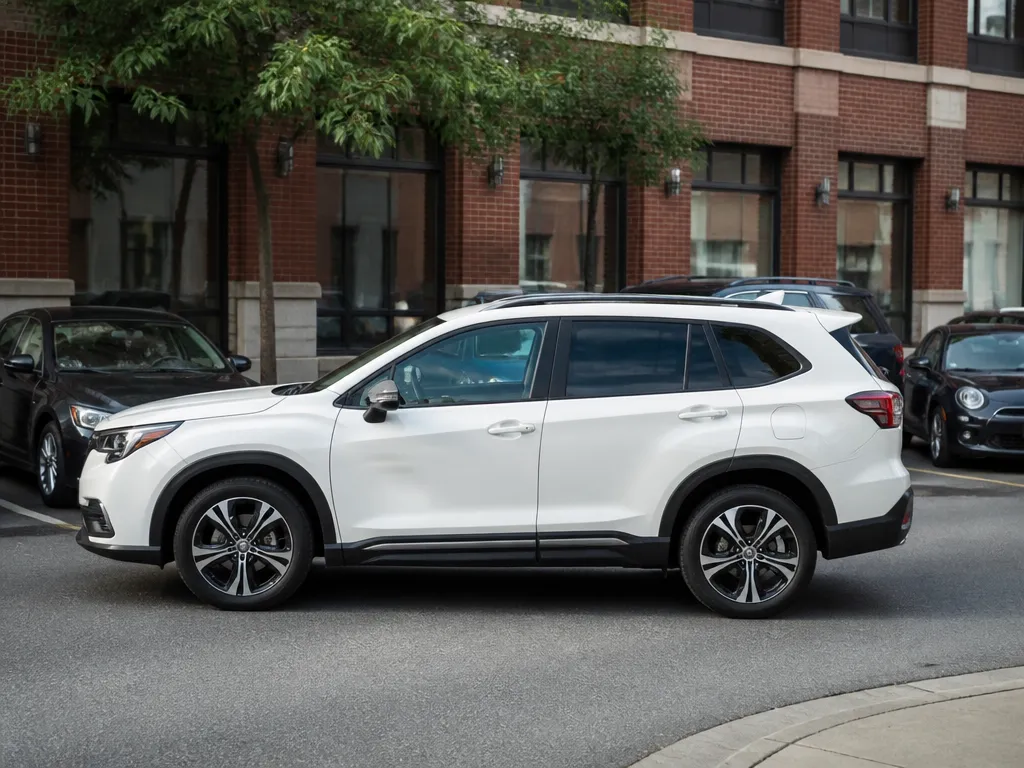
Street parking and tight U-turns punish SUVs that have poor sightlines or slow-to-understand driver-assist cameras. Pick trims with a wide camera set and strong low-speed sensing coverage, then verify curb awareness from the driver seat and mirrors before you commit.
Camera Layouts That Actually Help You Park
360-degree cameras are the easiest win when you parallel park or squeeze into angled spots, because you can line up the SUV’s corners instead of guessing. For city driving, the best setups usually include a surround view plus zoomed front and rear camera views for the exact zone where your bumpers and front tires swing.
Front/rear-only systems can work if the hood is short and your mirrors cover the fender area, but most owners end up relying on mirrors and “one more inch” anyway.
In practice, curb rash happens when the curb sits in your blind spot or when the camera view is delayed by screen setup or glare.
| Camera package | What you notice in tight spots | Best for |
|---|---|---|
| 360-degree surround | Easy corner placement, predictable alignment | Parallel parking, narrow garages, busy curb lanes |
| Front and rear (no surround) | Good for straight backing, harder for angled parking | Residents parking with less space stress |
| Curb-view / curb guidelines (if available) | Better curb proximity cues than generic lines | Drivers who get nervous about wheels close to curbs |
Blind-spot Monitoring That Helps At Low Speed
Blind-spot monitoring matters most when you creep through traffic, merge into bike lanes, or change lanes while someone is running alongside your quarter panel. Cross-traffic alerts are even more valuable in city lots, where you angle in and can’t see around parked cars.
When choosing a trim, prioritize packages that include blind-spot monitoring plus a cross-traffic alert you can hear or see clearly at a stop. Some systems only warn during lane changes above certain speeds, which is less helpful when you are inching forward in congestion.
Dealer lot test: Sit in the driver seat and adjust mirrors so the rear door handle disappears from your view. Then check your blind spots with your head still. If you still can’t see the adjacent lane edge clearly, you will rely on sensors and cameras more, so prioritize trims with that tech.
Seat Height And Sightlines For Curb And Obstacle Awareness
Seat height is not just comfort in a city, it is how quickly you catch curbs, speed bumps, and the lower edge of parked vehicles. Taller seat positions can make hood visibility worse if the hood line rises sharply, which pushes you toward the camera and parking sensors rather than “eyes only.”
Low-speed turns also expose turning behavior: some SUVs feel nose-heavy and drag their front corners wide on a tight radius, which makes parallel parking harder even with sensors. Choose trims that pair good visibility with tighter turning behavior, and if your shortlist includes both compact and mid-size options, the compact class usually wins in “time to fit” when the curb angles are aggressive.
| What to verify during a test drive | Why it matters on city streets |
|---|---|
| Front hood corner visibility when creeping | Controls how much you rely on camera views in slow turns |
| Mirror coverage of the rear quarter and door edge | Reduces blind-spot guessing when cars are tight beside you |
| Camera guide confidence at night and in rain | Determines whether sensors help or become clutter |
| Turning radius feel at walking speed | Predicts how fast you can complete parallel parking |
Stop-and-go Efficiency And Brake Feel
Hybrid drivetrains usually win city driving because they recapture energy when you slow down and can run the engine only when it adds value. Brake feel in traffic depends on how the car blends regenerative braking with the friction brakes, so the “smoothness” you feel is a calibration choice, not luck.
Hybrid Vs Gas In Congestion
In stop-and-go traffic, a hybrid (Toyota RAV4 Hybrid, CR-V Hybrid, Hyundai Santa Fe Hybrid, Lexus NX) can keep the vehicle moving with electric torque at low speeds, then bring the engine online when it needs sustained power. That pattern reduces idle losses and helps short trips, especially when you brake often enough for regen to matter.
Trade-off is you may still see mediocre gains on very short drives if the battery and catalytic system never reach stable operating temperatures. Plug-in hybrids (like the Mitsubishi Outlander PHEV) can be excellent when you truly charge at home, but their real-world efficiency depends on how much of your commute happens on electricity before the battery is depleted.
| City Driving Trait | Hybrid Behavior | Gas SUV Behavior | What to Test on the Drive |
|---|---|---|---|
| Low-speed creep and stops | Often uses electric torque, smooth initial movement | Uses transmission shifts or torque converter lockup | Watch for surging or delayed response when easing into traffic |
| Deceleration into traffic lights | Regen kicks in, friction brakes blend in quietly | Friction braking does most of the work | Feel for a “grabby” transition between regen and brake pads |
| Short-trip fuel economy | Improves when trips are long enough to stabilize systems | More heat losses from idling and cold starts | Track trip data for at least a couple of real routes, not one errand |
| Grade changes in town | Regen helps slow down smoothly, assists downhill control | More dependence on friction and engine braking | Try a gentle downhill stop and confirm control without bouncing |
Transmission Smoothness At Walking Speeds
At walking speeds, the best city SUVs keep the drivetrain calm. Look for minimal “lurch” when you roll from a stop, and minimal hunt when creeping forward with small throttle inputs.
In test driving, do repeated starts in a parking lot aisle: foot on the brake, release slowly, and then vary pedal pressure just enough to move a few feet. A transmission that feels refined will respond immediately and smoothly, while one that feels busy will pause, then surge as it finds gear or clutch engagement.
Brake Modulation Confidence In Congested Stops
Good brake feel in traffic means you can feather the pedal and get the deceleration you expect, even with frequent stops and different traffic densities. Regenerative braking can mimic that smoothness, or it can create a stepped sensation where regen fades and friction takes over.
During the test drive, perform three light-to-moderate stops from the same speed, and pay attention to pedal travel, not just stopping distance. A confident setup feels linear, with no shudder, no sudden bite late in the stop, and no “release” sensation when you lift off the brake.
Insider tip: When a car has automatic brake hold, test it by stopping for 5 to 10 seconds at idle, then creeping forward again. A well-calibrated system avoids a jolt when it releases and resumes control.
Short-trip Habits That Change Real-world Efficiency
Real efficiency on city routes drops fast when trips are too short for the engine to warm, the battery to balance, and tire pressures to stay stable. For hybrids and plug-ins, the “first mile penalty” is the big culprit, and it can erase gains you’d see on a longer loop.
Short-trip habits that improve outcomes are simple and repeatable: keep speeds steady when you can, avoid full-throttle accelerations that force the engine to catch up, and don’t let tire pressures drift low. If you have a plug-in, treat charging like part of the ownership plan, not a bonus, because the best consumption comes from using electricity before you run the battery down.
Commute Comfort Over Potholes
Softer, better-tuned suspensions and properly sized tires absorb broken pavement without beating up your spine or the cabin. City comfort also comes from controlling noise, vibration, and harshness (NVH), which is a big reason some SUVs feel “calm” even in traffic while others feel busy and loud.
Suspension Tuning: Firm Control Vs Forgiving Ride
On rough city streets, a stiff setup can feel crisp on smooth roads but it magnifies impact harshness when you drop into potholes or hit patched asphalt seams. A forgiving tuning is usually the better trade for commuters, especially with frequent short trips where the suspension never fully warms up.
Trim choices often matter here. A sport-oriented package may swap in lower-profile tires, higher spring rates, or different shock damping, and that combination tends to increase impact harshness. If your routes include potholes and expansion joints, prioritize models described with “comfort” suspension tuning, not “sport” or “handling” calibrations.
Tires And Sidewall: What To Ask When Pricing
Wheel size and tire sidewall height decide how much the tire can “give” before impacts reach the suspension. Lower-profile setups look better and can feel more responsive, but they transfer more harshness over potholes and uneven asphalt.
When you price tires, ask what the factory size is and what sidewall height you are actually getting. Many SUVs can run multiple sizes depending on trim, and the difference in ride comfort can be noticeable even when the overall tire diameter stays close.
| What to compare at the tire counter | City-driving impact |
|---|---|
| Tire sidewall height (from the size code) | More sidewall often means more cushion over potholes and patched asphalt. |
| Tread pattern and “quiet”/comfort design | Quieter tread designs usually reduce road roar in stop-and-go traffic. |
| Load rating and tire construction | Correct ratings help the tire resist damage from repeated impacts and curb hits. |
Cabin Nvh Sources In Urban Driving
Urban noise is a mix of tire roar, wind noise, suspension rattle, and powertrain resonance from stop-and-go operation. Road noise usually comes through the tires, wheel well liners, and windshield/cowl area, while suspension impacts can create little rattles that show up only over uneven pavement.
For example, many SUVs develop creaks or buzzes around the center stack, door panels, and headliner after months of city mileage on rough roads. Those sounds are often tied to trim fit and isolator condition, and they get worse if the suspension setup is harsh enough to excite the body.
During test drives, pay attention to three things: tire noise at 25 to 45 mph, wind noise when you change lanes, and any buzzing from the dash or door area after you hit a pothole or expansion joint. Choose the SUV that stays steady and “quiet” through those exact moments.
Mechanic tip: If the SUV feels great on smooth dealership pavement but turns loud or jittery once you hit patched streets, the tire size and suspension calibration are the usual culprits. That combo beats out almost every “comfort” promise you hear in the showroom.
Recommended Trims And Must-have Features
City-friendly SUV trims are the ones that make slow traffic, tight parking, and confusing intersections less stressful. Prioritize driver-assist tech for lane keeping and collision avoidance, plus parking visibility tools like sensors and a 360 camera. Choose the lowest trim that has those basics, then step up only if you need comfort and better outward visibility.
| Feature type | What you get in the city | Trim rule |
|---|---|---|
| Automatic emergency braking (pedestrian) | Helps reduce damage risk at crosswalks and sudden stops | Do not skip |
| Lane centering / lane-keep assist | Reduces fatigue on long commutes and helps you stay centered | Skip only if you drive extremely conservatively |
| Adaptive cruise (traffic-aware) | Smooths stop-and-go speed changes and spacing | Worth it for heavy traffic commutes |
| Blind-spot + rear cross-traffic alert | Improves safety when changing lanes and backing out | Do not skip |
| Parking sensors | Improves accuracy in tight gaps | Baseline |
| 360 camera | Better curb and clearance awareness, especially in garages | Upgrade if parking is your daily stress point |
“In the real world, the best city trim is the one you can park without guessing. If you routinely rely on mirrors and a spotter, move up until the camera and sensor views feel ‘idiot-proof’ to you.”
For the most common city-driver profiles, the smart pattern is consistent: compact-to-midsize SUVs with strong outward visibility and the driver-assist plus parking tech above beat larger, higher-power trims that still make parking harder. The trade-off is simple, the more you spend, the more you should be paying for visibility and low-speed assistance, not for features you will never touch.
Test-drive Checklist For City Owners
Plan a 30 to 45 minute test drive that includes parking, tight turns, stop-and-go traffic, and a few camera checks after sunset. Bring a small note pad and rate each SUV on visibility, low-speed control, and brake feel before you even compare infotainment.
| Test | What to do on the lot | What “good” feels/looks like | Red flags | Models most sensitive to this |
|---|---|---|---|---|
| Visibility and mirrors | Stand outside, check hood edge and A-pillar coverage from driver seat. Adjust mirrors, then do 2 quick head-turns left and right while moving 5 mph. | Clear sightline to crosswalks and lane edges, mirrors capture blind spots without constant re-aiming. | Chunky pillar blocking views, mirrors feel “too far off” or distort nearby cars. | Compact SUVs with higher waistlines and thick A-pillars |
| Seat height comparison | Compare sight over parked cars at stop, then compare reach to steering wheel and pedals. | Steering wheel doesn’t require you to slouch, and you can brake without stretching your leg. | Overly low seating makes curb navigation stressful, or your knee hits the dash. | Small crossovers and taller-riding turbo models |
| Parking simulation (camera sensors) | Use the backup camera and, if equipped, the 360 view. Do a 3-point or tight spot entry, then stop and recheck overlays. | Camera guidance updates smoothly, the vehicle path line matches reality, and sensors beep consistently. | Camera lags, overlays drift during steering, sensors go silent near obstacles. | Any SUV with big body overhangs or wide tires |
| Low-speed turning feel | In an empty lot, do slow U-turns and tight left-right transitions at 5 to 10 mph. | Steering effort stays predictable, the vehicle tracks cleanly, and you can place the tires with one or two corrections. | Steering is vague, tires scrub excessively, or the SUV feels reluctant to pivot. | Heavier models, especially those with larger wheel sizes |
| Stop-and-go brake modulation | Brake repeatedly from 10 mph to a near-stop without coming to a hard halt. Then inch forward and repeat. | Brake pedal is easy to feather, the SUV holds cleanly without lurching, and stopping is consistent. | Shaky pedal, jerky transitions, or frequent “grab” behavior at the end of the stop. | All SUVs, especially those with adaptive cruise or auto-hold modes |
| Creep behavior (traffic crawl) | In D, release the brake and watch motion for 1 to 2 seconds. Then repeat with your right foot hovering for precise control. | Gentle, controllable creep that lets you fine-tune distance without riding the brake. | Sudden surge when you lift, or delayed response that makes you “chase” the car ahead. | Models with electronic shifters and light-duty tuning |
| Infotainment + camera usability | Test map zoom, pinch/knob response, and switch between camera views quickly. Do a quick glare check with headlights on. | No noticeable lag when switching cameras, touch controls feel crisp, and night images stay readable. | Delayed touch response, camera glare washes out curb lines, or overlays are hard to interpret. | Any SUV with a busy screen layout and aggressive UI animations |
Parking Simulation: Measure Confidence, Not Just Tech
Drive into a tight marked space and use the camera guidance for one attempt, then repeat without staring at the screen for the second attempt. The SUV that lets you finish the maneuver confidently is usually the one you will park faster in real life.
For example, camera usefulness drops fast when glare hits the lens or when overlays do not line up during steering input. If the 360 view looks “accurate” only when the wheel is straight, you will fight it the moment you angle into a spot.
Low-speed Drive: Turning Radius And Steering Effort
Do a sequence of slow turns in both directions and judge how often you need to correct. An SUV that feels effortless to place in a lane or keep off the curb will save you time in dense city intersections.
For instance, heavy steering on center can be manageable, but steering that changes weight mid-turn is a pain in parking lots. Notice whether the tires sound busy and whether the SUV feels like it resists rotation when you ask for quick direction changes.
Stop-and-go Test: Brakes, Creep, And Smoothness
Repeat the same traffic routine two times. The best city SUV keeps brake feel consistent and creep predictable even when you change your following distance by a few feet.
In practice, inconsistent modulation is obvious when you try to stop smoothly at the same spot twice. If you get a jerk right at near-stop or the car “hangs” before moving, that is what you will feel all day during commuting.
Infotainment And Camera Clarity: Lag And Night Glare Check
Switch camera views and return to the map without waiting. The SUV that makes you fumble the screen is the one you will avoid using while multitasking, and that defeats the point of having parking cameras in the first place.
For example, glare issues show up at dusk when headlights hit the lens and the lane markings disappear. If night camera images are washed out or the sensor warnings are buried behind UI popups, you will rely less on the system than you expect.
Tip from the service bay: if an SUV needs “perfect” screen positioning to park smoothly, you will hate it after a few weeks. City driving rewards cars that stay easy when you are tired.
Quick Summary
Picking a city-focused SUV comes down to how easily it handles tight parking, stop-and-go traffic, and rough pavement while still delivering good fuel economy and low ownership hassle. The article says the “usual wins” are easy parking tech like 360-degree cameras and sensors, low-speed driver help such as adaptive cruise control and lane centering, and efficient powertrains, especially hybrids or efficient turbo engines. It also emphasizes starting with maneuverability, then prioritizing camera coverage for faster curb checks.
For the shortlist, the 2025 Honda CR-V is named the best overall city pick because it is not huge but stays practical in stop-and-go use, with a ride that remains composed over rough pavement. The 2025 Honda HR-V is the best compact for tight parking, described as small enough for slimmer aisles with good visibility. For efficiency in traffic, the 2025 Toyota RAV4 Hybrid is the top hybrid choice, while the 2025 Subaru Forester is highlighted for active safety confidence, and the best value for ownership costs is split between the RAV4 (gas) and Mazda CX-5, with maintenance and wear items described as straightforward, and the most important takeaway is to choose the trim with the safety and camera package first.
| Need in City Traffic | Article Pick | Why It Fits (from article) |
|---|---|---|
| Best overall city SUV | 2025 Honda CR-V | Easy maneuvering and visibility, practical rear seat and cargo for daily gear, composed ride over rough pavement |
| Tight parking | 2025 Honda HR-V | Small enough for slimmer parking aisles, good visibility for low-speed maneuvers |
| Hybrid for stop-and-go | 2025 Toyota RAV4 Hybrid | Built for stop-and-go fuel waste, calm and predictable low-speed behavior |
| Safety tech in dense traffic | 2025 Subaru Forester | Active safety confidence, higher trims add more driver-assist and visibility tech, tall seating helps spot hazards earlier |
| Lower ownership-cost tilt | 2025 Toyota RAV4 (gas) or Mazda CX-5 | Straightforward maintenance and wear items, aimed at avoiding expensive surprises |
Frequently Asked Questions
What Suv Is Best For City Driving If I Want The Easiest Parking And Tight Turns?
Look for an SUV with a shorter wheelbase and a small turning radius, since that is what actually makes parallel parking easier. If you are choosing between similar trims, prioritize compact or subcompact size over bigger all-wheel-drive variants.
Which Suv Gets The Best Gas Mileage For Stop-and-go City Traffic?
In cities, mpg depends heavily on how often you accelerate hard and how the transmission manages low-speed driving. Pick an SUV with a modern automatic or hybrid powertrain and check the EPA combined rating for your model year, since city driving ratings are not always a perfect match for your commute.
Are Suvs With All-wheel Drive Worth It For City Driving?
If you deal with rain, snow, or icy mornings, AWD can help you maintain traction when starting and cornering slowly. If your commute is mostly dry and you want lower costs, many AWD systems are less efficient than front-wheel drive, so fuel economy can take a hit.
What Safety Features Should I Prioritize In An Suv For City Driving?
For city traffic, prioritize automatic emergency braking, blind-spot monitoring, and lane-keeping assist. If you drive in heavy cross-traffic, also look for a rear cross-traffic alert to help when pulling out of parking spots.
What Should I Test Drive On An Suv Before Buying It For City Commuting?
On a short test drive, pay attention to visibility (hood line, mirrors, and rear view) and how the brakes feel during stop-and-go driving. Try a full stop from 20 to 30 mph, then watch for brake shudder or long pedal travel, since those can point to issues that get worse in traffic.
Is A Smaller Suv Always Better Than A Midsize Suv For City Driving?
Not always, because midsize SUVs can have better ride quality and sometimes more driver-assist tech, even if they are harder to park. If parking and garages are your biggest problem, choose smaller, but if you care more about fatigue and visibility, a midsize can be the better daily choice.