


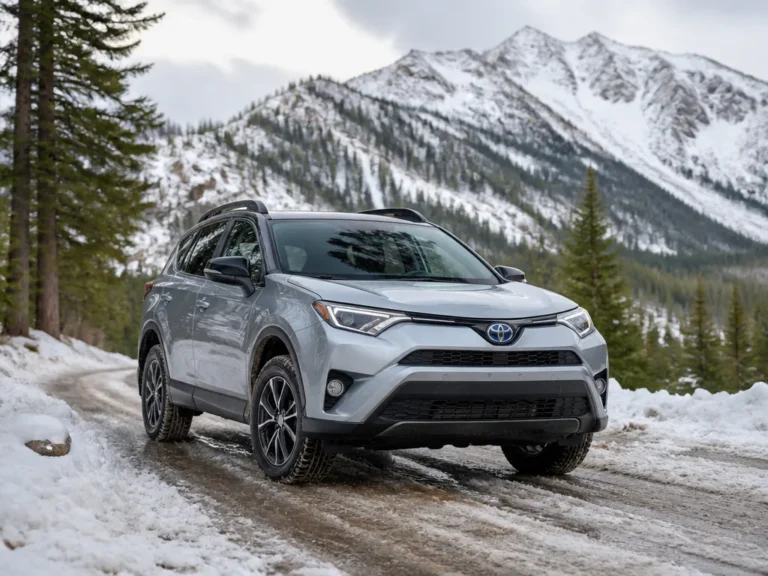
You‘re searching “best Toyota for snow driving” because winter keeps finding you, and tires plus traction make or break the trip. Maybe you’re deciding between a cheaper AWD crossover and a tougher body-on-frame 4WD, or you’re trying to match a specific Toyota to your snowfall and commute. You want a shortlist you can trust, with real buying notes.
Best match usually comes down to drivetrain: AWD for most snow days, 4WD for deeper snow or rough roads. This guide narrows Toyota options by model and trim, adds year ranges, rough new and used price bands, and the winter caveats that matter, like tire choice and ground clearance.
Toyota’s best snow-driving picks are AWD RAV4 and RAV4 Hybrid (easy AWD traction for most winter commutes) and 4WD 4Runner (more capability for deeper snow). For minivan comfort with AWD, Sienna AWD works well. Choose winter tires in sizes that fit your trim, usually switching before temperatures drop near 45°F.
Best Toyota For Snow Driving
For real winter confidence in a Toyota, you want high ground clearance, a proper AWD system, and the right winter tires.
In practice, most “snow-ready” Toyota picks turn into “tire-ready” picks, because tire grip decides how well the vehicle starts, stops, and steers on snow and slush.
Fast Pick: Match The Model To Your Snowfall
Pick based on how often you deal with deep snow, packed snow, or frequent plowing and slush. Toyota’s best winter models follow a simple rule: higher stance and AWD help you get moving, while winter tires keep you moving safely.
Snow Reality Check: Tires Beat Awd Alone
AWD gives you better traction when you accelerate, but it cannot replace tire tread design and rubber compound made for cold. The difference shows up fastest when you turn, brake, or drive over slushy patches where traction is unstable.
Shop-floor truth: If you only budget for one “snow upgrade,” spend it on winter tires first. AWD helps you get moving, winter tires help you stay in control.
How This List Is Scoped (And What Trims/years To Target)
This shortlist is limited to Toyota AWD/4WD vehicles that are common in the used market and have enough clearance for winter conditions. The target trims are the ones that pair AWD/4WD with stability controls you can feel working, plus factory winter-friendly convenience items like heated mirrors or heated seats (availability varies by year).
Trim and model-year expectations are practical rather than perfect. The safest used-buy approach is to target the AWD/4WD-equipped variants (avoid 2WD) and then focus on systems that behave predictably in low traction.
| Toyota model | Drivetrain scope for snow | Best fit | Used-buy target |
|---|---|---|---|
| RAV4 | AWD | Cleared roads and mixed commutes | Prefer AWD trims with added convenience/driver aids where available |
| Highlander | AWD | Long drives in cold, snowy weather | Prefer AWD with winter comfort items (heated options) |
| 4Runner | 4WD | Deep snow, rough access roads | Prefer 4WD with higher ground clearance options (trim depends on year) |
| Tacoma | 4WD | Snow + hauling or rural routes | Prefer 4WD variants; match tire size to the spec you can maintain |
Bottom line for trimming: prioritize AWD/4WD over “luxury trims,” then pick the winter-friendly convenience items you will actually use. Next section will go deeper on RAV4 AWD winter-ready specs, including what to look for beyond the badge.
Rav4 Awd Winter-ready Specs
RAV4 AWD uses an electronically controlled transfer case with a traction-control strategy that varies torque to help you claw forward on slick pavement. RAV4 driveline behavior in snow is predictable, but it is still tire-limited, so tire choice matters as much as AWD.
Ground clearance and packaging are why RAV4 works better than many “snowy day” crossovers. RAV4’s underbody and wheels are spaced to reduce scraping in slush, and the AWD system keeps the vehicle moving when one axle loses grip.
Drivetrain Behavior In Winter
RAV4 AWD keeps front wheels and rear wheels in play, then traction control steps in when slip starts.
In practice, the car is happiest with smooth throttle and momentum, since aggressive inputs can still trigger wheel slip and traction control to intervene.
Clearance Notes For Slush And Packed Snow
RAV4 is meant for winter commutes and plowed roads with some drifting, but slush depth and road buildup can still overwhelm ground clearance. Roof carriers, mud flaps, and wheel size affect how quickly slush collects around the wheel wells.
| RAV4 trim vibe | Winter relevance | Shop tip |
|---|---|---|
| LE/XLE AWD | Best daily balance, usually lower cost | Verify the AWD system, check tire wear pattern |
| Adventure AWD | More off-road oriented styling and comfort for rougher parking lots | Look for good tread on all seasons if you plan to winter-tire later |
| TRD Off-Road AWD | Most rugged stance for snow-country errands | Confirm suspension hasn’t been bounced hard and alignment is straight |
What Trims And Year Ranges To Target
Shop for an AWD RAV4 with the comfort and safety tech you want, then plan on dedicated winter tires. Gas AWD is the easiest value target, but Hybrid AWD can be strong for stop-and-go snow commutes because it runs smoothly through low-speed traction situations.
Reality check: RAV4 AWD works well in snow, but it is not a substitute for a true low-range, locking-differential 4WD truck when you’re driving deep ruts or trail snow. Keep expectations aimed at plowed roads, packed snow, and moderate drift.
For year ranges, prioritize newer model years for infotainment and driver-assist consistency, and older model years for price. A common used-value strategy is to find a clean, low-mile AWD example that still has good brake thickness and tire tread you can measure.
Typical pricing swings a lot by region and trim, so treat any numbers as rough estimates: used AWD RAV4s often land in the sub-$20k range to low-to-mid-$20k range depending on year and miles, while newer trims can climb higher. New prices vary by incentives and current demand, so compare “out-the-door” figures with comparable AWD trims in your area.
Reliability in snow is mostly about wear items. Expect faster brake wear from frequent low-speed grinding and salt exposure, and check tires closely for uneven tread from prior slip events, alignment issues, or aggressive curb hits.
Snow-performance caveat: RAV4 AWD helps you start and maintain motion, but steering and stopping still depend on tires and brake health. If you drive on icy roads often, budget for winter tires and keep pressure adjusted for cold weather.
Rav4 Hybrid Awd/prime Snow Notes
RAV4 Hybrid AWD and RAV4 Prime do well in snow because they keep drive available to the wheels that need it, while the hybrid powertrain gives predictable low-speed torque in slippery starts. The AWD system and traction control can react quickly, but tire choice and how you manage regen in cold weather matter more than the badge.
Drivetrain Feel In Winter (Hybrid Weight And Regen)
Hybrid drivetrains add mass (battery and electric components) low and toward the rear third of the vehicle, which helps stability, but it also means your stopping distances with worn tires get worse faster than you expect. Regen braking can feel different on fresh snow versus dry pavement, since the car blends electric decel with friction brakes to maintain traction.
Before committing to a used one, pay attention to how the vehicle behaves in a controlled parking-lot test: gentle regen on a light snow patch should feel smooth, steering should stay consistent, and the AWD engagement should not cause shuddering or repeated traction control flare-ups.
Prime-specific Caveats To Verify
RAV4 Prime adds a larger high-voltage battery and more winter variables. Cold weather can reduce available electric range and may limit regen until the battery warms, so expect different pedal and decel feel during the first few miles.
Prime buyers should also verify charging history and battery health indications in any pre-purchase inspection. Look for a clean service record for HV system software updates and confirm the car was charged on schedule if it lived with a plug.
| Checklist item | What to verify |
|---|---|
| Cold regen consistency | Test-drive in cool conditions if possible, watch for abrupt transitions or warnings |
| Battery and charging history | Ask for documentation of charging behavior and any HV-related service |
| Winter tire fitment | Confirm correct wheel size and load rating for your model year |
Trim Picks, Year Ranges, And Used Buying Tips
For snow performance, prioritize trims that include AWD and a traction-oriented driving setup, then budget for a quality winter tire package. For used shopping, the most practical window is typically mid-cycle years where you can find better mileage and fewer mods, but the right year depends on what AWD and tire sizes were paired in that specific build.
In practice, a clean, well-documented used Hybrid AWD often beats a higher-mile Prime if you cannot guarantee winter tire condition.
For example, a Prime with mismatched wheels or neglected tread compounds can erase the advantage, since traction is still tire-limited.
Mechanic note: Before you buy, ask for tread-depth measurements on the tires that are actually on the car. Snow traction is linear with tread, and cheap “all-seasons” can turn an AWD car into a white-knuckle machine.
Winter Maintenance And Tire Pairing For Awd Consistency
Winter reliability on a hybrid depends on the basics. Prioritize fresh wiper blades, correct coolant mix, and battery condition, then make sure your charging and starting system are healthy for cold mornings.
Tire pairing matters because AWD wants matching rolling characteristics. Use the same winter tire model and tread depth across all four corners, avoid mixing sizes, and if you replace a set mid-season, match the new tires as closely as possible to the remaining tread depth on the other axle.
Highlander Awd And Hybrid Awd
Highlander AWD and Highlander Hybrid AWD are strong family picks for snow commuting because they keep the vehicle stable, warm, and roomy when roads get ugly. The trade-off is that real-world capability depends heavily on tires and clearance, since the Highlander is an SUV that expects plowed roads, not deep ruts.
Awd Behavior In Slush And On The Highway
Highlander AWD is built for traction when conditions change, like patchy ice, slush, or a snowbank that sticks to the tires.
In practice, it feels calm and predictable at steady throttle, and it helps you maintain forward motion when you lose grip on one side.
Highway slush is where the Highlander shines for school-run to road-trip use. AWD helps reduce the “wait and see” moment when you hit a slick seam of pavement, but braking distance still grows fast, especially with worn tires or mismatched tire tread.
Ground Clearance Limits, Where It Shines, And Where It Struggles
Highlander clearance is good for typical snow-season daily driving, but it is not a substitute for true off-road ground clearance. Snow “caves” form when the tires cut through and then pack material ahead of the drivetrain, exhaust area, or underbody.
In plowed, salted areas, the Highlander is a great commuter. In unplowed side streets, expect slower progress and more underbody scraping if you push into deeper drifts or rutted fields.
Buyer rule of thumb: If your route includes unplowed intersections or lots of deep snowbanks, prioritize tire quality and consider whether a more off-road oriented Toyota (like 4Runner) fits better than an AWD crossover.
| Use case | Highlander AWD/Hybrid AWD fit | Key limiter |
|---|---|---|
| School runs, plowed roads | Excellent | Tire tread and pressure |
| Highway slush and storms | Very good | Braking distance |
| Unplowed side streets | Okay, careful driving | Snow packing underbody |
Trim Guidance For Heat, Comfort, And Winter Practicality
For snow buyers, aim for trims with strong comfort content because winter time is spent idling, waiting, and commuting. Look for heated seats, heated steering wheel, good defrost performance, and convenient second-row comfort so passengers stay warm.
Snow-friendly package value is often in the details: all-season versus dedicated winter tires, wiper blade quality, and fast cabin warm-up. When shopping, also verify whether the truck has the equipment that matters to your climate, like heated mirrors and a quality windshield wiper setup.
Year Ranges, Typical Pricing, And Winter Wear Items To Inspect
For reliability and tech balance, most shoppers target late model years with complete safety and infotainment updates, while staying away from the first year of a major redesign. In the used market, this usually means focusing on recent refresh years within the generation you are considering rather than the earliest units.
Typical pricing is rough but practical: new Highlander trims with AWD often sit at a mid-to-high five-figure range, while used AWD/Hybrid AWD examples commonly land in the low to mid five-figure range depending on year, mileage, and trim. Under $20k can happen on older/high-mile units, but your winter confidence drops if the tires, alignment, and brake wear are already questionable.
Best-use Scenarios: School Runs, Road Trips, Mixed Weather
Highlander AWD/Hybrid AWD is at its best for mixed weather commutes where you want a comfortable cabin, stable highway behavior, and enough traction to feel confident at launch and during gentle maneuvers. School runs are where the heated cabin and easy seating setup matter most.
For road trips, the Hybrid can be especially appealing when you are spending long stretches in stop-and-go traffic or variable conditions, because the drivetrain helps keep efficiency reasonable. Mixed weather is the sweet spot as long as you prioritize the one thing that controls traction the most, winter tires, then match your driving to the slower speeds and longer stopping distances.
4runner 4wd Part-time Advantage
4Runner 4WD is a smart choice for rough snow because it pairs high ground clearance with a part-time transfer case that can send more driveline torque to the wheels when you need it. When conditions get slippery, that extra traction control helps more than most “crossover” AWD systems. The trade-off is that the 4WD mode has to be used correctly, or you can bind the drivetrain on dry pavement.
Part-time 4WD on the 4Runner means you normally drive in 2WD or auto-like behavior only when the system allows it, then you actively engage 4WD low-speed traction modes when roads get bad. Use 4H for slippery packed snow, icy corners, and loose surfaces where you feel the rear wheels slipping. Use 4L for deep snow ruts, heavy slush, or slow crawling where you want low gearing and smoother throttle response.
Ground Clearance And Traction For Deep Snow
4Runner’s higher ride height keeps more of the underbody out of the snow berms, which helps traction stay available instead of getting buried. The suspension travel and traction-focused drivetrain layout are why it feels more controllable when you hit uneven drifts or plowed snow ridges.
For example, a 4Runner in 4H with quality winter tires will usually walk through light to moderate deep snow better than an AWD crossover running all-seasons. A locked-in 4WD bias can help you climb out of a rut, even when acceleration is modest.
| What you’re driving | 4Runner mode to shop for | Typical feel |
|---|---|---|
| Plowed, packed snow | 4H | More stable traction on ramps and corners |
| Ice or mixed patches | 4H | Less wheel spin, better confidence |
| Deep slush, ruts, or crawling | 4L | Controlled torque at low speed |
What To Check On A Used 4runner (And Which Trims To Hunt)
Trim matters, but durability matters more. Shop for winter-friendly packages and the most complete maintenance history you can find, because snow driving punishes brakes, underbody components, and suspension wear.
“On snow-capable 4Runners, the biggest used-vehicle problem I see is neglected underbody care. If the frame and brake lines look heavily rusted, you may be buying a winter vehicle that needs work immediately.”
Year ranges depend on what you can find locally, but generally focus on cleaner rust-free examples and verify the service records for 4WD driveline components. Higher-mile trucks should get extra scrutiny for transfer case operation, differential leaks, and worn suspension bushings. Typical used pricing for a solid 4Runner 4WD varies a lot by mileage and rust level, but rough shopping ranges often land in the mid-$20,000s to low-$40,000s for usable examples (expect variation by year, trim, and local market).
Snow-performance caveats are real. 4Runners can feel slower to respond at the steering wheel in deep snow because grip builds progressively, and tight turns can increase slip and driveline stress. Tire strategy is the limiter: winter-rated tires outperform any mode-switching, and mixing tire wear or running questionable tread depth will erase the benefit of 4WD.
| Used 4Runner checklist item | Why it matters in winter |
|---|---|
| 4WD engagement test (4H, then 4L) | Prevents getting stranded when it’s time to use traction |
| Brake inspection and rotor condition | Snow braking is harsher on pads and rotors |
| Tire brand and tread depth | Tread and winter compound drive grip more than drivetrain mode |
| Frame and brake line rust | Rust can become a safety issue fast in salted regions |
Sequoia 4wd Snowy Capability
Toyota Sequoia 4WD can handle deep snow and mountain grades better than most full-size SUVs, but it is only as capable as its tires, brake condition, and winter setup. The truck-like size and weight help traction in steady conditions, while ground clearance and tire compound decide whether you keep moving when the road turns into slush and packed snow.
What 4wd Does Well For Winter Hauling
Sequoia 4WD is built for real-world load and elevation changes, so it is a strong pick for families towing light loads or carrying gear into snowy regions. The biggest snow advantage comes from AWD bias to keep the drive wheels loaded during throttle changes, plus the way the drivetrain manages slip when the surface is uneven.
For steep grades, the full-size wheelbase and robust cooling approach make long climbs more manageable, but you still need to respect brake heat and traction limits with a heavy load. With snow tires, the Sequoia stays composed through braking and gentle steering inputs, which matters more than people think when the road is icy.
Ground Clearance And What To Expect
Sequoia is tall, but deep snow exposes the limiting factor fast: tire tread depth and the ability to “float” rather than plow. In slush, the underbody can collect snow and reduce airflow, so you may feel it as heat buildup or reduced throttle response after repeated high-load pulls.
Winter expectation should be “move confidently on maintained roads,” then “get through moderate snow,” not “go anywhere like a dedicated snow machine.” If your routes include frequent 6 inch plus unplowed drifts, spec for maximum tire size within clearance and plan to keep momentum steady.
Recommended Trims And Winter Option Packages
For winter confidence, the best Sequoia choices are trims with the strongest winter comfort and traction-related features, especially integrated heated seating and heated steering when you spend hours in cold weather. Look for packages that include heated side mirrors, remote start with a good runtime, and advanced traction controls that help when one wheel loses grip.
In practice, the “snow spec” is usually less about luxury and more about how often you start cold and how you manage visibility, because foggy windshields and delayed defrost drive risky driving decisions.
| Winter-focused pick | Why it matters | What to verify on the listing |
|---|---|---|
| Limited or higher (heated comfort) | Faster cabin recovery and better visibility reduce fatigue | Heated steering wheel, heated mirrors, defrost function |
| Any trim with strong winter traction tech | Helps manage slip on packed snow | Confirm 4WD system type, traction modes, and recent tire date |
| Models with cold-weather convenience | Remote start helps, especially with winter tires | Remote start capability and whether it works correctly |
Year Ranges, Used-buy Inspection, And Reliability Notes
For used shopping, prioritize the most recent generation you can afford to reduce risk from age-related wear, especially suspension bushings, wheel bearings, and brake hardware. A conservative target is to look across model years that are still within a reasonable mileage window for your region, then buy based on tire wear, service history, and rust condition rather than trim badge alone.
For the inspection checklist, focus on items winter exposes: corrosion around brake lines and calipers, tire sidewall cracking, and any signs of drivetrain vibration during slow turns. If the vehicle has frequent salted-road exposure, inspect underbody coating, rocker panels, and the exhaust hangers for rot.
Mechanic tip: During test drive, try a gentle stop on a safe, low-traction surface. If you feel severe steering pull or hear grinding, walk away and plan on a brake-and-rotor bill even if the listing looks clean.
When A Full-size Suv Is Worth It
A full-size SUV like Sequoia is worth it when you carry people, cargo, or gear and you need stability on longer winter routes where you cannot avoid slush. A smaller crossover can feel easier to maneuver in tight plowed lots, but it also has less reserve for towing, heavier loads, and sustained uphill grades.
A Sequoia is not the best pick when your routine is mostly short city trips on fully plowed streets, because higher fuel burn and bulk make it harder to justify. For deep, mixed-condition highways and snow hauling, the Sequoia hits the sweet spot, provided you spec winter tires and keep brakes and fluids fresh.
Rough price reality (used vs. newer): Sequoia used pricing varies heavily by year, mileage, and rust history, but many shoppers should expect a wide spread, with newer examples costing meaningfully more. Budget planning should include winter tires, potential brake work, and any needed suspension refresh, since those wear items are what determine real winter performance.
Sienna Awd Winter Use Cases
Toyota Sienna AWD is a practical snow-day choice because the all-wheel drive helps keep a minivan’s driven wheels from spinning when traction drops. The real advantage is predictable control for families on packed snow, slush, and wet roads, as long as you match it with the right winter tires.
Where The Awd Minivan Layout Helps (And Where It Does Not)
AWD in the Sienna improves launch and mid-corner grip by spreading torque to whichever axle has better traction. On snowy commutes, this usually feels like smoother starts on unplowed lots and fewer traction-control interventions than a front-wheel-drive minivan.
Ground clearance is the limiting factor compared with SUVs and body-on-frame 4WD trucks. The Sienna can handle winter roads well, but it is not designed for deep ruts, frequent high-center hits, or low-speed rock crawling where you would expect a true 4WD system and taller underbody protection.
| Winter condition | Sienna AWD behavior | Owner win | Watch-out |
|---|---|---|---|
| Packed snow | Better off-the-line traction than FWD | Confidence for school runs and commutes | Still depends heavily on tire grip |
| Slush and wet snow | Stable progress if tires cut through | Reduced wheel spin | Aggressive acceleration can overwhelm any tires |
| Light snow on icy patches | Torque distribution helps, ABS manages slip | More consistent traction-control behavior | Braking distances still increase on ice |
| Plowed road with spray/ice | Predictable steering with correct tires | Comfort stays high on long drives | Hydroplaning risk rises with worn tires |
Trim And Equipment Picks For Winter Comfort
For cold-weather use, prioritize Sienna trims that include heated front seats, heated steering wheel (if available on that year), and strong climate control. For AWD, also verify the vehicle is equipped with the winter-friendly wheel and tire setup you plan to run, since the “best” tire size can vary by year and package.
Year-to-year, look for features that reduce driver workload in storms: rear-seat heat for passengers, front defrost that keeps glass clear, and reliable wiper performance. Used value depends on these comfort items as much as drivetrain, since winter commuting is where the minivan shines.
“The Sienna’s AWD helps you move. Winter tires help you move, turn, and stop.”
What To Verify When Shopping Used (Reliability In Cold Climates)
Cold-weather reliability starts with basics: confirm the van has complete service history, correct coolant type for your climate, and no evidence of coolant loss. Inspect for tire age (sidewall date), proper brake pad thickness, and uneven wear that could point to alignment drift, which matters a lot when roads get slick.
Typical used-price targets vary by year, mileage, and demand, so treat them as ballpark only. For buyers, a realistic strategy is to find the best-maintained AWD unit within your budget and then budget for a proper set of winter tires plus a spare rim plan if the tire sizes or wheels you buy do not match your summer setup.
Best Use Scenarios
Families and daily commuters get the biggest payoff: AWD traction helps you get moving in snow, while the Sienna’s sliding-door layout keeps boarding easy during storms. Road-trip days also fit the Sienna well, because it is stable at highway speeds when paired with winter tires and keeps cabin heat consistent for passengers.
The Sienna AWD is best when your route is covered by plows and you are not chasing off-road obstacles. When the plan includes deep, unplowed snow, steep driveways, or frequent underbody scrapes, an SUV with more ground clearance and true 4WD capability will usually feel less stressful.
Tires, Maintenance, And Driving Tips
Winter traction is decided by your tires, then your tire setup, then your driving habits. The biggest snow gains come from good-quality winter tires with full tread depth and correct pairing on AWD/4WD Toyotas.
| Situation | What to do | Why it matters in snow |
|---|---|---|
| AWD/4WD with mixed tires | Use matched tires, same size, and similar tread depth | Drivetrain and traction control work best when rolling behavior is consistent |
| Tread depth getting low | Plan replacements before the tread is worn out | Snow channels and biting edges wear away, so braking and steering fall off |
| Uneven wear | Correct alignment and inspect suspension basics | Uneven wear reduces contact patch grip on slippery surfaces |
“In snow, gentle inputs beat bravery. Use smooth throttle and steady steering, and give extra time to stop because traction drops long before you feel it.”
For example, when climbing an icy hill, keep wheelspin low by using gradual throttle and maintaining momentum without sudden surges. For descending, avoid riding the brakes, then modulate braking early and smoothly so the tires keep searching for grip instead of locking and sliding.
For instance, add at least double your normal following distance in snow and packed slush. Uphill and off-camber corners are where traction disappears first, so slow earlier than you think and keep the vehicle pointed straight before you turn.
For traction aids and emergency basics, carry a shovel, a set of traction mats or a bagged traction product, and a compact air pump if your Toyota uses low-profile tires. Carry a flashlight, gloves, a small tool kit, and jumper cables or a jump starter, and keep the cabin stocked with warm layers and basic snacks in case you get stuck or delayed.
Quick Summary
If you are trying to pick the best Toyota for snow driving, the article’s main point is that drivetrain and tires are the real deciding factors, not the badge alone. It says AWD is usually the best match for most snow days because it helps you move on slick pavement, while 4WD is better when you face deeper snow or rough access roads. The guide also calls out ground clearance and winter tire sizing as key realities, noting that winter tires often need to be swapped before temperatures drop near 45°F.
For specific Toyota picks, it puts RAV4 AWD and RAV4 Hybrid at the top for easy winter commutes, and it recommends 4WD 4Runner when you expect deeper snow and tougher trails. It also mentions Sienna AWD for minivan comfort, Highlander AWD for bigger-family longer trips, and Sequoia 4WD for winter hauling needs, plus Tacoma 4WD if you can live with truck steering feel. The article warns AWD cannot replace winter tread, and closes with a clear priority: spend on winter tires first, then use AWD/4WD to get you moving.
| Toyota | Best for | Why |
|---|---|---|
| RAV4 AWD, RAV4 Hybrid | Cleared roads and mixed commutes | Everyday winter traction with predictable AWD behavior |
| 4Runner 4WD | Deep snow and rough access roads | Higher capability and off-road oriented hardware |
| Sienna AWD | Winter-friendly minivan use | AWD grip with minivan practicality |
Frequently Asked Questions
What’s The Best Toyota For Snow Driving If I Want The Safest Traction And Stability?
Look for a Toyota with all-wheel drive (AWD) and active safety tech like stability control. AWD helps you keep moving on slick roads, and stability control helps reduce wheel spin and slide when traction changes quickly.
Which Toyota Is Best In Snow, A Rav4 Or A Highlander With Awd?
For deeper snow or rough plowed roads, the Highlander AWD typically gives you more interior space and a higher curb stance than many RAV4 setups. For tighter parking and cheaper upkeep, the RAV4 AWD is often the easier everyday choice, but snow grip will still depend heavily on your tires.
Do I Need Awd If I Buy The Best Toyota For Snow Driving, Or Are Snow Tires Enough?
If your Toyota is front-wheel drive (FWD), you can still do well in most winter conditions with proper winter tires, especially when roads are consistently plowed. But if you often face ice, steep hills, or frequent unplowed snow, AWD usually helps you get moving and stay controlled more reliably.
What Tires Matter Most For The Best Toyota For Snow Driving, And When Should I Switch Them?
The tire choice matters more than the badge. Use real winter tires (not all-season) once temperatures regularly drop below about 45°F (7°C), because rubber and tread behavior change in the cold.
What’s A Common Mistake People Make With The Best Toyota For Snow Driving, And How Do I Avoid It?
A big mistake is assuming AWD means you can drive faster or follow less distance. Even with AWD, you should slow down earlier, keep extra space, and avoid sudden acceleration or braking because stopping distance on ice does not shrink just because the drivetrain is AWD.
Is The Best Toyota For Snow Driving Different If I’m In The Mountains With Steep Grades?
Yes, for mountain driving you want a Toyota with AWD, strong winter-ready tires, and a setup that reduces wheel spin. Also plan for traction limitations, since packed snow and ice can still demand smoother throttle and longer following distances than you’d use on dry pavement.