

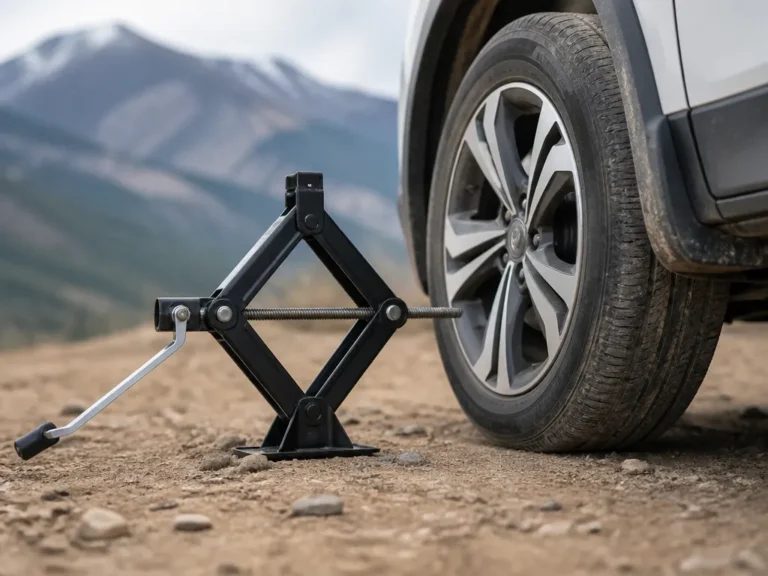
Ever tried to change a tire on your SUV and realized the jack in the trunk barely reaches the jacking point? Or you’re staring at weight ratings wondering if a 2-ton jack is enough for your ride. The right “jack for SUV” setup depends on clearance, lifting points, and correct capacity, not what fits in the spare tire well.
Choose the jack type that matches your clearance and use (floor jack for garage, scissor or bottle for roadside), then size it by vehicle weight and jack rating. Use jack stands if you’ll work near the underside, and always lift at the correct frame or pinch weld points from the owner’s manual.
jack for suv: For a safe tire change, use a jack rated for at least your SUV’s curb weight or the trailer-GVWR/GAWR guidance in the manual, with a practical buffer (many owners target 2.5 to 3 tons for passenger SUVs). Lift at the manual’s frame jacking point, chock wheels, then place jack stands before any under-vehicle work.
Jack For Suv: Capacity That Won’t Fail
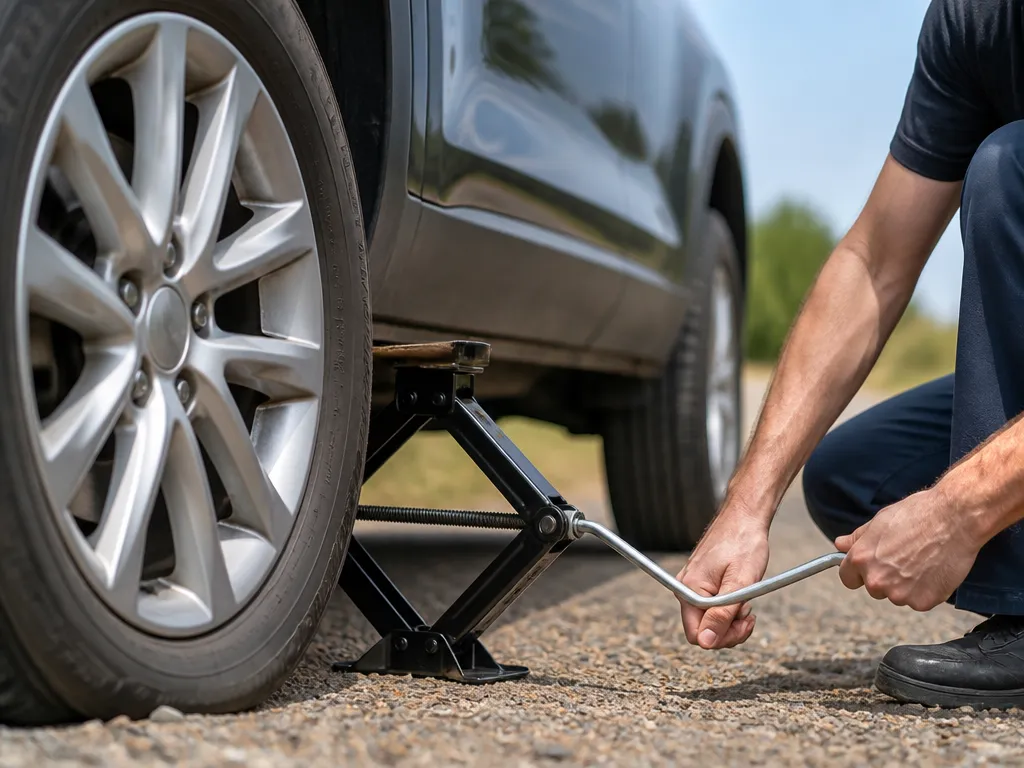
Choosing the right lifting capacity for an SUV is about more than “it fits in the garage.” A jack rated for an SUV’s curb weight can still overload when the load shifts, the tire is flat, or the lift point takes an uneven hit.
Jack ratings need real attention because the numbers on the label assume ideal conditions. Real-world loads swing upward and sideways when the contact pad lands on a curve, when the tire is partially off the ground, or when you jack on grade. For safety, size the jack so you have a margin over the portion of vehicle weight you are actually lifting.
Capacity Math That Makes Sense On Your Lot Or Driveway
Start with what’s closest to worst-case: the SUV’s GVWR (Gross Vehicle Weight Rating). GVWR is what the vehicle is engineered to weigh when loaded to spec, so it is a better baseline than curb weight when you expect passengers, cargo, or a towing setup. Curb weight is still useful, but it can be optimistic if you carry gear.
| Weight number | What it represents | How you use it for jack sizing |
|---|---|---|
| GVWR | Max loaded weight per manufacturer | Use as the starting point for conservative jack capacity |
| Curb weight | Vehicle weight with standard equipment | Use when you keep the SUV lightly loaded most of the time |
| Corner load estimate | Portion of vehicle weight on the lifted wheel | Estimate by dividing total vehicle weight by 4, then add margin |
For example, take an SUV with GVWR of 7,200 lb. A simple corner-load estimate is 7,200 ÷ 4 = 1,800 lb per wheel.
In practice, you want margin for uneven ground and a flat tire, so plan on the lifted corner seeing closer to 2,000 to 2,300 lb. That means a jack rated at 3,000 lb is a more realistic minimum than a 2,000 lb jack, and a 4,000 to 6,000 lb jack is common insurance if you do roadside changes often.
Minimum Safety Margin For Real Suv Use
For passenger SUVs (including crossovers), a strong baseline is: choose a jack with at least 1.5 times the estimated lifted-corner load. This margin accounts for load transfer when you raise one corner, plus the awkward moments where the jack pad shifts a little while you get the tire off the ground.
Flat tires and uneven pavement make the jack work harder because the load can become less predictable at the lift point. A jack that is perfectly adequate on level concrete can fall short when the vehicle rocks or the pad contacts a pinch seam at an angle.
Important: Jack capacity rating does not protect you from bad jacking points, weak ground (soft asphalt, grass, gravel that shifts), or a jack that is not aligned with the lift seam. Capacity is only one part of the safety equation.
Suv Jack Types Compared
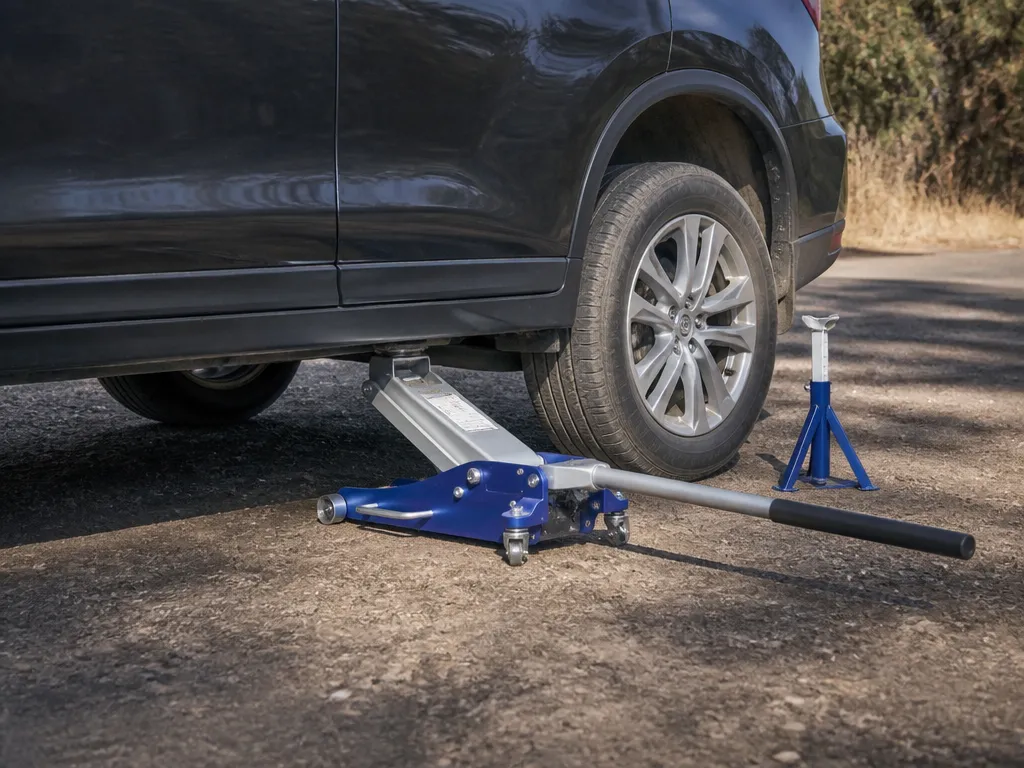
Most SUV roadside tire changes are won or lost on stability and how easily the jack reaches the lift point on your specific body style. Floor jacks are the most forgiving at home, while scissor and bottle jacks can work, but they demand better surface conditions and correct placement.
| Jack type | Where it shines | Main SUV limitation | Roadside practicality | Garage practicality | Stability notes |
|---|---|---|---|---|---|
| Floor jack | Level lifts for tire changes and light suspension work | Bulk, requires flat space to roll into position | So-so (big to pack) | Excellent | Wide base helps on pavement, still avoid sand, mud, or steep slopes |
| Scissor jack | OEM-style compact carrying | Limited lift height and short effective stroke | Good (factory kit) | Fair | Thin jacking pads sink easily on gravel and soft ground |
| Bottle jack | Low profile fits under SUVs with limited clearance | Side-loads can slip under uneven loading | Good (compact) | Good (with proper base) | Needs a solid pad under it and correct vertical alignment |
| Hydraulic high-lift jack | More lift height than standard bottles for taller SUVs | Can be bulky and still needs firm ground | Good if you carry it | Very good for higher frames | Handles clearance better, but rough ground can upset the base |
| Rolling roadside kits | Fast setup, quick wheel access on pavement | Not ideal for off-road recovery or soft terrain | Excellent on flat ground | Good if you already store it at home | Wheels and base still need level contact to avoid rocking |
How Each Type Changes The Risk
Floor jacks are the safest bet for DIY tire work because their wide base and smooth control reduce “catching” the lift point. SUVs often lift through frame or pinch-point pads, and a floor jack makes it easier to center that contact. Trade-off is size, so it works best for garage changes or when you can stage the vehicle on solid pavement.
Scissor jacks are compact, and most OEM kits assume a flat roadside. Scissor jacks also have limited stroke, which can leave a tall SUV just short of enough clearance to pull the tire without stressing the mechanism. Gravel shoulders are where they get risky, because the base can dig in and the jack can twist under load.
Bottle jacks are good when clearance is tight because their nose sits low and can pick up the lift point cleanly. Bottle jacks demand careful alignment, side pressure avoidance, and a firm base under the saddle. On soft shoulders, the jack can sink before it ever reaches full lift.
Hydraulic high-lift jacks help when the SUV sits high or when you need extra travel to clear the wheel. High-lift designs improve reach, but they still rely on a stable base, and rough ground can cause rocking at the pivot. Tall trucks also mean a taller load arm, so keep the vehicle stable and positioned squarely.
Roadside Versus Garage Priorities
Roadside kits prioritize setup speed and compact storage, so a scissor jack or bottle jack often wins for trunk space. Garage use prioritizes control, stable base area, and consistent centering, which is why a floor jack is the “least drama” choice for most SUV owners.
Rolling roadside kits are strongest on smooth pavement where their base stays planted and the kit can roll into position quickly. Rolling kits get less confidence on uneven shoulders, because you lose the “wide stance equals stability” advantage that you get with a floor jack.
Insider mechanic tip: If your SUV has a factory jack location that sits near the pinch weld or a frame dimple, your jack saddle must land flat and centered. A jack that touches the lift point at an angle is a slip waiting to happen, even when the capacity rating is plenty.
Lift Height And Reach Checks
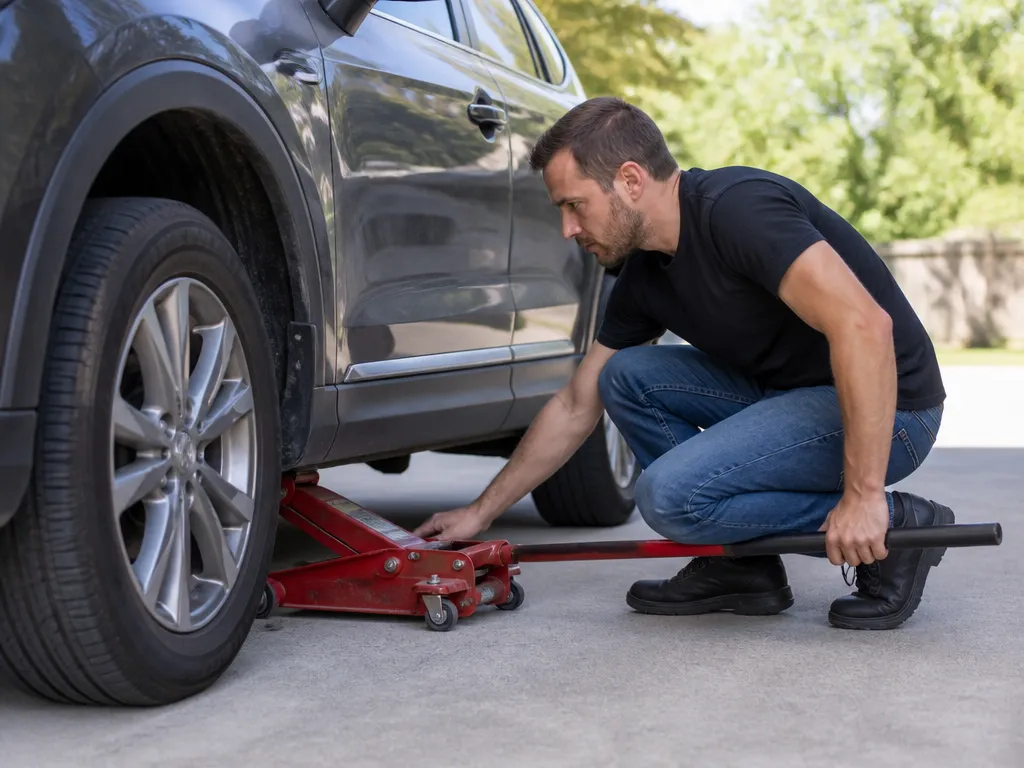
Most SUV jack failures come from two mismatches: the jack cannot lift the vehicle high enough to clear the tire, or the saddle cannot reach the jacking point without repositioning. Before you buy or crack the handle, confirm your SUV’s pinch-point height and the jack’s minimum lift, maximum lift, and saddle reach for the tire-change scenario you actually do.
Measure The Suv’s Jacking Height And Usable Lift Window
Start with the pinch point height, the distance from the ground to the marked jacking location (usually on the pinch weld area, not the plastic rocker). Measure from flat ground with the SUV’s suspension settled, and take the height at the exact spot the jack saddle will touch.
Then map that height to your jack’s specs. A floor jack or scissor jack can fail if its minimum lift is too high (can’t get under) or its maximum lift is too low (can’t get the tire off the ground). Pay attention to travel from fully retracted to the point the saddle can hold the load, not just “rated lift” on a marketing chart.
| Measurement | What to check on the jack | Why it matters |
|---|---|---|
| Pinch-point height (H) | Maximum lift capability at load | Insufficient lift leaves the tire dragging, forcing unsafe pushing |
| Ground clearance to jack saddle | Minimum lift or lowest saddle height | Too tall means the jack cannot sit under the jacking point correctly |
| Distance from jack base to pinch point | Saddle reach, saddle width, and arm geometry | Short reach leads to edge contact on the rocker or repositioning mid-lift |
Compare Reach And Lift For Real-world Suv Positions
Level parking is the easiest case, but many flat tires happen on an uneven shoulder. On a slope or a dip, your effective jack height and available travel change because one side of the SUV sits lower, tilting the load onto the saddle.
For example, a compact SUV on a slightly crowned road can put the pinch weld on the curb side a little higher than you expect. A jack with a long reach might let you hit the jacking point while staying square to the vehicle, but a jack with short reach can push you to place the base too far out, which increases instability risk.
Mechanic tip: If the jack saddle needs to sit cocked to “grab” the pinch weld, that’s a reach problem. Repositioning is fine, forcing contact at an angle is not.
If The Jack Can’t Lift High Enough, Choose A Safe Alternative
A jack that reaches the jacking point but cannot remove the tire is not a “close enough” situation. The correct fix is to use an appropriate tool that gives you both height and stability, then support the vehicle before you work near the wheel.
Safe options usually mean either a higher-lift floor jack for home use, a dedicated long-reach SUV jack if you are consistently hitting the pinch weld wrong, or using roadside-rated equipment that matches the vehicle. Avoid improvised blocks, stacked wood, or lifting from suspension parts, because they can shift and crush.
Use Jack Pads And Adapters Correctly
Many SUVs have pinch welds that can be thin or have protective coatings. A proper jack pad or adapter helps spread the load and reduces the chance of slip, especially on jacks with smaller saddles.
Adapters should match the jack model and saddle size, and they should keep the saddle centered on the jacking point. Improvising with random rubber or homemade wood pads can tear, compress unevenly, or slip, which is exactly the failure mode you are trying to prevent while lifting an SUV.
Find Suv Jacking Points Fast
Most SUVs have reinforced jacking points in the pinch-weld area and along the frame rails, and those are the only places a floor jack or lifting puck should contact. Factory jacking pads are usually molded or stamped for alignment, and the driver side often shows clearer markings than the passenger side.
| Lift location to check | What it looks like | Where the jack contacts | Common SUV examples | Owner-manual confirmation |
|---|---|---|---|---|
| Frame rails (reinforced section) | Heavier metal rail, sometimes with holes or a reinforced notch | Jack saddle centered on rail, not on sheet metal | Body-on-frame models like Toyota 4Runner, Ford Expedition | Use the exact page for “Jacking points” or “Vehicle lifting” |
| Reinforced pinch weld / rocker pinch points | Thick pinch seam along the lower rocker, often with a cutout for the tool | Jack saddle on the seam, or the provided lift notch | Many unibody crossovers and CUVs (Honda Pilot, Toyota Highlander) | Confirm front vs rear position and left vs right |
| Factory jacking pads (stamped pads) | Small flat “pad” area or stamped rectangle on the underbody | Rubber/metal pad lifts on the center of the marking | Jeep Grand Cherokee, Nissan Pathfinder, Subaru Outback-based lifts | Manual shows pad locations and sometimes minimum lift points |
| “Don’t lift here” thin sheet metal | Flat floors, thin outer skin, decorative trim edges | Do not place the saddle on these surfaces | Common on most SUV rocker outer panels | Manual warns against lifting on unreinforced body panels |
| Unreinforced plastic covers | Skid plate or splash shields made of plastic | Do not jack through shields unless the manual allows it | Undertrays on Acura MDX, BMW X3, etc. | Manual indicates whether shields can be removed first |
Typical Safe Areas: Frame Rails And Reinforced Pinch-welds
Frame-rail lift points look like solid steel channels running fore to aft, with a reinforced section where the jack saddle can sit without crushing metal. Unibody SUVs usually protect the pinch-weld with a reinforced seam along the rocker, and that seam is where the factory tools and scissor jacks are intended to land.
Reinforced pinch-weld areas are thicker than the surrounding rocker skin, and you can often spot a notched opening for the scissor jack’s screw or the floor jack adapter. For a quick confidence check, press a fingernail on the area you want to lift, the reinforced seam should feel rigid compared to thin outer panels.
Spot The Factory Pads, Then Confirm “Don’t Lift Here” Zones
Factory jacking pads are usually shaped to guide the jack saddle, some are flat rectangles, others have a slight dimple or notch to center the contact point. When you crawl under, use door stickers and undercarriage markings first, then match them to the lift diagram in the owner’s manual.
“Don’t lift here” zones include thin floor sections, outer rocker sheet metal, and any area covered by plastic undertrays that hides the actual structure. Rust can also fool you, if the rail or pinch weld looks pitted, flaking, or bent, skip lifting there and use the manual’s alternate location, or have the situation inspected by a shop before you put load on it.
Professional habit: you should be able to point to a stamped pad or a manual diagram before you pump the jack, if you cannot, stop and re-locate.
Tire Change Jack Steps Safely
Level ground and controlled lifting prevent most jack-related accidents. Wheel chocks keep the SUV from rolling, and jack stands control the load once the tire is off the ground. Follow the lifting point and raise only as high as you need for the swap.
Insider tip: A floor jack is best in a garage, but many SUVs use an integrated scissor or compact jack kit for roadside use. Even with the right jack type, correct placement on the reinforced point is what prevents rocker damage and keeps the lift stable.
Safety Checklist And Do-not-do
Use wheel chocks, park brake, and jack stands every time. A floor jack or bottle jack can lower suddenly, so the SUV must never rely on the jack alone if you will put any body part under it.
Do-not-do List That Prevents The Big Injuries
In practice, SUV lift points are designed for a reason: they spread the load into the frame or reinforced pinch weld. If the stand sits on sheet metal, it can bend and slide, and you lose the load path that keeps everything stable.
Stand Placement Rules (Solid Ground And Correct Contact)
Place the SUV on solid, level ground. Set jack stands on a firm base so the feet do not rock, sink, or tilt as the suspension unloads.
For contact, the stand top and the SUV’s lift point need full seating. Keep the stand centered under the lift point, and confirm the top saddle is flat against the metal surface.
| Situation | What to do | What to avoid |
|---|---|---|
| Concrete driveway | Use chocks and stand on clean, dry concrete | Ignore oil spots and allow stand feet to sit on grit |
| Asphalt | Find the flattest spot, clear loose debris | Jack on a cracked edge or soft shoulder |
| Gravel/packed dirt | Use a proper base board if needed | Let stand feet dig into loose rock |
Insider tip: On uneven ground, the vehicle can “walk” off the lift points as the suspension unloads. Keep the base under the stand as level as possible before you raise the SUV.
Tire And Wheel Re-install Cautions (Torque Habits And Orientation)
For many SUVs (Ford Explorer, Jeep Grand Cherokee, Toyota 4Runner, Honda Pilot), torque specs typically fall in the low-to-mid 100 ft-lb range, but the exact value varies by model and wheel type. Always use the spec from your owner’s manual or service information, then tighten with a calibrated torque wrench, not “feel.”
After-lift Verification Before Hands-free Work
After you set jack stands, perform a quick stability test before getting under or starting work. Push the tire/wheel area gently to confirm the SUV does not shift, rock, or slide off the lift point.
Keep your hands and head away from pinch points and the stand edges while you test. Once stability is confirmed, you can work hands-free, but stay clear of the jack line and stand line in case a component settles.
Troubleshooting Jack Problems On Suvs
A jack sinking into soft asphalt or dirt means the load is shifting support, so you need to stabilize from the side and reduce ground pressure before you lift any higher. A slipping saddle usually comes from using the wrong lift point or a worn pad, so stop lifting, re-position, and secure the base again.
Jack Sinks, Saddle Slips, And Lift Points Misbehave
When the base sinks, the SUV can suddenly drop or slide as the tire on the ground loses contact. Stabilize by moving the base to a firmer spot, then spread the load with a purpose-made base plate or a flat metal pad under the jack (not loose rocks). Keep your hands out from under the vehicle while you adjust, and avoid propping with anything that can roll.
When the saddle slips off the pinch weld or control-point recess, it is usually because the jack is angled, the contact area is wet, or the lift point is slightly out of view. Stop cranking, set the jack down, then re-center the saddle. Use a jack pad designed for SUV lift points if your jack saddle is too small, but only on a stable, level surface.
For common SUV lift-point mistakes, use this quick reference:
| Symptom | Likely cause | Fix |
|---|---|---|
| Jack base sinks | Soft surface or too-small contact area | Reposition to firmer ground and use a flat base plate |
| Saddle slips sideways | Wrong lift point, angle, or slick metal-to-metal contact | Lower, re-center, use correct pad |
| Lift point deforms | Point load on thin rocker area | Stop and use a wider jack pad on the designed contact point |
Rule of thumb: If the jack is not lifting straight up and the saddle is not sitting square on the lift point, do not add height. Fix the contact first.
Not Enough Lift Height And Lifting On An Incline
Not enough height usually means the jack is compressed at the start, the saddle is too low on the frame, or the suspension is already at its limit due to uneven ground. Fix it by lowering the jack, adjusting base placement, and moving the jack to a spot that lets the jack extend with a near-vertical stroke.
For example, on a driveway with a lip, a low floor jack can bottom out before the tire clears. In that case, switch to a higher-lift floor jack or a bottle jack with a proper pad and then transfer support to jack stands once the tire is off the ground.
Lifting on an incline increases sliding risk because the wheel chocks can lose effectiveness as the suspension unloads. Reduce the slope impact by moving the vehicle to flatter ground if you can, then chock both sides of the wheel that stays on the ground. If you cannot move, call for help rather than pushing the jack higher, especially on gravel, wet pavement, or paved shoulders.
Using Jack Pads And Blocks Correctly (And When Not To)
Jack pads and blocks spread the load and protect pinch welds, rocker panels, and frame rails, but only when they are flat and rated for the job. Use jack pads to match the jack saddle size to the SUV’s lift point, then keep the contact area clean so the pad does not shift.
Jack pads should not replace proper lift-point selection. If the pad is the only thing holding the vehicle up, or the pad is deforming, the jack placement is wrong. In that situation, stop, reposition, and verify the correct contact point before lifting again.
Jack For Suv Buying Checklist
Match the jack’s rating and lift range to your SUV’s curb weight and the lifting point you need to reach. A jack that “sort of works” on paper can still be unsafe if the saddle reach is too short, the footprint sinks on soft ground, or the listed lift range does not cover your tire-change height.
| What to check | Target spec for SUVs | Why it matters in real use | Common listing red flags |
|---|---|---|---|
| Capacity rating | Choose a jack rated above your SUV’s curb weight (include a margin for passengers and cargo). | Prevents overload when you lift at an uneven angle. | Only a “max” number with no guidance for load position. |
| Minimum lift | Must be low enough for the jack to contact the pickup point without excessive cranking. | Some SUVs sit close to the ground, especially with smaller tires. | “Fits most vehicles” with no minimum height spec. |
| Maximum lift | Must raise the tire enough for your tire tool removal and clearance. | Too little lift forces you to fight the wheel and can tip the jack. | Max lift listed loosely, or range shown without endpoints. |
| Saddle size and reach | Wide, stable saddle with reach that contacts the correct pinch point or factory pad area. | Reduces slip and rocker-panel damage risk. | Small saddle on high-mass SUVs. |
| Base width and footprint | Wide base for stability, especially on asphalt cracks, gravel, or wet shoulders. | Saves you from tip or sink during lifting. | “Lightweight” jacks with narrow bases. |
| Jack stand compatibility | Include stands that match the jack’s lift height needs, or buy a stand set separately. | Jack-only support is unsafe for hands-in work. | Jacks sold with no stands and unclear guidance. |
| Accessories included | Wheel chocks, jack pad or adapter (if needed), and a tire tool that matches your lug nuts. | Chocks stop roll, adapters protect contact points, tool compatibility avoids stuck roadside work. | Listings that omit chocks or provide mismatched socket sizes. |
| Roadside storage | Real kit fit in your cargo area with space for the tire and tools. | Roadside failures happen because gear was jammed in the back. | “Fits SUVs” with no dimensions or weight guidance. |
Required Accessories That Keep It Safe And Usable
Jack stands matter when you plan to get under the SUV or remove more than just the wheel. Wheel chocks prevent the vehicle from rolling, which matters even on small slopes. A jack pad or adapter helps match the saddle to SUV contact points and reduces the chance of slipping or cracking trim.
Tire tool compatibility is where a lot of roadside kits fail. Confirm your lug wrench socket size and whether the included tool matches, then check if you need a breaker bar or a specific handle length for stubborn lug nuts on trucks and crossovers.
Roadside Kit Practicality And Listing Red Flags
Roadside use is where stability beats pure lift height. Choose a jack with a broad base and manageable weight for the person who will lift it, and make sure it fits your SUV’s cargo layout without fighting the spare tire or subfloor. For long trips in cold or wet conditions, prioritize a jack with smooth operation and clean sealing surfaces, since grit makes it bind.
Watch for listings that give vague lift numbers like “low profile” or “works for most SUVs,” or that state capacity without clarifying measurement conditions. Weak materials show up as thin saddles or tiny base plates, and unclear lift range means you might top out before the tire clears. When the seller does not list minimum and maximum lift, treat it as a guess you cannot afford.
Quick rule: Verify the jack’s saddle reach and lift range against your SUV’s real lifting point and tire-change clearance before you buy, not after you’re on the shoulder.
Quick Summary
Picking the right jack for an SUV is mostly about clearance, the exact lifting points, and correct capacity, not what happens to fit in the spare-tire area. The article stresses matching jack type to where you are using it, with a floor jack being the go-to indoors and scissor or bottle jacks being more practical for roadside use. It also says to size the jack by SUV weight using the manufacturer guidance, and to target a real-world buffer, with many passenger SUV owners aiming around 2.5 to 3 tons.
For safety, the article calls out that using a jack rated only to “cubic label math” can still be risky when the load shifts, the tire is partially off the ground, or you jack on grade. It recommends starting from GVWR (Gross Vehicle Weight Rating) for more conservative sizing, since it reflects the SUV loaded to spec better than curb weight. It gives an example where 7,200 lb GVWR leads to an estimated 1,800 lb corner load, planning closer to 2,000 to 2,300 lb with a 3,000 lb jack as a more realistic minimum. Use level ground, chock wheels, lift only at the frame or pinch weld points from the owner’s manual, and never rely on a jack alone.
| What to match | What the article says to do |
|---|---|
| Jack type | Floor jack indoors, scissor or bottle for roadside |
| Capacity sizing | Use GVWR as the starting point, plan margin over estimated lifted-corner load |
| Lift points | Use only the frame or pinch weld locations listed in the owner’s manual |
| Setup before lifting | Use solid, level pavement, chock opposite wheels |
Frequently Asked Questions
What Jack Size Do I Need For An Suv?
You should pick a jack with a lifting capacity of at least half the vehicle weight, and ideally enough margin for the corner you are lifting. For many SUVs, that often means going for a jack rated at 2 tons (4,000 lb) or more, because weights and trim levels vary.
Can I Use A Car Jack On My Suv?
You can if the jack is rated for the SUV’s weight and the lifting points match. The risk with many “car jacks” is insufficient capacity, smaller saddle size, and reach that might not line up with SUV pinch welds or lift points.
Where Should I Place A Jack On An Suv So It Is Safe?
Use the factory jack point shown in your owner’s manual, typically near the pinch welds or reinforced areas along the rocker panel. Avoid jacking on thin plastic trim, floor pans, or curved body panels, since they can flex or fail under load.
How High Does A Suv Jack Need To Lift?
You want enough height to clear the tire and still give room to remove and install the wheel without fighting the angle. A good target is at least 2 to 3 inches of usable lift above the tire clearance, because uneven ground and wheel size can steal extra space.
What Is The Best Suv Jack For Changing A Tire Quickly At Home?
A floor jack is usually the fastest for repeated changes, because it has smoother lift and easier positioning than most scissor jacks. If you need to carry it for emergencies, prioritize a compact jack with a stable base so it sits flat and lifts reliably on the roadside.
What Common Mistake Should I Avoid When Using A Jack For An Suv?
Never rely on the jack alone for support, especially once the SUV is off the ground. Always use jack stands on solid, level ground, and keep your hands and feet out from under the vehicle while it is supported only by the jack.