


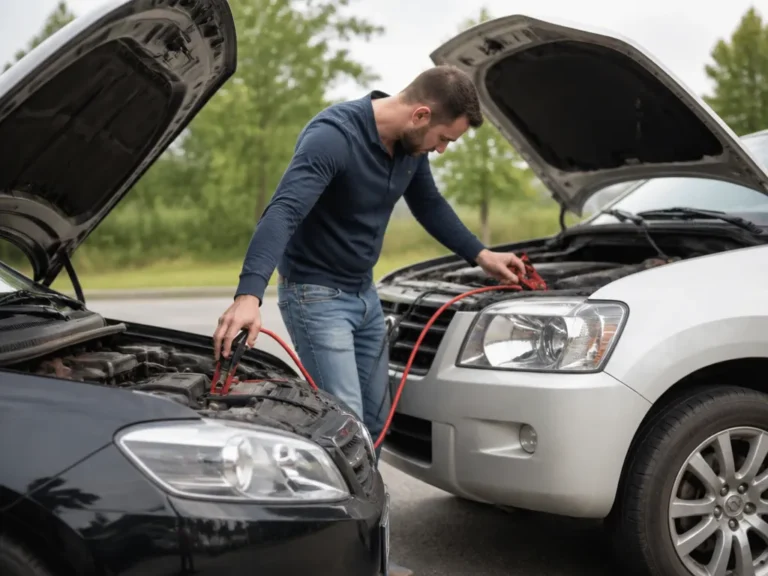
You’re stuck in the parking lot with your SUV dead, and the only help nearby is another car. The moment you hook up cables wrong, you can fry a battery or trigger an electrical fault. This is a step-by-step, safety-first look at how to jump start an SUV with a car, including modern battery realities.
Jump starting works on most SUVs because they use a 12V battery, but hybrids and EVs need different procedures. Expect to follow a strict cable order, start the donor first, then the SUV, and drive or idle for 20 to 30 minutes to regain charge.
Jump start an SUV with a car by using 12V jumper cables, keeping the vehicles from touching, and connecting donor + to SUV + first. Connect donor – to an engine ground point on the SUV. Start the donor, wait 1 to 2 minutes, then crank the SUV. Remove cables in reverse order.
Jump Start An Suv With A Car: Compatibility Checks
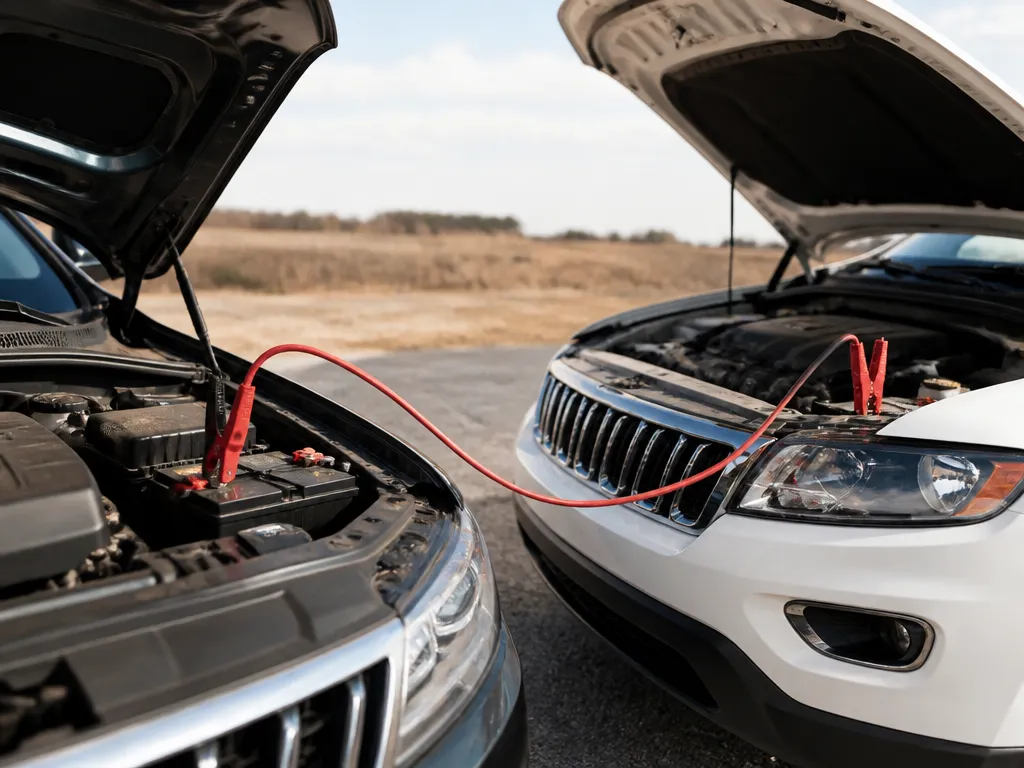
A jump start only works if both vehicles share a compatible electrical system and you connect the cables to the correct terminals. Most SUVs use a 12-volt battery, but some platforms can surprise you with different layouts, hybrid charging logic, or battery management behaviors.
12v Vs 24v Compatibility (When To Stop)
Use the battery label on the SUV and the donor car to confirm system voltage. A typical passenger car and most SUVs are 12V, but commercial trucks, some older industrial vehicles, and a few specialty vehicles can be 24V, which makes direct jump starting incompatible.
Another compatibility trap is battery location and terminal access. Some vehicles (common on newer European brands and many stop-start cars) hide the positive terminal behind a jump post or require attaching the negative clamp to a specific grounding point.
| Battery/System Reading | Result | What to do |
|---|---|---|
| 12V on both vehicles | Compatible for a standard jump start | Match terminals and follow the cable order in the next section |
| 24V on either vehicle | Not compatible for direct cross-jump | Use a professional-grade jump system or service assistance |
| Voltage unclear, missing label, or unusual setup | High risk of wrong procedure | Use the vehicle manual or roadside service, then try a battery test |
Hybrid And Ev Warning (Where “Jump Starting” Can Differ)
Hybrid systems and EVs often include a separate high-voltage battery and a separate 12V battery for computers and relays. Jump starting is usually still possible, but the correct procedure can include special starting steps and specific connector locations, and some models will warn you to use only approved points.
Do not assume a standard car-donor method is safe if the SUV has a high-voltage system warning illuminated.
For example, a Toyota Prius, Ford Escape Hybrid, or Lexus models may still use a 12V battery, but the jump cable attachment points and the “donor vehicle running” rule can change by generation.
Hard stop: If you see a “hybrid system” or high-voltage warning, or if the 12V battery is in an enclosure with no clear safe terminals, use roadside assistance and request the correct jump procedure for that model year.
Modern Battery Types (Agm And Stop-start Changes)
Most newer SUVs and many cars now use AGM batteries or start-stop batteries. AGM is still a 12V system, but it is less tolerant of poor connections, incorrect polarity, and “sparkfest” clamp contact.
AGM and stop-start systems also tend to trigger charge-sensing behavior after a jump. Plan on a longer run-time to recharge the 12V battery enough to drive, and expect that a simple brief restart attempt can leave the computers unhappy and cause repeated no-crank symptoms.
Before You Start: Confirm It’s A Battery/no-crank Issue
Try to confirm “no crank, no start” is truly voltage-related before you connect cables. If the SUV shows dash lights that are bright but it still does not crank, you might be dealing with a failed starter, relay, immobilizer issue, or a blown fuse rather than a weak 12V battery.
For example, a faint click and dim interior lights often point to low battery voltage, while a single loud click with stable lighting can be a starter circuit problem. Use the next decision points to avoid wasting time and avoid arcing at the wrong moment.
What You Need And Safety Gear
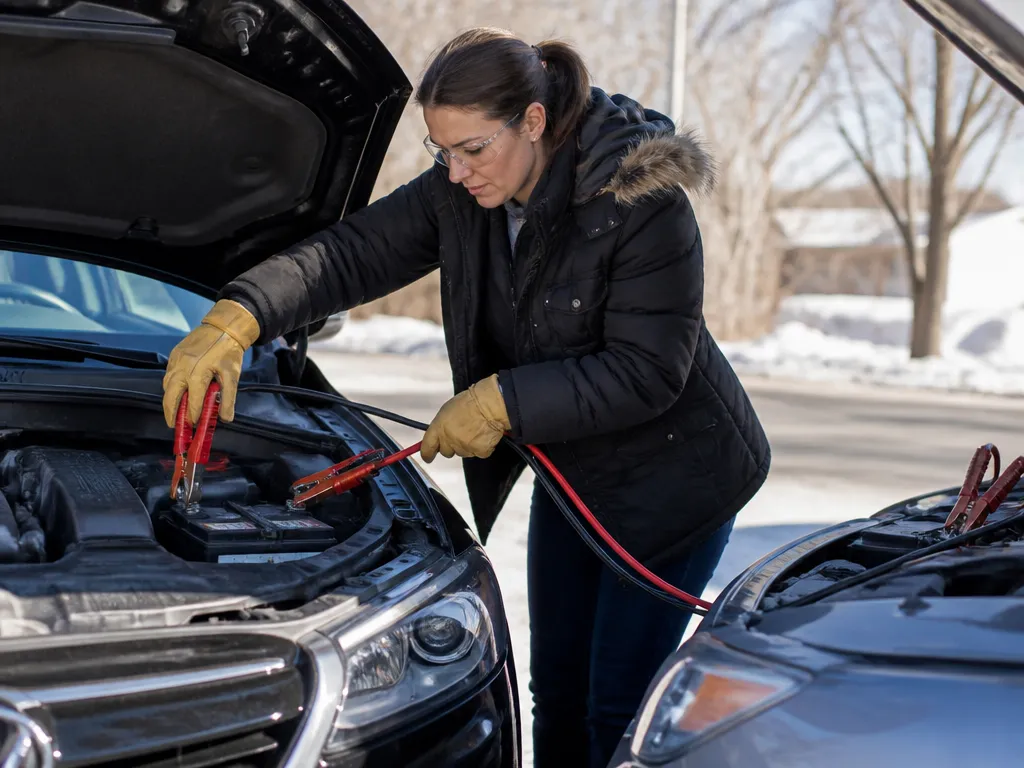
Use jumper cables in good shape and the right gauge for the job, because thin or damaged cables create heat and voltage drop. Wear gloves and eye protection to guard against battery acid and sparks, and keep the vehicles separated so the battery cables stay under control. Never smoke or create sparks near either battery, since battery vapors can ignite.
Tools And Safety Gear
Jumper cables should have intact insulation, sturdy clamps, and enough conductor cross section to handle SUV starter current without overheating. A typical safe approach is to use cables rated for starting heavy vehicles, with thicker wire preferred when the SUV battery is in a tough spot or the battery-to-donor distance is long.
| Item | Amount/Specification | Notes |
|---|---|---|
| Jumper cables | One set, intact clamps, correct gauge | Choose thicker wire for longer runs and larger engines. Avoid cables with cracked insulation or loose clamp springs. |
| Gloves (chemical resistant) | 1 pair | Protect hands from acid on corroded terminals and from accidental clamp contact. |
| Eye protection | 1 pair of safety glasses | Shield your eyes if a clamp arcs or if battery crust flakes off. |
| Flashlight | 1 handheld or headlamp | Helps you confirm positive and negative posts before any contact is made. |
| Optional terminal cleaner | Battery terminal brush or non-metal wipes | Use only after ensuring safe conditions and no active arcing. Do not use metal tools that can bridge terminals. |
For example, if the SUV battery posts are covered in white crust, use a flashlight first and clean enough to confirm the terminal you are clamping. The goal is a solid electrical connection, not grinding metal aggressively.
Safety red line: If you smell strong sulfur, see heavy venting, or notice swollen battery sides, stop and get professional help. A damaged battery can vent violently during attempts to start.
Never smoke, run a space heater nearby, or let anyone create sparks while cables are connected. Jumper cable arcing usually comes from loose clamps or reversed connections, and it can damage modern battery management components and wiring.
Suv And Donor Vehicle Setup
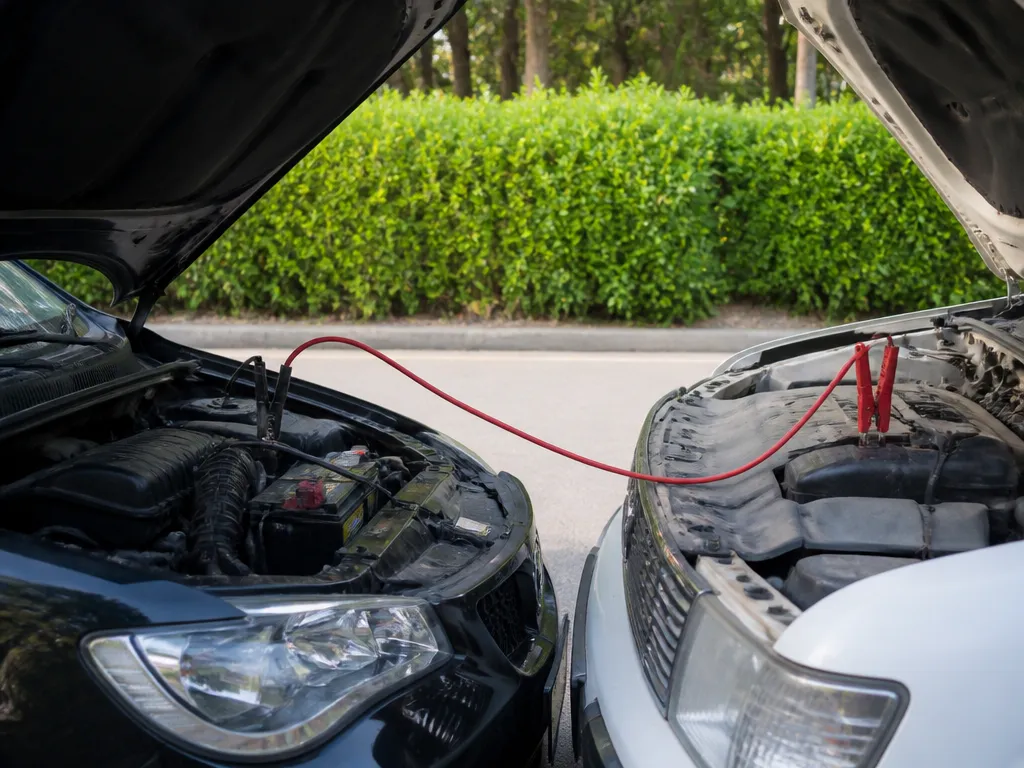
Position both vehicles on level ground and keep them stationary for jump starting. Set the parking brake on each vehicle, put transmissions in Park (or Neutral for a donor with a manual), and shut off the ignition, all accessories, and lights before you touch any cables.
Keep the vehicles apart so the cable leads cannot swing into sheet metal, fans, or other moving parts. Aim for a gap of at least a couple feet and make sure the cable insulation stays intact, since a short can arc and damage battery terminals.
Battery Condition Checks Before You Connect
Inspect both batteries for obvious damage. A battery that is cracked, leaking fluid, heavily corroded around the posts, or smells strongly like “rotten eggs” (hydrogen sulfide smell) needs caution before any jump attempt.
If you see smoking, active venting, or the battery case is visibly damaged, do not attempt a jump start. A damaged battery can vent violently when you connect cables, and that is a shop-level safety problem, not a roadside “try harder” situation.
| Battery observation | What to do | Why it matters |
|---|---|---|
| Hot to the touch | Step back, ventilate, do not proceed | High heat can mean internal failure and risky venting |
| Leaking fluid | Do not connect; rinse exterior only if safe, then get help | Electrolyte can cause burns and corrosion |
| No visible damage | Proceed with terminal identification and clean connections | Clean metal contact reduces voltage drop during cranking |
Safe Grounding Point For The Suv
Choose the SUV grounding point before you connect anything. Many modern SUVs have battery-mounted electronics and tight engine bays, so the safest ground is usually a solid metal engine block or designated ground stud, away from the battery if possible.
Keep the SUV’s ground access in mind while you position the donor car. If you cannot reach a clean metal ground spot without routing cables across plastic covers, air intake components, or tight edges, reposition or stop and get help, since chafed insulation or an accidental contact can short the system.
Locate + And – Terminals Correctly
Find the correct connection points by visual cues first, then by the battery labels if they are present. Positive is usually a marked battery post or an under-hood “jump start” terminal, negative is either a marked battery post or a solid ground point on the chassis.
Quick check: the correct positive point will be tied to the battery’s “+” circuit (usually red-labeled), and the correct negative point will be tied to battery ” – ” (black-labeled) or a factory ground stud. Cable polarity errors can blow fuses or damage electronics, so never “guess” based on which post looks closest.
| Point you’re spotting | What it usually means | Use for jump start? |
|---|---|---|
| Battery clamp with “+” on it | Positive terminal | Yes, for positive cable |
| Red plastic under-hood “JUMP START +” post | Remote positive terminal | Yes, for positive cable |
| Battery clamp with ” – ” on it | Negative terminal | Yes, for negative cable |
| Unmarked stud near a fuse box | Distribution point or accessory ground | Do not connect unless labeled |
Insider tip: If you can’t clearly see a “+” or ” – ” marking, stop and locate the owner’s manual diagram for jump points before you attach cables. A 30-second label check prevents a lot of expensive “mystery” electrical damage.
Jumper Cable Connection Order Steps
Connect the cables in a strict order to prevent reverse polarity and accidental shorts. Correct polarity is donor positive to SUV positive, then donor negative to a solid ground on the SUV, typically an unpainted engine block bolt or metal bracket.
Cable clamp rules: Never allow the clamps to touch each other, even briefly. Route cables so they cannot contact the fan, serpentine belt, or exhaust components while either vehicle is started or while someone moves around the engine bay.
For example, if an SUV’s battery is tucked under a cover, you can still use the ground point on the engine block by following a metal bracket or bolt you can confirm is unpainted. Chrysler, GM, Ford, and Toyota engine bays often have good grounding points on the block or bracket, even when the negative battery terminal is harder to access.
Common mistake: Clamping the black lead to the SUV’s negative post can create sparks right at the battery area. Using an engine block or chassis ground is the safer choice when you have a clean metal point available.
Start with the donor running after all clamps are secure. Start the donor first, let it stabilize for a short moment, then attempt the SUV start; the disconnect order comes after success so you do not create arcing while moving clamps.
| Connection | Clamp Color | Where It Goes |
|---|---|---|
| 1 | Red | Donor battery + |
| 2 | Red | SUV battery + |
| 3 | Black | Donor battery – |
| 4 | Black | SUV ground (engine block/chassis metal) |
Crank Attempts And Restart Timing
After cables are connected correctly, give the SUV a short attempt to crank, then pause to protect both batteries and the starter. Aim for controlled bursts, not continuous cranking, because repeated long attempts drain the donor and heat the starter.
Restart Timing: How Long To Wait And When To Try Again
Most SUVs need a bit of donor current before the starter gets enough voltage. Start with the donor running, then try the SUV after a brief soak period.
For example, if the SUV cranks once strongly, you are usually close. If it cranks weaker each time, stop early because the donor battery and cables are likely dropping voltage under load.
Quick Summary
Jump starting an SUV with another car usually works because most SUVs use a 12V battery, but hybrids and EVs require different procedures. The critical points are making sure you connect the cables in a strict order and avoid wrong polarity, since bad hookups can damage a battery or trigger electrical faults. Start by setting both vehicles on level ground with the parking brake on, and keep the ignition and accessories off. Use the battery labels to find the positive and negative terminals, since covers or jump posts can hide them.
Compatibility matters just as much as the cable order. Confirm the battery/system voltage labels on both vehicles, because 24V setups make direct cross-jump incompatible, and terminal access can be tricky on some cars with a special grounding point. If the SUV has a “hybrid system” or high-voltage warning, or the 12V battery is in an enclosure with no clear safe terminals, use roadside assistance for the correct model-year steps. For a standard jump: connect donor + to SUV +, donor – to an engine ground point, start the donor first, wait 1 to 2 minutes, idle 20 to 30 minutes after starting, and remove cables in reverse order.
Frequently Asked Questions
Can I Jump Start An Suv With A Regular Car Battery?
Yes, you can usually use another vehicle’s battery as long as you connect the jump starter correctly and both batteries are a 12-volt system. If either vehicle is not 12-volt (rare in passenger vehicles), do not jump it this way.
What Order Do I Connect Jumper Cables To Jump Start An Suv With A Car?
Connect red to the donor car’s positive (+), then red to the SUV’s positive (+). Next connect black to the donor car’s negative (-), and the last black clamp to a bare metal ground on the dead SUV away from the battery area.
How Long Should I Let The Car Charge Before Starting The Suv?
Let the donor car run for 1 to 2 minutes, then try starting. If it won’t start after a few attempts, stop and figure out why, because a weak battery or a non-battery failure may be the real issue.
Can I Jump Start An Suv If The Battery Is Frozen Or Leaking?
No. If the battery looks bulged, cracked, frozen, or leaking, don’t attempt a jump start because it can vent or fail. Use a qualified service or replace the battery, and keep people and sparks away.
Should I Turn Off The Cars And Electronics Before I Jump Start An Suv With A Car?
Yes, shut both vehicles off and remove key fobs from the ignition if you can, then keep loads off like heaters, headlights, and infotainment while you connect cables. After the SUV starts, let it run for 10 to 20 minutes to help the alternator recover, especially if it was a hard crank.
What’s The Most Common Mistake When Jump Starting An Suv With A Car?
The most common mistake is reversing the clamps or connecting the last ground clamp to the wrong spot. If you hook them up backward, you can damage electronics, so double-check positive-to-positive and negative-to-ground every time.