


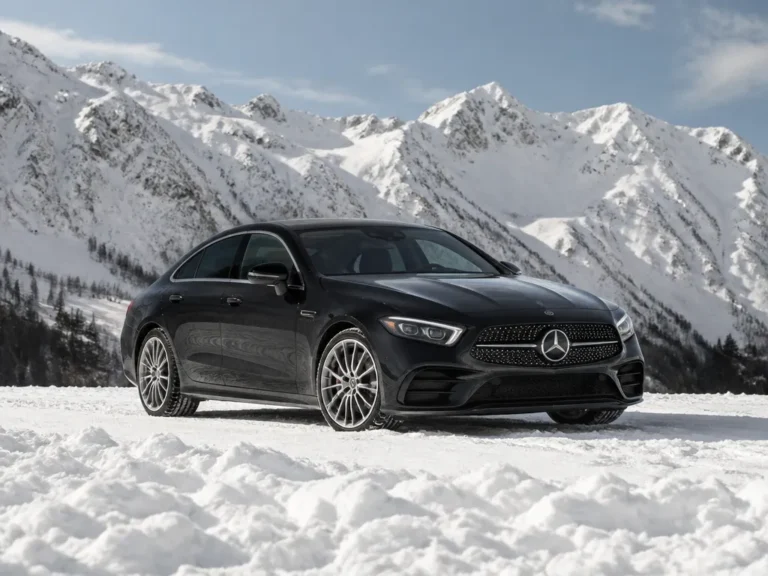
Your Mercedes-Benz CLS keeps getting parked outside, and now the first real snow is here. You are wondering if a low-slung CLS can stay predictable on slick pavement, and what actually changes between driving modes, AWD setups, and winter tires.
CLS snow confidence comes down to traction hardware and tires, not the badge. 4MATIC-style AWD typically helps you get moving, but good winter tires are what shorten stops. Expect stability and ABS/traction control to intervene more often, especially during starts and downhill speed control.
Mercedes Benz Cls In Snow: How Capable Is It?
The Mercedes-Benz CLS can drive in snow safely when it is equipped with proper tires and the driver respects traction limits. CLS traction control and stability systems can reduce wheel spin and help you stay pointed forward, but braking and steering still depend heavily on tire compound and contact patch.
What “Snow Capable” Changes On The Cls
Snow turns every contact event into a traction gamble. On the CLS, steering feel gets lighter and more delayed as the tires lose lateral grip, and braking distance grows quickly once the surface goes from packed snow to slush. ABS can pulse the brake pedal, and the brake system can feel less predictable when the rotor surface is wet or ice-coated.
Cold weather also changes how the car behaves before everything warms up. Tire rubber firms up in deep cold and grip drops until the tires heat through, even if the tread looks fine. Around town, the first few stops and turns after you start driving are where most “I thought it would grip better” moments happen.
Big Variables That Decide Whether The Cls Feels Confident
The drivetrain layout matters, but tires matter more on snow days. The CLS can only deliver traction that the tires can support, and a worn or mismatched set will overwhelm the electronic aids. Temperature and surface type also matter a lot, packed snow and light powder behave very differently than glare ice or wet slush.
| Snow situation | CLS behavior to expect | What limits you |
|---|---|---|
| Packed snow | Steady acceleration with careful throttle, ABS assists hard stops | Tire grip and how smooth your inputs are |
| Light powder | More squirm in turns, quicker wheel spin risk | Lateral traction and tread effectiveness |
| Slush | Braking pedal feel can feel “mushy” or inconsistent | Reduced contact patch from wet snow |
| Glare ice | Electronic aids can’t create grip where tires have none | Friction coefficient, not electronics |
“Snow performance is mostly a tire story. A CLS with fresh winter tires feels controlled, and the same car on worn all-seasons feels nervous even with traction control turned on.”
Plan around these limitations. The CLS has limited ground clearance compared to SUVs, so deep snow over the front edge can reduce airflow to brakes and increase the chance of slush buildup around wheels. The safest way to measure confidence is simple: make a short test drive in an empty area, do a controlled stop from low speed, then evaluate how quickly the car straightens and how the tires sound and feel under braking.
In practice, a CLS becomes “winter-ready” when you match the car to the season. Fit dedicated winter tires, keep them properly inflated for cold temperatures, and give yourself extra following distance because stopping ability and lateral grip fade faster than most drivers expect in slush.
Awd Vs Rwd Cls For Snow Grip
Mercedes-Benz CLS with rear-wheel drive can feel confident in light snow, but it loses momentum quickly when the rear tires break traction during throttle. CLS 4MATIC adds a front-axle torque path, so grip comes on sooner for launches, merging, and regrouping after you hit a slick patch.
Cls Rwd: Where It Feels Confident And Where It Gets Slippery
CLS RWD works best when you keep power smooth and steering inputs gentle. In light snow or packed slush, traction control can usually meter torque to prevent wheelspin, but the car still has less drive grip than AWD when the surface gets uneven.
For example, a level on-ramp covered with patchy snow is where RWD can surprise you. A small throttle increase after the rear tires start slipping can trigger faster wheelspin, and the car will try to rotate, so you feel it through steering corrections.
Cls 4matic/awd: Why It Helps On Launches And Mixed Traction
CLS 4MATIC improves snow grip because it can send torque to both axles, so the driven wheels are less likely to all break loose at the same time. That extra drive path is most noticeable when you start from a stop, accelerate from low speed, or cross from a cleared lane into a snowy shoulder.
In practice, AWD reduces the “single-point failure” feeling of RWD. If one axle hits a slick spot, the other axle can keep pushing, so the CLS stays straighter and you can maintain momentum with less steering correction.
Traction-control tells you what’s happening. If you feel repeated throttle “tapering” while speed barely rises, traction control is actively limiting torque. If steering angle increases but the car keeps sliding sideways, you are past the tire grip ceiling and the system can only slow the wheelspin, not create grip.
| Drive setup | What you feel in snow | Best use case |
|---|---|---|
| CLS RWD | More rear slip during hard starts, more need for lift-and-stabilize after wheelspin | Light snow, clear dry patches, conservative acceleration |
| CLS 4MATIC/AWD | Smoother takeoff, better straight-line pull when traction is mixed | Sloped commutes, patchy snow, frequent stop-and-go |
Limits: Why Even Awd Cannot Fix Bad Tires Or Deep Snow
AWD helps you move, but it does not fix stopping distances when braking on ice. Worn all-seasons or summer tires will still lose traction, even if the drivetrain is working hard.
Deep snow adds another problem: ground clearance and airflow matter. Packed snow around the underbody or wheel wells can rob the car of effective tire bite, and you can end up with both axles spinning because the tires are riding on slick, churned snow instead of biting fresh surface.
Winter Tires Vs All-seasons For Cls
Mercedes CLS tires are the part that decides whether power and steering inputs turn into traction or wheelspin on snow. In slush and ice, dedicated winter compounds grip harder at low temperatures, while all-seasons lose effectiveness once the tread rubber stiffens. That difference is what keeps the CLS from feeling “fine” at cruise and scary during braking or mid-corner corrections.
Compound And Tread Design: Where Winter Rubber Actually Grips
Winter tires use softer rubber that stays pliable in cold weather, so the contact patch can conform to snow grains instead of skating over them. Winter tread designs also add more biting edges (often with more aggressive siping patterns) to help the tire squeegee slush and channel water away on slick surfaces.
For CLS drivers, the practical outcome is shorter, more stable stops and more predictable steering response when the surface alternates between compacted snow, slush, and a thin ice film. All-seasons may feel acceptable until temperatures drop and the road gets slushy, then the grip gap shows up fast.
Tread Depth Reality: Legal Tread Can Still Be Unsafe In Snow
Tread depth wear matters more in winter because you are relying on sipes, biting edges, and the ability to displace slush. “Legal” tread depth is a minimum for safe highway driving, not a guarantee of snow traction. By the time the grooves are shallow, the tire’s ability to evacuate slush and generate biting edges drops sharply.
Rule of thumb: treat worn winter tires as “all-season in snow” once the tread is getting low, and plan replacement sooner rather than later.
| Winter tire condition | What you tend to feel in CLS driving |
|---|---|
| New to mid-life | More consistent stopping and steering in compact snow, fewer “lock and slide” moments |
| Low tread | Braking gets longer on slush, steering response feels vague on glare ice patches |
| End-of-life | Traction control works overtime, ABS pulses more often, steering corrections require more input |
Fitment For Cls: Size, Load Index, And Keeping Traction Consistent
Fit winter tires to the CLS using the exact approved tire size range for your specific year and wheel setup, and match or exceed the load index and speed rating listed by Mercedes for that size. Skipping the correct load rating can cause sidewall strain under cold, loaded conditions, which hurts grip and handling feel.
In practice, many CLS owners keep the same wheel and go down to a winter-optimized tire width within the manufacturer-allowed range. A slightly narrower winter tire can cut through slush better, but only if the size stays within Mercedes’ approved specs for your configuration.
Esp Abs Traction Control In Snow
ABS on snow keeps the wheels close to slip, so braking feel is typically steadier and more controlled than older systems. A good snow surface also reduces the chance of a hard pedal “surprise,” but icy packed snow can still make the pedal feel jumpy because the tire grip swings fast.
Abs: Why Cls Braking Can Feel Calmer (Or Weird)
In most CLS winter setups, ABS pulse makes stopping distances steadier by preventing full lockup. On loose powder, you often feel a lower-frequency modulation as the tires regain and lose grip. On glare ice or compacted snow, the system can chatter harder because the tires are near the traction limit almost immediately.
Callout: If the brake warning lights come on or ABS does not activate when you would expect it (no modulation during a hard stop on slippery pavement), that is a reason to get the system scanned.
Esp And Traction Control: The Signs You Are Losing Grip
ESP (stability control) and traction control intervene when they detect wheel-speed mismatch or yaw angle that suggests the CLS is starting to rotate or drive wheels are spinning. The most common sign you will notice is a brief reduction in engine torque, followed by a faint braking assist at an individual wheel.
What it feels like on snow during daily driving:
| Situation on snow | Electronic behavior you may feel | What it means for control |
|---|---|---|
| Launching from a stop | Torque reduction, wheel braking to curb spin | Grip is limited, but the system is buying traction |
| Turning under moderate throttle | Stability braking at an inside or outside wheel | CLS is being corrected to reduce oversteer or understeer |
| Hard braking while turning | ABS modulation plus stability assist | Stopping and directional control are being coordinated |
Uphill Launches: How Torque Management Keeps You Moving
Uphill starts are where traction control does the most obvious work, because the rear or front drive wheels are fighting both gravity and throttle demand. On the CLS, you will typically feel an “electronics-led” launch where wheel spin is brief and then engine torque gets dialed back until the car hooks up.
When Esp And Abs Cannot Overcome Traction Loss, And How To Respond
Systems can reduce slip, but they cannot create friction. On ice where the tires have very low grip, ESP may run constantly, warnings may flash, and braking may feel less effective because the tires are skimming rather than gripping.
For driver response, think “smooth inputs first,” because abrupt throttle or steering forces push you over the traction limit again.
Professional check is worth it if the same intervention problems happen every time on good tires, or if you get repeated stability/ABS faults on the dash.
Cls Snow Driving Performance Cues
In snow, the CLS stops feeling “premium-smooth” and starts rewarding clean throttle and steady steering. Traction control and ABS will work hard, so the biggest driver variable is how you feed torque and how gradually you change direction when grip drops.
Acceleration: Wheelspin Patterns And Smooth Starts
Expect quick traction-control intervention when you apply power from a stop, especially on slick, packed snow. The most common pattern is brief wheelspin, a short cut in torque, then a regain when the tires bite again. That cycle is normal, but repeated hard starts overheat tires and help snow pack build up under the contact patch.
To get the best launch feel in a CLS, aim for a “creep” start: smooth pedal, minimal steering angle, and a pause before you add more torque. If the car is RWD, you can still drive it safely, but you will feel faster wheelspin in the initial 1 to 2 seconds.
Braking Stability: Side-to-side Grip Changes
ABS on the CLS will keep the car stable when one side has less bite than the other, but you can still feel a tug as the system modulates pressure. In a split-grip situation (ice on one side, snow on the other), the pedal may feel “pulsed” and the car may pull slightly until you straighten the wheel and let braking forces rebalance.
Hard braking on snowy ruts is where stability confidence drops. The car’s weight is high and the tires can lose grip laterally, so you steer less than you think you need to, and you avoid adding steering input mid-brake.
Driver tip: Brake in a straight line first, then turn. Let the tires do braking work, then let them do cornering work.
| Surface | What the CLS driver feels | Practical response |
|---|---|---|
| Packed snow | ABS chatter, shorter stopping distance than expected | Brake firmly but smoothly, keep steering input light |
| Slushy edges | Delayed grip, longer pedal travel, uneven pull | Reduce brake force earlier, straighten wheel |
| Thin ice patches | Sudden ABS activation | Ease off and re-apply with lower force, avoid turning |
Steering And Cornering: Front-rear Grip Balance And Calm Inputs
Snow cornering in the CLS is about balance, not speed. The front end will often turn in first, then traction control and ABS manage stability as the rear begins to slip. Calm inputs matter because abrupt steering plus power or braking creates a “grip mismatch” that the car cannot correct smoothly.
For realistic outcomes, expect understeer on most CLS setups when the tires are matched and the road is evenly slick. When you hit a patchy surface, the car can feel like it rotates differently wheel to wheel, so slow down before the corner and hold a steady steering angle through the arc.
Hill Climbing And Stop-and-go: Momentum Strategy And Launch Control Tips
On a snowy incline, the CLS will do best when you keep momentum without spinning. A strong stop-and-go technique is to roll forward with minimal brake drag, build a little speed before the steeper section, then reduce throttle just enough to maintain traction rather than trying to power through a slipping start.
Launch control, if equipped on your CLS, can help you avoid the “messy” first wheelspin by aiming for consistent driveline behavior. Use it only when you are on uniformly slick ground, because uneven ice can still trigger slip cycles. For most drivers, a smooth, moderate first pull beats repeated attempts at full throttle from a dead stop.
Deep Snow And Slush Limitations
Deep snow and slush turn the CLS into a ground-clearance and wheel-well management problem, not a traction-control problem. Once the tire can’t stay in clean snow, the car feels “stuck” even if the drivetrain is trying. The AWD system helps you move, but bodywork and brake drag in slush can still limit control.
Ground Clearance And Bodywork: What To Avoid
Rutted roads and packed berms are where the CLS gets in trouble. The low nose and long front overhang can get the front bumper or underbody “caught,” especially when the snow is uneven and the road crown is doing you no favors.
In practice, keep your approach speed low and straighten out before you roll into deep sections, because a side-load can force the wheel well to pack faster. If you feel the steering tug or hear scraping under load, back out and take a different line rather than forcing through.
Wheel-well And Underbody Slush: Effects On Cooling, Braking, And Control
Slush packs in the front wheel wells, behind the liners, and around the underbody. That buildup can block airflow to the brakes and radiator, making brake temperatures run higher after repeated low-speed stops. Packed snow also adds rolling resistance and can make steering feel heavy as the tires work harder to push slush out of the tread.
For example, after a long commute through wet slush, the first few stops often feel “grabby,” because a thin ice film forms on rotors while slush keeps moving across the tire contact patch. The longer you stay in the slush, the more likely you are to get uneven braking feel as moisture freezes in places.
| Where slush builds | What you feel | What it can affect |
|---|---|---|
| Front wheel wells | Heavier steering, more vibration | Traction, brake cooling, stability control behavior |
| Underbody and around airflow gaps | Higher heat after repeated stops | Brake fade risk, cooling efficiency |
| Rotors and splash zones | Temporary wet or icy brake feel | ABS cycling frequency, pedal modulation |
Braking Feel Changes After Slush
After slush, the pedal can feel different because rotor surfaces are unevenly wet, then start freezing at the edges. ABS also may work more quickly when the contact patch is coated with thin ice, so the car can “pulse” more often than it did earlier in the trip.
Tip: drive the first minute like you’re on fresh winter tires that haven’t been scrubbed in yet, and recheck pedal feel with light stops at low speed. If ABS is repeatedly firing during gentle braking, you’re likely on an icy film rather than regular packed snow.
“Slush makes brakes feel weird because it changes rotor surface condition from one stop to the next. Gentle test stops early tell you how slippery the film is.”
Visibility And Sensor Cleanliness (Camera, Radar, Windshield Wipers)
CLS driver-assist depends on clean sensor views, and winter slush is messy enough to foul them fast. Front camera lenses get smeared by spray and road grime, and radar performance can be reduced by heavy buildup around the sensor area.
Windshield wiper performance drops when washer fluid freezes at the sprayer or when slush sits on the glass faster than the wipers can clear. Keep the wiper blades in good shape, use winter-rated washer fluid, and wipe the area around the front camera housing if you notice persistent smearing after a few minutes in slush.
Cls Winter Prep Checklist Before Storms
Winter storms demand a CLS that can grip when temperatures drop. Verify tires, brakes, fluids, and underbody clearance now to avoid surprises on slick roads. AWD variants with 4MATIC help, but proper tires and clear wheel wells remain essential.
Tires demand attention before a storm. Check cold inflation to the vehicle placard, and ensure all four tires are inflated the same and within 1-2 psi of each other for balanced grip. Inspect tread depth and look for uneven wear; replace when near or below 5/32 inch so you maintain snow traction.
Brakes should be visually and functionally ready for cold weather. Look for uneven wear on pads and rotors and listen for grinding when you apply the brakes. Check the brake fluid level and signs of leaks; a low level can indicate a leak or water absorption that reduces braking performance in the cold.
Fluids and wipers are a quick win for winter readiness. Fill washer reservoir with winter-grade fluid that resists freezing to well below freezing; confirm the heater and defroster can clear the windshield quickly. Inspect wiper blades for cracking or glaze and replace if streaking occurs; test the rear defrost if equipped.
Underbody checks catch snow and ice before they cause issues. Look for snow buildup on the undertray and wheel arches; remove any ice that could rub on driveshafts, brake lines, or suspension parts. Check for loose hardware, missing fasteners, or degraded splash shields that can loosen in winter conditions.
Expert tip: On CLS models with all-wheel drive, a set of dedicated winter tires on all four corners dramatically improves traction in snow, but you still must keep volumes of snow cleared from wheel wells and bumper areas to prevent clogging sensors and rotors.
Snow Scenarios: What To Expect
4MATIC-equipped CLS models stay relatively stable in light snow, with ESP/ASR modulating throttle and braking to keep you on a straight line. Expect the car to lose some grip well before you feel dramatic instability, so slow down a bit and maintain smooth inputs.
In light snow, the CLS tends to feel composed as long as tires are up to the task. Grip fades progressively with colder pavement, so plan for gradual inputs and shorter following distances.
Moderate snowfall with packed roads reduces braking margins and widens turning radii. Even with all‑wheel drive, throttle response should be smooth and steering corrections gentle to maintain grip.
Icy patches and crosswalk stripes can make the CLS feel “surprisingly light” as grip vanishes on painted or shaded surfaces. Anticipation and smoothness are essential as the vehicle can step sideways with minimal provocation.
Uphill stop-and-go demands restraint to prevent wheelspin while maintaining momentum. Use the car’s hill hold assist if equipped and apply steady throttle as soon as grip is established.
Quick Summary
On snow, the CLS relies on traction hardware and tires, not the badge, to stay predictable. 4MATIC-style AWD helps you get moving, but winter tires shorten stopping distances more than any drivetrain choice. Expect stability control and ABS to engage more often during starts and downhill speed control. Fit the tires appropriate for the season, and use a dedicated winter compound when temperatures hover near or below 7°C.
Temperature, surface, and tire condition shape how the CLS handles snow, with packed snow offering some traction while glare ice can erase it. Cold rubber firms up until tires warm, reducing grip. Traction control cannot create grip when tires have none, so speed and steering inputs must be gentle, with extra distance on icy surfaces where ABS pulses do not shorten stops.
Frequently Asked Questions
Is The Mercedes-benz Cls Available With 4matic, And Does That Help In Snow?
Yes, most CLS trims offer 4MATIC all wheel drive; it helps by distributing torque to the axle with grip, but it does not replace winter tires.
What Is The Best Winter Tire Setup For A Mercedes Cls To Maximize Snow Traction?
Install four winter tires on all corners of the CLS, and look for the three-peak mountain snowflake symbol to confirm true winter capability.
Does The Cls Have A Snow Mode Or Traction Control Setting To Help In Snow?
Some CLS models with Drive Select include a Snow or Slippery mode that moderates throttle response and stability control; if yours lacks it, use the Comfort setting and keep ESP enabled.
How Should I Drive A Mercedes Cls In Snow To Avoid Getting Stuck?
Start with a gentle throttle and maintain extra stopping distance, using higher gears to reduce wheel spin; if you start to slide, ease off the accelerator and steer calmly.
What Common Mistakes Reduce A Mercedes Cls Snow Performance?
Avoid summer tires and under inflated tires in cold weather; also verify that brakes, ESP and tires are in good condition before winter driving.