


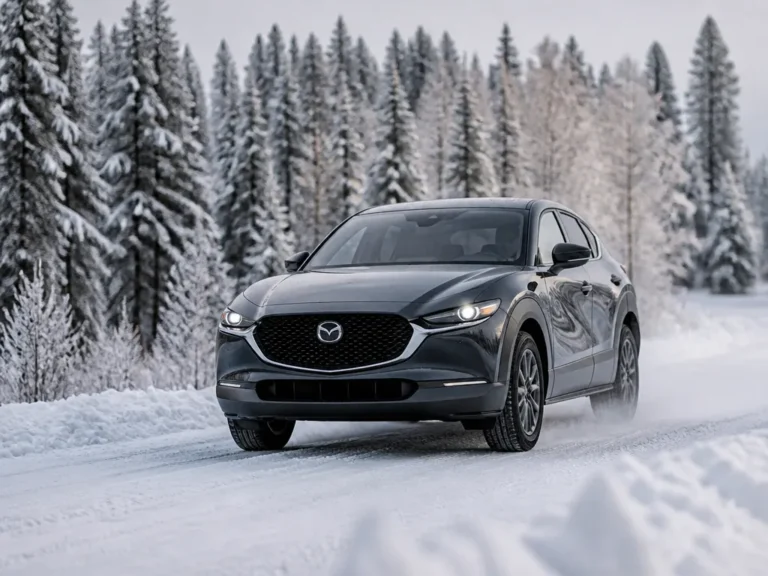
You bought or own a Mazda CX-30 and you’re wondering how it handles once the roads turn into packed snow, slush, and ice. The real question is traction and stopping, not the brochure. This guide breaks down how the CX-30 behaves in winter, what to watch for day-to-day, and how to set it up for the season.
With winter tires, good pressures, and smart driving habits, the CX-30 can be confident on snow. The grip you feel depends more on tire tread and temperature than on driver-assist hype. You’ll get CX-30-specific notes on AWD engagement behavior, traction control and ABS pedal feel, plus a practical checklist for pre-winter and in-winter setup.
Mazda CX-30 winter driving comes down to traction control response and tire grip. In packed snow and slush, winter tires usually cut stopping distance and improve steering feel versus all-seasons, especially below 7°C (45°F). Expect ABS to pulse on icy braking and traction control to intervene with quick engine torque trims during wheel spin.
1. Mazda Cx30 In Snow And Winter Driving
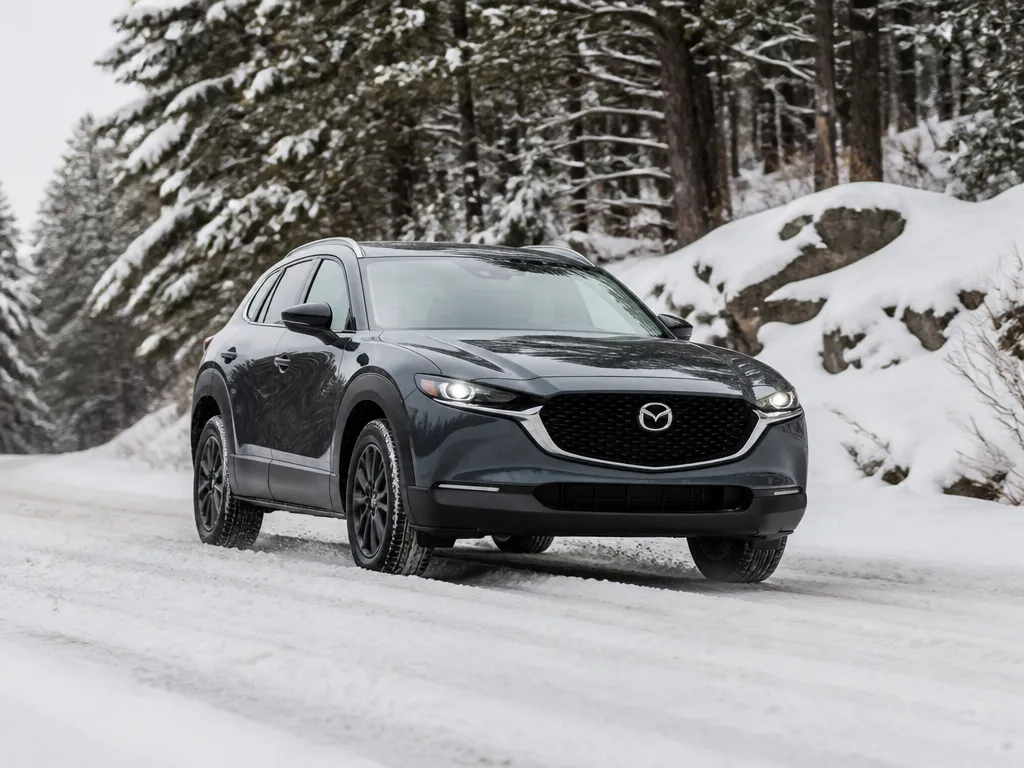
Winter driving can punish small crossovers fast, which is why winter tire traction and stable drivetrain behavior matter more than badges. The Mazda CX-30 is a practical choice for snowy commutes because it starts around $26,375 for a CX-30, making it easier to budget for the right snow tires and wheel setup. Pair that with its compact size for easier lane changes and parking during storms, and you get a realistic winter package for many owners.
In practice, the biggest win comes from choosing the correct tire and keeping them properly inflated for cold weather. A good winter setup usually means dedicated winter tires (often a separate set of wheels) and a pressure check after the first hard freeze, since tire pressure can drop noticeably with temperature. If your CX-30 uses a spare or compact spare, plan for reduced speed and shorter range, especially when roads are slick.
Traction And Control Choices That Matter Most
Snow performance on a CX-30 comes down to tire compound and tread design, plus how the vehicle is driven. All-wheel drive helps, but it cannot replace traction tires, especially during braking and in deep, churned snow. In winter conditions, smoother throttle inputs and earlier braking make a bigger difference than trying to “power through” slick patches. For best results, match your tires to your typical weather, since light snow on salted roads and heavier, packed snow require different tread performance. When conditions are severe, keep speeds conservative and avoid sudden steering corrections, because that’s when grip is lowest.
Reader takeaway: budget for a proper winter tire setup early, then drive it gently and check pressures after cold weather hits, and your CX-30 will feel far more confident than it does on all-seasons.
2. Awd Vs Fwd Traction Behavior
Traction behavior matters because front-wheel drive and all-wheel drive send engine torque to different tires, and that changes how a Mazda CX-30 feels when the road is icy, packed snow, or slushy. AWD typically improves grip when all four contact patches lose traction at once, while FWD often concentrates slip at the front, changing steering response. For winter driving, that difference shows up most during takeoff, merging, and correcting for sideways drift.
In practice, AWD helps you put power down sooner after a stop because the rear wheels can share load, which is why you usually see less wheel spin on slick ramps and snowy intersections. For FWD, the CX-30’s front tires do more work, so abrupt throttle can trigger quicker traction control intervention and a more “push” feeling as the fronts slip. Snow tires still dominate the outcome either way, since tire compound and tread pattern do more for stopping and lateral grip than drivetrain alone.
How It Changes Daily Snow Control
When the surface is uneven, AWD’s ability to move torque to the wheels that still have grip can reduce the “front tires are digging a trench” sensation.
For example, leaving a driveway after a fresh plow pass can mean one side is drier than the other, and AWD usually recovers traction more smoothly before you reach the steering limits. In a FWD setup, the front tires take the brunt, so if you roll into power mid-corner, the car can understeer as the traction control clamps wheelspin. Cold weather also affects tire pressure and rubber stiffness, so using correct tire pressure for snow conditions helps both AWD and FWD behave more predictably.
3. Traction Control Intervention Feel
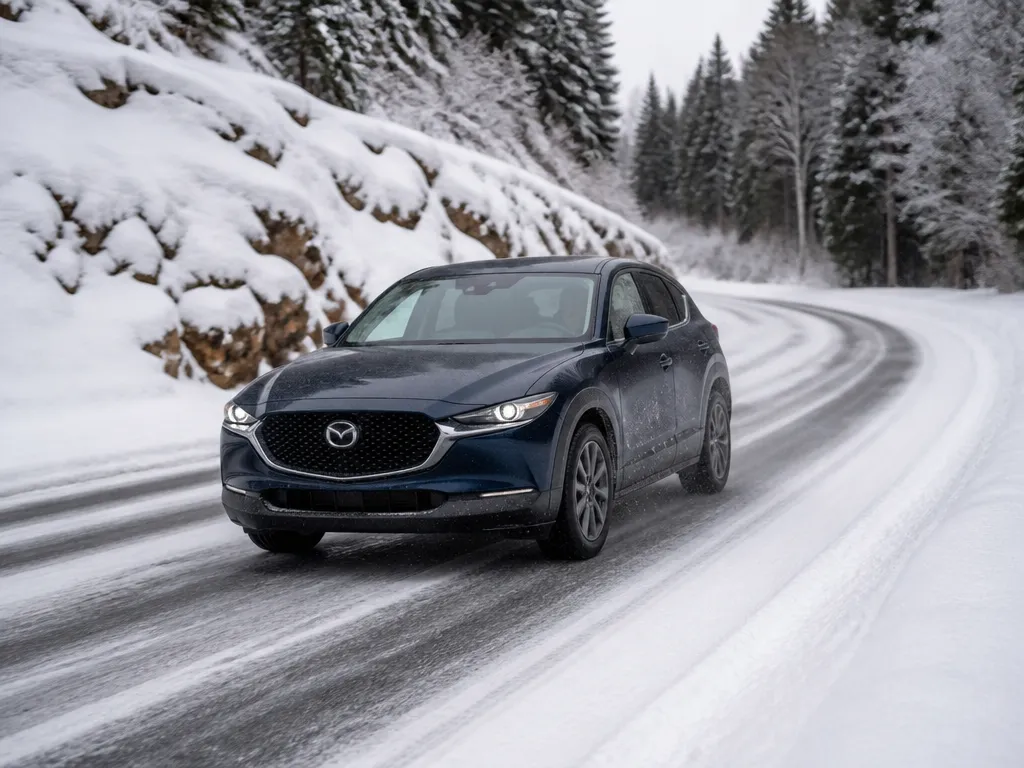
Traction control behavior matters in winter because it is what you feel through the throttle and steering when the tires start to lose grip. On the Mazda CX-30, you can usually tell when the system is working because acceleration smooths out, engine torque gets cut, and the car tries to pull itself back in line before you reach for the brakes. That “intervention feel” helps you keep momentum on packed snow and avoid the jerky surges that make slides start.
For example, when you feather the pedal from a stop on a slushy incline, the onset is often subtle at first, then more noticeable as wheelspin increases. If you feel a sudden hesitation or a rapid pulsing under steady throttle, that usually means the system is actively limiting torque to regain traction. With winter tires, you typically get longer, more consistent acceleration before traction control has to step in, which makes the car feel more predictable.
How To Read The System’s “Language” On Slick Roads
Traction control is doing its job when it limits wheelspin before the car rotates. If intervention comes very early, that can point to tire grip issues (wrong tires for the season, low pressure, or tread wear) rather than a faulty system. If the engagement feels delayed or inconsistent, that is a cue to slow down and consider having the braking and wheel-speed sensors checked by a shop, since those inputs affect traction control logic. For winter driving, the goal is consistent inputs: gentle throttle, slightly more following distance, and smooth steering corrections so the system can work without you fighting it.
4. Braking On Slush And Ice
Slush and ice turn tire friction into a moving target, so the CX-30 can lock up or slide sooner than drivers expect. That is why braking habits and tire grip matter as much as any brake system, especially at low speeds around intersections and parking entrances. On a CX-30, smooth pedal inputs help keep traction available for steering while you slow down.
In practice, start braking earlier than you normally would, then squeeze the pedal progressively instead of stabbing it. If you feel the vehicle begin to drift, easing off slightly can help regain grip, then reapply pressure gently. Use the lowest safe speed for the conditions and give following traffic extra space so you have time to modulate braking on slick patches.
How To Modulate The Pedal When Grip Keeps Changing
On a surface that alternates between wet slush and exposed ice, the coefficient of friction can drop suddenly, so you want to stay in the “traction zone” where the tires are rolling but slowing. Use smaller pedal movements than you would on dry pavement, and pause between adjustments long enough for the tires to respond.
For example, if a wheel starts to lose grip, holding steady pressure longer can sometimes worsen slide, while a brief release and re-squeeze can bring the vehicle back under control. If your CX-30 is equipped with ABS, you may feel pulsation, but the goal is still controlled pressure and straightening the steering before braking harder.
5. Steering And Cornering Confidence
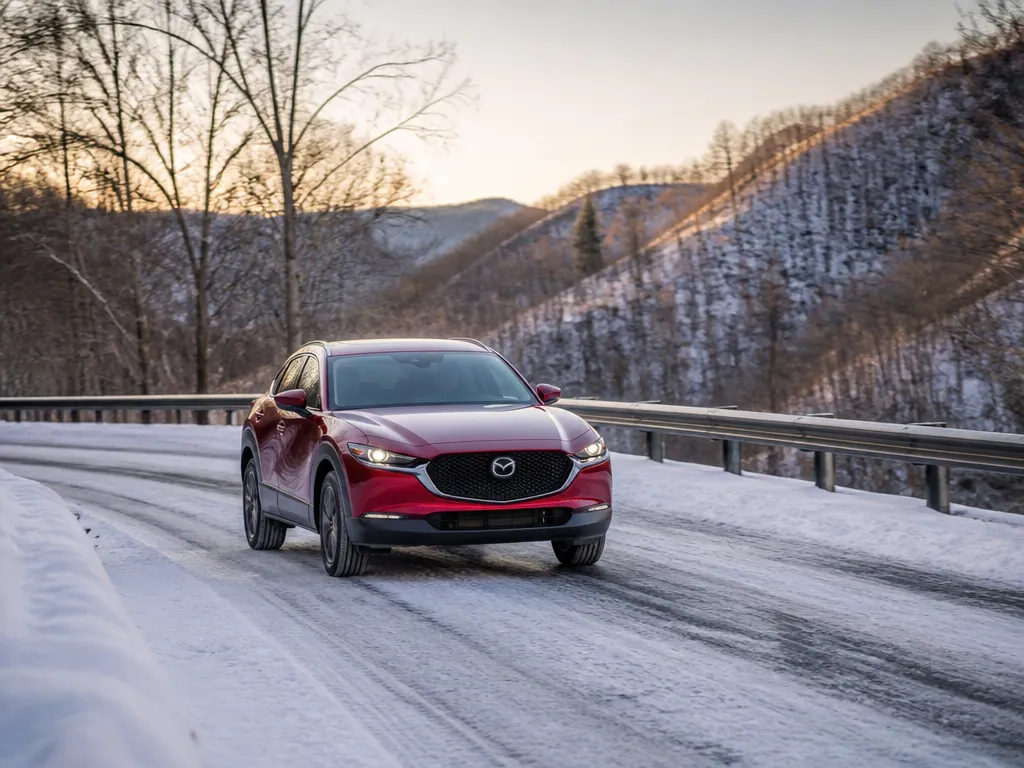
Steering feel and predictable cornering matter in winter because tire grip changes fast on snow and slush, and the driver needs consistent response to keep the car pointed where you intend. The Mazda CX-30 is built on a compact, crossover platform that typically feels stable for its size, and that baseline matters when you are switching between cleared lanes and patchy ice. In practical winter driving, confidence comes from how well the CX-30 maintains direction while traction varies, especially on highway ramps and tight town corners.
In snowy conditions, the biggest factor in winter cornering confidence is still tire choice: a proper winter tire and correct inflation reduce wandering and delay slide-on-set. The CX-30 family is commonly equipped with power steering and electronic stability logic, which helps the car stay composed when you get abrupt throttle or steering inputs on low grip surfaces.
For example, if you are commuting in stop-and-go snow, aim for smoother steering transitions and avoid turning the wheel aggressively while rolling over uneven snow ridges.
What To Feel For During Winter Cornering
Good winter behavior usually shows up as steady “aim” through the middle of the turn, with fewer sudden changes in steering weight from one surface to the next. When the front end starts to wash out, you often feel it as a widening gap between steering input and actual vehicle path, followed by traction control activity. In that situation, ease off the throttle and reduce steering angle, since the front axle needs time to regain grip. A CX-30 that feels consistently responsive is a sign your tires are doing their job, while a vehicle that darts or floats over uneven snow often points to tire mismatch, worn tread, or pressure issues.
6. Hill Starts And Grade Climbing
Steep winter grades are where a CX-30 driver gets hit with the worst mix of wheel slip, higher engine load, and less traction from compacted snow or slush. This is exactly why hill starts and grade climbing belong on your winter-driving checklist, since getting moving uphill without spinning tires often comes down to how you manage torque and braking.
In practice, you want to start smoothly and keep the car balanced, because abrupt throttle on icy slopes can overwhelm traction before the tires bite. Use the slope to your advantage by maintaining a small, steady throttle opening while releasing the brake in a controlled way, then feed in more power only after you see the car tracking straight. If your CX-30 has a traction-control system, it can reduce wheel spin, but you still need to avoid aggressive inputs because traction control works with limited grip.
When To Use Momentum Versus Patience
On packed snow, momentum is your friend for short grades because a continuous, steady pull can stay within the grip available at the tire surface. For longer climbs or repeatedly slick switchbacks, patience matters more, since you may need to slow down, straighten the steering, and reapply power progressively to prevent wheel spin. If you feel the tires chirp or the car shudders while trying to climb, ease off and stabilize your line before adding throttle again. Many drivers get into trouble by trying to “power through” a slip, when reducing throttle and re-centering the car often regains traction faster.
7. Low-speed Maneuvering In Snow
Low-speed control is where winter driving problems show up first, because slow turns load the tires with steering and braking at the same time. The Mazda CX-30 is built for everyday commuting, so mastering tight parking-lot moves helps you avoid wheel slip when traction is poor and snow is packed into the tread.
In practice, drive with a longer approach to every stop and start, then use smooth steering inputs to let the tires regain grip.
For example, in a CX-30 with all-wheel drive, rolling gently at idle speed through slushy intersections reduces the chance of sudden traction loss while you modulate brake pressure.
Winter tires matter here more than most people expect. Even if your CX-30 has good traction tech, winter-capable tires improve how quickly grip returns after a slip, which makes slow steering feel predictable.
Small-space Technique
In tight parking lots, treat every maneuver like a controlled experiment: one input at a time. Make your steering decision first, then brake or apply power gently while keeping the steering angle steady, because jerking the wheel mid-brake is what often triggers more slip. In deep, uneven snow, avoid “threading the needle” between piles, since the tires can catch and kick the vehicle sideways. Clear a path with careful repeated shuffles rather than one aggressive attempt, and leave extra room so you do not have to crank the wheel while stopped.
8. Highway Snow And Whiteout Control
High-speed winter driving is where snow control systems matter most because reduced traction can quickly turn a small mistake into a loss of steering or braking distance. A CX-30 matters on highways in winter because its stability-oriented driving aids and all-season plus snow-tire use can help you keep the vehicle pointed where you intend when conditions slide from snow to near-whiteout visibility.
In practice, the biggest “system” is your setup: fit quality winter tires with a fresh tread compound and keep tire pressures at the door-jamb specification when cold. Snow packed into grooves kills braking, so treat a single pass through slush as a reason to re-check feel and distance. For whiteouts, use low beams or fog lights only if they illuminate the road edge without reflecting back, and reduce speed early because your visibility can collapse before you feel the car losing grip.
How Driving Aids Behave When Traction Drops
Stability control and anti-lock braking can keep you straight while braking, but they cannot create friction where snow and ice have taken it away. In deep snow or a sudden transition from bare pavement to glare ice, the car may feel like it “won’t respond” for a moment because the traction and brake systems are working to prevent wheel slip. That is when calm throttle and gentle steering matter most: if you slam the accelerator or jerk the wheel, you overload the system and risk building a slide that takes longer to recover. If warning lights appear or ABS or traction control seems to be cutting in more than usual, back off and get the vehicle checked before you push it on the highway.
9. Winter Tire Vs All-season Reality
Winter tires earn their place because their rubber stays softer in cold temps, which helps the tread bite the snow and ice instead of glazing over. For a Mazda CX-30, that matters when traction control and ABS are working overtime, since the tire is what actually decides how much grip you have at the contact patch.
For practical sizing, many CX-30 owners run common winter tire ranges in the 17 to 18 inch wheel sizes, so you can often match your wheel width and keep overall diameter close to stock to avoid speedometer weirdness. Budget planning is real: expect winter tires plus wheels (or tire-only swaps) to cost roughly $700 to $1,500+ depending on tire brand, warranty, and whether you add mounted wheels. Use a true snow-rated tire, typically marked with the 3PMSF symbol, because it’s built for colder traction and not just mild wet conditions.
How The Tradeoff Shows Up In A Cx-30
In the CX-30, you can feel the difference first as steering response during low-speed maneuvering and braking feel when you come up on slush or churned snow. In mild weather, an all-season can feel fine because the tires are warm, but once temperatures drop and surfaces get slick, the all-season compound tends to harden and loses that extra bite. Winter tires can also be noisier and wear faster if you keep them on long into warm weather, so planning the swap schedule matters.
10. Tire Size, Pressure, And Heat
Cold-weather grip depends a lot on correct tire pressure, since air contracts as temperatures drop and winter tires also run hotter once you get moving. For a Mazda CX-30, staying in the door-jamb spec keeps the tread shape where it belongs, which matters for both snow bite and stability on cleared roads. Heat management also affects wear, especially during repeat short trips in freezing temps.
For example, check pressure after the car has sat for 3 hours (or is close to ambient), then add air to match the Mazda placard.
In practice, plan on a difference of a few PSI between mild and deep-freeze mornings, and recheck weekly during the first month of winter. Keep in mind that overinflation reduces contact patch area in slush, while underinflation builds extra sidewall flex, which accelerates tread wear and can raise temps fast on longer drives.
How Pressure And Heat Show Up In Real Winter Wear
Heat is the real “timer” for winter tire performance. If you run low for days at a time, the tread wears in a wide, sloppy pattern, and the tire tends to feel less responsive when the road alternates between packed snow and dry pavement. If you run high, you may notice more wear in the center and a harsher ride on frost-heaved roads, plus reduced bite when traction is marginal. Because winter trips are often short, tires can start cold again before they fully warm up, so consistent pressure checks early in the season matter more than you might think.
11. Chains: Compatibility And Setup
Chains matter in winter driving because many areas restrict studs and require traction aids when roads get icy, especially on steep grades and during snowstorms. For a Mazda CX-30, getting the right chain type for your tire width and wheel clearance is what keeps you from fighting fitment while you are trying to move safely.
Measure your tire size on the sidewall (example format: 215/60R16 or 225/50R18) and buy chains that list that exact size range. Use the tire clearance and cable routing guidance from the chain manufacturer, since wheel well space varies by wheel size, and the CX-30 can be equipped with different wheel/tire combinations. Plan to install chains in a dry, well-lit spot before your first storm, then re-check the tension after the first short drive (follow the chain brand’s interval). A practical starting point is using a fitment chart on the chain box or website, then confirming clearance around the strut, brake line area, and inside the wheel well.
In practice, expect setup to take longer in real winter conditions, so keep tools and gloves in the vehicle and avoid installing chains while traffic is moving nearby.
- Carry the correct chain model for your tire sidewall size and wheel diameter
- Keep chain links and hooks clean, and check for worn tensioners
- Practice once when temps are above freezing to learn the feel
- Install on the drive wheels only, then drive gently until you confirm tension
Tradeoffs
Snow chains provide traction when tires cannot bite, but they also increase noise, steering effort, and drivetrain loading, so they are best for limited segments like storms, pullouts, or climbing short icy ramps. Cable-style “tire socks with cables” can be easier to fit in the CX-30’s wheel well, yet they may wear faster on plowed, packed roads and still need correct tensioning. For the best results, choose chains rated for the road conditions you expect, then follow the manufacturer’s posted speed limits and removal guidance so you do not damage tires, wheels, or suspension components. When in doubt about clearance for your specific CX-30 wheel setup, verify compatibility against your tire size and wheel diameter.
12. Cold Start And Cabin Warmup
Cold mornings hit the Mazda CX-30 hardest because engine oil thickens fast at low temperatures, so smoother warmup matters for drivability and drivetrain wear. A winter cabin that warms quickly also reduces fogging and helps you clear the windshield sooner, which is a safety win when snow is falling or visibility is already limited.
In practice, plan on warming the cabin while you clear snow from the roof and hood so the defroster has time to catch up. Use the front defrost setting first, then switch to face and feet once airflow feels steady. For quick heat management, keep the HVAC fan on a moderate setting rather than blasting full heat immediately, which can spike engine load demand during the first few minutes in very cold weather.
For example, letting the engine idle only long enough to start smoothing out the RPM and gaining defrost progress is usually more efficient than extended idling.
Tradeoffs In Very Cold Weather
Extended idling can raise cabin temperature, but it also wastes fuel and may not fully bring the engine to optimal operating conditions if temperatures are extremely low. Using recirculation helps the cabin warm quicker, though it can increase interior humidity, so switching back to fresh air when the windshield starts to fog is the smarter move. If your CX-30 has a remote start option, treat it as a way to get the cabin and glass started, then drive off gently once the engine smooths out. In heavy snow or icy wind chills, prioritize defrost output and steady low-speed driving over chasing cabin comfort.
13. Defrosting And Visibility Checks
Snow and freezing drizzle fog up a CX-30 fast, especially when you get repeated door openings from parking lots and walk-in garages. Clear defrosting matters because reduced windshield visibility is one of the fastest ways winter driving turns stressful. A quick pre-drive check also helps you catch weak airflow or a failing defrost circuit before you are stuck at the roadside.
For snow seasons, keep the cabin capable of drying the glass by using recirculation only briefly, then switch to outside air once the windshield starts to clear. Start with full defrost and fan, then reduce the airflow once you see steady, clear sightlines. A spray-and-wipe routine helps too, because brine residue sticks to the glass and re-fogs after the first warm burst from the heater.
Dial In Technique For Snowy Windshields
In practice, timing and heat management beat running max heat forever. Start with the defrost mode and fan high for the first few minutes, then fine-tune to keep the windshield clear without blasting hot air directly into your face. If you see fog return after you start moving, it usually means moisture is still in the cabin air, so shift to outside air and run the heater at a steady level until the fog stops. For heavy snow pack on the glass, give it time to melt rather than scraping aggressively, since gouged glass can reflect headlights and glare at night.
14. Sensors And Cameras In Slush
Slush is rough on visibility and on the electronics that depend on clean sensor surfaces, which is why winter driving sections include camera and sensor behavior on the Mazda CX-30. When spray and road grime coat the front camera area, the system can lose contrast and become less reliable for lane guidance and driver assistance. Keeping those systems functional matters because snowy conditions already demand higher attention and earlier reactions.
In practice, you will usually notice the issue first in the camera view, where snow mist or streaks can wash out lane lines and reduce the crispness of objects in the display.
For example, during a heavy slush day, wiper spray plus a quick wipe of the camera cover (only after it has cooled) can restore clarity better than waiting for the heat cycle to clear everything. In some trims, the vehicle also uses radar and ultrasonic sensors around the bumpers, which can get packed with ice so they misread nearby obstacles.
What To Do When The Camera View Looks “Washed Out”
Washed-out camera imagery usually comes from a thin film of salt spray, melting ice beads, or a streak pattern left by wipers. Start by parking somewhere safe and checking the camera cover and the surrounding bezel for grit, because slush tends to deposit sand-sized particles that scratch if wiped aggressively.
For instance, lightly rinse off loose debris first, then wipe with a clean microfiber and a gentle lens-safe cleaner. If the system is still unreliable after the surface is clean and dry, the temporary limitation may clear once the sensors warm up and the calibration routines run, but persistent warnings are worth a dealer scan to confirm no sensor fault has set.
15. Pre-winter Cx-30 Inspection Checklist
Snow and slush punish small weaknesses, so a pre-winter inspection helps catch issues that can turn into loss of traction, poor braking, or starting problems once temperatures drop. For the Mazda CX-30, winter readiness is mostly about tires, brakes, lights, wipers, and the battery and charging system, since those directly affect stopping and visibility on cold mornings.
For example, plan this inspection 1 to 2 weeks before your first hard freeze so you have time to schedule tire mounting or service if anything is off. Start with a quick walkaround: check tread depth, tire sidewall condition, and verify all four tires match your winter strategy, then inspect wiper blades for streaking and replace if they smear. Check brake pedal feel and look for uneven pad wear or rotor corrosion, and confirm the headlights, high beams, brake lights, and reverse lights work at full brightness.
In practice, pull the air filter and make sure it is seated and clean enough for cold-start airflow, and top off windshield washer fluid with a winter-rated concentrate so it does not gel. Verify battery age and charging output before the cold snap, since a weak battery is the most common “it ran fine in fall” failure. If you run salt frequently, inspect for brake line corrosion and underbody rust at least lightly around fittings and fasteners.
What To Check First When Temps Drop Fast
Cold weather amplifies battery strain, so the priority is starting reliability, then stopping and visibility. A battery that passes in mild weather can still struggle once thick oil and cold cranking load stack up, so a load test is more useful than a basic voltage reading. Next, focus on brakes and tires together, because winter grip depends on tire compound and tread, while brake performance depends on pad contact quality and rotor condition. For visibility, replace wipers before they chatter or skip, since clear glass matters more when precipitation turns to ice. If any warning lights are on or the steering feels off, schedule a professional inspection before driving in snow, since steering and brake issues are not “wait and see” problems.
In-winter Driving Habits Checklist
Winter traction changes fast, and with a CX-30 you want smoother inputs to keep the tires from breaking loose. This habit checklist belongs in a snow-driving plan because controlled throttle, steering, and braking reduce wheel slip and help stability systems do their job when conditions get slick.
Start every drive with a quick look around: check for packed snow on the wheel wells and under the bumper, confirm the wipers move freely, and clear the camera or sensor area if equipped.
In practice, aim for steady acceleration and gentle decel, giving tires time to regain grip between throttle changes. If you’re heading out early, let the engine reach operating temperature before you ask for hard acceleration, and keep speeds conservative in turns where the road surface can change side to side.
How To Adjust Daily Driving In Snow And Slush
Road conditions swing between ice, packed snow, and wet slush, so your habits need to be flexible. If the first few turns feel “grabby” then suddenly slippery, back off speed immediately and widen your lane position to avoid the uneven ice ridges that form near tire tracks. For light snow, you can often drive normally at reduced speed, but for slush and spray you’ll want earlier braking and smoother steering because visibility drops and the tires can hydroplane briefly. Keep an eye on how the CX-30 responds when you lift off the throttle mid-corner, since abrupt lift can shift weight and trigger traction control more often.
Quick Summary
When winter turns roads into packed snow, slush, and ice, the Mazda CX-30’s real-world results come down to traction and stopping, not driver-assist hype. With winter tires, the article says stopping distance usually improves and steering feel gets better than it does on all-seasons, especially below 7°C (45°F). Expect ABS to pulse on icy braking and traction control to intervene with quick engine torque trims during wheel spin, so the goal is steady inputs rather than forcing grip.
The piece also stresses that correct setup details matter as much as AWD or FWD layout. Check tire pressure cold and set it to the Mazda door-jamb specification, especially after a hard freeze since pressure drops with temperature. Visibility is the hidden issue, so plan for faster wiper wear and higher defrost duty in blowing snow. It notes AWD generally feels steadier when accelerating out of turns, but winter tires dominate either way, and you should swap when temperatures consistently dip below about 7°C (45°F).
| Winter item | What the article says to do | Why it matters |
|---|---|---|
| Temperature trigger | Swap to winter tires below about 7°C (45°F) | Grip and stopping improve as cold slows all-season performance |
| Braking behavior | Expect ABS pulsing on ice and slush, keep steady brake pressure | Helps you avoid panic inputs when traction is limited |
| Tire pressure | Check cold and set to the Mazda door-jamb specification | Cold weather can drop pressures and reduce traction |
| Visibility | Plan for fast wiper wear and stronger defrost use in blowing snow | Good sight lines prevent missed hazards |
Frequently Asked Questions
Is The Mazda Cx-30 Good In Snow, And How Do I Make It Safer?
Start with the basics: use the right winter tires, keep tire pressures set for cold weather, and give yourself extra stopping distance. If your CX-30 has an AWD system, still treat it as traction help, not a substitute for tire grip and cautious braking. Winter tires are usually the biggest improvement for snow control.
Does The Mazda Cx-30 Have Enough Ground Clearance For Deep Snow?
Ground clearance matters for packed snow and rutted roads, but how you drive matters just as much. Stay out of plow berms and avoid “high center” situations by slowing early and choosing smoother tracks. Clearance can help, but it does not prevent underbody contact in deep, uneven snow.
What’s The Best Way To Warm Up A Mazda Cx-30 Before Driving In Winter?
For short, local trips, focus on clearing ice and snow from windows, mirrors, and lights first. Then let the engine reach normal operating temperature gradually while you drive gently, especially for the first few miles. Hard acceleration or aggressive braking right away can cause wheel slip and sketchy traction.
Why Does My Mazda Cx-30 Feel Jerky Or Slip On Snowy Roads?
This often comes down to tire grip, tire wear, or traction control working harder than you expect. Check that your winter tires match the season, look for uneven wear, and avoid sudden throttle inputs on slick starts. Wheel spin from weak traction is a common cause of “jerky” behavior in snow.
What Winter Maintenance Should I Do On A Mazda Cx-30 To Reduce Problems In Snow?
Before your first storms, verify tire tread depth, confirm wiper blade condition, and make sure winter washer fluid is topped off with the right freeze rating. Also inspect brakes and check that you do not have any fluid leaks, since winter driving magnifies issues quickly. Fresh windshield wiper performance and good tire tread are high-impact winter checks.
Is It Worth Paying Extra For Awd On A Mazda Cx-30 If I Drive In Winter?
If you are choosing between traction setups for snowy conditions, AWD can help you move more confidently on slick grades, but it cannot replace winter tires for stopping. If your area is more about packed snow and ice than slushy starting from stoplights, prioritize winter tires first, then choose drivetrain based on your typical road conditions and budget.