



You found a listing that says “suicide doors,” and you want to know if it is real or just marketing. A true suicide door is a rear-hinged door that swings from the rear side of the opening. This article helps you confirm the hinge location and opening swing, then narrow down which cars (with year ranges and trims) actually use them.
Suicide doors are rear-hinged doors with hinges mounted toward the rear of the body opening, so the door swings in the opposite direction from a conventional front-hinged door. You will get specific model-year examples, a quick visual checklist, and buying/inspection tips for what tends to wear out.
Cars with suicide doors are rare, because a true suicide door is rear-hinged. Look for the hinge on the rear side of the opening and check that the door swings from that rear hinge. Use ads/photos to confirm whether both doors or only certain configurations are rear-hinged.
Cars With Suicide Doors: What Qualifies
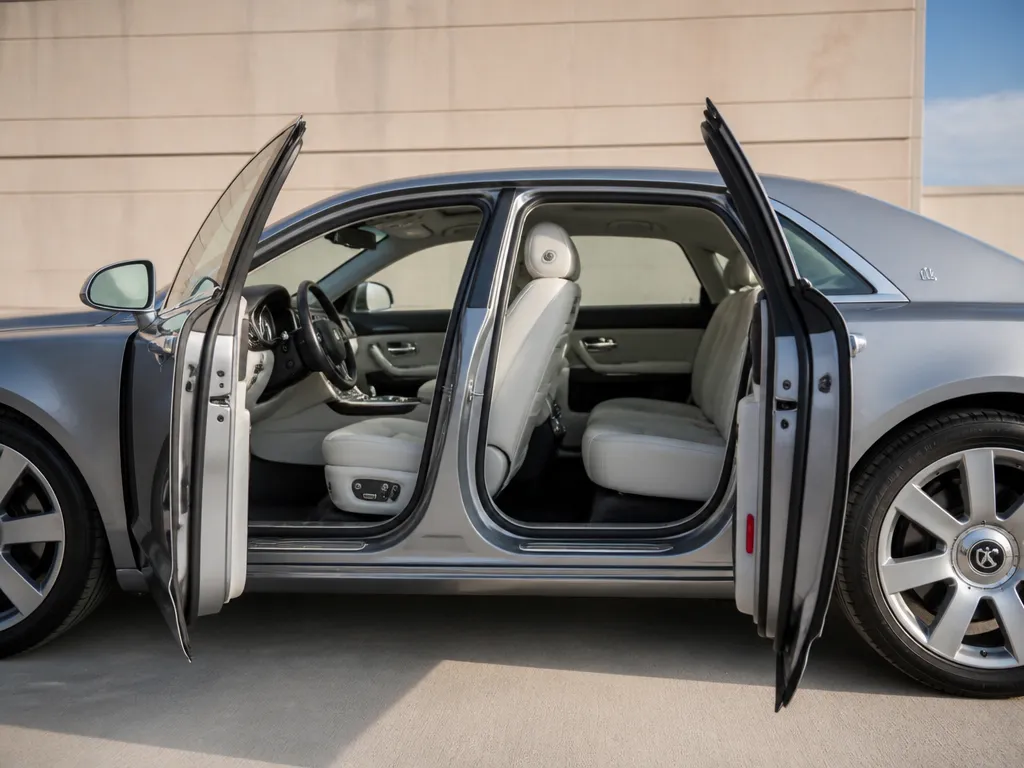
Suicide-style doors open from the rear edge and hang on hinges mounted on the rear side of the door opening, so the door swings outward in the opposite direction from a conventional front-hinged door. The key is hinge location relative to the body opening, not just the fact that the door is on the back of the car.
True layouts are rear-hinged on the door, meaning the door’s pivot point sits toward the back half of the opening. Rear-hinged lookalikes also exist, especially on coach-style conversions, so you need a quick visual check before you assume the car is the real deal.
True Rear-hinged “Suicide” Door Layout Vs Lookalikes
On a qualifying car, the door opens by swinging outward from a hinge that is mounted toward the rear side of the opening. The hinge side will be closer to the rear of the vehicle than the front edge of the opening.
Common mix-ups happen with cars that have conventional hinges but open as “coach doors” because of how the door is mounted or framed. Modified vehicles can also mimic the exterior behavior while keeping hinge geometry close to conventional, which changes how the door behaves and how it locks.
How To Tell Hinge Side Relative To The B-pillar
Stand beside the car and pick a door that you know is intended as the rear-hinged feature. Find where the hinge arm mounts to the body, then compare that location with the B-pillar or rear side of the opening. A hinge mounted toward the rear side identifies the rear-hinged layout.
In a simple test, open the door slightly and watch which edge leads. The qualifying door pivots from its rear hinge, so its front edge moves away from the opening rather than acting as the hinge pivot.
| What you see | What it usually means |
|---|---|
| Hinge bracket mounted toward the rear side of the B-pillar opening | True rear-hinged door |
| Hinge bracket mounted toward the front side of the opening | Conventional hinge geometry (lookalike or coach-style setup) |
| Door pivots from a top hinge like a wing | Does not qualify (gull-wing style) |
Only One Rear Door Hinged That Way, And What Counts
Some vehicles have the rear-hinged design on one door only (often the rear door) while the other rear door uses conventional hinges. For qualification, the door itself must meet the hinge-side rule, so a car can qualify even if only one side and one door carry the rear-hinged hardware.
In listings, sellers sometimes call the whole car “suicide doors” when only a single door is modified. If you are checking photos, confirm the hinge location for each door individually, especially if the listing mentions “conversion,” “custom,” or “limited production.”
What Doesn’t Qualify (Door Types That Get Mislabeled)
Scissor doors, gull-wing doors, and roof-swing systems are often marketed with the same vague “suicide” label, but their hinge axis is not rear-hinge mounted on the door opening. Those designs use top hinges or special linkage, so they do not meet the hinge-side qualification.
Front-hinged rear doors also get mislabeled when photos are shot from the side. Front-hinged rear doors swing outward but pivot from the forward side of the opening, so the hinge-side check will fail.
Buyer warning: Don’t rely on the model badge or a seller’s wording. Use the hinge side relative to the opening as the deciding factor, because conversions and “lookalike” builds are common on the used market.
Rear-hinged Vs Suicide-hinged Cues
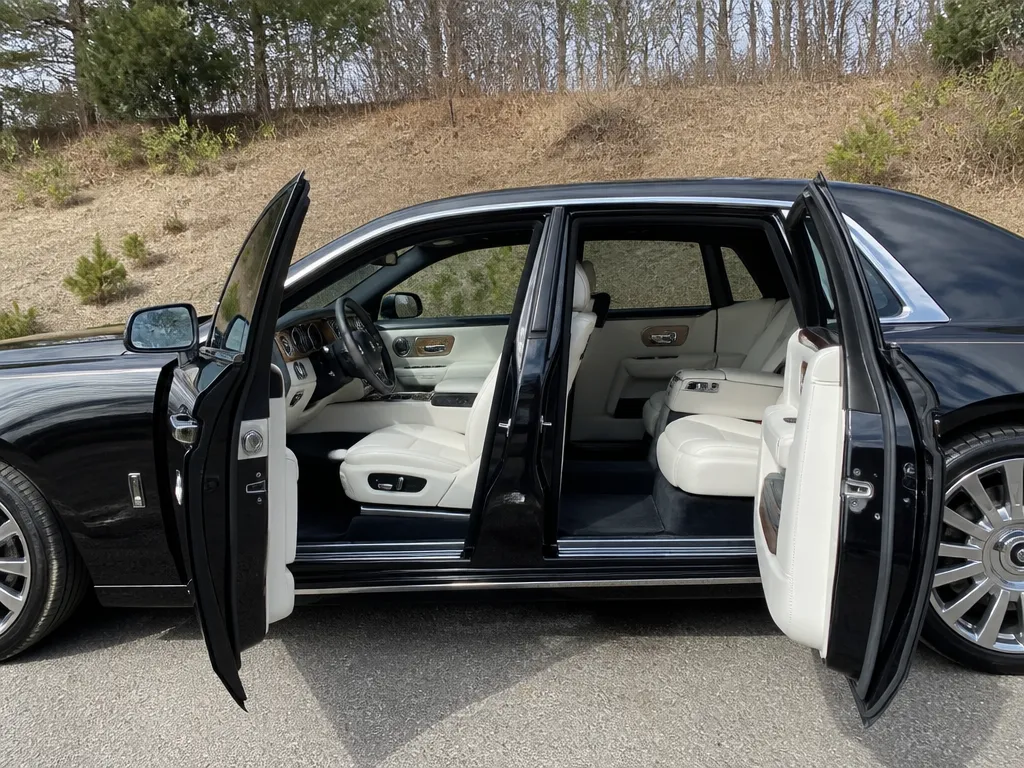
Rear-hinged “suicide-style” doors are easy to confirm in photos if you know what to look for. The hinge sits near the rear edge of the door opening, and the door swings outward based on that hinge geometry.
Start with the hinge location. On true rear-hinged setups, the hinge line is close to the back of the opening, so the door pivots around a point near the rear pillar area rather than near the front edge.
| Photo cue | Rear-hinged door sign | Conventional front-hinged sign |
|---|---|---|
| Hinge location | Near the rear edge of the opening | Near the front edge of the opening |
| Gap/seam behavior | Gap pattern suggests pivot near the rear of the opening | Gap pattern suggests pivot near the front of the opening |
| Door jamb hardware | Latch/striker placement matches rear-pivot geometry | Latch/striker placement matches front-pivot geometry |
Insider tip: If the listing includes a shot where both doors are visible from the side, compare the hinge sides side by side. Real rear-hinged setups look consistent across the pair, while “camera trick” photos often only show one ambiguous angle.
Cars With Factory Suicide Doors
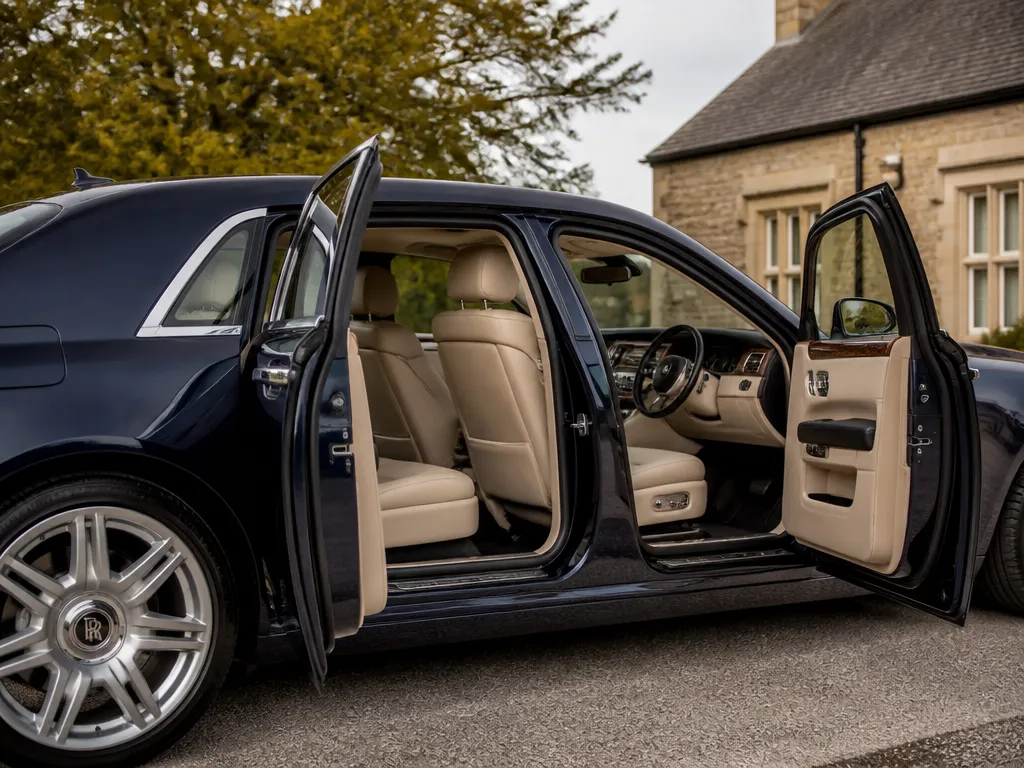
Rear-hinged “suicide-style” doors show up on a surprisingly small number of production vehicles. The most consistently documented examples come from classic-era full-size American cars and a handful of niche modern conversions.
For practical used-market searching, treat every “suicide doors” listing as ambiguous until you confirm hinge location. Many modern vehicles marketed with “suicide doors” use rear-hinged rear doors, scissors mechanisms, or dealer conversions that look similar from a distance.
| Vehicle type | Typical door(s) used | How to confirm fast |
|---|---|---|
| Classic full-size American (selected years) | Often front doors, sometimes only certain body styles | Look for hinge pins closer to the rear of the opening |
| Coachbuilt luxury | Often both sides, arrangement depends on build | Confirm with build sheet or by checking hinge position directly |
| Modern “suicide door” conversions | Can be rear doors or both doors, depending on kit | Compare door hinge location and swing direction to factory geometry |
Buyer reality check: The exact year, side (driver vs passenger), and whether both front or rear doors are rear-hinged can change by body style and trim. If the seller cannot show clear hinge photos in both lighting directions, assume it is not confirmed as factory suicide doors.
How Each Listed Car Matches
Factory rear-hinged “suicide” doors show up by the hinge location and the door swing direction. You can confirm the layout by looking for hinges on the rear side of the opening and checking whether the door opens outward from that rear hinge.
Door Configuration Recognition By Model
For accuracy, compare the ad photos to the hinge geometry, not the door shape. A long door with a chrome edge can look similar across conversions, but the hinge knuckle placement is what separates real rear-hinged suicide doors from “normal door” swaps or aftermarket disguises.
Some limited packages and coachbuilder cars use a hybrid layout where only one door is rear-hinged. Other cars have rear-hinged doors on both sides but differ between left-hand-drive and right-hand-drive conversions, so verify the specific side shown in the listing.
| What you see in the ad | Likely hinge design match |
|---|---|
| Hinges visible behind the door opening, door swings outward from the rear hinge | Rear-hinged suicide door |
| Hinge line looks like a normal front door, but ad copy claims suicide doors | Aftermarket fender/trim changes or mislabeling (verify latch and hinge knuckle location) |
| Only one door has rear-edge hinge mounts | Conversion-specific partial setup (common on specialty builds) |
Tip: if the seller only provides close-up interior shots or front-quarter exterior shots, assume the hinge is being hidden. Ask for a photo that shows the door-to-pillar gap with the door open at 30-60 degrees, because that’s where the hinge location becomes obvious.
Usability And Safety Tradeoffs
Rear-hinged “suicide” doors change daily driving more than most people expect. The door’s travel is wider, the latch feel can be less familiar, and getting kids in and out takes extra care around door-edge pinch points.
Seat-belt And Child Access: Getting In Without Fighting The Door
Most rear-hinged setups improve reach for adult passengers, because the door opens wide. The catch is that the rear seatbelt and child-seat belt path can end up farther from your hands once the door is fully open, so you may need to pause and set the belt before you swing the door again.
For child seats, the highest risk is routine pinch points and awkward body positioning while the door is moving.
For example, your forearm can slide into the door gap near the hinge area as the door swings, and that is when people rush and “catch” a hand or sleeve.
Parking Clearance: Door Swing Path In Tight Spaces
Conventional doors often clear small gaps because they swing forward. Rear-hinged doors swing toward the outside rear quarter, and the clearance you need is determined by the hinge location plus the door’s full arc.
For instance, in a typical two-car driveway, the passenger-side rear door may collide with a neighboring vehicle, fence post, or curb before it reaches a comfortable opening angle.
| Situation | Usability impact | What to watch |
|---|---|---|
| Parallel parking | Higher chance of contact | Door arc hits nearby panels before it opens fully |
| Garage with low wall/overhang | Moderate to high risk | Door opening angle reduced by roofline or overhead structure |
| Two cars close at a curb | Frequent limitation | Rear-hinged door needs more “open space” on the outside |
Door Security And Latch Feel: Different Engagement, Different Habits
Rear-hinged doors often latch with a different feel than front-hinged doors, and the handle action can surprise new owners. Confirm “fully latched” before driving, because minor misalignment can make the door seem closed while it is not properly seated.
Door security also depends on how the latch and striker wear over time. Older vehicles with suicide-style hinges can develop play, and that play changes how confidently the door closes.
Owner tip: after closing, give the door a gentle pull at the handle area (with the car parked and safe to do so). If it feels loose compared to how it used to feel, inspect hinge mounts and latch alignment before relying on it.
Emergency Egress: What Changes When Doors Don’t Open Smoothly
Emergency escape relies on quick, predictable door movement. Rear-hinged doors add potential friction points from hinge-area contamination, misalignment, or latch binding, and those issues may only show up when a door is loaded or opened under stress.
For safe daily use, treat “sticky” operation as a warning sign. If a door opens stiffly one day and freely the next, or if it requires extra force to latch shut, have it checked by a shop because bent hinges, worn bushings, or striker issues can keep the door from opening cleanly when you need it most.
Buying And Inspection Checklist
Suicide-door hardware usually fails in predictable places: alignment at the hinges and striker, latch pull-in feel, and corrosion at hinge mounts and door-jamb seams. A good test ride plus a careful open-close inspection catches most issues before you buy.
Rust Risk Areas And Corrosion Tells
Door jamb seams around the latch plate, hinge mounting panels, and the rocker/underbody near the rear door area are common corrosion hot spots because water gets trapped and the metal sees constant vibration. Focus on bubbling paint, flaking seam sealer, rust freckles at spot weld edges, and repaired areas that look fresh compared with the rest of the shell.
Hinge mounts that rust through can cause sag, which then drives latch misalignment and can make the door feel heavy or reluctant to swing. If you can press with moderate force and the panel flexes, walk away and bring the car to a body shop for inspection.
Test Drive, Static Cycles, And When To Call A Pro
Perform repeated open-close cycles from a consistent starting position. Listen for grinding, scraping, or popping at the hinge, then verify the swing arc is equal side-to-side with the door fully open. Unequal swing usually means bent body structure, hinge settling, or mismatched aftermarket hardware.
Professional inspection triggers are straightforward: structural rust at hinge mounts, visibly damaged hinges, a door that will not latch without heavy force, and any body or suspension misalignment that affects wheel-to-fender spacing. If the car shows signs of prior accident repair in the door surround or floor area, have a shop check body alignment points before you spend money.
| Inspection Point | What to Look For | Common Underlying Cause |
|---|---|---|
| Gap consistency | Door sits uneven, wide gap on one edge | Hinge wear, bent striker, sagging mount |
| Latch pull-in feel | Delayed catch, needs a slam | Striker misposition, worn latch components |
| Hinge play | Rocking movement at the hinge | Worn bushings/pins, loose fasteners |
| Rust locations | Jamb seams, hinge mounts, rocker/underbody corrosion | Water intrusion, failed seam sealer, thin metal |
Mechanic tip: If the door’s behavior changes after you slightly lift or support it, the hinge mounting and bushings are doing the “work.” That is a buying problem, not something you should ignore.
Rarity, Availability, And Pricing Expectations
Rear-hinged “suicide” door cars are scarce in the used market, and truly factory-built examples show up far less often than owner-built conversions. Most listings labeled with “suicide doors” are actually front-hinged modifications or generic aftermarket kits that can still function, but they rarely match the factory geometry and hardware.
Factory Originals Vs. Conversion Projects
Factory suicide-door cars are typically limited-run or region-specific models, so you usually find them through collector channels rather than mainstream classifieds. Aftermarket conversions are more common because the parts and fabrication know-how are easier to source, even if the outcome varies wildly.
Condition is the make-or-break factor on both types. Door alignment, hinge wear, and rust at the hinge boxes drive both drivability and long-term durability, because the door has to swing freely, latch cleanly, and stay square under motion loads.
Where To Shop For The Real Thing
Classic markets and high-end auction previews are the best hunting ground for genuine factory cars, especially when sellers provide provenance. Collector forums and marque-specific Facebook groups also help because long-time members can spot fake hinge orientation and mismatched latch positions quickly.
Import niches can turn up interesting candidates, but you still need to validate whether the car has rear-hinged doors on both sides and whether the latch geometry is original to that configuration. Specialty dealers that focus on coachbuilt or low-volume imports sometimes know the difference, but you should still inspect the hinges and body metal yourself.
| Where it shows up | What you’re more likely to find | Buyer takeaway |
|---|---|---|
| Classic auctions and specialty consignment | Lower-volume factory cars | Demand documentation, but expect cleaner bodywork |
| Collector forums and marque communities | Verified builds and known-condition cars | Ask for photos of hinge boxes and latches |
| General classifieds | Aftermarket conversions | Plan for verification and negotiation |
| Import niches | Region-specific variants, plus replications | Confirm both doors and operation consistency |
Pricing Expectations (Conservative Guidance)
Exact pricing swings by model, rust history, and whether the car is genuinely factory-configured, and live used listings vary too much to pin down a single number. As a rule, a sound, verified factory example costs more because you’re buying scarcity and correct body structure, while a conversion often sells cheaper but can demand ongoing metalwork and latch/hinge alignment attention.
Condition-adjusted budgets are the smarter move: rust in the hinge areas, bent latch support, or misaligned door skins can turn a bargain into an expensive project. Use the door system as your baseline cost risk, since correcting hinge-box corrosion and realigning the opening is more than just “adjust the hinges.”
Dealership-style tip: If the ad is vague and the seller only provides angled exterior shots, assume the door geometry might be compromised. Ask for straight-on photos of the hinge area (inside and outside), the striker engagement, and a short video showing the door opening to full swing.
Quick Summary
True “suicide doors” are rear-hinged doors that swing from the rear side of the door opening, so the hinge location and the opening direction are different from a conventional front-hinged layout. Because rear-hinged lookalikes exist, especially on coach-style conversions, confirm the hinge side and door swing in ads and photos before assuming it is a real suicide-door setup.
Qualifying cars can have rear-hinged hardware on only one door, but that door must still follow the hinge-side rule. Sellers sometimes label the whole car “suicide doors” when only a single door is modified, so each door must be verified individually. Scissor doors, gull-wing doors, and roof-swing systems do not match a rear-hinged suicide-door design.
| What to check | Qualifies | Doesn’t qualify |
|---|---|---|
| Hinge location vs B-pillar | Hinge bracket mounted toward the rear side of the opening | Hinges are front-mounted on the door opening |
| Door swing behavior | Door swings outward from the rear hinge side | Door pivots with front or top hinge motion, including wing-type action |
| Common listing confusion | Check each door if only one side is modified | Scissor, gull-wing, and roof-swing systems marketed as “suicide” |
Frequently Asked Questions
Which Cars Still Have Suicide Doors, And How Can I Identify Them?
Suicide doors are rear-hinged doors, and many models use a hinged rear-door design often called reverse-opening doors. If you are shopping used, look for listings that mention “rear-hinged,” “suicide,” or “reverse-opening” and verify with clear photos of the hinges at the rear edge of the door.
How Much Do Suicide Door Repairs Usually Cost Compared To Regular Doors?
Expect costs to be higher and more variable because the hinges, latches, wiring (on power doors), and alignment can be less common and more labor-intensive. Budgeting for “diagnose plus parts plus labor” is the safest approach, and a body shop familiar with the specific model can give a tighter estimate.
Are Cars With Suicide Doors More Dangerous Than Cars With Conventional Doors?
The real risk depends on the condition of the latch, striker alignment, and door check components, not just the hinge layout. If a door does not close firmly, has excessive play, or opens unexpectedly, treat it as unsafe and do not rely on it until it is inspected and adjusted by a qualified shop.
Why Does A Rear-hinged (Suicide) Door Not Close Properly, And What Should I Check First?
Common causes are worn hinges, bent door alignment, or latch/striker mismatch after an accident or body work. Start by checking for loose hinge bolts, then inspect the striker area and door seals for uneven contact, and confirm whether the door consistently catches the latch without needing extra force.
Can I Retrofit Suicide Doors Onto A Different Car, Or Is It A Bad Idea?
Retrofitting is usually a high-risk, high-cost project because it requires correct structure strength, hinge geometry, latch logic, and often wiring and crash-related considerations. Unless you have the complete factory parts and documentation for that exact platform and are working with a specialist, it is very easy to end up with poor alignment or an unsafe latch setup.
What Is The Most Common Mistake People Make When Maintaining Suicide Doors?
The biggest mistake is ignoring latch and hinge wear and continuing to force the door when it starts to drag or not latch cleanly. If the door feels “off,” stop using it until you inspect hinge condition, alignment, and latch engagement, because small issues can turn into bigger problems with fit and retention.