


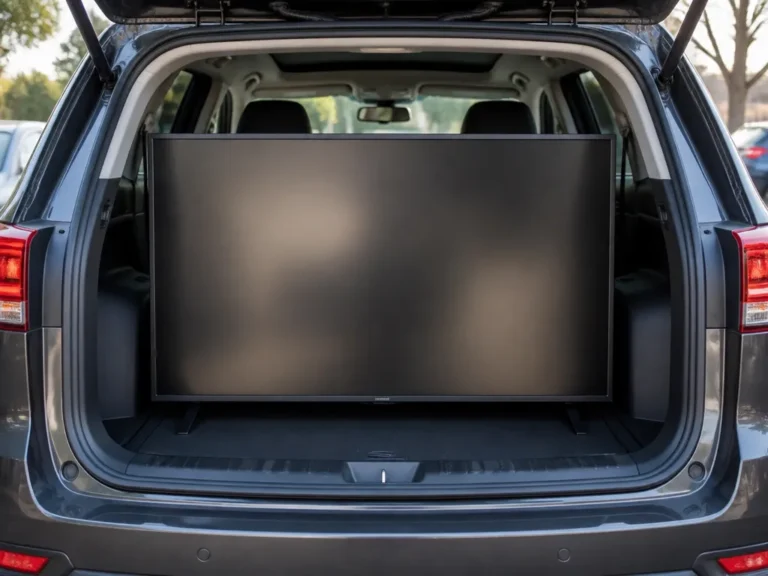
You just bought a 75-inch TV (or you’re helping a friend) and you’re staring at your SUV thinking, “Will this thing actually fit through the hatch?” The hard part is that screen size in inches does not tell you the real width, height, and depth with the stand off.
Measure the TV in three real dimensions (width, height, depth without the stand) and measure your SUV’s cargo opening and usable cargo floor before you try to muscle it in. Most fit failures happen because of TV height or depth at an angle, even when screen width looks close.
Large Tv Fit In An Suv: Quick Fit Check
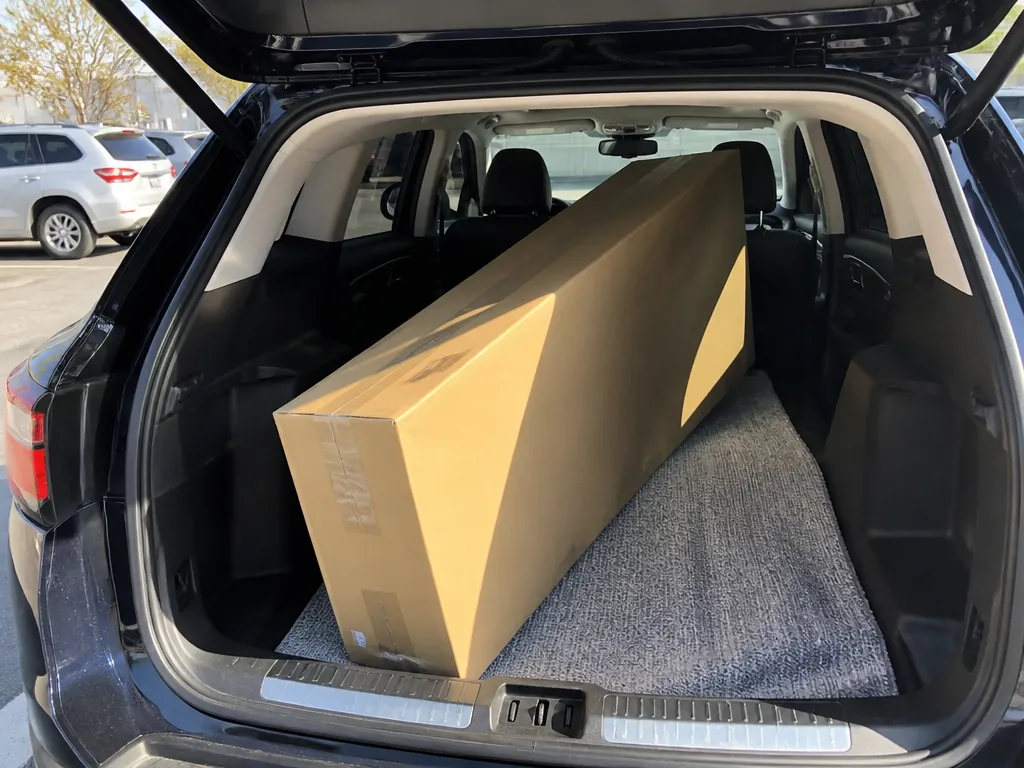
Most large TV fit checks fail on the SUV’s cargo opening clearance first, especially with hatchbacks and liftgates that taper inward. The next common fail is TV height against the cargo floor to headliner limit with the trunk area loaded normally. A third problem is cargo length.
What Usually Fails First (Use This Order)
Run your pass fail in the order below. This is faster than measuring everything blindly because width and length can look close while the opening lip blocks the TV.
The 10-minute Measurement Rule (No Guessing Allowed)
Spend 10 minutes measuring the TV and the SUV once, then decide. Bring a measuring tape, a notepad, and two helpers if your TV is big enough to need more than one set of hands.
| Fit check | Rule to pass | Common “surprise” blocker |
|---|---|---|
| Opening pass | TV width ≤ opening width, TV height ≤ opening height | Hatch taper near the latch area |
| Cargo height pass | TV depth orientation fits within cargo height | Roofline curve and plastic trim |
| Cargo length pass | TV length ≤ usable cargo length in your chosen orientation | Front seats or center console intrusion |
Insider tip: Measure the TV’s deepest point, not just the screen thickness. Camera bumps, power box recesses, and cable strain relief are the usual culprits.
One Decision: Cargo Area Fit Vs “Truck-style” Alternative
Pick one plan and stick with it: load it inside the cargo area (rear hatch or SUV cargo opening) or use a roof/truck-style alternative. If the TV fails the opening dimensions but the cargo area would hold it, you probably need a different orientation or a roof rack approach, since you cannot force it through without damaging the panel or the TV frame.
In practice, many mid-size SUVs (like RAV4, CR-V, Tucson) often fit big TVs better when the second row folds flat and the TV is loaded width-first, while larger full-size SUVs (Tahoe, Expedition) tend to win on cargo length but still lose on hatch taper. For wagons and minivans you typically have an easier opening, for crossovers with tall rooflines you may need to choose vertical loading or roof transport.
Measure Your Tv Like A Pro
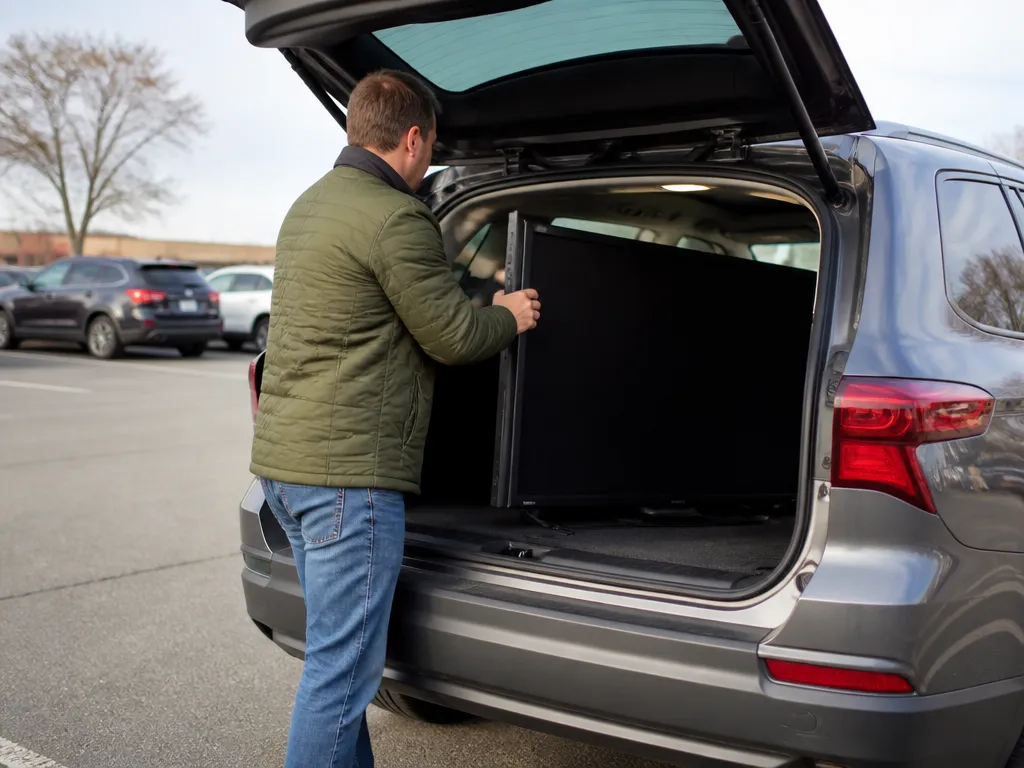
TV “55/65/75/85 inch” size is the diagonal of the screen, so it tells you nothing by itself about whether it fits your SUV cargo area. A 75-inch class TV can be several inches wider and taller than the numbers on the box suggest, and the stand can add a lot of extra depth and height.
Screen Size Vs Real-world Dimensions
Start with the screen, then add what actually occupies space in your SUV: the TV’s overall width, overall height, and the deepest point (often the back panel, cables, and the stand). Manufacturers sometimes list “screen size” and “dimensions with stand,” and those two numbers can differ significantly.
Measure and record the following in inches (or millimeters if that is what your tape measure uses): overall width, overall height, and overall depth (front-to-back). If you plan to remove the stand, record dimensions both ways, because stand removal can reduce depth and sometimes overall height depending on the TV design.
Pro tip: Depth usually includes more than the screen thickness. Account for the power connector location, cable strain relief, and any back cover bulge.
Measure Correctly, Then Measure Again
For many large sets, the boxed measurement is tighter than measuring free-standing because foam blocks protrusions, but the carton can be taller due to molded packing. Boxes also give you a “safe shape” for transporting, which can reduce the chance of the screen taking a side impact.
Document everything immediately, in one place, using the same unit for all three axes. When it comes time to check your SUV’s cargo opening, you want your notes to match the orientation you will load in (flat or edge/vertical), because depth and height swap roles depending on how the TV rides.
Suv Cargo Opening Measurements Checklist
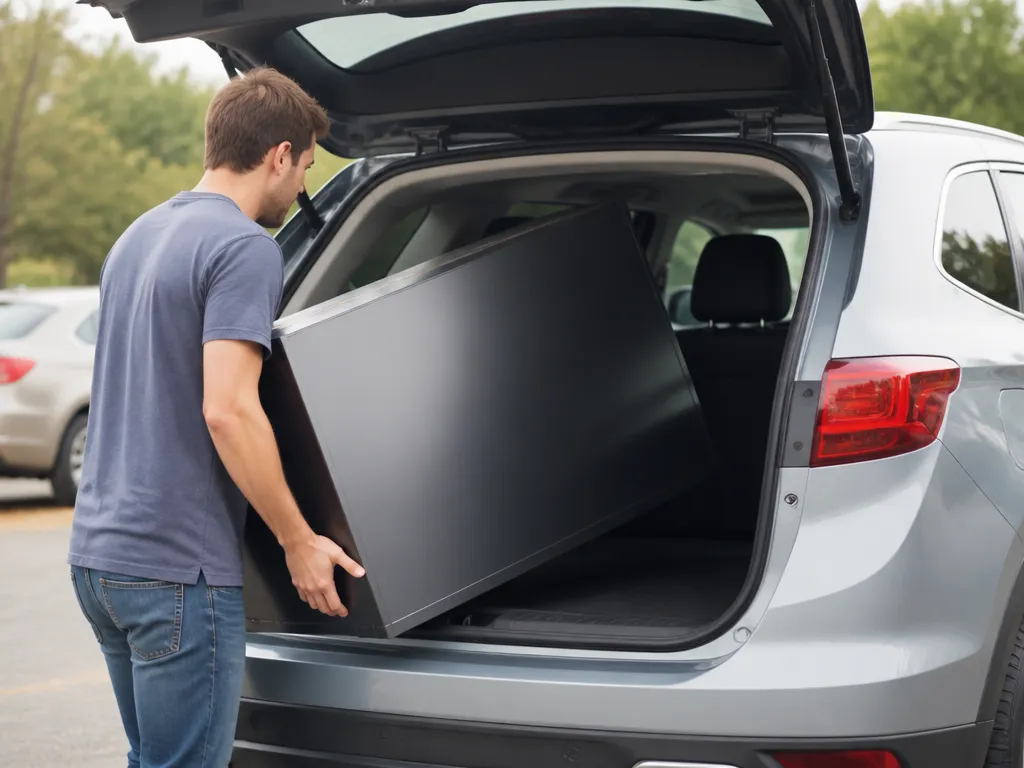
Cargo fit comes down to three numbers at install time: the TV’s widest and tallest outside dimensions, the hatch opening width and height, and the usable cargo space after wheel wells and seatbacks get involved. Measure both the SUV’s opening and the interior “box” you can actually slide the TV through.
Quick fit math rule: the TV must clear the hatch opening, then clear the usable interior box, then clear any step and wheel-well intrusions while transitioning from hatch plane to cargo floor plane. A TV can “fit” by straight numbers and still fail during the corner rotation phase, so angle and step measurements save you from repeated trial-and-error.
| Measurement | Where to measure | Write down |
|---|---|---|
| Hatch opening width/height | Narrowest and lowest points at the hatch mouth | Wopen, Hopen |
| Usable cargo floor width/length | Tightest rectangle between wheel wells and to seatbacks/step | Wfloor, Lfloor |
| Usable height to liner/rails | From floor to lowest overhead obstruction in that configuration | Hclear |
| Angled clearance envelope | At your chosen insertion tilt during a dry run | Wangle, Hangle (practical) |
Trade-off to expect: folding the second row usually adds floor length but can reduce effective width if seat cushions or anchors create extra “pinch points.” For SUVs like the Honda CR-V, Toyota RAV4, Hyundai Tucson, and Subaru Outback, hatch curvature and inner pillar shape often set the constriction, so record opening measurements before you assume the cargo area is the limiting factor.
“Measure the narrowest moments, not the widest brochure numbers. The hatch lip and the step created by folding seats are where bulky items fail most often.”
Fitment Logic: Clearance Rules That Matter
Most “it almost fits” problems come down to one thing: clearance for the TV’s outer edges plus the hardware space needed to secure it. A 2 in. miss on insertion height or depth can still mean the hatch won’t close or the stand hits before the TV fully seats.
Minimum Clearance For Insertion And Securing
Plan for a safety gap around the TV, not a perfect squeeze fit. Real-world clearance has to account for the TV’s corners, any bevel on the back, and the thickness of straps or brackets you use to keep it from shifting.
Mechanic rule of thumb: if you are relying on forcing it past trim to get straps in place, you are already too tight. Measure for clearance that lets the TV slide in by hand and the straps lie flat without tensioning themselves into contact points.
Width And Height Limits, Where Hatch Closure Is The Real Judge
Width and height decide whether the TV clears the cargo opening and roof rails without touching the headliner or lifting into the hatch arc. Hatch closure is unforgiving, because the TV’s top edge or stand lip can hit a few inches before the door latch fully engages.
Practical fit check rule: when the TV is oriented for loading, verify the maximum height or width of the “stand-removed or stand-in” envelope, plus your strap height, clears the opening at the tightest point.
| What blocks first | What to measure | Typical result |
|---|---|---|
| Hatch opening top lip | TV height in chosen orientation + 1.5 to 2.0 in. gap | Door won’t close, or rub marks appear immediately |
| Side rails or inner trim | TV width + clearance for strap routing | Straps pinch or TV shifts when tightened |
| Headliner contact points | TV corner radius, not just screen size | Interference at corners while inserted |
Length Limits And Depth, How “Sliding In” Becomes “Standing In The Way”
Length governs whether the TV can move fully into the cargo area or whether the stand hits before you reach a stable position. Many TVs measure “short enough” by screen size, but their stand depth or back-panel depth stops travel early.
Depth and stand thickness are the sneaky killers. A TV can clear the door opening but still fail because the stand base contacts the cargo floor or seatback before the TV is far enough back to secure properly.
When The Tv Touches Roof Or Trim, Don’t Force It
Contact with roof rails, headliner edges, or hard trim is a deal-breaker. Forcing it in can crack LCD panels, damage the corner protectors, or loosen stand hardware, even if the screen looks fine right away.
Instead of pushing: reduce interference by changing orientation, removing the stand if your TV supports safe handling, folding seatbacks to change the effective “seat-to-roof” clearance, or using a different tie-down strategy that keeps the TV centered and flat.
Best Loading Orientation For Big Tvs
For a big TV in an SUV, the “right” orientation is the one that keeps the widest dimension inside the cargo opening and avoids pushing the glass into latch points. Flat loading usually gives better surface support across the cargo floor, while edge or vertical loading buys width clearance when the hatch opening is tight.
When Flat Placement Works Best
Flat placement works best when your SUV has a long, straight cargo floor behind the front seats and the TV can sit without the screen corners “hanging” over the edge. A centered flat load keeps the glass supported along a broad area and reduces twist, which is what typically causes stresses at the panel corners.
For example, a minivan-like cargo layout or an SUV where the liftgate opens wide and the floor is flat lets you rest the TV close to the seatback with only mild angle changes. Flat also makes it easier to keep the TV centered so it clears hinges and latch hardware with the same margin on both sides.
When Edge Or Vertical Placement Works Best
Edge or vertical placement is the move when width or hatch opening shape is the blocker. Turning the TV so its narrow dimension goes across the opening often lets you pass hinges and latch recesses without forcing the corners toward the metal.
For instance, compact crossovers with narrow liftgate openings or steep rooflines often require edge loading because the TV depth hits the roof arc before the width clears. Vertical loading can also help when the cargo floor is shallow but the opening height is still usable, as long as you can secure the bottom support and keep the top from contacting the headliner.
Positioning rule for hinges and latch areas: keep at least 2 to 3 inches of clearance at the corners while you test-fit by hand. Hinges usually sit slightly higher and farther inward than people expect, and latch areas often have sharp protrusions that can chip bezels even when the main screen clears.
How to clear roof curvature and side rails: angle the TV only as much as needed to keep the back edge from “walking” into the roof arc. Keep the screen plane parallel to the direction of travel whenever possible, because changing angles increases the chance of twist that shows up as pressure marks on panels and bezels.
Common reasons the hatch won’t close: the TV is too far forward and the edge is contacting the inner tailgate skin, the TV is too tall because stand bulk was not removed or compressed packaging was left on, or the TV is sagging under its own weight because only one side is supported. Another frequent issue is the glass corner striking the hinge-side weather seal area, which stops the latch even if the center looks clear.
Orientation-specific padding and “no twist” guidance: pad both sides with flat, non-compressing material so the TV cannot rotate during strap tensioning. Use corner protection and keep straps tensioned symmetrically, so the TV stays square to the opening. Rule of thumb: if you can see the TV rotate a few degrees when you snug a strap, that is twist starting, and the load needs to be repositioned before you drive.
“Test-fit with the liftgate almost closed, then stop before latch engagement. That catches hinge, seal, and curvature contact points without forcing the latch.”
Step-by-step: Load Without Damage
Moving a large TV in an SUV is all about preventing screen edge stress and stopping the set from shifting during bumps. The safest low-effort method is to clear the cargo opening, pad the TV on both sides and corners, then secure it so it cannot rotate or slide.
Quick check before driving: grab the TV at two opposite padded sides and attempt to slide it. If it shifts more than a couple millimeters, re-pad the contact points and re-tension the straps.
Securement And Safety Rules For Passengers
Secure the TV like cargo, not like a passenger. A large screen can shift with hard braking or a driveway bump, and shifting creates both impact risk inside the cabin and broken glass risk.
Where To Tie Straps And Where To Avoid Pressure
Anchor straps only to solid, load-rated points, such as factory tie-down loops in the cargo floor, the side cargo rail tie points, or trailer-style anchor brackets that are designed for towing loads. Avoid tying into thin plastic trim, tailgate sheet metal, or the liftgate seal area.
Fragile panels bend and the TV load can transfer into them. The goal is to pull the strap tension into the SUV’s structure, not into the outer skin.
Prevent Shifting: Stop Bounce And Side-to-side Movement
Use at least two straps for restraint and aim them to stop both forward movement and lateral movement. One strap alone lets the TV rock, even if it stays mostly in place during gentle driving.
Tighten the straps until the TV feels firm against the cargo surface, then recheck after a short “shake test” drive around the block. You want “no clunk” when you gently rock the TV from the side with the vehicle stationary and the straps slack-free.
Weight Distribution And Passenger Protection
Place the TV low and as flat as your SUV layout allows, with the heaviest part supported first. Keeping the center of gravity low reduces how far it can “walk” during braking or uneven pavement.
Keep the load away from the passenger compartment bulkhead only if you can still secure it fully. If the TV is close to occupants, use a cargo barrier style approach (netting or a rigid barrier) so the TV can’t swing into seating in a sudden stop.
Covering rule: do not drive with an uncovered TV or a loose blanket. A loose cover can shift like a parachute, the TV can still bounce, and the glass can get chipped by vibration or contact with cargo hardware.
Before leaving the driveway, close the hatch or liftgate fully and confirm the closure is latched. Then check that the straps are clear of the hatch opening path, the TV cannot push the door further open, and the cargo area light or trunk seal is not pinching strap webbing.
If It Doesn’t Fit: Suv Alternatives
When a large TV does not fit your SUV cargo area, the fix is usually layout and method, not forcing it. Start with seat and orientation changes first, then move to roof transport only if you can keep the load stable and protected. If the numbers still do not work out, renting a bigger vehicle or using professional delivery is the safer, faster call.
Try A Different Layout First (Seats-up And Orientation Swaps)
Many SUVs gain the missing clearance when you change orientation and remove obstructions. Turning the TV so it rides “edge-first” (standing direction) can fit when “face-first” (flat) won’t, but it increases the risk of tip or slide if your tie-down points are poor.
For a quick try, remove the TV stand and pack any protruding corners so the glass or LCD does not take a direct impact.
Roof Rack Option (Viable Only Under Strict Conditions)
Roof transport can work when the SUV roof rack is rated for the TV’s total weight and you can lash the load without compressing the screen. If the TV hangs over the rack ends or you cannot route straps so they cinch to solid rack crossmembers, skip it and move to a rental or delivery.
Roof rule: the TV should be fully supported by the rack, protected with rigid corner protection, and restrained so it cannot shift sideways or bounce vertically.
Cover And Secure For Roof Or Cargo Transport
Covering is for impact and weather protection, securing is for movement control. For an SUV floor or folded-seats carry, use a cargo net and soft edge protection so the TV cannot slide when you brake hard.
For roof transport, cover the entire TV, but keep straps accessible so you can re-check tension at stops. Tighten just enough to eliminate slack, then shake-test the load by pressing lightly (through gloves and padding) to confirm no wobble.
Rent Bigger Or Use Professional Delivery (When It’s The Smart Move)
Renting a larger vehicle is usually the fastest path when the TV barely misses fit by a few inches or when your SUV requires a risky vertical carry. The threshold is practical: if you cannot achieve stable support with restraint that does not touch the screen, move up a size or hire delivery.
Professional delivery is worth the money when the TV is high-end, unusually heavy, or you cannot get a clean fit even after orientation changes. Dealership-grade delivery teams also handle stairs, thresholds, and interior placement, which cuts the risk of a dropped corner during carry.
If You’re Unsure, Stop And Re-measure The Right Way
Unsure fitment usually comes from measuring the wrong dimension, forgetting packaging thickness, or assuming the TV stand removal creates enough clearance. Stop before loading and re-check the TV’s depth (front-to-back), because it is the dimension that most often kills roof or cargo fit.
When re-measuring, confirm three things with the SUV in the exact carry configuration you plan to use: the clearance to the cargo opening, the clearance to the tailgate inner lip, and the available tie-down contact area. If you cannot repeat the fit with the wrapped TV and the final strap paths, treat the SUV as a no-go and switch to rental or delivery.
Quick Summary
The key takeaway is that TV inch size does not predict fit. Measure the TV in three dimensions, recording width, height, and depth with the stand removed, then measure your SUV’s cargo opening and usable cargo area at the narrowest points.
Plan on about 1 to 2 inches of extra clearance so packaging and strap hardware do not bind on trim and seals. If the opening and cargo measurements do not pass with that buffer, use a roof or truck-style alternative, a larger vehicle, or professional delivery.
Frequently Asked Questions
What Tv Size Will Fit In An Suv If I Want It To Lie Flat?
You can usually fit bigger TVs by laying them flat, but the real limit is your SUV cargo opening width, the TV box length, and hatch clearance. Measure the TV carton length and compare it to the distance from the cargo opening to the back of the front seats with the seats folded.
Can I Fit A 75-inch Tv In An Suv Without Removing The Front Passenger Seat?
Sometimes, but it depends on the SUV and whether you need to angle the box to clear the dashboard side and liftgate opening. As a safe rule, test-fit the box with the seats folded and check whether the carton width can pass through the cargo opening without forcing the hatch to close hard.
Do I Need To Remove The Tv From The Box To Fit It In My Suv?
Not automatically, but removing the TV from the box can help if the carton makes the difference between fitting and not fitting. If you do remove it, keep the screen protected, don’t lay it face-down directly on hard surfaces, and secure it so it cannot slide during stops.
How Do I Safely Secure A Large Tv Inside An Suv So It Does Not Break?
Use tie-down straps to the cargo anchors and keep the TV from moving in all directions, not just front-to-back. Aim to immobilize it with straps plus padding, and avoid letting the screen take direct contact with the liftgate or wheel wells.
What’s The Most Common Mistake When Trying To Fit A Large Tv In An Suv?
The biggest mistake is relying on “inch size” and forgetting the TV carton dimensions, which can be much larger than you expect. Always check carton length, width, and height, then verify the hatch closes without binding or crushing the package.
Will A Large Tv Fit Better In An Suv If I Put It Upright Or On Its Side?
Often, yes, because upright or side mounting can reduce how much length you need, but you trade that for higher risk if it can tip. If you go that route, make sure the TV is fully immobilized with straps and padding, and avoid orientations that allow rocking or impact against the sides during driving.