


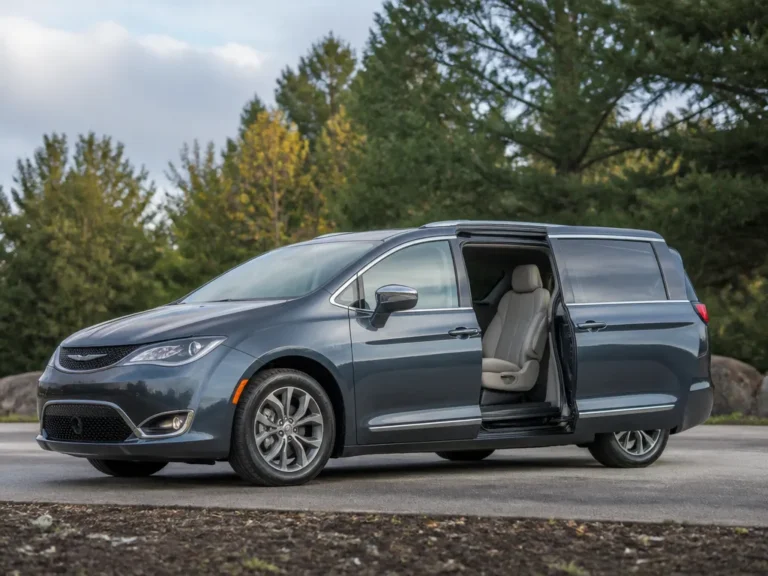
Trying to decide between a minivan, crossover, or full SUV with sliding doors gets confusing fast, because some models have power assist while others need a firm hand. If you are shopping, repairing a sticking track, or just trying to confirm real-world space and reliability, you need specifics, not vague “family friendly” blurbs.
Best sliding-door picks depend on budget, door type (manual versus power), and how the seals and sensors behave in daily use. You will get model-focused buying guidance with new and used price ranges (where available), plus a test-and-inspection checklist for door operation and common failure points.
Cars and SUVs with sliding doors are usually minivans (with 2 or 3-row seating) and a few rare crossover/SUV layouts. Expect door choices to range from manual pull to power sliding, with key checks like smooth rail motion, latch feel, and weather sealing. Used pricing varies widely, so verify history and warranty coverage before purchase.
Cars And Suv With Sliding Doors: What To Expect
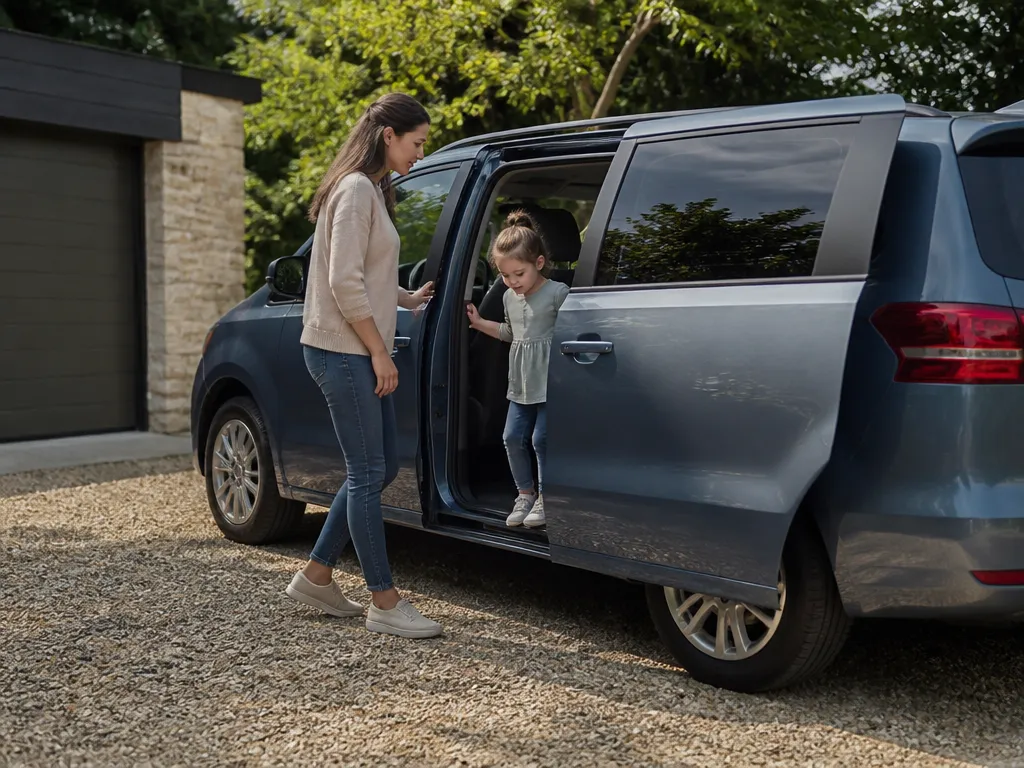
Power sliding doors move on a motorized track system and lock with electronic latch control. Most issues you notice show up as slower operation, a failure to latch, or extra resistance when opening and closing.
Power Vs Manual Sliding: What Changes Day To Day
Manual sliding doors use a mechanical track and a spring-assisted latch, so you control the speed and feel through the handle. That feel matters in tight spots, because you can stop the door halfway and reposition it without fighting a sensor.
Power sliding doors add a motor, gear reduction, and control module that watches switch inputs and door position. That means convenience in the driveway and parking lot, but more to go wrong when a sensor reads wrong or an obstacle signal triggers.
Owner reality check: a manual door is harder on your shoulders with kids in tow, while a power door is easier until something interrupts the latch or the pinch-protection logic.
Common System Parts That Decide How The Door Behaves
Sliding doors are usually a track plus moving rollers, with a motor-driven rack or belt style drive. The latch motor and striker alignment determine whether the door feels crisp at the end of travel.
Sensors and logic are what turn a minor issue into “door won’t close.” Hall-effect or hall-style position sensors, a latch status switch, and obstacle detection all affect the closing cycle, including how the door slows near full latch.
Real-world Usability For Families
Loading and unloading is the big win, especially when you park next to another vehicle and need a wider entry with fewer door swings. Real-world usability depends on travel distance and how the door sits at the fully open position, since some models still leave limited room for a car seat base.
In tight parking, power doors can be convenient because you can open to a consistent position, but you may need to plan for the door’s arc and clearance requirements for strollers and shopping carts. For kids, pinch protection is comforting in theory, yet a false trigger can make you wait while the system resets or relearns.
| What you notice | Typical cause | Why it matters |
|---|---|---|
| Slower-than-usual travel | High resistance in track, latch drag, or motor/control limits | Longer door cycles can frustrate drop-offs and pickups |
| Stops mid-close and reverses | Obstacle detection trigger or position signal mismatch | Kids and strollers get stalled in the doorway |
| Won’t latch on first try | Latch motor, striker alignment, or switch feedback issues | Security and weather sealing suffer |
Sliding-door convenience also comes with a packaging trade-off. The door track and open space take design volume, so you should verify seat-belt access, aisle width when the door is open, and whether you can reach child-seat latches without fighting the door edge.
Best Overall Sliding-door Minivans
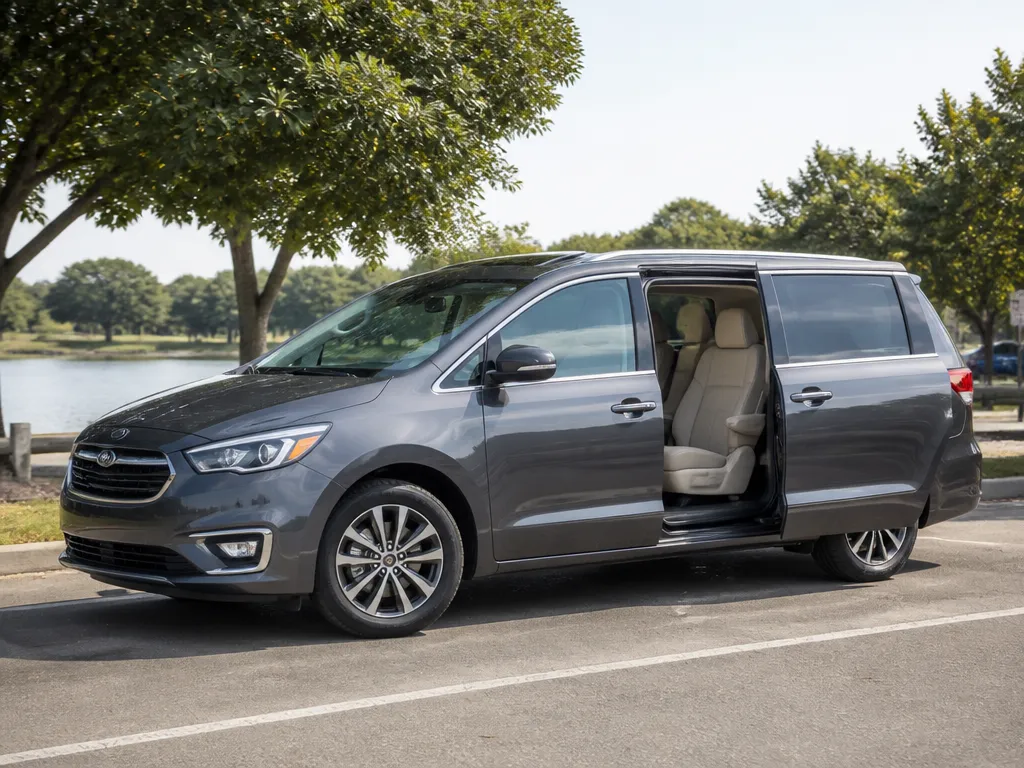
Honda Odyssey, Chrysler Pacifica, and Toyota Sienna are the three minivans families keep circling back to for day-to-day practicality and easy access for kids. Power sliding doors are the key convenience feature, and each of these models has a different take on how the cabin layout supports families.
Honda Odyssey: Family Practicality With Easy Entry
Honda Odyssey is a top pick because its sliding-door convenience feels effortless in real life, especially in tight parking lots and busy school runs. Recent Odyssey trims typically stack the most useful access features together, like power sliding doors and a power tailgate, so you can load strollers and gear without wrestling doors.
For families who move car seats often, Odyssey’s interior space feels friendly and its seating layout is easy to live with. When shopping, compare trim levels by door controls (how the driver and passengers operate them), rear seat convenience, and whether the sliding doors have obstruction sensing that can prevent door stops from becoming a hassle.
Chrysler Pacifica: Power Features And Cabin Room
Chrysler Pacifica is known for interior space and flexible seating, and many shoppers focus on it because the minivan “do it for me” features are available across multiple trims. Pacifica power sliding doors are a common reason people choose it, and the overall cabin layout is friendly for moving between rows without climbing over seats.
For car-seat households, Pacifica’s rear access and the way the door openings line up with the second and third rows is where it wins attention.
In practice, the bigger the person loading it and the more bulky the gear, the more you’ll care about smooth door motion and how confidently the seats fold and latch.
Shop tip: while test-driving, check door speed consistency, listen for any scraping or delayed motion from the door mechanism, and confirm both doors stop and reverse correctly when you lightly obstruct them.
Toyota Sienna: Reliability Reputation With Car-seat Friendly Packaging
Toyota Sienna earns trust by reputation, and families often pick it specifically because it is easier to keep long-term without chasing surprises. Sienna offers practical minivan packaging for car seats, and buyers typically shop for the trims that include power sliding doors so loading stays simple even on rushed mornings.
Car-seat fit is where you should spend time: position two seats you actually own (or check the model you plan to buy) and make sure you have enough access to buckle and release. Sienna’s cabin layout usually makes that process less frustrating than in many crossovers, especially when the second and third rows are in their most-used configurations.
| Model | Why families buy it | Power door focus |
|---|---|---|
| Honda Odyssey | Easy daily usability, practical seating flow | Target trims with power sliding doors and strong driver convenience |
| Chrysler Pacifica | Flexible cabin layout and good rear access | Look for power sliding doors across the trim you can afford |
| Toyota Sienna | Long-term reliability reputation and car-seat packaging | Choose trims with power sliding doors for the best routine fit |
Pricing varies widely by year, mileage, trim, and whether the vehicle has power door options, so exact current and used bands were not found reliably in the available scrape data. As a rule of thumb, expect power sliding doors trims to cost more than base models, and older years with high mileage to dip faster in price than newer trims with the door convenience packages intact.
Best Value Under $25k Used
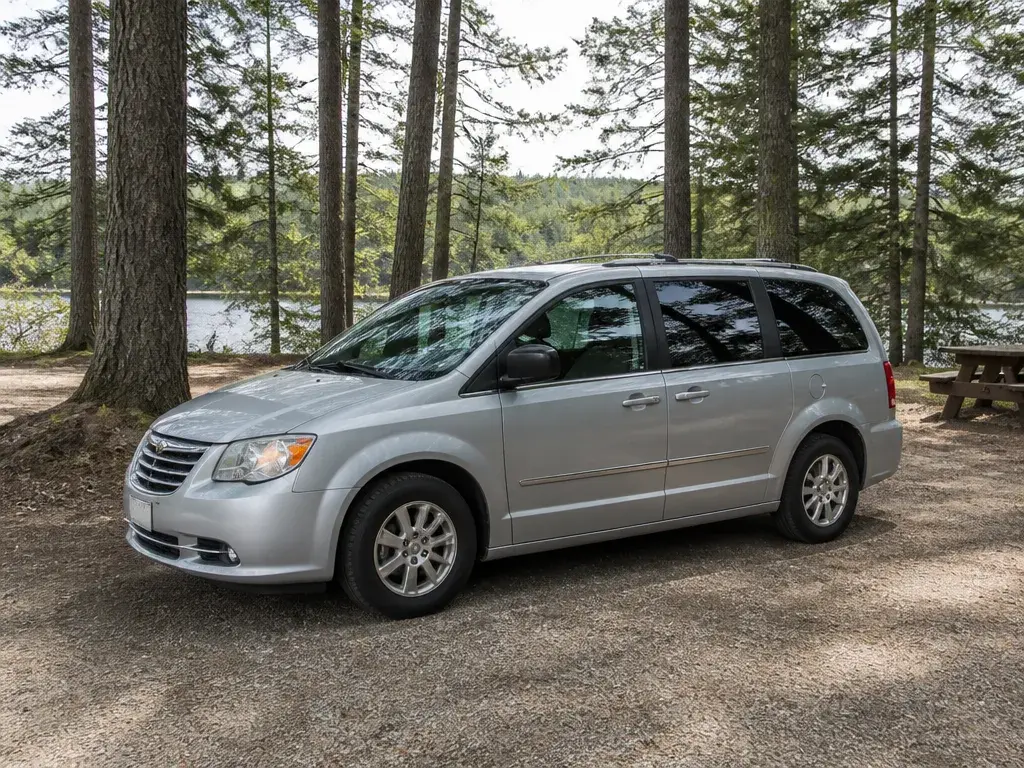
Mid-2010s minivans with power sliding doors are the best value under $25k used because they are common, parts are easy to find, and the sliding-door mechanism is predictable when it is maintained. The smartest targets are the 2010 to 2017 model years for the popular Toyota Sienna and Honda Odyssey trims that came with power sliding doors.
Best Picks By Budget (What To Hunt First)
Under $25k, the best buys usually land in higher-mileage territory, so you want a clean door system more than you want ultra-low miles. Prioritize minivans that were regularly serviced and show no “slow to close” complaints from the seller or on service records.
In practice, the “sweet spot” is a vehicle that has the power sliding doors and a maintenance history that includes transmission service (where applicable) and frequent basic electrical health checks. Budget should also include a door-system check, since the mechanism depends on sensors, wiring, and control modules.
How To Choose Years (What To Target And Avoid)
Service history is your biggest filter in the used market. Target years where the owner has consistent records, and avoid examples with long gaps, repeated battery replacements, or vague notes like “door issue” without a diagnosis.
Door operation complaints are a major red flag. Pay attention to slow movement, doors that won’t fully latch, hard stops, or repeated auto-reverse events, since those point to sensor or latch wear more often than simple lubrication.
Rule of thumb: If a seller says the door “sometimes acts up,” budget for electrical or module-related troubleshooting, not just a worn roller.
| Year range to prioritize | Why it fits under $25k | What to verify before paying |
|---|---|---|
| 2010-2013 | Lower price, still easy to find | Door speed and latch engagement, scan for stored faults |
| 2014-2017 | Best blend of features and price | Recent service records, stable battery and charging history |
| Avoid irregular “door fix” histories | Budget gets eaten by rework | Parts replaced without root-cause diagnosis |
What To Negotiate For (Repairs Depend On The Wear Item)
Negotiation should match the expected failure category. Sliding-door problems fall into two buckets: “door hardware wear” (rollers, tracks, latch assembly) and “door control or sensor issues” (wiring, switch inputs, control module behavior). Hardware wear is often cheaper and easier to confirm; control problems can turn into repeated diagnostics.
Drivetrain wear matters too, because minivan buyers often shop by miles while door-system issues are more sensitive to electrical stability. If the van has a history of charging or battery problems, expect more nuisance faults in the door system.
Before you write a check, verify the door operation on a cold start and again after a short drive. Ask the dealer or seller to show both sliding doors operating without assist, then listen for grinding or binding and watch the latch final engagement.
If you see stored error codes related to body control or door modules, insist on an inspection that goes beyond clearing codes. Clear-codes tactics hide whether the issue is intermittent, and intermittent door-system faults are the ones that usually show up again right after the purchase.
Sliding-door Suv Options And Reality
Some vehicles advertised as “SUVs” with sliding doors are actually minivans or minivan-based crossovers, and the door hardware tells the real story. Listings also confuse model years because sliding-door availability moved between trims and markets. Treat the side-door mechanism and floor layout as the truth, not the headline on the ad.
Models That Confuse Shoppers In Listings
Look out for ads that say “SUV” while the vehicle shares a minivan body shell or carries “Sienna” style proportions, because those models are built around sliding-door packaging. Chrysler and Dodge often label certain people-movers as crossovers in marketing, and used sellers copy that wording into auction listings. The fastest way to avoid disappointment is to confirm you are getting true sliding-door hardware and the second-row seating arrangement that matches it.
For example, many compact three-row “SUV” listings that mention a “power sliding door” are actually vehicle lines built on a minivan platform, with a sliding second row and optional third-row access. Those vehicles can be great for families, but they drive and package closer to a minivan than to a body-on-frame or true unibody “SUV” feel. If you are shopping for an SUV specifically for ground clearance and driving stance, verify those traits too.
| What the listing claims | What the vehicle may actually be | Clue to check in photos/spec sheet |
|---|---|---|
| “SUV with sliding doors” | Minivan-based crossover or minivan | Sliding door on both sides, power door controls near the driver, minivan-like step-in height |
| “Sliding doors (rear only)” | Van-like packaging with one side or trim-dependent setup | Only one door in pictures, missing rear door handle, no second-row seat access via sliding |
| “Power sliding” / “automatic access” | Manual sliding with optional power, or intermittent system faults | Door button on dash or B-pillar, smooth travel without hesitation, door latches fully aligned |
How To Confirm Real Sliding-door Hardware (Without Guesswork)
In photos, you should see a B-pillar track area and the sliding door’s roller track line along the lower sill. A true power sliding setup usually shows a switch on the driver area (or a rear door switch depending on trim), and the door may have multiple latch points you can see at the leading edge when open. On the spec sheet, search for phrasing like “power sliding doors” and confirm whether it is standard or optional by trim.
In practice, insist on seeing the vehicle with the doors open and close, or at least one photo that clearly shows the door fully closed and seated in the latch. A common listing trick is “sliding door” in the description, while the car has one inop door due to a latch, cable, or track roller issue. A working door should move at a steady pace, stop cleanly at the fully open and fully closed positions, and close without a final pull.
Who Should Consider An Suv Alternative?
Accessibility needs make sliding doors a serious advantage because they reduce the swinging arc and help with car-seat handling and mobility-device positioning. Sliding doors also make tight parking lots easier to work in, especially for second-row entry where a wide opening matters more than door width. Cargo layout helps too, since sliding-door minivan-style packaging often gives more usable access from the side than many standard SUVs.
Accessibility aside, people often pick sliding-door vehicles for “load and unload” life, like school drop-off routines, strollers, and frequently loading sports gear. Buyers chasing SUV driving feel should pay attention to sightlines, turning radius, and ride height, because many sliding-door options drive more like a minivan even when sellers call them SUVs. If you need real ground clearance for snow or trails, confirm the suspension height and tire setup before committing.
Mechanic’s reality check: sliding-door listings should be treated like “systems,” not “body style.” If the ad does not clearly state whether doors are power-operated and if the photos show only one side, plan on verifying operation in person.
Sliding-door Spec Checklist To Compare
Door controls and safety behavior decide how pleasant these vehicles are in real life. Focus on how the handle and key fob work together, how the car handles obstructions, and how far the sliding door opens with people and cargo in the way.
| Category | What to Check on the Spec Sheet | What You Want to See | Why It Affects Daily Use |
|---|---|---|---|
| Key fob reach | Ask whether “power sliding door” has remote operation, and if it is hands-free or requires a button press | Remote open/close works from normal standing distance near the lane edge | Reduces juggling keys, kids, and groceries when parking in tight lots |
| Interior controls | List interior switches (overhead/console), and whether they allow manual override when powered | Clear, reachable switch location for the row you actually use most | Prevents “wrong-row” delays when kids are buckled in |
| Auto-close behavior | Note whether the system auto-close requires confirmation, and whether it has speed control | Auto-close is smooth and predictable, and it stops safely when interrupted | Helps avoid repeated re-opening when you park on a slope or load awkward items |
| Pinch protection | Look for pinch protection/anti-entrapment language | System stops or reverses movement when an obstruction is detected near the closing path | Protects hands and clothing when passengers move close to the track |
| Obstruction detection behavior | Note how the system reacts to light contact, door latch interference, or misalignment | Consistent stop or reversal with a sensible recovery, not repeated “fight mode” | Determines whether the door becomes annoying when loading strollers or car seats |
| 2nd-row slide range | Check whether the 2nd-row seat is power or manual and the available slide travel | 2nd-row seat can clear enough space for access without forcing the 3rd row to do everything | Controls how quickly you can reach child seats or baggage |
| 3rd-row usability | Confirm whether the 3rd-row is reachable with 2nd-row movement and if the door opening is wide enough | 3rd-row passengers can exit without scraping shoulders on the B-pillar area | Defines whether the third row is practical, or just a “sometimes” option |
| Cargo floor height | Compare lift-over height and whether the floor stays level when the 2nd and 3rd rows move | Cargo opening aligns with your typical bag and grocery height | Reduces strain when loading or unloading daily |
For example, many families choose minivans like the Honda Odyssey, Toyota Sienna, or Chrysler Pacifica because their door systems tend to feel predictable at curbside.
In practice, the spec you want is not just “power,” it is whether remote open works at the distance you actually stand, and whether the auto-close will complete a cycle after a brief interruption.
For a fair comparison, test each vehicle the same way during a test drive: park in a tight space, load a bulky item that triggers your “real-world” obstruction risk, then open and close the door repeatedly. Pay attention to the door’s stopping and recovery behavior, and to whether interior switches are reachable from the row that needs them most.
Mechanic’s tip: Compare the “time to fully closed” and the “response to half-interruptions.” A door that pauses for a second before deciding to reverse usually feels smoother than one that reverses immediately and restarts the cycle.
Test-drive Inspection For Door Problems
Sliding doors that feel “almost right” on the lot can have expensive drivability and body-fit issues once you hit heat, vibration, and repeated cycles. Spend two minutes exercising each door through its full travel, then check the sensor behavior and the door-to-body alignment while it runs.
On-the-spot Operation Test
Run the door through several complete open and close cycles with the vehicle stationary first, then again while you lightly move around the lot (no more than a few mph). You are listening for gear whine, grinding, and uneven resistance, and you are watching for pauses or “creep” near latch points.
Sensor Checks And Warning Behavior
Obstruction detection is where abused doors hide. During the test, keep an eye on the dash message and pay attention to how the system reacts if an object is placed in the door path (use a soft item like a jacket sleeve, not a hard tool).
Door systems that intermittently refuse to fully latch can log no-code complaints early, so use behavior as your clue. A consistent “won’t fully latch” warning, or a door that tries to close repeatedly then stops, is a strong reject signal.
| What you see on the test | Most likely cause area | What to do |
|---|---|---|
| Door reverses when it should keep closing | Obstruction sensor sensitivity or wiring/connector issue | Cycle multiple times, then scan for stored codes |
| Door won’t fully latch, then message appears | Latch mechanism, striker alignment, or sag at the hinges/body | Check alignment and sealing gaps before you buy |
| Intermittent operation, works only when warm or after resets | Low voltage, sensor signal dropout, module/connector issue | Look for loose harness routing near the track |
Alignment And Weather Sealing
Alignment tells you if the door is riding on worn rollers or drifting due to hinge or body movement. Stand back and compare the gaps along the front edge of the sliding door and at the rear edge near the quarter panel, then compare both sides of the vehicle.
Water-trail signs matter even on a clean car. Check for dark streaks inside the track area, damp carpeting near the threshold, and any visible seal flattening where the door closes.
Insider tip: A door can operate “fine” on one cycle and still leak after a few minutes in the same position. Run open-close again after you wait a few minutes, then inspect the seal and threshold.
Common Sliding-door Repairs And Costs
Sliding doors usually fail in a few repeatable places: the latch/striker electronics, the power-assist motor, and worn track or rollers. Electrical symptoms often trigger a slow, partial movement, repeated “clunking,” or a door that won’t fully latch. Expect rough repair bills to swing widely based on whether the shop only diagnoses or has to replace multiple modules and door hardware.
Most Common Culprits (What Fails First)
Door latch actuators are a top offender, especially after years of heat cycles and repeated cycles in stop-and-go use. The power-assist motor can also wear out, and you’ll often hear a weak whir followed by stalling or a door that moves a short distance then stops. Track wear and roller issues show up as uneven travel, scraping noises, and “binding” that gets worse when the vehicle is loaded.
In practice, many shops start by checking the easiest wear items and the biggest electrical signals before tearing into the door. If the door intermittently works, don’t assume it is purely mechanical, because worn wiring in the door harness can create the same symptoms.
For example, a harness that flexes every time the door opens can break a single conductor while still passing continuity tests intermittently.
| Failure point | Common symptoms | Typical repair difficulty (DIY) | Typical cost range (rough) |
|---|---|---|---|
| Door latch actuator/striker | Won’t latch, weak latch feel, intermittent failure messages | Moderate to hard (door disassembly often needed) | ~$300 to $900 parts and labor |
| Power-assist motor/drive | Slow travel, repeated stutter, door stops mid-cycle | Hard (alignment and load checks) | ~$700 to $1,800 parts and labor |
| Track wear, rollers, guides | Squeal or scrape, uneven closing, binding when loaded | Moderate (access-dependent) | ~$250 to $1,200 parts and labor |
| Door alignment/hinge or check links | Door sits high/low, latch misses, uneven gap | Moderate to hard (adjustment accuracy matters) | ~$200 to $900 labor-heavy |
Electronic Causes You Should Not Ignore
Control module issues are less common than worn mechanical parts, but they do happen, especially after water intrusion or corrosion in connectors. Wiring harness wear at the moving sections is a frequent “gotcha,” because the harness flex point is where fatigue cracks start. A smart scan tool can show relevant door position and latch command behavior, which helps separate “door can’t move” from “door is commanded but won’t respond.”
For example, one intermittent symptom pattern is a door that attempts to move but quits as if it hit resistance, even when the track is free. That points toward a sensor mismatch, harness resistance, or a motor control fault rather than a purely worn roller set.
What To Expect On An Estimate (Diagnosis First)
Most credible estimates start with diagnosis, then parts and labor. Diagnosis time is usually charged first because the shop has to confirm which subsystem is actually failing, then verify it with scan tool data and live measurements. Labor for door work is time-consuming since it often involves door panel removal, connector handling, and test cycles to prove the fix.
For rough budgeting, many shops land in these zones depending on scope: diagnostic-only visits are often the lowest cost, then parts-plus-labor pushes totals higher. When multiple items are failed at once, such as latch plus harness plus rollers, totals can climb quickly because the shop time stacks with each additional component.
| Estimate stage | What you’re paying for | Rough cost range (typical) | Best DIY involvement |
|---|---|---|---|
| Initial diagnosis | Scan tool checks, actuator tests, inspection of harness/track | ~$100 to $250 | Limited to visual checks |
| Single-part fix | Latch actuator or motor replacement plus calibration and testing | ~$300 to $1,800 | Only if you’ve done door work before |
| Multiple-part repair | Track/roller service plus electrical repair, longer test cycles | ~$800 to $2,500+ | Mostly leave to pro |
Trade-off to remember: replacing a motor or latch without confirming track condition or harness integrity often leads to a repeat failure, because worn rollers or broken wires still cause the door to stall or misread position.
DIY can be worthwhile for simple track cleaning and basic roller inspection, especially when symptoms are clearly mechanical and the door moves freely by hand. DIY is riskier when you suspect actuator faults, harness damage, or module communication issues, because misdiagnosis wastes money and door alignment can turn a small problem into a bigger one. If the door won’t latch and you see repeated error codes, have it diagnosed professionally so the shop can confirm the actual command and feedback signals before you spend on parts.
Maintenance And Ownership Tips
Sliding-door reliability comes down to clean track surfaces, stable power, and avoiding “electrical add-ons” that fight the factory modules. If the door slows, drags, or stops mid-travel, treat it like an early warning, not an annoyance.
Track And Roller Care: What To Clean, What Not To Grease
Tracks fill with dust, tire rubber, and road grit, and that abrasive mix grinds rollers even if the door still feels “okay.” Plan a quick inspection every few months and a more thorough cleaning once or twice a year, especially on vehicles that see winter salt or sandy roads.
For cleaning, use a damp microfiber and a non-residue cleaner designed for automotive plastics and painted surfaces. Focus on the rail inside the doorway where the rollers ride and check the drain holes so water can escape.
For example, if a Toyota Sienna or Honda Odyssey door feels like it hesitates at the same spot, dirt buildup in one section of the rail is common. Cleaning that section often restores smooth motion without parts replacement.
Mechanic tip: If the door guide is bent or a roller is seized, cleaning helps for a short time at best. Continued rough motion usually means a hardware issue.
Battery And Charging Effects: Weak Voltage Causes Module Misbehavior
Sliding-door systems use body control modules and sensors, and they are voltage-sensitive. A battery that is weak at rest, or a charging system that dips during starts, can cause slow calibration, false obstructions, or erratic module behavior.
Check battery condition and charging output before you blame the door hardware, especially if problems appear after sitting, cold weather, or frequent short trips. If your vehicle logs door-related faults, confirm the battery load test first.
| Symptom | Common voltage-related pattern | What to do first |
|---|---|---|
| Door stops and “reverses” | More frequent during low-charge mornings | Battery load test and alternator output check |
| One door works intermittently | Module behavior varies with system voltage | Confirm battery health, then scan for codes |
| Calibration fails or won’t complete | Happens after the battery drops | Repair charging issues before service work |
Aftermarket Risks: Remote Start, Alarm Installs, And Trim Interference
Aftermarket remote start and alarm systems can trigger sliding-door modules when wiring taps are sloppy or when harnesses interfere with door harness routing. The door harness runs near moving parts, and any extra slack, poorly routed connectors, or pinched wires can create intermittent faults.
In practice, the safest move is to have aftermarket installs performed with the installer following the vehicle’s wiring diagrams and using OEM-quality connectors, not generic twist-and-tape methods. If you bought the vehicle with an aftermarket alarm, ask what bypass modules were installed for the factory keyless system.
Stop using the door and book service when the door hits hard, moves unevenly, repeatedly stops mid-travel, or triggers safety features without an obstacle. Those are the times when the track, rollers, guide, or sensor alignment needs professional inspection, and driving with a compromised mechanism can quickly turn a minor issue into a more expensive fix.
Quick Summary
Shopping for cars and SUVs with sliding doors is tricky because door feel and repair paths change a lot between manual pull-and-spring latch and power sliding with electronic latch control. The article says power doors run on a motorized track and lock through latch motors, striker alignment, and position sensors, so owners often notice slower travel, extra resistance, or a failure to latch. It also points out that manual doors can be stopped halfway and repositioned without fighting sensors, which matters in tight spots.
To verify real-world usability and catch early wear, the article recommends a practical inspection plan: test each sliding door fully, listen for grinding or slow starts, and check sealing and tracks for torn rubber, bent rails, or debris-packed weep holes. It also advises checking alignment at the latch, since misalignment can trigger repeated sensor trips and early wear. For power systems, pinch protection should respond predictably and recover quickly, and power latch or sensor repairs can cost more, so confirm warranty coverage, and end with the most important takeaway that you should know the door type first before any deeper diagnosis or purchase decision.
| Topic | What to check | What trouble may look like |
|---|---|---|
| Operation | Cycle the door fully, especially before full latch | Slower-than-usual travel, slow starts, or stops mid-close and reverse |
| Latching | Latch feel, last inch pull-in, striker alignment | Won’t latch on first try, feels almost closed, inconsistent lock confirmation |
| Sensors and safety | Response to normal obstructions and pinch-protection behavior | False triggers that stall the doorway, inconsistent recovery after an interrupt |
| Track and sealing | Inspect seals, rails, and weep holes | Torn rubber, debris-packed weep holes, bent rails, abnormal resistance |
Frequently Asked Questions
What Are The Best Cars And Suvs With Sliding Doors For Families?
If you want easy third-row access without climbing over seats, look for minivan-style sliding doors on both sides. Many buyers focus on models where the door opening is wide enough for kids and car seats, and where the sliding track area is easy to keep clean.
Are Sliding Doors Safer Than Regular Doors In Side-impact Crashes?
Sliding doors generally use the same core crash-safety goals as other doors, but real-world ratings and construction details vary by model and year. For anything involving side-impact protection, check the specific vehicle’s crash-test results for that exact trim and model year.
How Much Does It Cost To Repair A Power Sliding Door On A Car Or Suv?
Repair costs can range widely because the issue might be a sensor, latch/actuator, track alignment, or wiring. If you are seeing repeated errors, slow movement, or a door that won’t fully latch, get a diagnostic first, since guessing the part often costs extra.
Do Sliding Doors Open And Close Slower Than Normal Doors, And Is That A Problem?
Some power sliding doors take a moment to fully open or close, especially when the battery is low or the system is cold. If your door is consistently slow or stops mid-travel, that’s usually a sign of a failing latch, sensor, or obstruction in the track area.
What Common Problems Cause A Sliding Door To Not Open Or Not Latch?
The most common issues are debris in the track, misalignment, worn latch components, or faulty door position sensors. A quick check is cleaning the track and looking for obstructions, but if the latch will not engage, you should scan for door codes before replacing parts.
Can You Still Use A Car Or Suv With Sliding Doors If The Power Feature Fails?
Many power sliding door systems have a manual override, but it depends on the model. If you buy one, confirm in the owner’s manual whether it can be operated manually after a power door failure, and plan for dealership or shop service if it needs actuator replacement.