


You felt it the first time you braked on a snowy ramp in your MINI Cooper, the pedal stayed calm but the car slid anyway. If you drive a FWD Hardtop or an ALL4 Countryman, winter grip changes a lot, even with the same wheels. This guide breaks down which MINI setups hold up best, what winter tires to run, and how to drive differently on snow and ice.
Real-world key: FWD MINIs need winter tires first, ALL4 needs them too. You also want the right size, correct cold tire pressure, and a battery and heater that can keep cabin heat going. We’ll cover tire choices (including run-flat rules), winter-driving technique, and MINI safety tech you should know before the next storm.
Mini Coopers in snow and winter driving are safe when you pair the right drivetrain with real winter tires. Use winter tires on both axles, set pressure to the door-jamb spec for cold temps, and expect up to 10 to 20% more stopping distance on packed snow versus dry pavement. ALL4 helps on traction, while winter tires do the stopping.
Mini Coopers In Snow And Winter Driving
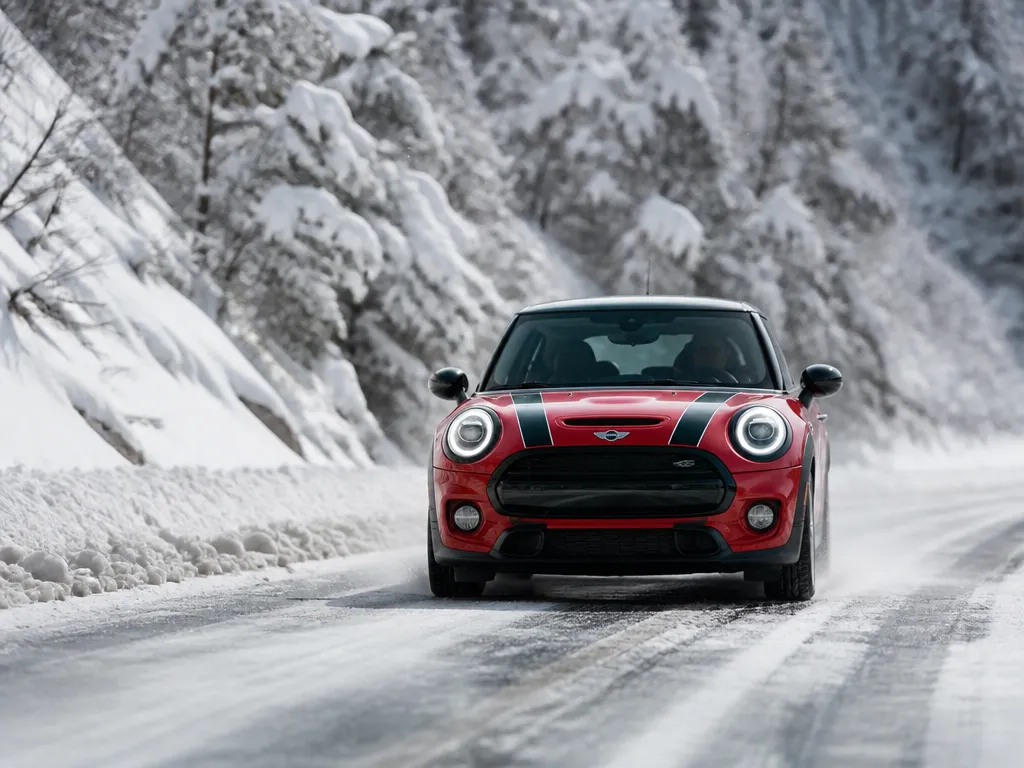
Mini Coopers handle winter weather best when you match the drivetrain to the road and use winter tires instead of relying on all-season tread. Snow traction depends more on tire grip and temperature than on MINI’s badge or horsepower. MINI models also vary a lot by whether you have front-wheel drive or ALL4 all-wheel drive, which changes how the car accelerates and recovers from slip.
Snow Performance Factors (What Actually Moves The Needle)
On snow and ice, traction is a tire problem first and a driver input problem second. Cold weather stiffens rubber, so winter tires keep a softer compound and better biting edges, especially below about 45°F (7°C). Tire pressure matters too, underinflation increases sidewall flex and heat, while overinflation reduces contact patch on snow.
For MINI owners, the other big factor is how the car reacts when you ask for torque. Front-wheel-drive MINIs can dig in and slip when you accelerate hard, while ALL4 models typically keep more control during low-grip pull-away and recovery from a slide. Even then, physics still wins, so a cautious right foot and clean steering inputs matter.
Mini Models And Drivetrain Setups To Expect
Most winter-drive decisions for MINI owners come down to whether the car is front-wheel drive (FWD) or has ALL4 intelligent all-wheel drive. MINI’s newer line-up includes ALL4-equipped variants, and MINI USA marketing for ALL4 emphasizes its all-wheel capability. In snow, that usually means better launch control and more stable behavior when traction changes left to right.
When shopping used MINIs for winter, check the build spec for drivetrain and tire type, then confirm whether the car runs run-flat tires or standard tires. The practical impact is simple: run-flat use can raise ride harshness in rough plowed snow routes, and many winter tire options steer owners toward standard tires on proper winter wheels.
| MINI setup | Winter strengths | Main limitation to plan for |
|---|---|---|
| FWD Cooper | Predictable behavior if you keep throttle gentle | More wheelspin on hard takeoffs and steeper snowy grades |
| ALL4 Cooper (intelligent AWD) | Better traction on acceleration and uneven grip | Still needs winter tires to stop confidently on ice |
| Run-flat tires (if equipped) | Mobility if you lose pressure | Less ideal ride feel with winter rubber on some setups |
Quick-reference Visuals: Drivetrain, Tires, Safety
Insider tip: On slick winter roads, braking stability improves more from tire grip than from swapping driving modes. Tire choice is the foundation.
MINI’s winter readiness also depends on what safety tech is on your specific car and how well it matches your tire situation. Anti-lock braking (ABS) prevents wheel lockup, stability control helps keep the car pointed where you intend, and traction control reduces wheelspin during acceleration. Those systems will still work in snow, but they cannot replace a tire that has hardened up or worn down.
Fwd Vs All4 Mini Cooper In Snow
MINI’s ALL4 helps most in snow by sending drive torque to the axle with more grip, which improves acceleration traction and reduces the “one-wheel spin” problem common to front-wheel drive. Front-wheel drive (FWD) in a Mini can feel fine for light snow, but it gives up stability confidence faster when you hit deeper slush or slick, uneven ice. The biggest real-world difference is how smoothly the car recovers as the tires lose grip.
| Drivetrain | Snow traction feel | Stability in cornering | Where it usually wins |
|---|---|---|---|
| FWD | Good on packed snow, struggles when torque spikes | Predictable but easier to overwhelm if you accelerate mid-corner | Commutes, light snow, dry pavement with spots of ice |
| ALL4 | More consistent pull on slick surfaces | Tends to stay calmer during steering input on low grip | Deep snow, slushy stop-and-go, mixed ice patches |
How All4 Torque Distribution Changes Winter Behavior
ALL4 is MINI’s intelligent all-wheel drive system. The system can shift torque front-to-rear when traction drops, which matters most during throttle changes, like pulling away from a stop or cresting a snowy driveway. That torque management reduces the amount of wheelspin you feel, and it helps the car keep moving straight when the front tires hit a slick spot.
In practice, ALL4 does not make winter tires optional. When you combine ALL4 with good winter tires, the car can keep its “go” response without jerking the steering. When you combine ALL4 with summer tires, traction still breaks down, because tire grip is the limiting factor.
Fwd Strengths, Limits, And What To Buy For Your Mini
FWD MINI models are a good choice if your winter is mostly plowed roads and you drive smoothly, using gentle throttle and earlier braking. The limit shows up on slippery intersections, steep ramps, and deep snow where a quick torque request overwhelms front tires. In those scenarios, ALL4 gives more driver confidence because the car keeps pulling with less wheelspin.
MINI’s trim and model year determine whether you get ALL4 versus FWD. If you’re shopping used, check the vehicle’s drivetrain option sheet and the VIN build details, then confirm the badge and drivetrain description in the listing since “AWD-like” marketing can be misleading. As a rule, higher trim configurations in certain model lines are more likely to offer ALL4, while many base versions are FWD.
Mechanic’s take: In winter, drivetrain helps, but winter tires do the heavy lifting. ALL4 can mask a little driver harshness, while FWD punishes it sooner when grip is inconsistent.
Mini Winter Tires Guidance
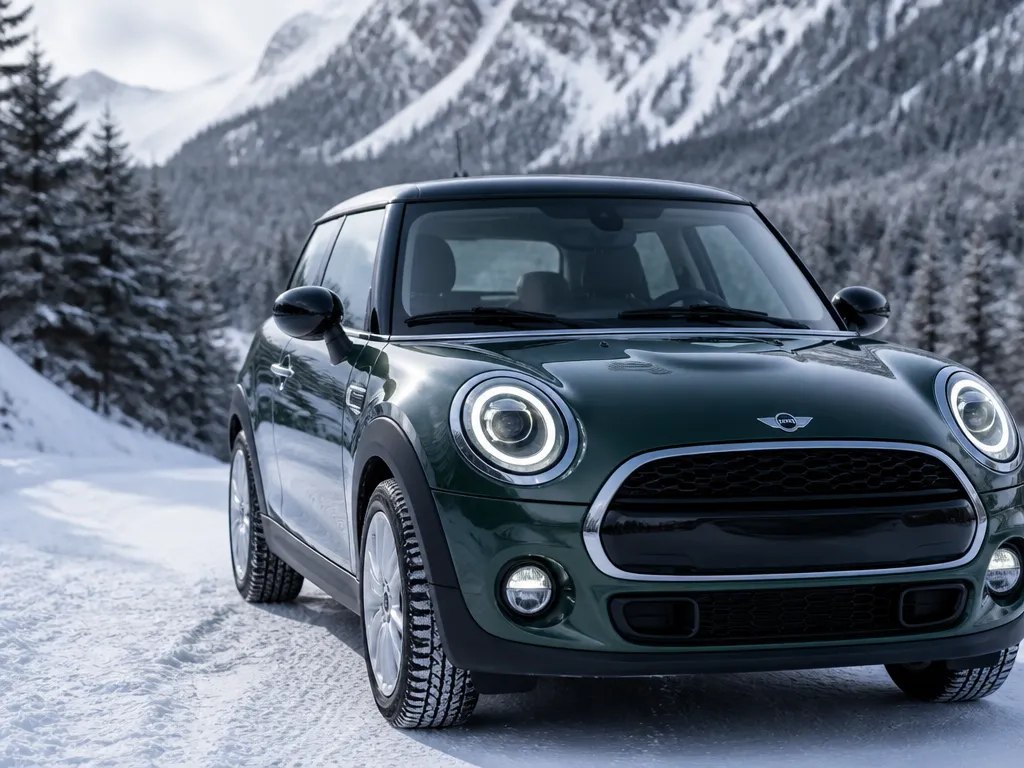
MINI model years and wheel sizes drive the exact winter-tire fitment, so start by matching the tire size on your door jamb or current tire sidewall. For snow traction, prioritize a winter (3PMSF) compound with full-depth sipes over an all-season, even if the car has strong traction control.
Tire Sizes By Mini Cooper Setup
MINI Coopers commonly use different wheel diameters depending on trim and year, so you may see multiple valid winter sizes. The safe way is to keep the same overall tire diameter as the OEM spec to avoid speedometer error and to keep ABS and stability behavior consistent.
| What to match | Why it matters in snow/ice |
|---|---|
| OEM tire width | Wider tires can float sooner on slush; narrower tires can cut through packed snow. |
| Overall diameter | Keeps ABS/traction calibration consistent and helps steering feel stay predictable. |
| Load index | Prevents sidewall overload when cold temperatures reduce tire pliability. |
Brands And Snow Performance You Can Trust
On MINI front-wheel-drive and All4 models alike, winter performance is mostly about tread design and compound that stays flexible below freezing. Look for reputable winter lines with aggressive siping and a snow-specific tread pattern, then buy the set size that’s closest to OEM fitment.
Commonly well-regarded winter brands in the North American market include Michelin (X-Ice series), Bridgestone (Blizzak WS series), Continental (WinterContact TS series), and Nokian (Hakkapeliitta series). If you run the same tire brand and model across all four corners, you keep traction control from “fighting” differences between tires.
Recommended Winter Pressures (And How To Set Them)
Cold weather drops tire pressure, and underinflation can make traction control intervene earlier while also increasing wear. Set pressures when the tires are cold and use the factory placard as the starting point for your specific size.
For practical winter driving, many MINI owners run slightly higher than the placard only if they see excessive tread squirm in corners, but stay within the tire maker’s pressure limits. A good baseline is placard pressure, then adjust in small steps after a few drives.
Run-flat Compatibility And What It Costs In Winter Grip
MINI run-flat systems change the tire carcass and sidewall behavior, which can affect ride harshness and tread feel on slick surfaces. If your MINI came with run-flats, buying a winter run-flat is the cleanest compatibility match, but winter options are usually fewer and more expensive than non-run-flat equivalents.
Shop tip: If you are not legally required to keep run-flats, many owners switch to standard winter tires on wheels matched to their MINI. That often gives better snow bite and a more compliant ride on rough plowed roads.
Before you spend money, confirm your wheel and tire setup can physically accept a non-run-flat tire, and confirm any tire-mobility kit or spare plan still makes sense for your model year. For exact sizes and whether your VIN is tied to run-flats, cross-check MINI fitment charts or your MINI dealer parts desk.
Step-by-step Winter Driving
Drive the MINI Cooper like you are traction-limited, not power-limited. Snow and ice reward smooth inputs, steady steering, and generous braking distance more than engine torque or aggressive steering.
Insider tip: If traction is marginal, treat your driving like a series of “micro-corrections.” Small steering adjustments and steady pedal movement are faster than repeated big changes because they keep the tires in their grip window.
| Scenario | Input to change | What you should feel |
|---|---|---|
| Takeoff on packed snow | Throttle, not steering | Minimal wheel slip, smooth forward creep |
| Approaching a stop on glare ice | Brake earlier, stay straight | ABS pulses without steering fight |
| Slow-speed turn | Reduce speed before turn-in | Steering holds the line, no sudden front push |
MINI Cooper AWD (ALL4) can help you accelerate and stay stable on input changes, but you still stop using tires and brakes.
Mini Safety Features For Snow
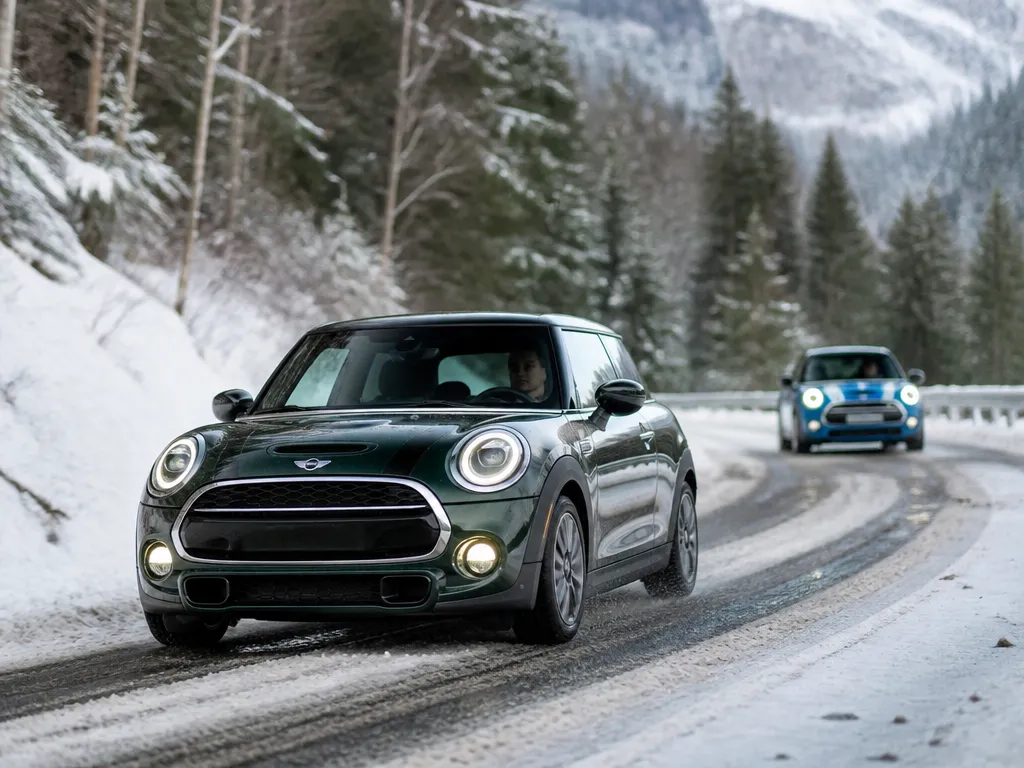
MINI winter safety is built around four control systems that work together: DSC/ESC for stability, ABS and brake assist for stopping, ALL4 for traction on drive wheels, and visibility aids for what you can see. Knowing how these systems react on low-grip pavement helps you drive less abruptly and get more usable traction out of the tires.
Visibility Aids And Winter Defrost Strategy
MINI’s winter advantage is as much about sight as grip, so prioritize the system you use before motion: heated mirrors, rear defog, and the HVAC defrost modes that clear glass fastest. Clear side windows matter too, because snow spray and airflow can hide lane markers and curb lines just as easily as windshield fog.
In real storms, windshield visibility drops first, then steering confidence follows. For best results, run defrost long enough for the glass to stay clear at idle, then reduce fan and re-target airflow to maintain clarity while you drive.
| System | What you feel/hear in snow | Driver takeaway |
|---|---|---|
| DSC/ESC | Engine torque cut, light brake pulses, stability indicator may flicker | Soften throttle and steering inputs; let the tires regain grip |
| ABS | Pulsing pedal under hard braking on slippery surfaces | Apply firm, steady braking; avoid sudden release while turning |
| ALL4 | Less wheel spin on launch, smoother pull on uneven snow | Use gradual throttle, keep speed conservative on glare ice |
| Defrost/defog | Windshield clears, then re-fogging if airflow is misdirected | Clear glass before rolling, then maintain airflow during the drive |
Insider tip: When stability control is active, steer gently and don’t countersteer aggressively. The car is already reallocating braking and torque, so over-correcting is the quickest way to make a slick situation worse.
Snow safety in a MINI comes down to matching your inputs to what these systems can correct. Smooth acceleration, firm straight-line braking, and clear glass give DSC/ESC, ABS, and ALL4 room to do their job instead of fighting frantic driver corrections.
Winter Prep And Maintenance
Cold starts hit battery capacity first, then coolant temperature control. A quick winter check on your MINI Cooper can prevent slow cranking, cabin fogging, and poor defrost performance when snow and ice show up.
Battery Health Check (Mini Cooper Models)
MINI Cooper charging systems are sensitive to weak batteries because cold weather reduces cranking power and increases the load from lights and blower motors. For best results, inspect the battery at the start of the season and again mid-winter if you park outside.
Tip from the bay: a “pass” on voltage can still fail a load test. For winter use, load testing is the number one battery decision tool.
Coolant And Antifreeze
Coolant that is low, aged, or mixed incorrectly can lead to overheating, heater performance loss, and corrosion issues. Confirm the level in the expansion tank when the engine is cold, and verify the correct coolant spec for your MINI model and year before topping off.
In practice, winter coolant problems usually show up as slow heat-up, weak defrost, or random warning messages after temperature swings. If you see repeated coolant warnings, leaking seams, or oily residue, get it diagnosed before the first hard freeze.
| Symptom | What it often points to | What to do first |
|---|---|---|
| Slow cabin heat | Low coolant level or thermostat behavior | Verify level, then scan codes and inspect circulation |
| Coolant smell after driving | Small leak at hoses or tank | Inspect visually (cool engine) and pressure test |
| Frequent coolant warnings | Ongoing leak or sensor issue | Professional leak diagnosis |
Wiper Blades And Winter Washer Fluid
Winter visibility is a system, not a single part. Replace worn blades before the first thaw-freeze cycle, and use winter washer fluid rated for your expected cold snaps.
Heater Efficiency And Airflow (Defrost Performance)
MINI Cooper cabins depend on proper coolant temperature and airflow controls to clear the windshield quickly. Before snow season, confirm the HVAC mode is delivering strong heat to the defrost vents, and check that the air intake is not blocked by debris.
In practice, if defrost takes too long or windows fog immediately, start with the simple stuff: verify HVAC settings, check for cabin filter restrictions, and watch for a coolant temperature issue. Cabin filter replacement is a low-cost winter win, often worth doing if it has been a long time since service.
Used Mini Winter Readiness
Used MINIs are only as winter-ready as their tires, rust protection, and documented maintenance. In snow and ice, a good traction setup beats almost every “power” upgrade you can buy.
What To Inspect Pre-purchase
Start with the basics that predict winter reliability: brake condition, coolant service, battery health, and evidence of fluid maintenance. Look for rust around wheel wells, rocker panels, and door seams, since winter salt kills underbody parts fast.
In person, do a quick functional check before you even haggle on price. Turn the steering wheel full-lock both directions, verify all lights work, and confirm the car starts promptly when cold if the seller can do it.
Tire And Run-flat Status (Most Important)
MINI drivability in winter lives and dies by tires. If the car still has original all-seasons, expect poor bite in deep snow and a longer stopping distance on ice, especially on F56/F55/F60-era cars with sportier suspension setups.
Run-flats add a complication: many drivers keep them thinking they are “winter-proof,” but traction still depends on compound and tread design. If you want maximum snow confidence, plan on dedicated winter tires and confirm your wheels are compatible with them.
| Buying condition | Winter outcome | What to do |
|---|---|---|
| All-seasons with worn tread | Weak snow packing grip, slow recovery from slips | Negotiate price for winter tires immediately |
| All-seasons with full tread | Better wear, still limited on ice | Consider winter tires for ice-heavy regions |
| Run-flats still serviceable | More puncture tolerance, not better traction | Verify age, check sidewall damage history |
| Dedicated winter tires on wheels | Best snow/ice braking and steering feel | Confirm correct load rating and size for the MINI |
Insider tip: check for uneven shoulder wear on the tires. Camber issues and worn suspension parts can make winter traction feel “random,” even with good tires.
Cold-month Maintenance History
Maintenance records matter more for winter because cold weather exposes small issues. Receipts should show regular oil changes (especially with turbo engines), brake fluid service, and at least periodic inspection of suspension bushings.
Coolant and HVAC also tell you how a prior owner drove the car. Ask whether the car ever overheated, whether coolant was replaced on schedule, and whether the heater blows strong and hot quickly on a cold start.
Common Winter Pitfalls To Avoid
Most used MINI winter problems come from assumptions. People buy a car with decent tread and think it will behave in snow, then get surprised by ice braking and traction control cycling.
When you inspect a used MINI, treat winter readiness like a checklist with a budget. If the tires are marginal or the records are vague, prioritize tires and key safety maintenance before you worry about anything else.
Quick Summary
Snow control in a MINI Cooper depends heavily on drivetrain choice and tire selection, not just the badge or horsepower. The article highlights how FWD Hardtop and ALL4 Countryman feel different when braking on slippery ramps, even if you keep the same wheels. It stresses that winter grip changes a lot between front-wheel drive and ALL4, and it calls out a core real-world priority: FWD MINIs need winter tires first, and ALL4 still needs them too. Cold tire compound behavior below about 45°F (7°C) is a major reason winter tires bite better.
Beyond choosing winter tires, the article focuses on setup and driving habits that reduce the common “slid anyway” problem. It says to run winter tires on both axles, use the door-jamb tire pressure spec for cold temps, and recheck after overnight temperature changes. It warns that packed snow can increase stopping distance by about 10 to 20% versus dry pavement, and it advises braking early and leaving extra room. It also explains that ALL4 helps with traction and recovery from slip, but it does not replace winter tires. The single most important takeaway is to pair your MINI’s drivetrain with true 3PMSF winter tires.
| Topic | What the article says to do |
|---|---|
| Tires | Use 3PMSF winter tires, and put them on both axles |
| Pressure | Set cold pressure to the door-jamb spec, then recheck after overnight temps |
| Drivetrain effect | FWD can slip more under hard acceleration, ALL4 spreads torque for easier recovery |
| Stopping distance | Expect about 10 to 20% more stopping distance on packed snow versus dry pavement |
| Driver inputs | Brake early, leave more space, and use smooth throttle and steering |
Frequently Asked Questions
Are Mini Coopers Good In Snow, Or Do I Need An Awd Model Like Mini All4?
Snow traction is mostly tire and driving technique, not badge alone. If you want easier starts and fewer wheel-spin moments, a MINI ALL4 (AWD) setup can help, but even an AWD Mini is still limited by how good your winter tires are, not the drivetrain.
What Winter Tires Should I Put On A Mini Cooper For Snow Driving?
Look for a dedicated winter tire marked for severe snow use, and size them to match your car’s door-jamb specs. For most owners, the biggest upgrade is switching from all-seasons to a true winter compound, especially if temps regularly drop below about 7°C (45°F).
How Do I Prevent Mini Cooper Wheel Spin And Slipping On Icy Roads?
Use a gentle throttle and avoid late steering inputs, because a Mini can feel eager but still get traction-limited when it’s icy. Keep speeds lower than you think you need, and if your car has stability control, don’t shut it off unless the owner’s manual explicitly allows it for your situation.
Will Salt And Winter Road Grime Ruin The Undercarriage Of A Mini Cooper?
Salt can accelerate corrosion fast, especially around wheel wells, brake hardware, and underbody seams. A regular underbody wash during the season, and inspecting brake caliper areas and brake lines after heavy snow, is one of the most practical preventions.
What Winter Maintenance Should I Do On A Mini Cooper Before The First Big Snowfall?
Start with a fresh cabin air filter, check tire tread and tire pressure (cold weather drops pressure), and verify the battery is healthy since cold cranks harder. If you have any warning lights related to steering, braking, or traction, get those diagnosed before winter drives.
Common Mistake: Should I Run All-season Tires On A Mini Cooper All Winter?
If it’s true winter where you live, all-seasons usually underperform once temps drop and roads get slushy or icy. You can feel traction fade, longer stopping distances, and more steering inconsistency, so for snow-heavy areas, switching to winter tires is the move most owners end up wishing they made sooner.