


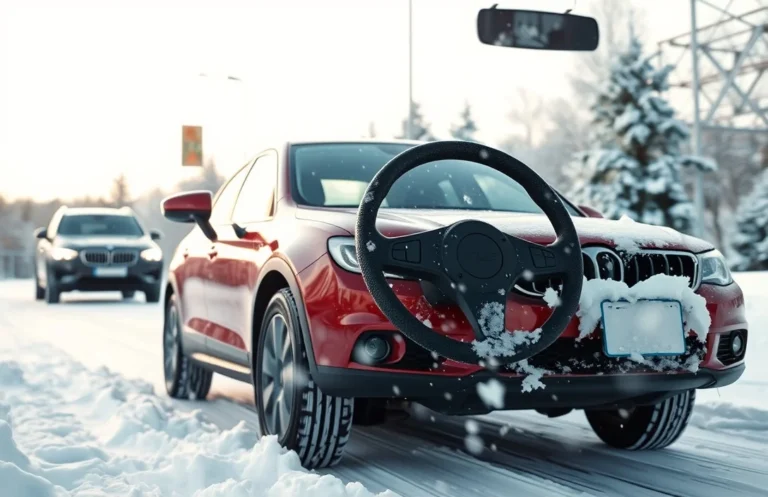
You’re standing in a parking lot with snow falling, maybe 2 to 4 inches already on the ground, and your front wheel drive car feels like a gamble. You’re wondering, “Can I drive it in snow safely?” The answer depends on how you drive, what your tires look like, and what “snow mode” really changes.
Yes, you can drive a front wheel drive car in snow. Front-wheel drive sends power to the wheels that also steer, which helps traction. Success comes down to tire grip (good tread or real winter tires), smooth throttle, and clearance for ice buildup. This guide covers what to do, what to avoid, and how to stack your odds.
Can You Drive A Front Wheel Drive Car In Snow?
Front-wheel-drive cars can move in snow, but they hit a traction limit fast. The driving difference comes from where the engine torque goes, how slippery the road is, and how much grip your tires have.
FWD helps because the weight of the engine and drivetrain sits over the drive wheels, so those tires usually start with better contact than the steering-only wheels on a rear-drive car. That advantage fades quickly once the tires are hydroplaning on slush or trapped on a thin ice sheet. Your job in winter driving is staying on the side of “grip” instead of “spin.”
What Fwd Does Well In Snow
FWD generally feels manageable for everyday commuting when the snow is light to moderate and roads are plowed or treated. Acceleration can be smoother than a car with driven rear wheels, especially on flat ground, because the drive wheels are also the ones controlling speed and pull.
What Fwd Can’t Fix
FWD cannot create traction out of thin air. When the road is glare ice, packed snow with embedded ice, or deep slush, even good FWD cars will spin if tires are out of grip and you ask for too much torque too quickly.
FWD also has a “front-wheel temptation” problem: steering and driving happen at the same tires. On snow that’s uneven or rutted, that can make the car feel twitchy when you turn and accelerate together.
| Condition | FWD reality | What to expect |
|---|---|---|
| Light snow, plowed roads | Works well | Normal control with careful throttle |
| Packed snow | Borderline | More wheel spin if you punch it |
| Glare ice | Grip is scarce | Steering and braking both feel vague |
| Deep slush | Likely overwhelmed | Spin, reduced braking confidence |
Insider mechanic take: In real winter commutes, the “make or break” factor is tire grip, not drivetrain layout. A mismatched all-season on ice can make even FWD feel unsafe.
FWD is a solid base for winter driving, but it is not a pass to drive aggressively. Treat traction limits as a constant, then adjust speed, following distance, and throttle to match what the tires can actually hold.
Traction Basics In Snow
Front-wheel drive grip in snow comes down to whether the drive wheels have enough normal force and whether the tires can keep water and ice from forming a slippery film. When weight and tire bite line up, FWD feels predictable; when they do not, the car spins up the front tires quickly and turns dull.
Weight distribution decides how much load the front tires carry. In a front-heavy or lightly loaded front scenario, the drive wheels see less normal force, so the tire has less friction to work with. Hitting the brakes or accelerating changes that load transfer, which is why gentle inputs usually outperform aggressive ones on packed snow.
Tire Tread And Snow Traction
Tire tread is your primary “traction tool” in snow, because it creates mechanical grip and helps route slush away from the contact patch. Snow tires use softer compounds and more biting edges, so they can flex into snow and pack to maintain contact longer than an all-season tire. All-seasons may work on light snow and dry-ish pavement, but they often lose grip faster once the surface gets slick.
For FWD cars, tire condition is even more critical because the front tires handle both steering and drive torque. Worn tread reduces the number of effective edges, and mismatched tire wear left to right can make one side spin sooner, pulling the car into understeer or sudden corrections. If you feel the steering stay accurate but the car fails to move under throttle, your front tires usually need tread depth and the right snow-specific compound.
| Surface | What tires must do | Typical FWD behavior |
|---|---|---|
| Fresh/light snow | Clear loose snow and keep edges engaged | Progressive traction if tires have good tread |
| Packed snow | Maintain bite through tread blocks and sipes | Steady control, throttle sensitivity increases |
| Slush | Channel water and prevent hydroplaning-like slip | Delay in response, traction fades with speed |
| Glare ice | Overcome an extremely low-friction film | Front tires can spin quickly, braking is unpredictable |
Mechanic’s tip: a front tire with good snow tread can make an FWD car feel “better than expected,” but bald or unevenly worn fronts turn traction into a coin flip, especially when you ask for both steering and acceleration at once.
Snow Driving Risks For Fwd
Front-wheel-drive cars can move through snow, but they are easier to overwhelm when traction is thin. The biggest winter risk in an FWD car is understeer, where the front tires lose grip and the car keeps going straight instead of turning. Loss of traction can also show up suddenly on glare ice, especially when the driver changes speed or steering angle at the wrong time.
Understeer Warning Signs You Will Feel First
FWD understeer starts the moment the front tires can no longer generate cornering force. Drivers usually notice it as a steering “disconnect” that makes the car feel reluctant to follow the turn. In deeper snow, this can be delayed, then appear fast when the front tires finally hit a firmer, slicker layer.
In practice, any scenario that increases front-tire demand can trigger understeer: entering a corner too fast, steering while still scrubbing speed, or turning on a road surface with mixed texture (snow over ice, slush over pavement).
Hazards That Steal Traction On Fwd
Black ice is the most dangerous hazard because it offers very little friction while still looking like clear road. FWD traction also drops fast when weight transfers away from the front tires, such as going downhill or when braking is minimal and speed builds through a gentle bend.
For real-world examples, a common setup is a front-drive sedan or small crossover on smooth, plowed roads where speeds feel safe. The risk spikes when you approach an intersection approach, a bridge deck, or a shaded section that turns glossy or dark. Those spots often force a late steering correction, and late corrections are when understeer turns into loss of control.
Driver tip: If stability control flashes early and the car still won’t rotate, treat it as a grip limit issue, not a “try harder” steering problem.
Best Practices For Fwd Snow Driving
Front-wheel-drive control comes down to keeping engine torque gentle so the tires stay pointed where you want to go. Smooth inputs also prevent the drive wheels from spinning and carving the lane for you.
Gentle Acceleration And Smooth Steering
In snow, traction is a moving target, so feed the front tires power gradually. A quick stab of the throttle usually triggers wheel spin, and the car will go where the spinning tires let it, not where your steering wheel points.
Steering should be measured too. Small, early steering corrections are easier for a FWD car to “follow” than sudden turns made at higher speeds.
For example, if you feel the nose drifting wide, ease off the throttle and reduce steering angle slightly until the front tires regain bite. That often restores directional control faster than “adding more wheel” while the drive tires are still slipping.
Insider tip: If your car is equipped with stability control, keep it on. Snow driving is where sensors and traction logic earn their keep, especially during throttle or steering transitions.
Manual and automatic drivers should both respect the same physics, just with different footwork. A manual driver should shift sooner and keep the clutch engagement calm, while an automatic driver should avoid abrupt downshifts that spike torque to the front wheels.
Controlled Braking And Abs Usage
Braking is how you trade speed for control, and in snow that trade has to be smooth. Press the pedal firmly but progressively, especially before turning, because braking while steering increases the chance of front lockup and understeer.
ABS is designed to prevent wheel lock during hard braking, but it cannot create traction where none exists. The pedal may pulse and you may hear buzzing, and that is normal, keep your foot steady and pointed where you want to go.
| Situation | What you should feel/do | Common mistake |
|---|---|---|
| Straight-line panic stop (snow packed) | ABS activates, pedal pulses; hold steady pressure | Jabbing the brake repeatedly or fully releasing to “reset” |
| Brake while turning | Earlier, lighter braking before steering input | Late braking in the turn, forcing front tire slip and understeer |
| Low-speed approach to stop | Progressive pressure, let the car settle | Riding the brake too hard on the first patch of snow |
For tight parking-lot maneuvers, use gentle brake release and controlled creep instead of hard stops. Hard braking at very low speed can still unsettle the front tires, and that’s when you feel the car dart even though you are moving slowly.
Safety warning: If your brake pedal feel changed suddenly, the ABS light is on, or braking pulls the car to one side, get the system checked. Snow can mask a problem by making everything feel slippery, but ABS, calipers, and wheel speed sensors still need to be healthy.
Snow Tires For Fwd Performance
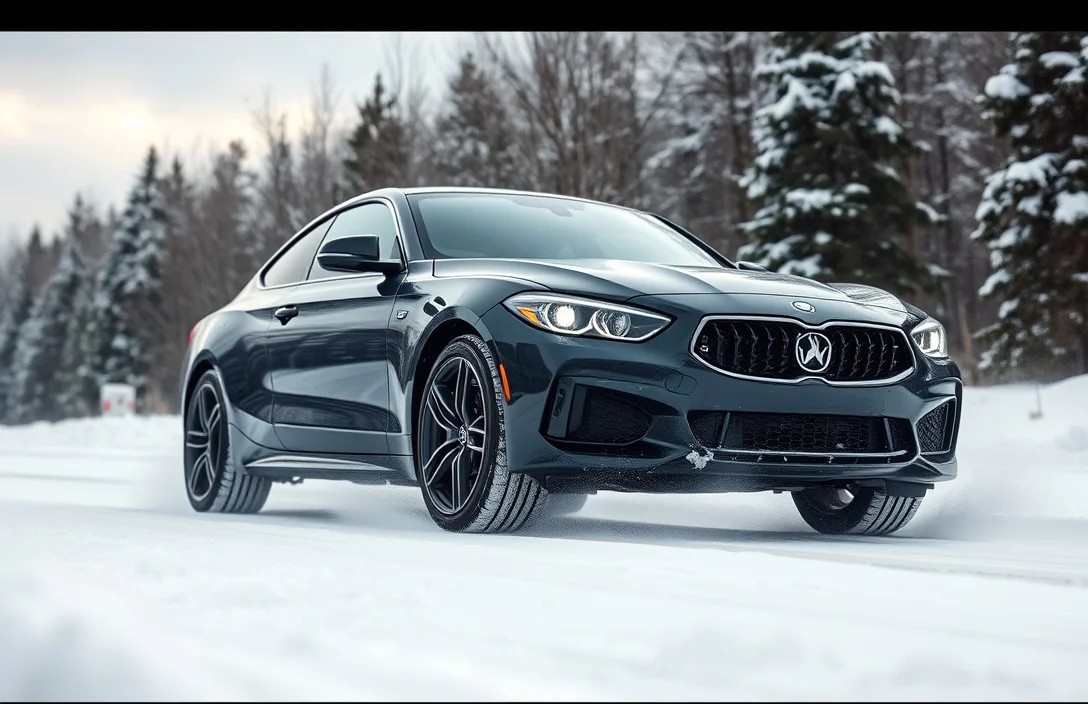
Winter tires give front-wheel-drive cars the traction they need by gripping through slush and packed snow with deeper tread sipes and a softer cold-weather rubber compound. All-season tires work in light snow and cold, but their tread design and compound lose bite as conditions get colder and snow gets heavier.
| Feature | Winter Tires (FWD-focused) | All-Season Tires in Snow |
|---|---|---|
| Rubber compound | Stays pliable in cold temperatures for better contact | Hardens more as temps drop, reducing grip |
| Tread design | More aggressive winter pattern and biting edges | More all-weather oriented tread, fewer snow-specific edges |
| Sipes (micro-grooves) | Higher density sipes for traction on snow/ice surfaces | Fewer sipes or less biting action when deeply loaded with snow |
| Slush evacuation | Designed to move water and slush to reduce hydroplane slip | Can struggle more once slush builds around the tire |
| Braking and pulling power | Better stopping stability and forward traction in real winter conditions | Longer stopping distances once snow is thick or icy |
Front-wheel-drive cars depend on the tires under the powered axle for both acceleration and much of the steering feel. Winter tires increase forward traction so you can maintain a steadier pace and avoid wheelspin, which also helps you keep the car pointed where you intend.
For many drivers in the U.S. and Canada, the real-world win is confidence in the messy middle, slushy roads after plowing and freeze-thaw nights. Winter tires keep more tread-to-road contact in those temperatures, which is where all-season tires often feel “slick” even when the tire tread still looks okay.
When To Switch To Winter Tires
Switch when temperatures regularly drop below about 45°F (7°C), because that is where the all-season compound starts to firm up and snow bite falls off. If you park outside overnight or drive early mornings, treat the forecast low as the deciding factor, even if daytime temps are higher.
Choose winter tires if you drive on roads that see packed snow, slush, or frequent freeze-thaw. Skipping winter tires is most defensible when you mostly drive cleared pavement, get minimal snow depth, and you can tolerate longer stops, slower takeoffs, and less consistent traction.
All-season Vs Winter Tires For Snow
All-season tires are built to be one tire for many months, with strengths in wet pavement and mild cold. Winter tires trade that flexibility for stronger snow traction, better low-temperature rubber performance, and tread patterns that stay effective when snow and slush load the tire.
In practice, winter tires usually improve three things drivers feel immediately: pulling ability on slick starts, braking consistency on snow-covered surfaces, and steering response before the tires reach slip. In FWD vehicles, those benefits reduce the “power slide” feeling that happens when the front tires lose grip during throttle changes.
Insider tip: Look for the Three-Peak Mountain Snowflake symbol on the sidewall for true winter-rated tires. If a tire is only labeled “all-weather,” “M+S,” or “for winter,” it may still be less capable than a dedicated winter tire in hard snow conditions.
Quick Summary
Yes, you can drive a front wheel drive car in snow, but traction control, tire choice, and controlled driving matter most.
| Situation | Front Wheel Drive Approach |
|---|---|
| Light snow | Drive normally but smooth, keep speed down, brake earlier. |
| Packed snow | Reduce throttle, steer gradually, maintain distance. |
| Ice | Go slower than you think, brake early, avoid abrupt maneuvers. |
Frequently Asked Questions
Can You Drive A Front Wheel Drive Car In Snow Without Getting Stuck?
Yes, you can drive front wheel drive in snow, and they often do fine when roads are just slick. You will still get stuck if you spin the front tires, so use smooth throttle and keep momentum on your side.
Is Front Wheel Drive Better Or Worse Than Rear Wheel Drive In Snow?
Front wheel drive is usually easier to control than rear wheel drive in snow because the driven wheels are also the steering wheels. Rear wheel drive tends to spin the rear and feel more likely to fishtail when traction drops.
What Tires Matter Most For Driving A Front Wheel Drive Car In Snow?
Tires matter more than drivetrain in snow. If you only have all-seasons, drive slower and expect longer stopping distances, but dedicated winter tires usually make a big difference in grip and braking.
How Should You Drive A Front Wheel Drive Car On Snowy Roads To Avoid Slipping?
Use gentle acceleration, gradual turns, and steady braking, and avoid sudden steering inputs. If the front tires start to spin, ease off the gas and let traction come back instead of “punching through” the snow.
Can You Drive A Front Wheel Drive Car In Snow If It Has Worn Tires Or Low Tread?
It is possible, but with worn tread you dramatically lose traction and braking. In practice, low tread can turn mild snow into wheel spin and much longer stops, especially on slushy or icy pavement.
Is It Safe To Drive A Front Wheel Drive Car In Snow If The Traction Control Or Abs Light Is On?
No, not until you figure out why the warning is on. If traction control or ABS is disabled or malfunctioning, you have less ability to prevent wheel spin and control braking on slippery surfaces.