

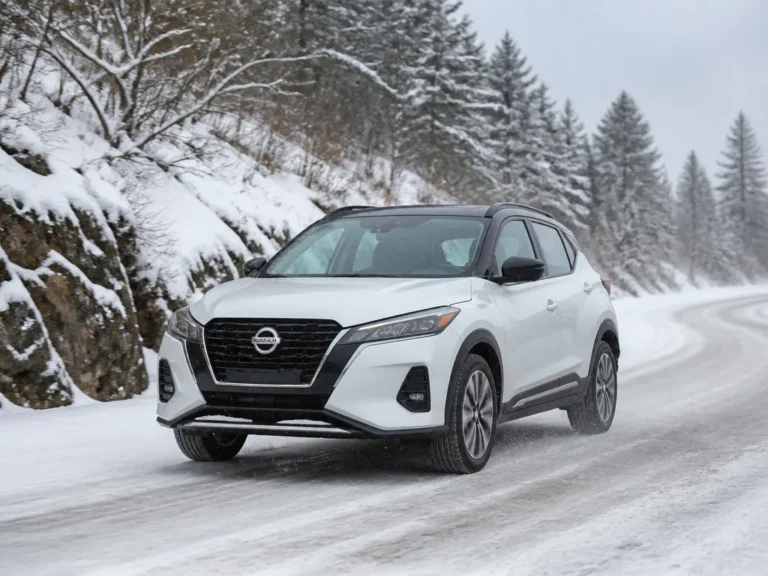
You feel it the moment you roll from a stop or creep through a snowy intersection, your Nissan gives a sudden tug, then regains power like it hesitates and bites back. That “kick” is usually traction control, stability control braking, or torque management reacting to wheel slip. This guide breaks down why it happens and how to make it predictable.
Most “kick in snow” moments are normal TCS/ESC intervention, where the car cuts engine torque and may apply small brake pulses to regain grip. Badly timed throttle, low tire traction, and mismatched tires make it harsher and more frequent. You will learn what to check, what modes to try, and when the behavior signals a fault.
Nissan kick in snow and winter driving usually means the traction system is sensing slip, then reducing torque (and sometimes applying brief braking) to get the wheels moving smoothly again. Expect it most at takeoff, during steering while turning, and when climbing. With good snow tires and gentle throttle, it should feel quick and controlled, not violent or repeated.
Nissan Kick In Snow And Winter Driving
In winter driving, the “kick” people feel is traction management doing quick corrections when the tires lose grip. Those corrections often feel like a brief surge, a jerk when torque comes back, or a light brake nudge as the car stabilizes slip. On many Nissan models, the sensation is normal when it is smooth, short-lived, and tied to throttle and road conditions.
What The “Kick” Actually Feels Like
“Kick” can show up in a few distinct ways, and each points to a different system action. If the behavior is consistent with slippery surfaces and changes with pedal input, it is usually the drivetrain and stability controls doing their job.
Which Nissan Systems Create The Sensation
Most “kick” events come from traction control, stability control, or braking control working together. Nissan labels vary by model, but the core logic is the same: detect slip, then intervene quickly.
| Driver-perceived symptom | Most likely system event | Typical timing |
|---|---|---|
| Jerk on throttle application | TCS cutting and restoring torque | During hard acceleration or sudden pedal input |
| Brake nudge, pedal pulse | ABS and/or ESC pulsing brake pressure | During braking or when ESC senses instability |
| Lurch as grip returns | AWD torque transfer and traction re-locking | After slip, often mid-corner or at low speed |
| Surge after easing off | Torque restoration after slip detection clears | When you modulate throttle on slick roads |
Insider tip from the shop floor: a “healthy” winter intervention feels brief and repeatable. Harsh banging, persistent grinding, or repeated power cut even on dry pavement is a red flag for tires, drivetrain issues, or a sensor problem.
Mode selection changes how readily a Nissan allows slip to occur before interventions get aggressive. Snow settings (when equipped) often soften throttle response and adjust traction logic, which can reduce the size of the torque “correction” you feel. The goal is predictability: the car should intervene smoothly, not punchy.
Why Traction Control Cuts And Returns
Traction Control (TCS) and Electronic Stability Control (ESC) interrupt drive torque when a drive wheel starts to spin, then reapply torque once slip drops. That repeated “cut, regain, cut again” is what many drivers describe as a kick or jerk in snow.
How Wheel Slip Turns Into An On-off Feeling
Snow ice reduces tire grip fast, so a small throttle change can send one wheel past the traction limit. Wheel-speed sensors detect slip within milliseconds, and the control unit commands less engine torque while (in many situations) coordinating braking to the spinning wheel.
On Nissan models with AWD, the system can also change how torque is distributed between axles. Even with AWD, you still get a momentary reduction because TCS does not wait for the driveline to “fix it” mechanically, it intervenes electronically to stop slip right now.
For example, accelerating out of a slow right turn on packed snow often triggers TCS right after the drivetrain loads the outside and inside wheels. The driver usually feels a brief reduction in pull, a small vibration or shudder, then a return to steady motion as the system “learns” that slip has dropped.
| What you feel | Likely system action | Typical cause in snow |
|---|---|---|
| Kick when you roll into throttle | TCS reduces engine torque, may use brake on a slipping wheel | Instant wheel spin from low traction |
| Shudder while maintaining speed in a turn | ESC uses brake pressure to correct stability | Front-to-rear grip mismatch and yaw correction |
| Delay before power returns | Control loop waits for slip to fall below threshold | Loose snow that keeps tires from regaining grip quickly |
Tip from the bay: if the “kick” is brief and only shows up during high-throttle moments or sharp steering inputs, it is usually normal TCS/ESC cycling. If it is violent, persistent, or triggers warning lights, check tire condition and pressure first, then scan the vehicle for stored stability or ABS-related codes.
Awd Lock-up And Torque Transfer Timing
AWD engagement in winter happens in fractions of a second, and that timing is what you feel as a “kick” when a tire finally gets enough traction for the system to send more drive torque. When the tires are slipping, the AWD controller is constantly rebalancing torque, then it snaps to a new balance once the slip window changes.
For Nissan AWD setups that use an electronically controlled coupling (common on several Rogue, Pathfinder, Murano, and other AWD models over the years), the transmission delivers torque first, then the AWD system meters how much goes to the other axle. Takeoff roll-on is where it is most noticeable, because wheel slip spikes as static friction breaks. At steady throttle, slip stays more consistent, so the AWD torque transfer feels smoother.
Takeoff Versus Steady Throttle
Takeoff on snow is a worst-case scenario for harshness because the leading tires can go from “almost gripping” to “spinning” quickly. That forces faster torque correction cycles, so you may feel a surge, a brief reduction in drive, then another surge as traction returns. Steady throttle at a low, constant engine load lets the system settle into a stable torque split, so the car feels calmer.
For example, a mild accelerator release then reapply at the crest of an intersection can make the AWD engagement feel harsher than a single, smooth pull. Throttle plate response and driveline wind-up add to it, especially if the front tires grab first and then the rear tries to catch up.
Throttle Abruptness And Torque Rebalancing
Throttle abruptness increases the “step” change in torque demand. That gives the AWD controller less time to ramp torque smoothly, so the lock-up strategy can feel more abrupt on slippery starts. A quick jab from idle can also cause a traction mismatch between axles, since one axle may gain grip sooner than the other.
In practice, try a pedal technique that keeps engine torque rise gradual for the first 1 to 2 seconds after you begin moving. If your Nissan has a Snow mode, it is designed to soften throttle response and make torque transfer timing less aggressive.
Driveline binding can worsen these sensations. If tires are mismatched (different brands, tread depth, or even pressure left side to right), the AWD system can see constant minor slip and it can feel like repeated micro-kicks. Uneven tire wear also changes how quickly each axle reaches traction, which makes timing corrections show up through the drivetrain.
Lock modes, if equipped (some models and trims offer more direct coupling/locking strategies than pure Auto), can increase harshness because they reduce the system’s ability to allow controlled slip. Locking strategies can force a higher effective coupling, which makes torque transfer timing feel less “forgiving” when one axle reaches grip faster than the other. Lock mode is best reserved for low-speed, low-traction situations where you can tolerate more drivetrain feedback and you are moving straight ahead.
| Condition | What you feel | Most likely timing reason |
|---|---|---|
| Snowy stop, smooth pedal | Light surge, then steady pull | AWD ramps to a new torque split once slip stabilizes |
| Snowy stop, hard jab | Strong kick, brief stumble, then catch | Torque demand jumps, axle slip changes quickly, controller rebalances in steps |
| Mismatched tires or pressure | Jerky “correcting” feel | Axles reach traction at different times, forcing frequent torque adjustments |
| Lock mode engaged on loose snow | Harsh engagement, driveline feedback | Coupling is more fixed, less slip cushioning during timing differences |
ASE master-mechanic tip: If the kick is only at takeoff, it is usually timing and throttle rate. If the kick shows up at steady cruise or during turns, think tire mismatch, driveline binding, or a system fault that needs a scan and inspection.
Nissan Mode Settings For Winter
Snowy conditions make Nissan traction control and AWD system logic react sooner, so the “kick” you feel is usually the drivetrain being reigned in after wheel slip. Mode selection changes how aggressively the vehicle delivers torque, which affects how predictably the car responds when you tip into the throttle.
When To Use Snow And What It Changes
Use Snow mode when you’re on packed snow, slush, or slick ice where grip is inconsistent across the road. Snow mode typically softens throttle response and limits torque so TCS (traction control) and AWD (where equipped) do less abrupt correction.
In practice, Snow mode often feels calmer at takeoff and better for creeping through intersections, driveways, and turns. Trade-off is reduced punch when you demand it, so if you try to “power through,” the car will feel slower and may still brake-wheel slip corrections.
Auto Vs Lock Vs Off-road (Awd-equipped Choices)
Auto AWD is your default in winter because it blends power transfer based on real-time slip. Lock is for low-speed traction events like climbing out of a snowbank or starting on uneven, deep, or drifted surfaces where you need the drivetrain to stay more evenly coupled.
Choose Off-Road when you’re dealing with loose surfaces (deep snow ruts, gravelly snow) and you want more allowance for traction changes. Avoid Lock on high-traction roads, because increased coupling can make the vehicle feel tense, bind, or jerk during turns.
| Mode | Best winter use | How it usually feels |
|---|---|---|
| Auto | Daily driving on snow/ice transitions | Most predictable, least intervention “shock” |
| Snow | Slush, packed snow, cold mornings | Softer throttle, calmer torque delivery |
| Off-Road | Ruts, deep snow drifts, mixed loose surfaces | More tolerant to changing grip, still controlled |
| Lock | Low-speed starts and short climbs in deep snow | More direct drive, less “hunting” but can bind on dry pavement |
Confirm The Selected Mode And Avoid Confusion
Start by checking the instrument cluster and the center display for the exact mode name (Snow, Off-Road, Lock, Auto). Nissan systems often change both transmission behavior and AWD logic, so you can’t rely on memory from last drive.
In practice, mode confusion is common after remote start, battery disconnects, or quick menu cycling. If you feel harsh “kicks” that don’t match your expected mode, re-select the intended setting, then drive gently for 20 to 30 seconds to let the traction system settle.
Insider tip: If the car feels like it “punches” when you add power, switch to Snow (and keep your inputs smooth) before you conclude there’s a drivetrain fault.
Symptom-to-cause Quick Mapping
Sudden “kick” moments in snow usually come from the traction system cutting torque, then reapplying it after slip drops, or from ABS/ESC grabbing to restore stability. The feel can vary from a gentle pulse to a sharp surge, depending on tire grip, AWD clutch engagement, and how quickly the tires reach the slip threshold.
| Winter “Kick” You Feel | What’s Likely Happening | What It Typically Feels Like | Owner Actions That Help |
|---|---|---|---|
| Launching from a stop | Torque cut and reapply (TCS or similar), sometimes with drivetrain slip across open differentials before traction catches. On AWD models, the transfer clutch may engage more aggressively once slip is detected. | Power fades for a split second, then returns with a lurch as grip comes back. | Start with lighter throttle, pause briefly after you release the brake, and avoid flooring for “instant” movement. |
| Climbing hills | Momentum loss triggers repeated traction interventions as load shifts rearward, tires unload and regain grip. ESC can add brake-based torque control if the vehicle starts to yaw or rotate. | Cycle of surge and slowdown, often louder as speed drops. | Maintain steady throttle (no jab), keep a longer gap, and don’t wait for wheelspin to “figure it out.” |
| Braking while turning | ESC blending with ABS, where individual brakes apply to hold the line. The “kick” is often brake grab when the stability system meters slip at the same time you’re asking for cornering grip. | Pulsing brake pedal, steering corrections, or a brief jerk when grip changes. | Brake in a straight line when possible. Feed in turn angle after braking pressure stabilizes. |
| Low-speed parking and maneuvering | Throttle sensitivity and traction mismatch across tires (packed snow on one corner, bare patches on another). Some Nissans with snow/traction-oriented modes adjust throttle mapping, so “kick” can change with mode choice. | Small surges, hunting between creep and slip, sometimes a chirp. | Use shorter throttle pulses and lower steering input changes. Confirm tire pressure matches the cold-weather spec on the door jamb. |
| Approach to stops/crests | ABS pulses plus traction recovery as weight transfers forward. Over a crest, tire grip can change instantly, so the system can cut and reapply effort while ABS manages wheel lock. | Pedal vibration at the same time the car “settles” more sharply. | Brake earlier and softer, then let ABS do the work. Keep steering centered during the last part of the stop. |
Launch Vs Climb Vs Braking: What’s Normal And What’s A Red Flag
For launches, a brief torque cut and reapply is normal when tires momentarily lose grip. A harsh, repeated lurch every time you move a few feet usually points to too much throttle for the surface, mismatched tire tread, or low tire pressure that lets the tire slip too easily.
For hill climbs, repeated “surge and slowdown” is often traction control and stability control cycling as grip comes and goes. A sign to investigate is a kick that feels like a drivetrain bind or hard shift into a different gear range, especially if warning lights appear on the dash.
“When the kick lines up with brake pulses or steering corrections, expect ABS/ESC involvement. When the kick lines up with throttle application from a stop or during climbs, expect torque cut/reapply from traction control.”
How To Drive Without Harsh Jerk
Harsh kick in snow comes from sudden torque when the tires briefly lose grip and the vehicle snaps back through traction control and AWD coupling. Smooth inputs keep wheelspin small, so TCS and ESC work in steady corrections instead of repeated cut-in and release.
Pedal Technique That Calms Nissan Traction Control
On a Nissan in winter conditions, the accelerator position is the fastest way to trigger the drivetrain to ask for more grip than the road can give. Use shorter pedal travels and softer heel-toe timing, aim for a steady engine load, and avoid “press, pause, press” behavior that matches the timing of traction control intervention.
For the smoothest response, treat the throttle like it is a dimmer switch, not an on-off switch. If you feel the car surge or hesitate, lift slightly for a moment and then reapply, instead of holding the same pedal position while the systems keep correcting.
Speed Targets, Incline Climbing, And Steering Timing
In practice, you want enough momentum to crest an incline, but not so much that you have to add a bunch of throttle mid-climb. If the vehicle starts slipping and cutting power repeatedly, back out early and regain traction with a slower approach, because repeated intervention creates that push-pull jerk feel.
Steering and braking timing matter because winter traction is limited, and combining high slip with hard cornering forces ESC to work harder. Enter turns with a stable speed, make steering changes before you add any meaningful brake pressure, then coast through the corner if the road is very slick.
| Situation | What causes kick/jerk feel | Driver correction |
|---|---|---|
| Starting from a stop | Wheelspin triggers TCS cut and reapply | Use 5 to 10 mph equivalent “crawl” approach, then build gradually |
| Climbing a hill | Repeated slip and AWD/traction response cycles | Use momentum from the approach, lift sooner if surging starts |
| Turning on glare ice | ESC adds correction while tires are already near traction limit | Steer first, then apply throttle, brake lightly earlier if needed |
Pro tip: If you see the stability or traction light flash and the car shudders, ease off immediately. Holding steady pedal input keeps the system in a “fight” cycle.
Speed Buffers And Smooth Stop Planning On Icy Approaches
Give yourself more distance than you think you need, because you cannot “steer through” ice with confidence. Plan stops so you arrive at the braking zone earlier, then use gentle brake application that ramps up, instead of late, hard braking that locks ABS and adds steering instability.
For speed buffers, aim to reduce your approach speed enough that you can slow with minimal brake modulation. When you must brake more, keep braking pressure steady until the car is straight, then finish slowing and only then adjust lane position.
Tires And Setup That Change Traction Feel
Traction feel in snow is mostly a tire-and-setup problem. When the tire breaks loose, Nissan’s traction control and stability system decide how much wheel torque to cut, so the “kick” feel changes fast with tire type, tread depth, sidewall condition, and winter pressures.
Snow Tires Vs All-seasons, And Why The Control System Reacts Differently
All-seasons get you moving, but snow tires keep grip longer as roads pack up and temperatures drop. That extra bite reduces sudden wheel slip, so traction control has less reason to intervene aggressively under throttle.
When a wheel loses traction, the system reacts by cutting engine torque and, depending on the situation, applying brake pressure to the spinning wheel. A tire with soft winter compound and angled siping can still grip at low speeds, so you get steadier torque delivery instead of repeated “give and cut” cycles.
Tread Depth, Sidewall Condition, And Matching Tire Sizes/brands
Tread depth directly affects how quickly the tire can evacuate slush and how early it recovers grip. Worn tires feel “grabby” right before they let go, which can make the traction-control cut feel like a kick.
Sidewall condition matters too because winter impacts and curb scrapes create weak spots that flex differently in snow. A tire with bulges, separation, or a cracked sidewall can slip unpredictably, even if the tread still looks decent.
| Tire condition | How it changes snow traction feel | What to do |
|---|---|---|
| Low tread depth | Grip drops sooner, slip-correction feels harsher | Replace winters when tread is worn, even if legally “still good” |
| Uneven wear | One side slips early, steering feel and kick increase | Check alignment and rotation history |
| Sidewall cuts or bulges | Unpredictable breakaway, vibration under load | Replace the tire, inspect for suspension damage |
| Mixed sizes/brands or staggered tread patterns | More frequent torque reduction from sensor comparisons | Use matched tire sets by axle, same size and construction |
Winter Tire Pressure: Keeping The Contact Patch Consistent
Cold weather drops tire pressure, and a low tire changes the contact patch shape so the tread transitions into slip sooner. That earlier breakaway is what turns smooth throttle into sudden torque-cut “kicks.”
Use the pressure guidance from your Nissan door placard or the tire placard values for your winter tire size, then recheck after the first cold snap. Winter driving also benefits from frequent checks because pressure swing is normal when temps swing day to day.
Quick sanity check: if the kick feels worse on one side, check for uneven tread wear and tire pressure differences before blaming the drivetrain. Alignment and tire setup issues can be the real root cause.
Normal Kick Vs Warning Signs
On a Nissan in snow, the “kick” you feel is traction control and stability control doing their job when a tire slips. Normal intervention is brief torque cut, a subtle tug, and sometimes ABS pulsing through the brake pedal during hard stops.
What Normal Intervention Feels And Sounds Like
Normal system behavior is usually short and repeatable, especially when you roll onto the throttle on packed snow or cross ruts. The car may also feel like it drags slightly then releases, since the ECU trims engine torque to bring wheel speed back in line.
In practice, normal “kick” looks like the following:
Insider tip from the shop floor: if the car responds the same way every time you hit the same kind of snow patch, the behavior is usually normal stability control strategy.
What Is Not Normal, And When To Stop?
Warning signs are where the kick turns into harshness, persistent loss of power, or symptoms that do not match traction control timing. Any steady warning light, repeated limp mode, or driveline noise that changes with throttle is a strong “get it checked” signal.
| Symptom | Likely meaning | What to do |
|---|---|---|
| Traction Control (TCS) or SLIP light stays on | Control system detecting a persistent issue | Reduce speed, avoid hard throttle, schedule diagnosis |
| Brake pedal grinding or repeated violent ABS chatter | Brake hardware or sensor problem, not normal slip control | Stop when safe and have brakes inspected |
| Limp mode, weak acceleration, or frequent “power off” feeling | Drivetrain protection due to a fault | Drive only to a service location, then diagnose |
| Pulling hard to one side while traction kicks | Possible tire, alignment, or brake imbalance | Do not keep forcing through it, check tires and brakes |
| One-wheel spin that never corrects | AWD or traction system not distributing torque correctly | Get scanned for codes and inspected |
Stop driving and get it checked immediately if you see ABS and ESC warnings together, feel grinding or clunking from the brakes or driveline, or the vehicle repeatedly drops into limp mode. Snow is already harsh on traction, so faults show up faster and safer when you treat repeated harsh behavior as a real issue.
Winter Troubleshooting And Prep Checklist
Tires are the first cause of a “hard kick” sensation in snow. If traction is too low, the traction-control system cuts torque quickly, and AWD engagement can feel like a sudden shove when grip changes. Start here before you chase sensors or modules.
When To Scan Codes (And What To Look For)
Scan codes when the stability behavior changes from “normal control correction” to “repeated power cuts” or when a warning light stays on. Pull codes for ABS and ESC/TCS whenever you see brake-related symptoms like pulsing plus sudden torque reduction, because wheel-speed faults can cause cascading traction events.
When a Nissan has AWD, codes that point to AWD control, rear driveline, or transfer case engagement should get priority, especially if the car feels like it repeatedly grabs and releases during light throttle. Pull codes after a cold-start drive, then again after the symptom appears, since some issues store intermittently.
Use a basic OBD-II scanner for generic codes, but if you see ABS/ESC/AWD-related manufacturer codes, plan on a shop with the Nissan-capable scan tool. A scan can cost about $100 to $200 at many independent shops, but it is cheaper than guessing on sensors and tires.
| Symptom | Most likely cause | Owner next step |
|---|---|---|
| Hard shove only during throttle increases | Traction limit reached, control correcting wheel spin | Reduce pedal input, confirm snow mode, check tires/pressure |
| Power cuts even at gentle throttle | Wheel-speed input or control fault (ABS/TCS/ESC) | Scan codes, check for wheel damage, consider shop |
| Vibration plus “kicking” feeling | Tire/balance issue or bent wheel | Inspect wheels, balance, replace damaged tire |
| Warning lights plus repeated interventions | ABS/ESC/AWD fault stored | Scan promptly, avoid aggressive driving, schedule diagnosis |
Winter Prep Checklist For Predictable Traction
Shop sooner if the ABS/ESC/AWD lights stay on, if you have grinding or clunking during engagement, or if the steering or braking feels wrong. Those are the cases where wheel-speed sensors, control modules, driveline components, or brake hardware need proper measurement.
Quick Summary
When a Nissan “kicks” in snow, it is usually the traction control and stability control logic responding to wheel slip, cutting engine torque and then restoring it when traction returns. The article explains that these interventions can include brief brake pulses to regain grip, which is why the sensation can feel like a sudden tug followed by power coming back. It is also made harsher by badly timed throttle inputs, low tire traction, and mismatched tires, especially during takeoff, steering while turning, and climbing.
The article breaks the feel into common patterns, including a jerk or snap on acceleration from TCS reducing torque and then reapplies, and a brake nudge or shudder during straight-ahead braking when ABS and ESC pulse brake pressure to control slip and yaw. It also notes that some Nissans with reactive AWD can lurch as torque transfer rebalances traction, often after slip. The guidance is to use Snow or Off-Road mode when equipped, drive with gentle pedal inputs, and expect healthy intervention to be brief and repeatable, because repeated harsh kicks or warning lights mean it can signal a fault that needs diagnosis.
| What you feel | Most likely system action | When it shows up |
|---|---|---|
| Jerk or snap when you apply throttle | TCS cutting and restoring torque | Hard acceleration or sudden pedal input |
| Brake nudge or pedal pulse | ABS and/or ESC pulsing brake pressure | During braking or when instability is sensed |
| Surge after easing off throttle | Torque restoration after slip detection clears | When traction grip returns |
| Lurch or hitch forward | AWD torque transfer re-locking and traction rebalancing | After slip, often at low speed or mid-corner |
Frequently Asked Questions
How Do I Stop My Nissan Kicks From Slipping In Snow?
Use the right tires first for winter conditions. In most Nissan Kicks winter setups, that means winter tires with good tread depth and keeping them properly inflated, then using gentle throttle and smooth steering to avoid wheelspin on slick surfaces.
Why Does My Nissan Kicks Kick Or Jerk When Driving In Snow?
Snow and traction changes can cause drivetrain and stability systems to intervene, which you can feel as a kick when grip suddenly changes. If the “kick” comes with warning lights or gets worse over time, get it checked, because things like brakes, sensors, or traction control inputs can contribute.
Should I Use Eco Mode Or Turn It Off For Winter Driving In A Nissan Kicks?
For snow, smoother power delivery usually matters more than mode labels. Eco mode can make throttle response gentler, which some drivers prefer, but if your Kicks feels too sluggish to keep traction on hills, you may prefer a different drive setting and still use light, steady inputs.
Can I Drive My Nissan Kicks In Deep Snow Without Damage?
Yes, but limit repeated wheelspin. If you keep spinning the tires, you can overheat components and dig yourself in, so try momentum with short pushes, use lower throttle, and consider traction help like sand or traction boards.
What’s The Safest Way To Brake On Ice With A Nissan Kicks?
Brake earlier than normal and avoid hard pedal pumps. If your Kicks has ABS, it can help under hard braking, but in ice you still need distance, and sudden steering while braking can reduce control.
What Should I Check On My Nissan Kicks Before Winter Starts?
Prioritize tires, tire pressure, and wiper visibility. Make sure tire tread is adequate for winter use, check pressure when the tires are cold, and confirm wipers and washer fluid are winter-ready so you can see clearly in blowing snow and slush.