

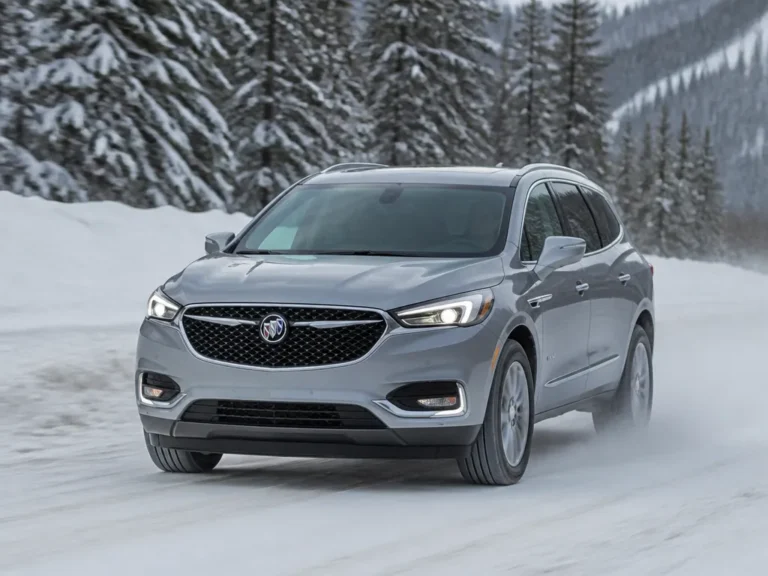
Ever get to a snowy on-ramp with your Buick Enclave feeling steady until the first ice patch hits? Owners search because starting, braking distance, and cornering grip seem to change fast in slush and packed snow, even with AWD. You want a realistic rundown of how the Enclave traction and stability systems behave, what driver aids help, and what setup actually makes the biggest difference.
Expect confident control when tires match the conditions, because AWD helps you move and recover traction, but it does not shorten stopping distances on ice. This snow and winter-focused guide covers AWD and stability behavior, scenario feel (launch, hills, braking, turns), and a pre-winter checklist built around the Enclave.
Buick Enclave in snow and winter driving comes down to traction, tires, and how driver aids react on slick roads. With AWD, you usually get better launch and grip management, but ABS and stability control still let you feel slip. Proper winter tires (with deep tread, correct cold pressure) often matter more than swapping drive modes.
Buick Enclave In Snow And Winter Driving
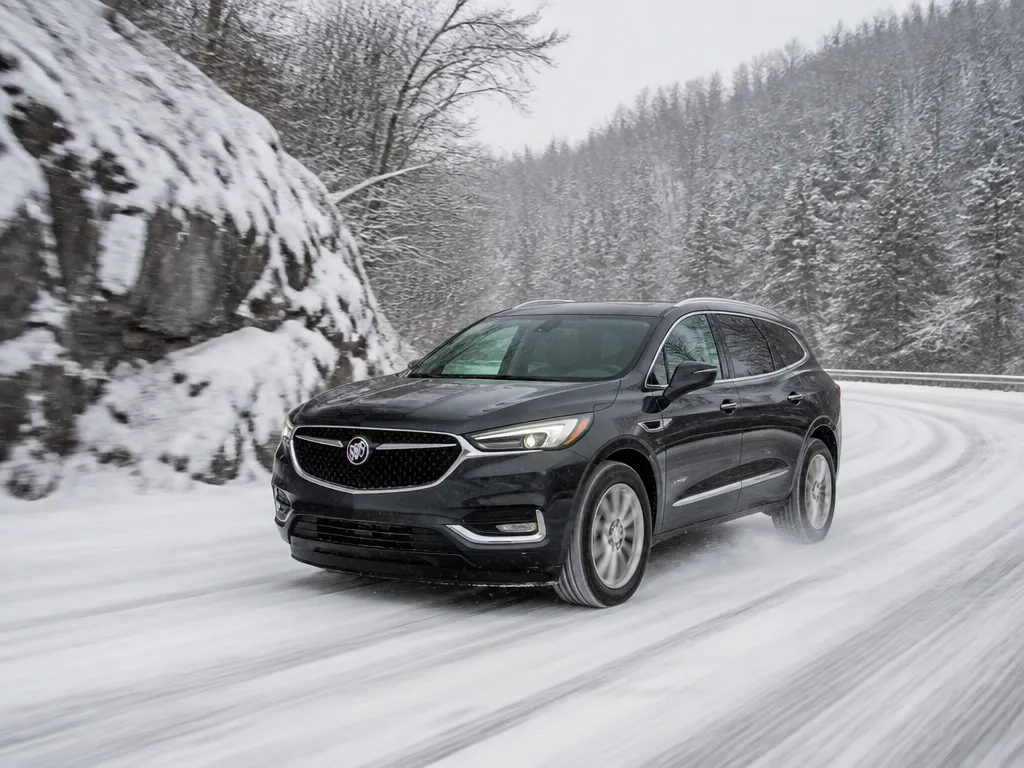
The Buick Enclave usually feels predictable in cold weather, but the real difference between “confident commute” and “slippery surprise” is tire grip and how smoothly you drive. In light snow and dry-cold pavement, the AWD system and traction control help you keep moving, while on packed ice your momentum and throttle control decide whether you claw for traction or spin.
What Owners Notice First In Snow
Enclave drivers typically feel the powertrain transition more than they feel mechanical harshness. The first noticeable change is slower, steadier response when you roll into the throttle, especially from a stop, because traction control will limit wheelspin and manage torque.
Stopping feels consistent if you stay off the brake too hard. Hard braking into slippery surfaces can bring ABS pulsing sooner than you expect, and turning while braking often tightens control behavior because the car tries to keep stability first, vehicle direction second.
Big Factors That Change Confidence
Tires are the biggest variable by far. An Enclave on all-seasons with adequate tread can feel “okay” in light snow, but it often turns vague on glare ice, where even AWD cannot create friction that tires do not have.
Traction control calibration and stability response are the second variable. The system is designed to reduce wheelspin and correct yaw, so the car may feel like it “pulls back” or limits acceleration when it senses slip, especially when the throttle input is abrupt or when tires are mismatched front to rear.
Driver technique is the third variable, and it is the one most people can change immediately. Snow is basically a grip-management game, so you want smoother throttle, earlier braking, and wider turns to keep the tires in their traction zone longer.
| Condition | How the Enclave usually feels | What to adjust |
|---|---|---|
| Light snow | Predictable throttle response, controlled stops with ABS | Maintain momentum, smooth pedal inputs |
| Packed snow | Noticeable traction limiting during acceleration | Gentler throttle, larger following distance |
| Glare ice | Traction control intervenes frequently, steering feels less linear | Extra momentum, slower turns, avoid abrupt inputs |
Mechanic’s reality check: AWD helps you start, but tires still control where you can steer and stop. On ice, the biggest “upgrade” is switching to winter tires, then driving with fewer abrupt throttle and brake changes so the stability system does less correcting.
Enclave readiness is about removing the distractions that reduce grip. Before a storm, check tire tread and look for uneven wear, confirm both front tires match in brand and size, and make sure windshield wipers and washer fluid are topped up for salt film and slush spray.
Enclave Awd Traction Tech On Ice
The Enclave’s winter confidence comes from how its all-wheel drive and stability systems manage wheel slip and yaw, then quietly steer the car back into line. On packed snow and icy glaze, the control strategy decides where to send torque and when to brake individual wheels, so the car may feel like it is correcting you even when steering inputs are steady.
What The Systems Do On Ice And Packed Snow
Wheel slip control is the job of the traction control logic, it watches each wheel speed and compares them to vehicle speed and steering behavior. When one tire starts spinning on ice, the system cuts engine torque and can brake that wheel to transfer drive to the axle side with grip.
ABS is the braking foundation, it prevents wheel lock by pulsing brake pressure when it senses a wheel is about to stop rotating. ESC adds a second layer by watching lateral stability, and it can apply brake pressure to one side and adjust torque to reduce oversteer or understeer when the tires lose their “planned” grip.
| Situation | What you’ll feel | What the car is doing |
|---|---|---|
| Hard braking on ice | Brake pedal pulses, steering stays more stable than you expect | ABS modulates pressure to stop lock-up, reducing slide length |
| Braking while turning | Occasional “grab” from the brakes, car tracks straighter than if you drove it manually | ABS + ESC coordinate to keep the yaw closer to commanded direction |
| Throttle on packed snow | Throttle feels muted, short surges of grip then smoothing | Traction control cuts torque and brakes a slipping wheel |
| Cornering on ice | Steady steering helps, but the car may correct with brake nudges | ESC applies selective braking to resist oversteer/understeer |
What You Can And Can’t Feel As A Driver
ABS and ESC can only work with the grip the tires provide. With worn all-season tires, the Enclave may still move laterally before ESC can create the needed correcting force, especially on a thin ice film where the tire can lose traction faster than the electronics can “buy back” stability.
Rule of thumb: If you have to “muscle” the steering to stay pointed, ease off the steering angle and reduce speed. ESC can help, but it cannot overcome low tire grip for long, and your inputs influence how quickly the system can stabilize the car.
Before you judge winter handling in the real world, remember this key behavior: traction control and ESC can make the Enclave feel smoother and more composed than a purely mechanical AWD setup, but they will also limit how quickly you can accelerate out of low-traction situations. The biggest improvement you can feel day to day is still tire grip, because the electronics are only reacting to what the tires are able to transmit to the pavement.
Snow Starts, Merges, And Hill Climbs
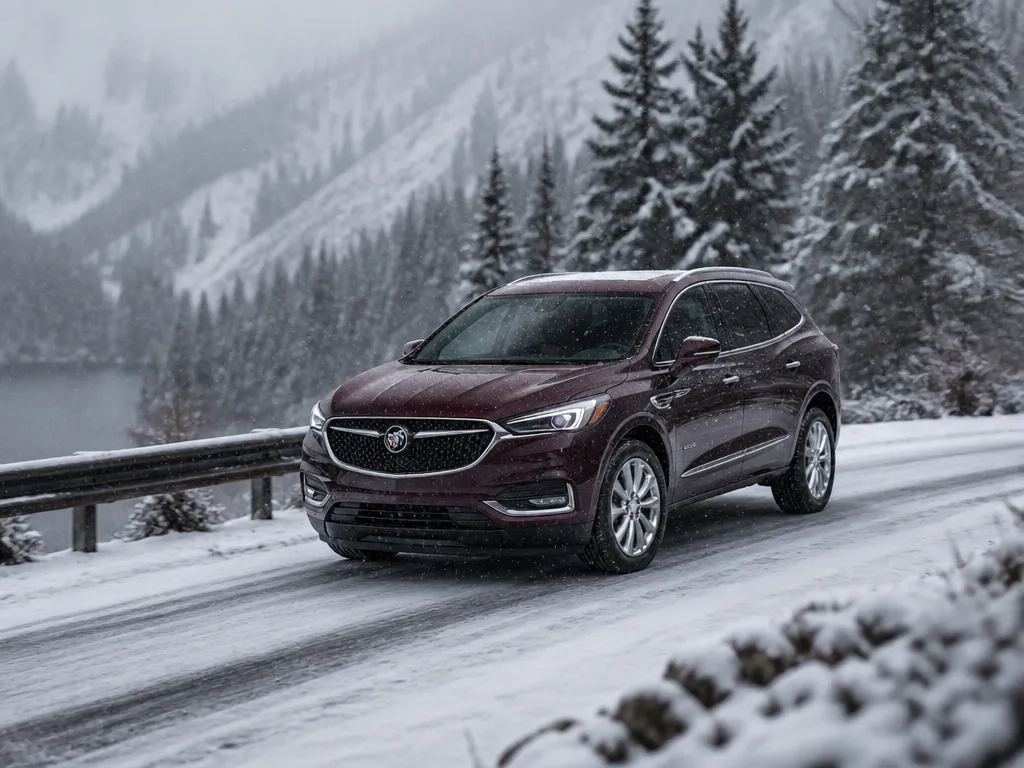
The Buick Enclave is at its best in winter when you drive for traction, not for wheel speed. In slushy lots and packed snow, smooth throttle and a little patience keep the AWD system from overcorrecting and help the transmission hold a usable gear. On icy starts and hill climbs, the biggest difference is tire grip, because any traction control can only manage wheel slip that the tires can hold.
Launching From A Stop: Wheel-spin Management And Pedal Technique
Launching from a stop in the Enclave usually feels “smart” right up until you ask for too much throttle too soon. If you roll into the accelerator hard, you will feel the driveline try to claw traction, then you get a brief surge and settle. The fix is simple: start with a short, light pedal press and let the AWD do the work at low wheel speeds.
For example, on a snowy driveway where the surface is polished, the Enclave will move more confidently when you pause for a half-second after you start rolling, instead of continuously increasing pedal. That pause helps keep engine torque matched to available grip, so you avoid that “spin then hook” cycle that can throw the vehicle slightly off line.
| Surface | Enclave feel | Driver adjustment |
|---|---|---|
| Powder over compact snow | Relatively smooth, steady pull | Still use gradual throttle, traction is available but limited |
| Packed snow | Grip comes and goes quickly | Short throttle bursts, then hold steady |
| Ice sheen | Torque leads to slip fast | Very light pedal, aim for momentum instead of acceleration |
Merging/accelerating: Avoiding Traction Loss And Maintaining Momentum
Merging is where winter driving exposes throttle calibration. The Enclave can accelerate well when tires keep contact, but if you punch it mid-merge on glare ice, traction control will cut torque and the car may feel “stuttery” as grip returns. Give it less pedal input and more distance to build speed so you are not depending on a sudden surge of traction.
In practice, target a smooth build to merge speed, then keep throttle steady rather than repeatedly backing off and reapplying. That steady torque lets the AWD keep the car pointed while your tires stay in their most stable grip range.
Insider tip: if the merge lane is mottled (fresh snow over black ice), accelerate earlier with a gentler slope to avoid landing on the slick section right when you request torque.
Hill Starts And Climbs: Preventing Roll-back And Managing Power-on Slips
Hill starts can be sketchy in any AWD SUV if you lift and reapply torque too abruptly. The Enclave’s job is to keep the drive wheels from spinning, but a slippery crest can still cause brief power-on slip that feels like the car is searching for traction. The best approach is to stage the vehicle, commit to a steady launch, and avoid “rev then bite” moves.
On climbs, power-on slip happens when the tires lose grip under load. The cure is reducing torque demand by easing into the throttle and keeping inputs smooth, especially on long grades where heat and tread condition can change traction. If you feel the vehicle start to surge and then lose momentum, back off slightly and regain speed once the surface grips again.
Braking In Slush And Slick Snow
Buick Enclave braking on packed snow and slush is all about tire grip and smooth pedal pressure, because the antilock system can only react once the tires are about to lock. ABS can shorten stopping distance on many slick surfaces, but it cannot create traction where the tires have none. On ice patches, Enclave braking still feels long, and ABS cycling is a clue you are near the limits.
What Abs Does And Does Not Fix On Ice
ABS in the Enclave is designed to keep the wheels near the rolling point so you keep some steering ability while braking. ABS also helps prevent a full lockup on snow and slush, which usually reduces the chance of sliding straight into trouble.
Ice is the exception because the tire can reach a true traction ceiling quickly, even if ABS is working correctly. When you feel rapid pedal vibration or hear a pulsing sound, ABS is doing its job, but that sensation does not mean you are stopping faster than physics allows.
Stopping Distances Vs. Feel, And Why Inputs Matter
The Enclave may feel like it is braking “normally” until the last moment, then the car needs distance to scrub speed because the tires are slipping. That is why smooth, earlier pedal application beats late, hard stomps, especially when slush hides slick layers under a thin wet film.
For example, in slushy intersections, a gentle press that builds quickly lets the tires generate consistent grip while ABS has less to correct. In packed snow, the same approach helps keep the vehicle stable while you brake and prepare to steer around traffic.
Signs Grip Is Compromised On The Enclave
Compromised grip usually shows up as delayed response, wandering, or frequent ABS cycling, and it often looks worse than you expect because slush can feel softer than it really is under the tire. Pay attention to the relationship between pedal input and the time it takes the Enclave to slow in a straight line.
Driver tip: If ABS is cycling hard and the Enclave still does not slow as expected, treat the surface as ice-level friction. Back off the speed early and plan for longer distances, because no brake system can overcome low-tread-traction.
Turning, Lane Changes, And Stability
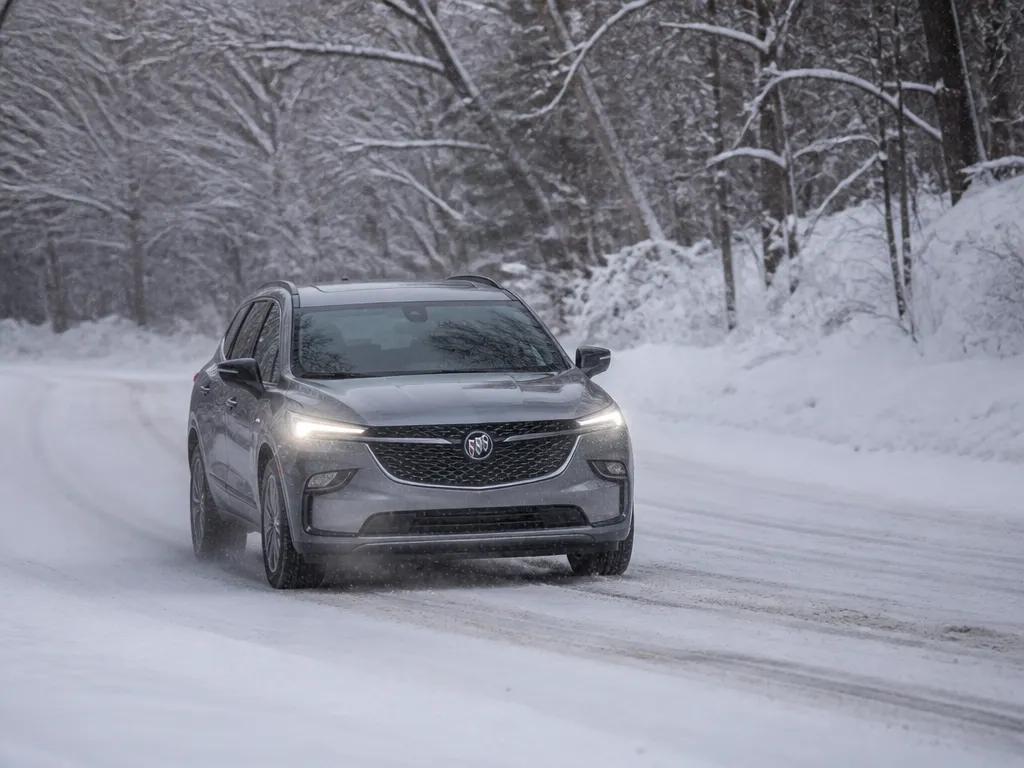
Turning grip balance on snow in the Enclave tends to favor front-wheel grip, so you‘ll notice understeer if you push into a corner before the tires bite. The AWD system helps with initial traction, but when surfaces ice over the Enclave ESC can trim engine torque and apply selective braking to keep you on a stable path. With smooth steering and light throttle, you preserve a stable turn and reduce the chance of a sudden loss of control. Front-to-rear grip can shift as you climb or descend grades or encounter hard-packed snow, so anticipate gradual changes in handling rather than abrupt moves.
Winter Tire Setup For The Enclave
Real-world snow performance on the Enclave improves with winter tires. In packed snow and ice, dedicated winter rubber provides better grip and shorter stopping distances than typical all-season tires.
For the Enclave, the clearest upgrade for winter traction is a dedicated set of winter tires on all four corners. All-wheel-drive helps during acceleration but cannot compensate for poor tire grip, so a full tire swap is essential when snow becomes common.
| Criterion | Winter Tires | All-Season Tires |
|---|---|---|
| Traction in snow and ice | Specialized tread compounds and siping bite into packed snow, improving grip and forward bite | Less grip on ice and hard-packed snow; more slipping and longer starts |
| Braking distances | Shorter stopping distances on snow and ice; improves ABS performance with consistent rubber contact | Longer stopping distances; higher risk of wheel lock on icy surfaces |
| Cornering stability | Better lateral grip, reduces understeer on slick surfaces | More understeer, especially on icy curves |
| Wear patterns and cold performance | Tread designed for cold temps; even wear across winter cycles | Tread softening and grip loss as temps drop; wear accelerates in cold |
| Sidewall condition and damage risk | Sturdy winter-specific sidewalls; inspect for cracks and cuts after road salt exposure | More vulnerable to sidewall damage when temps swing and roads salt |
| Cold-weather tire pressure behavior | Pressure stays more stable in cold; reduces contact patch variability | Pressure drops with cold air; grip deteriorates as underinflation rises |
Tread depth matters. Replace worn tires before winter with at least 6/32 inch of remaining tread for snow performance; deeper is better. Also inspect sidewalls for cracks, bulges, or bulging beads, which can fail under load in winter.
Cold-weather tire pressure checks are essential. Check tire pressures when the tires are cold, ideally before a daily drive or after sitting in the cold all night. In the Enclave, verify the recommended cold pressures on the door jamb label and recheck after a short drive to settle the tires, ensuring even contact with the road for maximum grip.
Pre-trip Checks For Winter Suv Use
Buick Enclave winter reliability starts before you pull out of the driveway: tires, battery health, and brake condition determine how confident you feel on ice. Do a 10 minute pre-trip scan every morning you drive, then a deeper check once before temperatures drop hard.
Before The Season: Tires, Brakes, Battery And Charging
Tires decide whether the Enclave feels predictable on packed snow and slush. Set a rule for the cold season: confirm you have winter-capable tread (or swap to dedicated winter tires) and verify pressures when the tires are cold, since low pressure makes snow grip worse and can shorten tread life.
Brakes need a clean, solid bite on snowy roads because every stop starts your traction battle. Check pad and rotor wear, confirm there is no pulling or grinding, and verify the brake fluid level meets the spec on the reservoir (use the correct DOT rating listed on the cap if you top up).
| Check | What you’re looking for | Why it matters in snow |
|---|---|---|
| Tire pressure | Set cold spec at the door jamb | Low pressure reduces contact patch grip on slush |
| Tire condition | Enough tread, no cracks or bulges | Damaged tires lose stability on icy corners |
| Brake wear | Pads not low, rotors not heavily scored | Snow stopping needs consistent pad friction |
| Battery | Passes load test | Cold draws more current, weak batteries struggle |
For the Enclave, the biggest “winter surprise” is usually tires and battery condition. Fixing those two before it snows tends to reduce the number of scary moments you experience on your commute.
Before Each Drive: Lights, Wipers, Washer Fluid, Quick Tire Scan
Before the first drive of the day, check every outside light and take a 30 second look around the front, mirrors, and rear. Winter grime hides fog lights and tail lights, and you want maximum visibility when snowbanks kick up spray.
Wipers need fresh performance. Inspect blade condition for streaking or chatter, then fill the washer reservoir with a freeze-rated winter mix so the system sprays immediately on salt mist and slushy road film.
For the tire scan, do not just look. Feel for bulges with your hand and check that one tire is not dramatically lower than the others, since fast pressure loss often points to a leak you need to address before it becomes a roadside problem.
Emergency Kit And Traction Aids: What To Keep In The Enclave
Traction aids save time when the AWD system is overwhelmed by deep ice, packed snow, or spinning tires on a steep driveway. Keep a shovel and traction boards within reach, and pack basic recovery items that let you move the car safely without improvising.
| Item | Best location in the SUV | Winter use |
|---|---|---|
| Shovel | Second row or cargo bin, not buried | Clear snow from tire paths quickly |
| Traction boards | Near the cargo floor edge | Provide grip on ice-packed ground |
| Jump starter | Cargo area with cables secured | Quick start if the battery is weak |
| Reflectors | Cab door pocket or small tote | Warning if you must set up at the roadside |
Limitations And Winter Driving Risks
AWD on the Buick Enclave improves launch and reduces how often you get stuck, but it still cannot stop physics. Ice can split the traction available between tires, so you can still slide in corners or during panic braking even with traction control active.
Awd And Traction Control Have Real Limits
Traction control does not “add grip,” it reacts when a driven wheel slips by cutting engine torque and, on many vehicles, applying brake to the slipping wheel. On polished ice, that cycle can feel like the Enclave is hunting for traction, then suddenly grabs, then slips again. The driver takeaway is simple: keep steering inputs smooth, and treat every start from a stop as a traction test.
In practice, packed snow and slush are more forgiving than glare ice. Packed snow tends to compress and hold some bite, while ice is slick enough that the tire contact patch may lose grip all at once.
Braking Performance Surprises On Ice
Anti-lock brakes (ABS) work by preventing wheel lock, which helps you keep steering ability, but it cannot shorten stopping distances on ice. When the surface is extremely slick, ABS may pulse and feel “busy,” yet the car can still take much longer to stop than you expect from dry-road experience.
For example, the Enclave can brake straight and stable, but the distance to full stop can spike because the tire compound and tread cannot displace water or form reliable micro-grip on ice. This is why winter tires matter more than most people think.
| Condition | What you may feel | What that usually means |
|---|---|---|
| Slushy snow | Brakes feel steady, ABS engages gently | More consistent friction, still longer than dry |
| Packed snow | ABS may cycle more often | Variable traction across the contact patch |
| Glare ice | ABS pulses hard, steering may be limited by grip | Tire cannot build enough friction for short stops |
Tip from the shop floor: if you cannot stop where you normally do on a familiar stretch, you are not “doing something wrong.” You are meeting an ice physics problem, and the fix is more margin, lower speed, and winter tires.
When To Get The Enclave Inspected
Winter can expose problems faster, especially those involving brakes and stability systems. If the Enclave pulls left or right under braking, that is a red flag for a sticking caliper, uneven brake wear, or a brake system imbalance that you should not ignore in snow.
Persistent warning behavior is another line you should not cross. A continuous or repeating ABS or ESC warning light, or messages that do not clear after normal cold-start checks, can point to a sensor issue (often wheel-speed related) or a hydraulic problem that affects stability control when you need it most.
If you see any of the above, schedule an inspection before the deepest part of winter. A shop can check for stored ABS/ESC codes using the OBD-II system, then inspect wheel-speed sensors, brake components, and related calibration issues that your own driving cannot diagnose reliably.
Quick Summary
The article’s main message is that the Buick Enclave feels predictable in cold weather, but the difference between confident control and a slippery surprise comes down to tire grip and how smoothly you drive. Even with AWD, you usually get better launch and grip management, and traction control limits wheelspin by managing torque. Still, AWD does not shorten stopping distances on ice, and ABS can start pulsing sooner than you expect when you brake hard on slippery surfaces.
As conditions get worse from light snow to packed snow and then glare ice, you feel more frequent stability and traction control intervention, often as slower acceleration and extra corrections, with steering becoming less linear. The article says winter tires typically outperform all-seasons once temperatures drop below about 45°F, and that correct cold tire pressure matters, since underinflation can worsen sidewall flex and steering response. You should clear snow from lights, wipers, mirrors, and use winter-rated washer fluid, then drive with earlier, straighter braking and progressive throttle inputs, because momentum and traction are what keep you in control.
| Surface | How the Enclave usually feels | What to adjust |
|---|---|---|
| Light snow | Predictable throttle response, controlled stops with ABS | Maintain momentum, smooth pedal inputs |
| Packed snow | Noticeable traction limiting during acceleration | Gentler throttle, larger following distance |
| Glare ice | Traction control intervenes frequently, steering feels less linear | Extra momentum, slower turns, avoid abrupt inputs |
Frequently Asked Questions
How Do I Start A Buick Enclave In Snow Without Draining The Battery?
Cold starts are where batteries get hit hardest, so give the Enclave 10 to 15 seconds before you crank again if it hesitates. If you have block heater access, use it for at least 1 to 2 hours before driving when it is very cold, and avoid repeated short start attempts.
What Winter Tire Size Or Type Works Best For A Buick Enclave In Deep Snow?
Stick with the tire size listed on your driver-side door jamb, because mixing mismatched sizes can affect traction and stability systems. In deep snow, prioritize true winter tires over all-season tires, since they keep grip at lower temperatures and in slush.
Why Does My Buick Enclave Feel Like It Loses Traction Or Hunts In Snowy Conditions?
Traction control and ABS can feel “intervening” when tires are slipping on packed snow, and low tire pressure makes it worse. Check tire pressure at cold temperatures, and make sure the wheels are not out of alignment, especially if you recently hit a pothole or curb.
How Should I Warm Up My Buick Enclave For Winter Driving So It Is Safe To Move?
You do not need a long idle to drive, but you should let oil pressure stabilize and the cabin clear.
In practice, aim for just a few minutes until the windows are defogged and the drivetrain is responding smoothly, then drive gently for the first 5 to 10 minutes.
What Is The Most Common Winter Mistake Buick Enclave Owners Make That Causes Slipping?
It is usually driving too aggressively right after a stop, when the tires are still cold and the surface is slick. Use smooth throttle, keep extra following distance, and avoid sudden braking by planning earlier, especially on freeze-thaw days where the road alternates between slush and ice.
When Should I Stop And Get My Buick Enclave Checked After Winter Exposure?
If you notice persistent warning lights, braking that feels uneven, steering pull, or a drivetrain shudder that does not go away after a careful test drive, get it checked promptly. Winter can uncover issues, but for anything involving brakes, steering, or stability controls, do not keep guessing, have a technician scan codes and inspect components.