


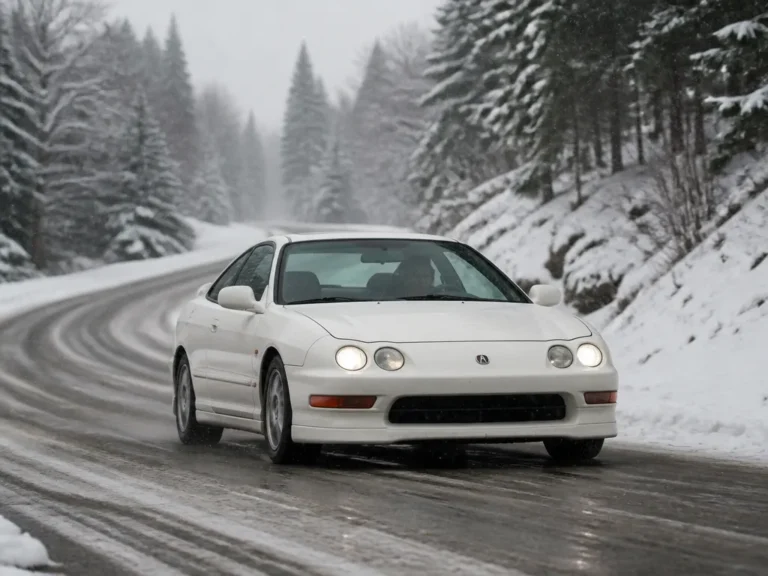
You’re parked on a snowy street wondering if your Acura Integra will feel safe when the roads freeze, or if you’re about to become a tow call. Since the Integra is a FWD compact, winter grip comes down to tires, technique, and how the traction and ABS systems manage wheel slip. Let’s walk through what to expect and what to do.
Yes, the Integra is front-wheel drive (FWD), so winter control depends heavily on tire choice and smooth inputs. Plan for longer braking distances on ice, use staged acceleration and extra following distance, and make sure your winter setup is ready before the first storm hits.
Acura Integra In Snow And Winter Driving
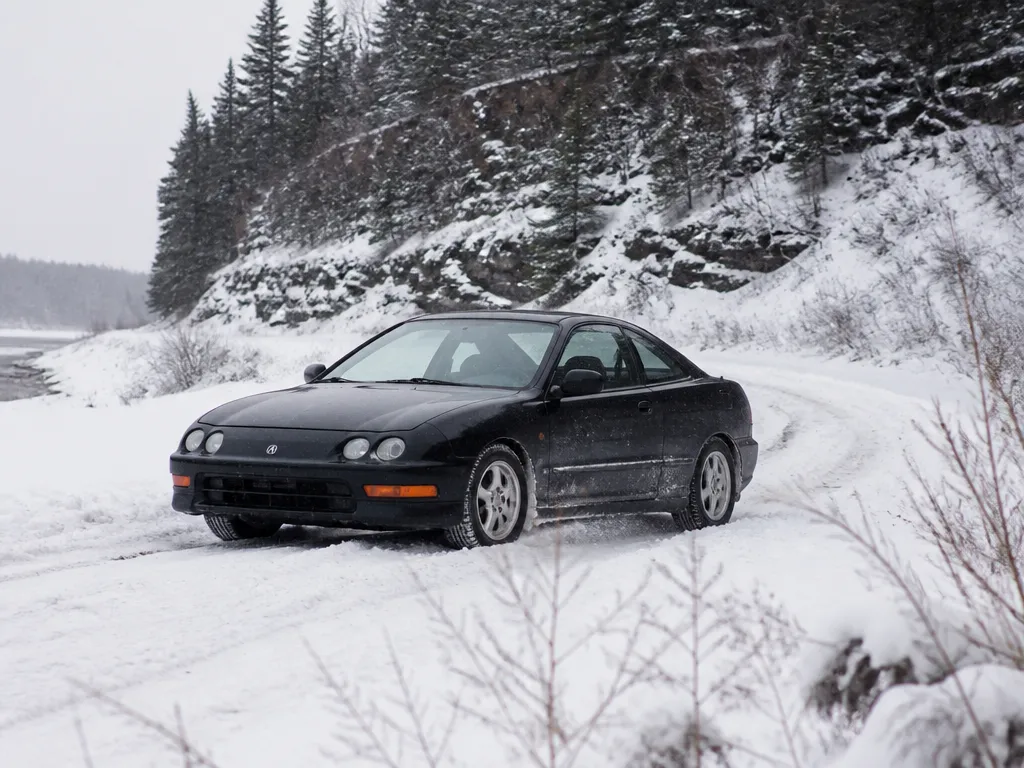
The Acura Integra is a front-wheel-drive compact car, and that drivetrain choice shapes everything in winter: power goes to the wheels that also steer, so traction management matters more than brute force. Expect predictable handling when tires are in good shape, and expect traction limits to show up fast on ice. The good news is winter driving in an Integra is very teachable, with a few disciplined habits and the right rubber.
Integra Winter Behavior At A Glance
Front-wheel drive tends to understeer first when grip drops, meaning the car will push toward the outside of a turn more than it will spin its way out. In deep snow, the driven wheels can dig a trench quickly, so momentum and tire contact matter more than throttle bravery. For icy situations, smooth inputs keep the tires from breaking traction abruptly.
For example, a light throttle roll while entering a snowy intersection usually stays controllable, while an aggressive shove often turns the event into a wheel-slip contest. The Integra will still move, but steering response can feel slower and you may feel a “hesitation” as the tires regain grip. That is why tire choice and driver technique are the first levers you pull.
Drivetrain Basics You Need For Confidence
The Integra sends engine torque through the front transaxle to the front axles, so the front tires do three jobs in winter: steering, braking support (with rear helping via brake bias), and propulsion. When traction drops, the tires lose grip before the drivetrain “fixes” the problem, so you feel it at the steering wheel and the accelerator pedal. A clean, well-inflated tire setup is the foundation because contact patch is your limiting factor.
Winter traction is also affected by how weight sits on the axles. Passing loads and braking transfer weight forward, which helps front grip during stop-and-go. Packed snow can reduce that benefit if tires cannot bite through the surface.
Realistic Performance Expectations
In typical snow, the Integra behaves best when you drive like you are always 1 step ahead of the surface. In rain-snow mix and slush, the front tires often provide usable grip if tread is deep and the tires are the right winter compound. On glare ice, any FWD car can lose traction instantly if you ask too much of the tire.
For winter readiness, plan around the tires because that is where most “winter performance” actually lives. If your tires are worn, highway all-seasons may feel fine in dry cold weather, then fall flat the moment the road turns slick.
Mitigation Strategies That Work In Day-to-day Driving
| Condition | What the Integra usually feels like | What to do first |
|---|---|---|
| Light snow on packed pavement | Steady, controllable with gradual throttle | Maintain momentum and gentle throttle |
| Slush | Steering response can feel delayed | Reduce speed and avoid sudden turns |
| Glare ice | Traction breaks quickly, especially with power or braking | Keep inputs smooth, leave extra following distance |
Insider mechanic tip: If the tires chirp or the car yaws even slightly, you have exceeded tire grip. Back off until the steering feels “connected” again, then drive at that level of traction.
Integra Winter Capabilities As Fwd
Integra is a front-wheel-drive car, so winter traction starts at the front tires. When the surface gets slick, the limiting factor is usually tire grip and how sharply you ask the car to accelerate or turn. Electronic aids help, but they cannot create friction where the tires are skating.
Traction Limits On Slick Surfaces
Front-drive traction is strongest when weight is loaded over the driven wheels, and weakest when the fronts are light or the surface is smooth and icy. On glare ice, even a perfect throttle lift can still feel “nervous” because tire rubber cannot maintain a stable contact patch. A big tell is rapid wheel spin in first and second, followed by delayed catch-up once you ease into the throttle.
In practice, Integra’s power delivery and stability logic keep you out of the most dangerous slide modes, but you still need to drive for available grip. Brake earlier than you think, turn slower than you think, and treat throttle inputs like they are on a dimmer switch. If you feel the steering wanting to fight you during an icy turn, the tires are past the adhesion point.
Weight Transfer And Load Effects (What The Fwd Layout Changes)
FWD cars tend to lose front traction during acceleration because weight shifts rearward, which unweights the front tires. That can make the car feel stable in a straight line, then more likely to understeer in a turn if you request both steering and acceleration on the same slippery patch. Cold soaked roads also stiffen tires, which reduces grip until the tire warms through driving.
For real-world mitigation, plan vehicle load and tire warming habits. Snow days where the car is empty behind the front seats can show up as lighter steering and reduced bite in early throttle.
Insider tip: If the car feels “darty” on slick pavement, start by slowing down and reducing steering angle. Tire grip issues look like steering problems because the fronts are the grip limiter.
Stability Aids: Vsa, Tc, Esc Behavior You Should Expect
Integra’s stability system is designed to manage the traction and yaw forces by controlling engine output (traction control), and by applying brake pressure to individual wheels (stability control). On snow and ice, TC and VSA can intervene quickly, so the car may feel like it is pulling power back right when you try to accelerate. That behavior is normal, and it often extends vehicle control compared with pure mechanical grip.
ESC logic usually becomes active when the car’s path does not match driver steering input, especially during faster-than-grip corner entry or when you combine steering and braking on the wrong surface. If you hold the steering angle steady but keep adding throttle, you can trigger repeated interventions, which feels like “rubber-banding.” The fix is simpler than it sounds: reduce speed, straighten the car first, then apply power.
| System | What you feel on slick roads | Driver mitigation |
|---|---|---|
| TC (traction control) | Engine power cuts in bursts, slight hesitation on throttle | Use gentler throttle, aim for smooth acceleration only |
| VSA (vehicle stability assist) | Brake pulsing or targeted braking, steering feels “corrected” | Reduce turn-in speed, avoid throttle during mid-corner |
| ESC (electronic stability control) | Earlier intervention if the car starts to understeer or oversteer | Let the car slow first, then steer and accelerate separately |
Winter Tire Guide For Integra
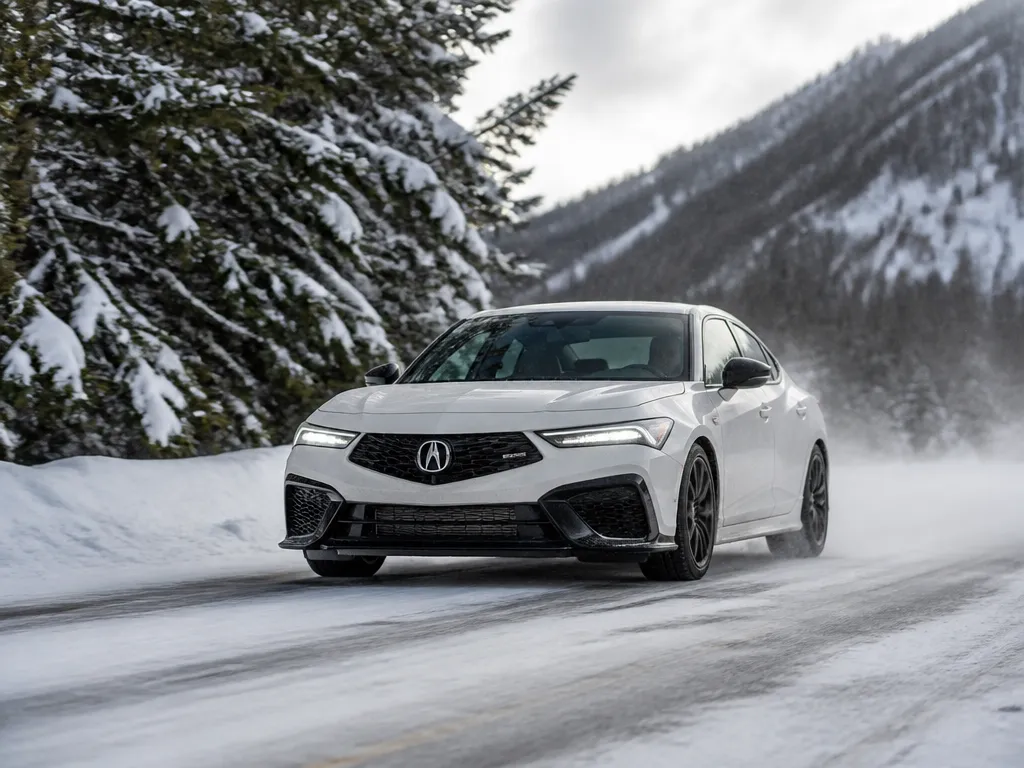
For an Acura Integra, the biggest winter upgrade is switching from all-season tires to winter tires when temperatures stay below about 45°F. FWD grips and accelerates better than you expect with the right winter rubber, but ice still needs tire traction and patience.
Best Studless Winter Tires (Traction-first)
Studless winter tires are the smart pick for most Integras because they offer strong snow bite and better ride and noise than studs. Choose studless models that are designed with high-silica tread compounds and dense siping for ice and slush.
Common studless options that work well on compact FWD cars include Michelin X-Ice Snow, Bridgestone Blizzak WS90, and Continental VikingContact 7 (availability varies by market and year). For mixed city driving with occasional ice, these tend to feel predictable, with braking that improves noticeably versus worn all-seasons.
Studded Tires: Pros And Cons
Studded tires can add real grip on long, hard-packed ice, especially on short commutes where you see the same icy spots every week. The trade-off is harsher ride, more road noise, and extra wear on dry pavement.
For Integra owners, studded tires make the most sense if your area has frequent bare ice and you are willing to store them when temps climb. Check local rules because studded tire legality varies by province/state and even by city.
| Winter option | Best for | Typical tire tech | Rough tire price range (pair) |
|---|---|---|---|
| Studless winter (example models) | Snow, slush, mixed winter roads | Siping + soft winter compound | $550 to $900 |
| Studded winter (example families) | Hard packed ice, frequent glare ice | Metal studs + winter tread | $700 to $1,100 |
| All-weather “winter-capable” tires | Light snow, milder cold climates | All-weather compound + tread depth | $500 to $850 |
Studded vs studless cost range: studded usually runs about $150 to $200 more per pair due to the studded construction and metal hardware. Studless often gives the best overall value for an Integra because you gain traction where you spend most of your time, slush and fresh snow.
All-weather Winter Tires As Alternatives
All-weather tires can work when your “winter” is mostly cold rain and occasional snow, and you do not want to manage a second set. The limitation is they are usually a compromise, with less ice bite than true winter tires and more fade as snow gets heavy.
All-weather models like Michelin CrossClimate 2 or similar “3PMSF all-season” tires are a reasonable fallback for mild winters. For frequent snow and freezing nights, a dedicated winter tire still pays off.
Sizing notes for Integra: use your door-jamb tire placard and keep the winter tire’s overall diameter close to OEM to protect ABS behavior and speedometer accuracy. The exact winter size depends on which Integra trim you have, but staying within the OEM-equivalent size range is the key rule.
Pro tip: plan to mount winter tires on separate wheels if you can. Swapping tires twice a year with the same tire set is fine, but moving wheels with TPMS saves time and reduces the chance of getting a slow leak from hurried work.
Tire Sizing By Integra Trim
Most Acura Integra trims run either 17-inch or 18-inch wheels, and the tire size you see is tied directly to that wheel diameter. Width also changes the contact patch shape, which affects how the tire bites in snow and how quickly it moves through slush.
Common Oem Tire Sizes By Integra Wheel Size
OEM winter traction comes from tread compound and siping more than the wheel itself, but wheel diameter and tire sidewall height influence snow feel. Taller sidewalls (often on smaller-diameter wheels) give a more forgiving ride and can help the tire follow uneven pavement and rutted snow better.
For most Integra setups you will see tire sizes listed in the format width/aspect ratio – rim diameter. Example formats you might find include 225/xxR17 or 235/xxR18 style sizes, where the “R17” or “R18” is the wheel diameter.
| Integra wheel option | Typical OEM tire format | Winter-driving effect |
|---|---|---|
| 17-inch | ~225/xxR17 (format varies by trim) | More sidewall compliance, often better in uneven snow |
| 18-inch | ~235/xxR18 (format varies by trim) | Sharper steering response, less sidewall cushion |
Inch Vs 17-inch Wheels: What Changes On Snow/ice
Integra 18-inch setups usually run a wider, lower-profile tire which can sharpen turn-in, but it also leaves less “give” when the tire drops into packed snow grooves. That can make the ride harsher and can reduce how easily the tread conforms to icy texture.
Integra 17-inch setups typically pair wider wheels with more sidewall height, which helps the tire maintain contact as the surface changes from slush to compacted snow. On bad roads, the sidewall height also helps reduce rim damage from potholes and buried debris.
Wheel Width Impact On Winter Grip
Wheel width affects the tire’s sidewall shape under load. A narrower wheel can stretch a winter tire’s tread more evenly across uneven snow and ice, while an overly wide wheel can reduce sidewall flex and make the tread feel less forgiving.
In practice, stay within the recommended wheel-width range printed in tire documentation for your specific winter tire model. That keeps the tread working as designed, and it prevents uneven wear patterns that can show up quickly in cold, stop-and-go use.
Shop tip: If you are considering a 17-inch winter wheel swap to replace 18-inch summers, plan around the exact door-jamb tire size. Then pick a winter tire model that is approved for that wheel width so the snow/ice compound and tread layout can do the job.
Integra Snow Driving Techniques
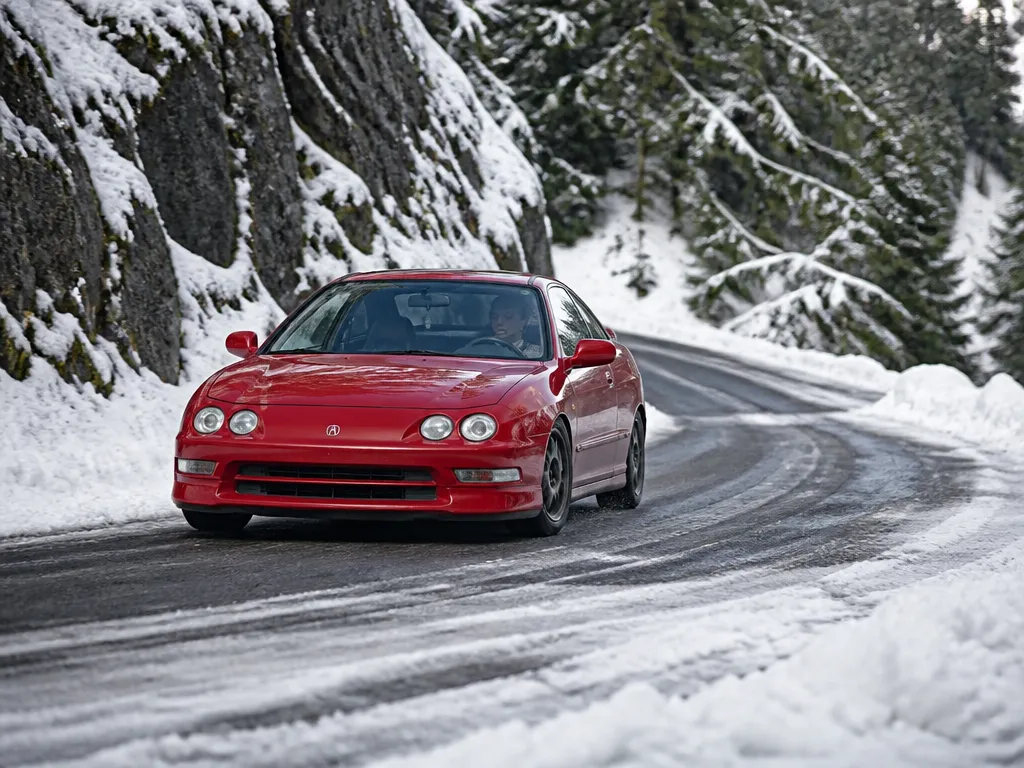
Acura Integra is front-wheel drive, so winter traction and control come from how gently you manage steering angle, throttle, and brake pressure. The biggest driver mistake in snow is abrupt pedal input, which overloads the front tires and causes wheel spin or a slide.
For example, approaching a stop sign on glare ice, a good sequence is to slow in a straight line first, then make the final speed reduction with smooth brake pressure once the car is already pointed where it needs to be.
In practice, turning while braking heavily is where many Integra drivers trigger ABS cycling and lose directional control.
Insider mechanic tip: when traction is low, drive like you are “metering” the pedals. If your body feels tense, your inputs are usually too sharp for the surface.
| Condition | Following distance | Braking approach | Throttle guidance |
|---|---|---|---|
| Light snow | 6 to 8 seconds | Early, smooth pressure | Small inputs, steady hold |
| Heavy snow/slush | 8 to 12 seconds | Brake before turns, extra room | No rapid increases in pedal |
| Glare ice | 12+ seconds | Gentle pulses, steer while slowing | Minimal throttle, traction first |
Winter Prep Checklist
A healthy battery, properly diluted windshield washer fluid, and clean lights make the biggest difference for an Acura Integra in cold weather. Cold starts and short drives expose weak batteries fast, so start with a quick, practical inspection before you buy anything.
Battery Health Check (Cold-start Reliability)
Check battery age and condition before the first hard freeze. If the battery is over about 3 years old, plan on load testing, because cranking speed and voltage sag are what cause “won’t start” headaches in snow. Inspect the terminals for white crust or wet corrosion, and make sure clamps feel tight.
For a quick decision path, do this:
| Symptom in cold | Most likely cause | Best next step |
|---|---|---|
| Slow cranking, lights dim | Battery capacity loss or high internal resistance | Load test, then charge or replace |
| No crank, click only | Weak battery or poor connection | Inspect terminals, clean, retest |
| Corrosion at posts | Connection resistance buildup | Clean and tighten; test again |
Fluids And Cold-weather Prep
Confirm the engine oil viscosity matches winter needs for your temperature range. Thicker oil can make cold starts harder, so use the grade you know will cover your coldest nights. Check coolant level and look for residue around the reservoir cap, because leaks worsen quickly in freezing temps.
Windshield washer fluid should be ready for freezing weather. Use a winter-rated concentrate, and top off with the correct mix for your lowest forecast temperature. For survival in slush, keep the washer reservoir full, because road grit that hits the lens can reduce visibility in seconds.
Wipers, Washers, And Visibility
Wipers in winter are about wiping ice film and keeping streaks off the glass. Inspect blades for cracks, uneven contact, or smearing, then replace them if they leave trails. Wipe-test with a little washer fluid to confirm the contact pattern is even across the blade.
In practice, the first snow is when people forget the simple stuff: icy spray can ruin visibility before you notice. Keep a spare pair of washer nozzles tools in your kit, and avoid using hot water to de-ice glass, which can crack cold glass. If you park outside, lift wipers off the glass or use a cover so blades do not freeze to the windshield.
Expert tip: If washer fluid sprays weakly in freezing weather, check the reservoir for the correct winter mix and confirm nozzles are not clogged. Weak spray often comes from gelled concentrate or frozen lines.
Lights And Emergency Gear
Clean headlights, tail lamps, and fog lights so you can see and be seen in blowing snow and early darkness. Inspect for burned bulbs and test every light function, including brake lights and turn signals, since winter road grime can hide small issues. Aim matters too, so if you replaced suspension parts or had a front-end impact, verify headlight aim.
Emergency gear should fit the way you actually drive. Keep a small shovel, traction aids, gloves, and a warm blanket in the trunk, plus a phone charger and an LED flashlight. For breakdown safety, pack jumper cables or a jump starter, and include a basic first-aid kit and reflective triangle or road flares if they are legal in your area.
Abs, Tc, Esc In Snow
On the Acura Integra, ABS stops wheel lockup during hard braking, traction control (TC) limits spinning at the drive wheels, and stability control (ESC) keeps the car pointed where you steer by reducing engine torque and braking individual wheels. In snow and ice, these systems trade some acceleration and a firm pedal feel for control, which is exactly what you want when grip is unpredictable. You may feel pulsing at the brake pedal or hear cycling during slip events, and that is normal operation.
How Abs, Tc, And Esc Behave On Slippery Pavement
ABS uses wheel-speed sensors to detect rapid deceleration that indicates lockup. When it sees impending lock, it modulates brake pressure several times per second, keeping the tires rolling so steering input still works. On snow that packs into tread blocks, ABS may feel “busy” because traction changes every rotation.
Traction control on the Integra monitors drive-wheel slip and reduces engine torque when the inside or outside front wheel spins faster than it should. TC can also trigger brake intervention at the spinning wheel, which transfers torque to the wheel with more grip. Stability control then looks at steering angle and yaw (rotation) tendencies, and it corrects if the car starts to rotate more than you intended.
| System | What you feel | What it’s doing | Driver takeaway |
|---|---|---|---|
| ABS | Pulsing pedal, fast brake noise | Brake pressure modulation to prevent lock | Press the brake firmly, steer through the turn, keep inputs smooth |
| TC | Throttle response softens, slight lurching | Reduces torque and may brake a spinning wheel | Start moving gently, ease off if it cycles repeatedly |
| ESC | Braking/thumping sensation inside a turn, engine torque cuts | Targets yaw with selective braking and torque control | Hold a steady steering angle, avoid sudden throttle and abrupt steering reversals |
Sensors In Cold Weather And What Changes On Ice
Wheel-speed sensors are electrical, so extreme cold can slightly change how quickly tires bite and release grip, which makes slip events more frequent. The Integra’s control unit reads those sensors continuously, so the timing of ABS/TC/ESC engagement depends more on tire-road friction than on temperature alone. On glare ice, the systems can cycle fast because the tire alternates between traction and near-zero grip each revolution.
After a fresh snow, the first few stops and accelerations often trigger more intervention because the surface is uneven and littered with packed snow ridges. Tire pressure matters here, too, underinflation increases tread squirm and changes the slip patterns the sensors “see,” which can cause earlier TC or ABS activity. Keeping pressures within the winter spec on your door jamb sticker gives the systems more predictable behavior.
Best Practices When These Systems Engage
Mechanic tip: If you feel ABS pulsing while you are drifting into a turn, focus on steering alignment and brake pressure first. Late steering corrections plus sudden throttle is what overwhelms TC and ESC on slick snow, especially on icy two-track ruts.
Quick Summary
The Acura Integra is front-wheel drive, so in snow and winter the article frames winter control as a tire and technique story rather than power. With FWD, you should plan for longer braking distances on ice and use staged acceleration so the front tires do not break traction abruptly. It also notes that winter grip drops fast when temperatures fall below about 45°F, making tire choice critical. The article specifically calls out that you will often feel understeer, with the car pushing toward the outside of a turn first when grip is low.
For day-to-day driving, the article advises using winter tires when it is below about 45°F, and keeping a 6 to 8 second following distance, especially in snow. It says ABS braking may take extra time on slick patches, and if you feel ABS chatter you should keep steady brake pressure while steering. Preparation is also emphasized, including checking tire tread, wiper blades, lights, and battery health each fall. If you get stuck, rock gently, keep wheel spin low, and add traction at the tires. Most important takeaway: winter performance is mostly tires plus smooth, FWD-smart inputs.
| Situation | What to do | Numbers to remember |
|---|---|---|
| Below about 45°F | Use winter-ready tires, not worn all-seasons | Threshold is about 45°F |
| Snow following distance | Increase space and drive ahead of the surface | 6 to 8 seconds |
| Ice braking with ABS | Keep steady pressure, steer through the event | Allow extra time for ABS braking |
| Getting stuck | Rock gently, minimize wheel spin, gain traction at the tires | Low wheel spin |
Frequently Asked Questions
How Do I Set Up My Acura Integra For Snow Driving?
If you want predictable traction, run fresh winter tires (not all-seasons), keep them properly inflated for cold weather, and make sure your brake pads and tires have tread you can measure. In winter, the biggest difference is tire grip, so prioritize tire condition before worrying about anything else.
Will An Acura Integra In Snow Lose Traction Easily Compared To Suvs?
Yes, an Integra can feel less forgiving in deep snow because it is a lower, lighter front-wheel-drive car design, and clearance and weight over the drive wheels matter. If you are stuck, gentle throttle and steady steering usually work better than aggressive revving that just spins tires.
What Should I Check First On My Acura Integra Before The First Snow?
Do a quick safety check of tire tread depth, tire pressure, and wiper blades, and top off fluids that affect winter visibility and cooling. If your Integra has older tires or you see uneven wear, address that first because it directly impacts traction in snow.
How Can I Stop My Acura Integra From Sliding On Icy Roads?
Use smooth inputs, slow down before turns, and avoid hard braking or fast steering while the car is already pointed into a slippery direction. If you have wheel slip, ease off the throttle and let traction come back before you correct the steering.
Is It Worth Buying Winter Tires For An Acura Integra, Or Just Use All-season Tires?
For frequent snow and cold, winter tires are usually worth it because they are built to keep grip when temperatures drop. If you only see light snow occasionally, you can stretch all-seasons farther, but you should expect reduced bite on ice compared to true winter tires.
Do I Need To Warm Up My Acura Integra Before Driving In Snow?
You should give the car enough time for the defroster and heater to clear your windshield, especially if the glass is icing up. In general, avoid prolonged idling in modern cars, and instead aim to start driving once you can see clearly and the drivetrain is responding normally.