


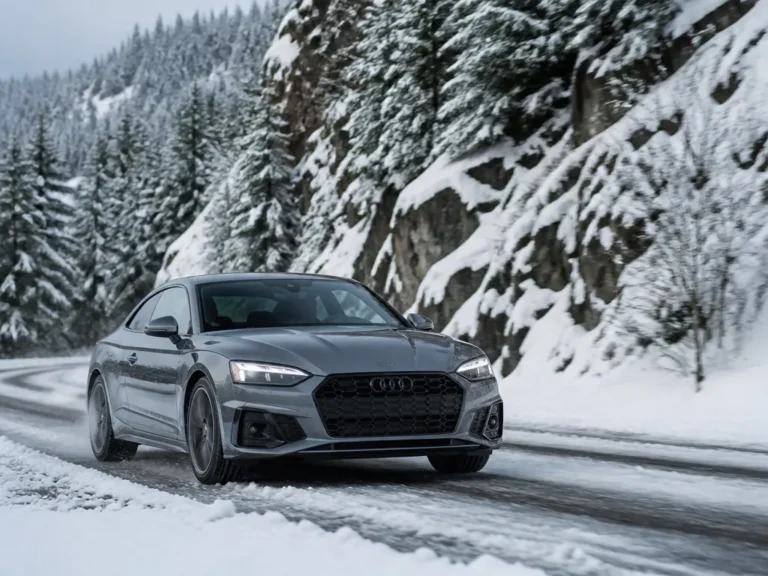
The first hard snow always shows up when you least want it, and your Audi A5 is suddenly a completely different car. Maybe you feel wheel spin at a stop, the brakes feel “grabby,” or the front end won’t bite on icy grades. This guide breaks down how an A5 behaves in packed snow, slush, and near-ice, and what to change before the next storm.
For winter driving in an Audi A5, the biggest win is matching winter tires to your exact A5 wheel size, then driving around how ABS and ESC intervene on low-traction surfaces. Whether you have quattro AWD or front-wheel drive, you’ll get clear expectations for traction, steering feel, and hill starts.
Audi A5 in snow and winter driving depends mostly on drivetrain and tires. With winter tires, expect steadier acceleration and shorter stopping than all-seasons on slush and ice. In packed snow, traction control may limit throttle quickly, and ABS will pulse during hard braking, especially on slick grades.
1. Audi A5 In Snow And Winter Driving
Winter grip is where the Audi A5 earns its keep, especially on the icy, stop-and-go routes where snow tires matter more than engine power. The A5 is commonly ordered with Audi’s quattro all-wheel drive, which helps keep torque going to the wheels that can actually find traction when the road surface changes every few blocks. This is why it belongs at the top of a winter-driving list for commuters and weekend travelers alike.
In practice, your winter setup starts with tire choice, since winter tires are what do the heavy lifting in cold temperatures. A smart way to prep the A5 is to run a dedicated winter wheel and tire set so you can swap in fall before the first hard freeze.
For example, if you drive frequently in mixed snow and slush, prioritize tires with strong snow and wet traction ratings rather than “all-season” tread compounds.
Cold-weather Traction Habits That Matter More Than You Think
All-wheel drive helps, but it cannot create traction where there is none. For best results, drive smoothly: gentle throttle inputs and earlier braking reduce how hard the system has to work. If your A5 has a sport differential option depending on year and drivetrain, it can shuffle torque under load, but sudden steering corrections on packed snow still upset the car.
For instance, if you must merge onto a snowy on-ramp, slow down before turn-in, keep the steering steady, and let the car settle before adding power.
Reader takeaway: fit proper winter tires, keep pressures accurate, and drive smoothly so the A5’s quattro traction can do its job instead of fighting sudden inputs.
2. Quattro Vs Fwd Grip Reality
Quattro matters in winter because it keeps all-wheel torque available the moment a tire starts to slip, which helps the Audi A5 stay composed when you hit slush, packed snow, or off-camber turns. FWD can still move fine with good tires, but the moment load transfers and the driven axle loses traction, you get more spin and less steering feel. That is why this item belongs in a practical “audi a5 in snow and winter driving” list.
For winter grip, tire type and tread depth usually beat drivetrain type. In practice, Quattro improves traction during acceleration and often reduces how quickly the car gets unstable when the road changes under you. A good rule is to expect the biggest advantage from Quattro when you are leaving a stop, climbing a slight grade, or correcting while turning on low-attachment surfaces.
Tradeoffs In Real Winter Use
Quattro systems add complexity, so you are more likely to pay for drivetrain-related maintenance over the life of the vehicle compared with a simple FWD layout, especially if you run mismatched tires front to rear or let tire wear get uneven. In addition, Quattro may feel more forgiving when you accelerate too early, but that can tempt overconfidence on slick intersections where stopping distance still depends on tire traction and brake condition. If your A5 is Quattro, keep all four tires the same size and tread pattern, and plan to replace them together when winter tires are worn to a low tread depth. For short commutes, the benefit often shows up as fewer moments of wheelspin and less “wandering” from inconsistent traction, but you still need to drive for reduced grip.
3. Winter Tire Setup For A5
Winter tires matter on an Audi A5 because they keep biting when temperatures drop, and that traction is what your Quattro system can take advantage of. A practical winter setup also reduces the risk of slide events caused by worn all-seasons, especially on slushy starts and packed snow. Swapping to a dedicated set is usually the biggest controllable upgrade for a winter commute.
For example, many A5 owners run a narrower winter size than their summer setup to improve ground contact and help cut through slush. Size matching should follow your vehicle’s tire placard and the exact wheel diameter you plan to use, since winter tires can be mounted on different wheel sets. Plan for seasonal storage time, and expect a pay-at-the-counter mounting and balance bill plus valve stems if you’re using TPMS.
In practice, a sensible winter tire spec set is a dedicated winter tire with a full-depth tread design and the right load rating for your A5. If you drive in deep snow or frequent freeze-thaw, prioritize tires with strong siping and snow traction over “all-weather” compromises. A common setup uses a dedicated winter tire on a second wheel set.
Tradeoffs And What To Watch
Winter tires trade comfort and quietness for grip, so expect more road noise and a firmer feel on dry pavement. All-season tires can still move your A5, but the benefit of winter tires is most noticeable during cold mornings, wet snow, and icy patches where tread compound and sip pattern work together. Avoid mixing winter tires with different wear levels on the same axle, since that can change how the car distributes torque through Quattro. If your winter wheels differ from the summer wheels, verify clearance around brakes and that the wheel offset matches what your setup allows, otherwise you can end up with rubbing or stress on components. During the first couple of drives, recheck fasteners and confirm the steering response feels consistent before you head into heavier weather.
4. Esc, Abs, And Traction Control Behavior
Snow changes everything about grip, and on an Audi A5 the stability system has to react fast when tires start to slip. ESC, ABS, and traction control are tied into the same wheel-speed sensing, so in winter you can often feel them working through steering corrections, brake pulses, and reduced engine torque. Knowing what “normal” intervention feels like helps you stay smooth, keep momentum, and avoid overcorrecting.
In low-traction situations, ABS cycles to prevent wheel lock during hard braking, which helps you maintain steering control instead of sliding straight. Traction control typically limits wheelspin by cutting power and, on some setups, using targeted braking at the slipping wheel. ESC uses a yaw-rate sensor and steering inputs to decide when to apply brake pressure and, in many cases, intervene by reducing drive torque if the car starts to understeer or oversteer.
In practice, you will get the most predictable control by driving with anticipation: gentle steering inputs, steady throttle, and earlier braking. For a trim with “dynamic” settings, check the owner’s manual for what the dash button actually changes, since the behavior of traction control and stability modes varies by year and package.
How To Judge “System Working” Vs “Something Wrong”
Intervention in snow should be brief and tied to specific events like braking hard on ice or accelerating from a stop on uneven ruts. A healthy system often communicates through momentary brake pulses, brief engine torque reduction, and stabilization when traction breaks. If the A5’s ESC or ABS light stays on, the car behavior becomes inconsistent, or you feel repeated severe braking pulses during normal low-speed rolling, that points to a sensor or controller issue. In those cases, stop experimenting and have the codes pulled with an OBD-II scan and the wheel-speed sensors checked, since ABS and ESC rely on accurate readings from each corner.
5. Snow Driving Techniques For A5
Winter traction in an Audi A5 depends as much on how you drive as on the car. Audi’s quattro models can help you move through slick patches, but in deep snow or on icy grades, throttle and braking habits decide whether the car stays pointed where you want. This makes snow-driving technique the practical “make it work” skill for audi a5 in snow and winter driving.
In practice, drive with longer following distances and use earlier, lighter inputs so the stability system and ABS have room to work. For traction control to be most effective, press the accelerator smoothly and avoid quick “stab and release” movements that can break the tires loose repeatedly. If your A5 has a winter driving mode or you can adjust drive settings, prioritize the gentler throttle mapping and smoother shift behavior (when equipped) for steering consistency.
Use good winter tires for the conditions, since the tire compound and tread are what actually bite in slush and packed snow. Keep windshield washer fluid rated for freezing temperatures, and clear snow from the headlights and taillights before moving. When momentum matters, aim for steady speed through drifts, and avoid stopping on an incline unless you have enough traction to restart cleanly.
For example, if you hit a snowy intersection with a slight slope, start in a lower gear or with a less aggressive launch so the car doesn’t spin then surge forward. If the rear gets light in a corner, ease off the throttle and let traction control regain grip before turning more. One rule of thumb: smaller steering corrections plus smooth speed changes beat sudden angle changes on slick pavement.
Brake And Turn Management On Ice
Braking technique is where drivers usually lose control in an Audi A5 during winter, especially on glare ice or crusted snow. Keep the steering wheel as steady as possible while braking, since combining heavy steering with hard braking can overwhelm grip and trigger stronger electronic intervention. If your A5 has ABS, you will typically feel pulsing through the pedal, and the best move is to keep steady pedal pressure rather than pumping. For turning, slow down before the corner, then apply power gently through the exit so the driveline helps pull the car straight instead of forcing wheel slip.
A5 Pre-winter And Storm Checklist
Cold-soak and salt exposure hit the Audi A5 early, and winter weather also stresses battery output and tire grip. A pre-storm check keeps small, predictable problems from turning into traction loss or delayed starts when snow and slush pile up. This is also the best time to confirm your winter setup, since the A5’s traction control and Audi systems depend on consistent tire and brake performance.
In practice, start with a quick tire and wheel audit: verify winter tires are on if temperatures stay below about 45 F, check tread depth, and confirm tire pressures match the driver’s door label (recheck after the first cold night).
For example, after a day of highway driving in wet snow, give the brakes a light inspection when safe, since heavy salt spray can hide uneven pad wear and rotor rust. Clean the front grille and intake areas of packed snow or road debris so airflow stays normal when defrost is running.
Storm-day Readiness
Before the first major snowfall, load a basic winter kit in the trunk: ice scraper, snow brush, flashlight, gloves, and a small tow strap or traction aid if your area sees frequent freeze-thaw. If your A5 has an electric parking brake and auto hold, cycle it a few times in your driveway to ensure you feel normal pedal and release behavior once everything is cold. For high snowfall zones, keep an eye on underbody spray areas and side mirrors, since road salt and slush can build up quickly and reduce visibility.
Quick Summary
In an Audi A5, winter traction problems show up fast, with symptoms like wheel spin at stops, “grabby” braking feel, and reduced front-end bite on icy grades. The article emphasizes that winter performance depends mostly on drivetrain and tires, not extra power. With winter tires matched to your A5 wheel size, expect steadier acceleration and shorter stopping on slush and ice. It also notes that ABS will pulse during hard braking and traction control may limit throttle quickly on packed snow.
The article draws a clear temperature line, saying winter tires work best below about 7°C (45°F), where all-seasons lose grip. It recommends checking tire pressure cold because it drops as temperatures fall, and it suggests servicing brakes before winter since weak pads or sticky slides can make stopping feel worse on slush. It also stresses driving technique, with smoother corrections to reduce ESC intervention and a bigger following gap since ABS and traction control still need distance to work. The biggest takeaway is to fit the right winter tires and drive smoothly so traction aids can do their job.
| Topic | What the article says for the A5 |
|---|---|
| Key winter upgrade | Match winter tires to your exact A5 wheel size |
| Best temperature range | Below about 7°C (45°F) |
| What you may feel | Traction control limiting throttle, ABS pulsing on hard stops |
| Maintenance before storms | Check cold tire pressures, service brakes |
| Driving change | Smoother inputs, earlier braking, and extra following distance |
Frequently Asked Questions
Is An Audi A5 Good In Snow Without Awd?
Yes, but it depends heavily on tires. In winter, the A5’s traction will be limited without an all-wheel-drive setup, so quality winter tires (with proper tread and pressure) matter more than any drive mode.
What Tires Should I Use On My Audi A5 For Winter Driving?
Use dedicated winter tires once temperatures stay near or below about 45°F (7°C). They stay softer in cold weather and help with grip and braking on snow and slush.
How Do I Keep My Audi A5 Stable On Icy Roads?
Be gentle with throttle and steering inputs, especially when traction control is actively intervening. If the car starts to slide, ease off the gas first, then steer smoothly in the direction you want to go.
Should I Warm Up My Audi A5 Before Driving In Winter?
Short warm-ups are fine, but avoid idling for long periods. In real-world terms, you want to move once the engine is running smoothly, then give the drivetrain a few minutes to come up to temperature.
Why Does My Audi A5 Feel Louder Or Show More Vibration In Snow And Cold?
Cold tire pressure and winter tire traction patterns are common reasons. Check tire pressures when the tires are cold, and inspect for uneven wear, missing wheel weights, or damaged tires after hitting potholes or curbs.
What Common Mistake Causes Poor Snow Performance In An Audi A5?
Using all-seasons or worn tires is the big one. If the tread is low or the rubber has hardened from cold weather, the A5 can feel like it has less grip even with stability control working.